Wrongful Death
Description

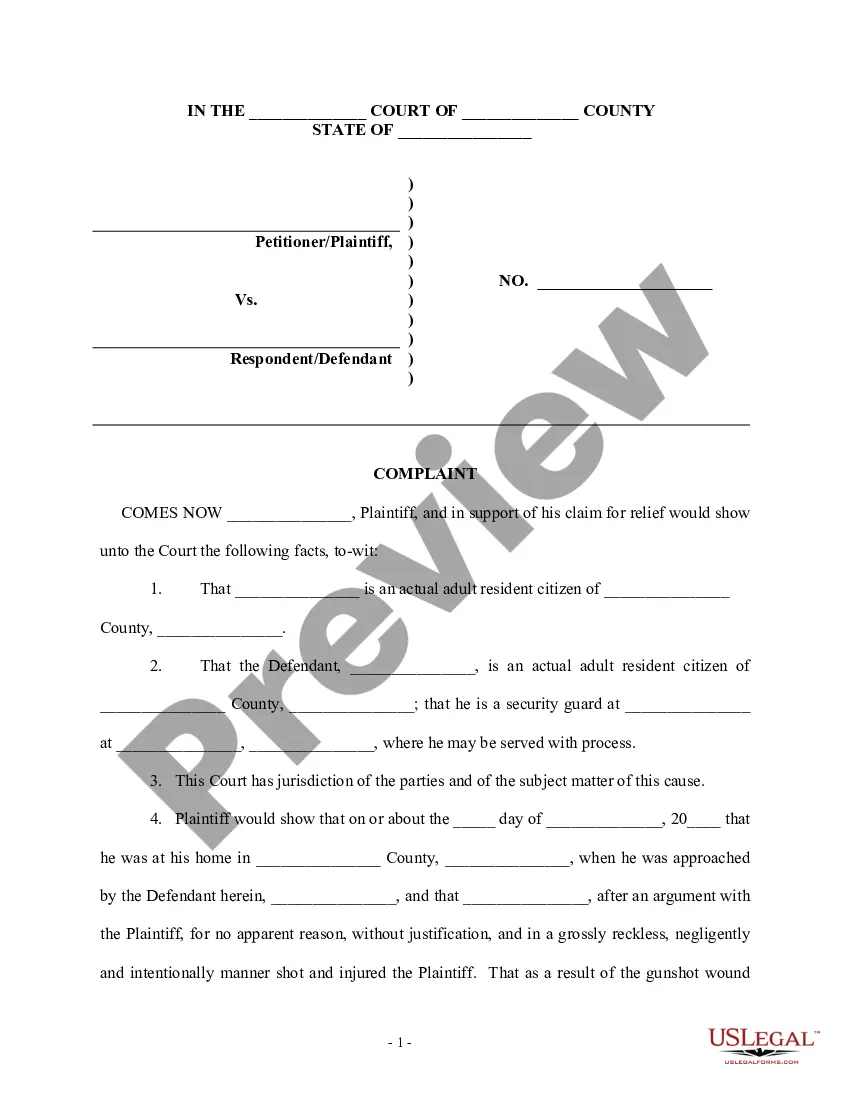
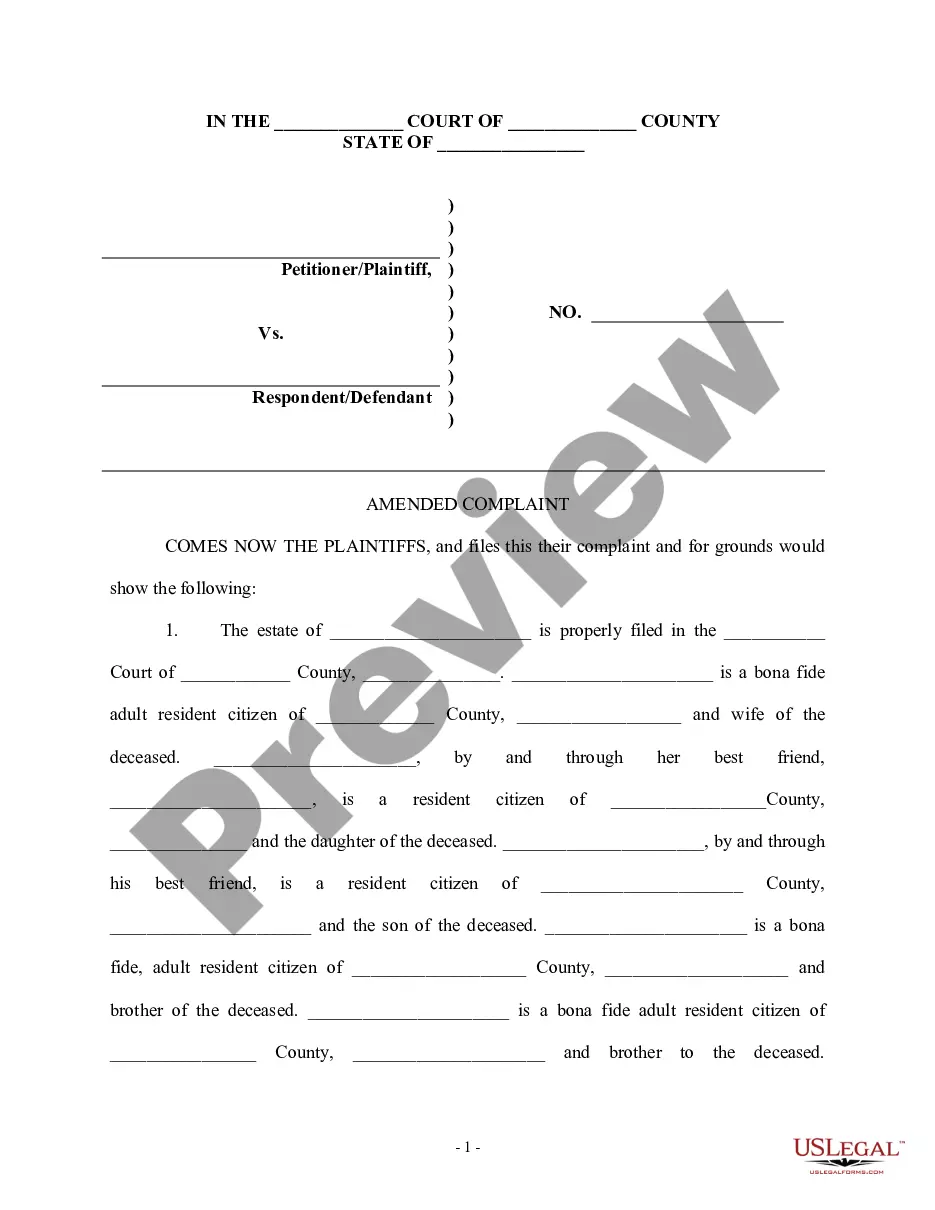
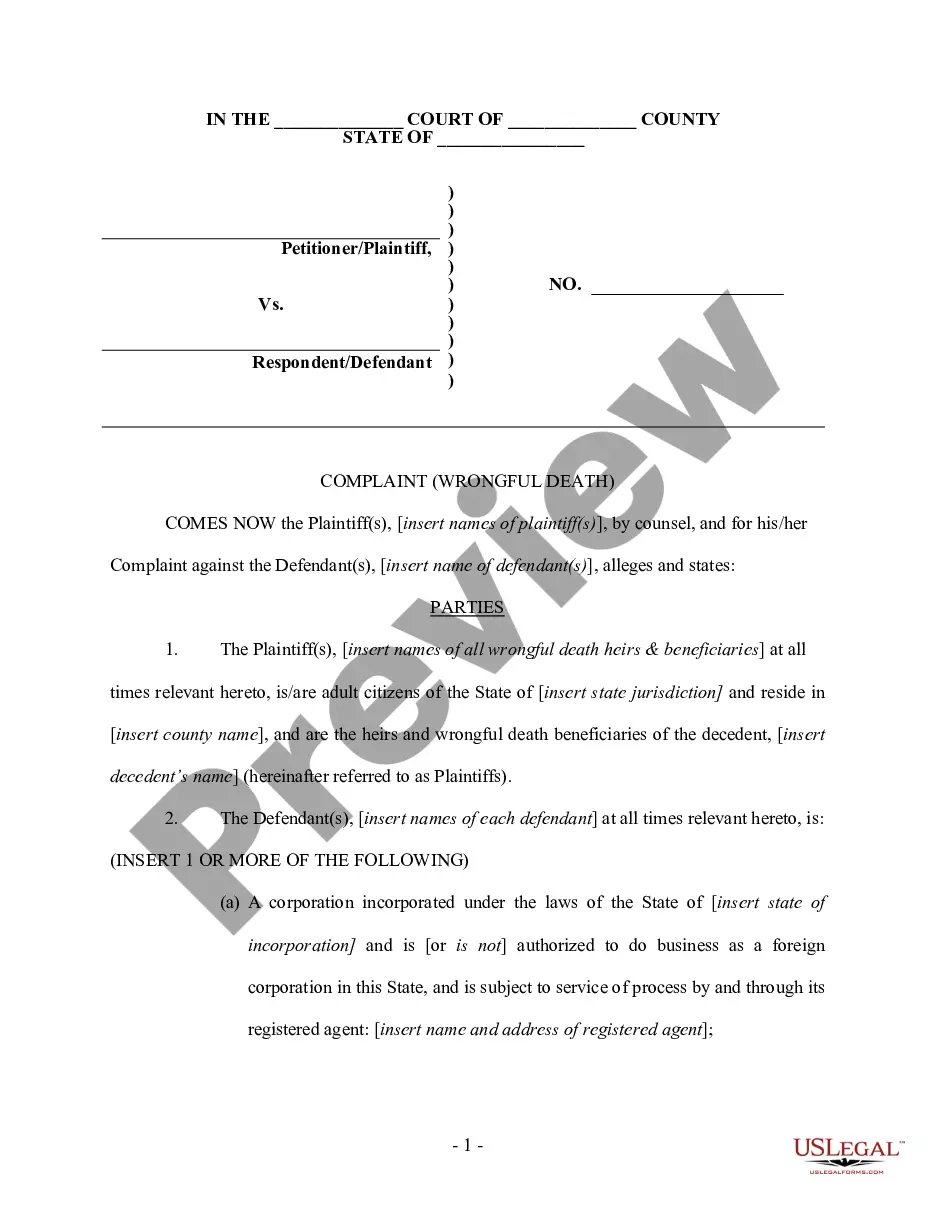
Get your form ready online
Our built-in tools help you complete, sign, share, and store your documents in one place.
Make edits, fill in missing information, and update formatting in US Legal Forms—just like you would in MS Word.
Download a copy, print it, send it by email, or mail it via USPS—whatever works best for your next step.
Sign and collect signatures with our SignNow integration. Send to multiple recipients, set reminders, and more. Go Premium to unlock E-Sign.
If this form requires notarization, complete it online through a secure video call—no need to meet a notary in person or wait for an appointment.
We protect your documents and personal data by following strict security and privacy standards.

Make edits, fill in missing information, and update formatting in US Legal Forms—just like you would in MS Word.

Download a copy, print it, send it by email, or mail it via USPS—whatever works best for your next step.

Sign and collect signatures with our SignNow integration. Send to multiple recipients, set reminders, and more. Go Premium to unlock E-Sign.

If this form requires notarization, complete it online through a secure video call—no need to meet a notary in person or wait for an appointment.

We protect your documents and personal data by following strict security and privacy standards.
Looking for another form?
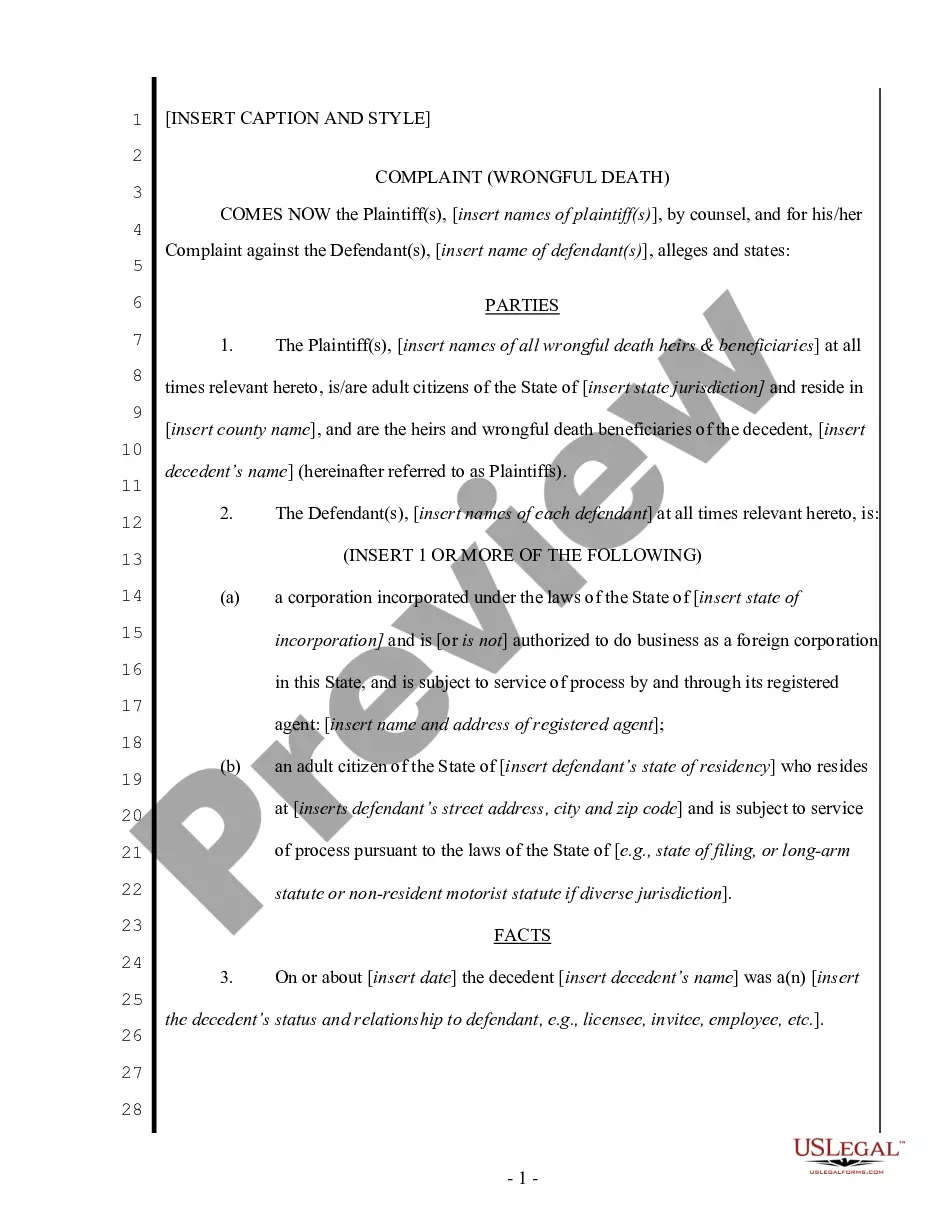
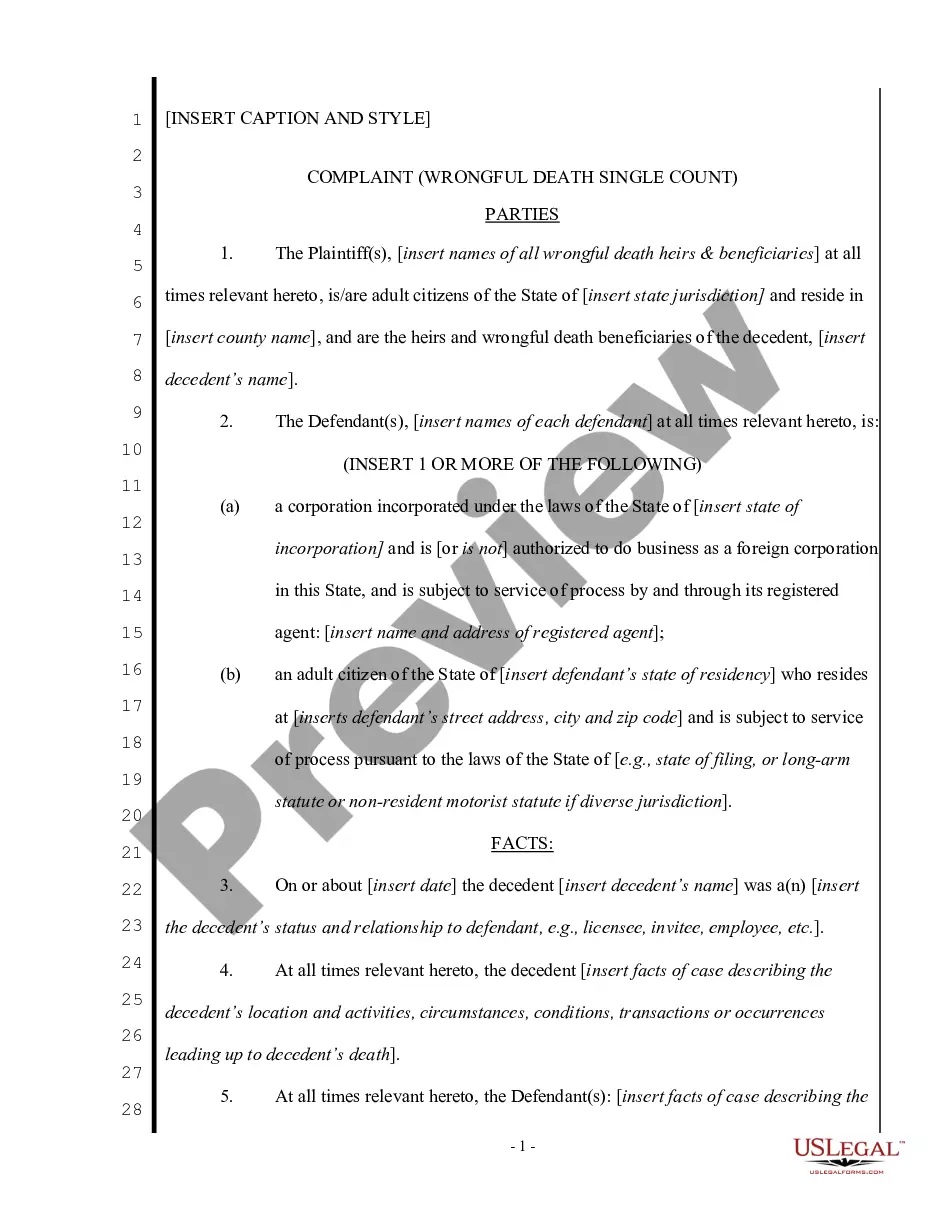




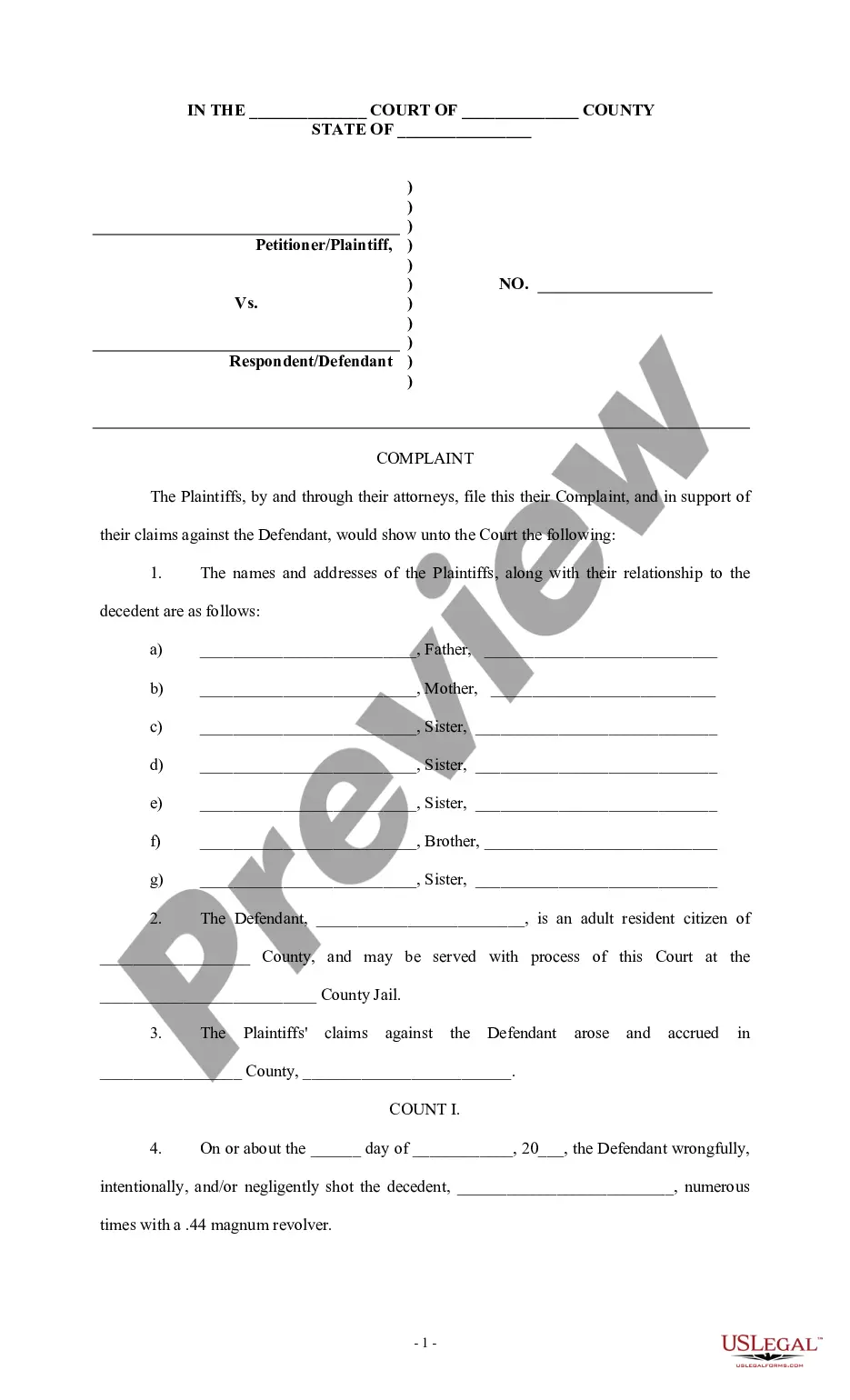
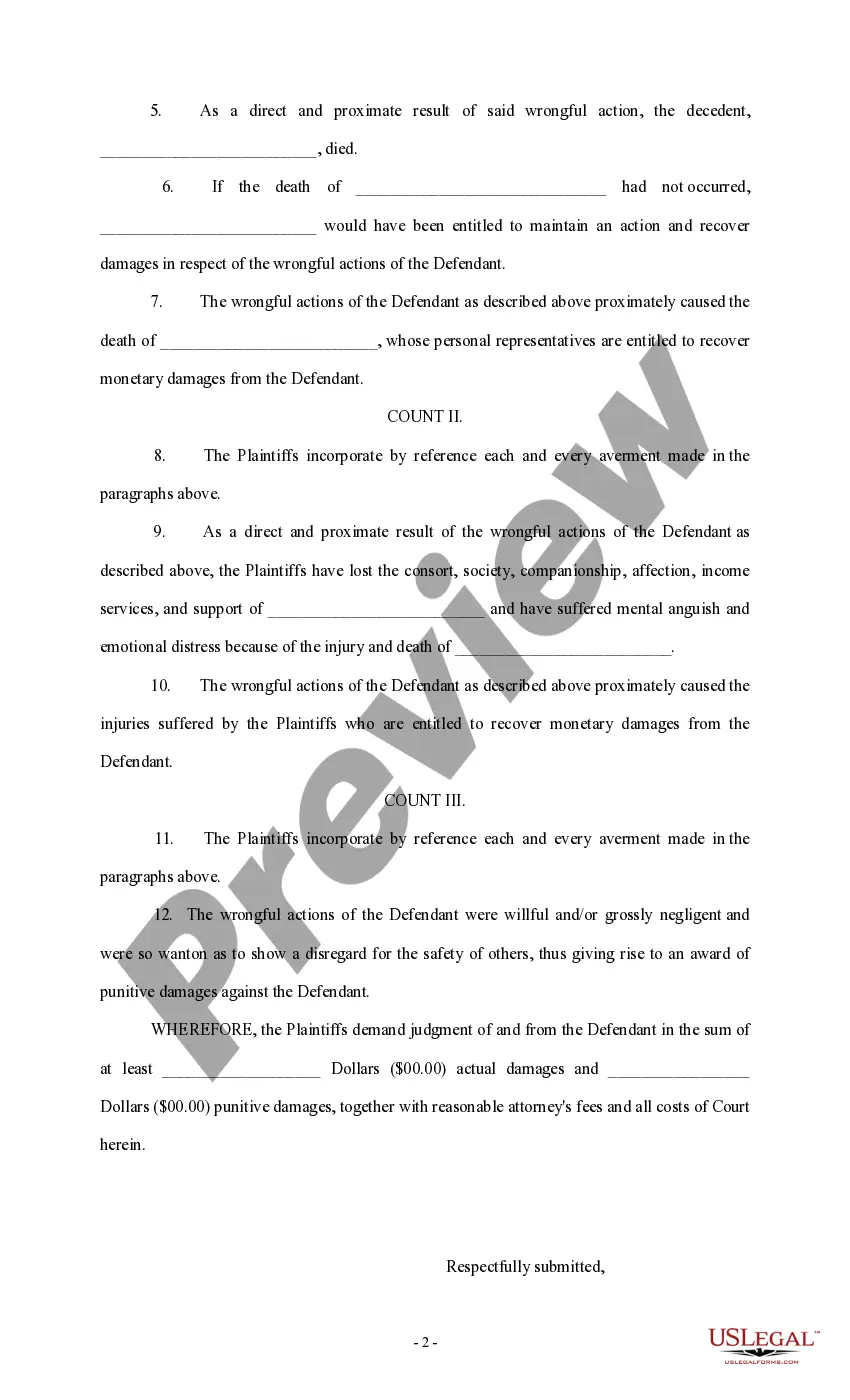
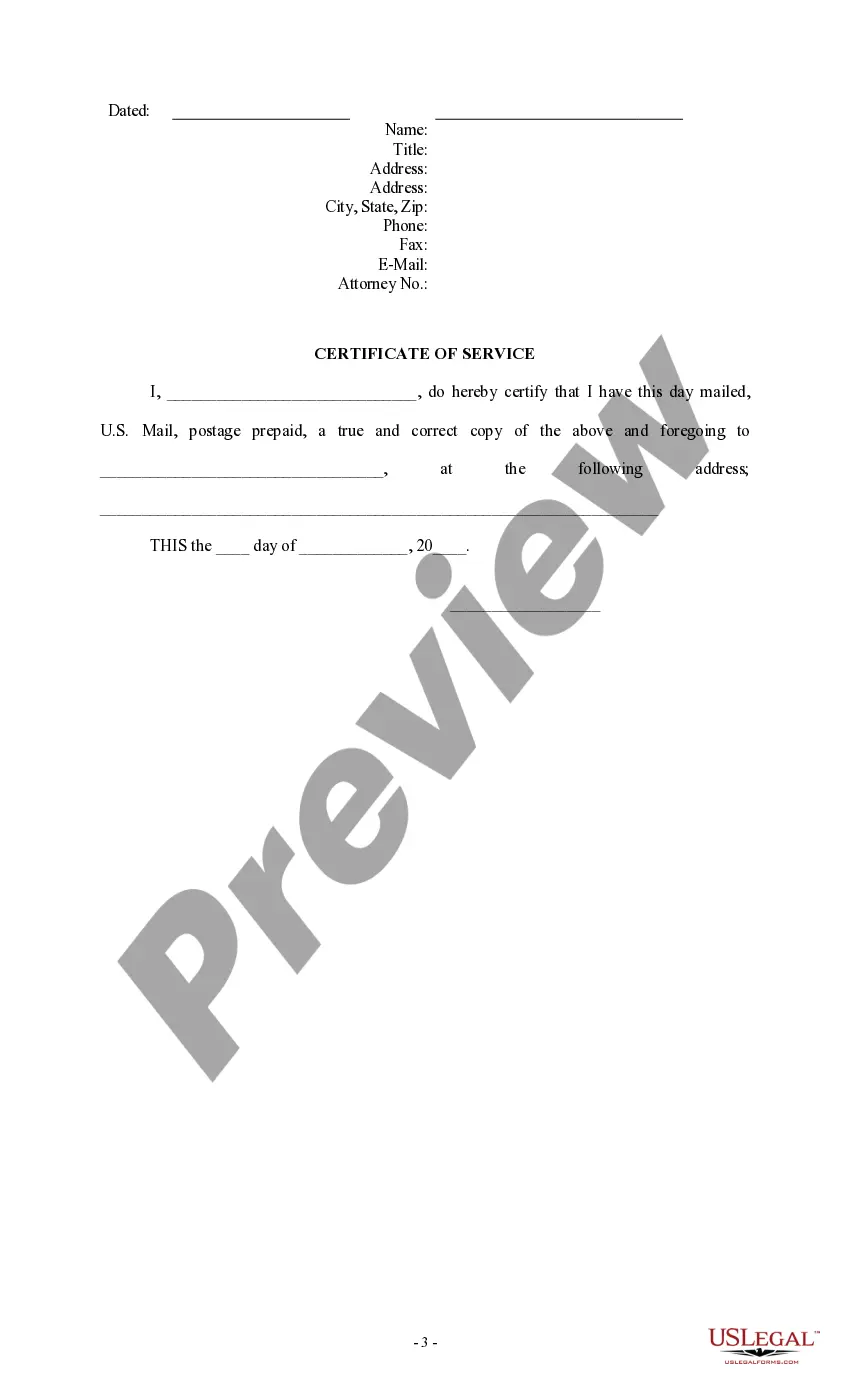
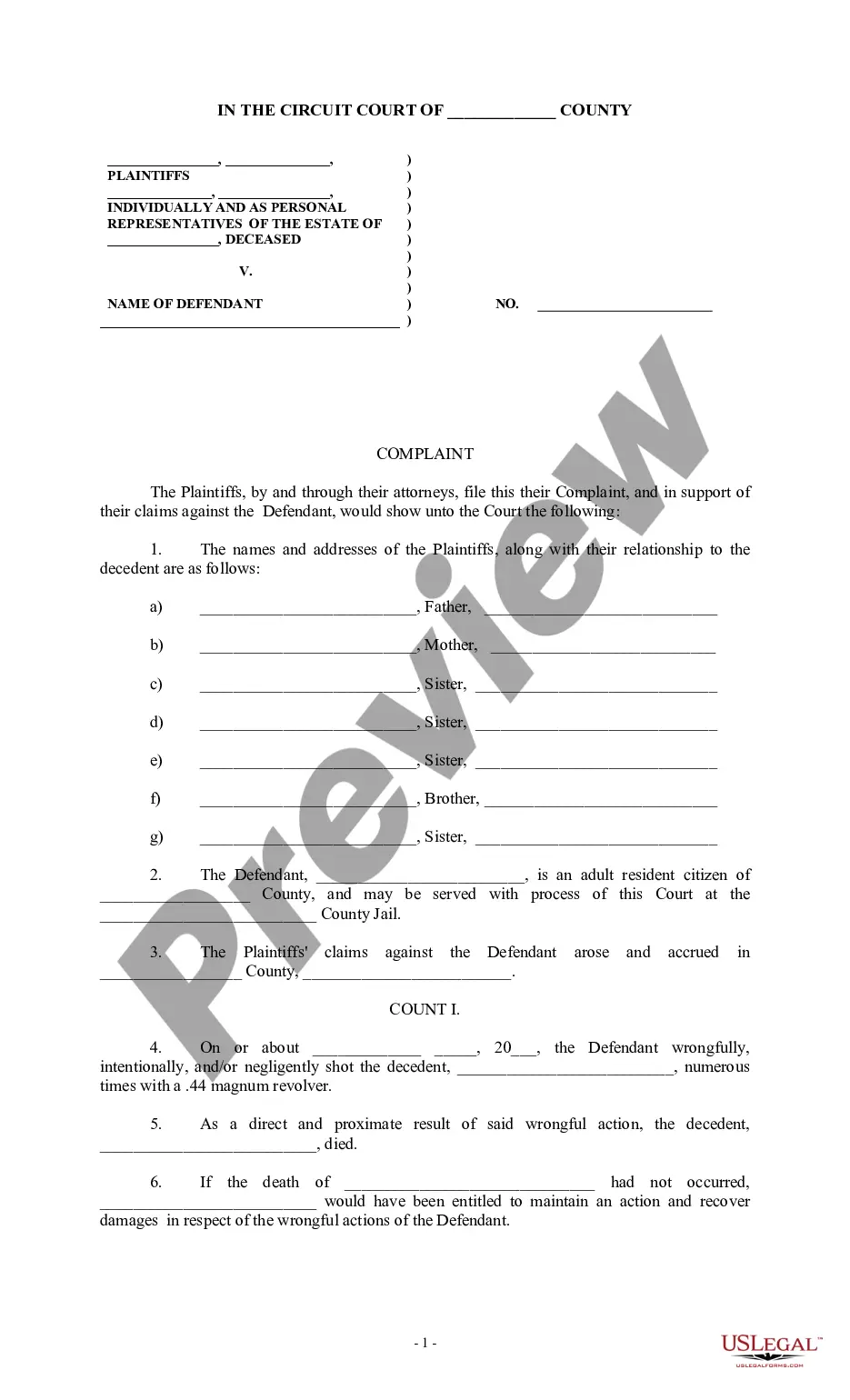
How to fill out Complaint For Personal Injury And Wrongful Death Due To Shooting / Violence?
- If you're an existing user, log in to your account and select the required wrongful death form. Ensure your subscription is still active; if not, please renew it according to your payment plan.
- For first-time users, start by checking the Preview mode and descriptions of the wrongful death templates. Confirm that you select the one that aligns with your needs and local jurisdiction rules.
- Utilize the Search function if necessary. If you find any discrepancies, search for alternate templates to ensure proper fit before proceeding.
- Purchase the desired document. Click 'Buy Now' and select your preferred subscription plan, creating an account to unlock the full library of forms.
- Complete your purchase by providing your payment details via credit card or PayPal.
- Download your form for immediate access and save it on your device, ensuring you can always retrieve it from the My Forms section.
By utilizing US Legal Forms, individuals and attorneys can streamline the tedious process of executing legal documents, particularly in matters as sensitive as wrongful death.
Take control of your legal needs today and discover how US Legal Forms can simplify your documentation process.
Form popularity
FAQ
Defending against a wrongful death lawsuit involves proving that you were not responsible for the alleged negligence or harm. Collecting robust evidence, such as eyewitness accounts, expert testimony, and documented records, can bolster your defense. It is equally important to seek professional legal assistance to strategize effectively. Using tools like US Legal Forms can help you prepare a solid defense and ensure all necessary legal documents are in order.
Wrongful death cases are often won, but success heavily depends on the specifics of each case. Cases that have compelling evidence and a clear link between the death and another party's actions tend to yield better results. Statistics show that a significant percentage of wrongful death lawsuits reach a settlement before going to trial, which can be a favorable resolution. Engaging with a seasoned attorney and leveraging resources like US Legal Forms can enhance your chances of a successful claim.
The odds of winning a wrongful death lawsuit depend on various factors, such as the strength of your evidence and the circumstances surrounding the case. Generally, cases with clear evidence of negligence have higher success rates. Consulting with a legal expert can provide you with insights specific to your situation, increasing your chances of a favorable outcome. With the right guidance, you can feel more confident about navigating a wrongful death claim.
Winning a wrongful death suit requires gathering solid evidence that supports your claim. You will need to demonstrate that the death resulted from someone else's negligence or intentional actions. Additionally, working with an experienced attorney can significantly improve your chances, as they understand the legal landscape around wrongful death cases. Utilizing resources like US Legal Forms can help you prepare the necessary documentation and navigate the legal process effectively.
Wrongful death is a civil claim typically filed by family members for losses due to someone's negligence, while manslaughter involves criminal charges against an individual for causing someone else's death, often without premeditation. In essence, wrongful death seeks compensation, while manslaughter aims to punish the wrongdoer. Understanding these distinctions is key for families looking to address their loved ones' untimely deaths, and platforms like uslegalforms can assist in shaping necessary legal documents.
Negligence refers to the failure to exercise reasonable care, leading to harm or injury, whereas wrongful death is a legal claim that arises when negligence results in a person's death. Essentially, negligence is the root cause, and wrongful death is the resulting legal outcome. Families dealing with the repercussions of wrongful death should consider seeking legal guidance to navigate their options effectively.
Someone dies due to negligence when an individual's failure to act responsibly leads to fatal consequences. For example, if a property owner neglects to fix a broken railing and a visitor falls and dies, the owner's negligence could result in a wrongful death claim. Understanding the circumstances surrounding wrongful death is crucial for families seeking accountability and closure after such tragic events.
An example of wrongful death occurs when a person dies due to someone else's negligence or intentional act. For instance, if a driver runs a red light and collides with another vehicle, resulting in a fatality, the deceased's family may file a wrongful death lawsuit against the driver. This legal action can help families seek justice and compensation for their loss, highlighting the serious implications of reckless behavior.
Wrongful life refers to a legal claim brought by a child who argues that they should not have been born due to negligence in prenatal care or genetic malpractice. For instance, if a doctor fails to inform parents of a genetic condition that could impact the child's quality of life, the child may claim wrongful life. This concept ties into wrongful death when considering the impact of negligence on life outcomes, emphasizing the importance of responsible medical practices.
To sue someone for wrongful death, you typically start by consulting with an attorney who specializes in this area. You will need to establish that the death was due to negligence or intentional harm. Your attorney will help you gather evidence, file the necessary paperwork, and initiate the lawsuit in the appropriate jurisdiction. Using resources from US Legal Forms can simplify the legal process and increase your chances of success.