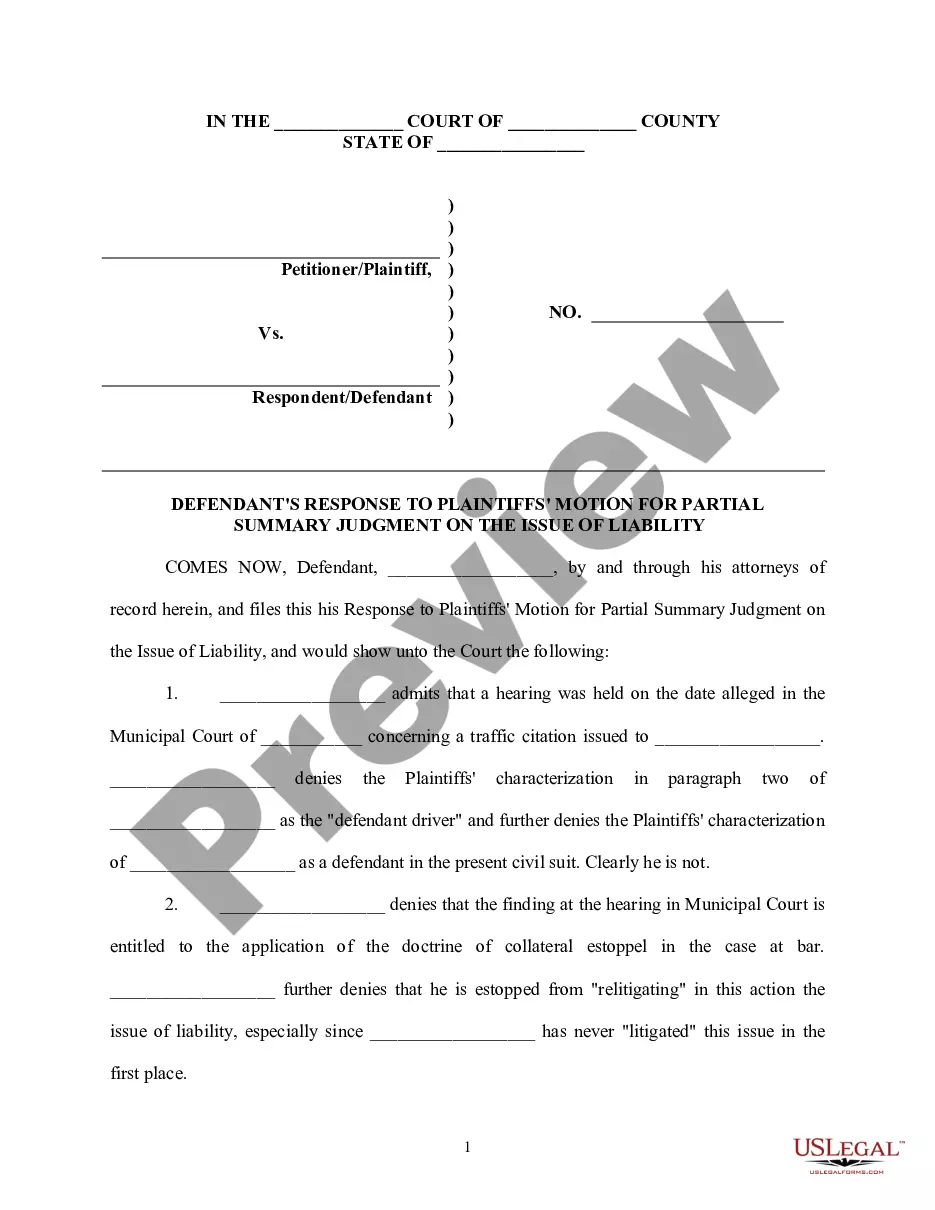
Summary Judgment For Damages
Description
Get your form ready online
Our built-in tools help you complete, sign, share, and store your documents in one place.
Make edits, fill in missing information, and update formatting in US Legal Forms—just like you would in MS Word.
Download a copy, print it, send it by email, or mail it via USPS—whatever works best for your next step.
Sign and collect signatures with our SignNow integration. Send to multiple recipients, set reminders, and more. Go Premium to unlock E-Sign.
If this form requires notarization, complete it online through a secure video call—no need to meet a notary in person or wait for an appointment.
We protect your documents and personal data by following strict security and privacy standards.

Make edits, fill in missing information, and update formatting in US Legal Forms—just like you would in MS Word.

Download a copy, print it, send it by email, or mail it via USPS—whatever works best for your next step.

Sign and collect signatures with our SignNow integration. Send to multiple recipients, set reminders, and more. Go Premium to unlock E-Sign.

If this form requires notarization, complete it online through a secure video call—no need to meet a notary in person or wait for an appointment.

We protect your documents and personal data by following strict security and privacy standards.
Looking for another form?


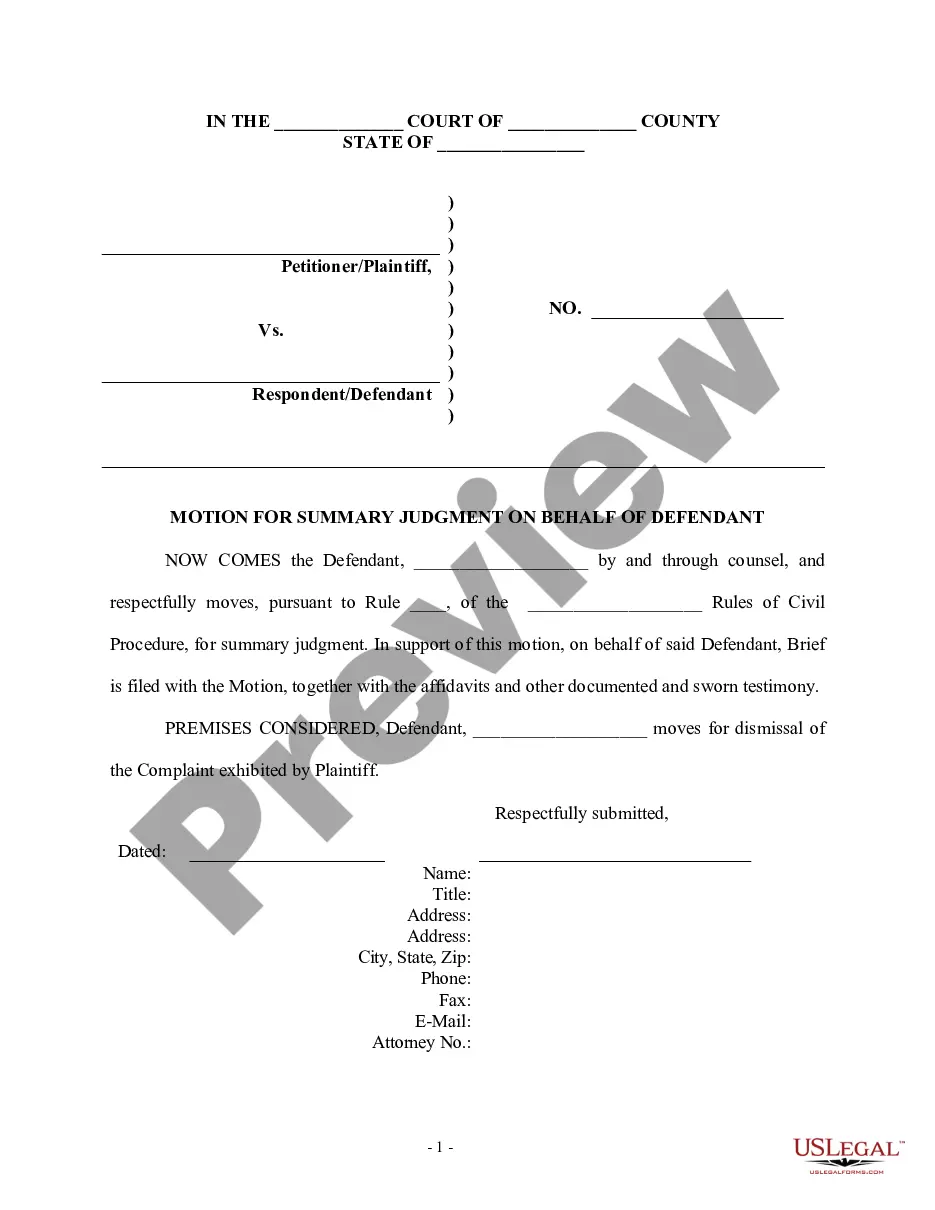
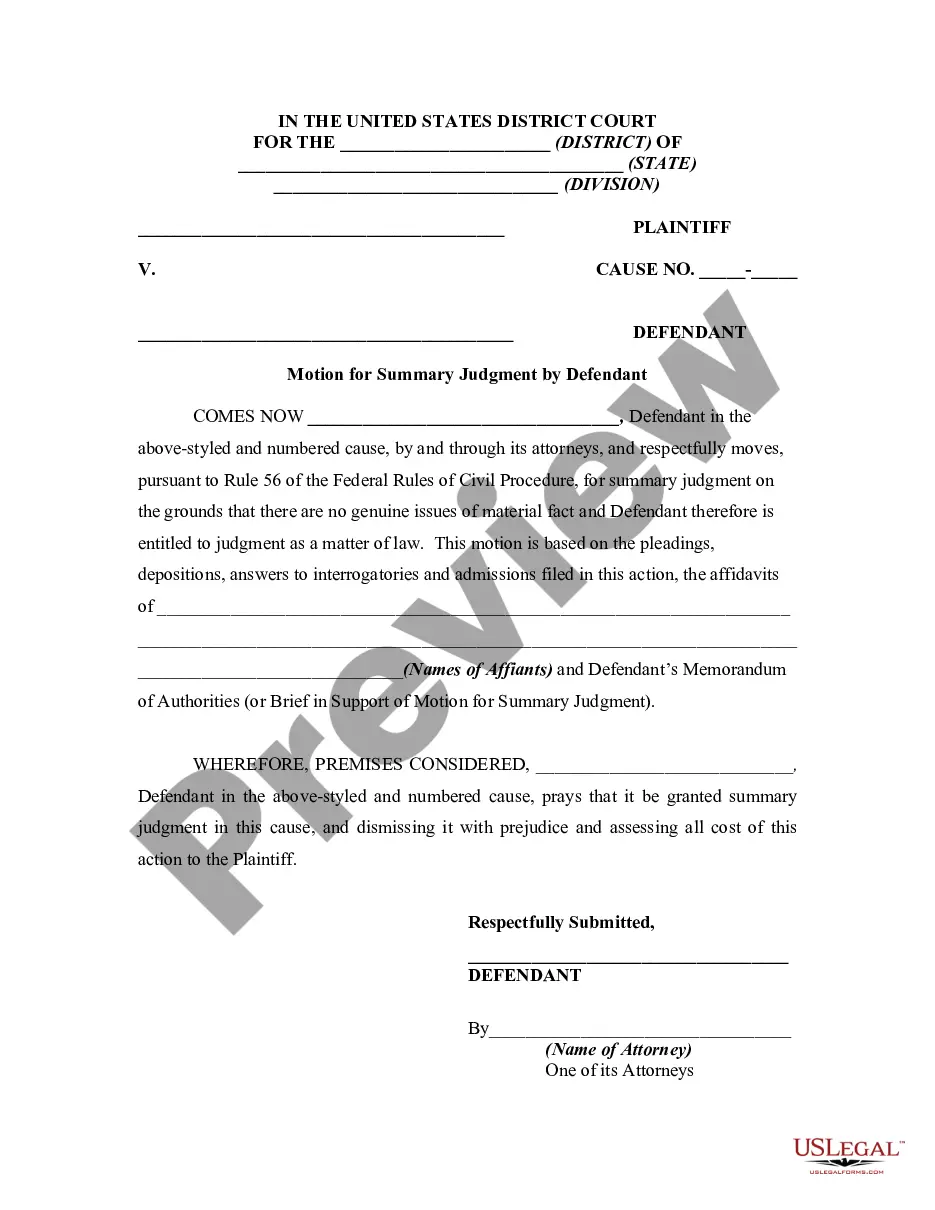
How to fill out Motion For Summary Judgment On Behalf Of Defendant?
- If you're a returning user, simply log in to your account and download the required form by clicking the Download button. Ensure that your subscription remains valid; renew if necessary based on your payment plan.
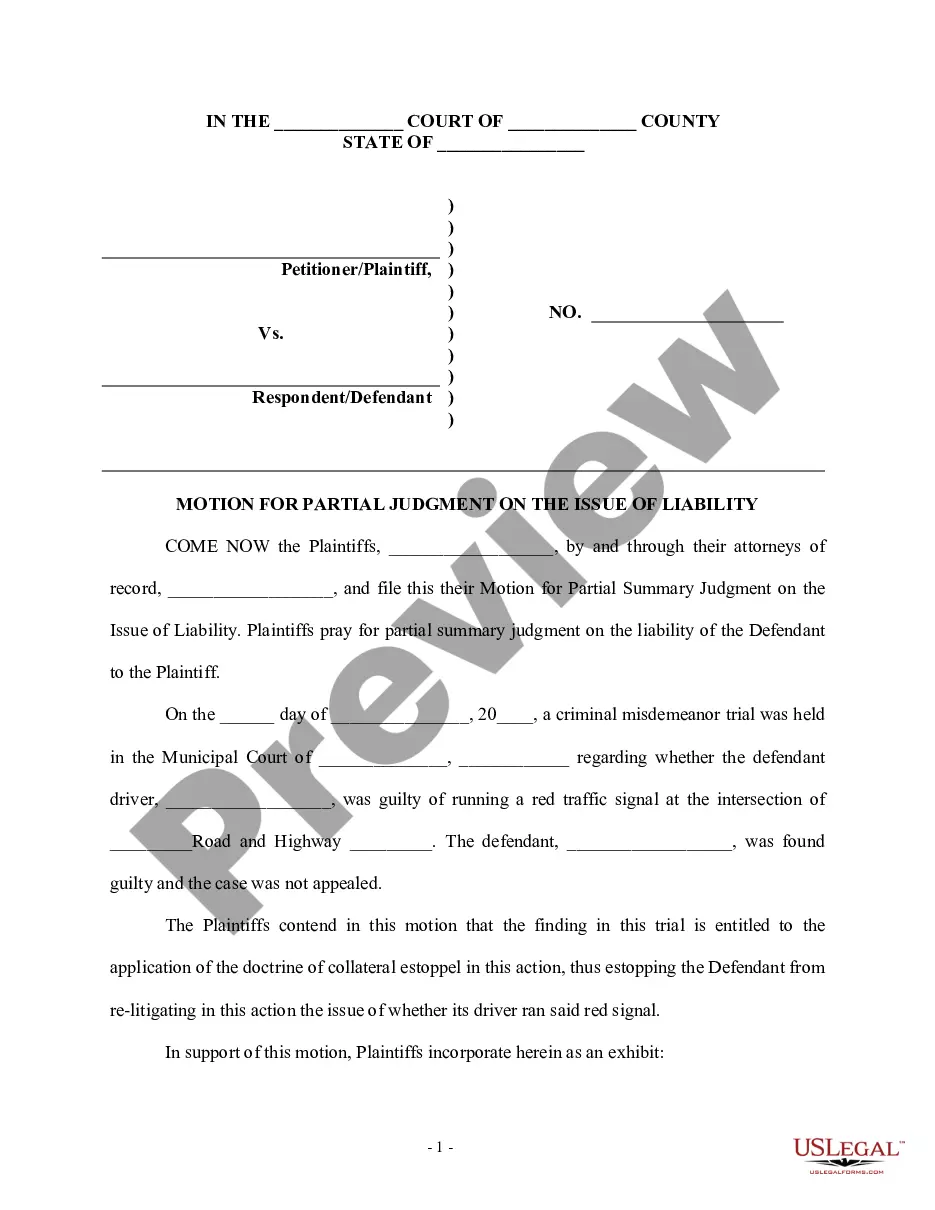
- For first-time users, begin by checking the Preview mode and form description to find the correct document that fulfills your local jurisdiction's requirements.
- If the form doesn't meet your needs, utilize the Search tab to find an alternative that is more appropriate.
- Once you find the right document, click the Buy Now button and select your desired subscription plan. You'll need to create an account to access the full library.
- Complete your purchase by entering your credit card information or using your PayPal account.
- After your payment is successful, download the form to your device, making it accessible anytime via the My Forms section of your profile.
Utilizing US Legal Forms not only simplifies the process of obtaining legal documents but also assures quality and accuracy through its robust collection and expert assistance.
Ready to streamline your legal processes? Visit US Legal Forms today to get started!
Form popularity
FAQ
Typically, the party with a stronger case files for summary judgment. This might be a plaintiff seeking damages or a defendant looking to dismiss claims against them. The intention is to clarify the issues at stake and reduce unnecessary trials. By leveraging the resources of platforms like US Legal Forms, you can streamline this process and increase your chances of success.
Filing for summary judgment for damages involves submitting a written motion to the court along with supporting documents. Begin by preparing your motion to outline the grounds for the request. Ensure you include all necessary evidence and legal citations. Lastly, file your motion with the court and serve a copy to the opposing party, adhering to local court rules for submission.
Summary judgment for damages can be filed by any party involved in a legal dispute, including plaintiffs and defendants. Typically, the party that believes there are no significant facts in dispute can seek this remedy. It’s a strategic move to expedite the process, saving time and resources. Understanding when to file is crucial, and consulting with legal experts can clarify your options.
To write a strong motion for summary judgment for damages, begin by clearly stating the legal basis for your request. Present undisputed facts and relevant evidence that support your claim. Use a structured format to enhance clarity, including sections for background, argument, and conclusion. Finally, make sure to cite applicable laws and precedents that strengthen your position.
When seeking a summary judgment for damages, the types of evidence you can use include documents, written admissions, and other testimonies that can be verified. Your evidence should clearly show that no factual disputes exist that would require a trial. Using the right platform, like UsLegalForms, can help streamline gathering and organizing the necessary documentation.
Writing a good summary judgment for damages requires clarity and organization. Start by clearly stating the facts of the case and the specific claims you are making. Support each claim with strong, admissible evidence, ensuring that your argument is coherent and compelling enough to lead the court to grant judgment in your favor.
To survive a summary judgment for damages, you should gather strong evidence that contradicts the arguments made by the opposing party. This evidence can include witness statements or expert opinions that highlight disputes in material facts. Working with a legal professional can help strategize an effective approach to counter any claims against your position.
To make a summary judgment for damages, you need to file a motion outlining the key facts and evidence supporting your case. This includes demonstrating that no reasonable jury could rule against you based on the evidence presented. Once submitted, both parties can argue their positions, and the court will decide if a trial is necessary.
In a summary judgment for damages, you can use a variety of evidence including affidavits, depositions, and official documents like contracts or reports. This evidence must be admissible in court and show that there are no genuine disputes of material fact regarding the case. Remember, the goal is to provide clear evidence that supports your claim without needing a trial.
To request a summary judgment for damages, you must file a motion with the court. This motion should outline the specific facts that support your case and demonstrate that no material facts are in contention. Accompanying documents should provide evidence, such as affidavits or discovery materials, to bolster your request. For clear guidance on creating this motion, US Legal Forms provides excellent resources and templates to help streamline the process.