Summary Judgment Dismissal With Prejudice
Description
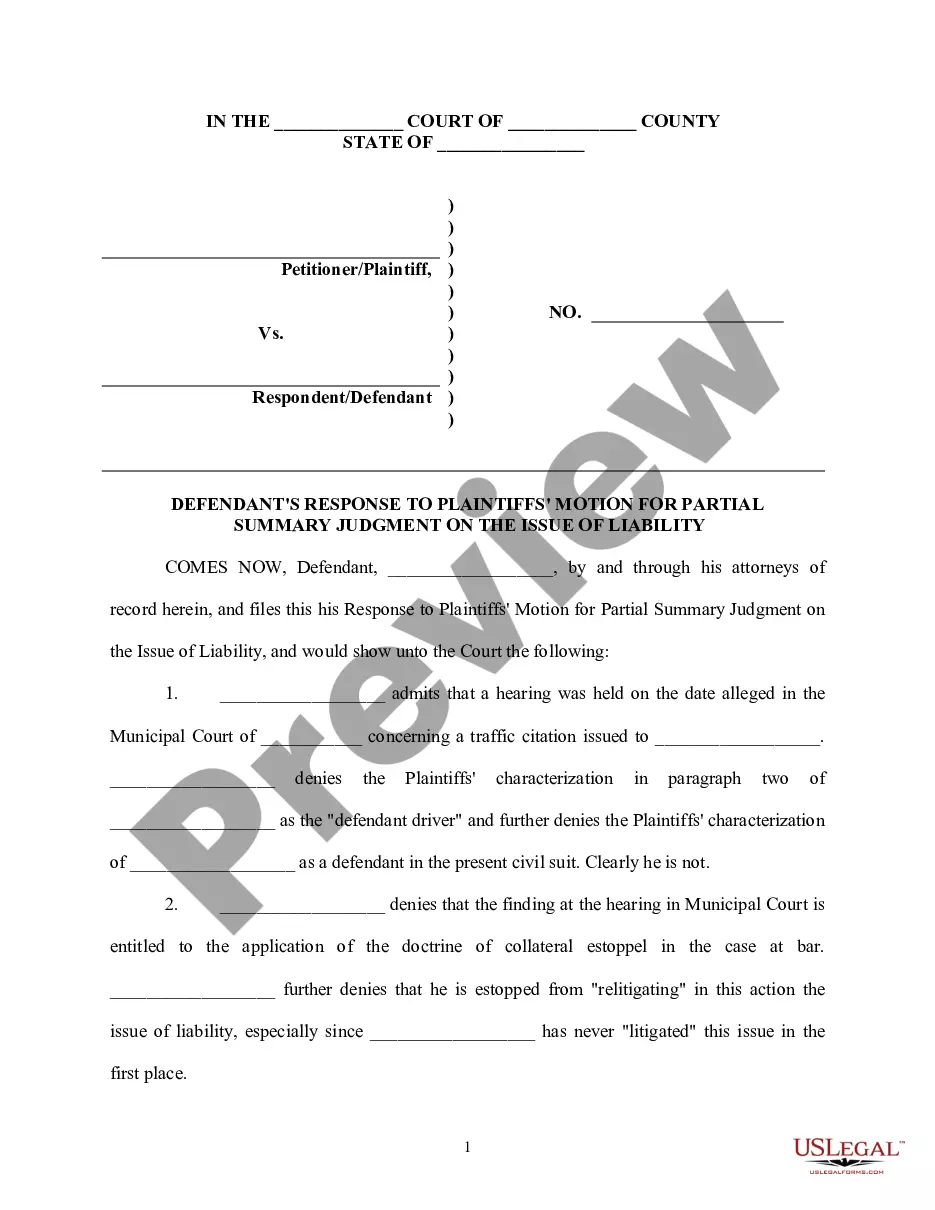
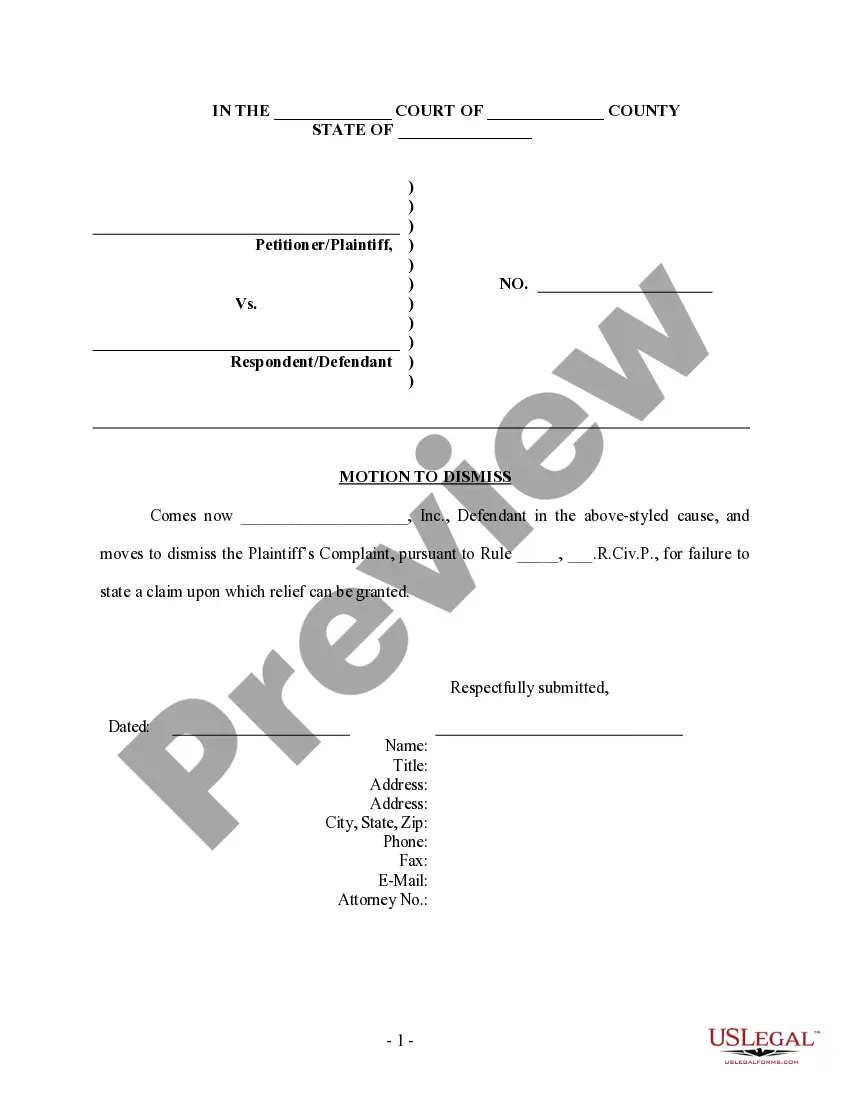
Get your form ready online
Our built-in tools help you complete, sign, share, and store your documents in one place.
Make edits, fill in missing information, and update formatting in US Legal Forms—just like you would in MS Word.
Download a copy, print it, send it by email, or mail it via USPS—whatever works best for your next step.
Sign and collect signatures with our SignNow integration. Send to multiple recipients, set reminders, and more. Go Premium to unlock E-Sign.
If this form requires notarization, complete it online through a secure video call—no need to meet a notary in person or wait for an appointment.
We protect your documents and personal data by following strict security and privacy standards.

Make edits, fill in missing information, and update formatting in US Legal Forms—just like you would in MS Word.

Download a copy, print it, send it by email, or mail it via USPS—whatever works best for your next step.

Sign and collect signatures with our SignNow integration. Send to multiple recipients, set reminders, and more. Go Premium to unlock E-Sign.

If this form requires notarization, complete it online through a secure video call—no need to meet a notary in person or wait for an appointment.

We protect your documents and personal data by following strict security and privacy standards.
Looking for another form?



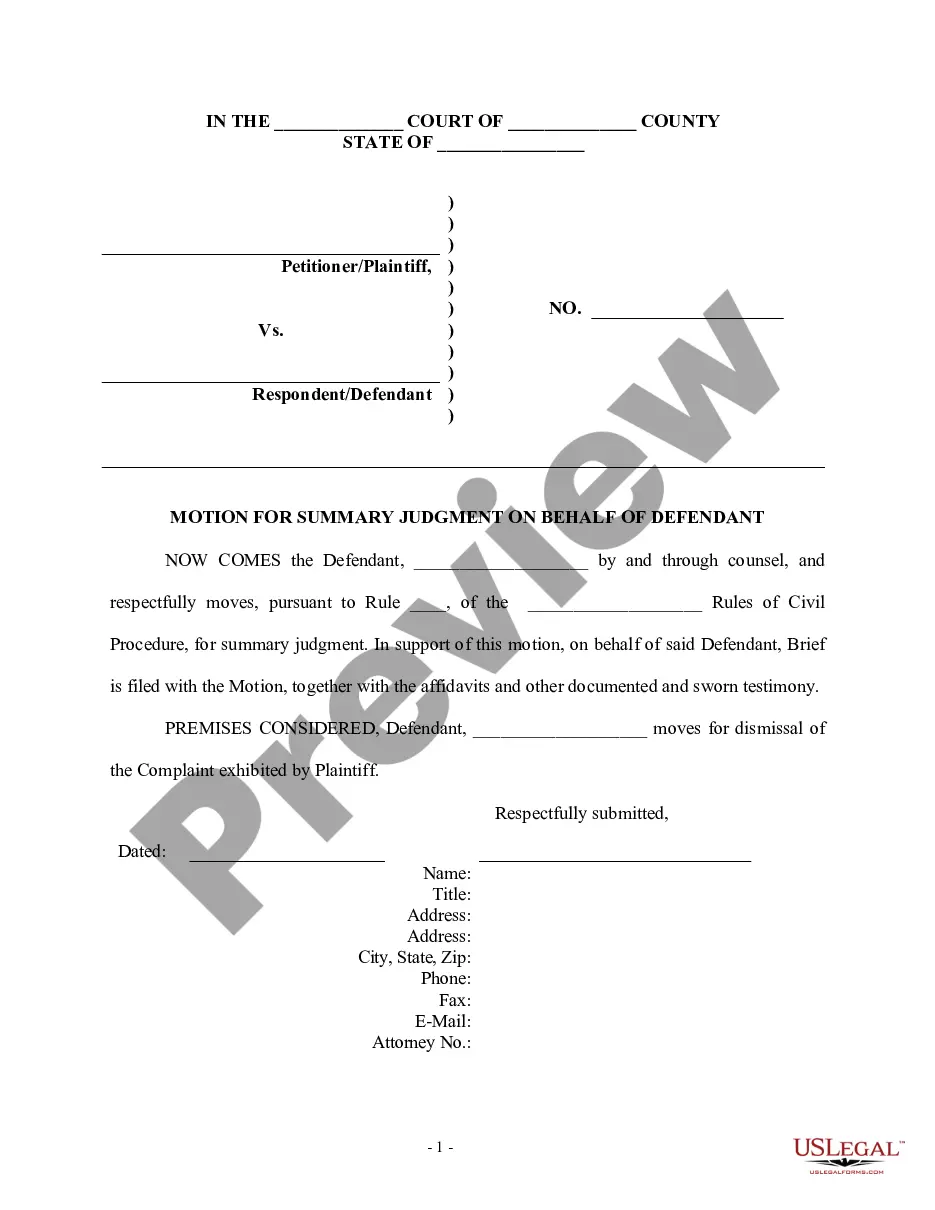
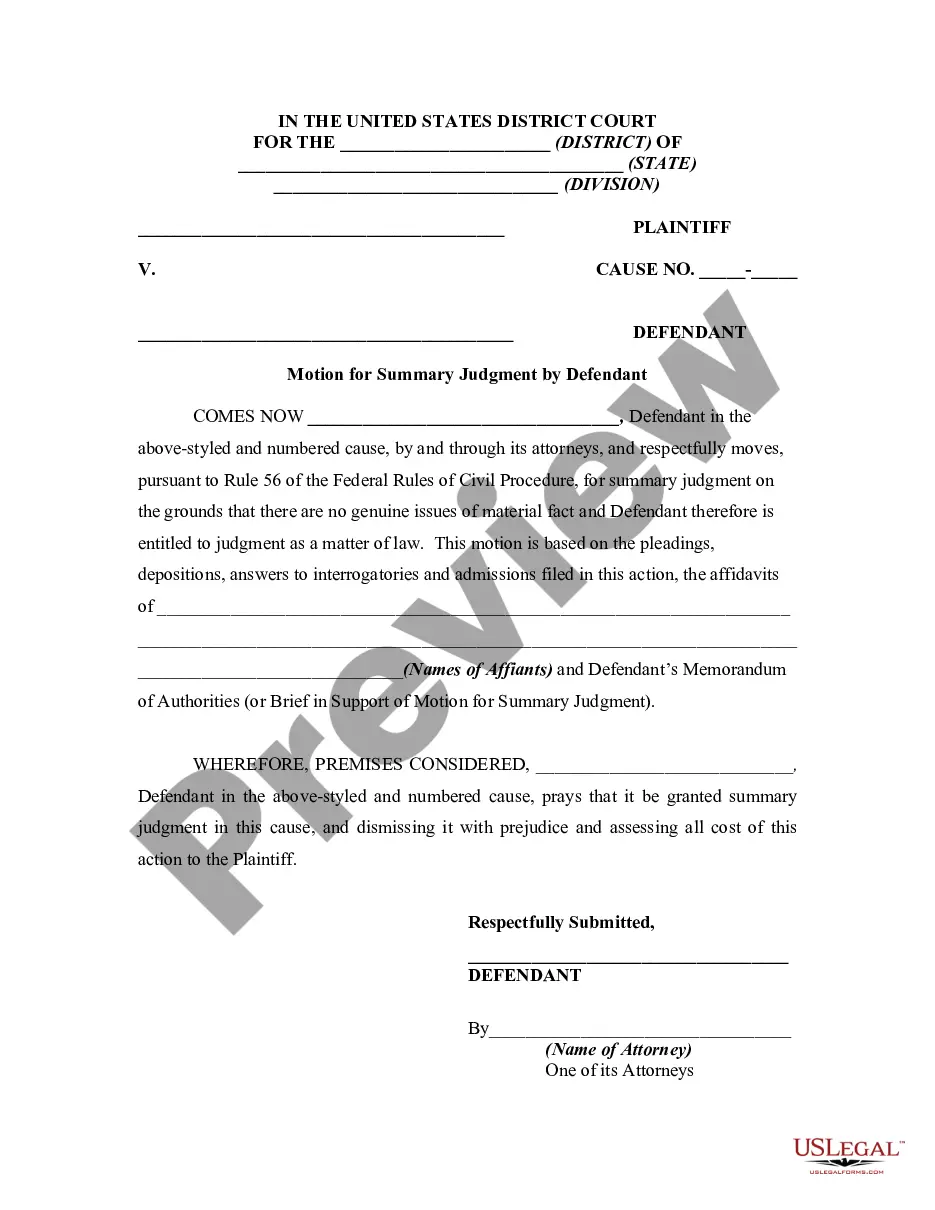
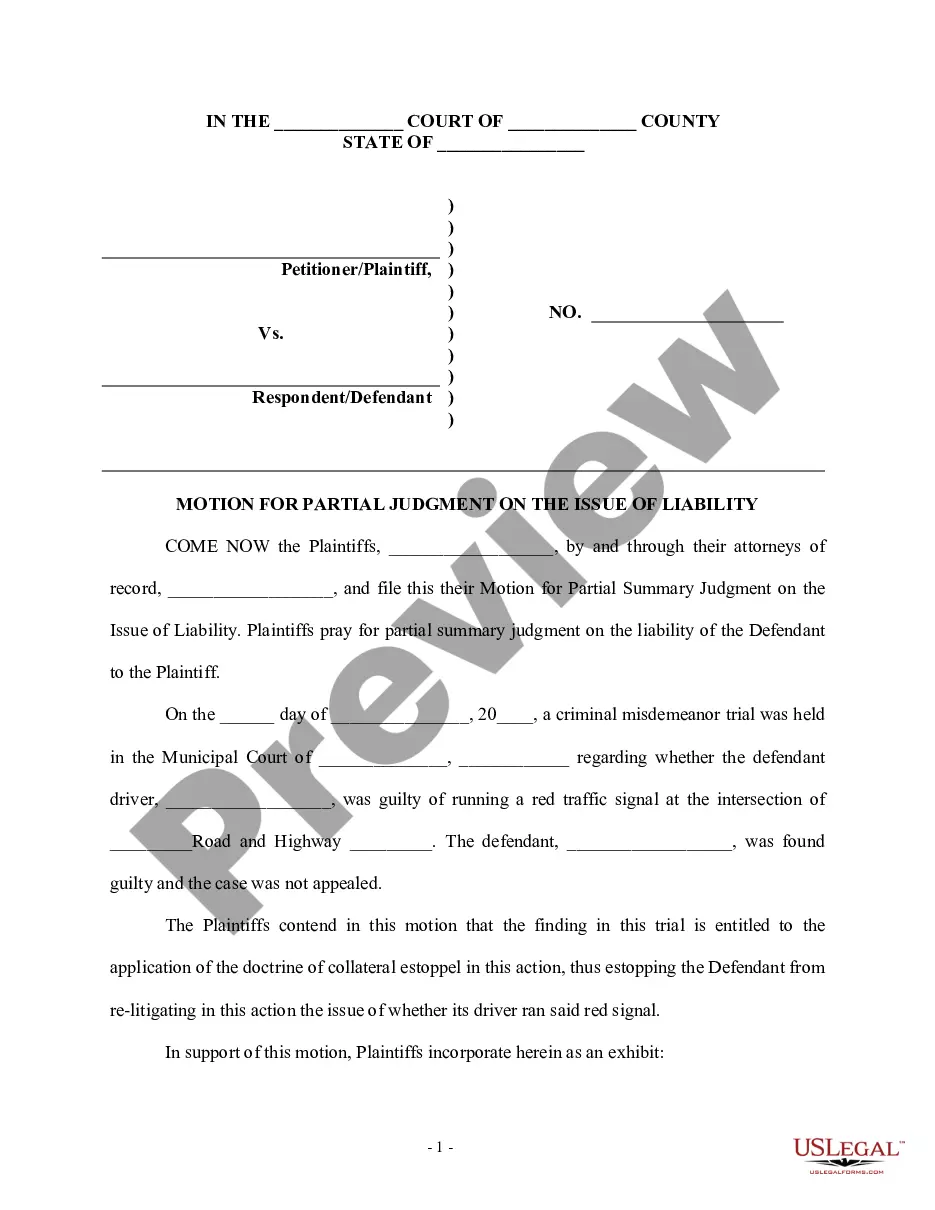
How to fill out Motion For Summary Judgment On Behalf Of Defendant?
- Log in to your existing US Legal Forms account. Ensure your subscription is active to access the documents you need.
- Preview the form associated with summary judgment dismissal with prejudice. Check the description to confirm it aligns with your jurisdiction's requirements.
- If necessary, utilize the Search feature to find alternative templates that better fit your needs.
- Select the document by clicking the 'Buy Now' button. Make sure to review the subscription options available.
- Complete your purchase by entering your payment information, either through credit card or PayPal.
- Download your selected form and save it on your device. Access it anytime via the 'My Forms' section in your profile.
By following these steps, you can efficiently gain access to vital legal forms tailored to your requirements. US Legal Forms stands out with its comprehensive collection of over 85,000 legal documents, more than many competitors at a similar cost.
Empower yourself with the tools available through US Legal Forms and ensure your legal documents are precise and lawful. Start today by visiting US Legal Forms and exploring their vast library of forms!
Form popularity
FAQ
Yes, summary judgment is generally regarded as a final decision when the judge rules on a case. It signifies that the court has fully evaluated the evidence and determined there are no genuine disputes of material fact. This finality is especially true for dismissals with prejudice, which eliminate the possibility of the same case being litigated again. If you are navigating complex legal matters, seeking assistance from platforms like US Legal Forms can provide valuable resources.
After a summary judgment is granted, the case typically concludes unless there are specific grounds for appeal. The winning party may then obtain a formal judgment from the court. If the judgement is a dismissal with prejudice, the losing party cannot refile the case. This resolution often provides closure and clarity, allowing both parties to move on.
A judgment dismissed with prejudice means that a case is permanently closed and cannot be filed again. This type of dismissal indicates that the court has made a final determination on the matter. As such, it protects the defendant from future litigation over the same issue. Understanding this can be crucial for parties involved in a legal conflict, especially when considering strategies for moving forward.
Indeed, a summary judgment can dismiss a case, particularly if there are no facts that need further examination. When a judge finds that the evidence overwhelmingly favors one party, they may rule accordingly. This decision can save both time and resources, expediting the legal process. Remember, a summary judgment dismissal with prejudice ensures the issue cannot be litigated again.
Yes, a summary judgment can lead to the dismissal of a case. When a judge grants summary judgment, it typically means there are no genuine disputes over material facts. This often results in a resolution without a full trial. Specifically, a summary judgment dismissal with prejudice prevents the plaintiff from bringing the case back to court.
The most common reason for case dismissal is the lack of sufficient evidence to support the claims. Courts often grant summary judgment dismissal with prejudice when parties fail to establish a prima facie case. Additionally, procedural missteps can lead to dismissal as well. Understanding these reasons is vital, as it can help you strengthen your case and avoid potential pitfalls in the future.
Yes, a defendant can file a motion to dismiss a case with prejudice, especially if they believe the claims lack merit or were improperly filed. This motion requires the defendant to demonstrate to the court why the claims should not only be dismissed but also why they should not be allowed to return. If you're a defendant in a similar situation, it's beneficial to work with legal counsel to formulate a strong motion for summary judgment dismissal with prejudice.
The order to dismiss with prejudice is a formal court document that indicates the conclusion of a case while prohibiting the plaintiff from re-filing the same claim. This order highlights that the court has fully examined the issues and decided on their merits. If you're dealing with such an order, it's important to understand its implications for your legal rights and consider consulting a professional to discuss your options.
Several factors could lead to a case being dismissed with prejudice, such as failing to present sufficient evidence or not complying with court rules. Courts may also dismiss cases when parties do not follow procedural requirements. If you're facing this situation, consulting an experienced attorney can clarify why a summary judgment dismissal with prejudice occurred and what it means for your future actions.
Summary judgment dismissal with prejudice refers to a court ruling that resolves a lawsuit in favor of one party, preventing the other party from bringing the same claims again. This dismissal occurs when the court finds that there is insufficient evidence to support the claims, making a trial unnecessary. Understanding this concept is essential, as it can significantly impact your legal options moving forward.