Verdict For Trial Without
Description
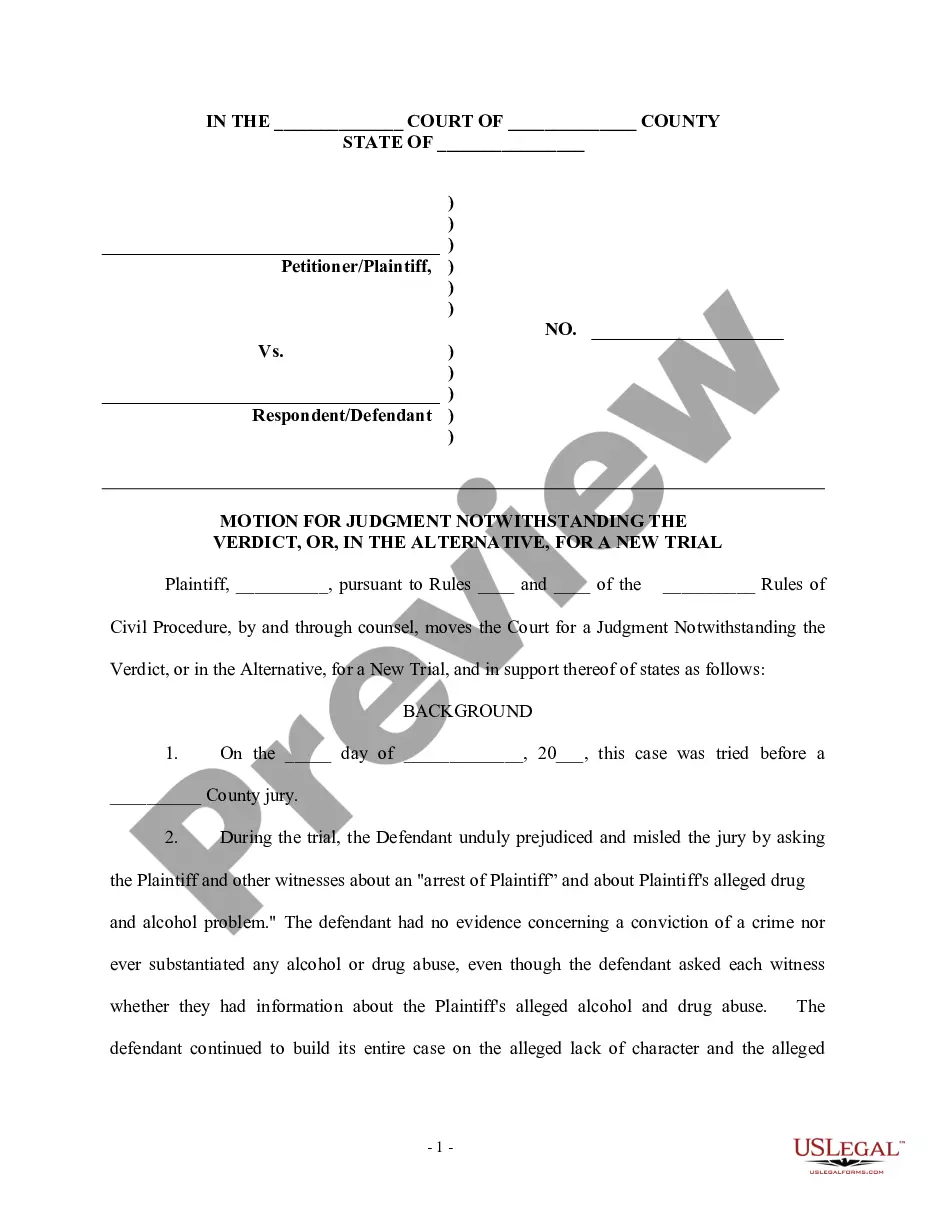
Get your form ready online
Our built-in tools help you complete, sign, share, and store your documents in one place.
Make edits, fill in missing information, and update formatting in US Legal Forms—just like you would in MS Word.
Download a copy, print it, send it by email, or mail it via USPS—whatever works best for your next step.
Sign and collect signatures with our SignNow integration. Send to multiple recipients, set reminders, and more. Go Premium to unlock E-Sign.
If this form requires notarization, complete it online through a secure video call—no need to meet a notary in person or wait for an appointment.
We protect your documents and personal data by following strict security and privacy standards.

Make edits, fill in missing information, and update formatting in US Legal Forms—just like you would in MS Word.

Download a copy, print it, send it by email, or mail it via USPS—whatever works best for your next step.

Sign and collect signatures with our SignNow integration. Send to multiple recipients, set reminders, and more. Go Premium to unlock E-Sign.

If this form requires notarization, complete it online through a secure video call—no need to meet a notary in person or wait for an appointment.

We protect your documents and personal data by following strict security and privacy standards.
Looking for another form?

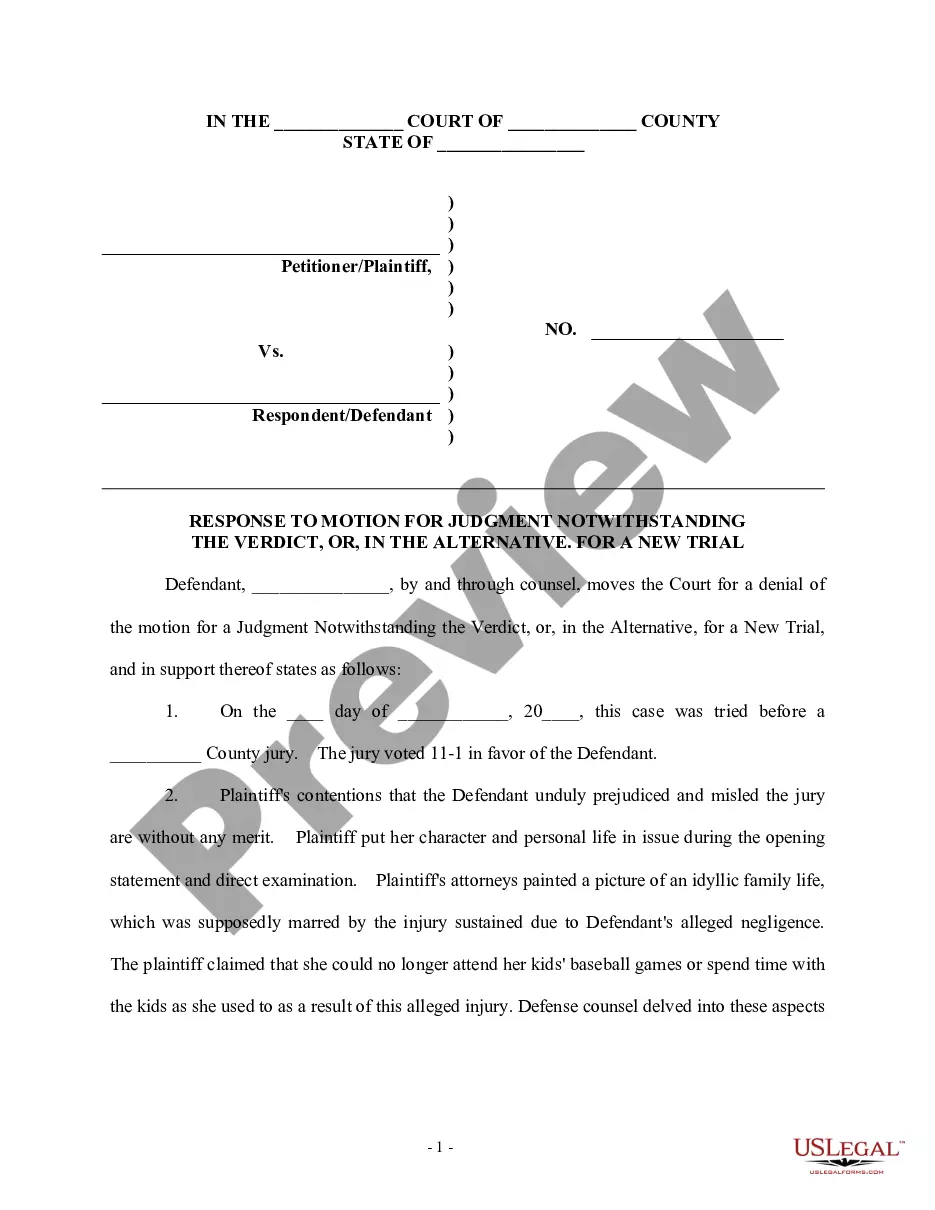
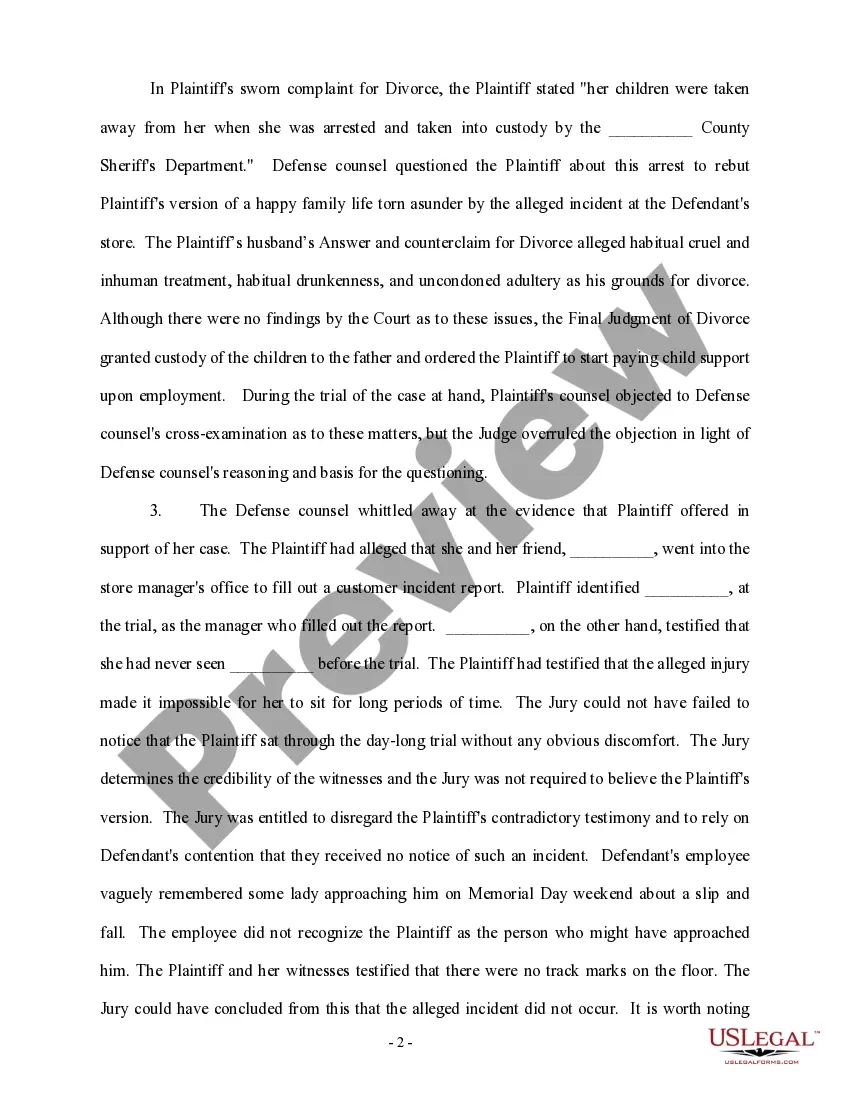
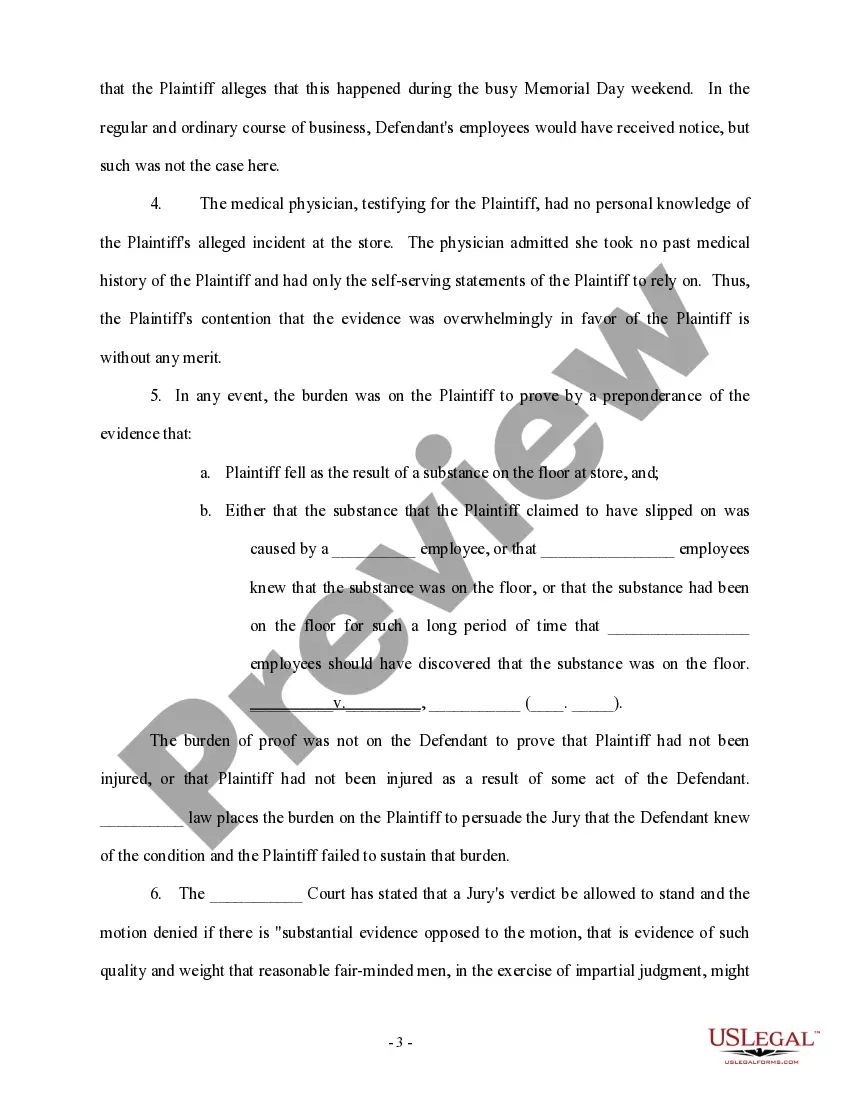
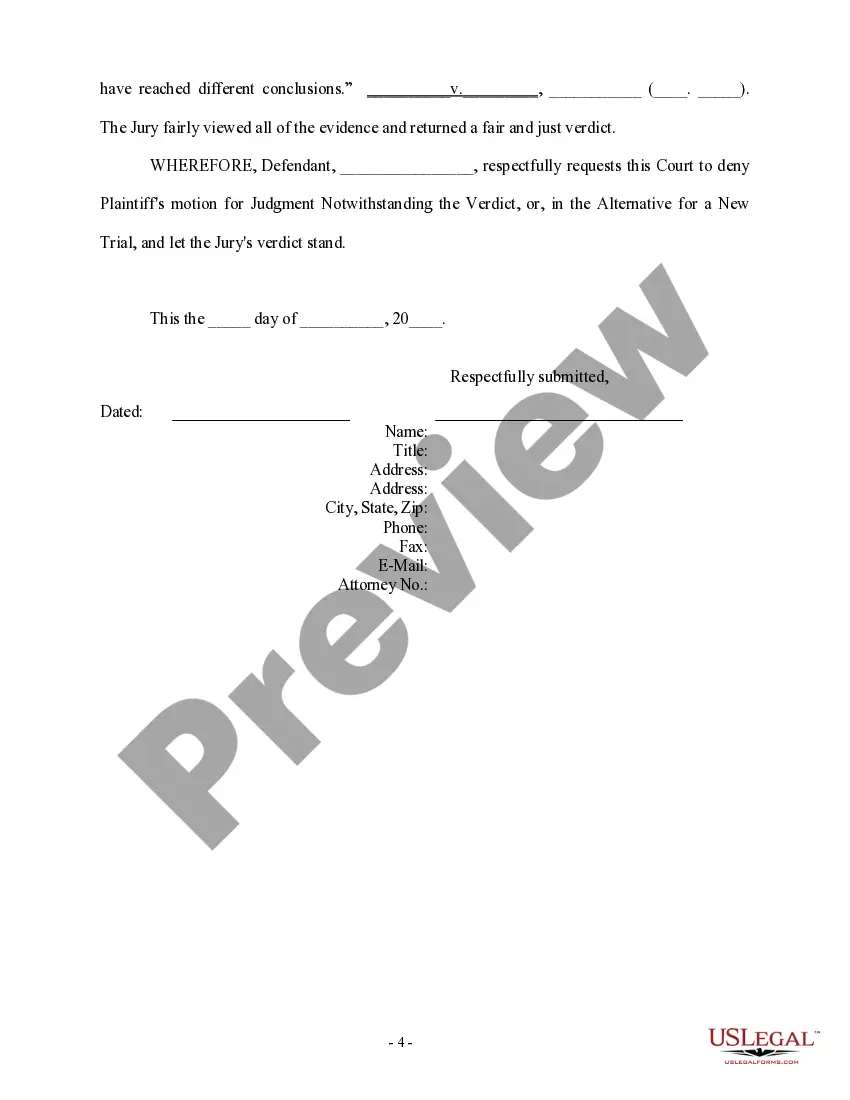
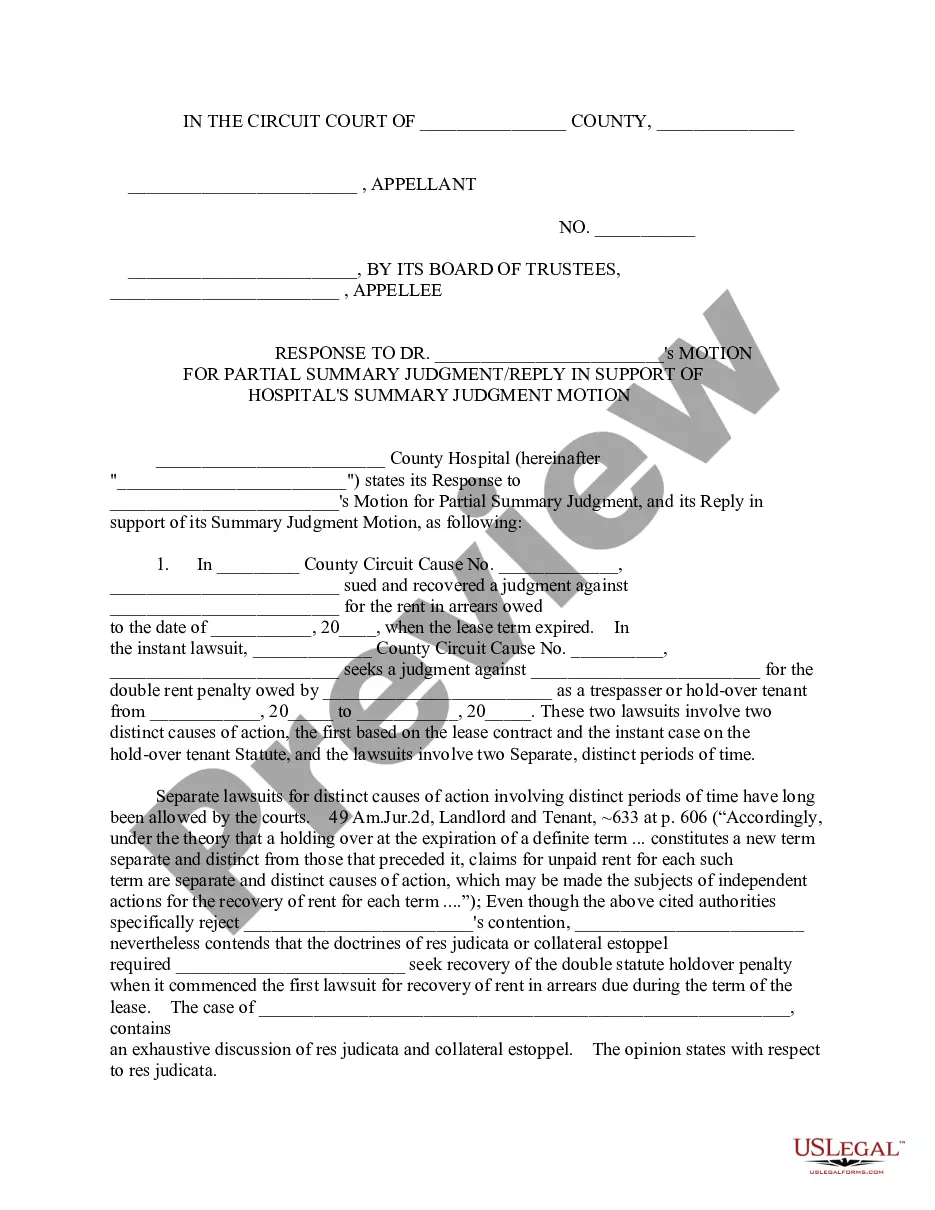
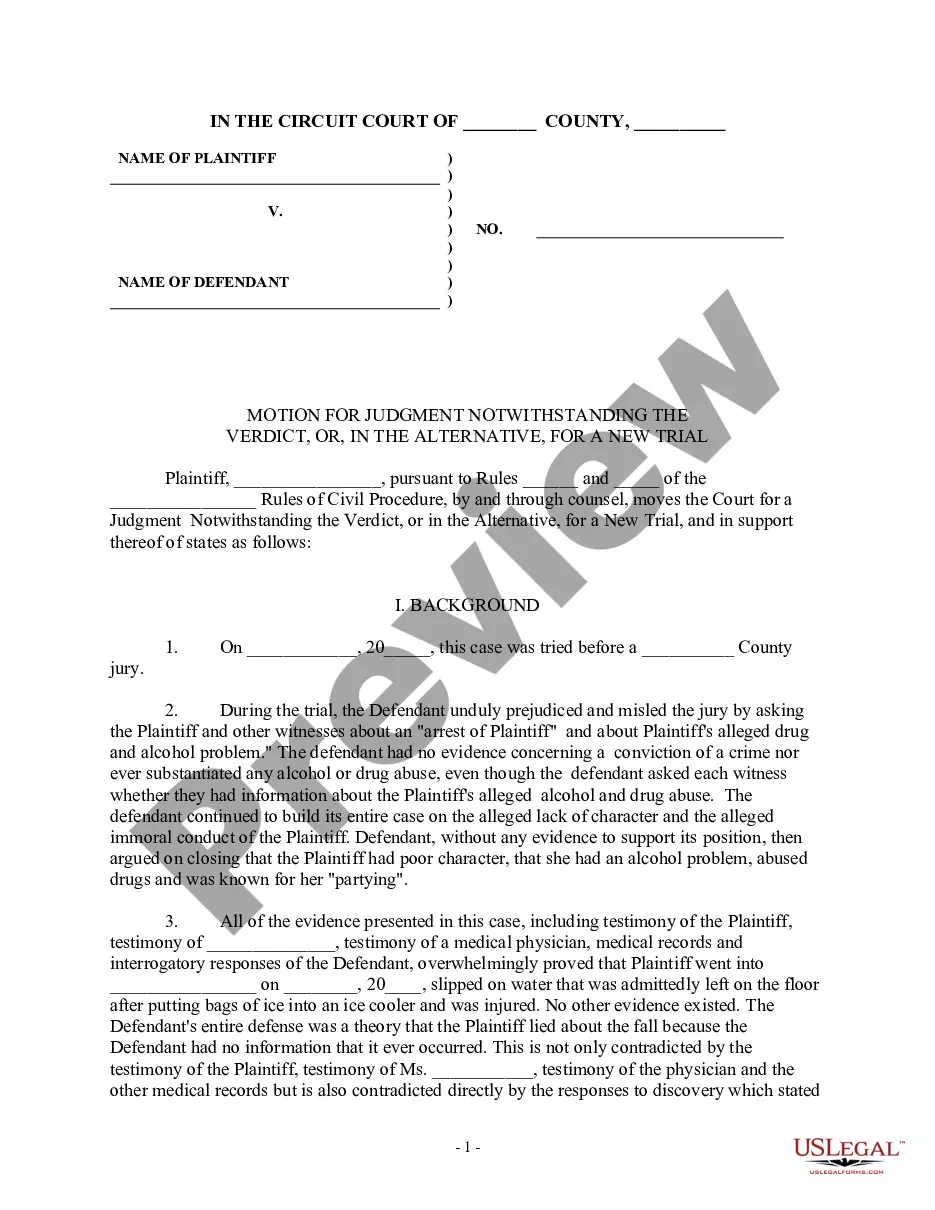
How to fill out Response To Motion For Judgment Notwithstanding The Verdict, Or In The Alternative, For A New Trial?
Securing a reliable location to obtain the most up-to-date and suitable legal templates is half the battle of navigating bureaucracy.
Selecting the proper legal paperwork requires accuracy and careful consideration, which is why it is essential to obtain samples of Verdict For Trial Without exclusively from trustworthy sources, such as US Legal Forms.
Once you have the form on your device, you can modify it using the editor or print it out to fill in manually. Remove the stress related to your legal paperwork. Explore the extensive US Legal Forms catalog where you can discover legal templates, verify their applicability to your case, and download them instantly.
- Use the catalog search or navigation feature to find your template.
- Review the form's details to verify it meets the criteria of your state and locality.
- Preview the form, if available, to confirm that the template is indeed the one you are looking for.
- Return to the search and identify the appropriate document if the Verdict For Trial Without does not fit your requirements.
- If you are confident about the form's suitability, download it.
- As an authorized user, click Log in to verify and access your selected templates in My documents.
- If you have not yet created an account, click Buy now to acquire the template.
- Select the pricing option that meets your needs.
- Proceed with registration to finalize your purchase.
- Complete your transaction by choosing a payment method (credit card or PayPal).
- Choose the document format for downloading Verdict For Trial Without.
Form popularity
FAQ
cause verdict means that the jury concluded the plaintiff did not meet the burden of proof required to win the case. This verdict indicates that the evidence did not sufficiently support the claims made, leading to a dismissal of the case without any liability assigned to the defendant. It is essential to understand the implications of a nocause verdict as it can significantly impact any subsequent legal actions. Utilizing platforms like uslegalforms can help individuals navigate the complexities of legal documentation and processes surrounding such verdicts.
To obtain a guilty verdict, the prosecution must present compelling evidence that demonstrates the defendant's guilt beyond a reasonable doubt. This may include witness testimonies, physical evidence, and expert opinions. The defense also plays a critical role, as they can challenge the prosecution's claims and present their side. Ultimately, the jury must be convinced of the defendant's guilt to reach a guilty verdict, making the trial process pivotal in the pursuit of justice.
A directed verdict occurs when a judge decides that the evidence presented by one party is insufficient to support the claim, thus directing the jury to deliver a specific verdict. For instance, if the plaintiff fails to establish a key element of their case, the judge may issue a directed verdict in favor of the defendant. This decision streamlines the trial process by preventing unnecessary deliberation on a case that lacks merit. It highlights the importance of solid evidence in obtaining a favorable verdict for trial without.
Yes, a judge can overrule a jury verdict through a legal process known as a judgment notwithstanding the verdict (JNOV). This occurs when the judge believes that no reasonable jury could have reached the same conclusion based on the evidence presented. Overruling a jury's decision is rare, as it undermines the jury's role in the trial process. However, it serves as a check on potential errors in the jury's judgment.
cause verdict occurs when a jury decides that the plaintiff has not proven their case, leading to no liability for the defendant. In other words, it means that the jury found insufficient evidence to support the claims made by the plaintiff. This type of verdict can bring a trial to a close without a finding of fault. Understanding the implications of a nocause verdict is crucial for anyone navigating the legal landscape.
Jurors should never discuss the case with outsiders or conduct outside research about the trial. These actions can compromise the integrity of the verdict for trial without proper deliberation. It is essential that jurors base their decisions solely on evidence presented in court.
A verdict is the decision made by a jury regarding the guilt or innocence of a defendant, while a judgment is the formal decision made by the court based on that verdict. The jury's verdict guides the judge's final ruling, which may include sentencing. Understanding this distinction is vital in navigating the legal process.
To be found guilty, the prosecution must provide compelling evidence that supports the charges against the defendant. This can include witness testimony, physical evidence, and expert analysis. A strong verdict for trial without solid evidence can result in wrongful convictions.
To give a verdict, jurors must review all evidence presented during the trial and discuss their findings. They reach a consensus before announcing their decision in court. The process of delivering a verdict for trial without sufficient deliberation may lead to unjust outcomes.
The standard of proof required for a guilty verdict is 'beyond a reasonable doubt.' This standard protects individuals by ensuring that they are only found guilty if the evidence is overwhelmingly convincing. A verdict for trial without this standard undermines justice and fairness.