Responses To Requests For Production California Ccp
Description
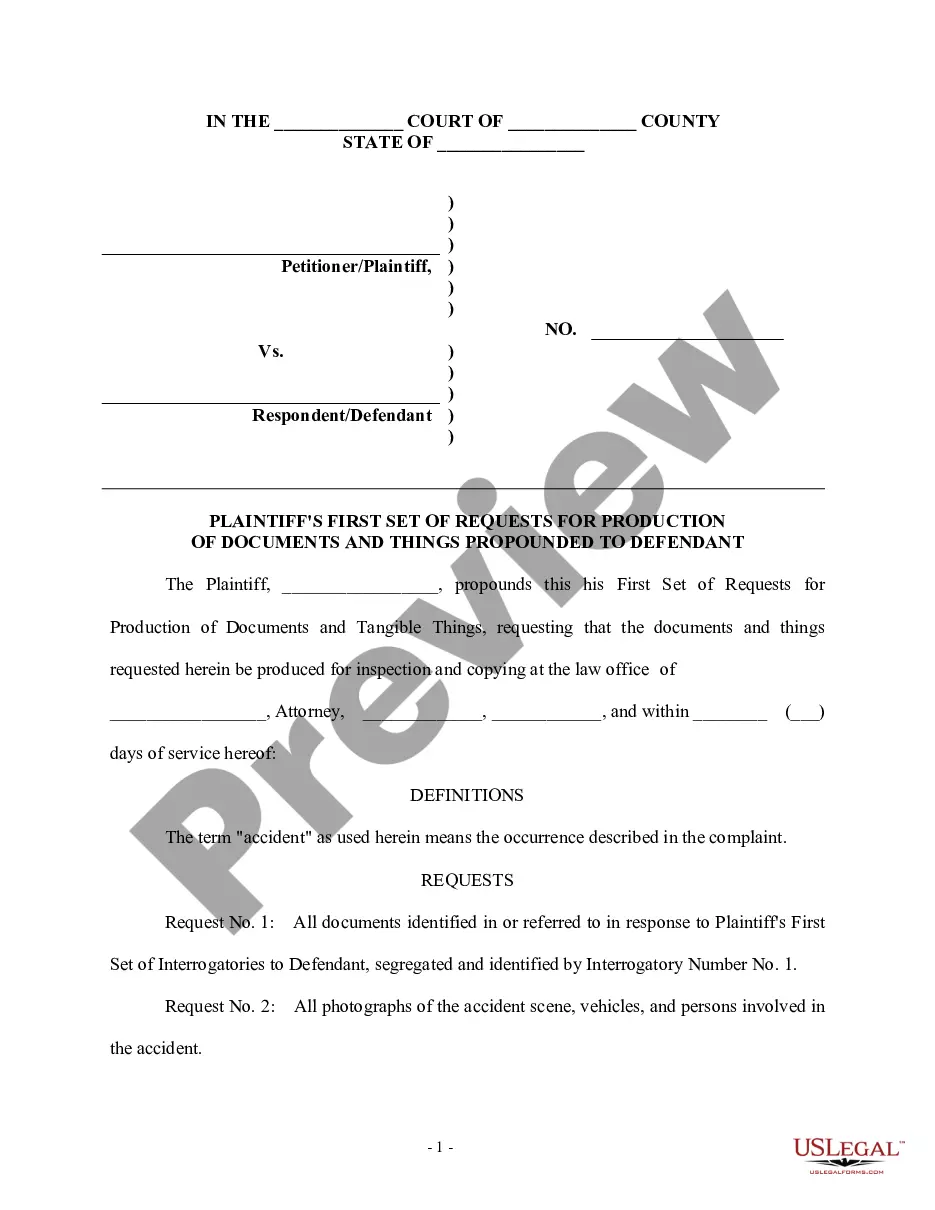
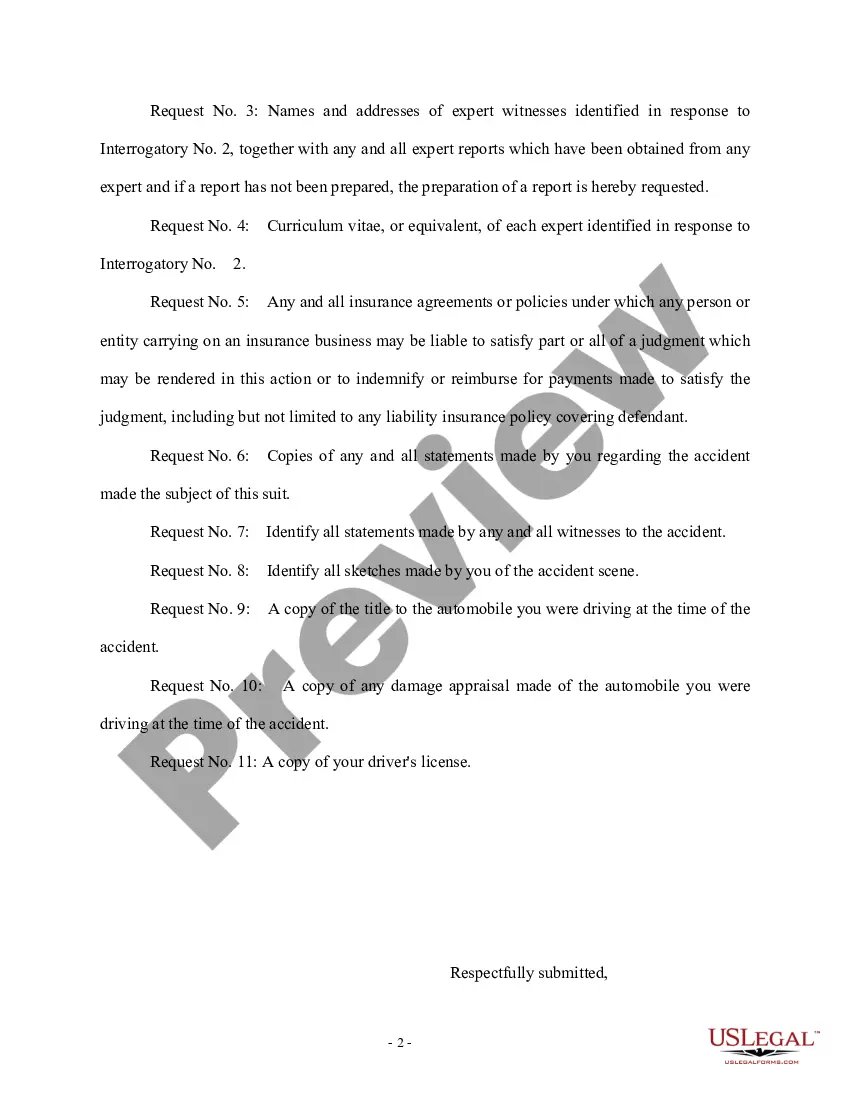
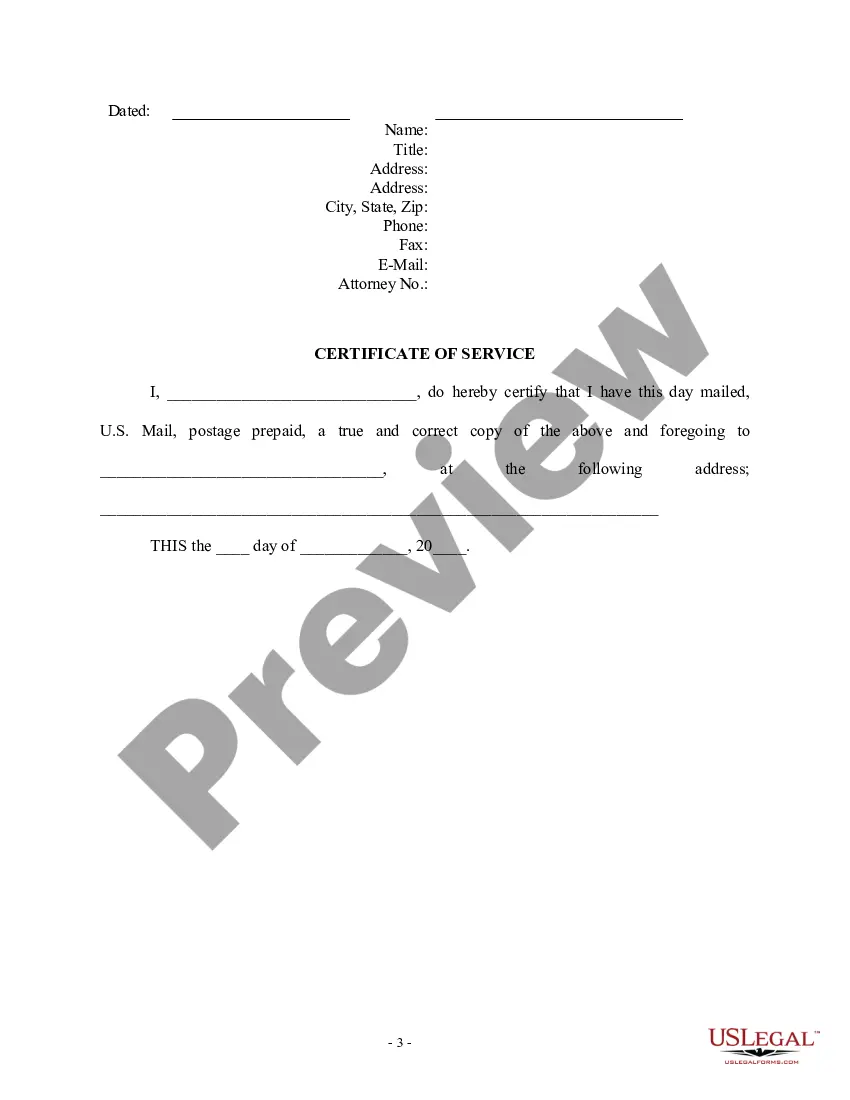
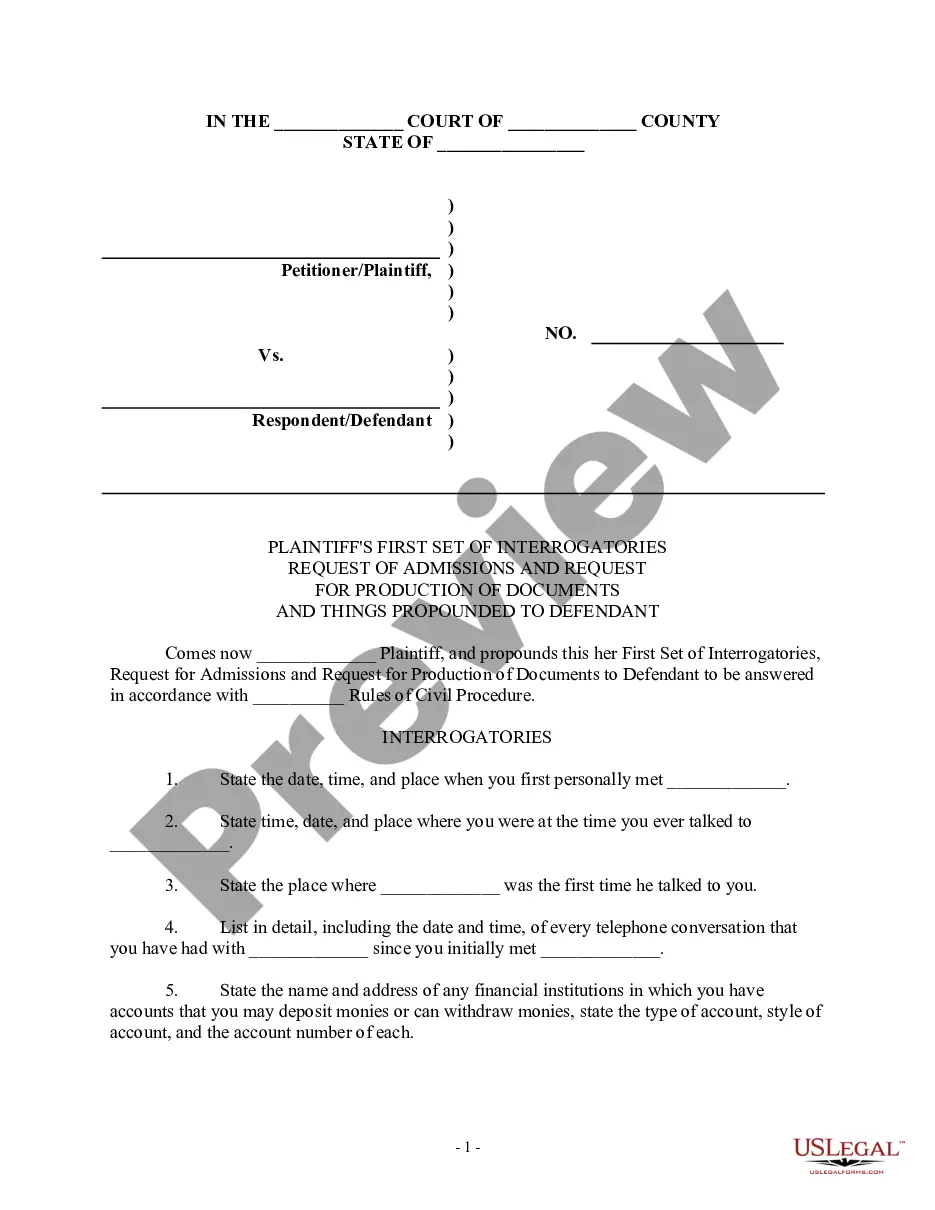
Get your form ready online
Our built-in tools help you complete, sign, share, and store your documents in one place.
Make edits, fill in missing information, and update formatting in US Legal Forms—just like you would in MS Word.
Download a copy, print it, send it by email, or mail it via USPS—whatever works best for your next step.
Sign and collect signatures with our SignNow integration. Send to multiple recipients, set reminders, and more. Go Premium to unlock E-Sign.
If this form requires notarization, complete it online through a secure video call—no need to meet a notary in person or wait for an appointment.
We protect your documents and personal data by following strict security and privacy standards.

Make edits, fill in missing information, and update formatting in US Legal Forms—just like you would in MS Word.

Download a copy, print it, send it by email, or mail it via USPS—whatever works best for your next step.

Sign and collect signatures with our SignNow integration. Send to multiple recipients, set reminders, and more. Go Premium to unlock E-Sign.

If this form requires notarization, complete it online through a secure video call—no need to meet a notary in person or wait for an appointment.

We protect your documents and personal data by following strict security and privacy standards.
Looking for another form?
How to fill out Plaintiff's First Set Of Requests For Production Of Documents And Things Propounded To Defendant?
Whether for corporate objectives or for individual matters, everyone must deal with legal issues at some stage in their existence.
Completing legal documents necessitates meticulous care, beginning with selecting the suitable form template.
With an extensive US Legal Forms catalog available, you don’t need to waste time searching for the right template online. Utilize the library’s user-friendly navigation to find the appropriate form for any situation.
- For instance, if you select an incorrect version of the Responses To Requests For Production California Ccp, it will be rejected upon submission.
- Thus, it is crucial to find a trustworthy source of legal documents like US Legal Forms.
- If you need to acquire a Responses To Requests For Production California Ccp template, follow these straightforward steps.
- Obtain the sample you require by using the search bar or catalog navigation.
- Review the form’s details to confirm it aligns with your case, state, and locality.
- Click on the form’s preview to examine it.
- If it is the wrong form, return to the search feature to locate the Responses To Requests For Production California Ccp template you need.
- Obtain the document when it meets your specifications.
- If you already possess a US Legal Forms account, simply click Log in to access previously stored documents in My documents.
- If you do not yet have an account, you can acquire the form by clicking Buy now.
- Select the suitable pricing option.
- Fill out the account registration form.
- Choose your payment method: you can utilize a credit card or PayPal account.
- Select the file format you desire and download the Responses To Requests For Production California Ccp.
- Once it is saved, you can complete the form using editing software or print it out and fill it in by hand.
Form popularity
FAQ
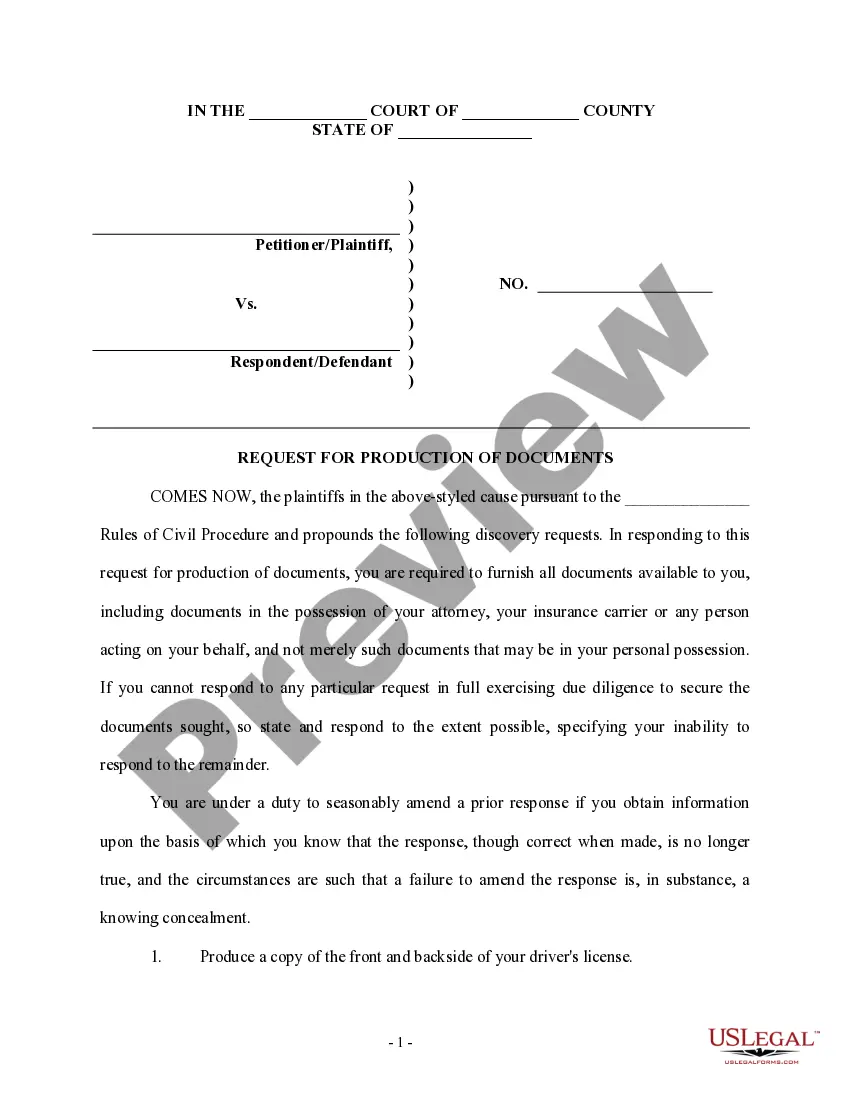
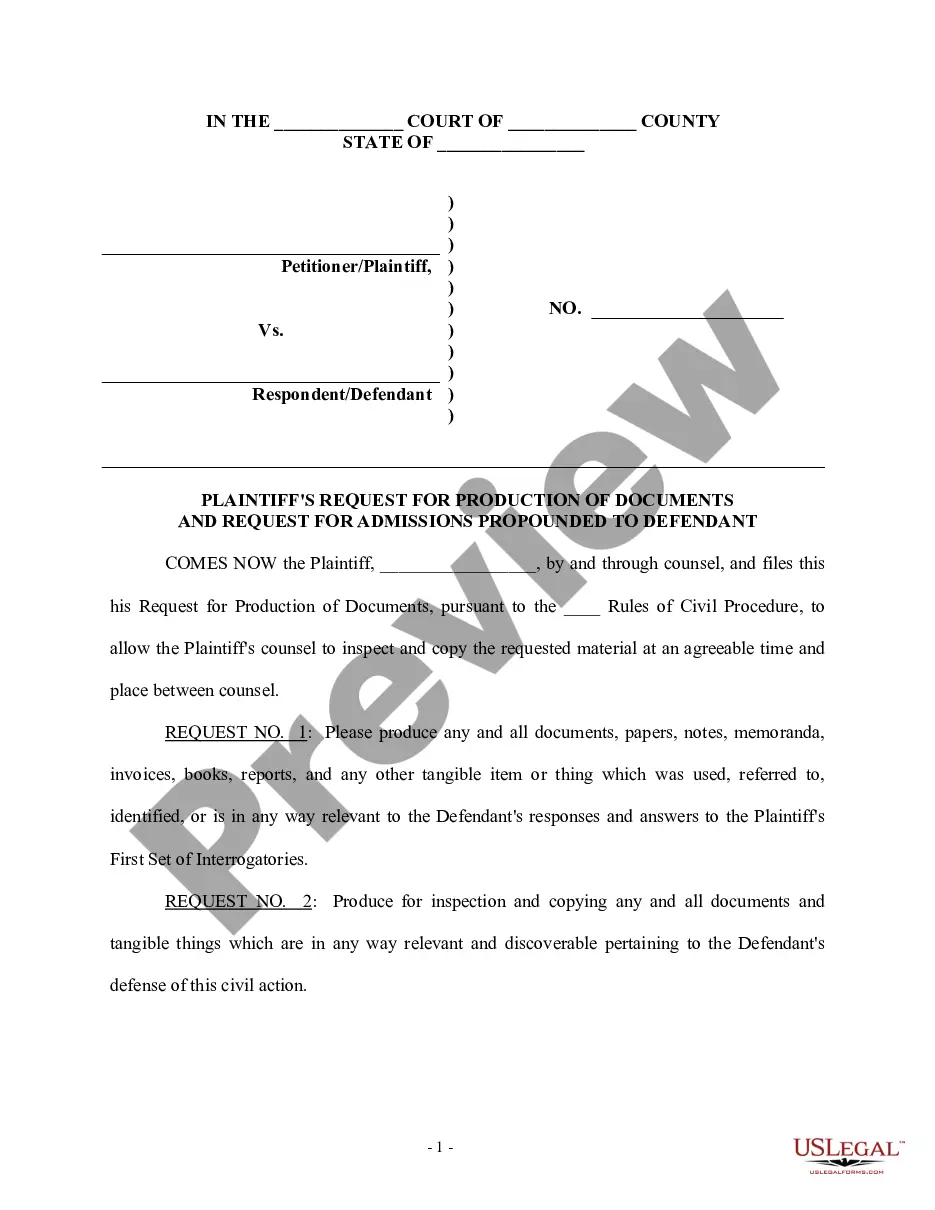
Answer. Requests for the Production of Documents. Definition: A written list of documents, electronic files, and audio and video recordings or physical things, submitted to a party from his or her adversary to inspect and copy the requested items and that have relevance to the issues in a lawsuit.
You typically have 30 days to respond to the request Once you've received (been served) the request, you have 30 or 35 days to respond, depending on how you received the request. In eviction cases (also known as unlawful detainer cases) you have 5 or 10 days to respond.
The Special Interrogatories you received should have a list of numbered questions. You need to respond to each question in the same order on your response template. On your template, each question, write ?Response to Interrogatory number? followed by the number of the question.
The California Code of Civil Procedure (CCP) essentially gives responding parties four code-compliant responses for each RFP. CCP §§ 2031.210-2031.240. If all of the RFPs are not produced based solely on legal objections, the requests for production do not need to be verified.
Your response to a request for production consists of two parts: One part is a written response to the requests, in which you state under penalty of perjury that you will produce the requested items; that you will not produce and why; or that you object to a request on legal grounds.