Summary Judgment To Issue
Description
Get your form ready online
Our built-in tools help you complete, sign, share, and store your documents in one place.
Make edits, fill in missing information, and update formatting in US Legal Forms—just like you would in MS Word.
Download a copy, print it, send it by email, or mail it via USPS—whatever works best for your next step.
Sign and collect signatures with our SignNow integration. Send to multiple recipients, set reminders, and more. Go Premium to unlock E-Sign.
If this form requires notarization, complete it online through a secure video call—no need to meet a notary in person or wait for an appointment.
We protect your documents and personal data by following strict security and privacy standards.

Make edits, fill in missing information, and update formatting in US Legal Forms—just like you would in MS Word.

Download a copy, print it, send it by email, or mail it via USPS—whatever works best for your next step.

Sign and collect signatures with our SignNow integration. Send to multiple recipients, set reminders, and more. Go Premium to unlock E-Sign.

If this form requires notarization, complete it online through a secure video call—no need to meet a notary in person or wait for an appointment.

We protect your documents and personal data by following strict security and privacy standards.
Looking for another form?

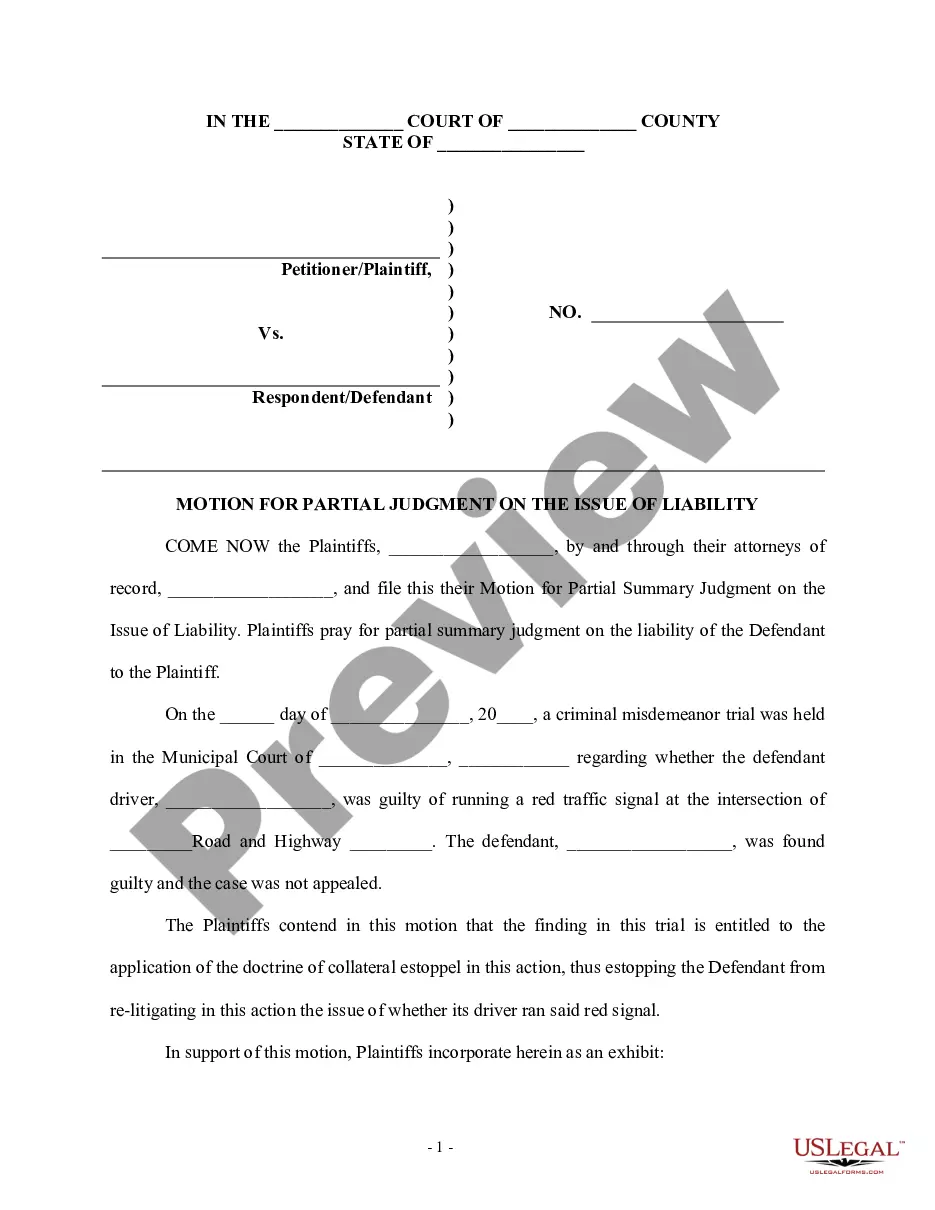
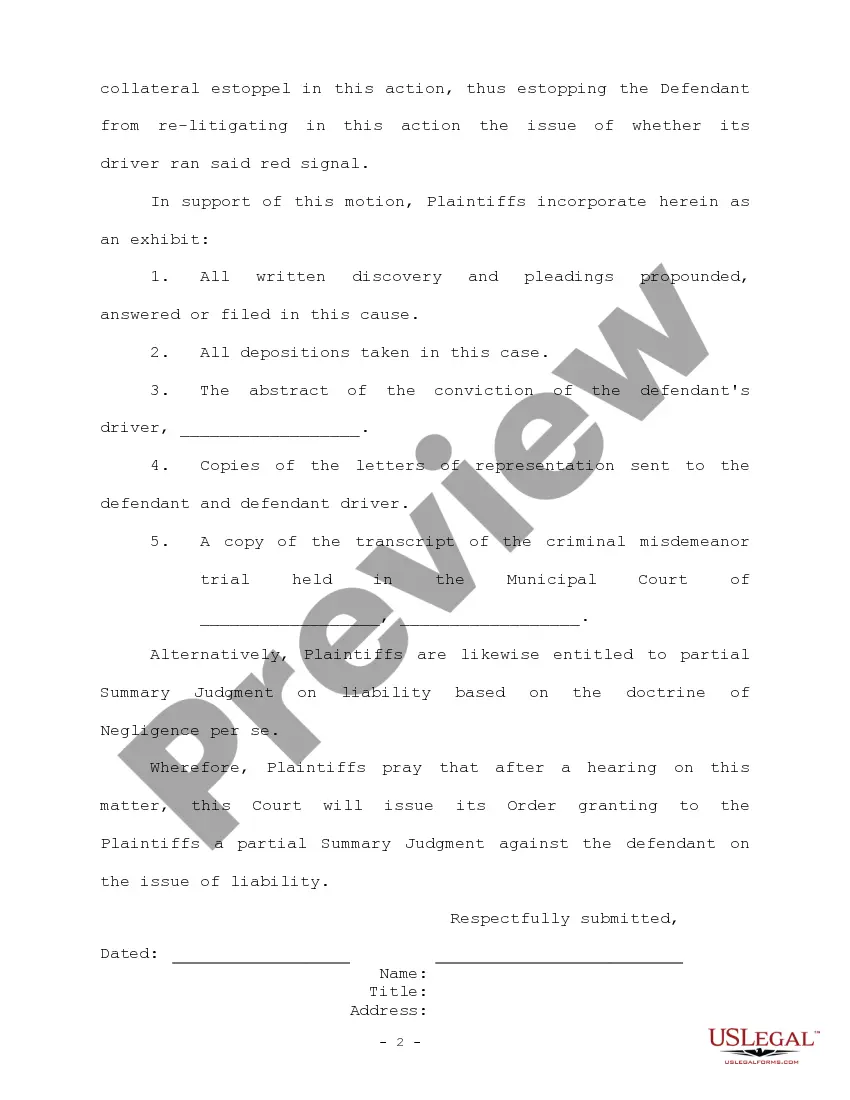
How to fill out Motion For Partial Summary Judgment On The Issue Of Liability?
Acquiring legal documents that adhere to federal and state statutes is crucial, and the web provides a plethora of choices to select from.
However, what's the purpose of wasting time hunting for the suitable Summary Judgment To Issue example online when the US Legal Forms digital library has already compiled such documents in one location.
US Legal Forms is the premier online legal repository with more than 85,000 editable documents created by lawyers for various professional and personal scenarios. They are simple to navigate with all files categorized by state and intended use. Our experts stay informed on legislative changes, ensuring your documents are always current and compliant when obtaining a Summary Judgment To Issue from our site.
Click Buy Now once you've found the right form and choose a subscription plan. Create an account or Log In and complete the payment via PayPal or credit card. Choose the most suitable format for your Summary Judgment To Issue and download it. All documents accessed through US Legal Forms are reusable. To re-download and fill out previously acquired forms, visit the My documents section in your profile. Take advantage of the most comprehensive and user-friendly legal document service!
- Obtaining a Summary Judgment To Issue is quick and straightforward for both existing and new users.
- If you already have an account with a valid subscription, Log In and download the document template you need in your desired format.
- If you are new to our site, follow these steps.
- Review the template using the Preview feature or through the text description to confirm it satisfies your requirements.
- Search for another template using the search tool at the top of the page if necessary.
Form popularity
FAQ
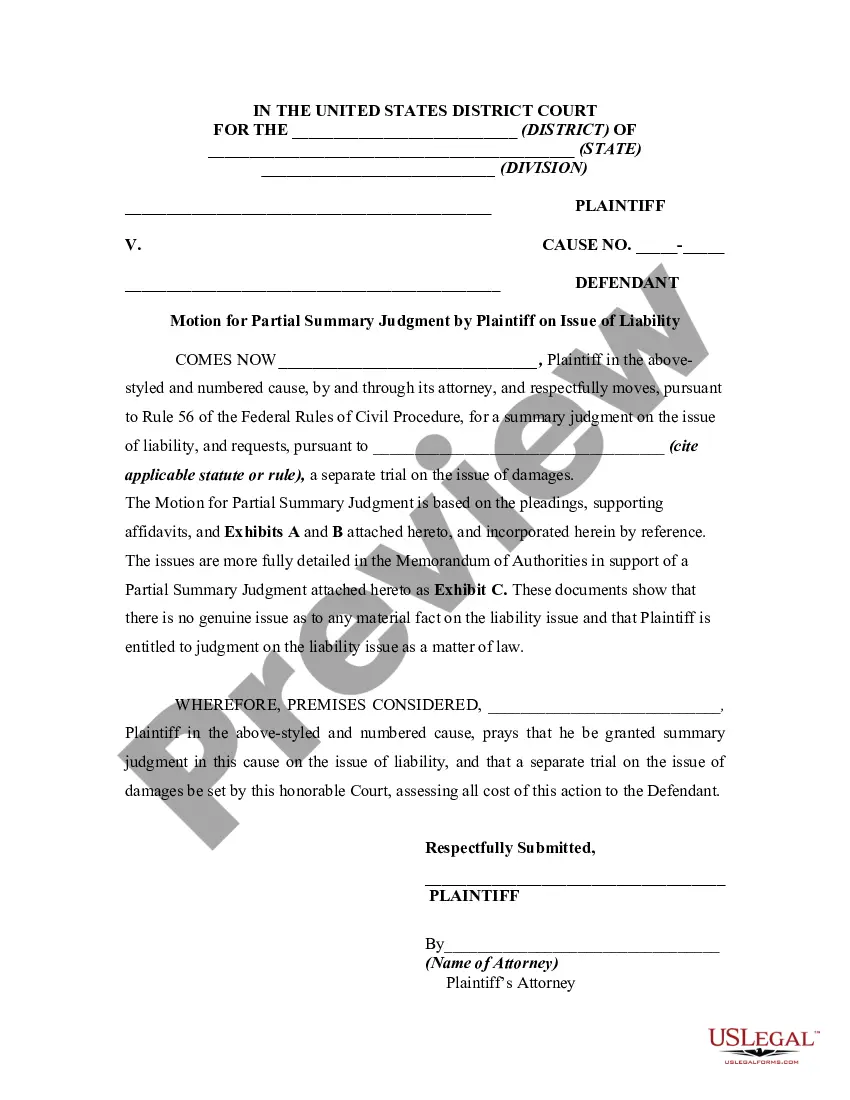
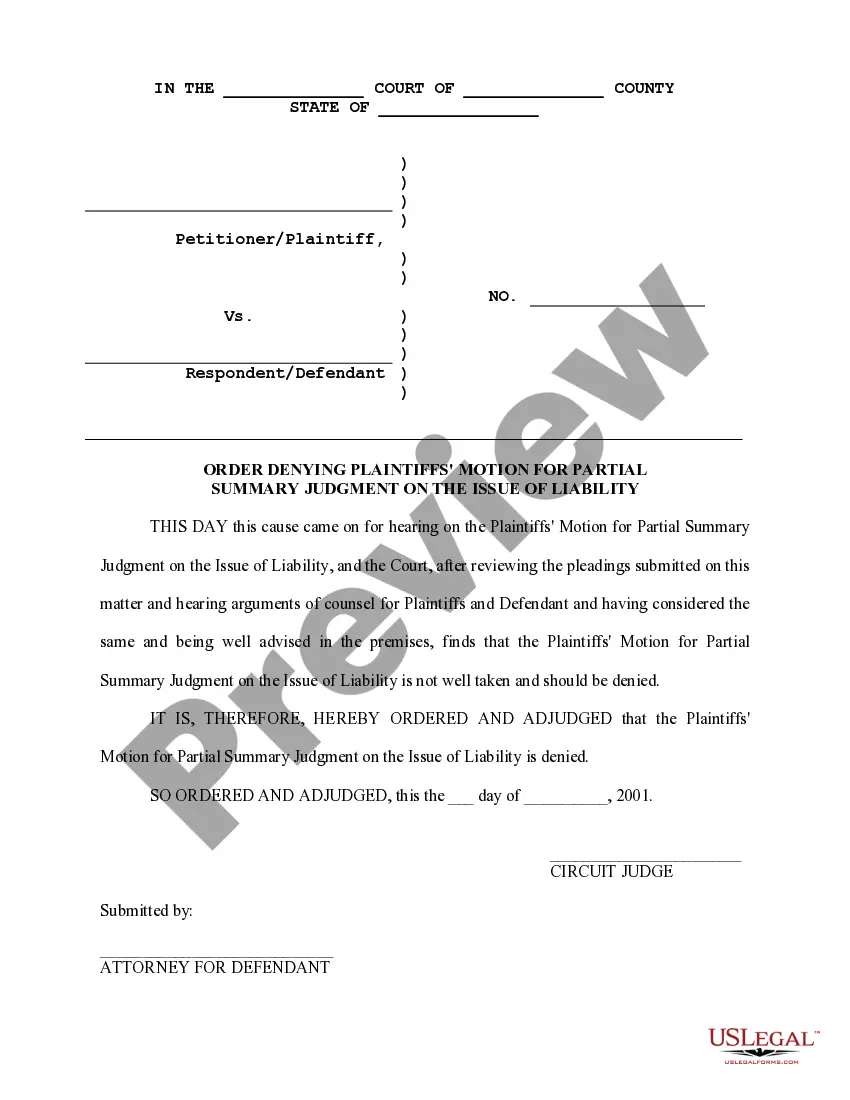
A summary judgment on an issue refers to a court's decision that resolves specific aspects of a case without going to trial. This type of judgment addresses key questions that can significantly affect the outcome of the case. By obtaining a summary judgment to issue on certain issues, parties can clarify their positions and focus on the remaining matters, thus streamlining the overall legal process.
Common grounds for summary judgment include lack of evidence to support a claim, failure to meet legal standards, or clear admissions by one party that negate the other’s claims. In some cases, procedural issues may also be grounds for a judge to issue a summary judgment. Understanding these grounds is crucial, as they can help you assess your situation and determine whether seeking a summary judgment to issue is a viable strategy.
A judge might issue a summary judgment to resolve a case swiftly when there is no genuine dispute over material facts. This decision helps to conserve judicial resources and avoids unnecessary trials. When the evidence clearly favors one party, the judge may find that a summary judgment to issue is the most efficient path forward, allowing the legal process to move along without delay.
A summary judgment can be both beneficial and disadvantageous, depending on your perspective. For plaintiffs, a favorable summary judgment can expedite a case and lead to a positive outcome without the need for a lengthy trial. However, defendants may view it negatively, as it can eliminate their chance to present their case in front of a jury. Understanding the implications of a summary judgment to issue is essential for anyone involved in a legal matter.
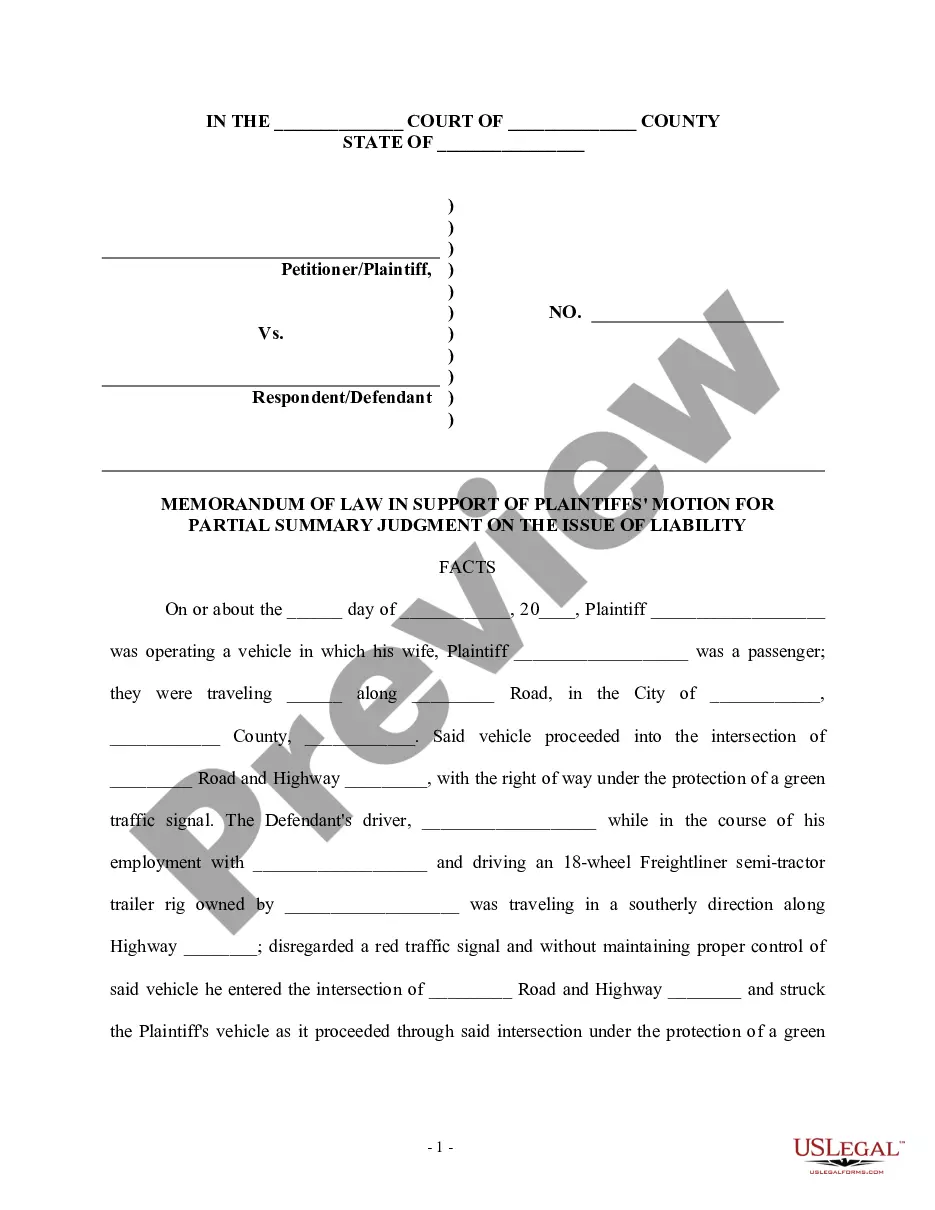
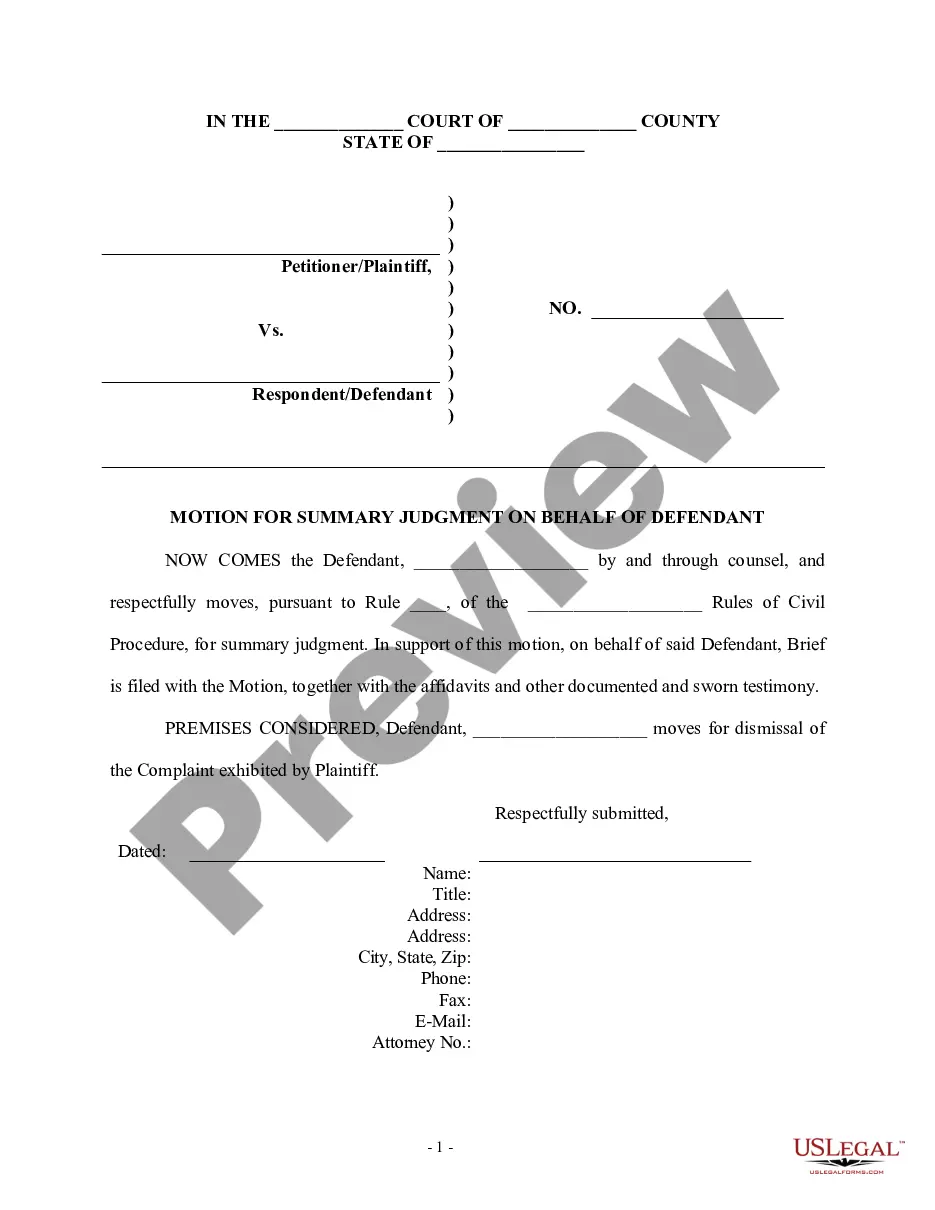
To structure a motion for summary judgment effectively, begin with an introduction that states the purpose of the motion. Next, lay out the undisputed facts, followed by the legal arguments that support why a summary judgment to issue is justified. Include a conclusion that succinctly reiterates your request for the court's ruling. Using a clear structure will enhance the persuasiveness of your motion.
A motion should be formatted with clarity and precision. Begin with a caption that includes the court's name, the parties involved, and the case number. Follow with a clear statement of the motion, a detailed argument section, and conclude with a request for the specific relief sought, such as a summary judgment to issue. Consistent formatting helps the court understand your position effectively.
An example of a summary judgment can be seen in a case where a plaintiff sues for unpaid wages, and the defendant admits to not paying but claims a legal defense. If there are no other relevant facts disputed, the court may issue a summary judgment in favor of the plaintiff, confirming their right to the owed wages. This process illustrates how a summary judgment to issue can resolve clear-cut cases efficiently.
Formatting a motion for summary judgment requires attention to detail and adherence to court rules. Start with a title page, followed by a table of contents if needed, and then include the motion's body, which outlines the facts, legal standards, and arguments. You should also attach supporting documents and evidence that justify the request for a summary judgment to issue, ensuring everything is clearly labeled and organized.
A genuine issue of material fact arises when there is a dispute over facts that could affect the outcome of a case. For instance, if two parties disagree on the timeline of events in a contract dispute, this disagreement could prevent a summary judgment to issue. The presence of conflicting evidence or testimony often indicates such issues. It is crucial to identify these facts clearly to determine whether a summary judgment is appropriate.
You cannot file a motion for summary judgment at any time; there are specific timelines you must adhere to. Typically, you should file after the discovery phase but before the trial begins. Courts usually set deadlines for filing such motions, so it's crucial to check local rules. Being mindful of these timelines helps ensure your request for summary judgment to issue is considered.