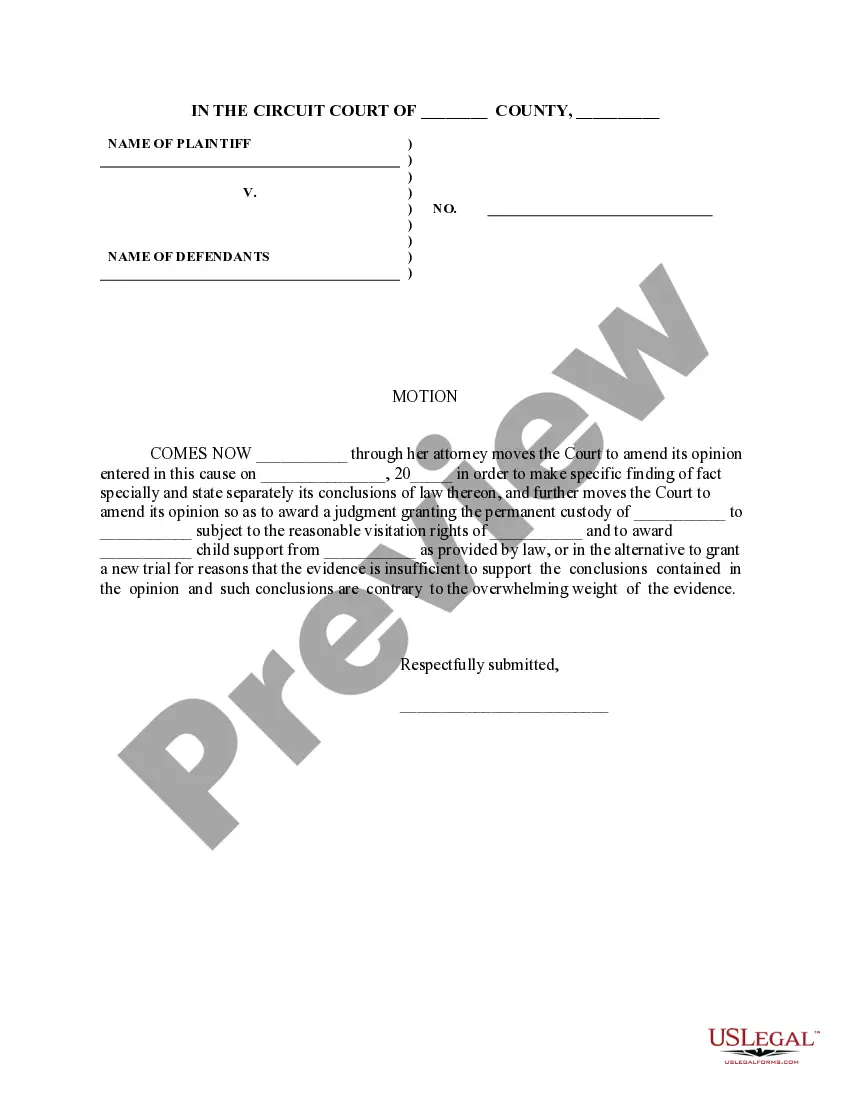
Fact Conclusions Without Randomization
Description
Get your form ready online
Our built-in tools help you complete, sign, share, and store your documents in one place.
Make edits, fill in missing information, and update formatting in US Legal Forms—just like you would in MS Word.
Download a copy, print it, send it by email, or mail it via USPS—whatever works best for your next step.
Sign and collect signatures with our SignNow integration. Send to multiple recipients, set reminders, and more. Go Premium to unlock E-Sign.
If this form requires notarization, complete it online through a secure video call—no need to meet a notary in person or wait for an appointment.
We protect your documents and personal data by following strict security and privacy standards.

Make edits, fill in missing information, and update formatting in US Legal Forms—just like you would in MS Word.

Download a copy, print it, send it by email, or mail it via USPS—whatever works best for your next step.

Sign and collect signatures with our SignNow integration. Send to multiple recipients, set reminders, and more. Go Premium to unlock E-Sign.

If this form requires notarization, complete it online through a secure video call—no need to meet a notary in person or wait for an appointment.

We protect your documents and personal data by following strict security and privacy standards.
Looking for another form?









How to fill out Motion To Make Specific Findings Of Fact And State Conclusions Of Law - Domestic Relations?
Securing a reliable source to obtain the latest and suitable legal templates is part of the challenge of dealing with bureaucracy.
Locating the appropriate legal documents requires accuracy and meticulousness, which is why it is vital to gather samples of Fact Conclusions Without Randomization exclusively from trusted sources, such as US Legal Forms.
Once you have the form on your device, you can adjust it using the editor or print it and fill it out manually. Remove the stress associated with your legal documentation. Discover the extensive US Legal Forms library where you can locate legal samples, assess their relevance to your situation, and download them instantly.
- Make use of the library navigation or search bar to find your template.
- Review the form’s details to ensure it meets the standards of your state and region.
- Access the form preview, if available, to confirm that the form is indeed what you are looking for.
- Return to the search to find the suitable template if the Fact Conclusions Without Randomization does not fulfill your requirements.
- Once you are confident about the form’s applicability, download it.
- If you are a registered member, click Log in to verify your identity and access your chosen templates in My documents.
- If you do not possess an account yet, click Buy now to acquire the template.
- Select the pricing option that fits your needs.
- Proceed to the registration to complete your purchase.
- Finish your purchase by selecting a payment method (credit card or PayPal).
- Pick the file format for downloading Fact Conclusions Without Randomization.
Form popularity
FAQ
Randomisation is crucial because it ensures that the results of a study are valid and reliable. When we discuss fact conclusions without randomization, we highlight the potential biases that may arise when data is collected in a non-random manner. This can lead to skewed results that do not accurately represent the population being studied. By using randomisation, researchers can enhance the credibility of their findings, making them more applicable and trustworthy.
An intervention study without randomization assesses the effects of a specific intervention on a particular group without random assignment. This method often uses pre-existing groups to analyze outcomes, allowing researchers to draw fact conclusions without randomization. Although it may not control for all biases, it can reveal important trends and relationships relevant to your interests. Exploring these studies can enhance your understanding of interventions in real-world settings.
A non randomized test is a method of evaluating the effectiveness of a variable without assigning participants randomly to different groups. This approach allows researchers to draw fact conclusions without randomization, using existing groups or conditions. While it may introduce bias, it can still provide valuable insights when randomization is not feasible. Understanding this type of test can help you make informed decisions based on available data.
Researchers can still make valid conclusions without randomization by employing alternative strategies such as matching or statistical control. Using these techniques allows you to minimize confounding variables and strengthen the credibility of your results. It's essential to document your methodology and justify your approach when randomization is not feasible. By doing so, you can provide fact conclusions without randomization that stand up to scrutiny.
Randomization is not strictly required in every experimental design; however, it plays a crucial role in reducing bias. When randomization is absent, researchers must carefully consider other methods to ensure the validity of their findings. You can still draw fact conclusions without randomization by implementing rigorous control measures. Ultimately, understanding these concepts helps you navigate your research more effectively.
While randomization is a gold standard in clinical trials, it is not always necessary or feasible. Non-randomized trials can still provide valuable insights, especially in specific populations or settings. By focusing on fact conclusions without randomization, researchers can still yield important findings that contribute to clinical knowledge, though they should be aware of the potential for bias and limitations.
When randomization is not possible, researchers should consider alternative study designs such as observational studies or quasi-experimental approaches. They can focus on controlling for confounding factors and using statistical techniques to ensure validity. Emphasizing fact conclusions without randomization enables researchers to still draw meaningful insights that can inform practice and policy.
Researchers can draw conclusions without randomization by employing various analytical techniques to assess the relationship between variables. They should use observational data, control for biases, and apply statistical methods to strengthen their conclusions. By prioritizing fact conclusions without randomization, researchers can still achieve valuable insights while acknowledging the limitations of their study design.
Drawing conclusions without randomization requires careful consideration of the data collected and the context of the study. Researchers should analyze patterns, control for confounding variables, and clearly state limitations in their findings. By focusing on fact conclusions without randomization, you can still produce reliable insights that contribute to the existing body of knowledge.
A controlled study without randomization involves comparing a treatment group to a control group where participants are not randomly assigned. This method helps researchers observe the effects of an intervention while controlling for external variables. By emphasizing fact conclusions without randomization, researchers can still derive significant insights, although they must be vigilant about potential biases impacting their results.