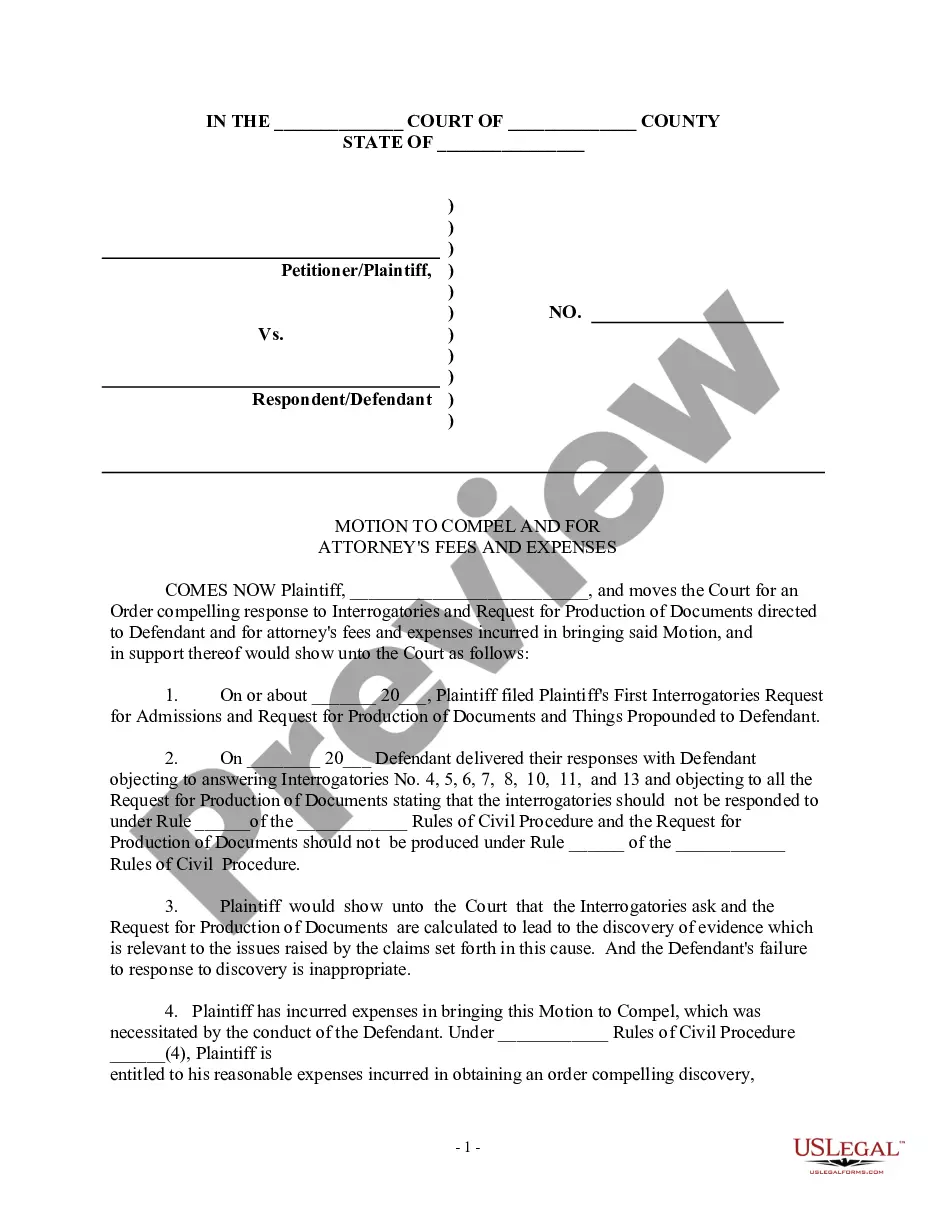
Motion Response Compel Withdrawn
Description
Get your form ready online
Our built-in tools help you complete, sign, share, and store your documents in one place.
Make edits, fill in missing information, and update formatting in US Legal Forms—just like you would in MS Word.
Download a copy, print it, send it by email, or mail it via USPS—whatever works best for your next step.
Sign and collect signatures with our SignNow integration. Send to multiple recipients, set reminders, and more. Go Premium to unlock E-Sign.
If this form requires notarization, complete it online through a secure video call—no need to meet a notary in person or wait for an appointment.
We protect your documents and personal data by following strict security and privacy standards.

Make edits, fill in missing information, and update formatting in US Legal Forms—just like you would in MS Word.

Download a copy, print it, send it by email, or mail it via USPS—whatever works best for your next step.

Sign and collect signatures with our SignNow integration. Send to multiple recipients, set reminders, and more. Go Premium to unlock E-Sign.

If this form requires notarization, complete it online through a secure video call—no need to meet a notary in person or wait for an appointment.

We protect your documents and personal data by following strict security and privacy standards.
Looking for another form?
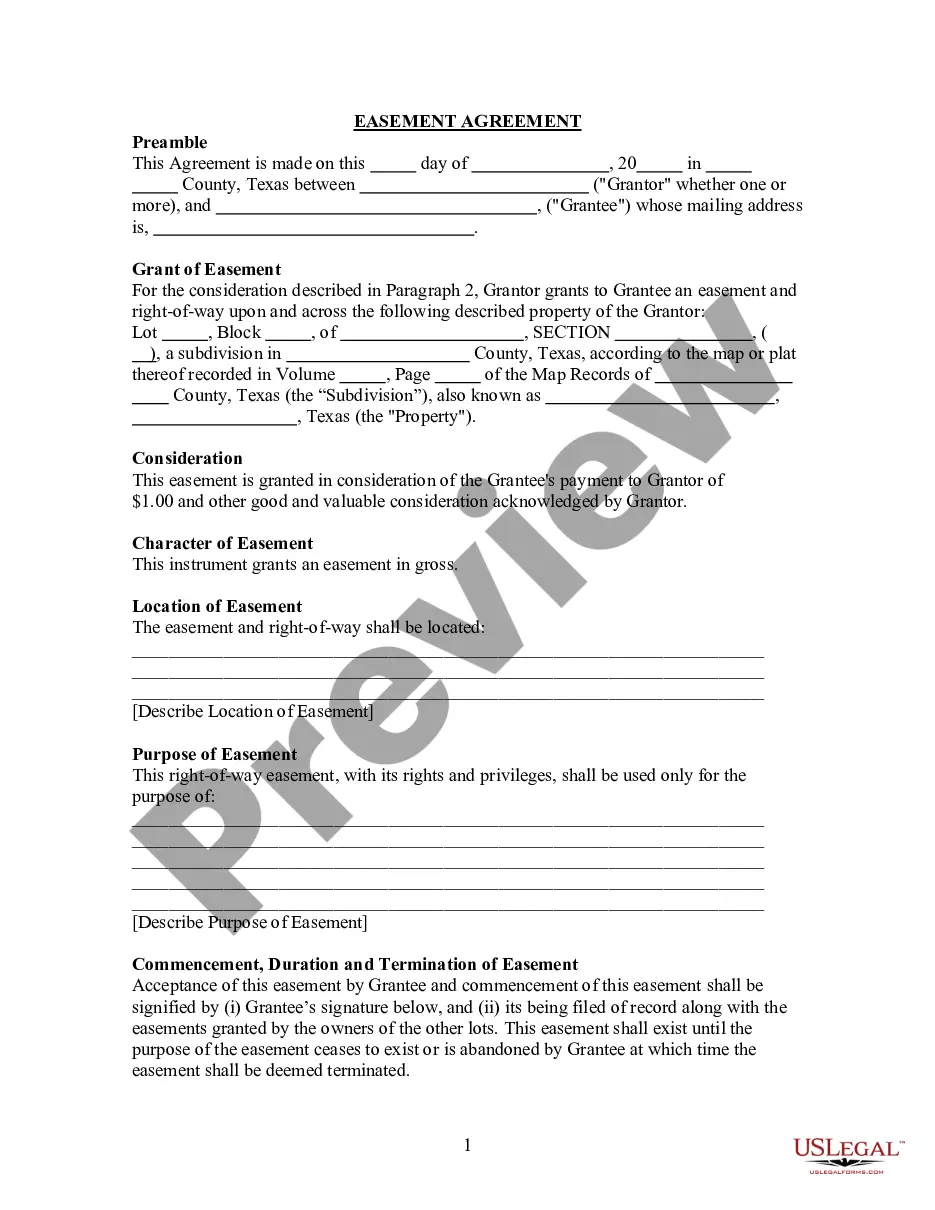



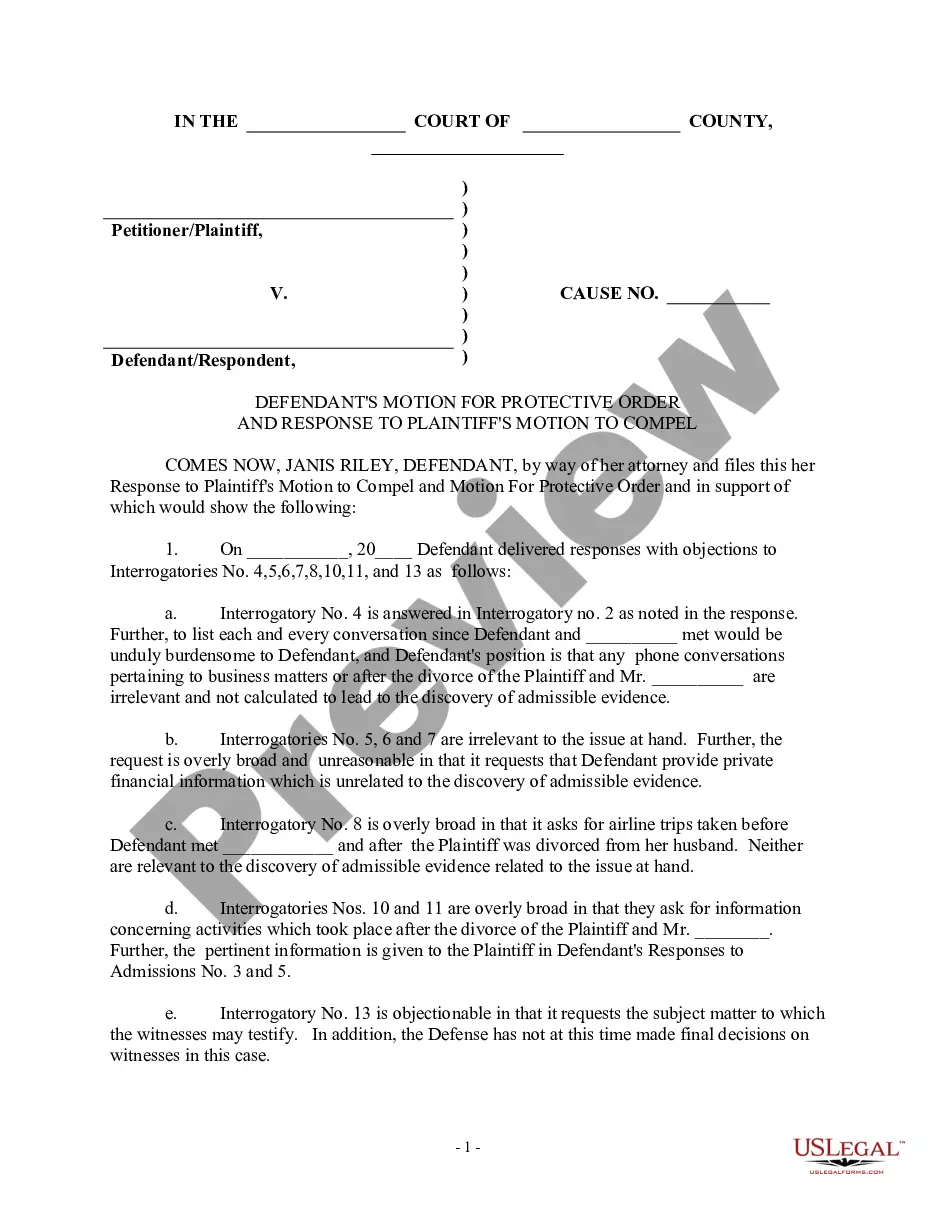
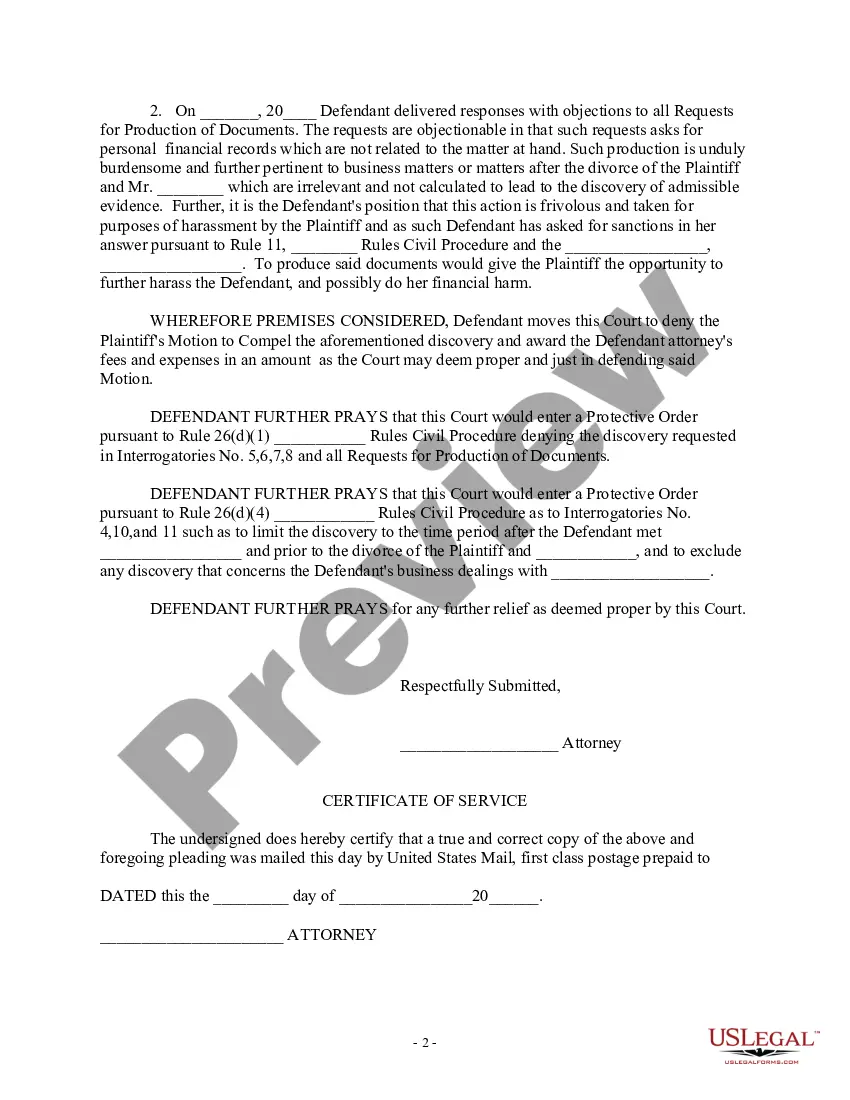
How to fill out Defendant's Motion For Protective Order And Response To Plaintiff's Motion To Compel?
Clearly, you cannot transform into a legal expert instantly, nor can you learn how to swiftly create a Motion Response Compel Withdrawn without an appropriate set of expertise.
Drafting legal documents is an extensive journey necessitating specialized training and abilities. So, why not entrust the creation of the Motion Response Compel Withdrawn to the experts.
With US Legal Forms, one of the most comprehensive libraries of legal templates, you can discover anything from court documents to formats for internal business communication. We recognize the significance of compliance and adherence to state and federal regulations. That's why, on our platform, all templates are location-specific and current.
You can access your documents again from the My documents section anytime. If you're a returning client, you can easily Log In and find and download the template from the same section.
Regardless of the purpose of your documents—whether financial and legal, or personal—our website has you covered. Experience US Legal Forms today!
- Locate the form you require using the search bar at the top of the page.
- View it (if this feature is available) and examine the accompanying description to determine if Motion Response Compel Withdrawn is what you need.
- Restart your search if you are looking for another form.
- Sign up for a free account and select a subscription plan to purchase the template.
- Click Buy now. Once the purchase is completed, you can acquire the Motion Response Compel Withdrawn, complete it, print it, and send or mail it to the relevant individuals or organizations.
Form popularity
FAQ
Filling out a motion notice requires you to provide specific details about the motion, such as the title, date, time, and location of the hearing. You should include the case number and any relevant parties. Accurate completion of the notice ensures proper communication about the motion's calendar, and US Legal Forms can provide you with necessary templates to get it right.
An example of a motion to dismiss might involve a case where the claim does not state a valid legal cause of action. The motion would assert that even with the facts presented, the law does not support the plaintiff's claims. Using a real-world example can clarify your argument, and you can find useful templates on US Legal Forms to assist in crafting your own motion.
To fill out a motion to compel, start by clearly identifying the discovery requests that you seek to enforce. You should explain why the other party should comply with these requests and any relevant legal rules that support your position. Consider using our US Legal Forms resources to access templates that guide you through this legally complex task, ensuring accuracy and completeness.
Responding to a motion to compel discovery requires careful attention to the requests made in the motion. A well-structured response should address each point and provide your reasons for any objections or compliance. This step is critical in maintaining a fair discovery process, and using our tools on US Legal Forms can help you craft a strong motion response compel withdrawn.
Filling out a motion for dismissal involves providing essential details about your case, including case number, parties involved, and grounds for dismissal. It’s crucial to articulate your reasons clearly and to reference applicable laws or rules. If you feel uncertain about the paperwork, our US Legal Forms platform offers resources to ensure your motion meets all necessary standards.
Properly writing a motion to dismiss requires clarity and a strong argument. Begin by stating the basis for the motion, explain why the case should be dismissed, and include any supporting facts or legal precedents. Make sure to format the document correctly according to your court's requirements. Utilizing US Legal Forms can simplify this process with templates tailored for your needs.
Yes, you can file your own motion to dismiss. It is important to understand the rules and procedures involved in your jurisdiction. Filing your motion correctly can strengthen your position in court, especially if you gather clear arguments and evidence. Using our platform, US Legal Forms, you can find the right forms and guidance to help you effectively navigate this process.
If a motion to compel is ignored, the court may view this as non-compliance and take further action. This could result in sanctions against the party who failed to respond. Clearly, it is essential to address all motions, including a motion response compel withdrawn, proactively to maintain your standing in court.
Filing a motion to compel can lead to various consequences, depending on the court's decision. If granted, parties must comply with requests for documents or testimony, which may strengthen your position. Conversely, if denied or ignored, it could weaken your argument and harm your case.
When a motion to compel is denied, it typically means that the court has determined the request lacks merit. As a result, the case will proceed without the compelled evidence or testimony. This outcome may significantly affect your ability to present your case fully and require you to explore alternative strategies.