Motion For Protective Order Federal Court
Description
Get your form ready online
Our built-in tools help you complete, sign, share, and store your documents in one place.
Make edits, fill in missing information, and update formatting in US Legal Forms—just like you would in MS Word.
Download a copy, print it, send it by email, or mail it via USPS—whatever works best for your next step.
Sign and collect signatures with our SignNow integration. Send to multiple recipients, set reminders, and more. Go Premium to unlock E-Sign.
If this form requires notarization, complete it online through a secure video call—no need to meet a notary in person or wait for an appointment.
We protect your documents and personal data by following strict security and privacy standards.

Make edits, fill in missing information, and update formatting in US Legal Forms—just like you would in MS Word.

Download a copy, print it, send it by email, or mail it via USPS—whatever works best for your next step.

Sign and collect signatures with our SignNow integration. Send to multiple recipients, set reminders, and more. Go Premium to unlock E-Sign.

If this form requires notarization, complete it online through a secure video call—no need to meet a notary in person or wait for an appointment.

We protect your documents and personal data by following strict security and privacy standards.
Looking for another form?

Form popularity
FAQ
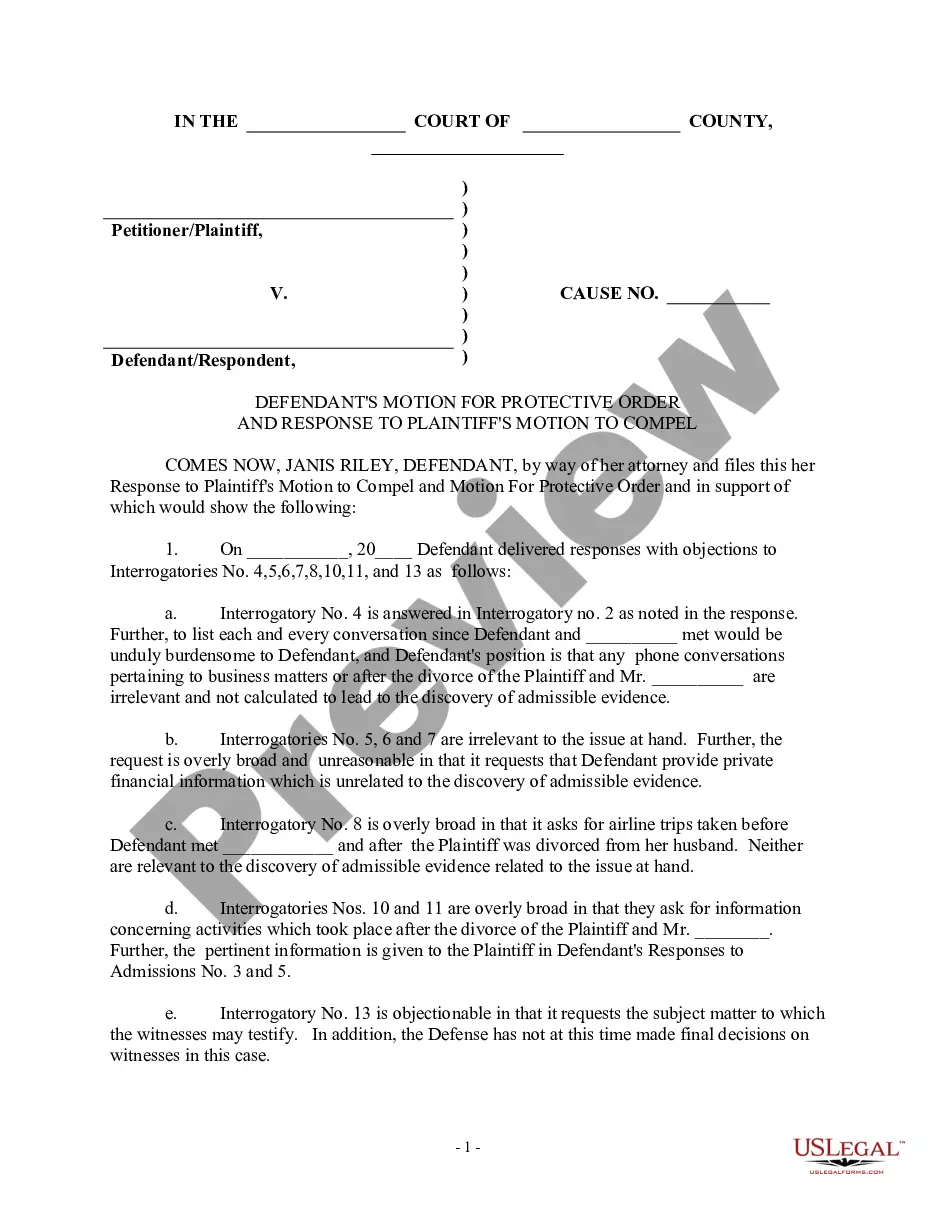
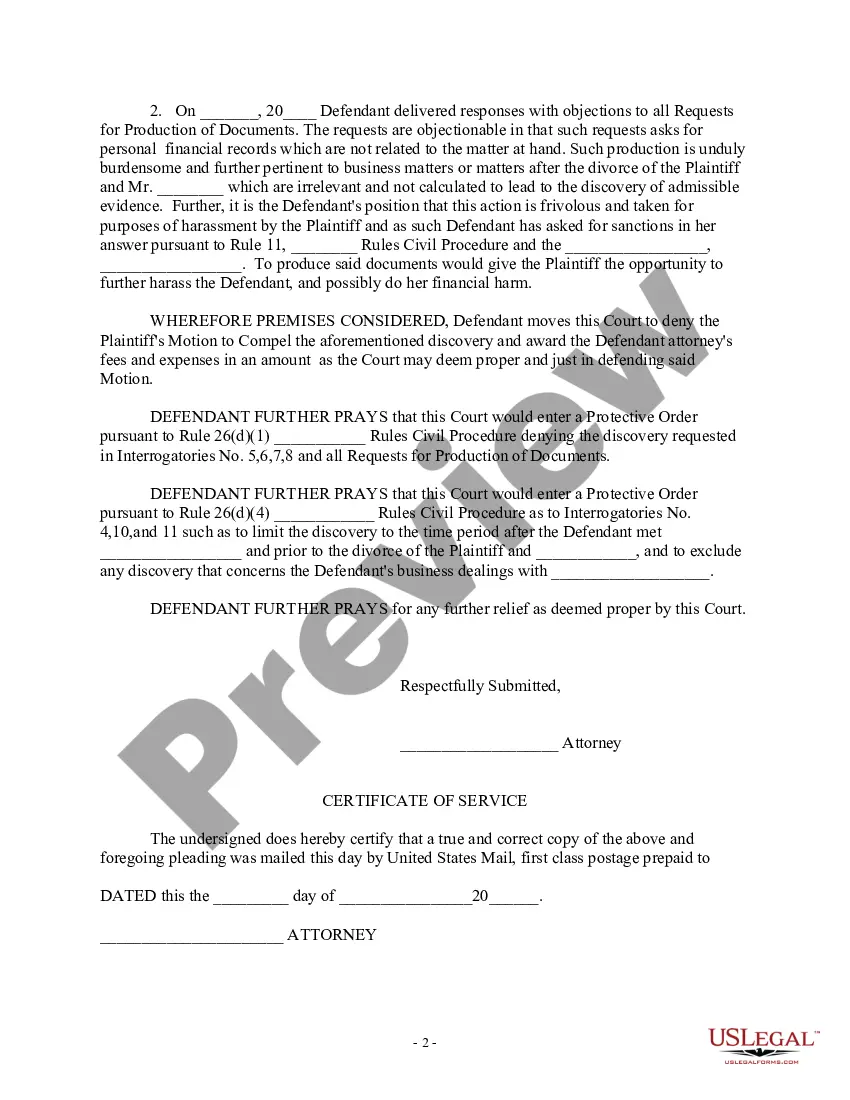
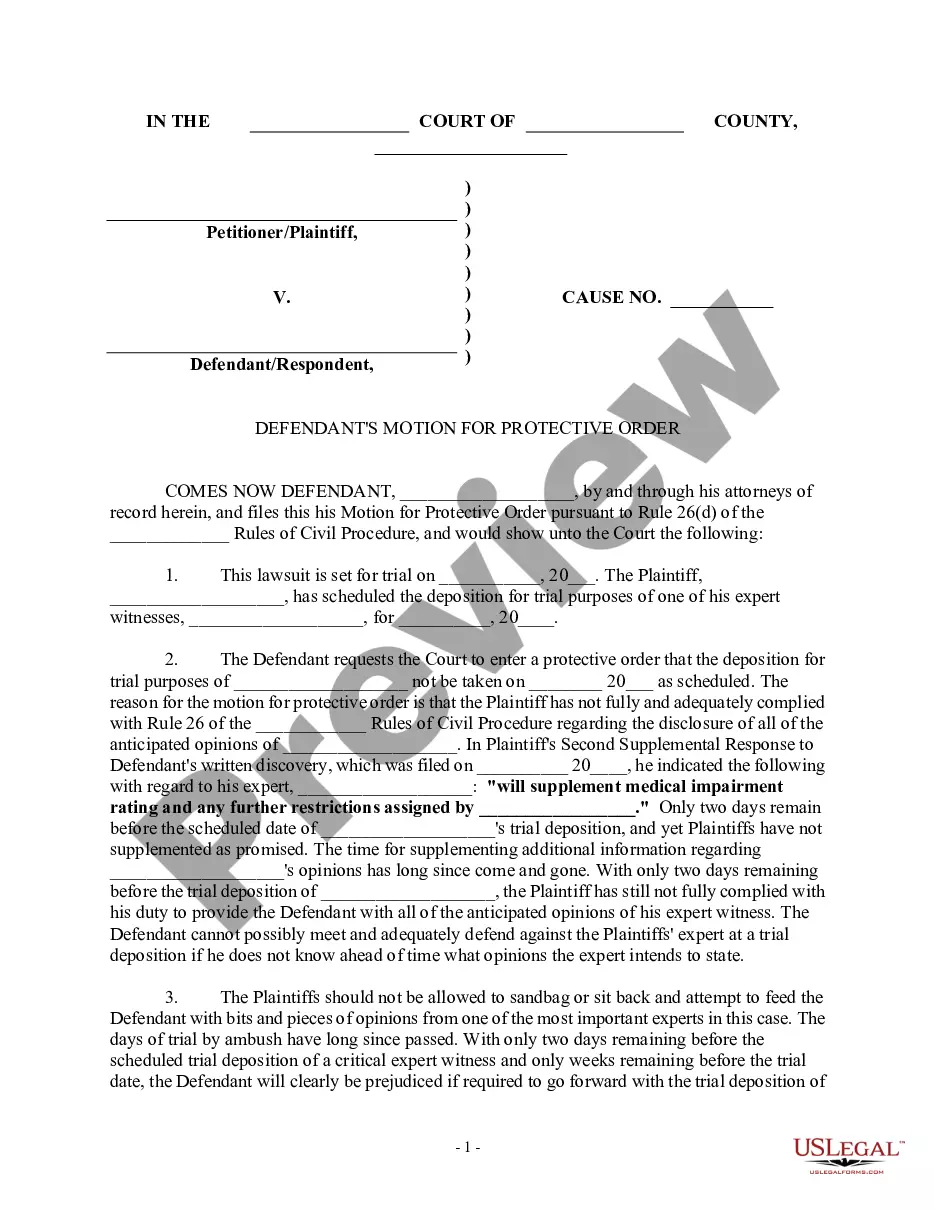
A motion for protective order in Texas serves to shield a party from disclosing sensitive information during legal proceedings. It is a crucial instrument when one party wishes to limit the scope of discovery or prevent harassment. Utilizing resources like US Legal Forms can guide you through the process of filing such a motion, ensuring proper adherence to legal standards and enhancing protection in your federal court case.
A protective motion refers to a formal request to the court to safeguard a party from undue burden, harassment, or disclosure of confidential information. This ensures that the legal process does not infringe on the rights of individuals involved. When filing a motion for protective order in a federal court, you actively pursue your right to privacy and seek necessary legal protections.
A motion for protective order in Texas is a legal request to the court to limit or restrict discovery or testimony in a case. This motion helps protect sensitive information from being disclosed inappropriately. By filing a motion for protective order in a federal court, you can ensure that your privacy rights are honored during legal proceedings.
Yes, parties must file Rule 26 disclosures in federal court to inform the opposing party about relevant information. These disclosures are part of the discovery process, providing necessary information regarding witnesses, documents, and expert witnesses expected to be utilized. To ensure compliance with federal court regulations, you need to understand how to efficiently prepare and submit these disclosures. When integrating a motion for protective order federal court, these disclosures help clarify what information will remain confidential.
Yes, a motion for protective order is categorized as a discovery motion within the legal process. It serves to limit or protect the disclosure of information during discovery, particularly when dealing with sensitive materials. Filing this motion allows you to seek the court's intervention in order to safeguard your interests. When pursuing a motion for protective order federal court, ensure that you clearly articulate the reasons for protecting the information in question.
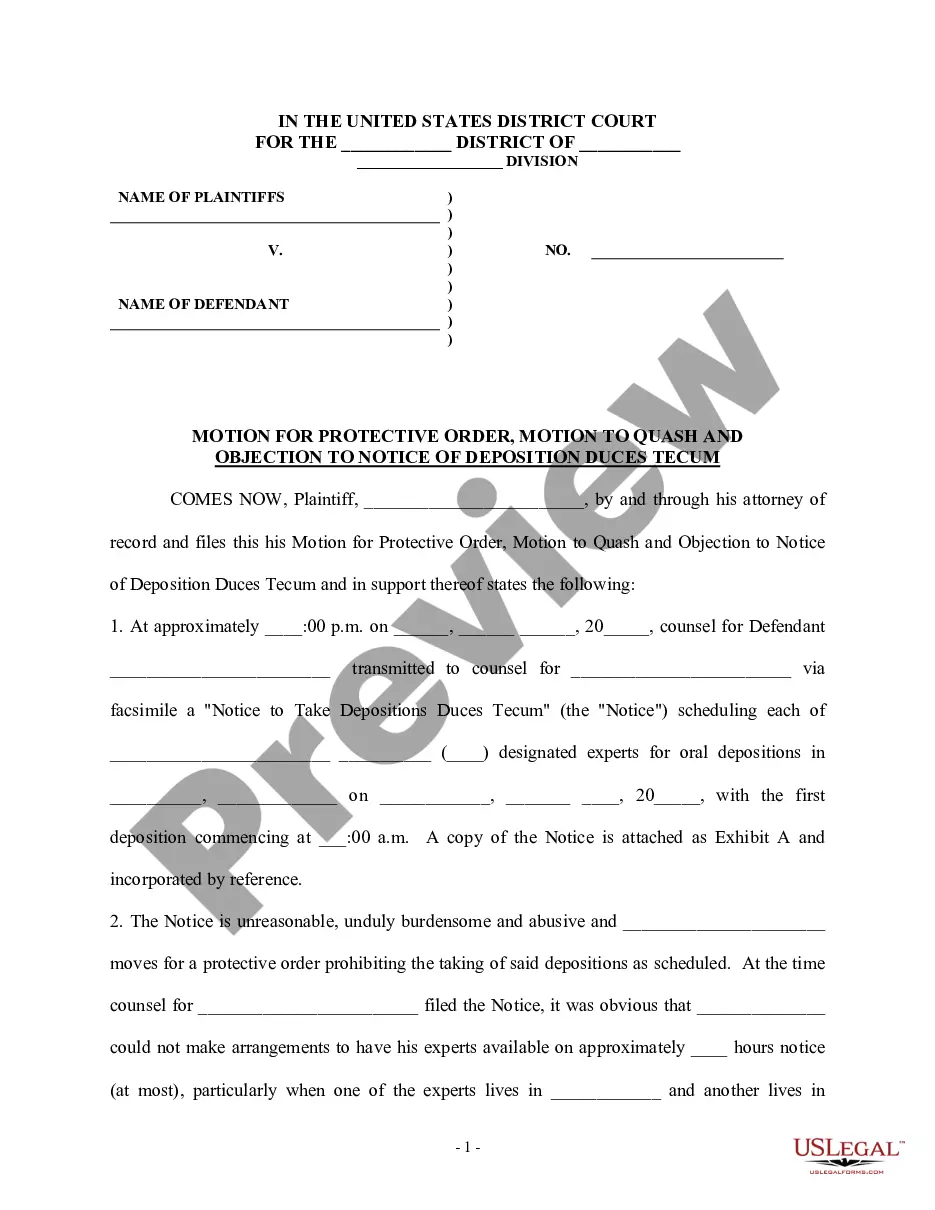
The federal rule for a protective order motion is primarily found in Rule 26(c) of the Federal Rules of Civil Procedure. This rule allows a party to seek the court's protection from disclosure of confidential or sensitive information. It outlines the procedures and considerations a court must take into account to determine if a protective order is warranted. Utilizing a motion for protective order federal court ensures legal compliance and protection of your confidential information.
Yes, in Florida, filing a motion for protective order can temporarily stay deposition proceedings pending a court’s decision. This means that you can pause depositions to address concerns over sensitive information or other relevant issues. By submitting this motion, you allow the court time to evaluate your request and make a ruling. Using a motion for protective order federal court can be an essential tool for protecting your rights during depositions.
Local Rule 26 refers to the rules governing discovery and disclosure in federal cases. It outlines the requirements for parties to share information during the discovery phase, including any motions for protective orders. Understanding Local Rule 26 is crucial for effectively navigating federal court procedures. This rule ensures that all parties have access to necessary information while also protecting sensitive data through a motion for protective order federal court.
Yes, a federal protective order exists under certain circumstances in federal court. This order is designed to safeguard sensitive information from being disclosed during legal proceedings. It helps protect private data, trade secrets, and other confidential materials. Obtaining a motion for protective order federal court is essential to ensure the integrity of your sensitive information.
Section 48 of the Federal Court Act addresses the rules concerning the protection of personal information and confidentiality in legal proceedings. This section allows parties to request a motion for protective order to shield sensitive information from public disclosure. Being informed about this section can help you effectively navigate issues related to privacy in federal court. For additional clarity, uslegalforms offers resources that can guide you through the complexities of federal court procedures.
