Wrongful Count Form Contract With The Law
Description

Get your form ready online
Our built-in tools help you complete, sign, share, and store your documents in one place.
Make edits, fill in missing information, and update formatting in US Legal Forms—just like you would in MS Word.
Download a copy, print it, send it by email, or mail it via USPS—whatever works best for your next step.
Sign and collect signatures with our SignNow integration. Send to multiple recipients, set reminders, and more. Go Premium to unlock E-Sign.
If this form requires notarization, complete it online through a secure video call—no need to meet a notary in person or wait for an appointment.
We protect your documents and personal data by following strict security and privacy standards.

Make edits, fill in missing information, and update formatting in US Legal Forms—just like you would in MS Word.

Download a copy, print it, send it by email, or mail it via USPS—whatever works best for your next step.

Sign and collect signatures with our SignNow integration. Send to multiple recipients, set reminders, and more. Go Premium to unlock E-Sign.

If this form requires notarization, complete it online through a secure video call—no need to meet a notary in person or wait for an appointment.

We protect your documents and personal data by following strict security and privacy standards.
Looking for another form?
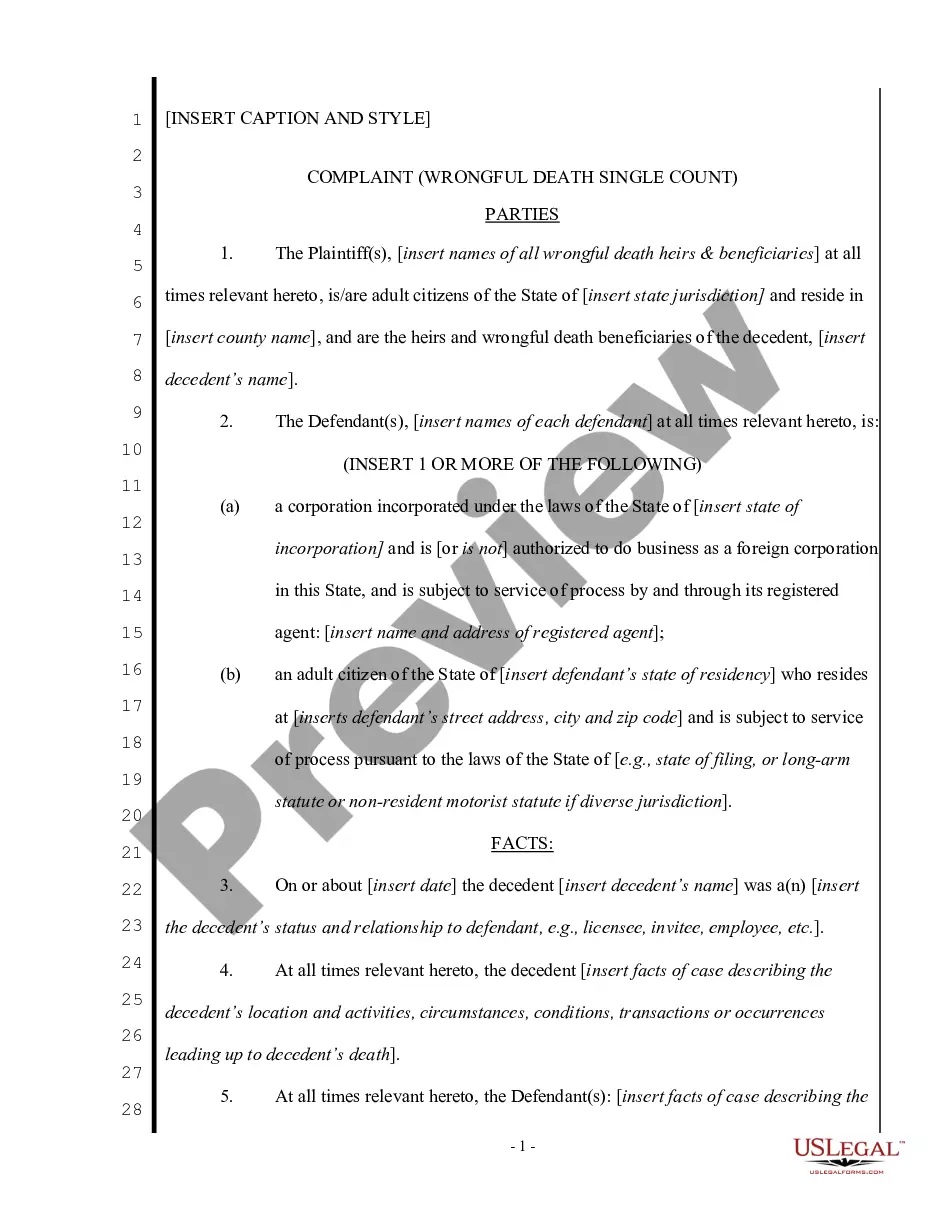
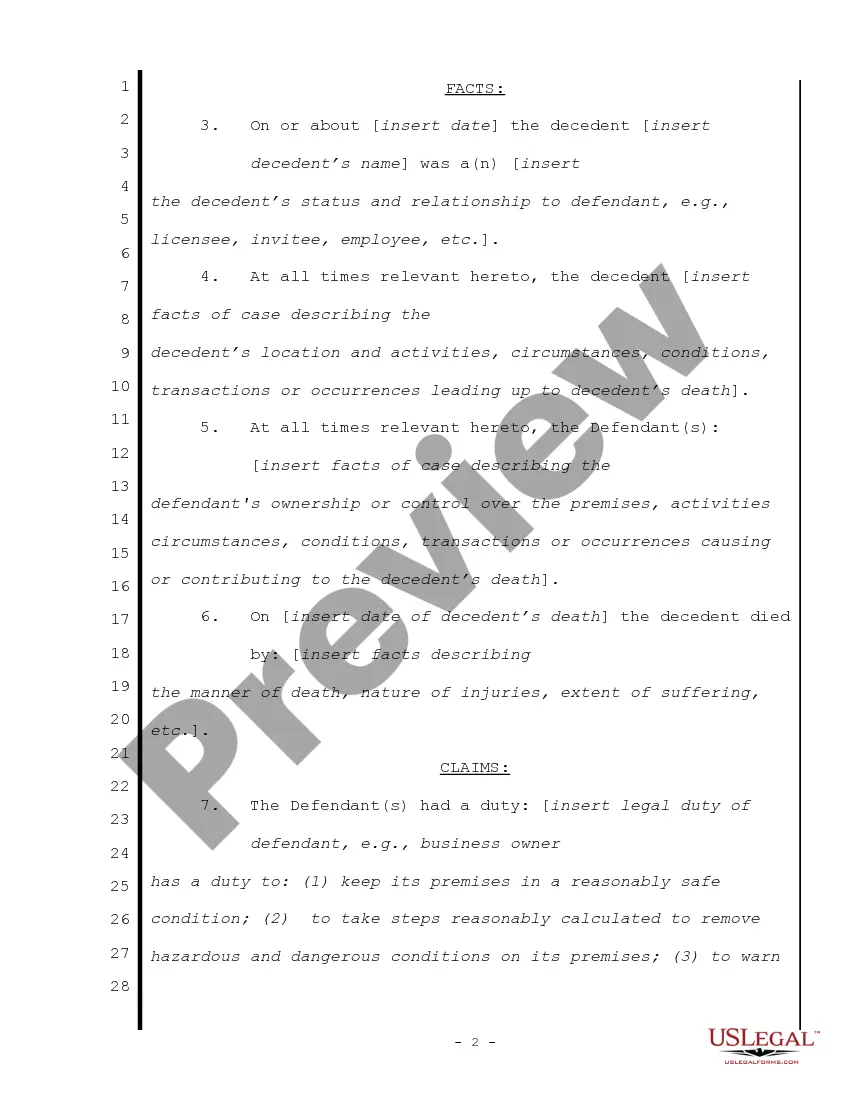
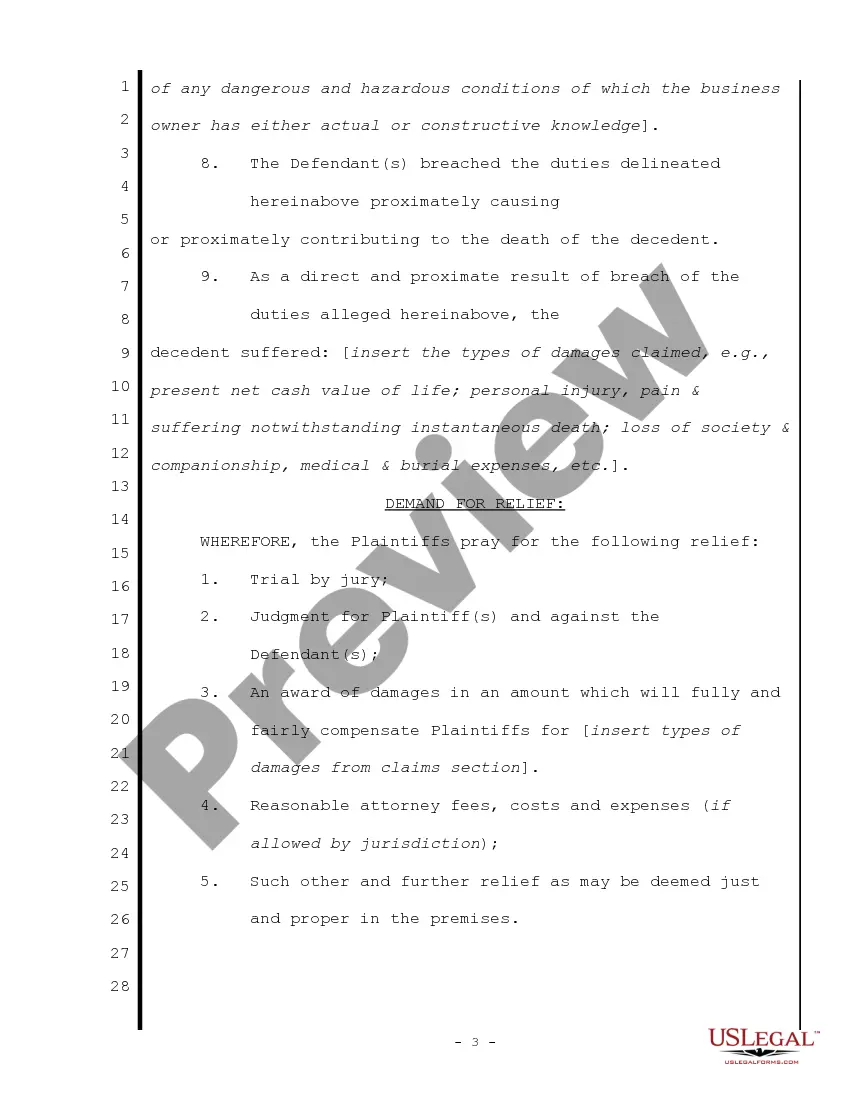
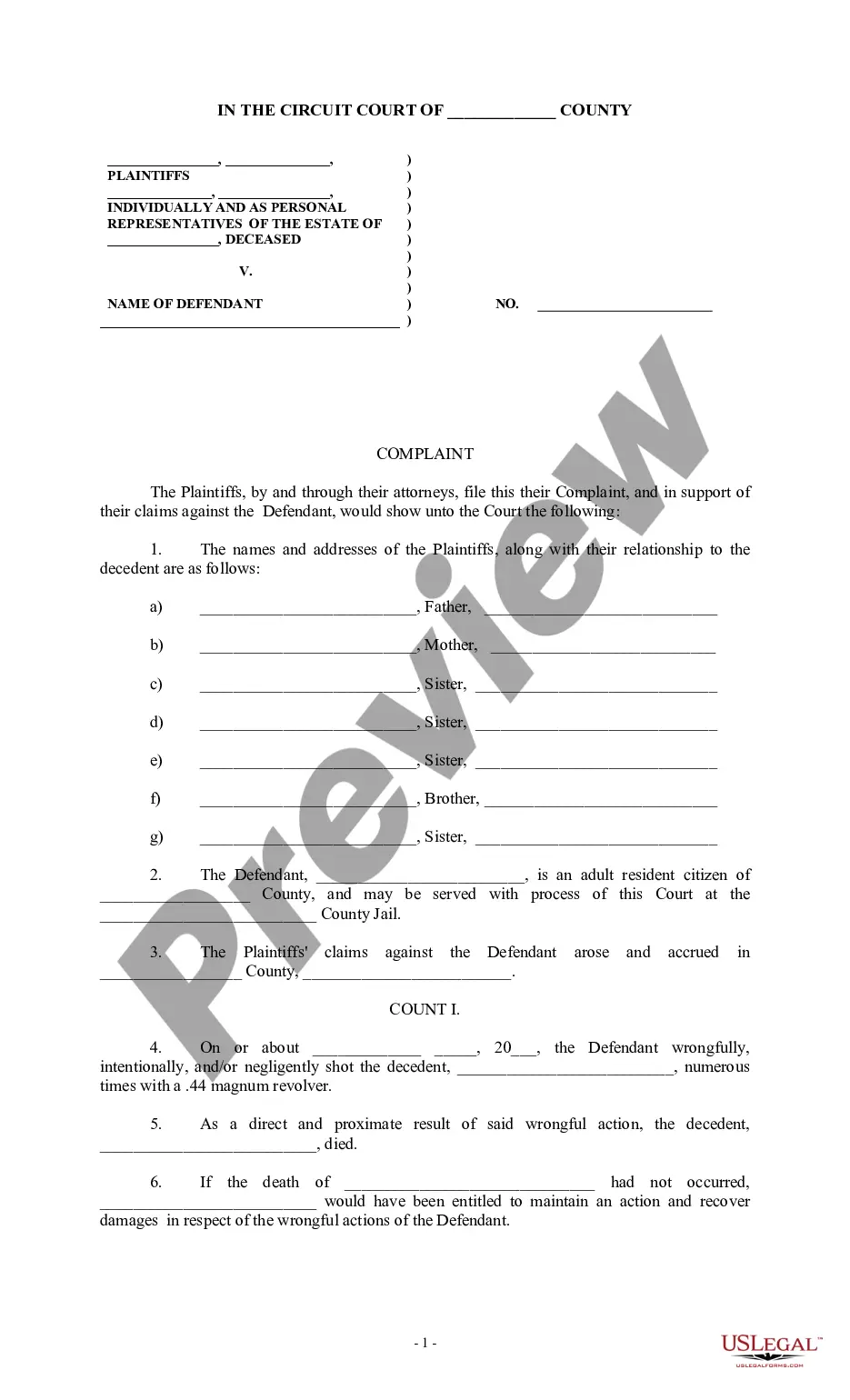
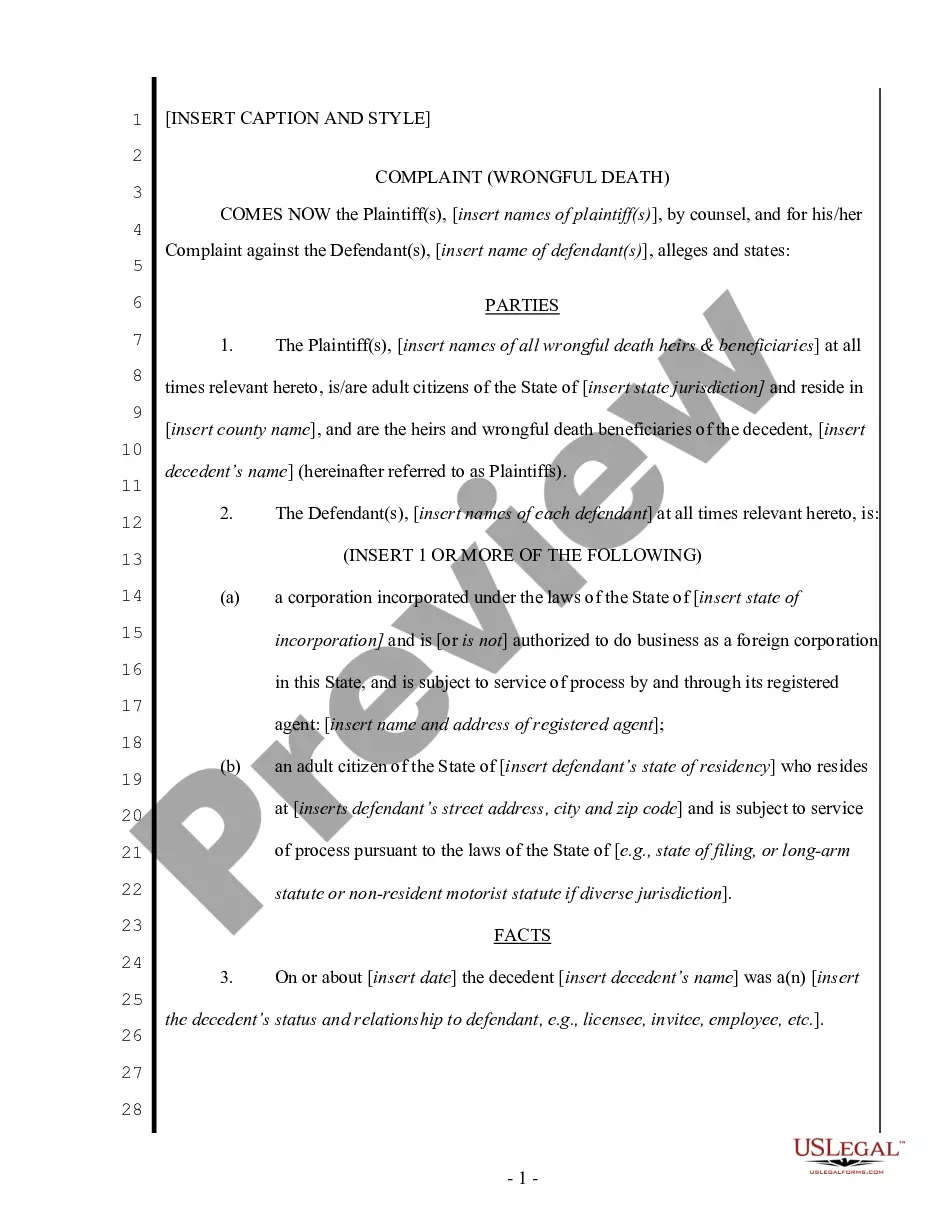
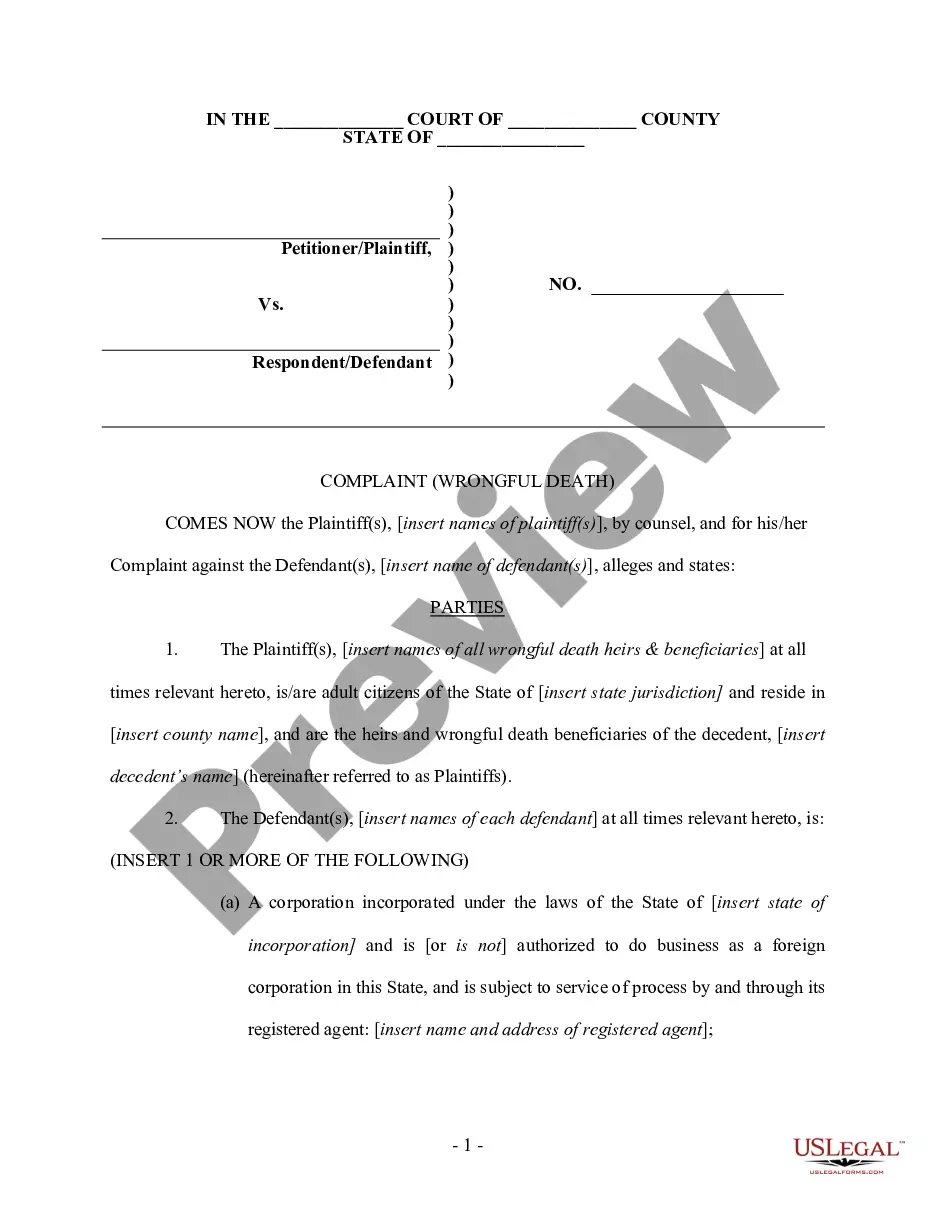
How to fill out Complaint For Wrongful Death - Single Count?
- If you have previously registered with US Legal Forms, log in to your account and select the required form template. Ensure your subscription is current; if it’s not, renew it per your payment plan.
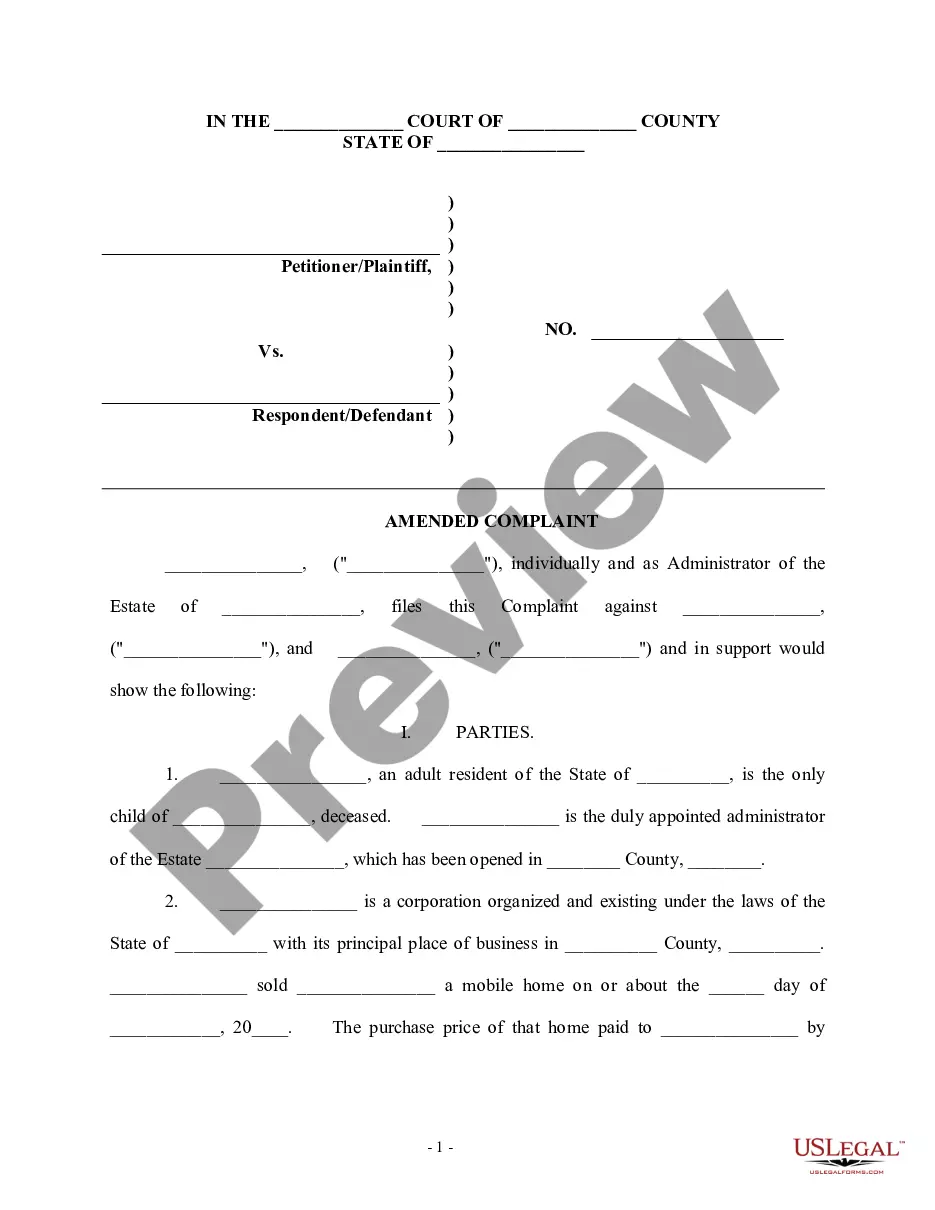
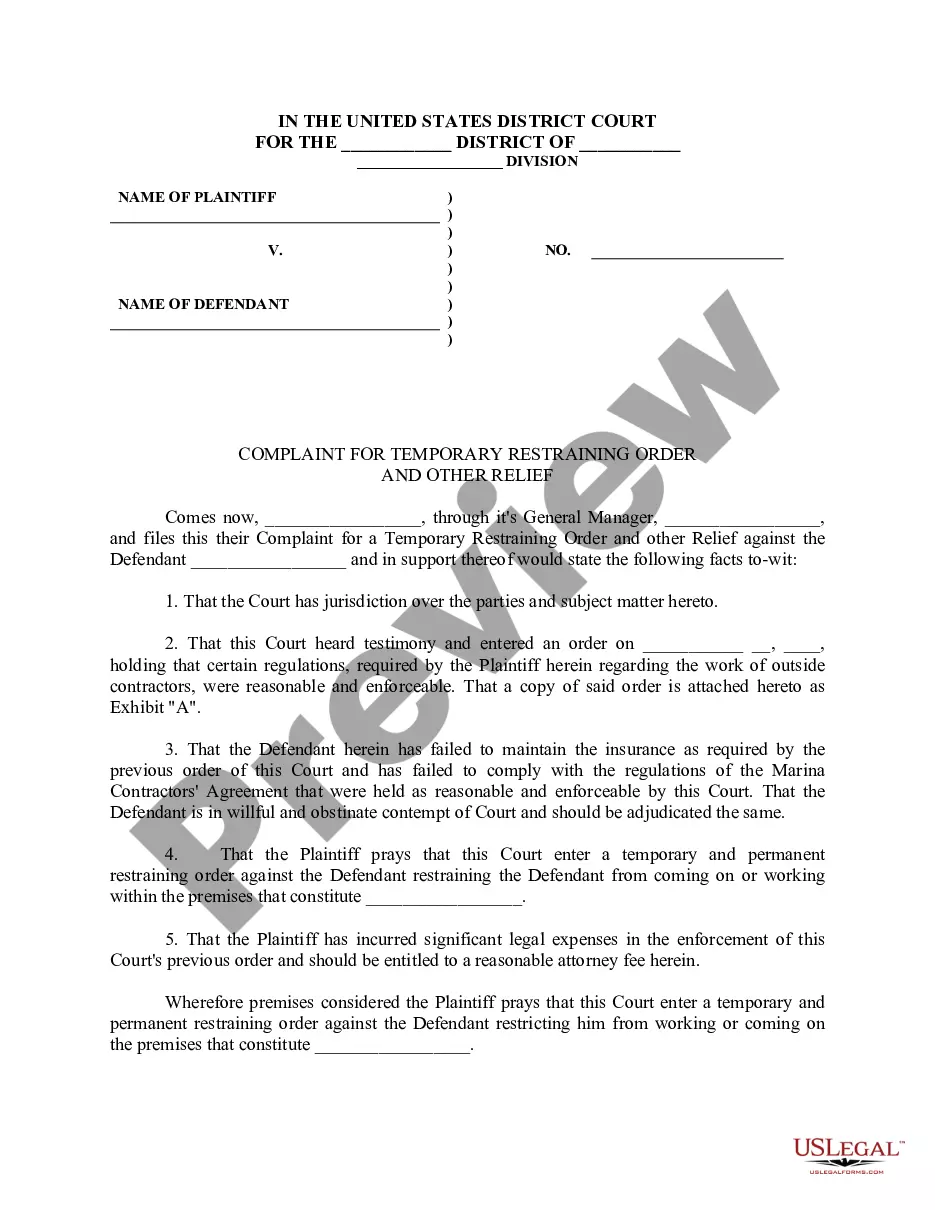
- For new users, start by reviewing the form description and Preview mode. Confirm the document meets your specific needs and adheres to your local jurisdiction.
- If adjustments are needed, utilize the Search tab to locate the correct template. Verify that it aligns with your requirements before moving forward.
- To purchase the document, click the Buy Now button and select your preferred subscription plan. Create an account to gain access to the comprehensive library.
- Complete your purchase by entering your credit card details or using your PayPal account for payment.
- Download the form to your device. You can also access it anytime via the My Forms section of your profile.
Using US Legal Forms not only provides quick access to a multitude of legal documents but also assures that all forms are fillable and editable according to your needs. With support from premium experts available, you're ensured a legally sound document.
Take the stress out of legal documentation. Start your journey with US Legal Forms today and ensure your wrongful count form is accurately executed!
Form popularity
FAQ
Termination may be considered wrongful discharge if it’s based on discriminatory reasons, retaliation for exercising a legal right, or if it violates an implied contract. If an employee is terminated after reporting violations or unsafe practices, this also falls under wrongful discharge. Knowing these grounds helps you recognize potential violations of wrongful count form contract with the law, empowering you to seek justice.
To prove wrongful termination, you must establish that your dismissal violated a statute or a company policy. This can involve demonstrating documentation of your employment history, correspondence related to your termination, and any relevant witness statements. Understanding the framework of wrongful count form contract with the law helps in gathering and presenting this evidence effectively. A well-prepared case is essential for success.
The odds of winning a wrongful termination case depend on various factors, such as the strength of your evidence and the specific laws in your state. Generally, cases backed by strong documentation and clear violations of rights tend to have higher success rates. It’s vital to consult with a legal professional who understands the nuances of wrongful count form contract with the law to evaluate your chances realistically and to guide you through the process effectively.
Wrongful termination occurs when an employee is fired in violation of federal or state laws, or company policies. Situations such as being dismissed for performing a protected action, like filing a complaint about discrimination, can fit this definition. When you understand these classifications, you can better assess your circumstances against the framework of wrongful count form contract with the law, which is designed to protect workers' rights.
To write an effective statement for wrongful termination, start by clearly outlining the facts surrounding your termination. Include details about your employment, the reasons given for your dismissal, and any evidence that supports your case. Focus on how your situation aligns with the concept of wrongful count form contract with the law, as this will strengthen your argument. Remember, clarity and brevity are key when presenting your case.
Wrongful discharge may occur when an employee is fired for discriminatory reasons, such as age, race, or gender. Another example includes termination due to retaliation for whistleblowing, where an employee exposes illegal activities. Lastly, being dismissed without following proper company policies can also classify as wrongful discharge under the umbrella of wrongful count form contract with the law, highlighting the importance of fair treatment in the workplace.
A prime example of a wrongful termination case is when an employee is fired for reporting unsafe working conditions. In this situation, the termination violates public policy, as the employee acted in good faith to protect themselves and others. This aligns with the concept of wrongful count form contract with the law, which ensures that employees cannot be punished for lawful actions. Choosing to understand these rights can empower you to take action.
A successful breach of contract claim must include three key elements: a valid contract, a breach of that contract by one party, and measurable damages caused by the breach. Each element must be clearly established to support your case in court. Understanding these components helps create a solid foundation for your claim. Resources available through platforms like US Legal Forms can assist you with wrongful count form contract with the law, making it easier to identify these critical elements.
Proving a breach of contract can be complex, primarily depending on the clarity of the contract terms. You need to demonstrate that a valid contract existed, that the other party breached it, and that you sustained damages due to that breach. With legal documentation tools from US Legal Forms, crafting a clear contract can make your case stronger. Understanding wrongful count form contract with the law can also enhance your chances of proving your claim.
The amount you can sue for typically depends on the actual damages suffered due to the breach. This includes lost profits, expenses incurred, and any additional costs related to the breach. In some cases, you may also seek punitive damages if the breach was willful. It’s important to understand the limits set under the wrongful count form contract with the law to determine potential compensation accurately.