Wrongful Count Civil Actions With Theft
Description
Get your form ready online
Our built-in tools help you complete, sign, share, and store your documents in one place.
Make edits, fill in missing information, and update formatting in US Legal Forms—just like you would in MS Word.
Download a copy, print it, send it by email, or mail it via USPS—whatever works best for your next step.
Sign and collect signatures with our SignNow integration. Send to multiple recipients, set reminders, and more. Go Premium to unlock E-Sign.
If this form requires notarization, complete it online through a secure video call—no need to meet a notary in person or wait for an appointment.
We protect your documents and personal data by following strict security and privacy standards.

Make edits, fill in missing information, and update formatting in US Legal Forms—just like you would in MS Word.

Download a copy, print it, send it by email, or mail it via USPS—whatever works best for your next step.

Sign and collect signatures with our SignNow integration. Send to multiple recipients, set reminders, and more. Go Premium to unlock E-Sign.

If this form requires notarization, complete it online through a secure video call—no need to meet a notary in person or wait for an appointment.

We protect your documents and personal data by following strict security and privacy standards.
Looking for another form?
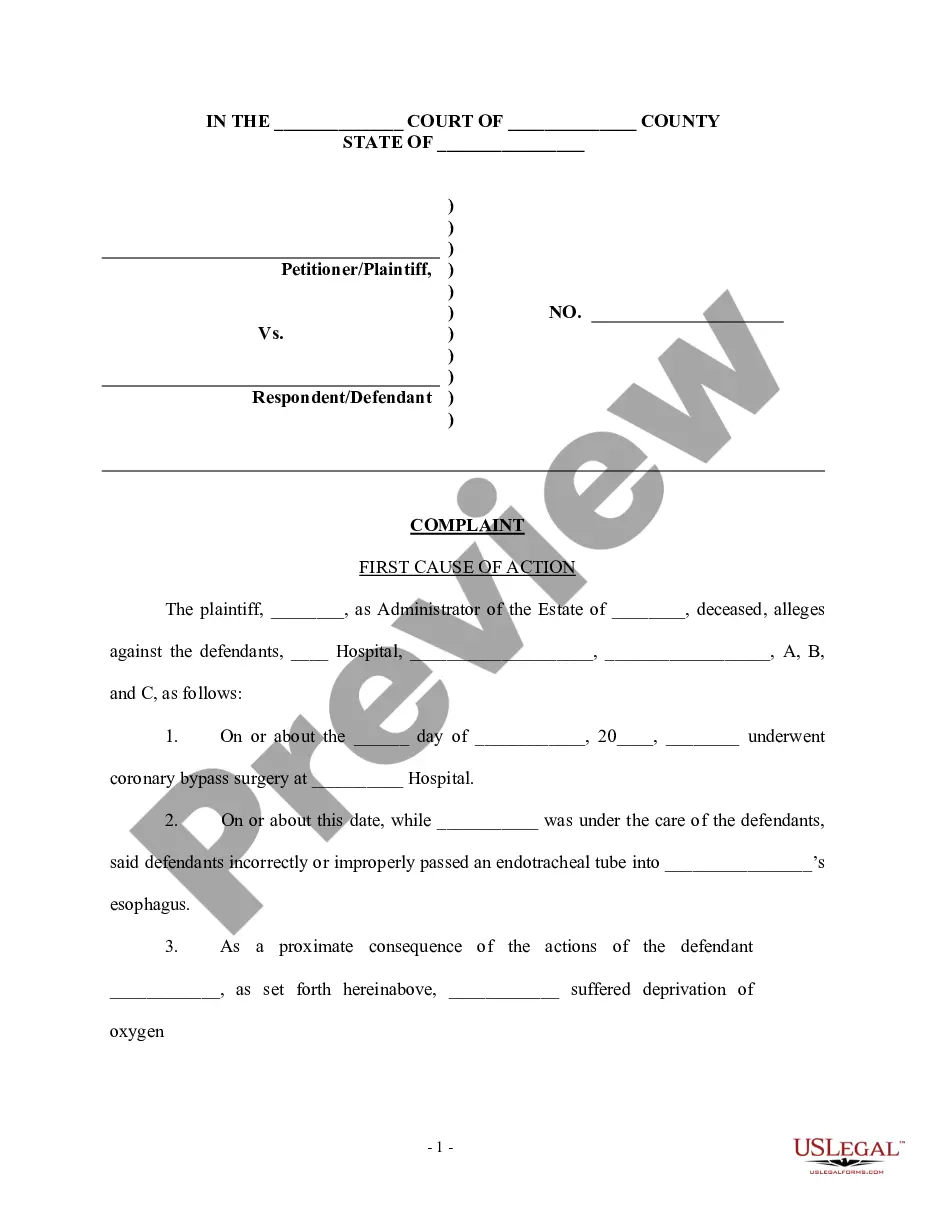
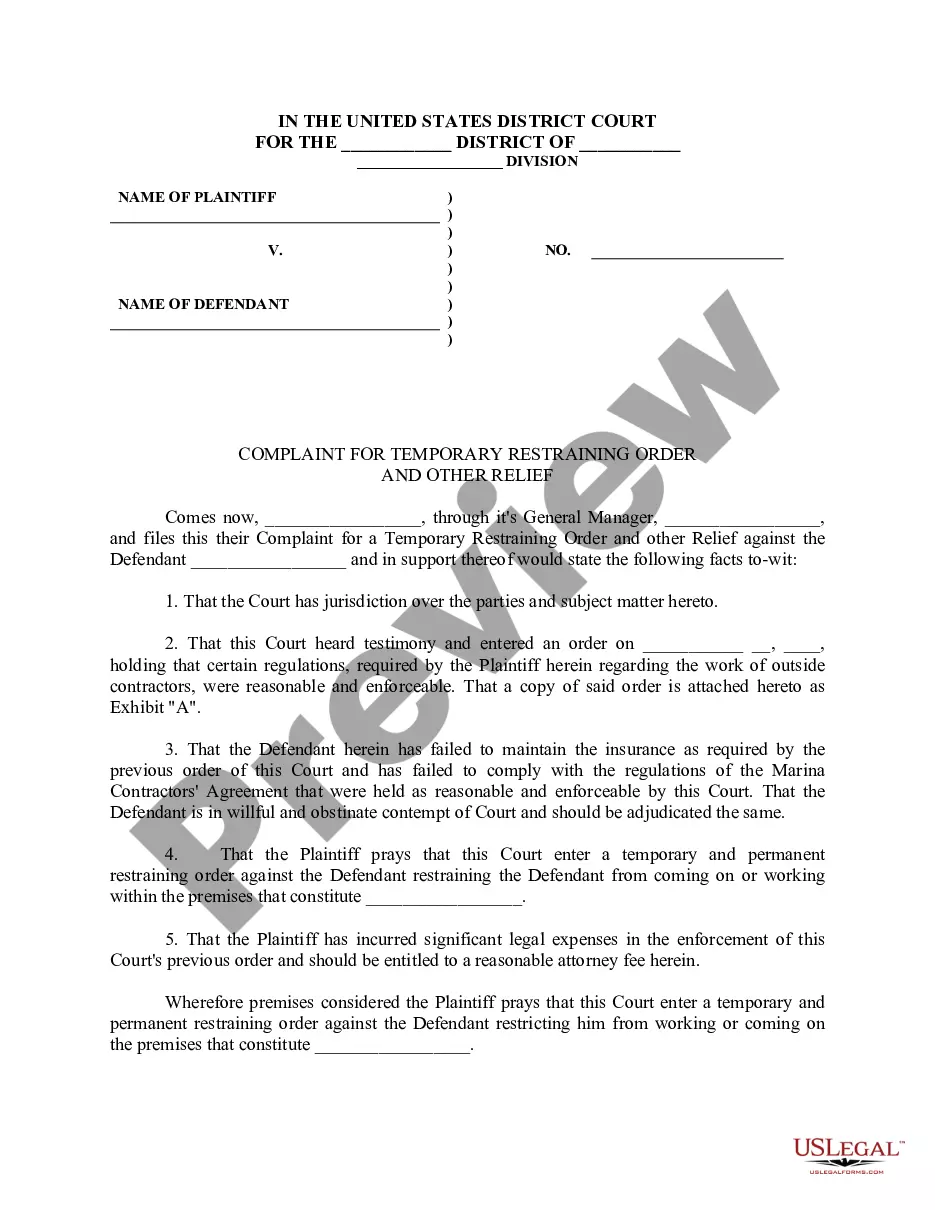
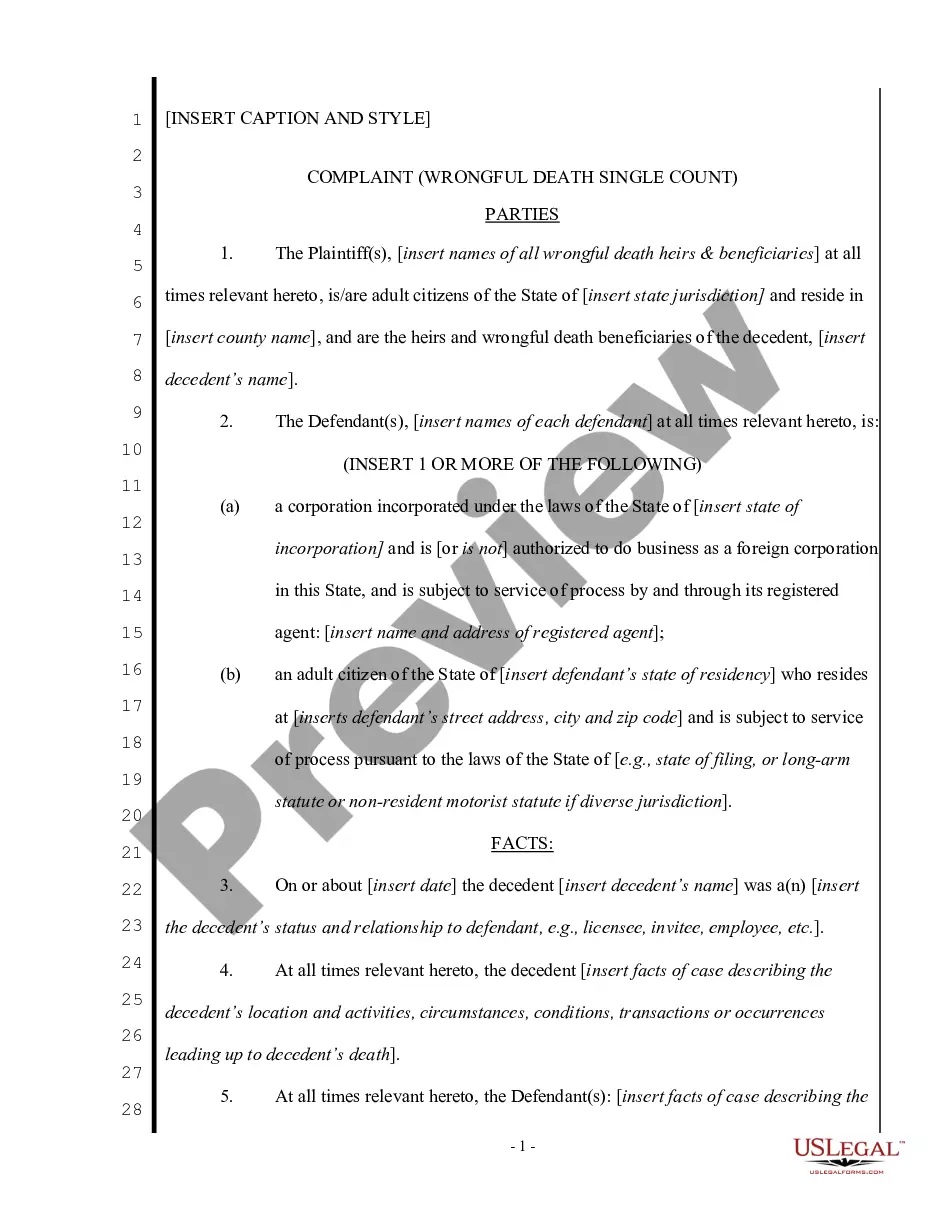
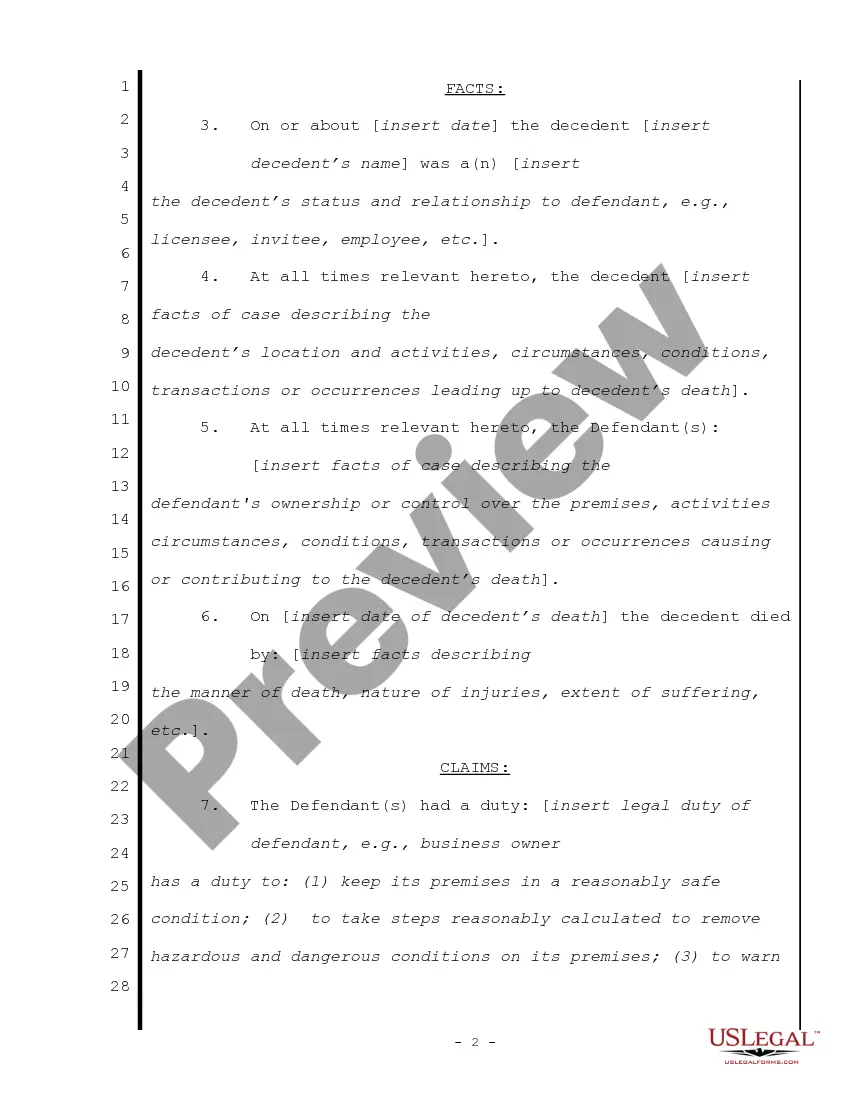
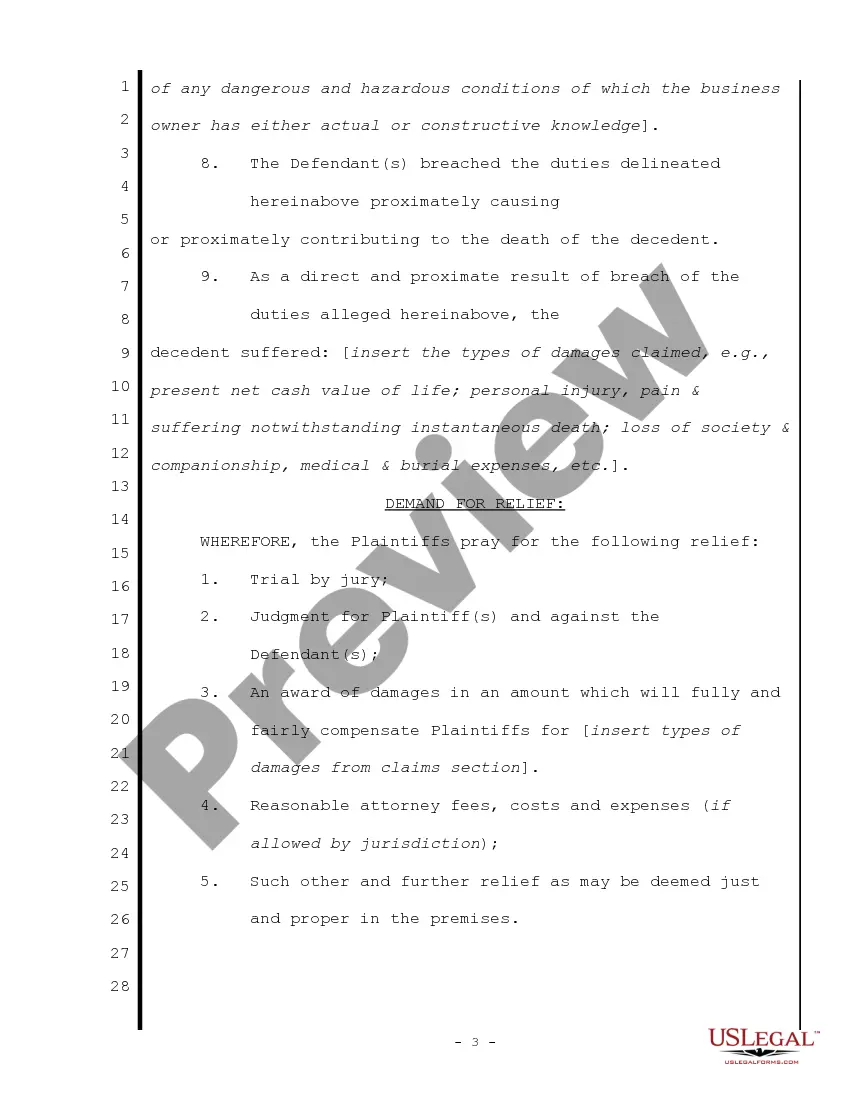
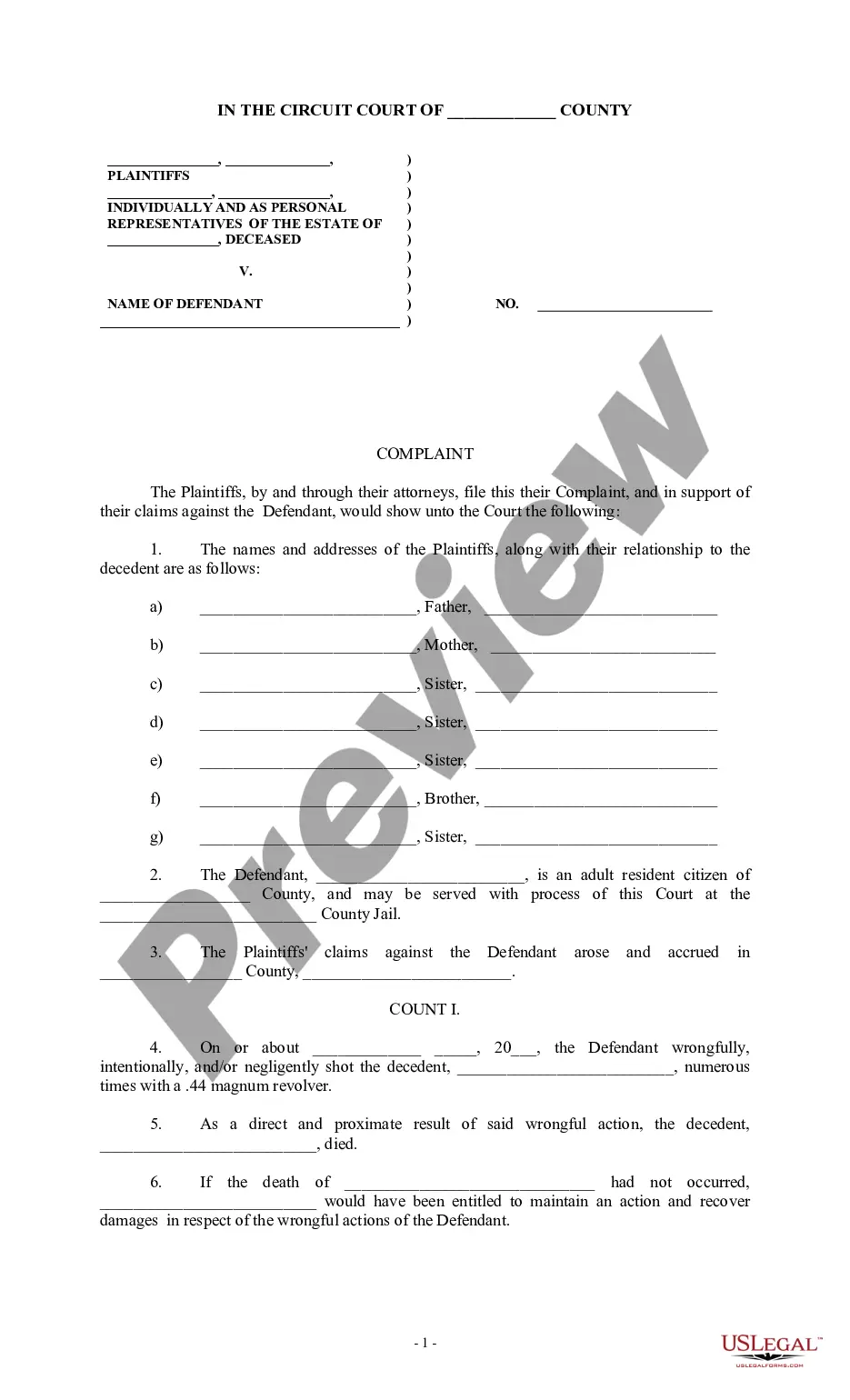
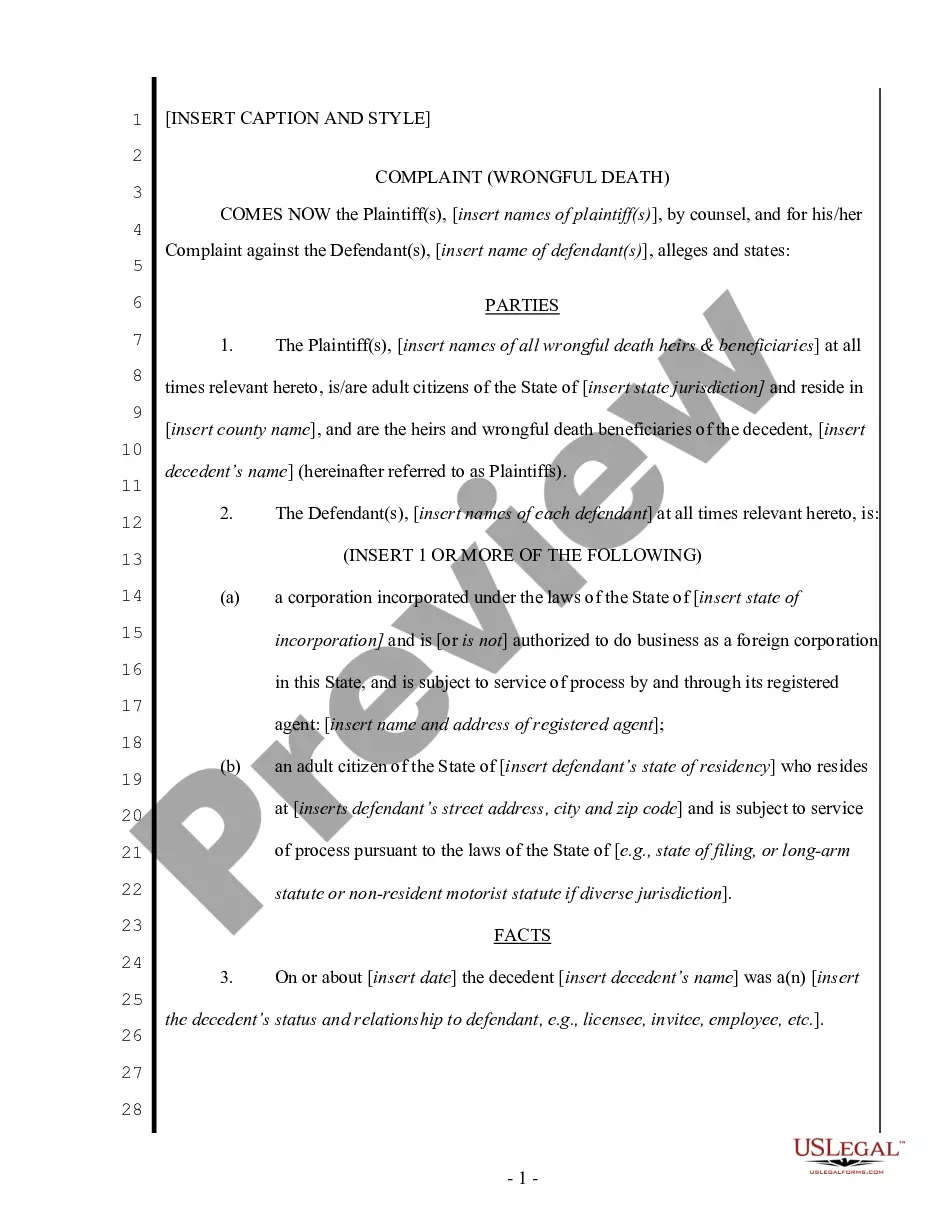
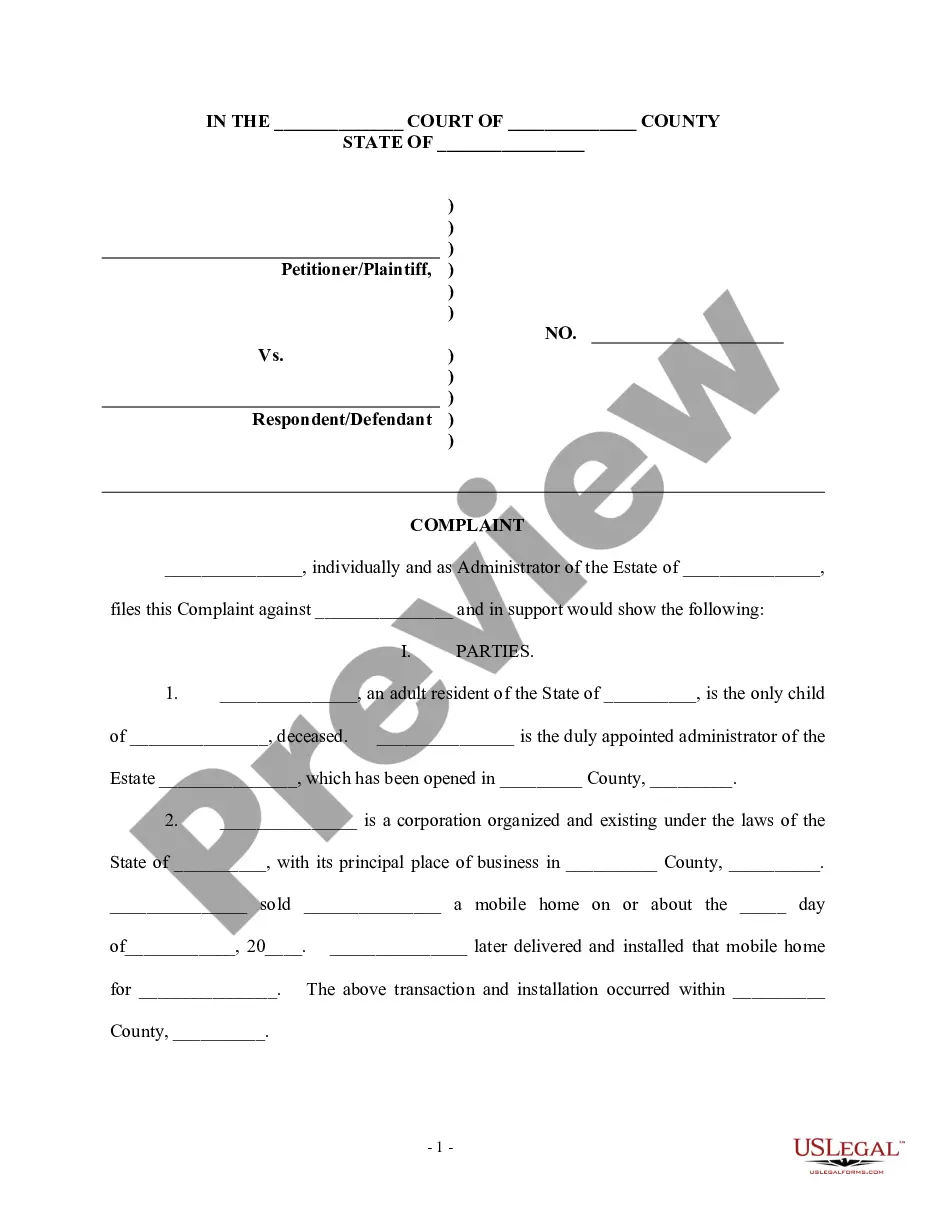
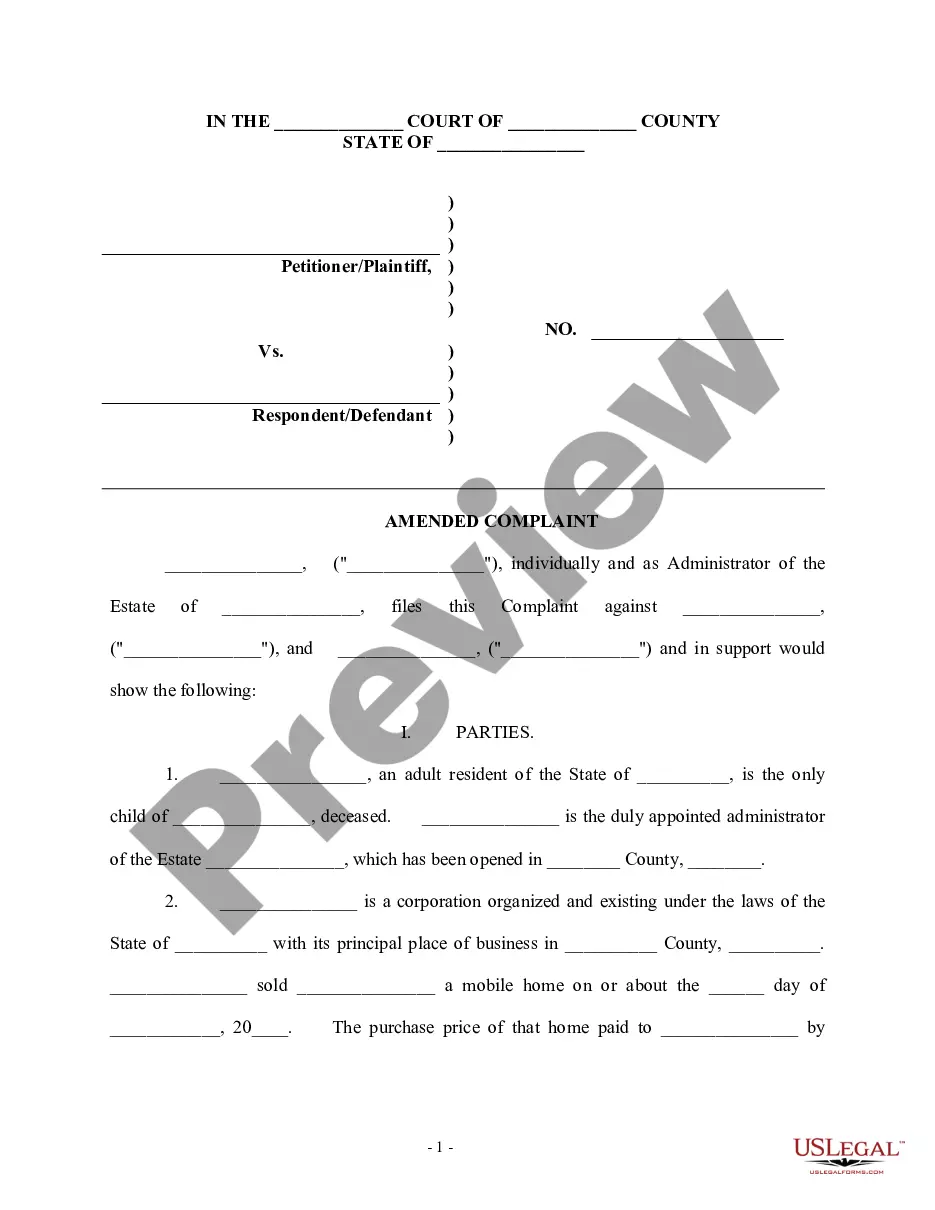
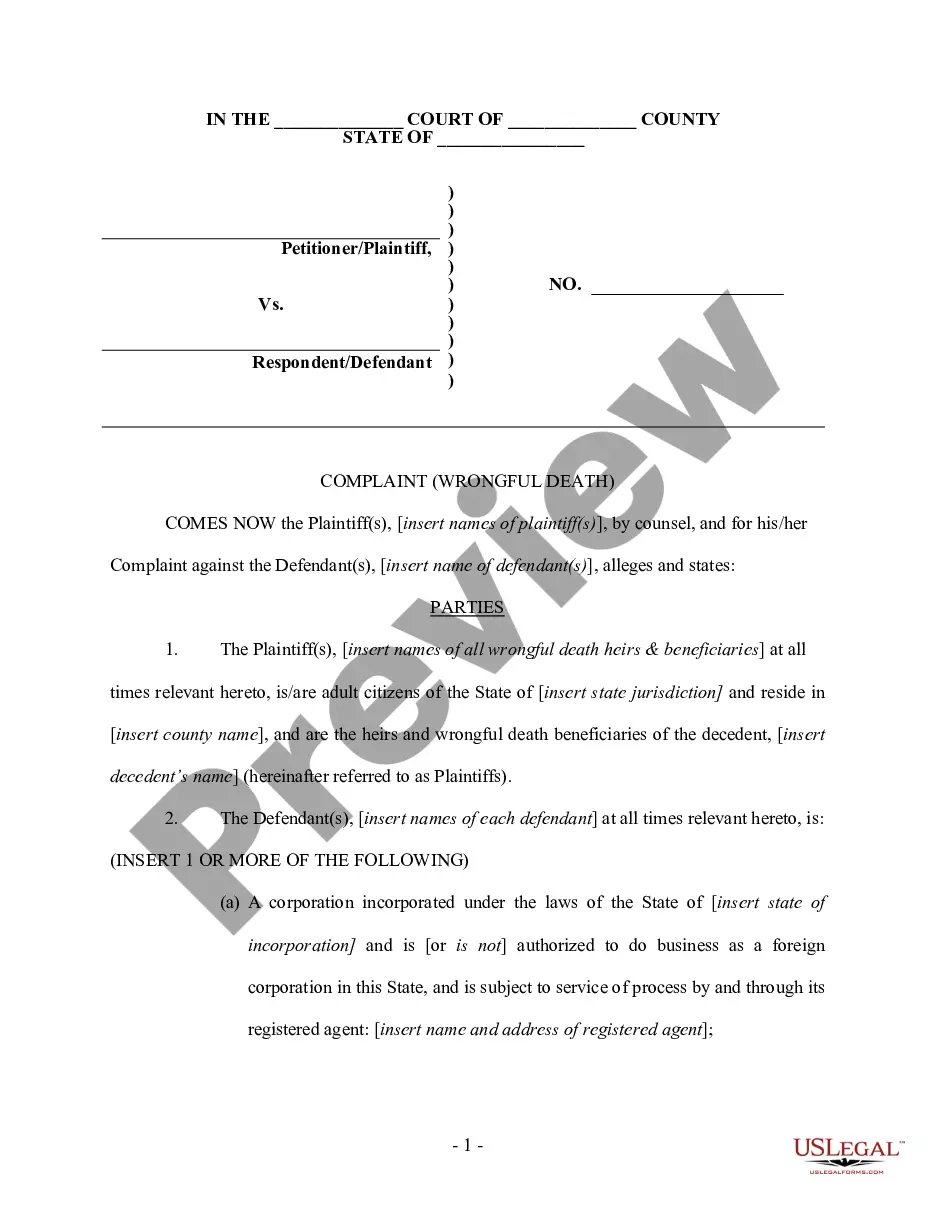
How to fill out Complaint For Wrongful Death - Single Count?
- Log into your US Legal Forms account. If you're a first-time user, create an account to access the document library.
- Browse the available forms or use the search feature to find 'wrongful count civil actions with theft.' Review the preview and description to ensure it fits your needs.
- If you need an alternative form, utilize the search function to locate a suitable template that matches your local jurisdiction.
- Select the form you require, click on the 'Buy Now' button, and choose your subscription plan.
- Proceed to payment by entering your credit card or opting for PayPal to complete the transaction.
- Download the template directly to your device, and check the 'My Forms' section in your account for easy access in the future.
By following these steps, you can swiftly access the necessary legal documents to address your wrongful count civil actions with theft.
Start using US Legal Forms today to empower yourself and ensure your documents are accurate and legally compliant!
Form popularity
FAQ
The maximum amount you can sue for in civil court often depends on the nature of the claim, including wrongful count civil actions with theft. In certain jurisdictions, there may be limits on recoverable damages, but in general, you can seek significant compensation. Understanding state laws about damage caps is crucial. Consulting a legal expert can clarify your potential compensation.
A civil cause of action refers to a situation where a person can bring a lawsuit based on wrongful count civil actions with theft. This means that harm has occurred due to someone else's illegal actions, warranting a legal remedy. Common causes of action include breach of contract, negligence, or theft. Knowing the basis for your claim helps you proceed effectively.
Yes, you can sue someone civilly for theft through wrongful count civil actions with theft. This means you can seek compensation for losses caused by the theft. A civil suit allows you to claim damages beyond just criminal penalties. It's essential to gather evidence and understand your rights in these situations.
To prove you were falsely accused, document all relevant details surrounding the incident and identify any inconsistencies in the accuser's statement. Gathering evidence to support your claims is crucial in wrongful count civil actions with theft. Consulting an experienced attorney can help you navigate the legal complexities involved in these situations.
Defending yourself against false accusations requires a solid strategy. First, collect every piece of evidence that disproves the allegation; this could include timelines, character references, or any correspondence. Engaging with a legal platform like USLegalForms can provide templates and resources for building your defense effectively.
Proving your innocence involves assembling credible evidence that dismisses the theft accusation. Documentation, reliable witnesses, and even alibi proofs can bolster your case against wrongful count civil actions with theft. Always keep lines of communication open with a legal professional who specializes in such matters.
It is possible to face theft charges without strong evidence, but it can weaken the prosecution's case significantly. In wrongful count civil actions with theft, the burden of proof lies on the accuser to establish guilt. Having a knowledgeable legal advisor can help demonstrate the lack of evidence against you.
To prove your innocence in wrongful count civil actions with theft, gather evidence that supports your claims. Collect documents, witness statements, or any video footage that can clarify your involvement. Additionally, consider consulting with a legal expert who can guide you on the best approach to defend your rights.
Yes, you can sue someone in civil court for theft if you can substantiate your claim. The civil justice system provides a venue for victims of theft to seek compensation through wrongful count civil actions with theft. It’s important to collect evidence and possibly consult legal resources like uslegalforms, which can guide you through the process. Knowing your rights empowers you to pursue justice effectively.
The civil side of theft is typically referred to as 'conversion' or 'theft liability.' This legal framework enables victims to seek compensation for their losses in a civil court. When engaging in wrongful count civil actions with theft, it is vital to understand how the law defines your rights. Gathering evidence and documenting your loss will strengthen your case and potential recovery.