Wrongful Count Actions Paper With Cases
Description
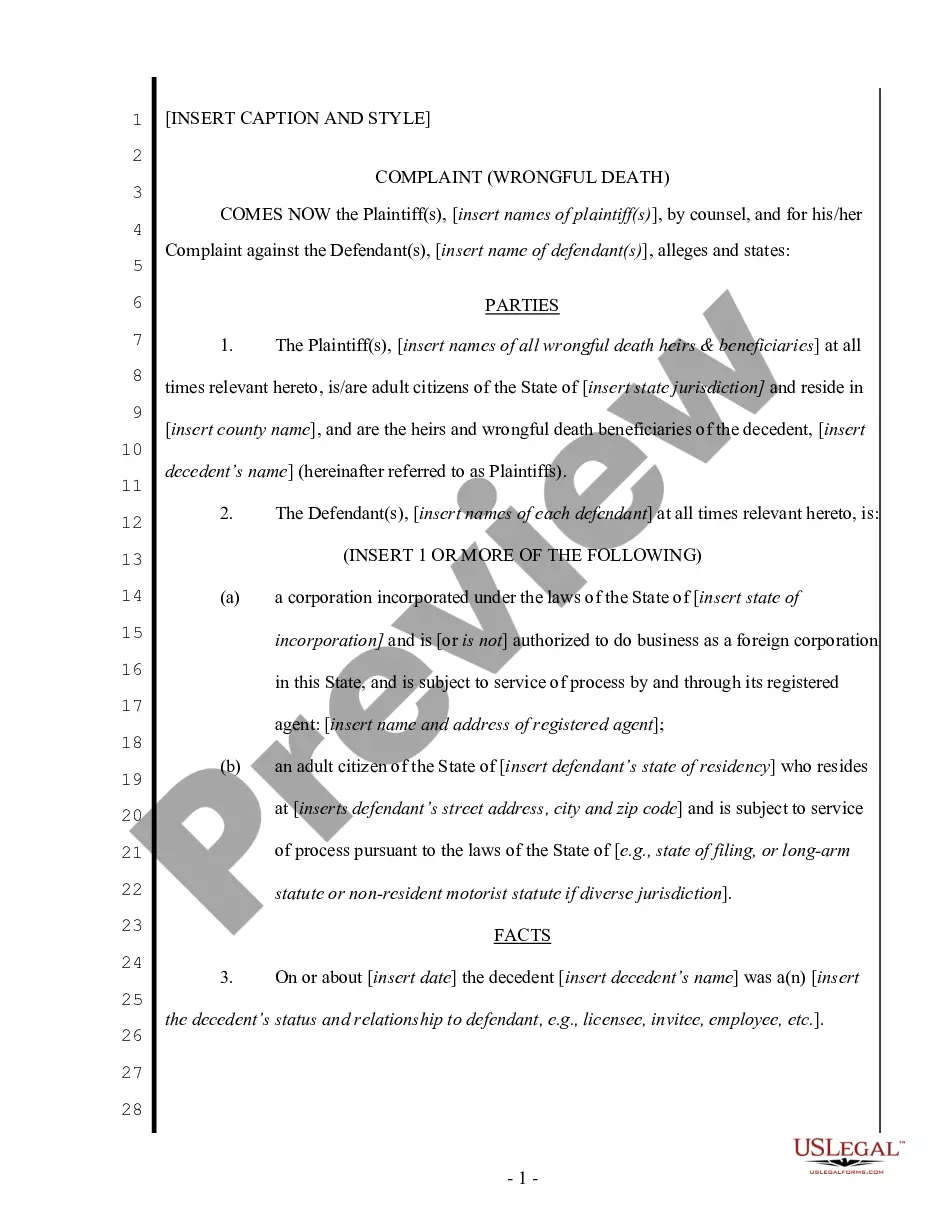

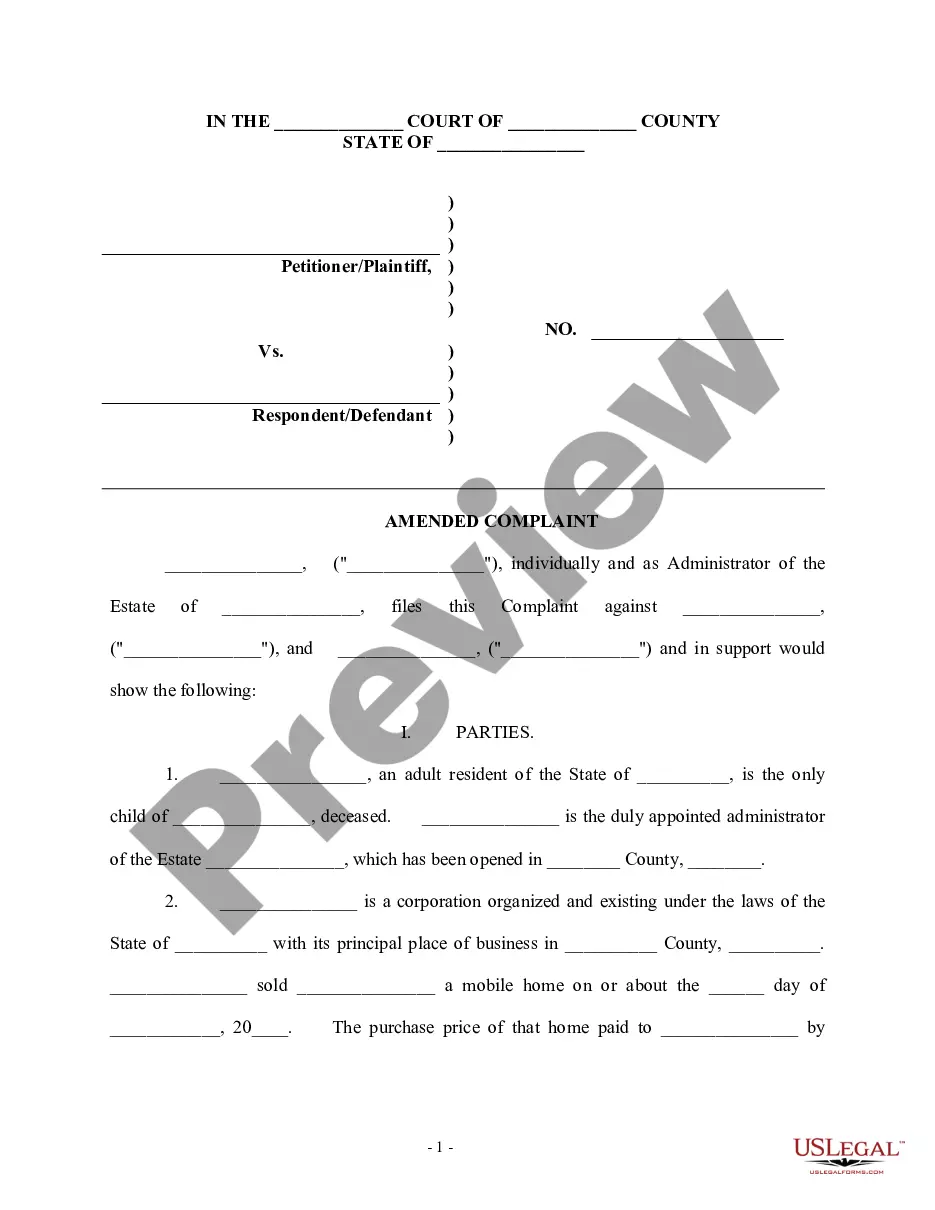
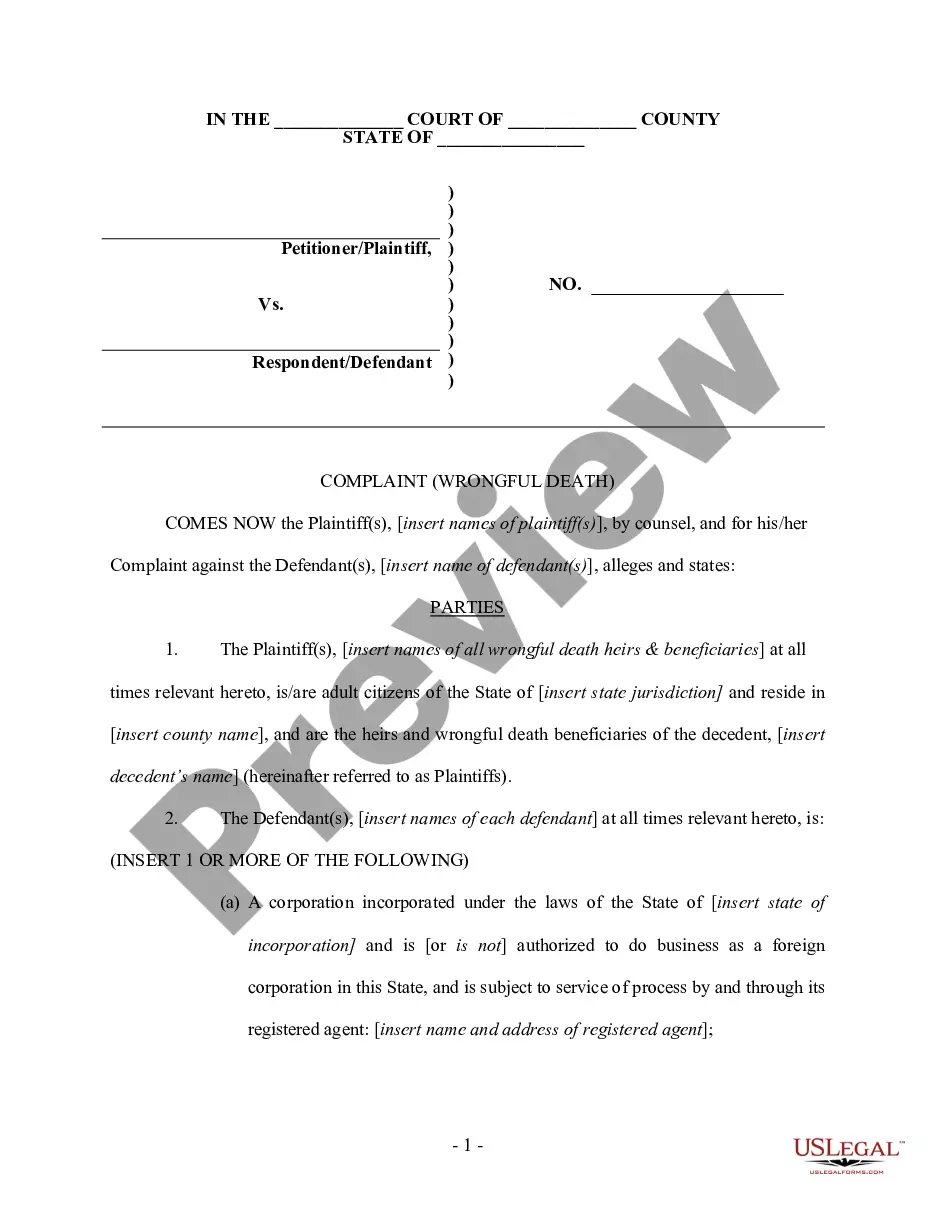
Get your form ready online
Our built-in tools help you complete, sign, share, and store your documents in one place.
Make edits, fill in missing information, and update formatting in US Legal Forms—just like you would in MS Word.
Download a copy, print it, send it by email, or mail it via USPS—whatever works best for your next step.
Sign and collect signatures with our SignNow integration. Send to multiple recipients, set reminders, and more. Go Premium to unlock E-Sign.
If this form requires notarization, complete it online through a secure video call—no need to meet a notary in person or wait for an appointment.
We protect your documents and personal data by following strict security and privacy standards.

Make edits, fill in missing information, and update formatting in US Legal Forms—just like you would in MS Word.

Download a copy, print it, send it by email, or mail it via USPS—whatever works best for your next step.

Sign and collect signatures with our SignNow integration. Send to multiple recipients, set reminders, and more. Go Premium to unlock E-Sign.

If this form requires notarization, complete it online through a secure video call—no need to meet a notary in person or wait for an appointment.

We protect your documents and personal data by following strict security and privacy standards.
Looking for another form?




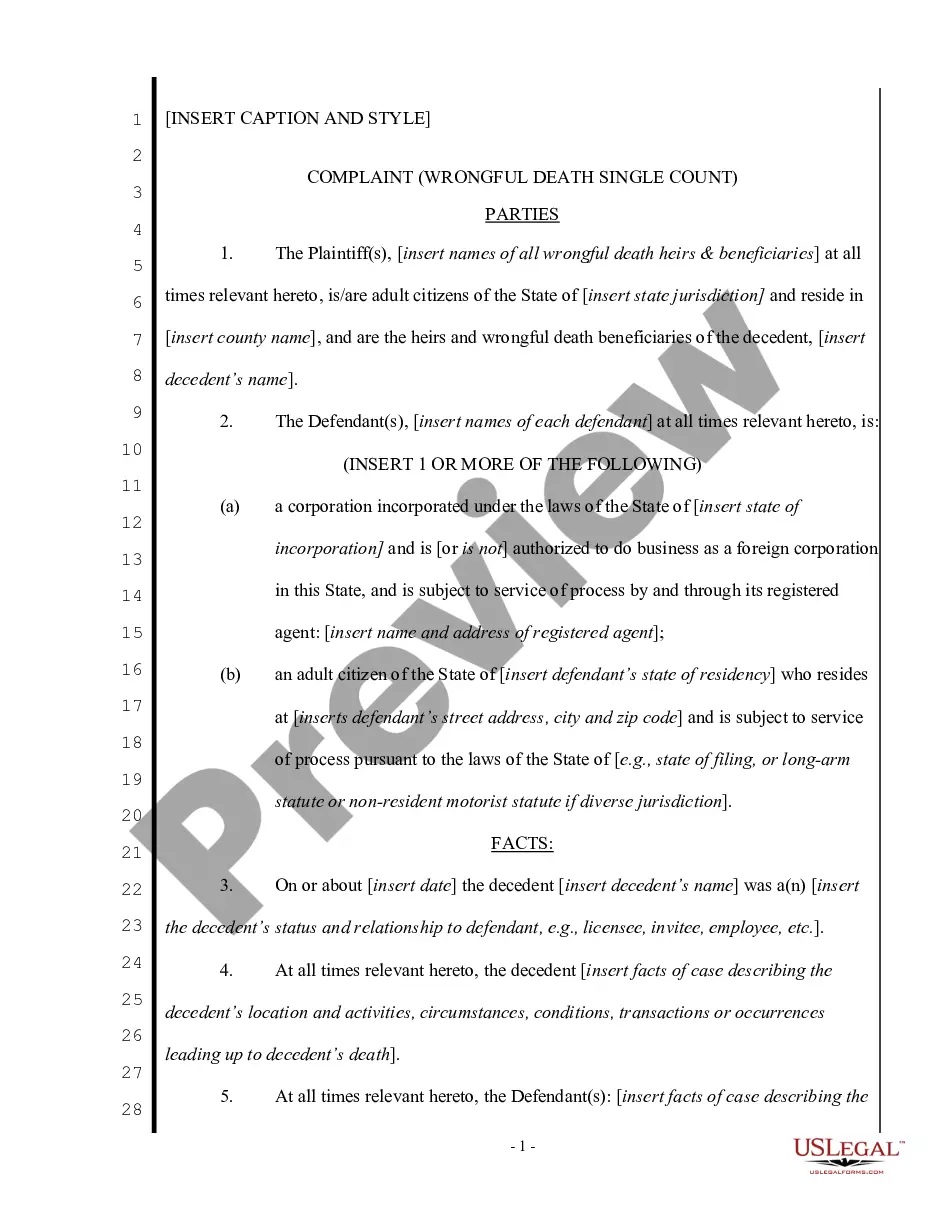
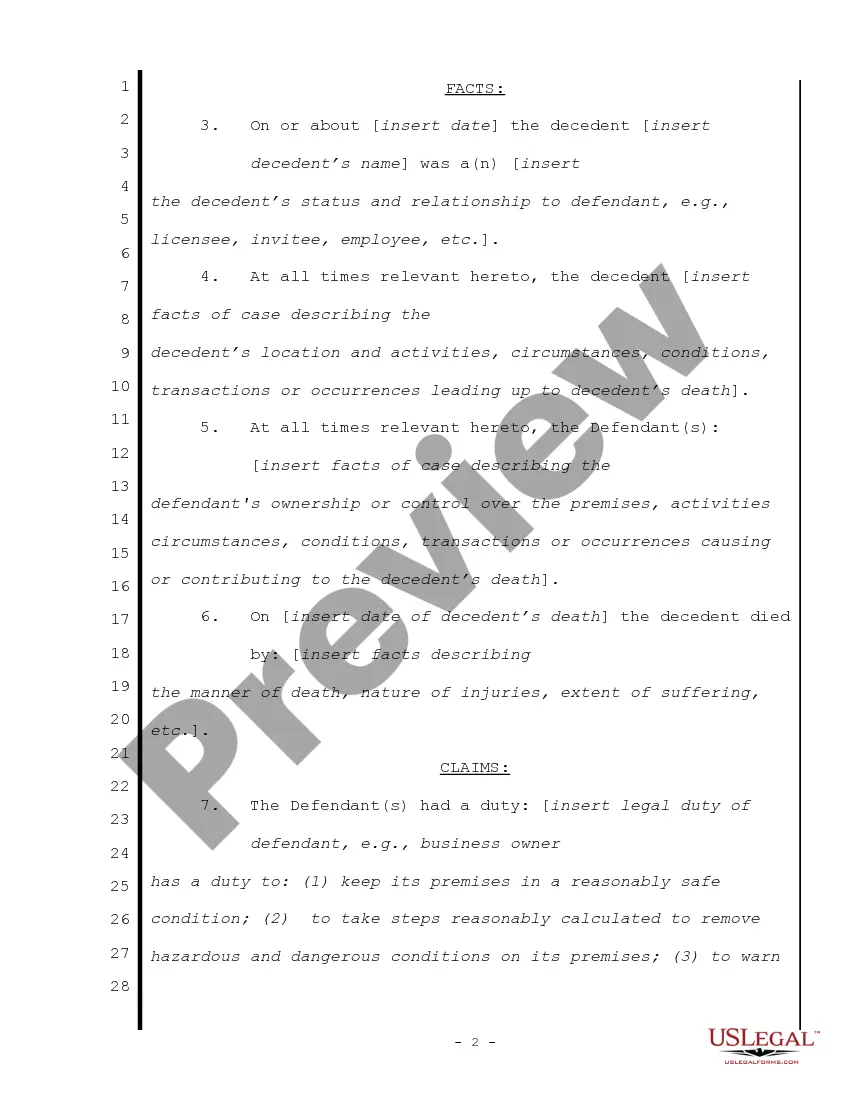
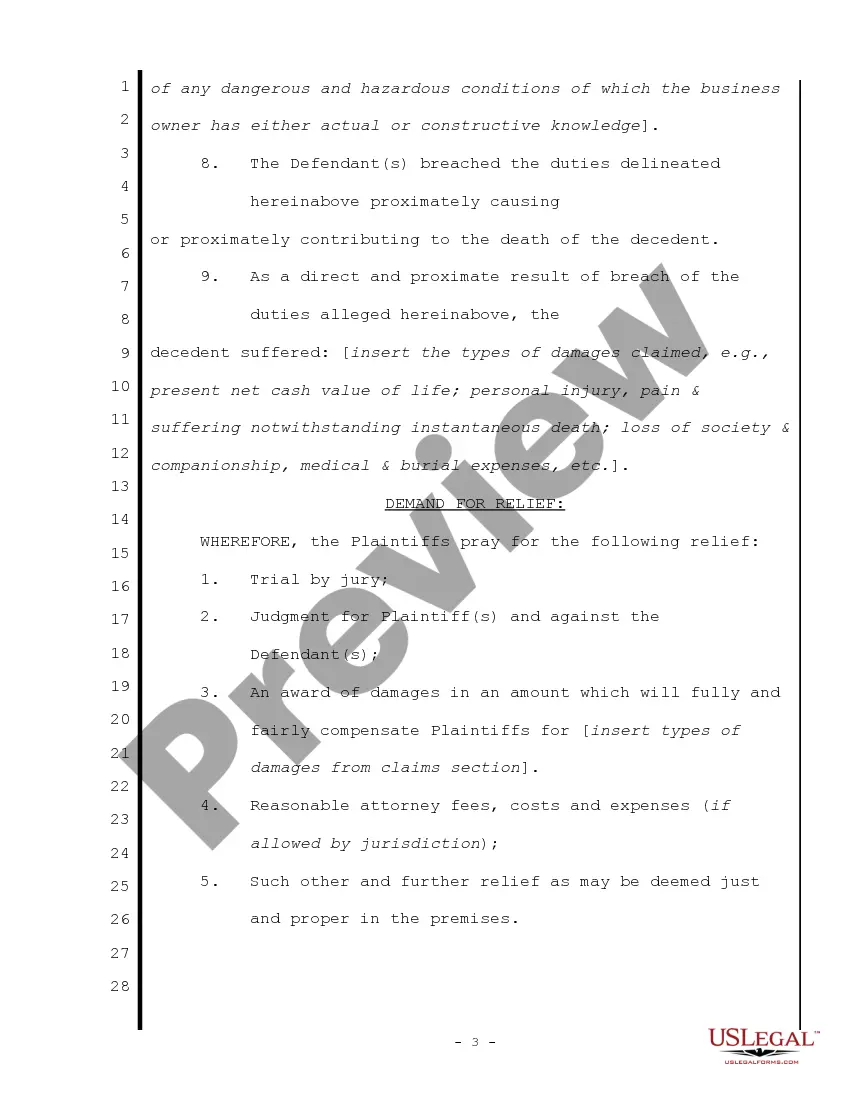
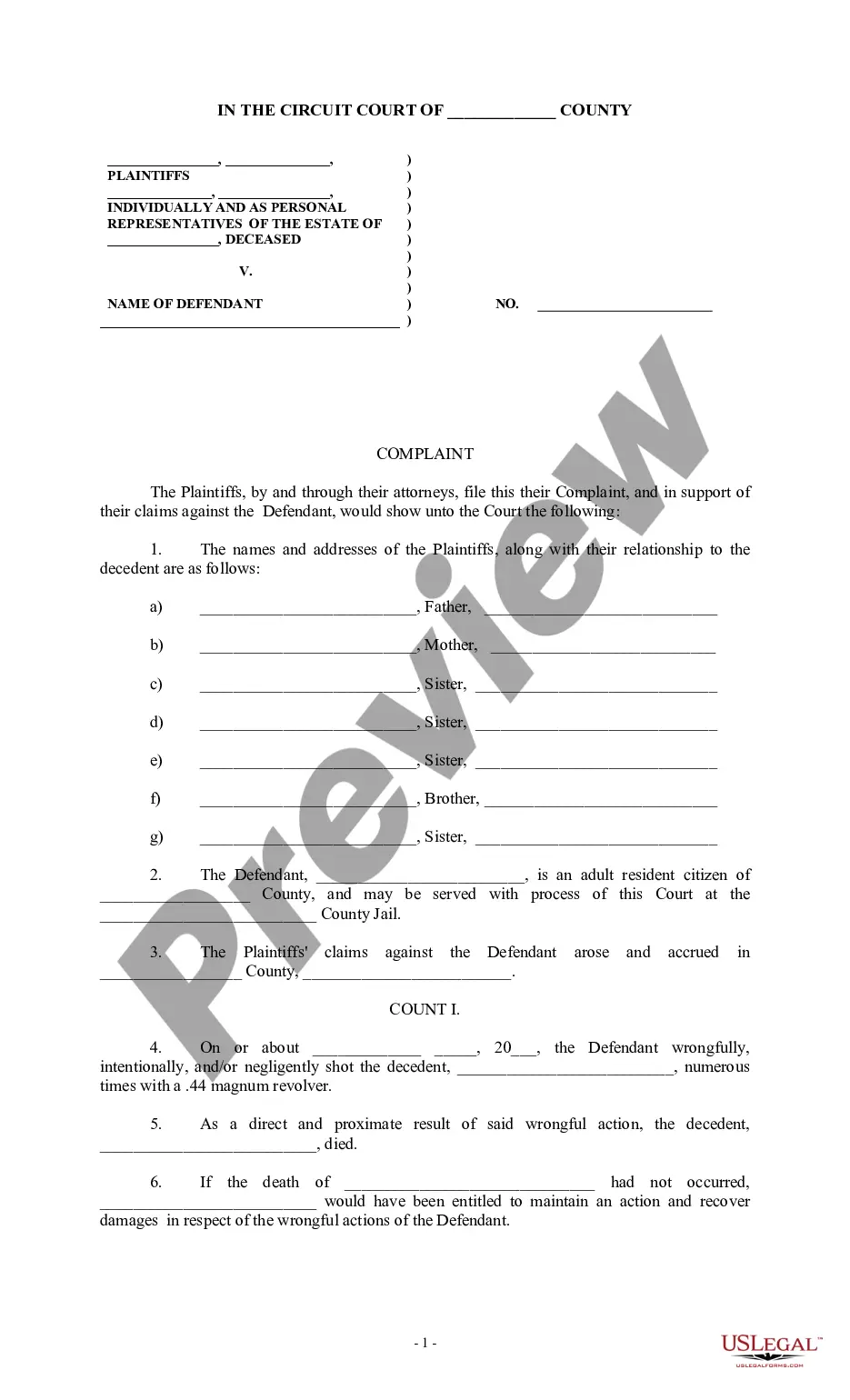
How to fill out Complaint For Wrongful Death - Single Count?
- If you're a returning user, begin by logging into your account and verifying your subscription status before downloading the necessary form template.
- For first-time users, start by reviewing the form description and using the Preview mode to confirm the document meets your requirements based on your local jurisdiction.
- Utilize the Search tab to find alternative templates if your initial choice isn't suitable. Make sure to thoroughly check for accuracy in selection.
- Proceed to purchase the document by clicking 'Buy Now' and selecting your preferred subscription plan. You'll need to create an account to unlock access to the library.
- Complete your payment using a credit card or PayPal to finalize your subscription, enabling document download.
- Once your purchase is complete, download the form to your device and access it any time from the My Forms section of your account.
Utilizing US Legal Forms not only saves you time but also ensures that your documents are comprehensive and legally sound.
Don't hesitate any longer—start exploring the extensive legal library today to ensure your wrongful count actions paper with cases is handled properly!
Form popularity
FAQ
31 U.S. Code 3730 is a significant part of the False Claims Act that outlines procedures for whistleblowing. It details the rights of individuals who report fraud against the government, ensuring they can seek legal action without fear of retaliation. This code is especially relevant for those interested in wrongful count actions paper with cases, as it provides the framework for protection and recovery.
A cause of action is a legal reason for bringing a lawsuit. To have a viable cause, one must show a violation of legal rights, or a wrongful act has occurred. This foundation is crucial when dealing with wrongful count actions paper with cases, as it establishes grounds for legal proceedings. Understanding these principles can empower individuals in their legal journeys.
Section 31 3730 of the False Claims Act outlines the process for qui tam actions. This section details who may file a claim, the requirements for doing so, and the protections for whistleblowers. It's essential for anyone exploring wrongful count actions paper with cases to grasp these details, as this law plays a significant role in federal fraud recovery.
The qui tam action under the False Claims Act allows private citizens to sue on behalf of the government if they suspect fraud. This action is vital for exposing wrongful behavior, particularly in government contracting. If successful, the whistleblower may receive a portion of the recoveries. Understanding this can be pivotal when navigating wrongful count actions paper with cases.
A legally recognized cause of action is a claim that is supported by sufficient legal theory and facts, allowing you to seek remedy through the court. In the realm of wrongful count actions paper with cases, understanding what constitutes a legally recognized cause is pivotal for successful litigation. Not every grievance qualifies as a cause of action; it must meet legal standards established by law. If you're unsure about your situation, consulting legal resources can clarify your options.
To file a complaint about the CRD in California, you need to complete a complaint form that details your issues with a real estate professional. Be sure to include all relevant information, supporting documents, and evidence, as this will strengthen your complaint. This process ties in closely with wrongful count actions paper with cases, as you must outline your cause effectively. Resources from US Legal Forms can help guide you through the necessary steps and provide templates for your complaint.
The most common complaints filed with the California Department of Real Estate (CRD) usually involve allegations of misconduct by real estate agents, such as failing to disclose material facts. These grievances often require a thorough examination of the facts laid out in wrongful count actions paper with cases. By knowing what common issues arise, you can prepare your documentation accordingly. If you are facing such a situation, platforms like US Legal Forms can assist with the necessary filing documents.
An example of a cause of action could be a personal injury claim resulting from a car accident. In such a case, the injured party would argue that the other driver acted negligently, leading to their injuries. This scenario is relevant to wrongful count actions paper with cases, where establishing the cause is critical to your case's success. Each type of claim has unique elements, so understanding your specific example can guide your legal strategy.
A claim refers to a demand for legal relief, while a cause of action is the legal basis that supports that claim. In the context of wrongful count actions paper with cases, a cause of action provides the framework for your legal argument, whereas a claim is the assertion you bring to the court. Understanding this distinction will help you present your case effectively. If you're unsure about which terms apply to your situation, consider seeking expert legal advice.
To create a cause of action, you must first identify the legal grounds for your claim. Next, gather evidence that substantiates each element of your cause, including facts that show how the defendant's actions caused your injury. Draft your complaint carefully, making sure it aligns with the requirements of wrongful count actions paper with cases. Utilizing a platform like US Legal Forms can streamline this process, providing templates and guidance to help you structure your documents efficiently.