Wrongful Actions Within The Workplace
Description
Get your form ready online
Our built-in tools help you complete, sign, share, and store your documents in one place.
Make edits, fill in missing information, and update formatting in US Legal Forms—just like you would in MS Word.
Download a copy, print it, send it by email, or mail it via USPS—whatever works best for your next step.
Sign and collect signatures with our SignNow integration. Send to multiple recipients, set reminders, and more. Go Premium to unlock E-Sign.
If this form requires notarization, complete it online through a secure video call—no need to meet a notary in person or wait for an appointment.
We protect your documents and personal data by following strict security and privacy standards.

Make edits, fill in missing information, and update formatting in US Legal Forms—just like you would in MS Word.

Download a copy, print it, send it by email, or mail it via USPS—whatever works best for your next step.

Sign and collect signatures with our SignNow integration. Send to multiple recipients, set reminders, and more. Go Premium to unlock E-Sign.

If this form requires notarization, complete it online through a secure video call—no need to meet a notary in person or wait for an appointment.

We protect your documents and personal data by following strict security and privacy standards.
Looking for another form?

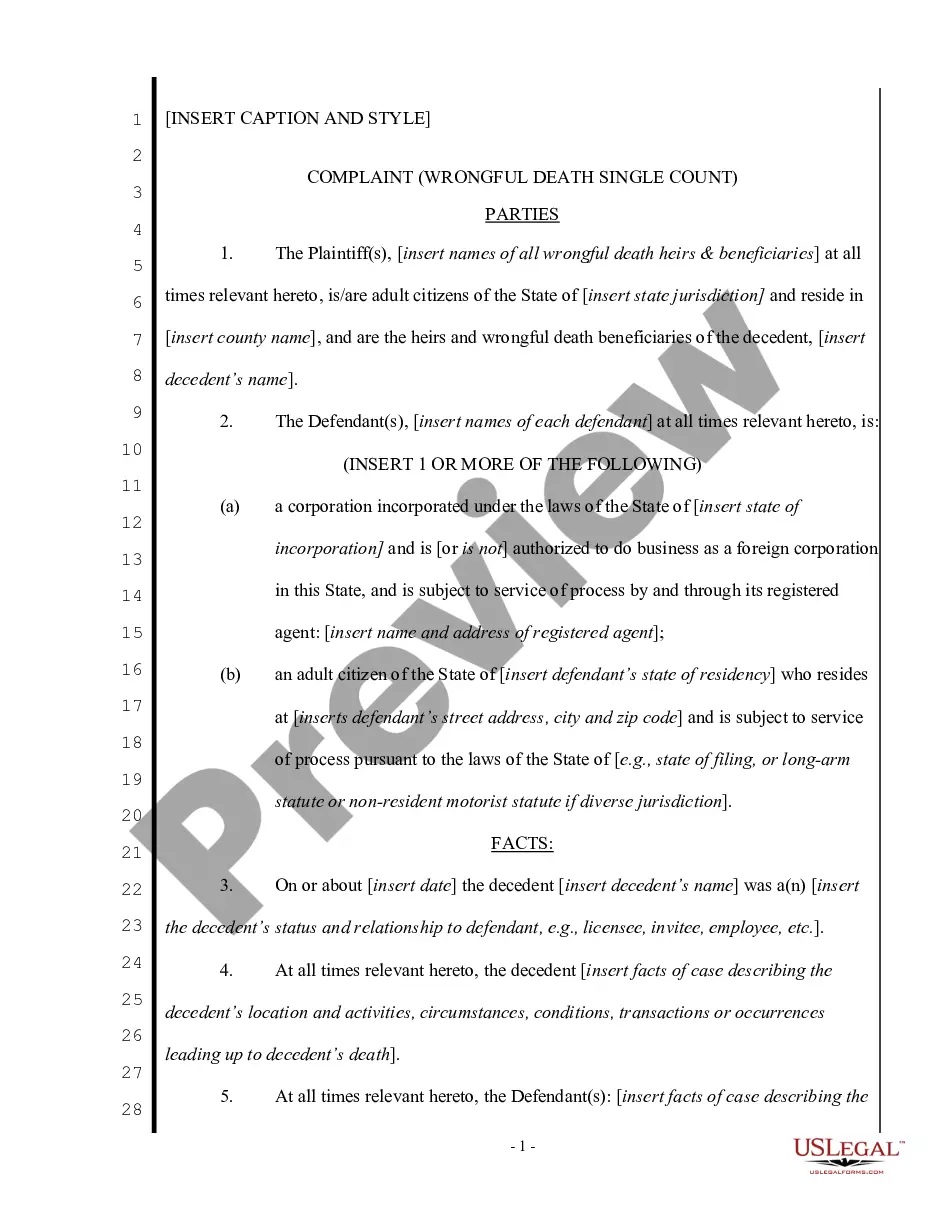
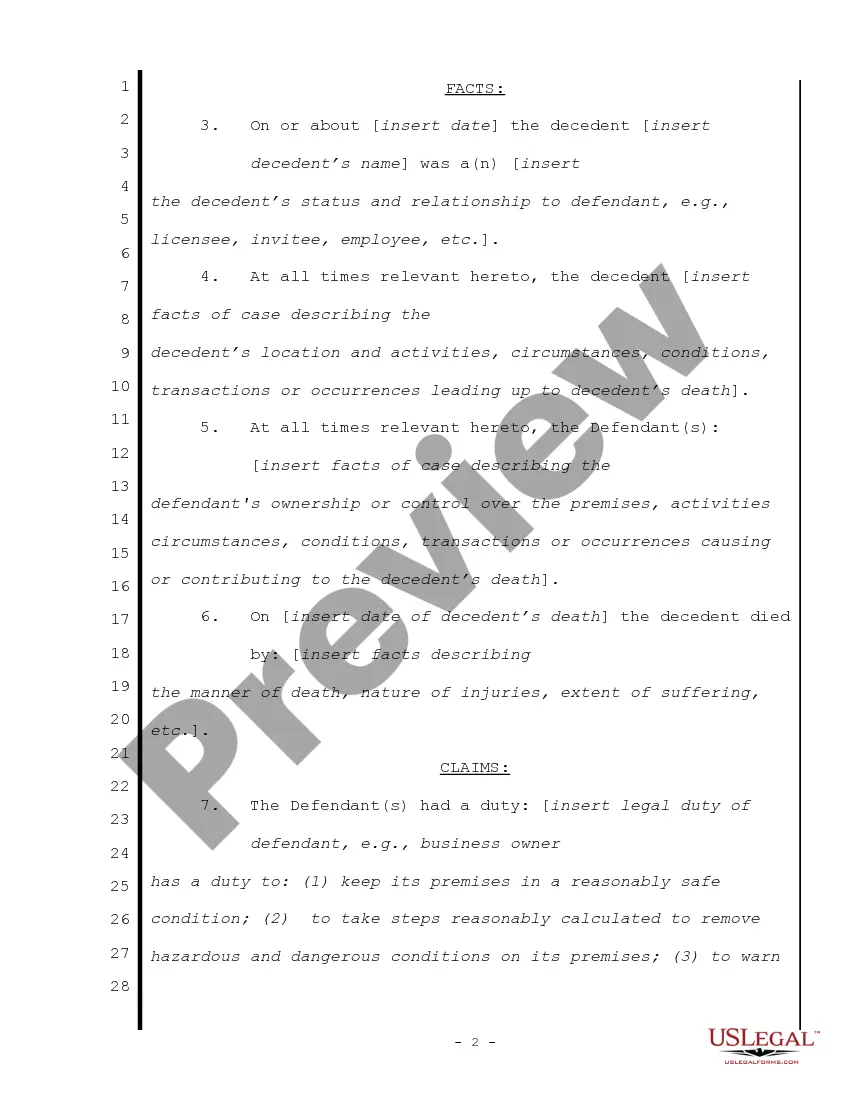
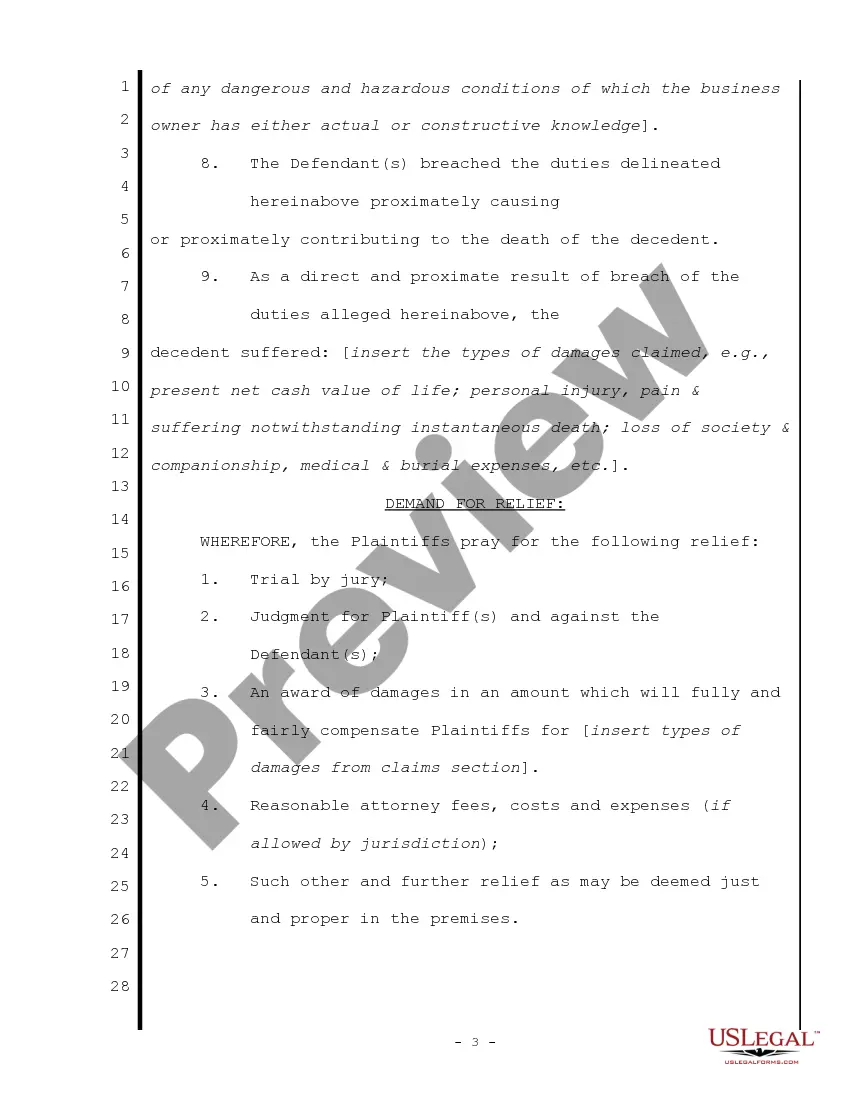
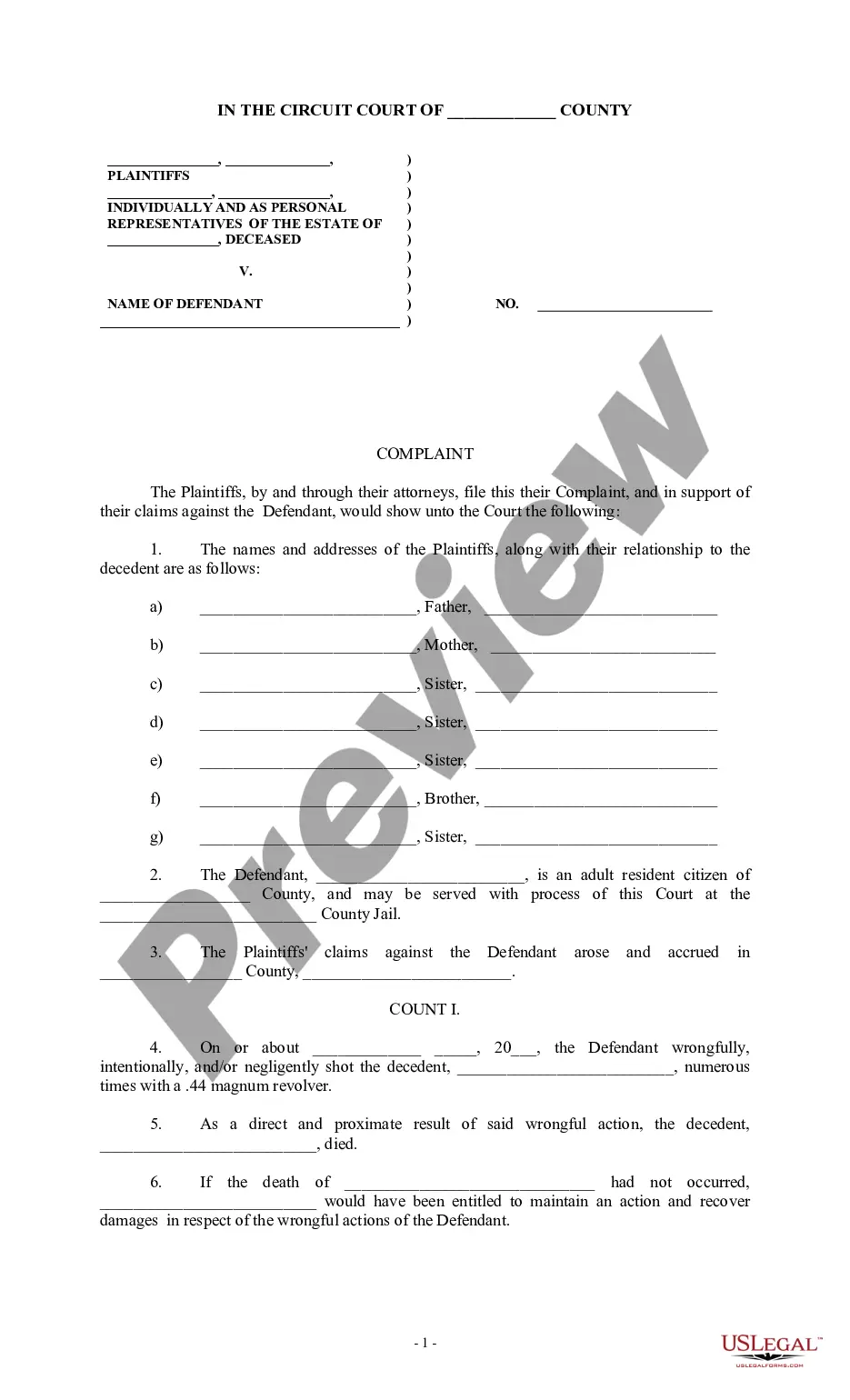
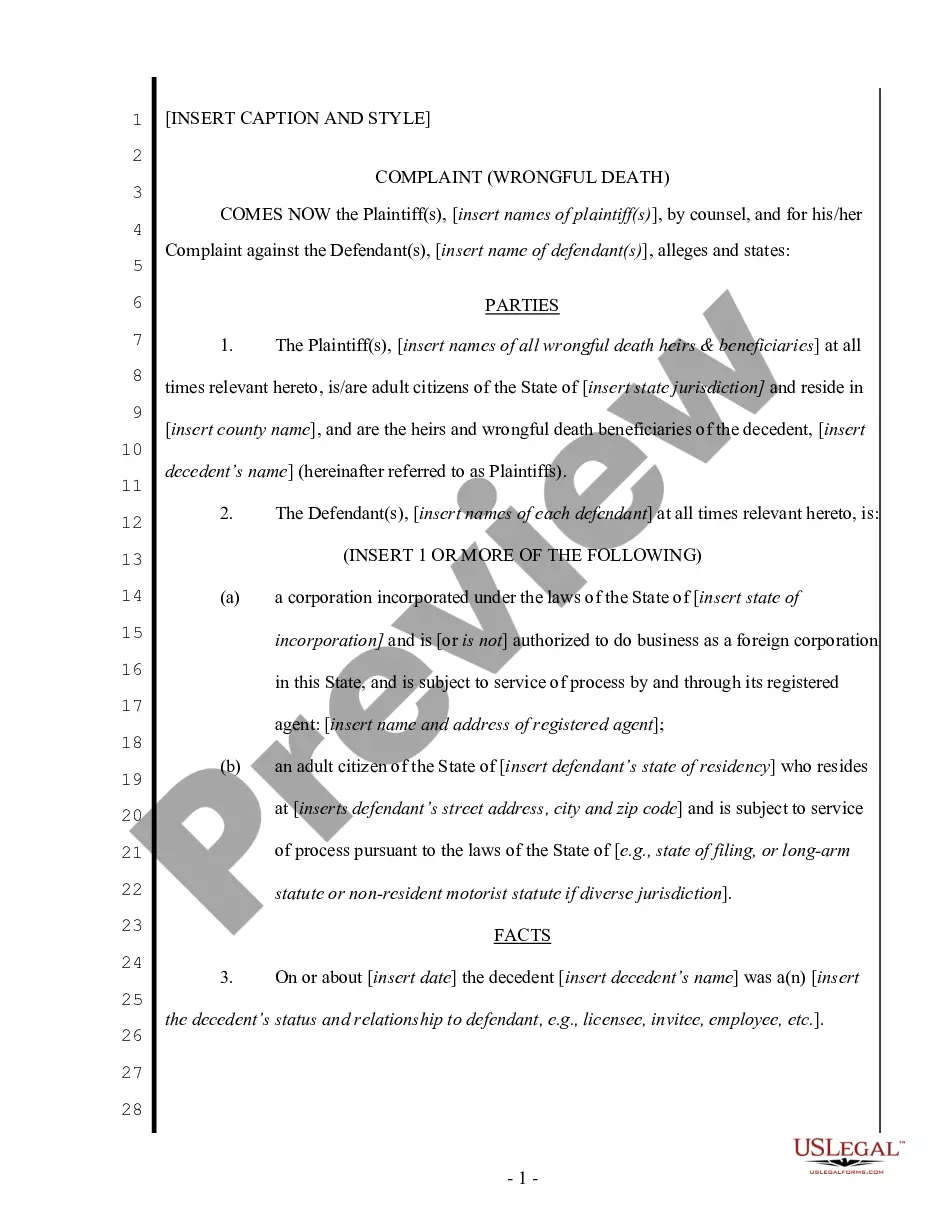
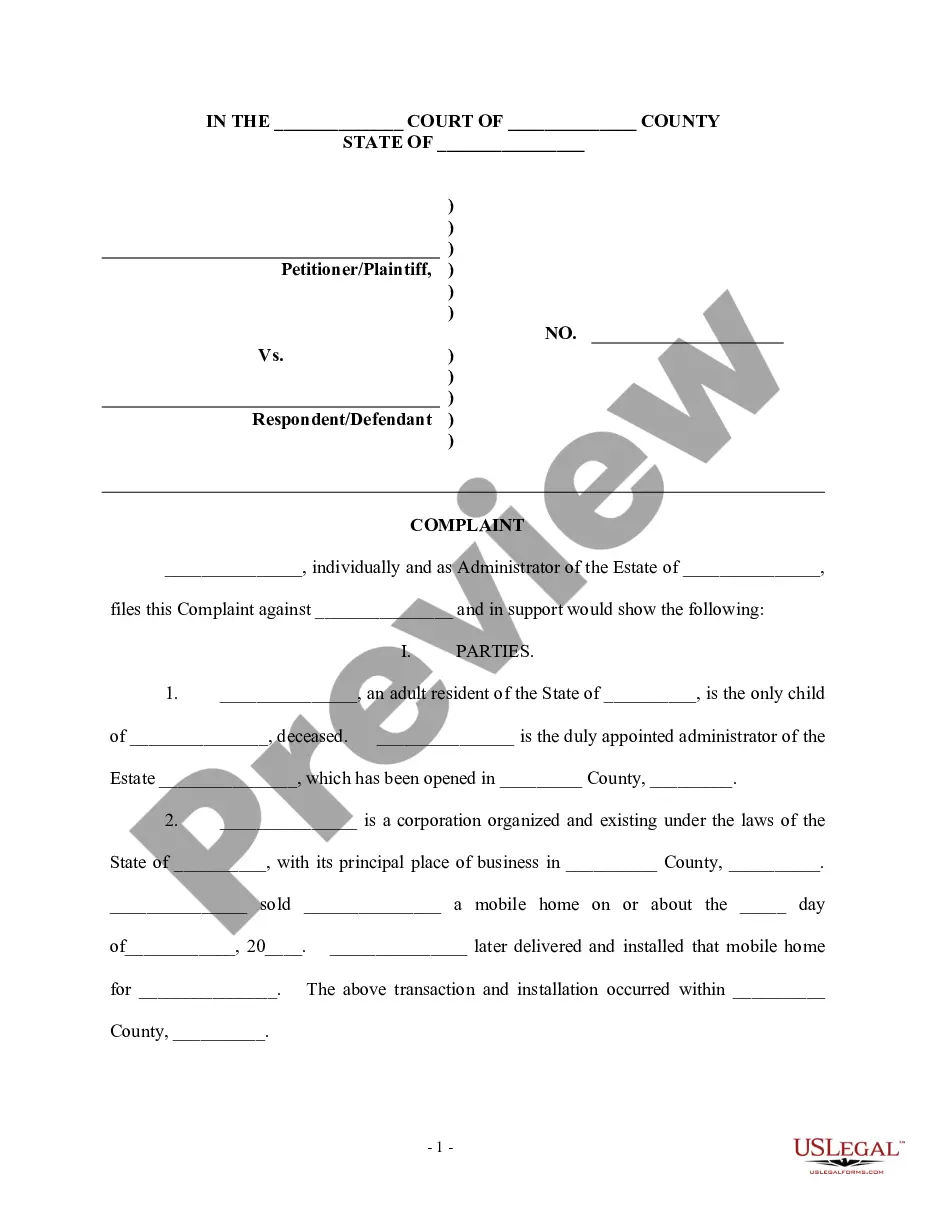
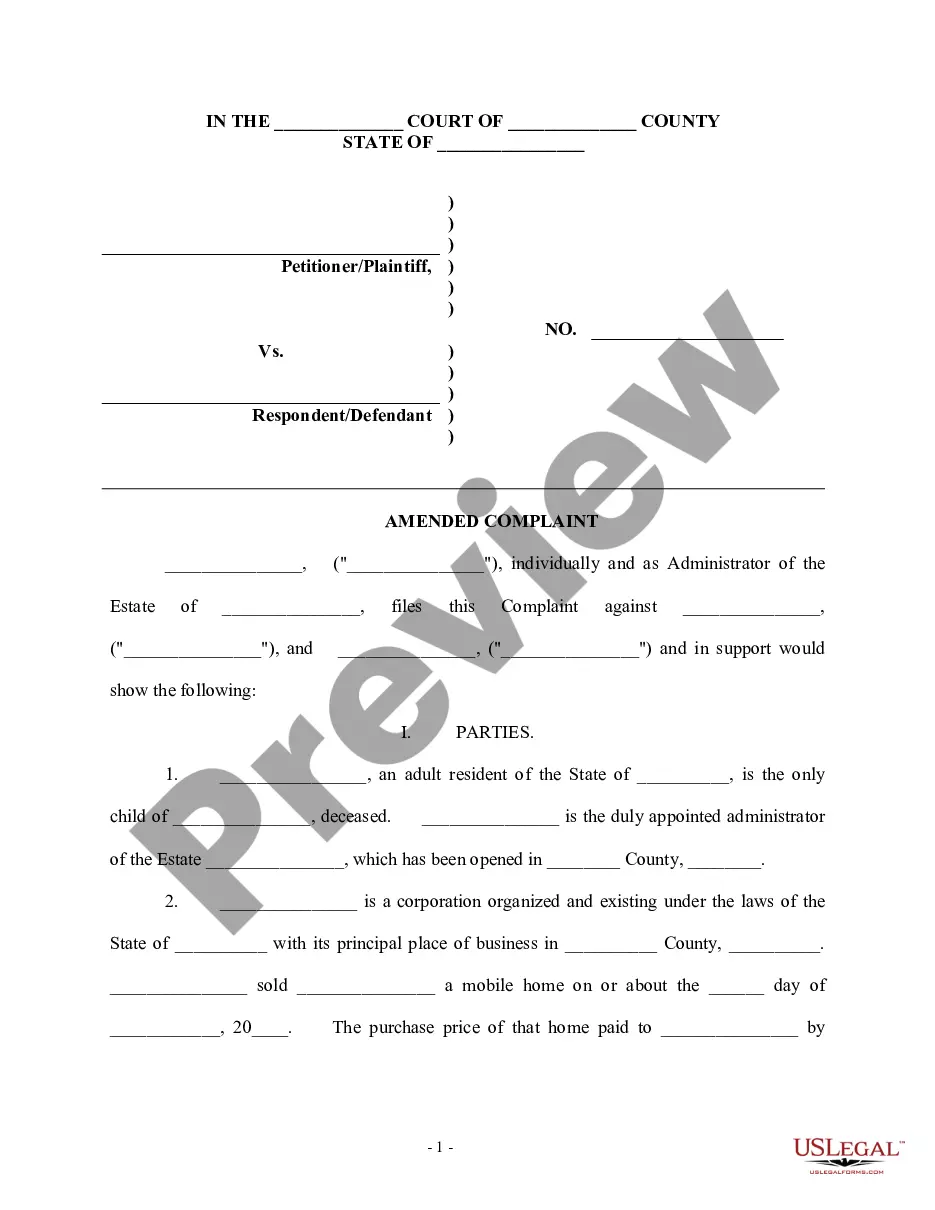
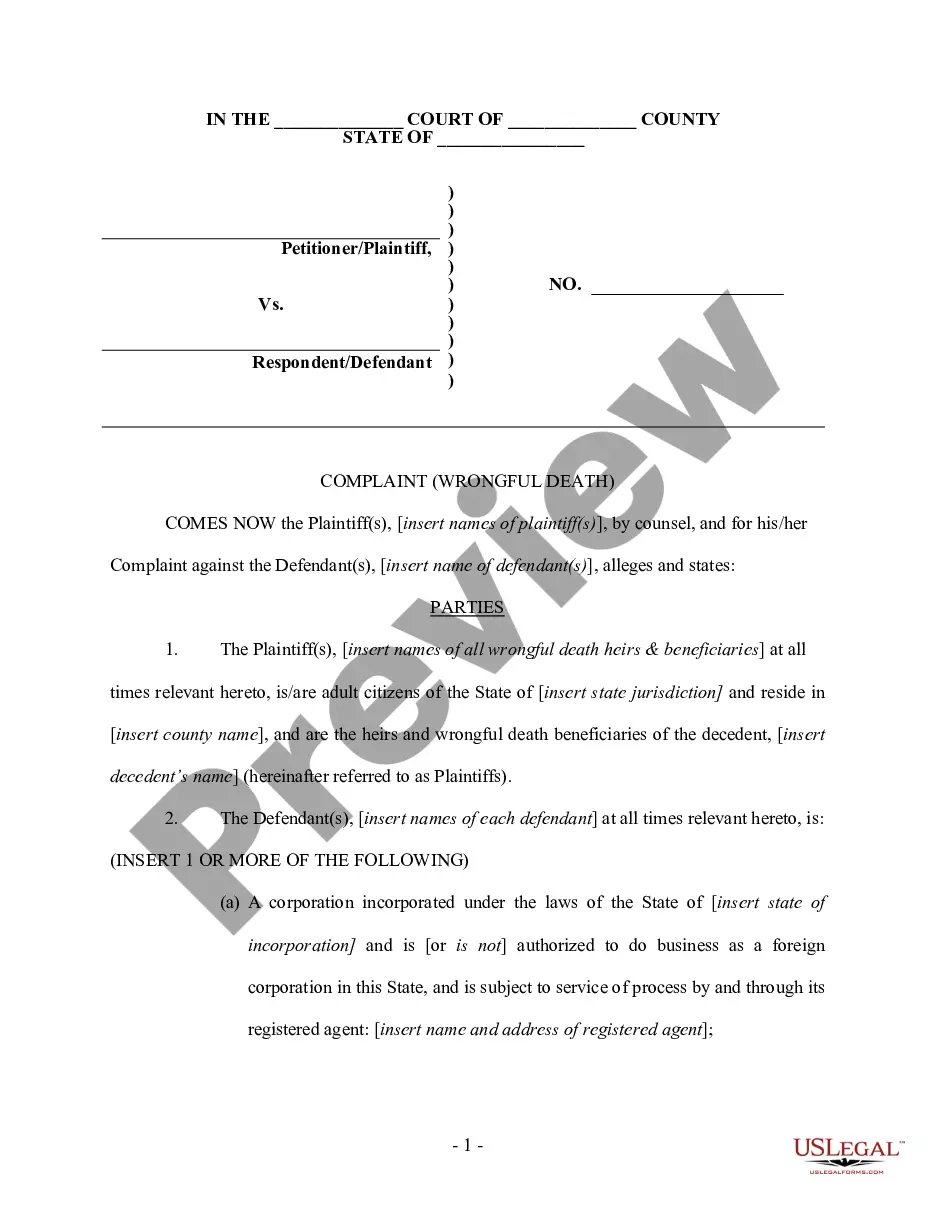
How to fill out Complaint For Wrongful Death - Single Count?
It’s clear that you cannot transform into a legal specialist instantly, nor can you swiftly master how to draft Wrongful Actions Within The Workplace without possessing a distinct skill set.
Producing legal documents is a lengthy process that necessitates specific education and expertise. Therefore, why not entrust the development of Wrongful Actions Within The Workplace to the experts.
With US Legal Forms, one of the most extensive legal template repositories, you can obtain everything from court forms to templates for internal corporate correspondence.
If you require a different template, restart your search.
Sign up for a free account and select a subscription plan to acquire the template. Click Buy now. Once the payment is processed, you can obtain the Wrongful Actions Within The Workplace, complete it, print it, and send or mail it to the relevant parties or organizations.
- We recognize the significance of compliance and observance of federal and local regulations.
- That’s why all templates on our platform are location-specific and current.
- Here’s how to begin on our website and secure the document you need in just minutes.
- Locate the document you require using the search field at the top of the page.
- Preview it (if this option is available) and review the accompanying description to verify if Wrongful Actions Within The Workplace aligns with your needs.
Form popularity
FAQ
Proving unfair treatment at work requires collecting robust evidence of wrongful actions within the workplace. Start by documenting specific interactions and outcomes that reflect unfairness. You can also obtain witness statements from colleagues who can corroborate your experiences. A well-documented case will provide clarity and support your claims in any discussions with management or legal representatives.
To report unethical behavior in the workplace, first review your company’s policies on reporting misconduct. Prepare any documentation highlighting the wrongful actions within the workplace. Present your report to HR or a trusted supervisor confidently, ensuring you articulate the issue clearly. If necessary, consider using external reporting channels to escalate the matter.
You can tell if your boss is treating you unfairly by observing behaviors that deviate from standard workplace practices. Examples include consistent criticism without constructive feedback, favoritism towards other employees, or unreasonable workload expectations. Such actions could indicate wrongful actions within the workplace. Trust your instincts and gather evidence to support your observations.
If you are being treated unfairly at work, start by addressing the issue with your supervisor or HR department. Communication is key, and presenting your evidence of wrongful actions within the workplace can help. If the situation does not improve, consider seeking legal advice. Understanding your rights can empower you to take further action if needed.
Documenting unfair treatment at work involves keeping a detailed record of incidents related to wrongful actions within the workplace. Use a notebook or digital file to note the date, time, location, and specific circumstances surrounding each occurrence. Additionally, include any communications and reactions from those involved. This thorough documentation will support your claims in any future discussions or legal action.
To prove you are being treated unfairly at work, you should collect evidence of wrongful actions within the workplace. This may include written correspondence, performance reviews, or witness statements from colleagues. Recognizing patterns of behavior can also help demonstrate a consistent issue. Documenting these instances will strengthen your case and clarify any disparities in treatment.
Unreasonable working conditions refer to environments that expose employees to hazards, excessive hours, or unfair expectations. Such scenarios are examples of wrongful actions within the workplace that can lead to job dissatisfaction and even health issues. Understanding your rights can help you advocate for a fair workplace.
Unlawful behavior in the workplace includes any behavior that violates labor laws, such as discrimination based on race, gender, or disability. These wrongful actions within the workplace create a toxic environment and can damage team morale. Identifying and addressing such behavior is crucial in maintaining a positive work culture.
Unacceptable actions in the workplace include bullying, harassment, and discriminatory behavior against any employee. Such wrongful actions within the workplace disrupt a healthy work atmosphere and can lead to legal issues. It is vital to foster a respectful workplace where everyone feels safe and valued.
Unlawful employment occurs when an employer violates labor laws, such as not paying for overtime, engaging in discriminatory practices, or failing to provide a safe working environment. These violations fall under wrongful actions within the workplace that can have serious legal repercussions. Knowing your rights can empower you to take action.