Wrongful Actions Form Contract With The Law
Description
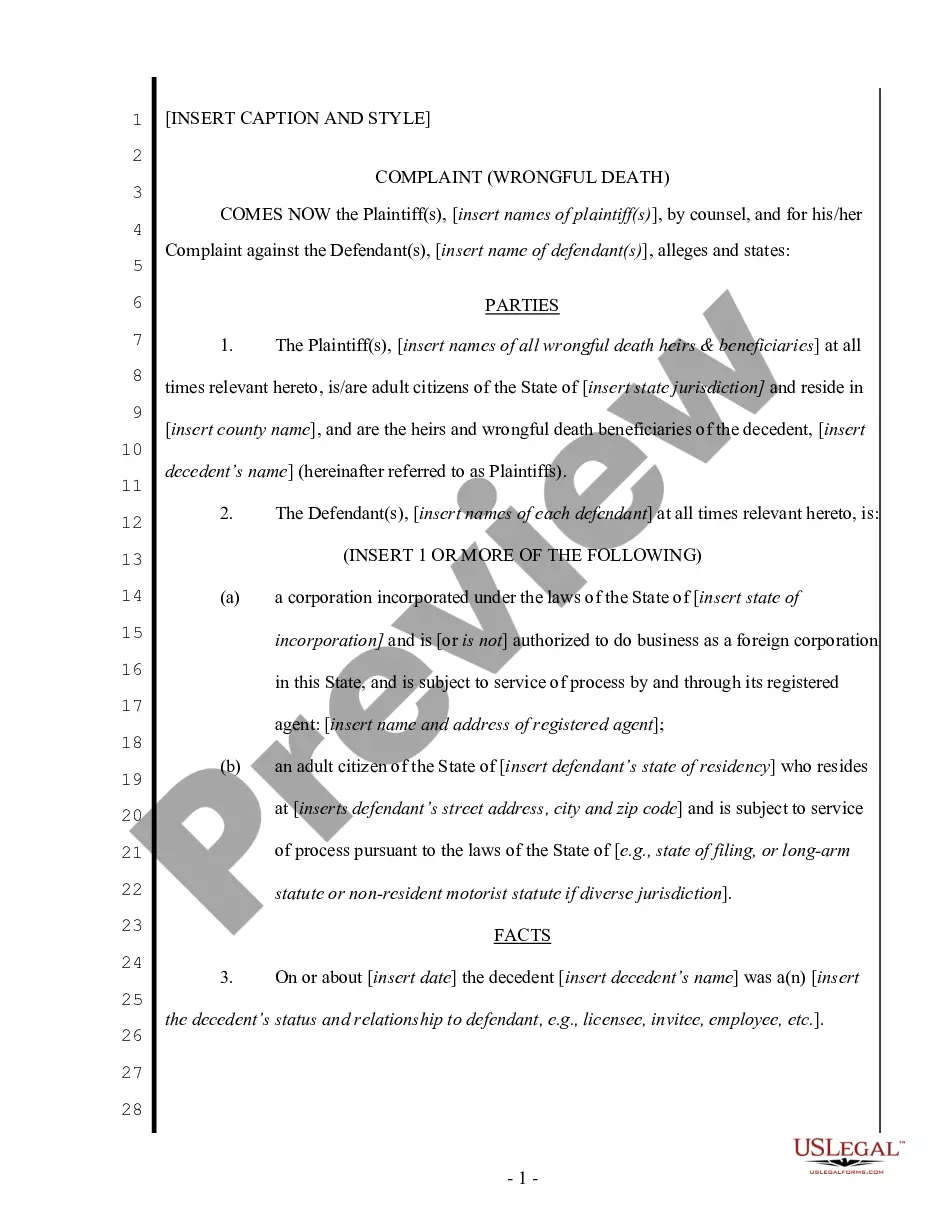

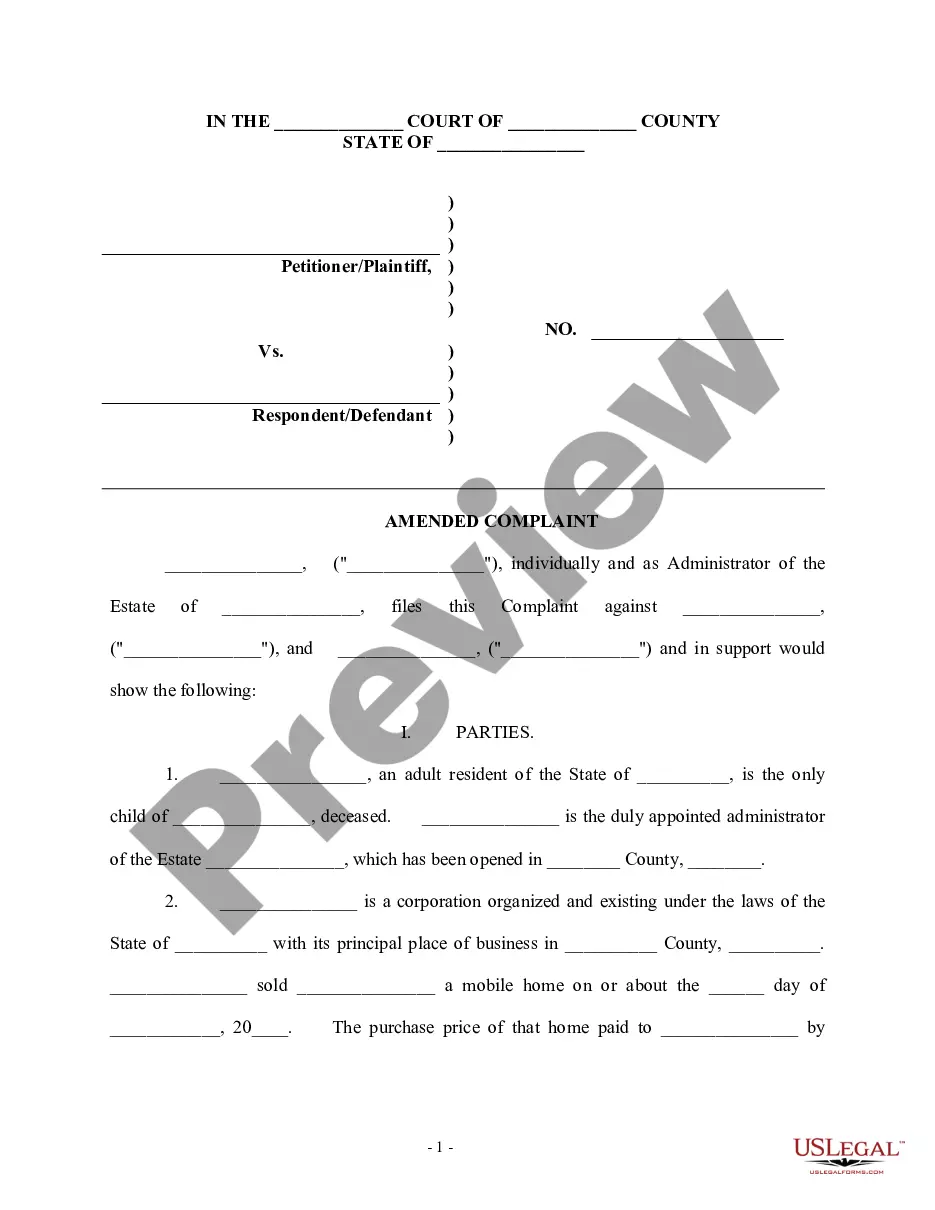
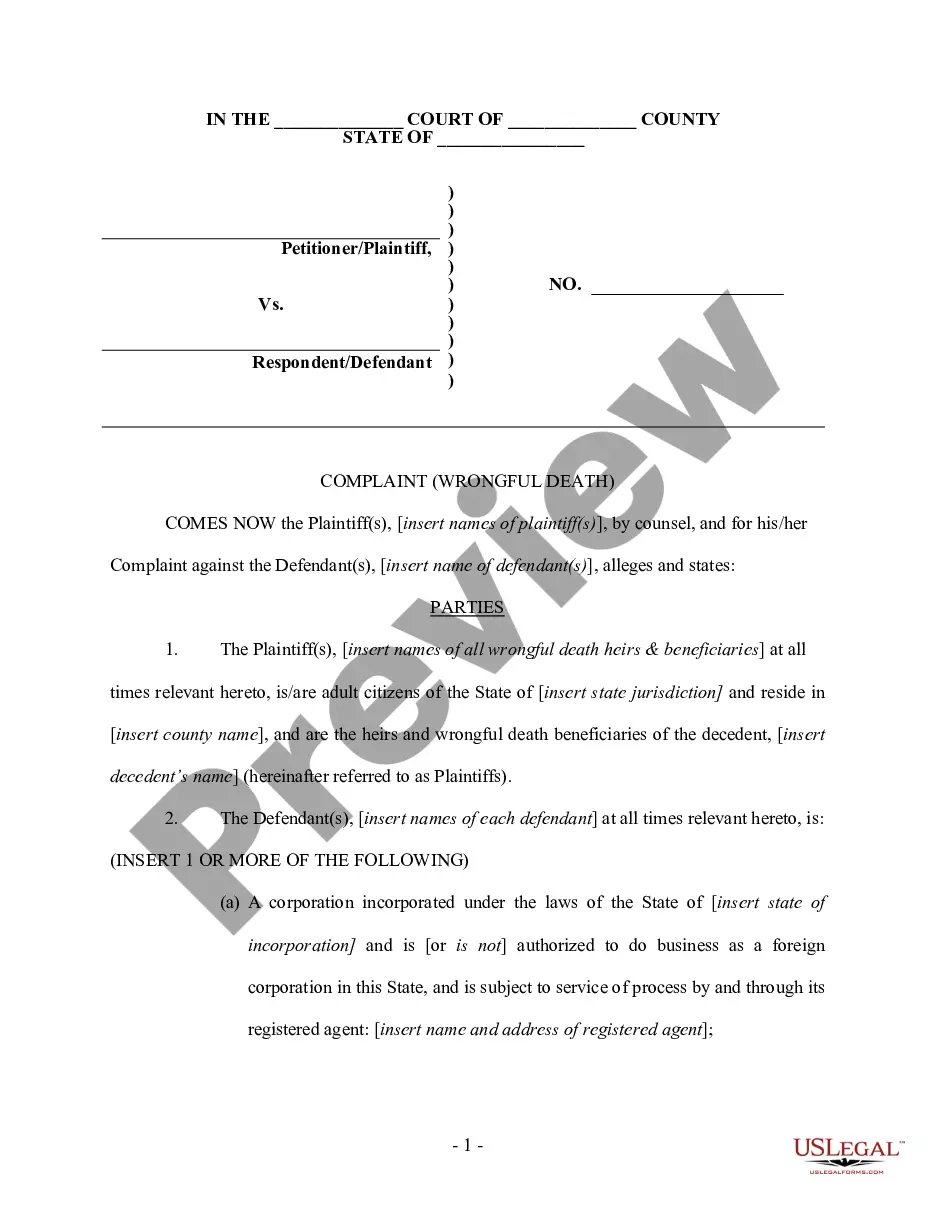
Get your form ready online
Our built-in tools help you complete, sign, share, and store your documents in one place.
Make edits, fill in missing information, and update formatting in US Legal Forms—just like you would in MS Word.
Download a copy, print it, send it by email, or mail it via USPS—whatever works best for your next step.
Sign and collect signatures with our SignNow integration. Send to multiple recipients, set reminders, and more. Go Premium to unlock E-Sign.
If this form requires notarization, complete it online through a secure video call—no need to meet a notary in person or wait for an appointment.
We protect your documents and personal data by following strict security and privacy standards.

Make edits, fill in missing information, and update formatting in US Legal Forms—just like you would in MS Word.

Download a copy, print it, send it by email, or mail it via USPS—whatever works best for your next step.

Sign and collect signatures with our SignNow integration. Send to multiple recipients, set reminders, and more. Go Premium to unlock E-Sign.

If this form requires notarization, complete it online through a secure video call—no need to meet a notary in person or wait for an appointment.

We protect your documents and personal data by following strict security and privacy standards.
Looking for another form?


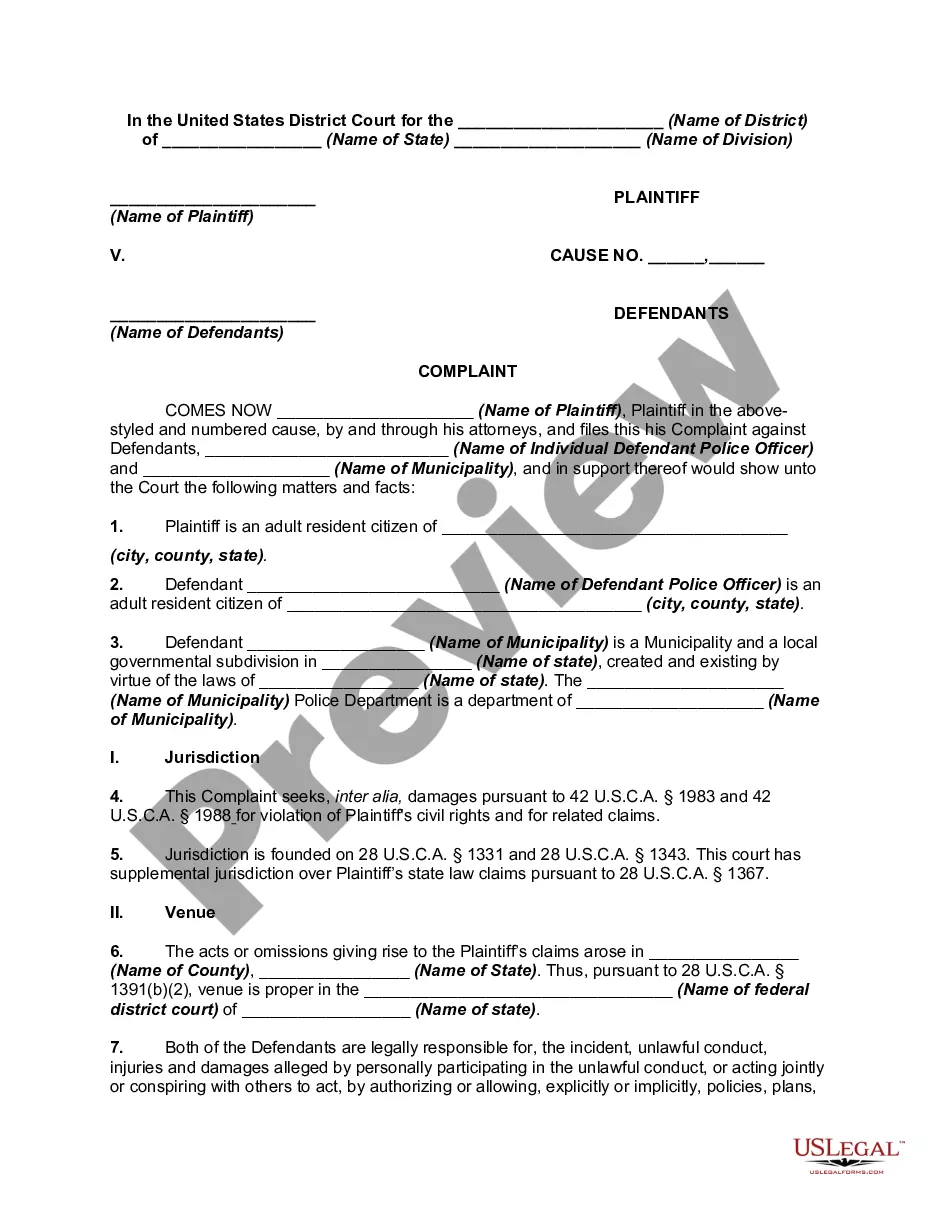
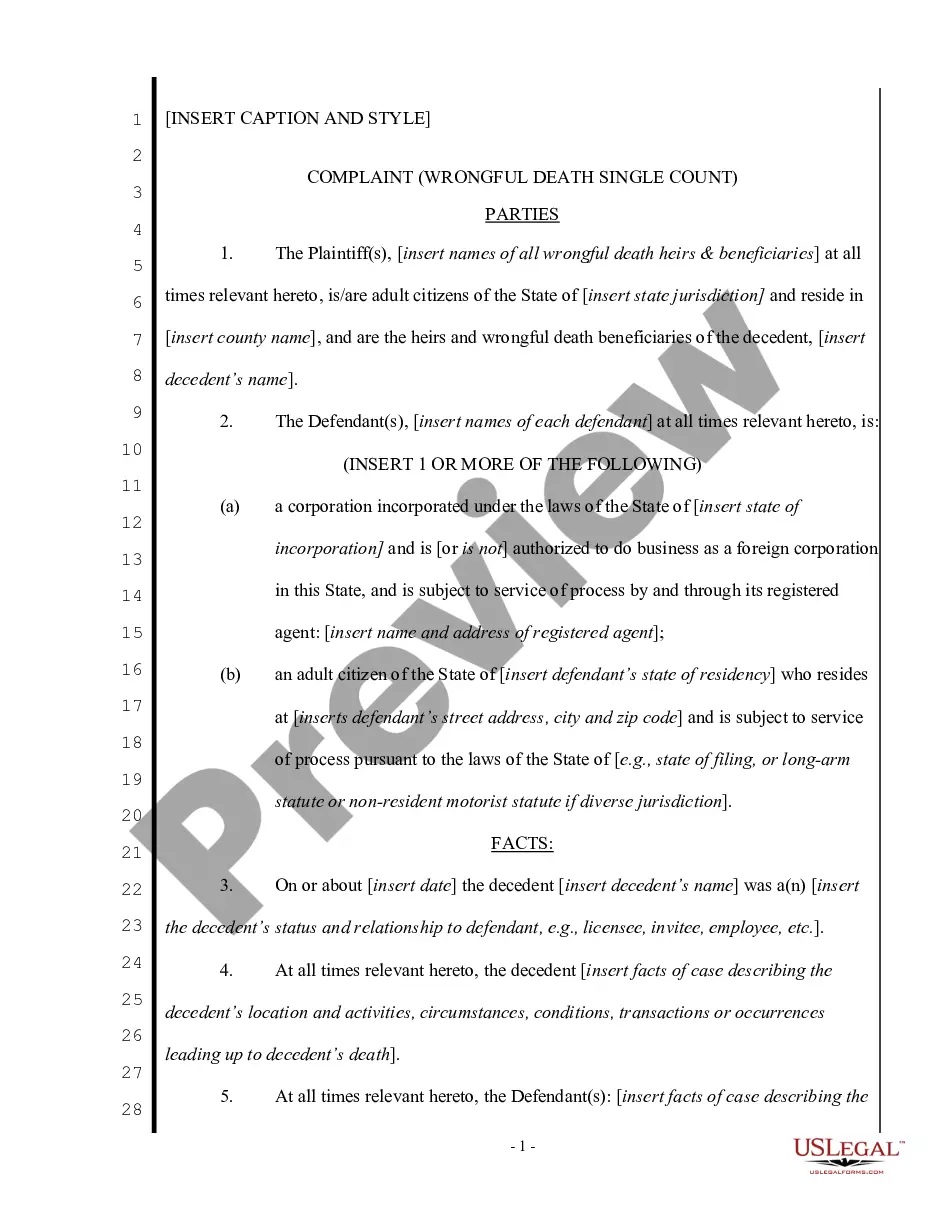
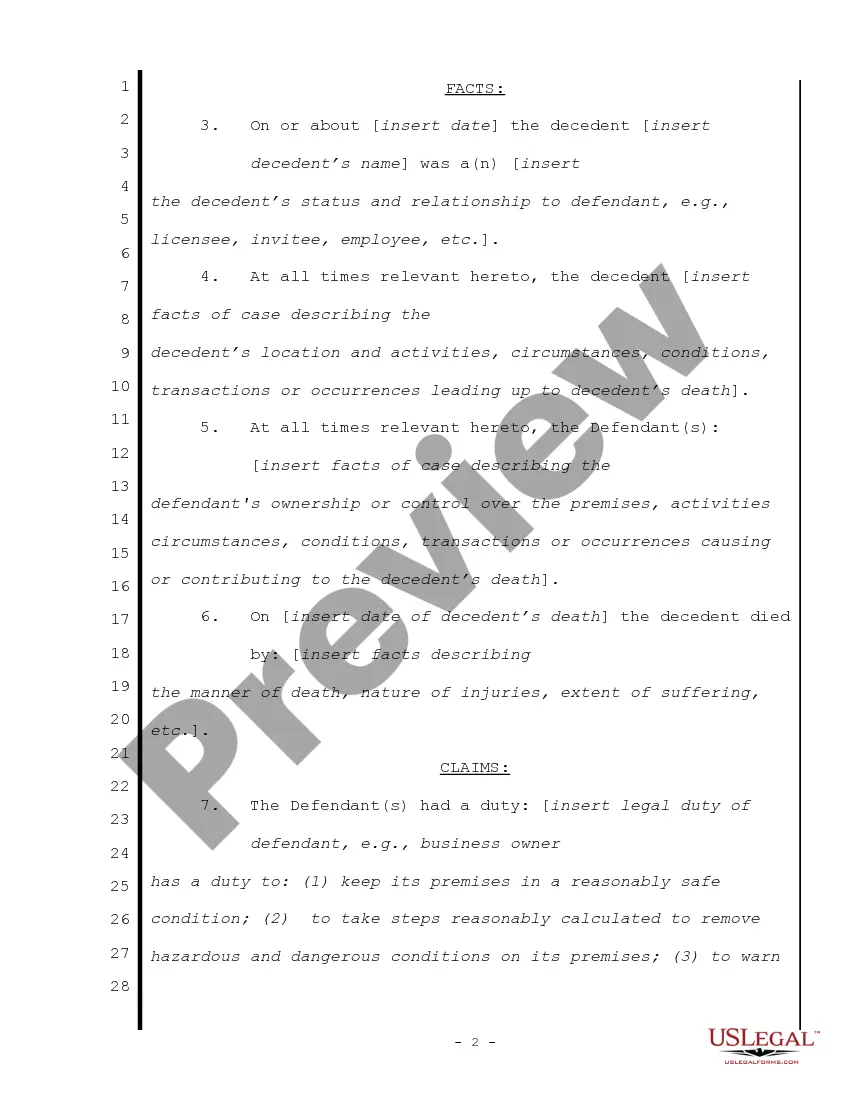
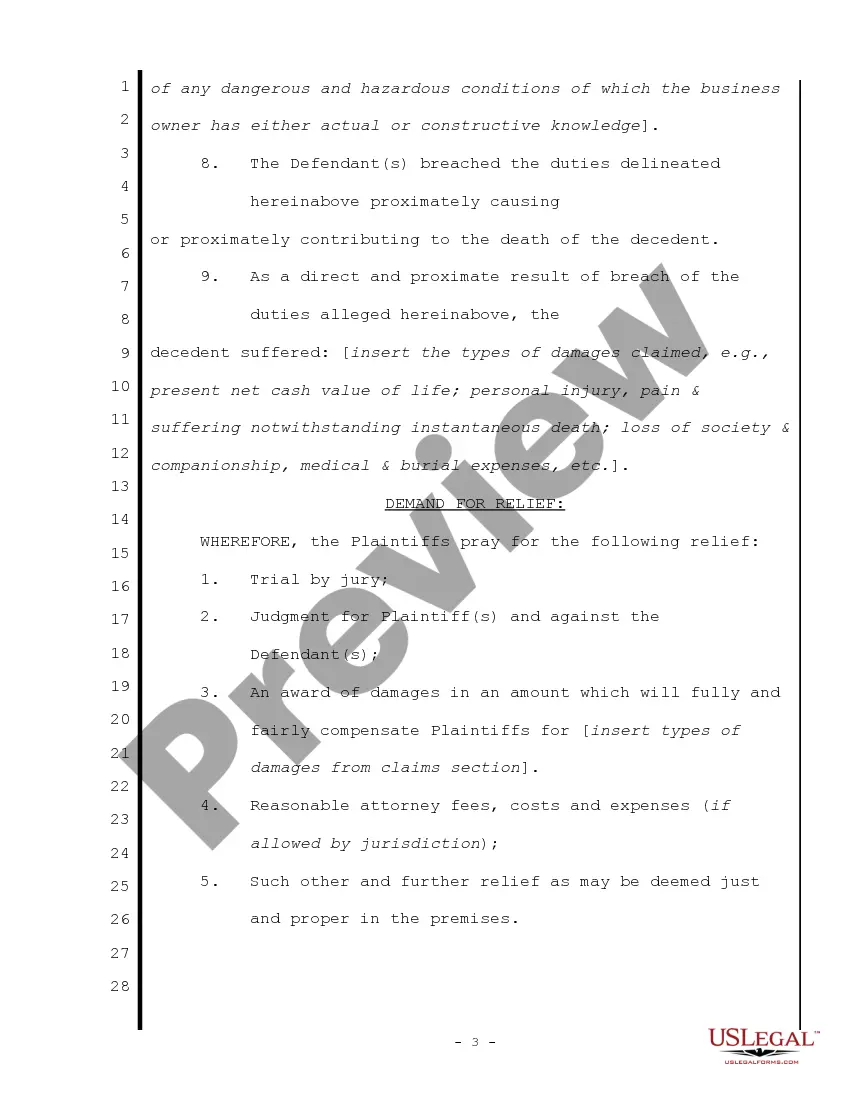
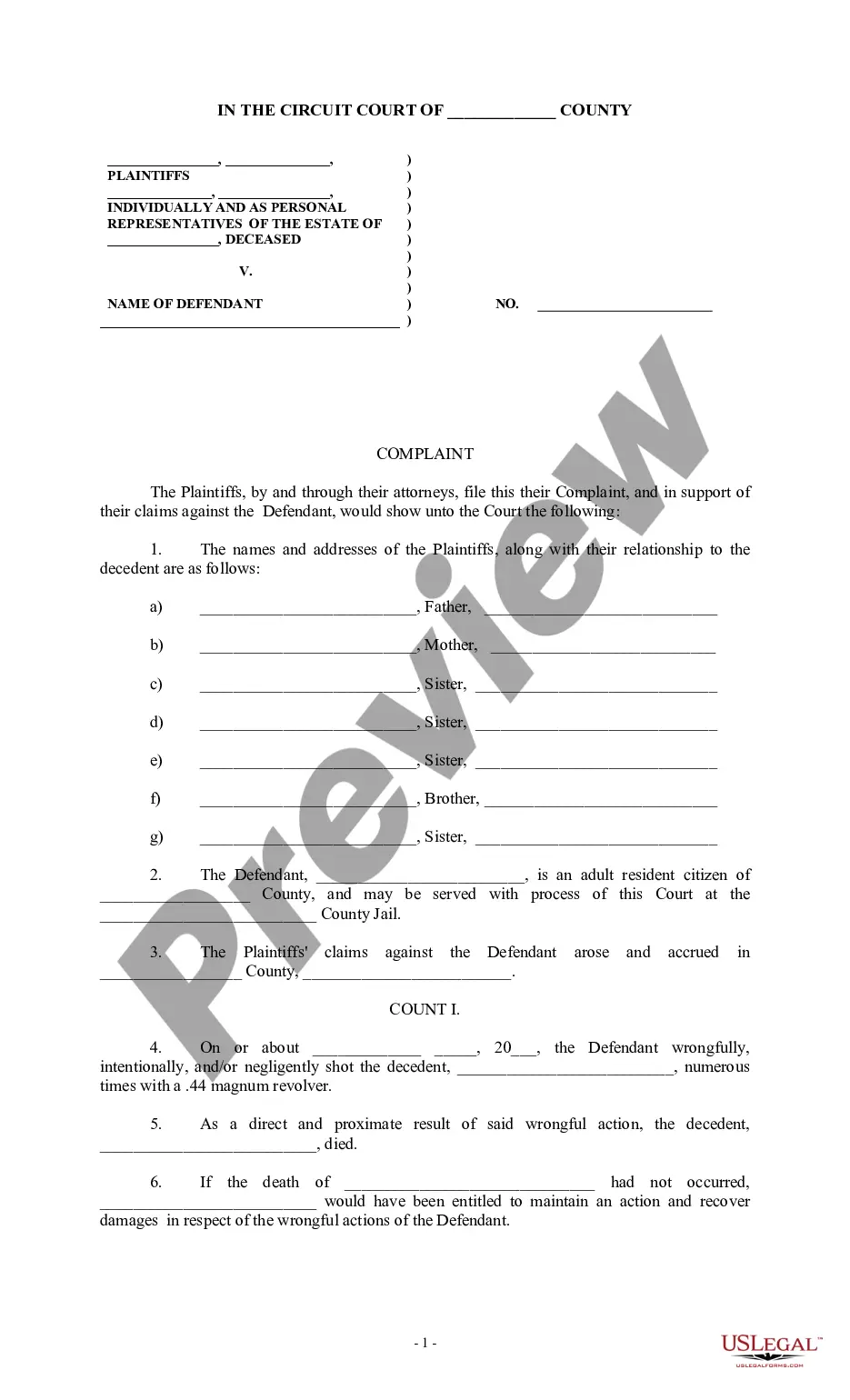
How to fill out Complaint For Wrongful Death - Single Count?
- If you're a returning user, log into your account and click the Download button to retrieve the form you require. Confirm your subscription remains valid; if not, renew it based on your chosen plan.
- For new users, start by reviewing the Preview mode and form description. Make sure to select the correct form that aligns with your needs and complies with local legal standards.
- If you need assistance, utilize the Search tab to find alternate templates. Ensure the one you choose properly addresses your specific situation before proceeding.
- Purchase the document by clicking the Buy Now button. Select your desired subscription plan and create an account if you haven't already to gain access to our extensive library.
- Complete your payment by entering your credit card information or using your PayPal account to finalize the transaction.
- Download the selected form onto your device for easy access, and find it later in the My Forms section.
By utilizing US Legal Forms, individuals and attorneys can efficiently prepare legal documents thanks to an extensive library housing over 85,000 legal forms. This not only saves time but also ensures accuracy in legal processes.
Embark on your legal journey today with US Legal Forms! Access the repository of legal documents and ensure you are prepared to tackle any wrongful action situations with confidence.
Form popularity
FAQ
A contract can be null and void at the outset if it is formed based on illegal terms or lacks essential elements like mutual consent. Factors such as fraud or significant misrepresentation at the time of signing can also make a contract void. Recognizing when a contract may be null helps you avoid the pitfalls of wrongful actions that form contract with the law.
A law may be declared null and void when it contradicts constitutional provisions or principles of fairness. Such decisions are often made through judicial review, which examines whether wrongful actions form contract with the law. Being aware of these legal processes helps you understand how laws evolve and the protection mechanisms in place.
Legal grounds that can invalidate a contract often involve issues like incapacity or illegality. When one party does not possess the legal ability to contract, or if the contract violates existing laws, it becomes void. Understanding these legal grounds can save you from disputes arising from wrongful actions that form contract with the law.
Several grounds can make a contract null and void, including fraud, misrepresentation, and coercion. Such wrongful actions form contract with the law that can lead to a lack of enforceability. Being informed about these grounds empowers you to avoid entering into agreements that could quickly fall apart.
A contract can be unenforceable for various reasons, such as if it lacks a clear offer, acceptance, or consideration. Other issues include illegal terms, being signed under duress, or lacking capacity. These elements are essential to prevent wrongful actions form contract with the law, which is why knowing them is crucial for anyone entering an agreement.
Three primary factors that can make a contract null and void include illegality, lack of capacity, and no consideration. These elements are vital because wrongful actions form contract with the law only when all required criteria are met. Understanding these factors helps you recognize when a contract may not hold up in court.
A contract may be considered null and void under certain circumstances, such as if it involves illegal activities or lacks essential elements like consent and consideration. These factors are crucial, as they determine whether wrongful actions form contract with the law. If you're unsure, consulting a legal platform like UsLegalForms can clarify these complex issues.
A breach of contract cause of action refers to the legal claim made when one party fails to fulfill their obligations under a contract. This non-fulfillment can arise from various wrongful actions that form contract with the law. By understanding this cause of action, you can better navigate the legal landscape and protect your rights.
A contract becomes legally invalid when it lacks essential elements such as offer, acceptance, consideration, and a legal purpose. When any aspect is missing, it is deemed unenforceable, often relating to wrongful actions that form contract with the law. Furthermore, if a party was coerced or misled while signing, the contract cannot stand legally. Utilizing resources from US Legal Forms can help clarify which contracts are valid or invalid.
Three key factors that can render a contract void include illegality, where the contract involves illegal activities, lack of capacity, which happens if one party cannot legally agree due to age or mental status, and mutual consent issues, where both parties do not truly agree to the terms. Recognizing these factors is crucial as they relate to wrongful actions that form contract with the law. Understanding your rights can lead you to seek help from services like US Legal Forms.