Wrongful Act Examples
Description

Get your form ready online
Our built-in tools help you complete, sign, share, and store your documents in one place.
Make edits, fill in missing information, and update formatting in US Legal Forms—just like you would in MS Word.
Download a copy, print it, send it by email, or mail it via USPS—whatever works best for your next step.
Sign and collect signatures with our SignNow integration. Send to multiple recipients, set reminders, and more. Go Premium to unlock E-Sign.
If this form requires notarization, complete it online through a secure video call—no need to meet a notary in person or wait for an appointment.
We protect your documents and personal data by following strict security and privacy standards.

Make edits, fill in missing information, and update formatting in US Legal Forms—just like you would in MS Word.

Download a copy, print it, send it by email, or mail it via USPS—whatever works best for your next step.

Sign and collect signatures with our SignNow integration. Send to multiple recipients, set reminders, and more. Go Premium to unlock E-Sign.

If this form requires notarization, complete it online through a secure video call—no need to meet a notary in person or wait for an appointment.

We protect your documents and personal data by following strict security and privacy standards.
Looking for another form?


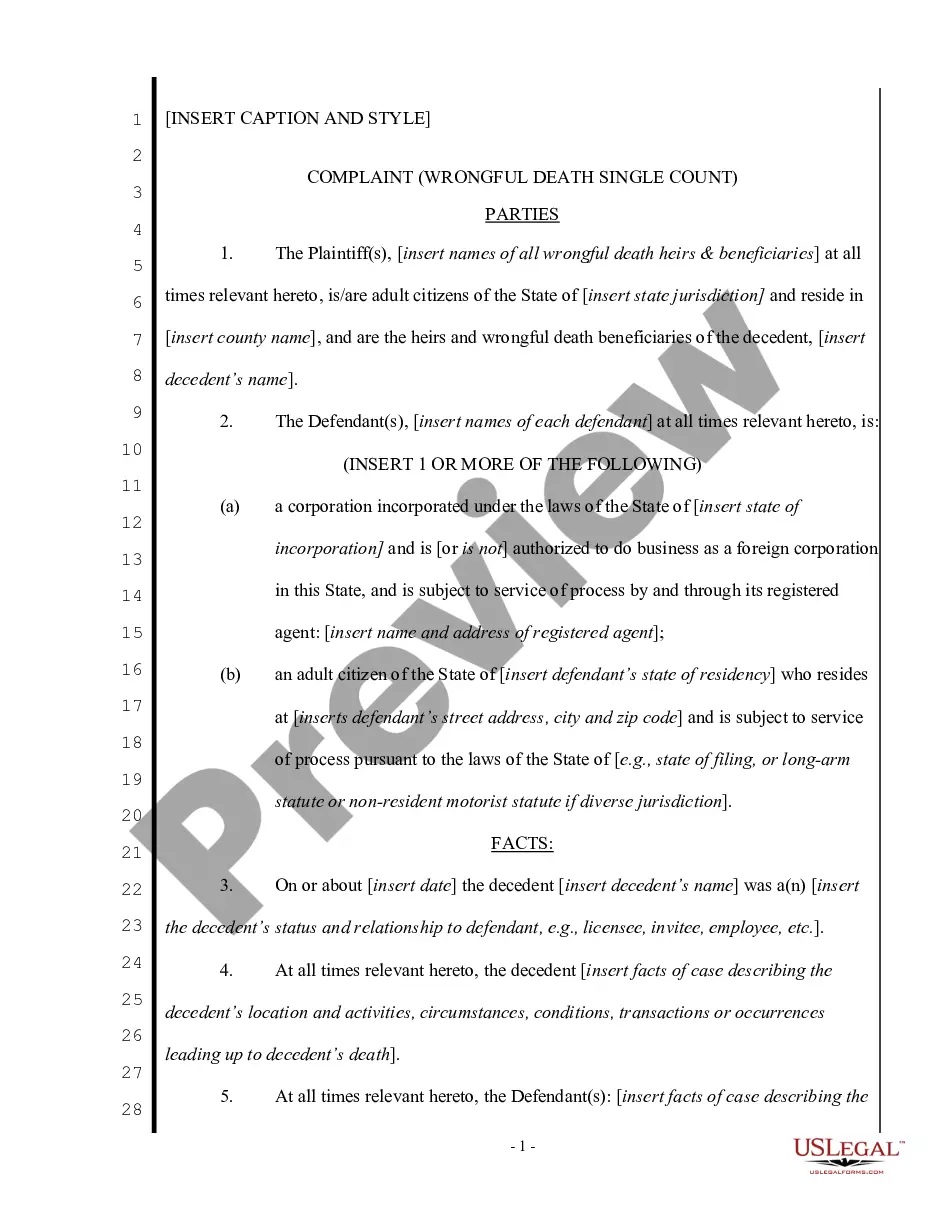
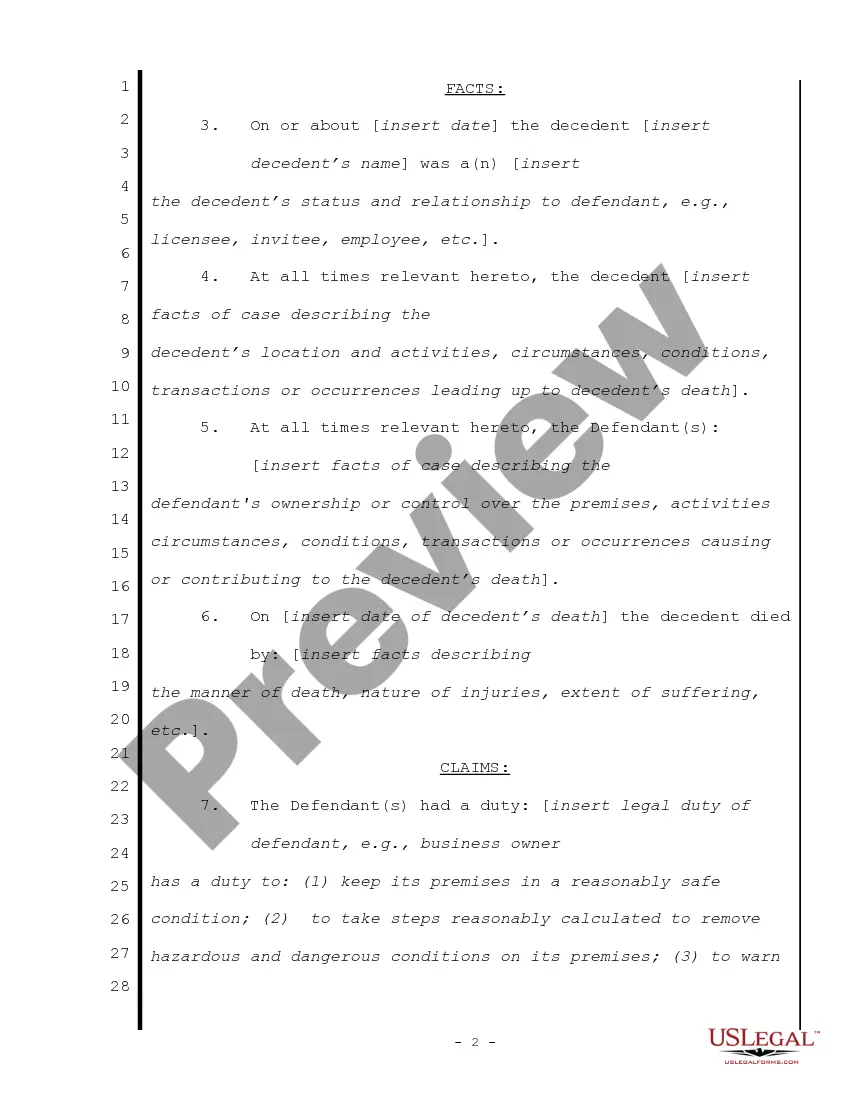
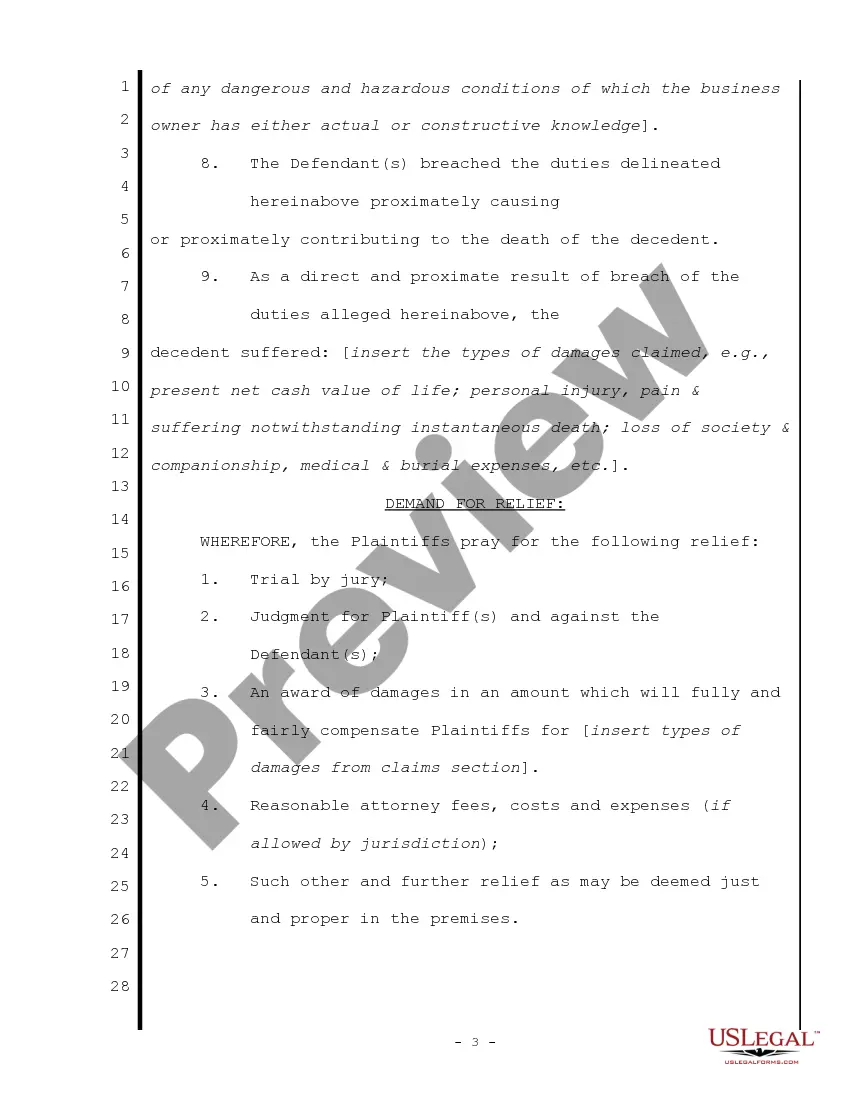
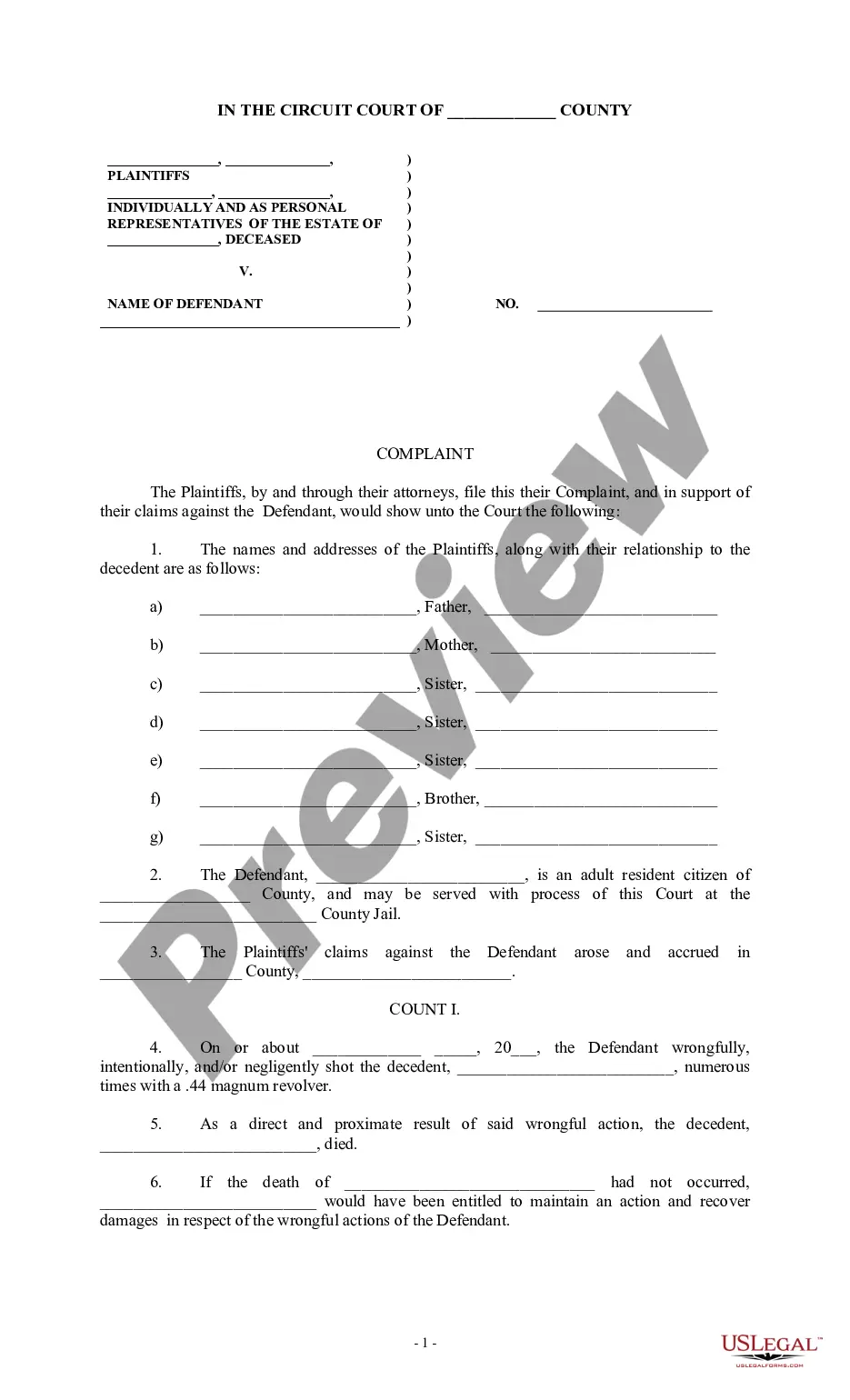
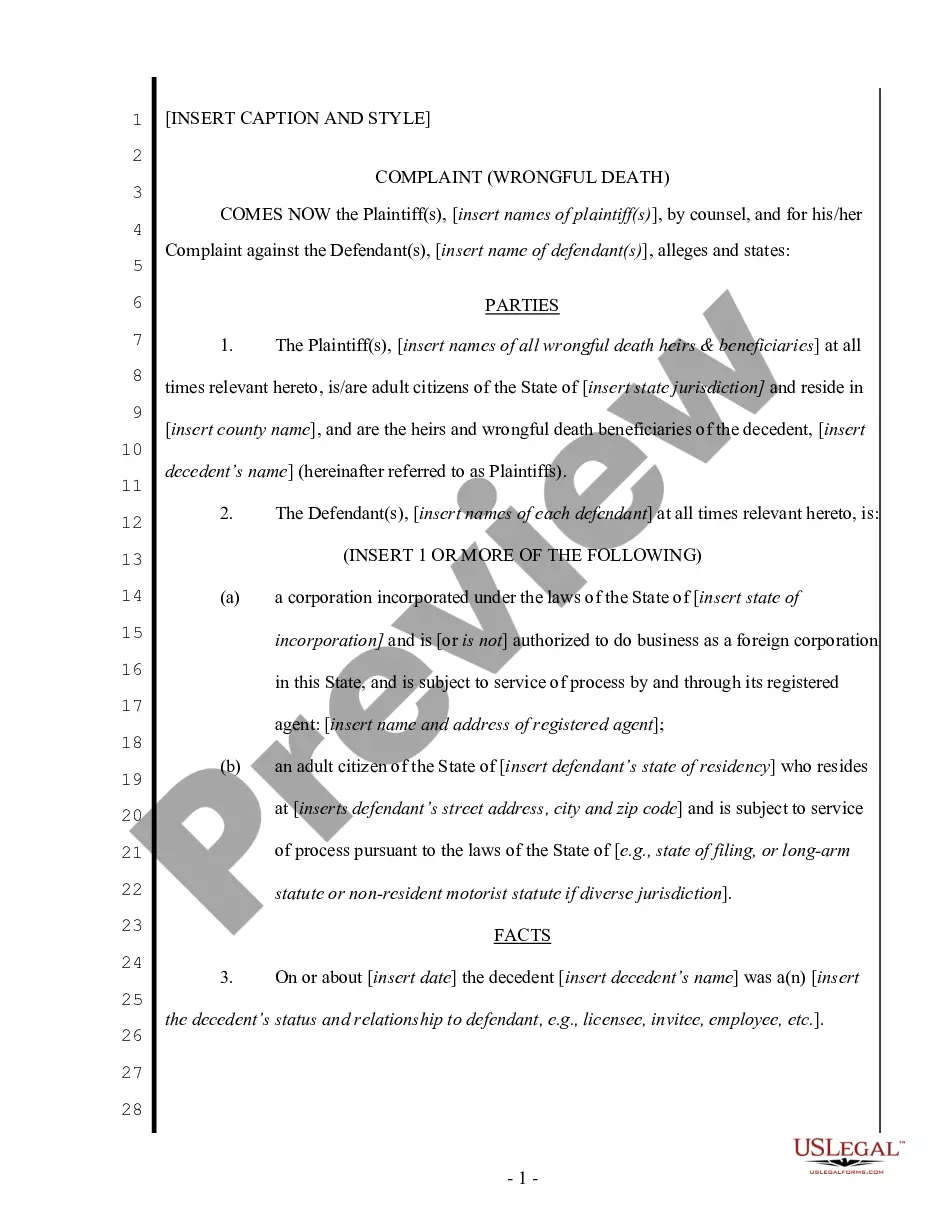
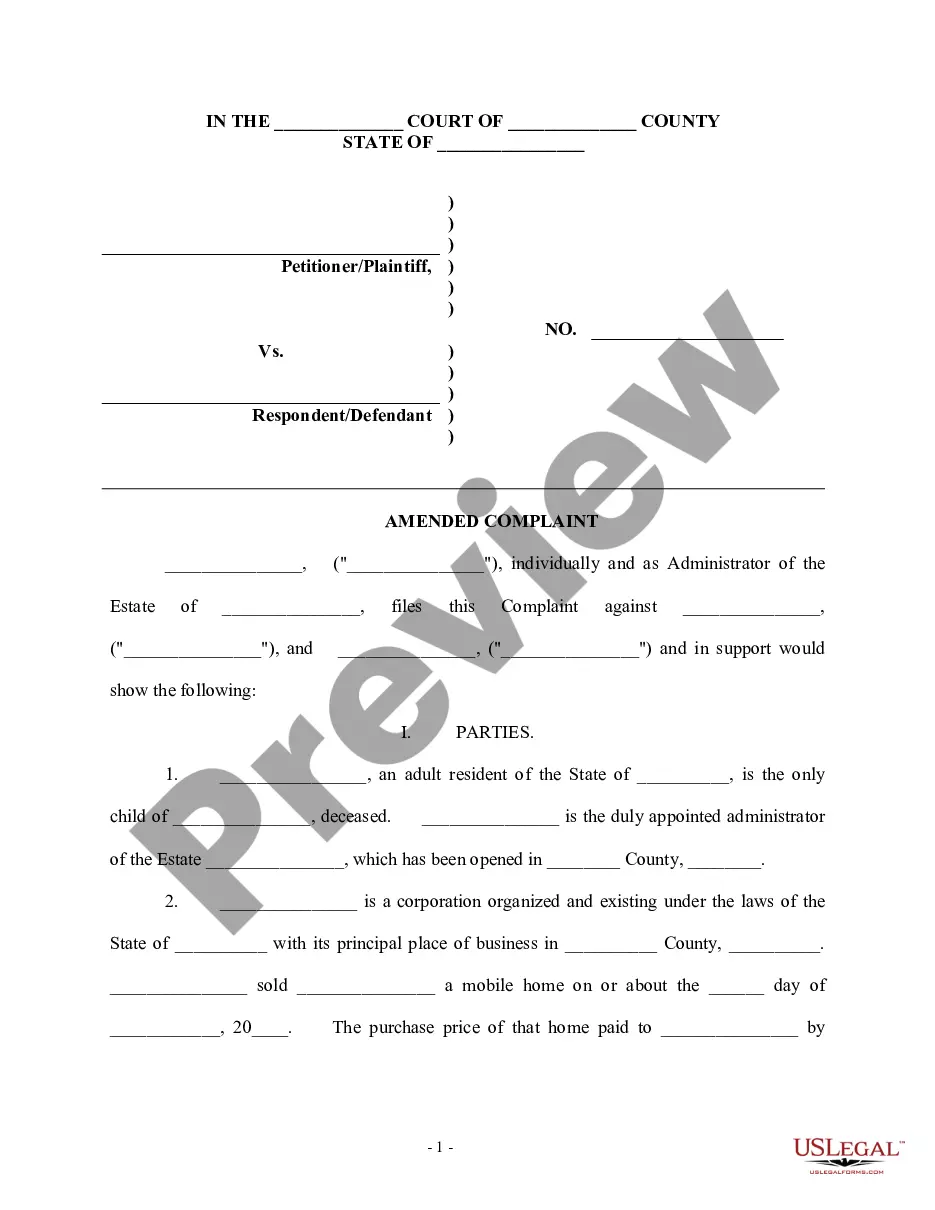
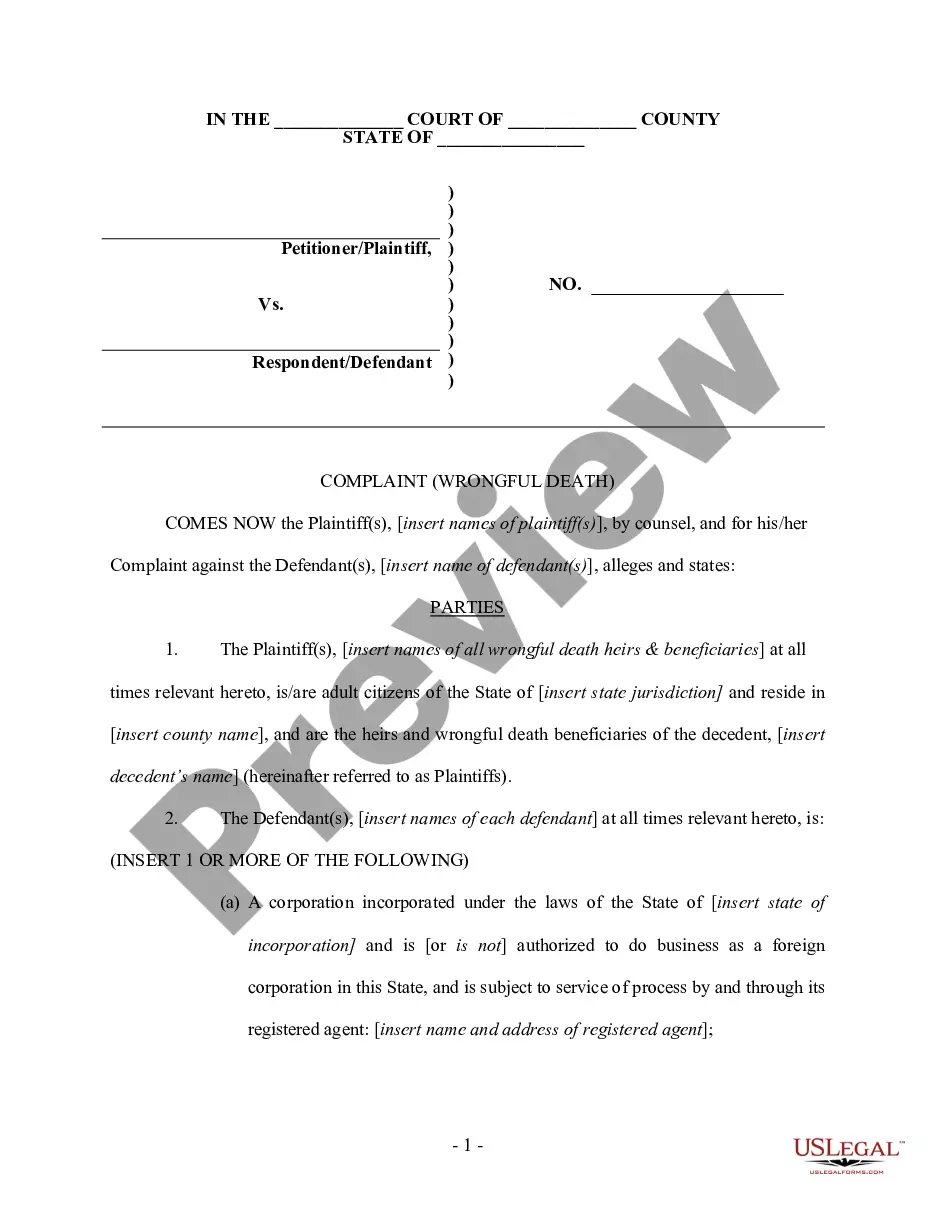
How to fill out Complaint For Wrongful Death - Single Count?
Creating legal documents from the ground up can occasionally be daunting.
Certain instances may demand extensive investigation and significant financial investment.
If you’re seeking a simpler and more cost-effective method of generating Wrongful Act Examples or any other paperwork without excessive hurdles, US Legal Forms is perpetually at your service.
Our online repository of more than 85,000 current legal documents encompasses nearly every aspect of your economic, legal, and personal matters.
However, before jumping straight to downloading Wrongful Act Examples, keep these tips in mind: Check the form preview and descriptions to verify that you have located the document you need. Ensure that the form you select aligns with the stipulations of your state and county. Choose the most suitable subscription plan to acquire the Wrongful Act Examples. Download the document. Then fill it out, certify it, and print it. US Legal Forms boasts an impeccable reputation and over 25 years of experience. Join us today and make document execution a straightforward and efficient process!
- With a few clicks, you can swiftly obtain state- and county-specific documents meticulously prepared by our legal professionals.
- Utilize our platform whenever you require dependable and trustworthy services to effortlessly search for and obtain the Wrongful Act Examples.
- If you’re familiar with our site and have established an account, just Log In, find the template, and download it instantly or retrieve it later from the My documents section.
- Not yet a member? No problem. It only takes a few minutes to register and browse our collection.
Form popularity
FAQ
A negligent or wrongful act or omission occurs when an individual fails to act with reasonable care, resulting in harm to another party. This includes both doing something harmful and failing to do something necessary. Reviewing wrongful act examples can provide insight into the specific instances where negligence is applicable.
An unlawful act is commonly termed a 'crime' or 'illegal act'. This encompasses behavior that violates established laws, leading to prosecution. Understanding the connection between unlawful acts and wrongful act examples can illuminate the range of legal repercussions one may face.
Legally, a wrongful act is defined as an action that causes unjust harm to another, violating their rights or causing injury. Such acts may be intentional or the result of negligence. Being aware of wrongful act examples can help determine if an act fits this legal definition.
A wrongful act or omission refers to both actions taken and actions neglected that result in harm to another person. For instance, failing to provide a necessary duty can be just as legally culpable as an overt harmful action. Exploring wrongful act examples can greatly assist in distinguishing between what constitutes an actionable offense.
A wrongful act is generally called a 'tort'. It encapsulates various actions that result in harm, injury, or damage to another person. By examining wrongful act examples, individuals can better understand the circumstances that constitute a tort.
In legal terms, a wrongful act is often referred to as a 'tortious act'. This encompasses actions that violate the rights of others, thus forming the basis for a lawsuit. Familiarizing yourself with various wrongful act examples can guide individuals in identifying possible claims.
The term commonly used to describe a wrongful act is 'tort'. A tort signifies an act that causes harm or loss to another person, leading to legal liability. Understanding wrongful act examples can help clarify situations where one may seek legal recourse.
An example of an act of omission could be a landlord neglecting to repair a broken staircase, leading to a tenant's injury. This failure to act signifies a breach of responsibility and can have serious legal consequences. By reviewing wrongful act examples like this one, individuals can better understand their legal obligations. Platforms like uslegalforms provide resources to help you navigate these responsibilities effectively.
The wrongfulness of an omission stems from a person's duty to act in certain situations. Failing to fulfill this duty can result in harm or injury to others, categorizing it as a wrongful act. When exploring wrongful act examples, it’s crucial to highlight instances where inaction causes significant harm. Understanding these scenarios can guide you in recognizing your responsibilities to others.
An act refers to a deliberate action taken by a person, while an omission signifies a failure to act when there is an obligation to do so. Both scenarios can result in wrongful acts, leading to liability. To grasp the full scope, consider wrongful act examples that showcase how both acts and omissions can lead to harmful consequences. This perspective helps clarify various legal responsibilities.