Law Firm Acquisition Checklist For Leaving
Description
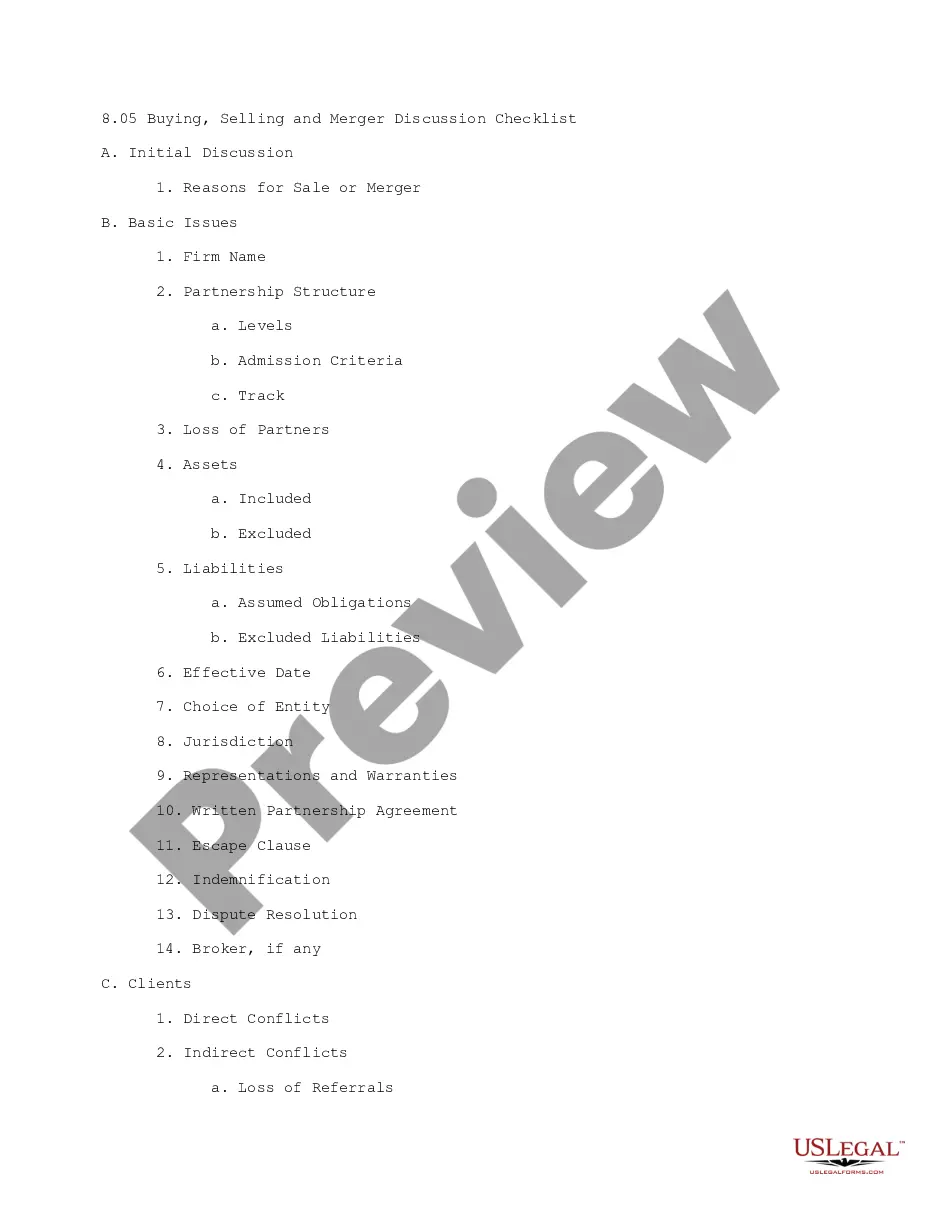
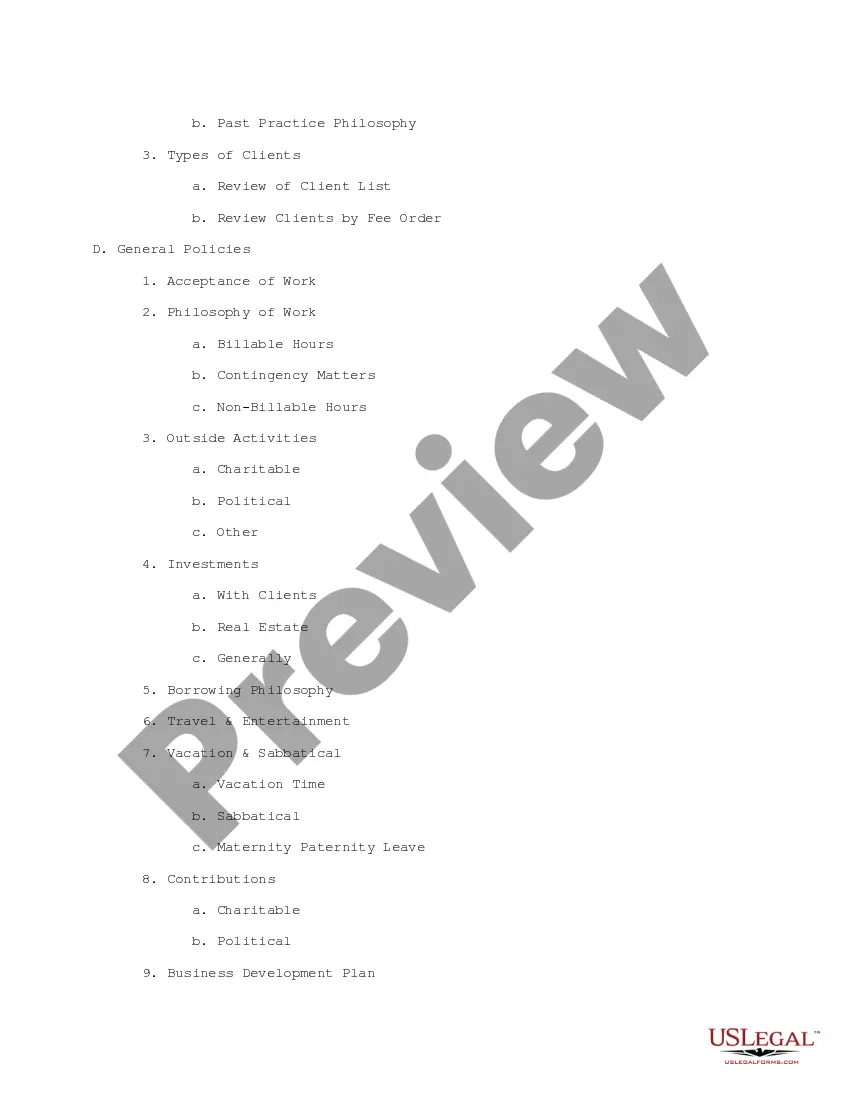
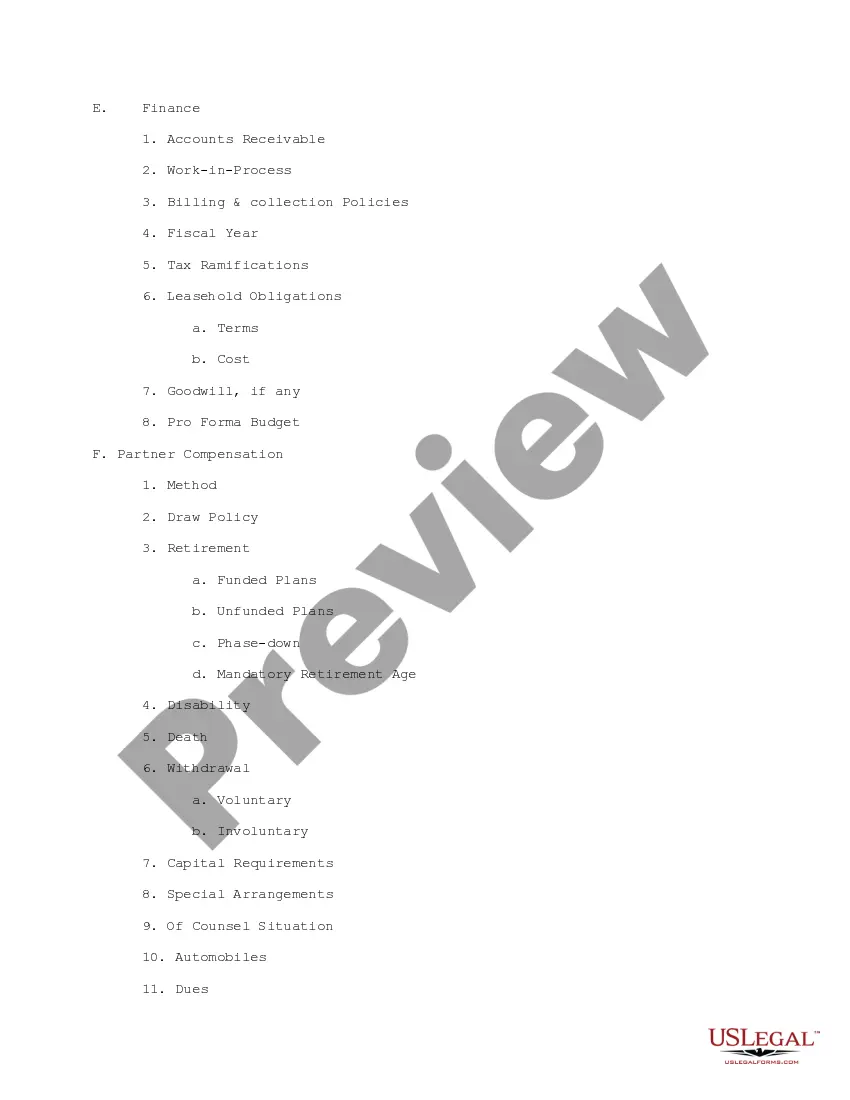
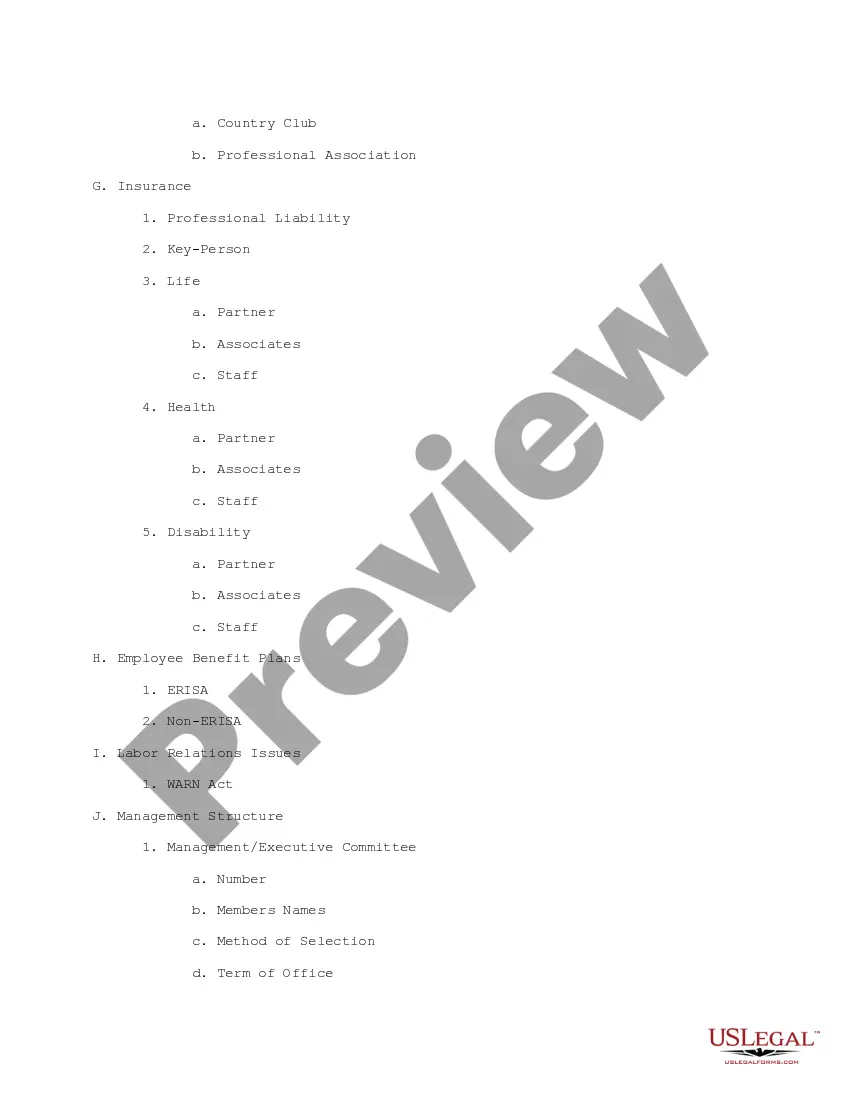


Get your form ready online
Our built-in tools help you complete, sign, share, and store your documents in one place.
Make edits, fill in missing information, and update formatting in US Legal Forms—just like you would in MS Word.
Download a copy, print it, send it by email, or mail it via USPS—whatever works best for your next step.
Sign and collect signatures with our SignNow integration. Send to multiple recipients, set reminders, and more. Go Premium to unlock E-Sign.
If this form requires notarization, complete it online through a secure video call—no need to meet a notary in person or wait for an appointment.
We protect your documents and personal data by following strict security and privacy standards.

Make edits, fill in missing information, and update formatting in US Legal Forms—just like you would in MS Word.

Download a copy, print it, send it by email, or mail it via USPS—whatever works best for your next step.

Sign and collect signatures with our SignNow integration. Send to multiple recipients, set reminders, and more. Go Premium to unlock E-Sign.

If this form requires notarization, complete it online through a secure video call—no need to meet a notary in person or wait for an appointment.

We protect your documents and personal data by following strict security and privacy standards.
Looking for another form?
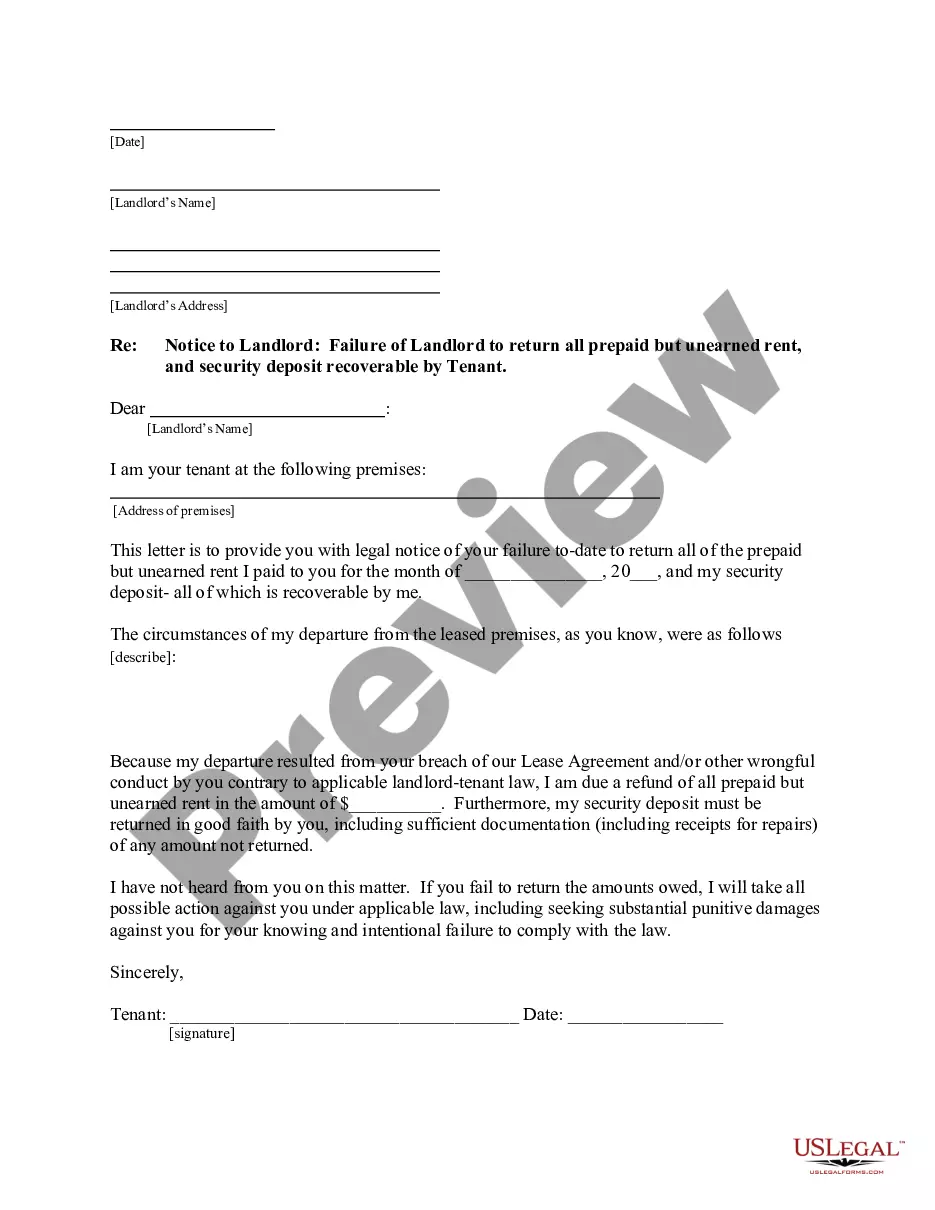






How to fill out Buying, Selling And Merger Discussion Checklist?
Regardless of whether it is for corporate reasons or personal matters, everyone must deal with legal situations at some point in their lives.
Filling out legal documents requires meticulous attention, beginning with the choice of the appropriate template.
With an extensive catalog from US Legal Forms available, you won’t have to waste time searching for the correct sample online. Utilize the library's easy navigation to find the right template for any situation.
- Acquire the necessary sample using the search bar or by browsing the catalog.
- Review the description of the form to confirm it aligns with your circumstances, state, and county.
- Select the form's preview to inspect it closely.
- If it is not the correct document, return to the search function to find the needed Law Firm Acquisition Checklist For Leaving sample.
- Obtain the file when it meets your requirements.
- If you already possess a US Legal Forms account, click Log in to access previously stored files in My documents.
- If you do not yet have an account, you can acquire the form by clicking Buy now.
- Select the suitable pricing option.
- Fill out the account registration form.
- Choose your payment method: either a credit card or a PayPal account.
- Select the file format you prefer and download the Law Firm Acquisition Checklist For Leaving.
- Once downloaded, you can fill out the form using editing software or print it and complete it by hand.
Form popularity
FAQ
In South Dakota, either spouse in a divorce can request alimony. However, the court will only award support if the requesting spouse demonstrates a need for financial support and that the other spouse can pay.
The first step to beginning the divorce process in South Dakota is to ensure you meet the state's residency requirements. You or your spouse must be domiciled in the state, meaning you have lived in South Dakota for at least one day and intend to make the state your permanent home.
What Is an Example Of A Stipulation? For example, if you operate a restaurant and offer a coupon, you can stipulate that patrons must order a specific amount of home delivery to qualify for the coupon.
South Dakota recognizes both ?fault" and ?no-fault" divorce.
Under South Dakota law a divorce may be granted for any of these grounds: adultery, extreme cruelty (including bodily injury or grievous mental suffering), willful desertion, willful neglect, habitual intemperance, conviction of a felony, chronic mental illness or irreconcilable differences.
South Dakota is an ?all property? state. This means when a divorce is granted, a court can make an equitable (or "fair") division of the property belonging to either person, whether the title to the property is in the name of the husband or the wife.
South Dakota recognizes legal separations. To obtain a legal separation, the couple must file a petition with the court.
South Dakota law requires courts to make an ?equitable division of property? during a divorce. This applies to all property owned by a married couple, both joint property and the individual property belonging to each spouse. It doesn't necessarily mean a split either.