Phlebotomist Agreement With Employer
Description
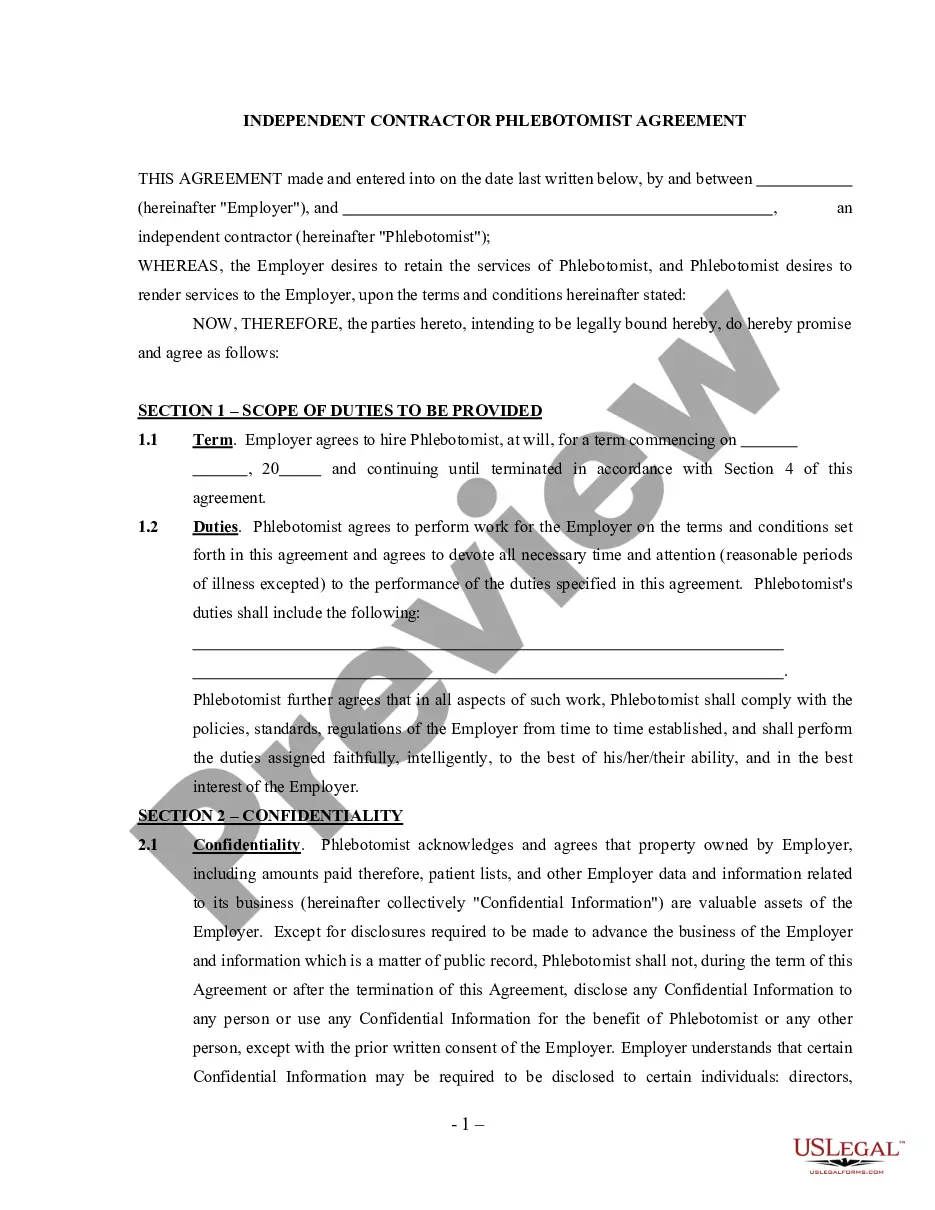
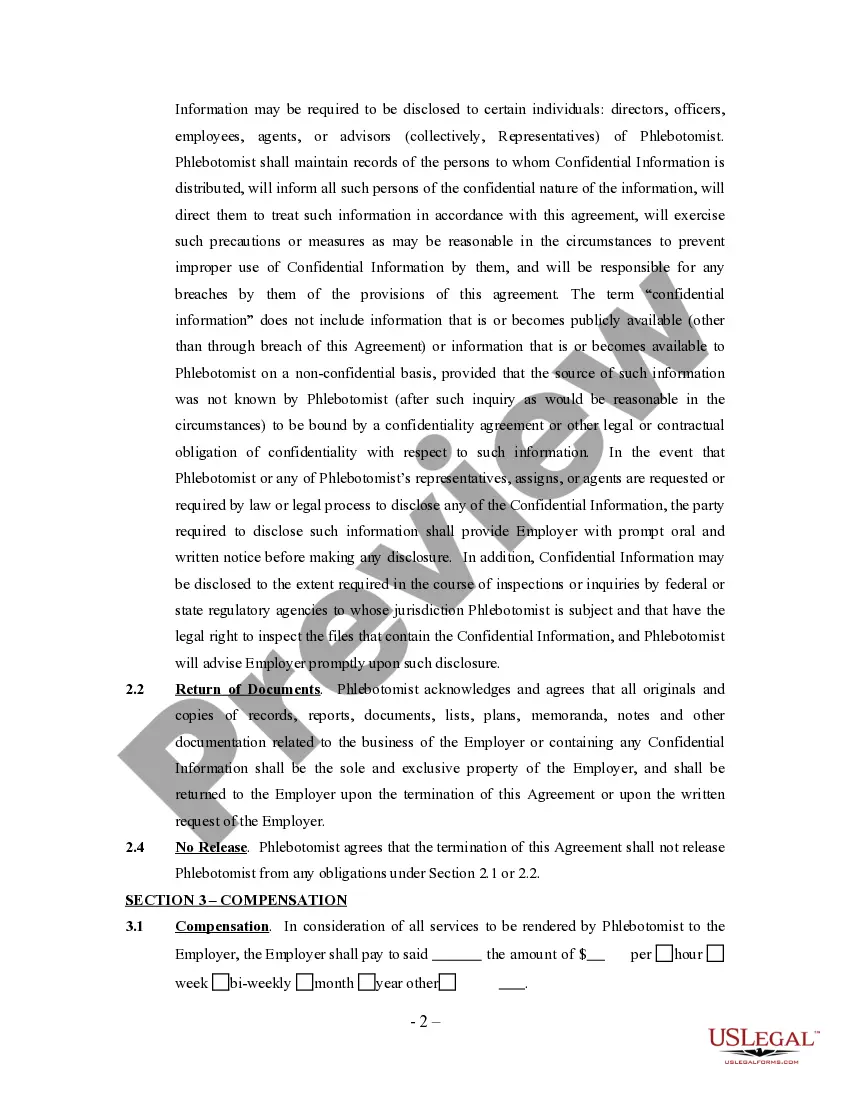
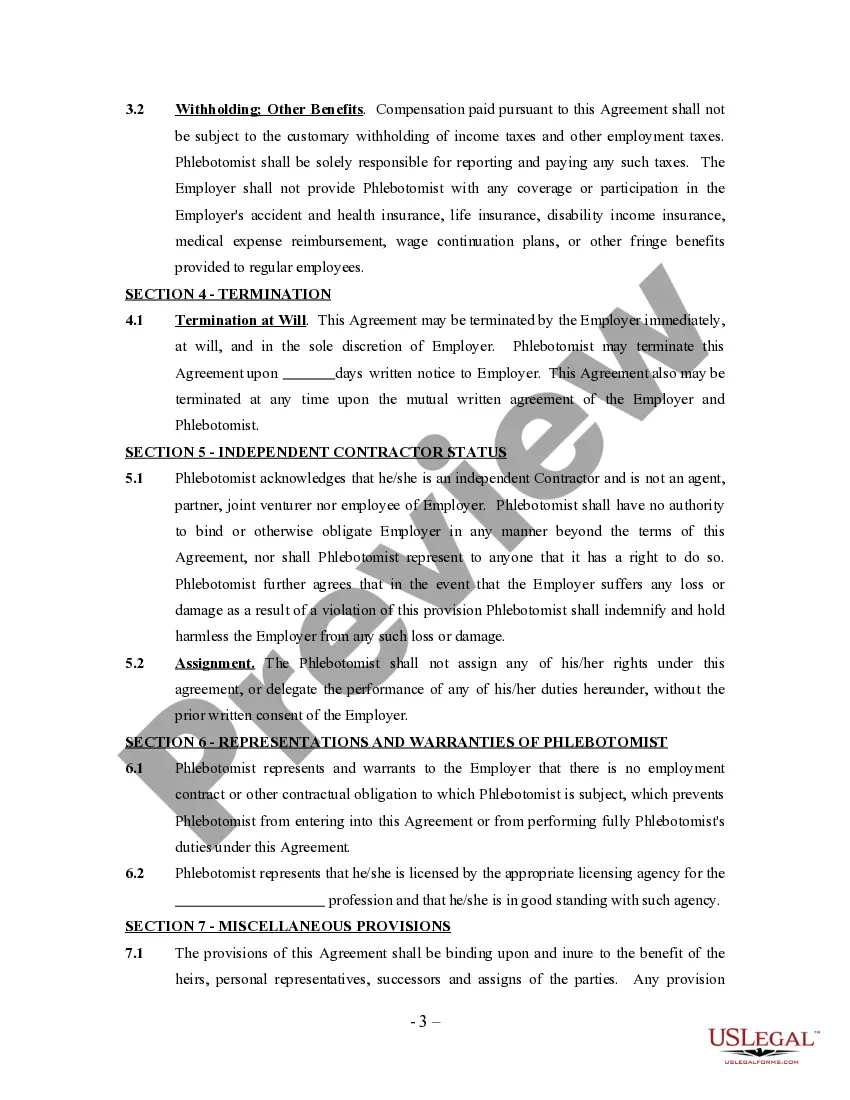
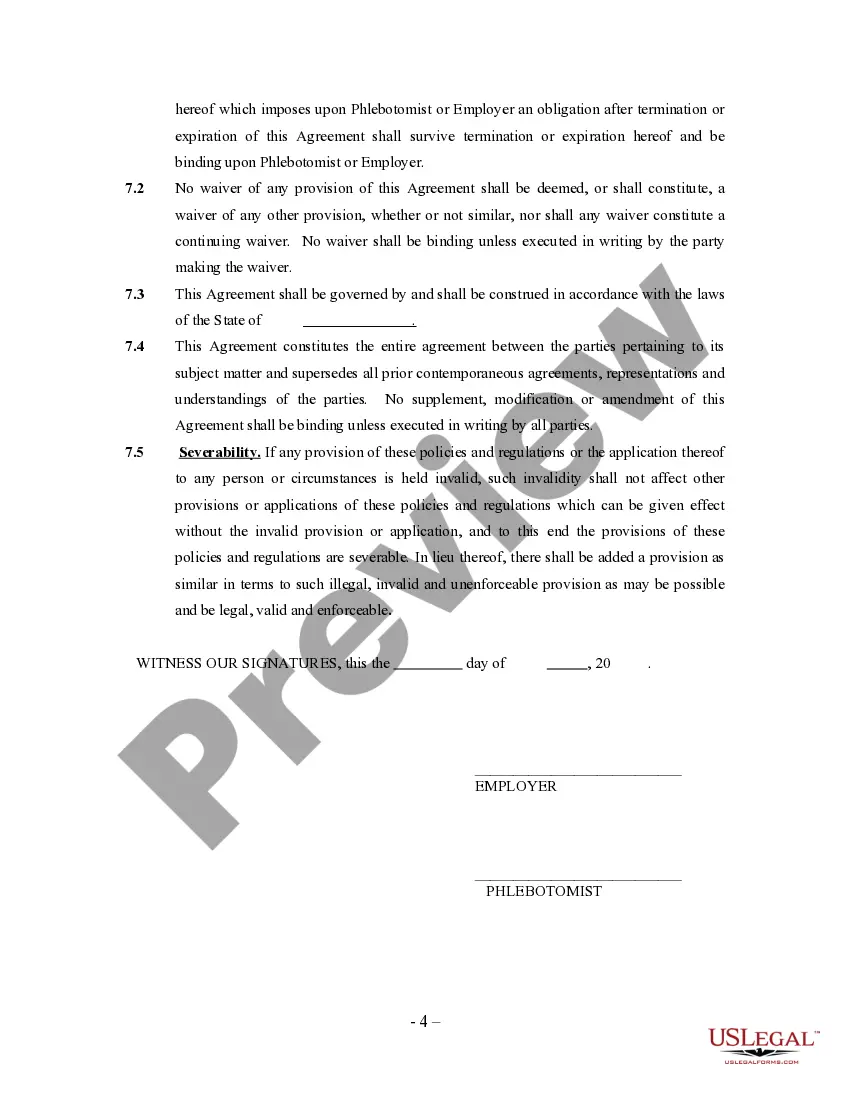
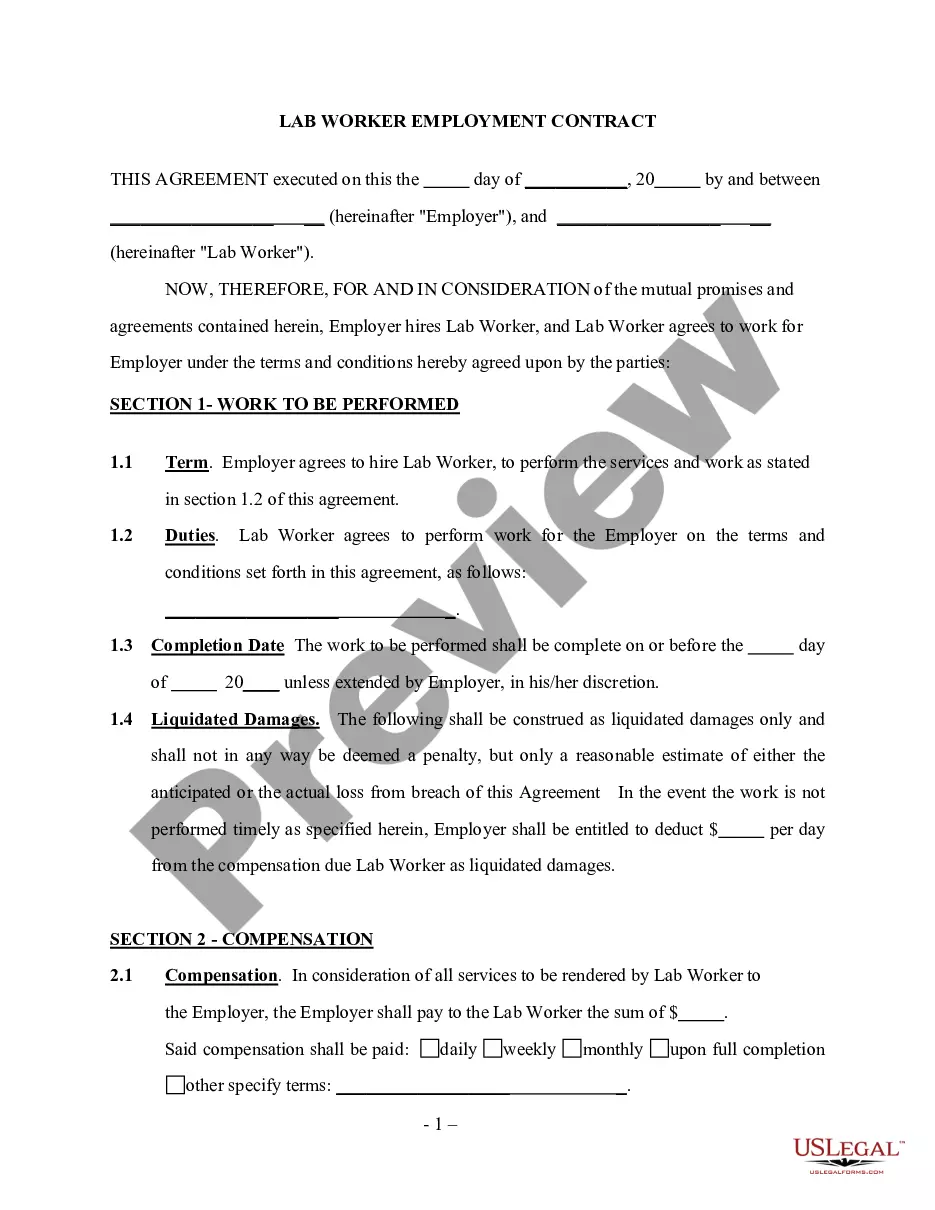
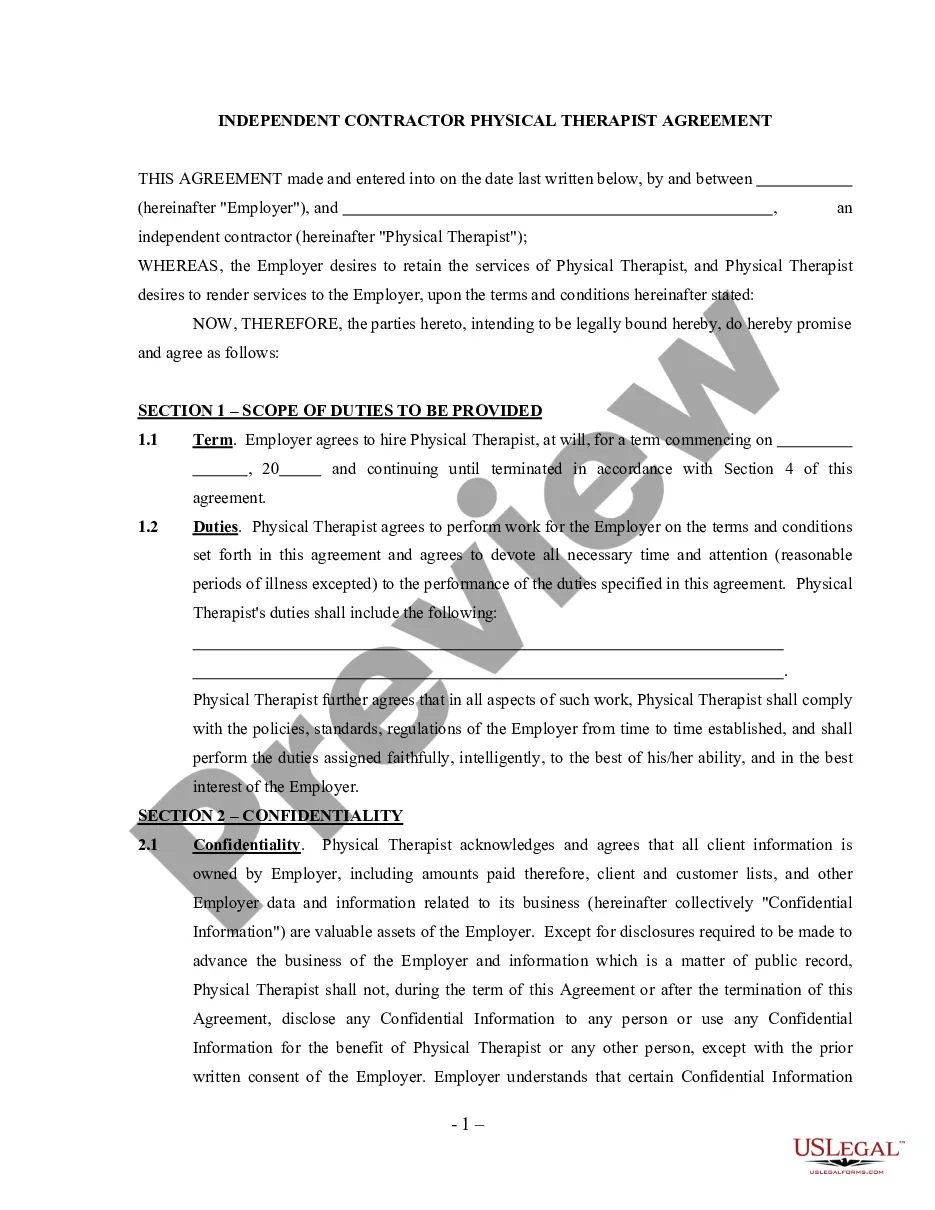
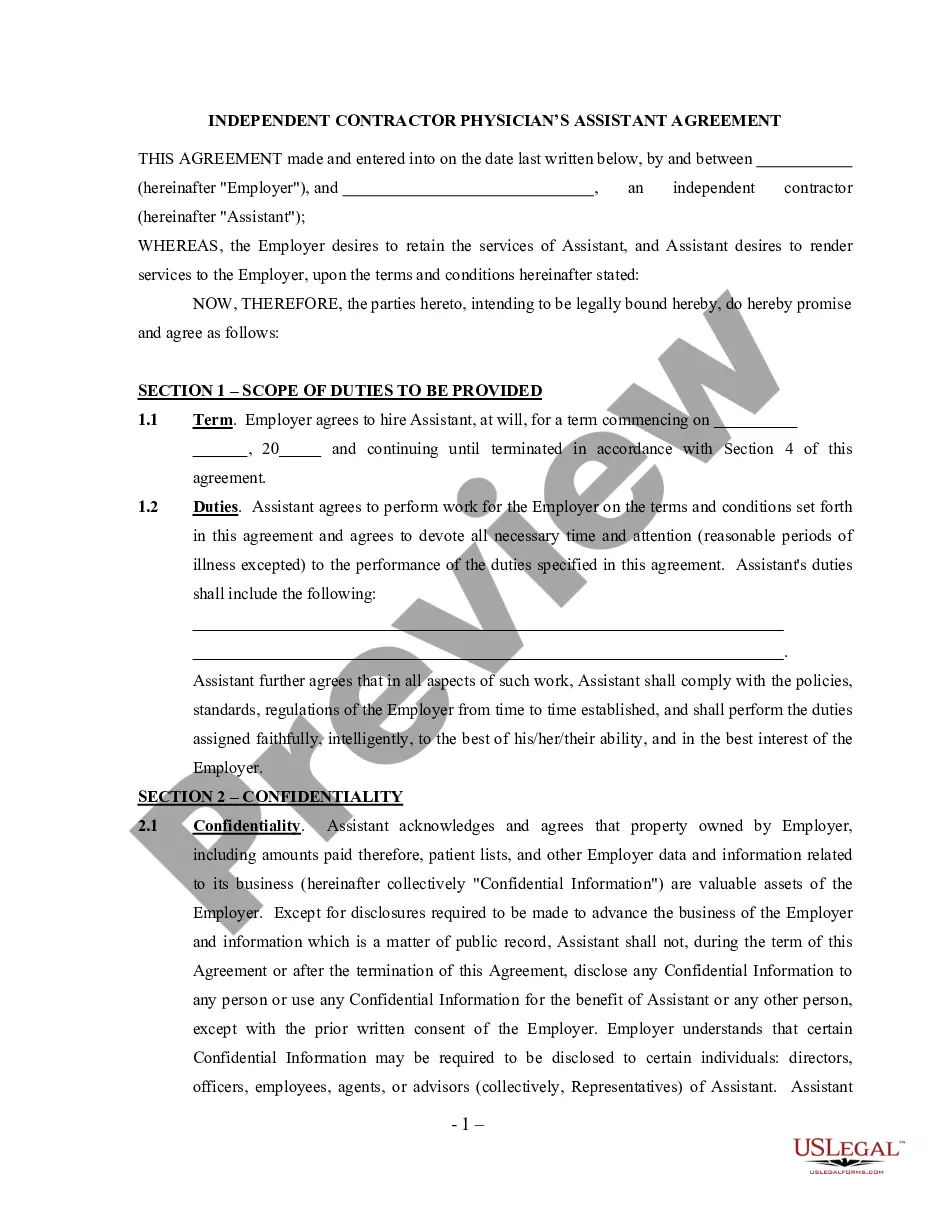
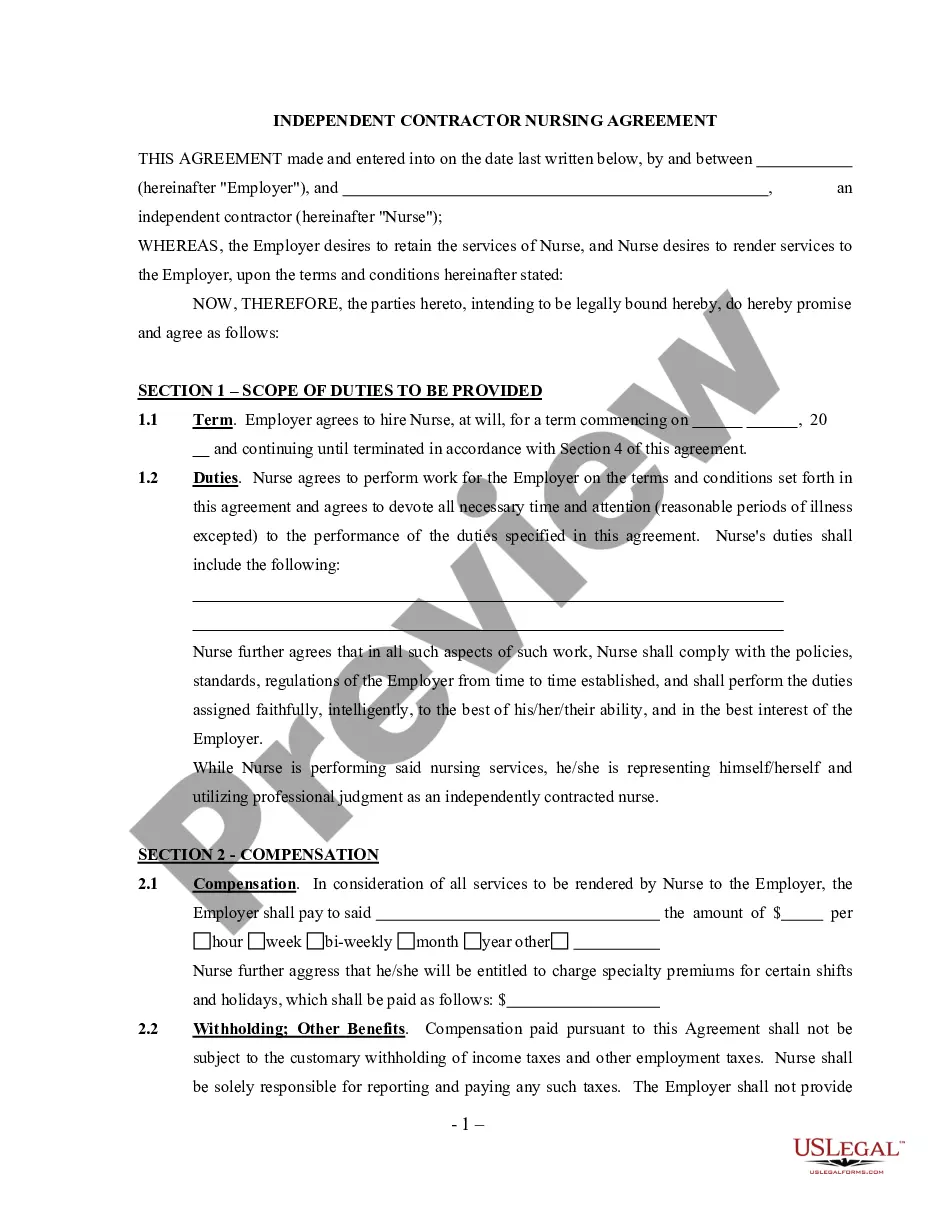
Get your form ready online
Our built-in tools help you complete, sign, share, and store your documents in one place.
Make edits, fill in missing information, and update formatting in US Legal Forms—just like you would in MS Word.
Download a copy, print it, send it by email, or mail it via USPS—whatever works best for your next step.
Sign and collect signatures with our SignNow integration. Send to multiple recipients, set reminders, and more. Go Premium to unlock E-Sign.
If this form requires notarization, complete it online through a secure video call—no need to meet a notary in person or wait for an appointment.
We protect your documents and personal data by following strict security and privacy standards.

Make edits, fill in missing information, and update formatting in US Legal Forms—just like you would in MS Word.

Download a copy, print it, send it by email, or mail it via USPS—whatever works best for your next step.

Sign and collect signatures with our SignNow integration. Send to multiple recipients, set reminders, and more. Go Premium to unlock E-Sign.

If this form requires notarization, complete it online through a secure video call—no need to meet a notary in person or wait for an appointment.

We protect your documents and personal data by following strict security and privacy standards.
Looking for another form?
How to fill out Phlebotomist Agreement - Self-Employed Independent Contractor?
Securing legal document samples that adhere to national and local laws is essential, and the web provides numerous choices to select from.
However, what is the purpose of spending time searching for the suitable Phlebotomist Agreement With Employer example online if the US Legal Forms digital library already compiles such templates in one location.
US Legal Forms represents the largest online legal repository with over 85,000 fillable documents created by attorneys for every business and life circumstance. They are easy to navigate, with all files organized by state and intended use. Our experts stay informed on legal changes, ensuring that your form is always current and compliant when obtaining a Phlebotomist Agreement With Employer from our platform.
Click Buy Now when you have found the right document and select a subscription plan. Establish an account or Log In and submit payment via PayPal or credit card. Choose the appropriate format for your Phlebotomist Agreement With Employer and download it. All documents you access through US Legal Forms are reusable. To re-download and complete forms you have previously acquired, navigate to the My documents tab in your profile. Make the most of the most extensive and user-friendly legal documentation service!
- Securing a Phlebotomist Agreement With Employer is quick and easy for both existing and new users.
- If you already possess an account with an active subscription, Log In and save the document sample you need in the correct format.
- If you’re new to our site, follow the instructions below.
- Examine the template using the Preview feature or through the text outline to verify it suits your requirements.
- Search for an alternative sample using the search tool at the top of the page if necessary.
Form popularity
FAQ
OSHA frequently cites three major violations: failure to provide proper fall protection, inadequate hazard communication, and lack of effective respiratory protection. For phlebotomists, understanding these violations can help in crafting a comprehensive phlebotomist agreement with employer that emphasizes compliance and safety. By addressing these key areas, you can enhance workplace safety and reduce the risk of penalties or injuries.
The Occupational Safety and Health Administration (OSHA) sets standards to ensure safety in phlebotomy practices. These requirements include proper training in bloodborne pathogens, usage of personal protective equipment, and implementation of safety protocols. A clear phlebotomist agreement with employer should outline these safety measures to protect both employees and patients. By adhering to these regulations, employers can foster a safer working environment.
Writing an agreement letter between an employer and a phlebotomist involves outlining clear terms of employment, including job responsibilities, working hours, and compensation. It is important to address confidentiality, training requirements, and compliance with health regulations. Utilizing a reliable platform like US Legal Forms can simplify this process, providing templates that ensure your phlebotomist agreement with employer is comprehensive and legally sound.
A phlebotomist typically works under the supervision of a healthcare provider in various settings, including hospitals, clinics, and laboratories. The employer may be a medical facility, a diagnostic lab, or even a blood donation center. Understanding the specific employer and setting is crucial, as it influences the phlebotomist agreement with employer regarding roles, responsibilities, and work conditions.
The two main types of phlebotomy are venipuncture and capillary blood collection. Venipuncture involves drawing blood from a vein, usually in the arm, and is the most common method used in healthcare settings. On the other hand, capillary blood collection is performed by pricking the skin, often on a fingertip, to collect a smaller sample. Understanding these techniques is essential for anyone entering into a phlebotomist agreement with an employer, as they dictate the methods you will use in your practice.
To become a contract phlebotomist, you typically need to complete a phlebotomy training program and obtain certification. It is important to build a strong resume that highlights your skills and experience in blood collection. After that, you can seek contract opportunities through staffing agencies or directly with healthcare employers. A solid phlebotomist agreement with an employer will ensure your roles and responsibilities are clearly defined, making it easier for you to succeed in this flexible career path.
The Occupational Safety and Health Administration (OSHA) guidelines for phlebotomists outline essential safety standards to protect both the phlebotomist and the patient. These guidelines include proper handling of needles, disposal of sharps, and maintaining a clean work environment. Ensuring compliance with these regulations is crucial for a phlebotomist agreement with an employer, as it promotes safety and reduces the risk of exposure to bloodborne pathogens. Following these guidelines helps maintain a professional standard in all phlebotomy practices.
A contract phlebotomist is a professional who works under a phlebotomist agreement with an employer on a temporary or project basis. These individuals typically provide their services to healthcare facilities, such as hospitals or clinics, without being a permanent employee. This arrangement allows for flexibility in scheduling and can be beneficial for both the employer and the phlebotomist. Contract phlebotomists often handle blood draws, specimen collection, and patient interaction.
The biggest mistake a phlebotomist can make is failing to establish a clear phlebotomist agreement with their employer. This agreement outlines expectations, responsibilities, and protocols essential for safe and effective blood collection. When phlebotomists skip this crucial step, misunderstandings may arise, leading to potential errors in patient care. Therefore, having a well-defined phlebotomist agreement with your employer is vital for your success and the safety of your patients.