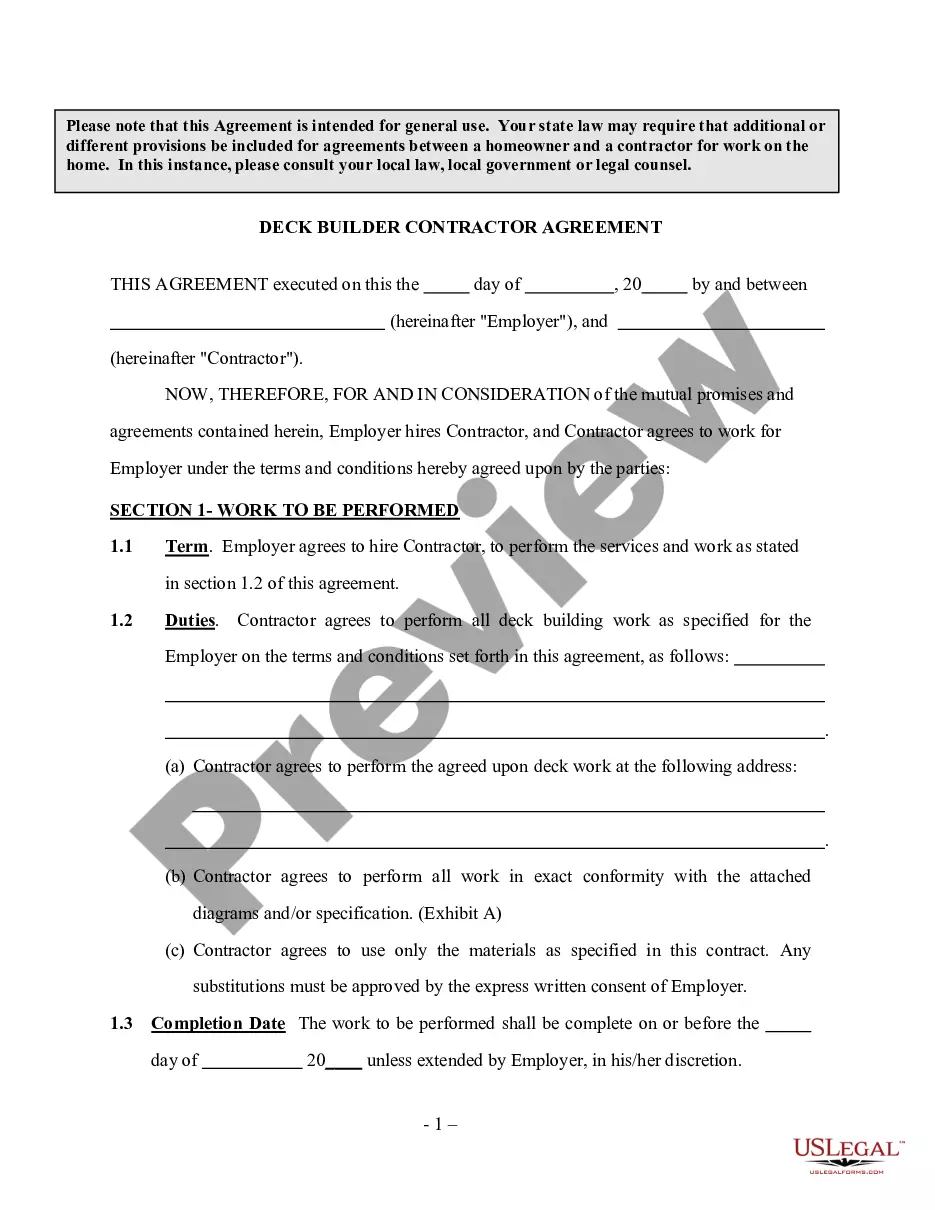
Contract For Building A Deck For A Hot Tub
Description


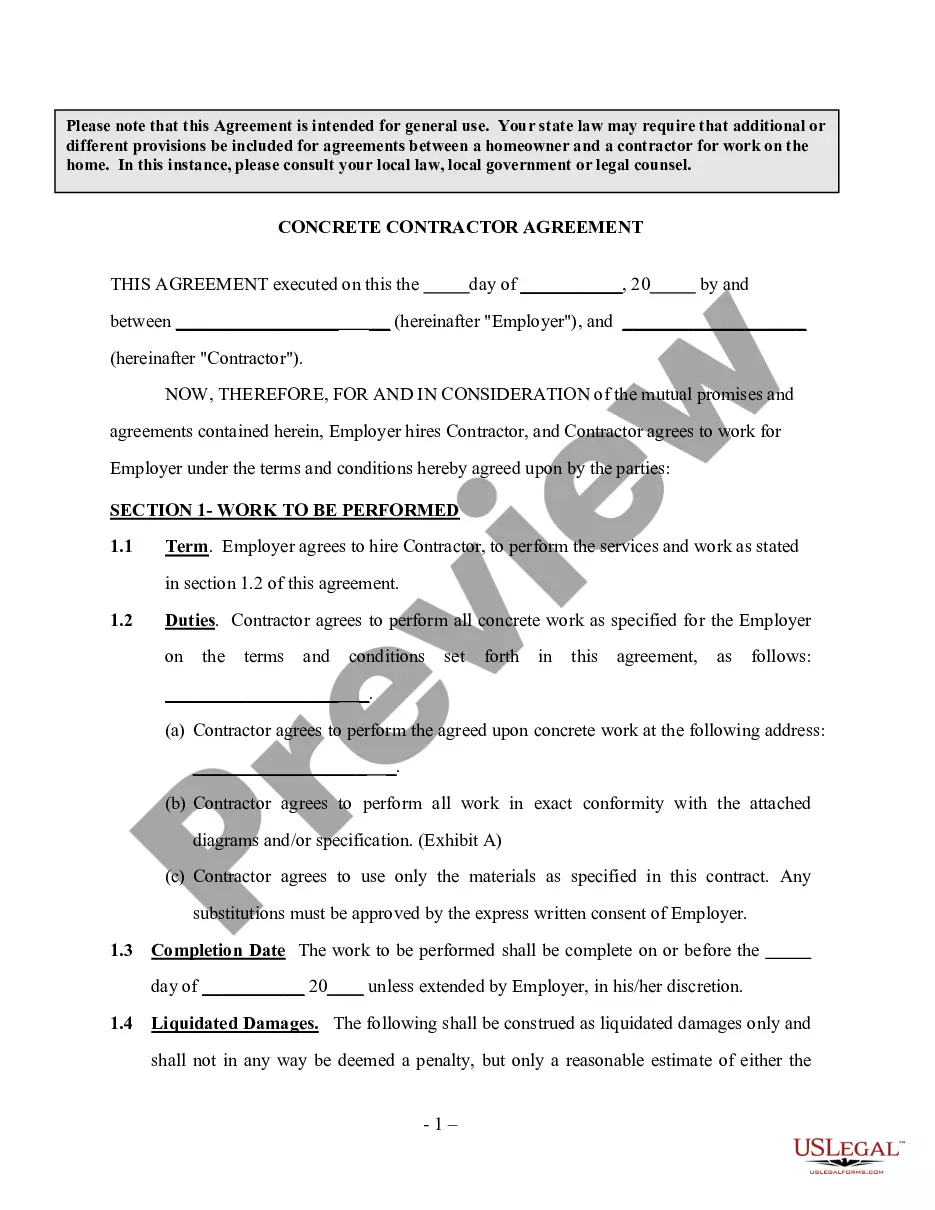
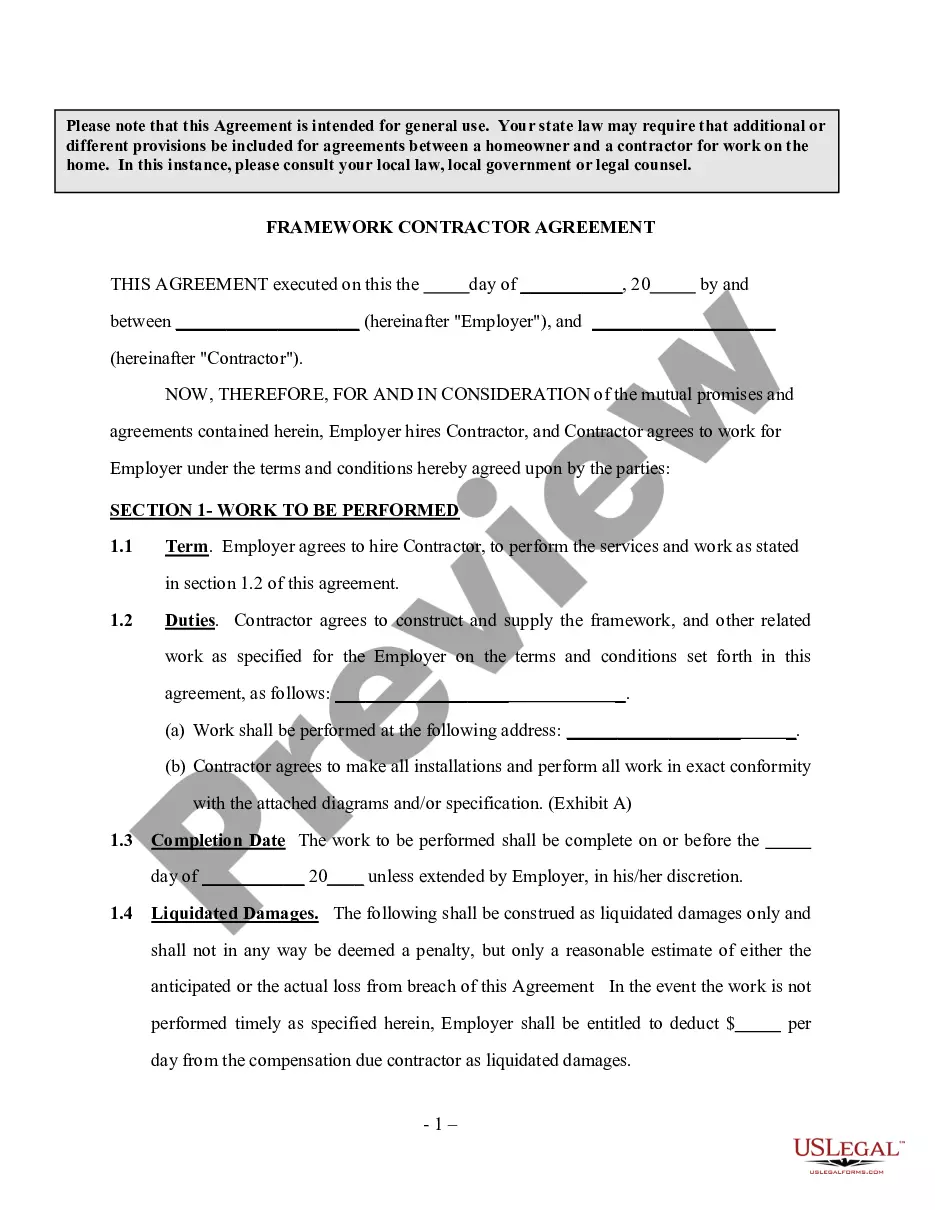
Get your form ready online
Our built-in tools help you complete, sign, share, and store your documents in one place.
Make edits, fill in missing information, and update formatting in US Legal Forms—just like you would in MS Word.
Download a copy, print it, send it by email, or mail it via USPS—whatever works best for your next step.
Sign and collect signatures with our SignNow integration. Send to multiple recipients, set reminders, and more. Go Premium to unlock E-Sign.
If this form requires notarization, complete it online through a secure video call—no need to meet a notary in person or wait for an appointment.
We protect your documents and personal data by following strict security and privacy standards.

Make edits, fill in missing information, and update formatting in US Legal Forms—just like you would in MS Word.

Download a copy, print it, send it by email, or mail it via USPS—whatever works best for your next step.

Sign and collect signatures with our SignNow integration. Send to multiple recipients, set reminders, and more. Go Premium to unlock E-Sign.

If this form requires notarization, complete it online through a secure video call—no need to meet a notary in person or wait for an appointment.

We protect your documents and personal data by following strict security and privacy standards.
Looking for another form?







How to fill out Deck Builder Contractor Agreement - Self-Employed?
Identifying a reliable source for the latest and most pertinent legal templates is a significant part of navigating bureaucracy.
Acquiring the correct legal documents necessitates accuracy and meticulousness, which is why it's crucial to obtain samples of Contract For Constructing A Deck For A Hot Tub solely from reputable sources, like US Legal Forms. A faulty template will squander your time and delay your situation.
Once you have the form on your device, you can modify it with the editor or print it out to complete it manually. Eliminate the complications associated with your legal documentation. Browse the extensive catalog of US Legal Forms to find legal templates, assess their relevance to your situation, and download them instantly.
- Utilize the library navigation or search field to find your template.
- Review the form’s description to determine if it aligns with the requirements of your state and locality.
- Open the form preview, if accessible, to confirm the form is indeed the one you seek.
- Continue your search and identify the appropriate document if the Contract For Constructing A Deck For A Hot Tub does not meet your needs.
- If you are confident in the form’s applicability, download it.
- As a registered customer, click Log in to verify and access your chosen forms in My documents.
- If you haven't created an account yet, click Buy now to acquire the template.
- Select the pricing plan that suits your needs.
- Continue to the registration to complete your order.
- Finalize your purchase by selecting a payment method (credit card or PayPal).
- Choose the document format for downloading Contract For Constructing A Deck For A Hot Tub.
Form popularity
FAQ
A personal loan agreement is a legally binding contract that defines the expectations for both a borrower and a lender. It can be drawn up with an official lender, like a bank or credit union, or used in a more informal situation, such as with a friend who's lending you an amount of money.
A Promissory note is essentially an unconditional written promise to repay a loan or other debts, at a fixed or determinable future date. Although it is legally enforceable, a promissory note is less formal than a loan agreement and is suitable where smaller sums of money are involved.
A loan agreement is any written document that memorializes the lending of money. Loan agreements can take several forms. The most basic loan agreement is commonly called an "IOU." These are typically used between friends or relatives for small amounts of money, and simply state the dollar amount that is owed.
For a personal loan agreement to be enforceable, it must be documented in writing, as well as signed and dated by all parties involved. It's also a good idea to have the document notarized or signed by a witness.
Categorizing loan agreements by type of facility usually results in two primary categories: term loans, which are repaid in set installments over the term, or. revolving loans (or overdrafts) where up to a maximum amount can be withdrawn at any time, and interest is paid from month to month on the drawn amount.
A promissory note is generally sufficient if the amount of money is relatively small and there is a great deal of trust between the lender and the borrower (or debtor). In contrast, a loan agreement is more appropriate if the two parties do not know one another well and have substantial debt.
Promissory notes are used to legitimize the agreement between the lender and the borrower in the eyes of the law. No promissory note may mean the loan contract isn't legally binding or enforceable.
Promissory notes are legally binding whether the note is secured by collateral or based only on the promise of repayment. If you lend money to someone who defaults on a promissory note and does not repay, you can legally possess any property that individual promised as collateral.