Common Law Agreement With Child Ontario
Description

Get your form ready online
Our built-in tools help you complete, sign, share, and store your documents in one place.
Make edits, fill in missing information, and update formatting in US Legal Forms—just like you would in MS Word.
Download a copy, print it, send it by email, or mail it via USPS—whatever works best for your next step.
Sign and collect signatures with our SignNow integration. Send to multiple recipients, set reminders, and more. Go Premium to unlock E-Sign.
If this form requires notarization, complete it online through a secure video call—no need to meet a notary in person or wait for an appointment.
We protect your documents and personal data by following strict security and privacy standards.

Make edits, fill in missing information, and update formatting in US Legal Forms—just like you would in MS Word.

Download a copy, print it, send it by email, or mail it via USPS—whatever works best for your next step.

Sign and collect signatures with our SignNow integration. Send to multiple recipients, set reminders, and more. Go Premium to unlock E-Sign.

If this form requires notarization, complete it online through a secure video call—no need to meet a notary in person or wait for an appointment.

We protect your documents and personal data by following strict security and privacy standards.
Looking for another form?






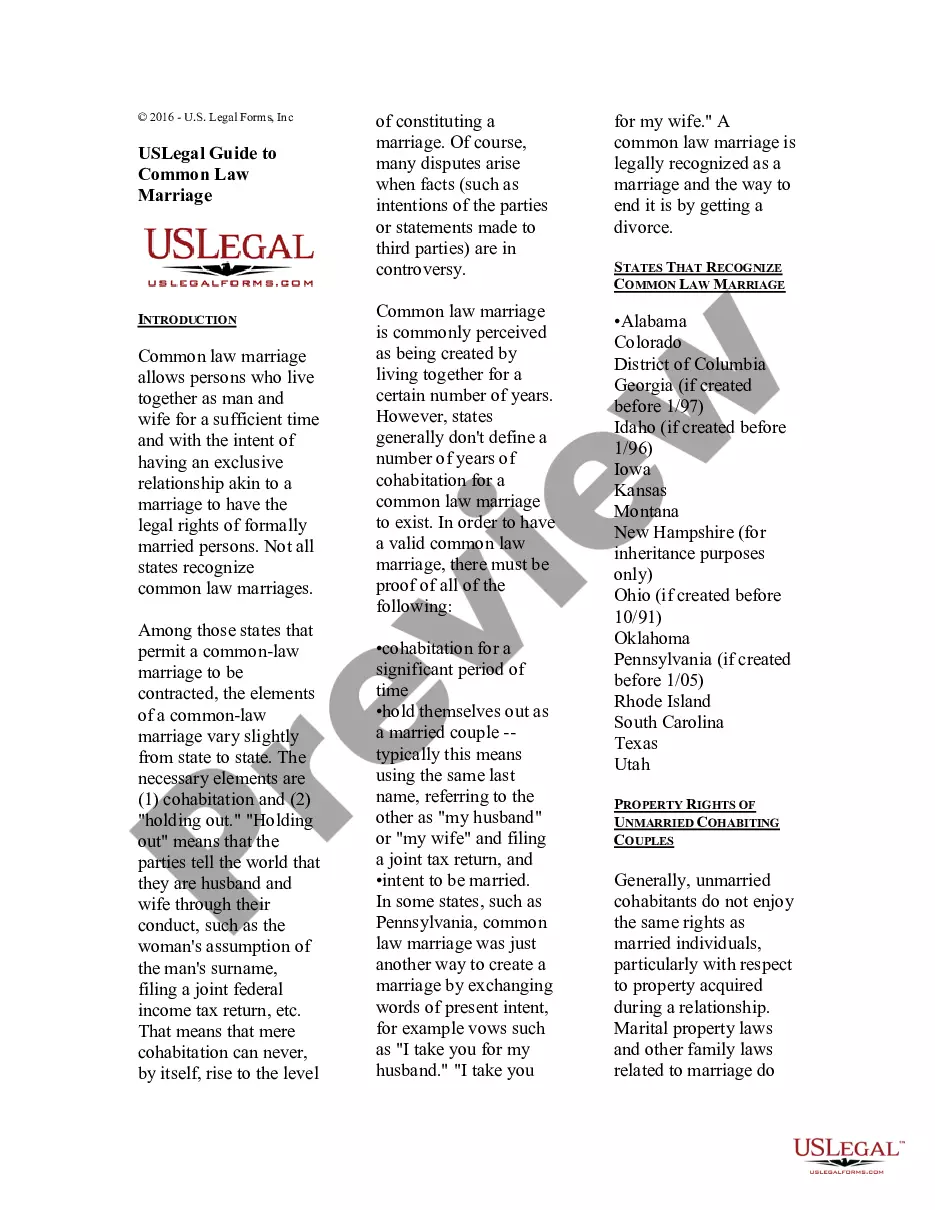
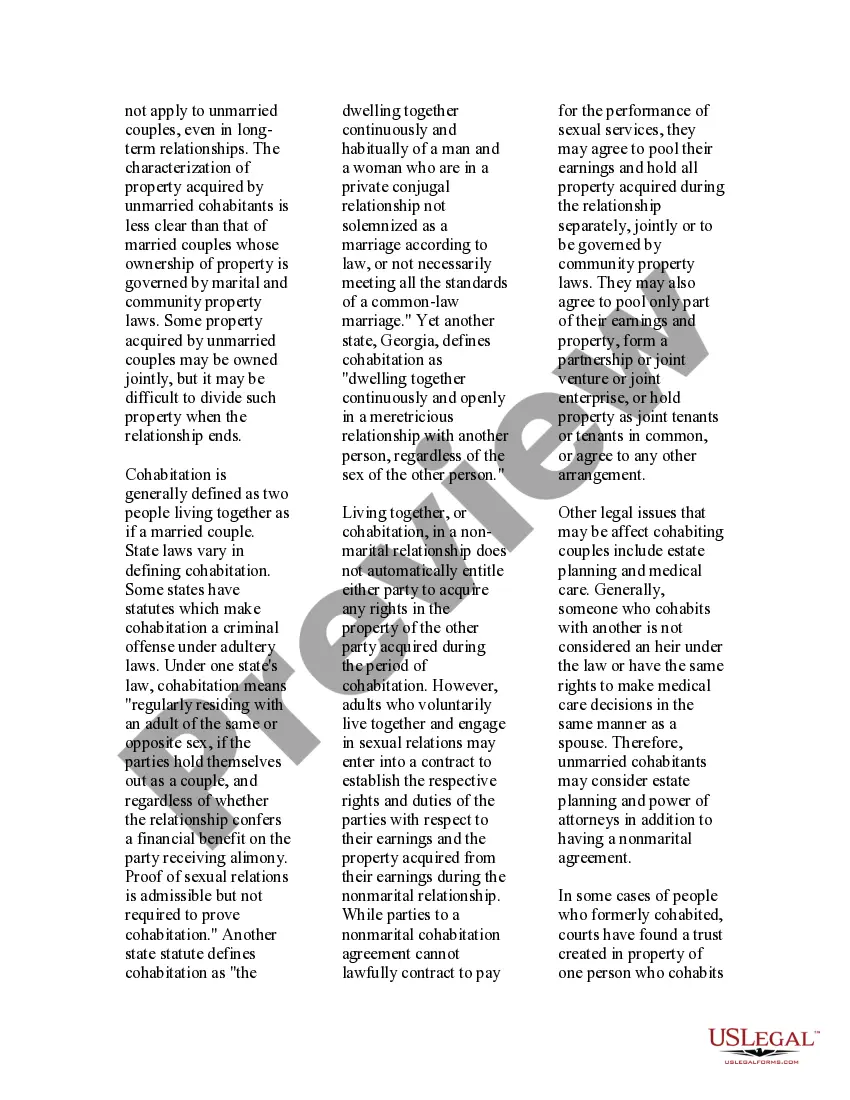
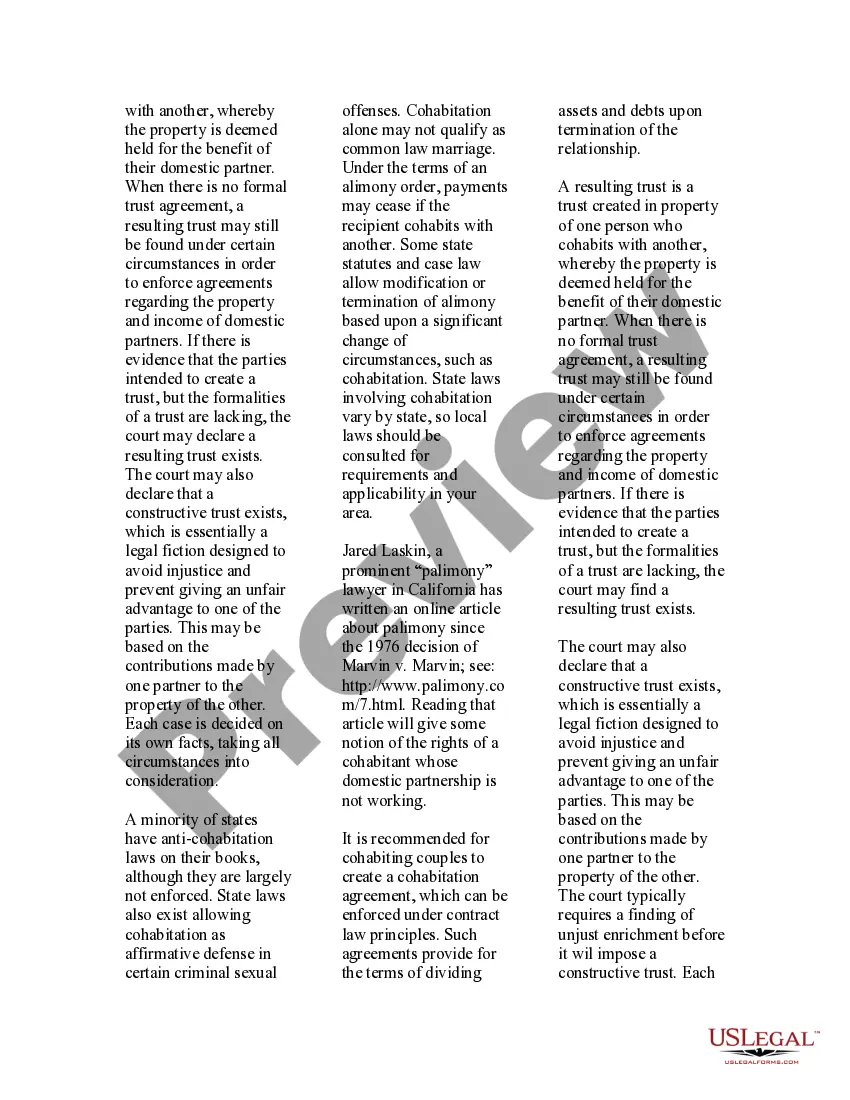
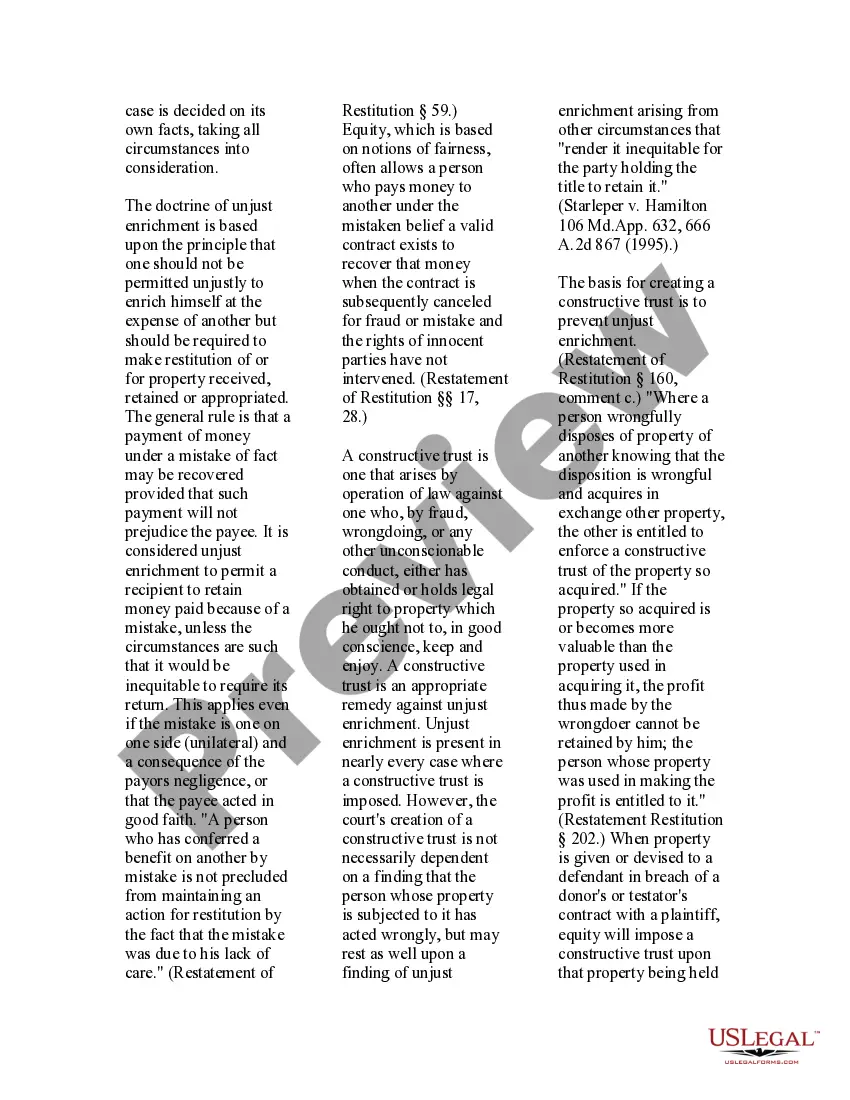
How to fill out USLegal Guide To Common Law Marriage?
Legal document management may be overwhelming, even for the most experienced experts. When you are interested in a Common Law Agreement With Child Ontario and do not have the a chance to devote in search of the right and updated version, the operations may be nerve-racking. A strong online form catalogue might be a gamechanger for everyone who wants to handle these situations efficiently. US Legal Forms is a industry leader in web legal forms, with more than 85,000 state-specific legal forms available at any moment.
With US Legal Forms, you can:
- Access state- or county-specific legal and business forms. US Legal Forms handles any needs you may have, from personal to business papers, in one location.
- Employ innovative tools to complete and deal with your Common Law Agreement With Child Ontario
- Access a resource base of articles, instructions and handbooks and resources highly relevant to your situation and requirements
Save time and effort in search of the papers you need, and use US Legal Forms’ advanced search and Review tool to get Common Law Agreement With Child Ontario and get it. In case you have a membership, log in to the US Legal Forms profile, search for the form, and get it. Take a look at My Forms tab to find out the papers you previously saved as well as deal with your folders as you see fit.
Should it be your first time with US Legal Forms, create a free account and obtain limitless access to all advantages of the library. Here are the steps to take after accessing the form you need:
- Confirm this is the right form by previewing it and reading its information.
- Ensure that the sample is recognized in your state or county.
- Select Buy Now when you are ready.
- Select a monthly subscription plan.
- Pick the file format you need, and Download, complete, eSign, print and send out your papers.
Benefit from the US Legal Forms online catalogue, supported with 25 years of expertise and reliability. Transform your daily papers managing in a smooth and easy-to-use process right now.
Form popularity
FAQ
In Ontario, Canada, two people are considered common law partners if they have been continuously living together in a conjugal relationship for at least three years. If they have a child together by birth or adoption, then they only need to have been living together for one year.
It can either be typed or completed by hand in black ink. Use your full legal names, exactly as shown on your passport. The IMM 5409 requires the number of the continuous years you cohabited as a couple, with the start and end dates. The start date is when you moved in together ? not when you started dating.
When common-law parents stop living together, they don't have to get a divorce, because there is no marriage to end. But they do need to decide what will happen to their kids and how they will divide their property. The laws about custody and access are the same for married couples as they are for common-law couples.
Items that can be used as proof of a common-law relationship include: shared ownership of residential property. joint leases or rental agreements. bills for shared utility accounts, such as: gas. electricity. ... important documents for both of you showing the same address, such as: driver's licenses. ... identification documents.
The IMM 5409 ? Statutory Declaration of Common-law Union, is an application form that people who wish to include their common-law spouses in their immigration applications must complete. There are several programs available that allow family members to sponsor each other for residency in Canada.