Employ Disabled Act For Employers
Description
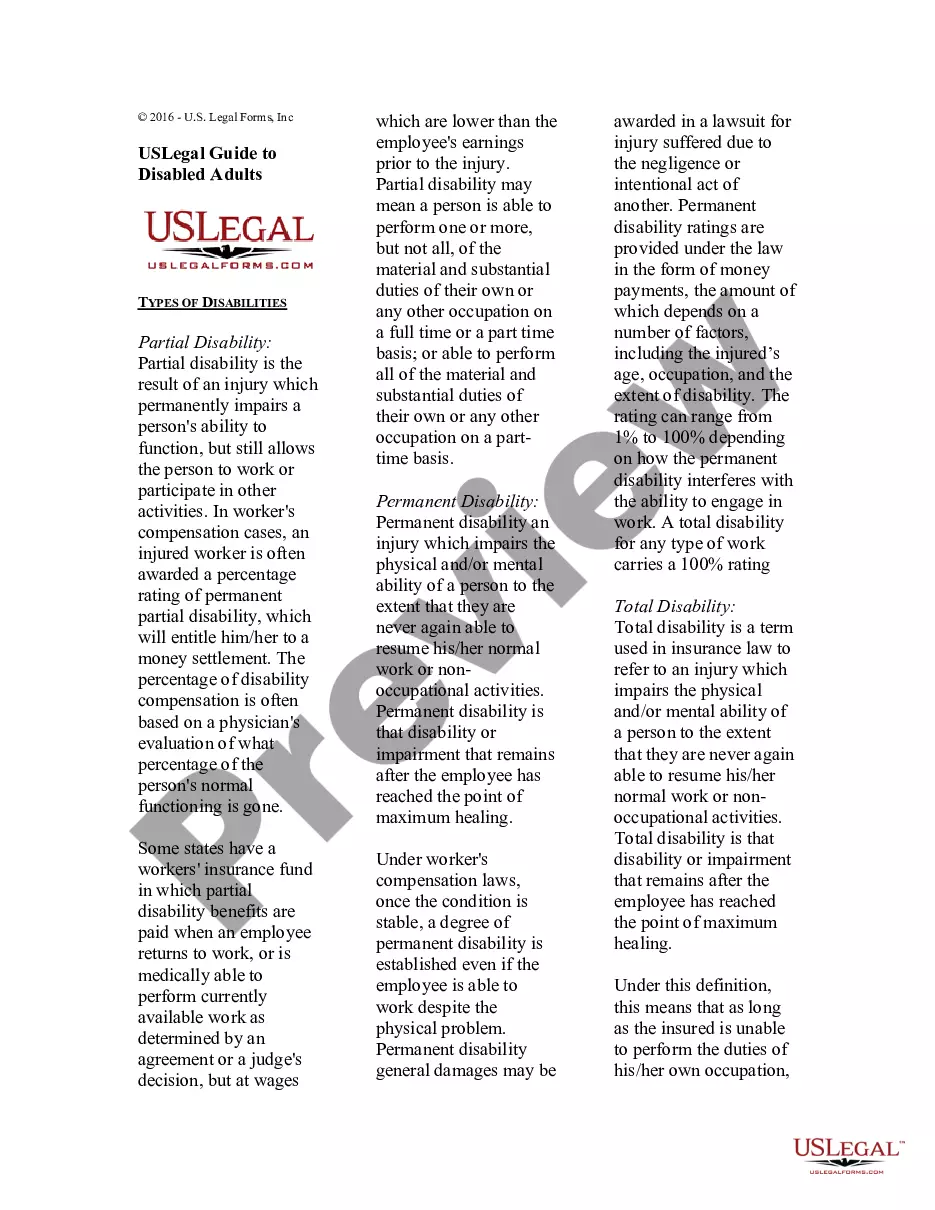
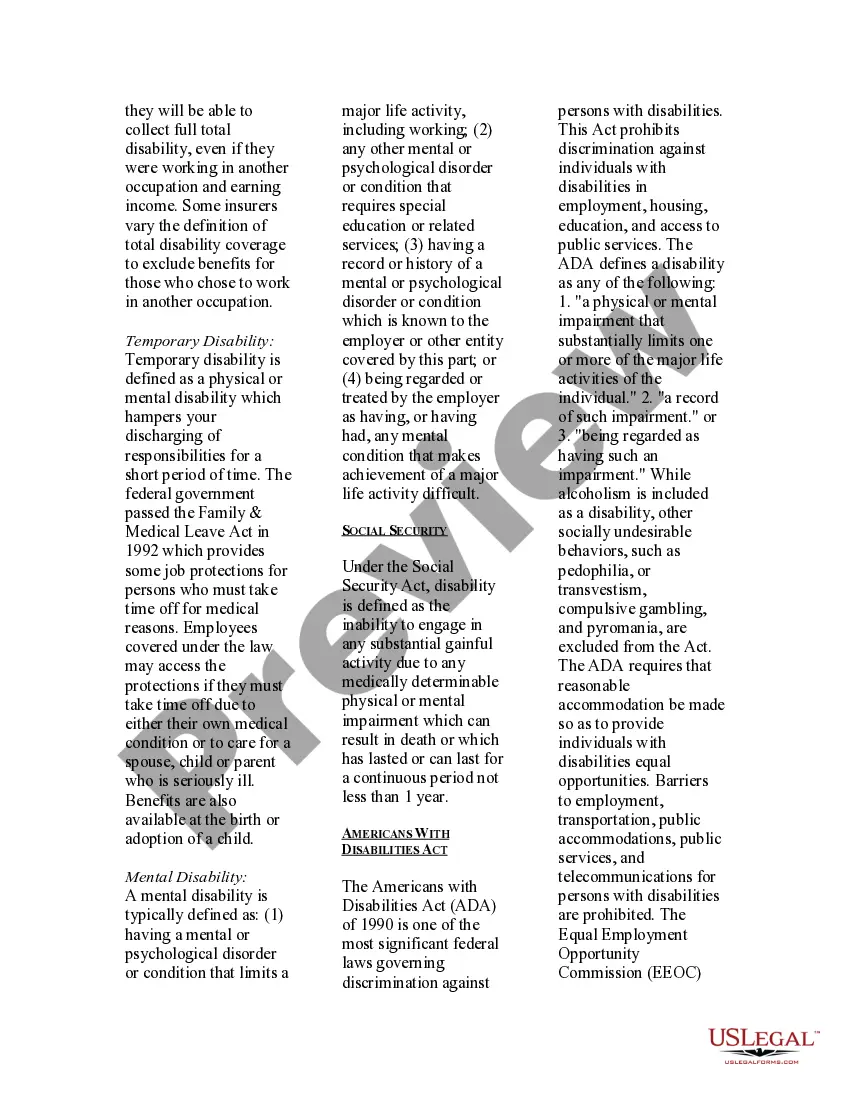
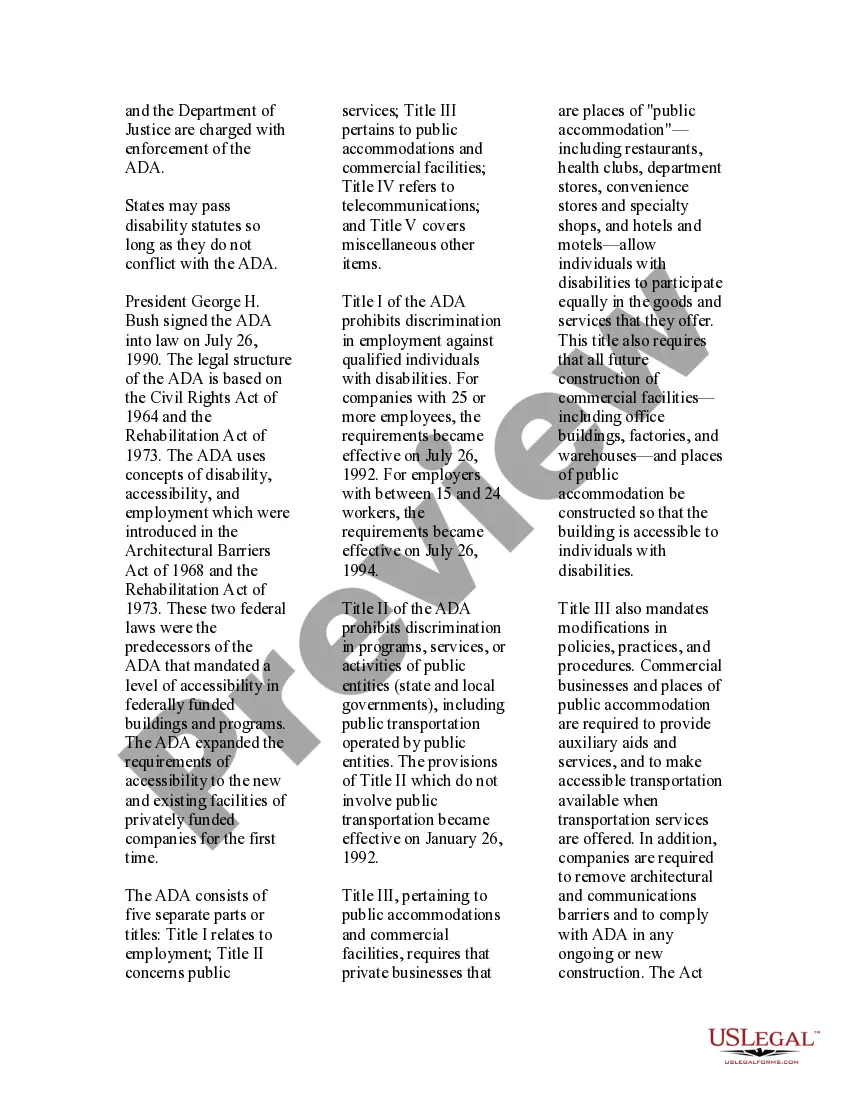
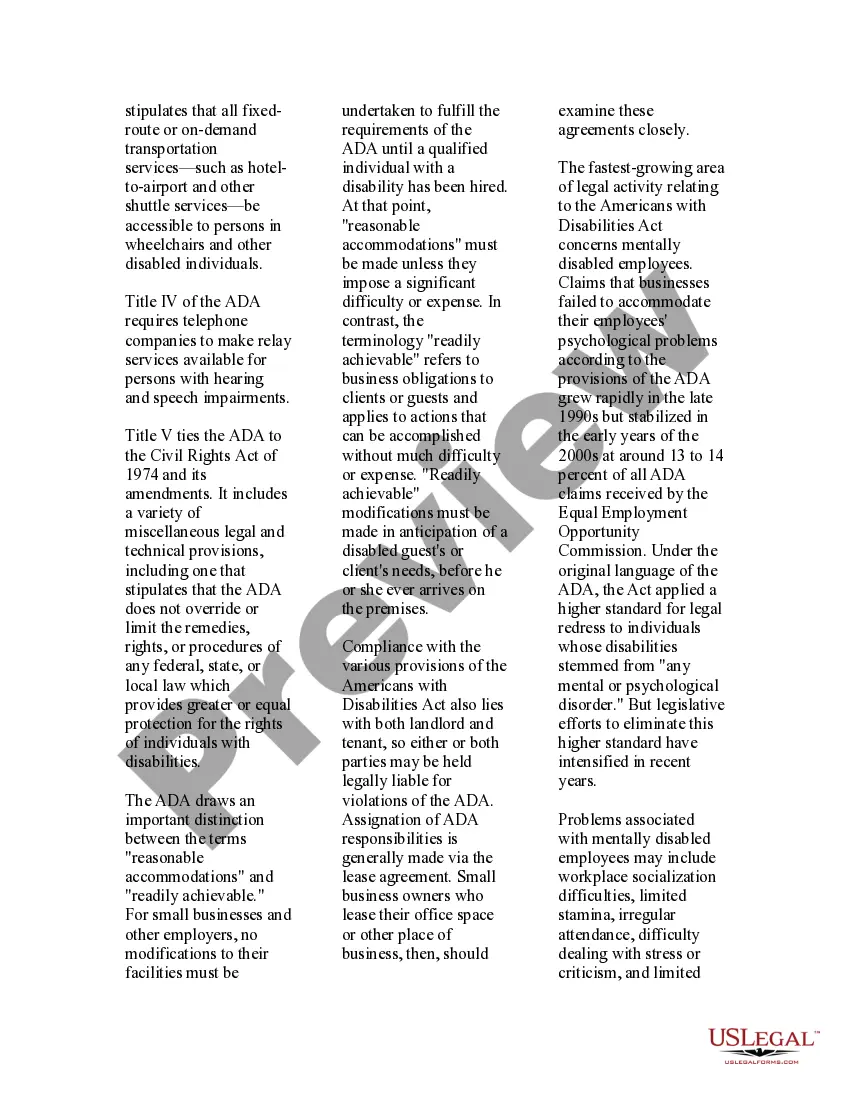


Get your form ready online
Our built-in tools help you complete, sign, share, and store your documents in one place.
Make edits, fill in missing information, and update formatting in US Legal Forms—just like you would in MS Word.
Download a copy, print it, send it by email, or mail it via USPS—whatever works best for your next step.
Sign and collect signatures with our SignNow integration. Send to multiple recipients, set reminders, and more. Go Premium to unlock E-Sign.
If this form requires notarization, complete it online through a secure video call—no need to meet a notary in person or wait for an appointment.
We protect your documents and personal data by following strict security and privacy standards.
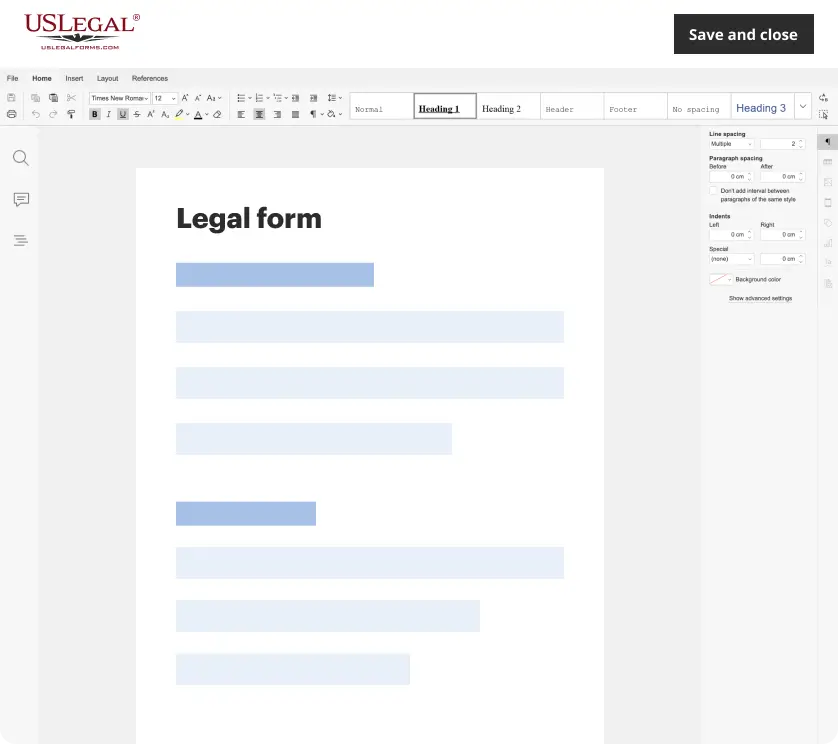
Make edits, fill in missing information, and update formatting in US Legal Forms—just like you would in MS Word.
Download a copy, print it, send it by email, or mail it via USPS—whatever works best for your next step.
Sign and collect signatures with our SignNow integration. Send to multiple recipients, set reminders, and more. Go Premium to unlock E-Sign.
If this form requires notarization, complete it online through a secure video call—no need to meet a notary in person or wait for an appointment.
We protect your documents and personal data by following strict security and privacy standards.
Looking for another form?
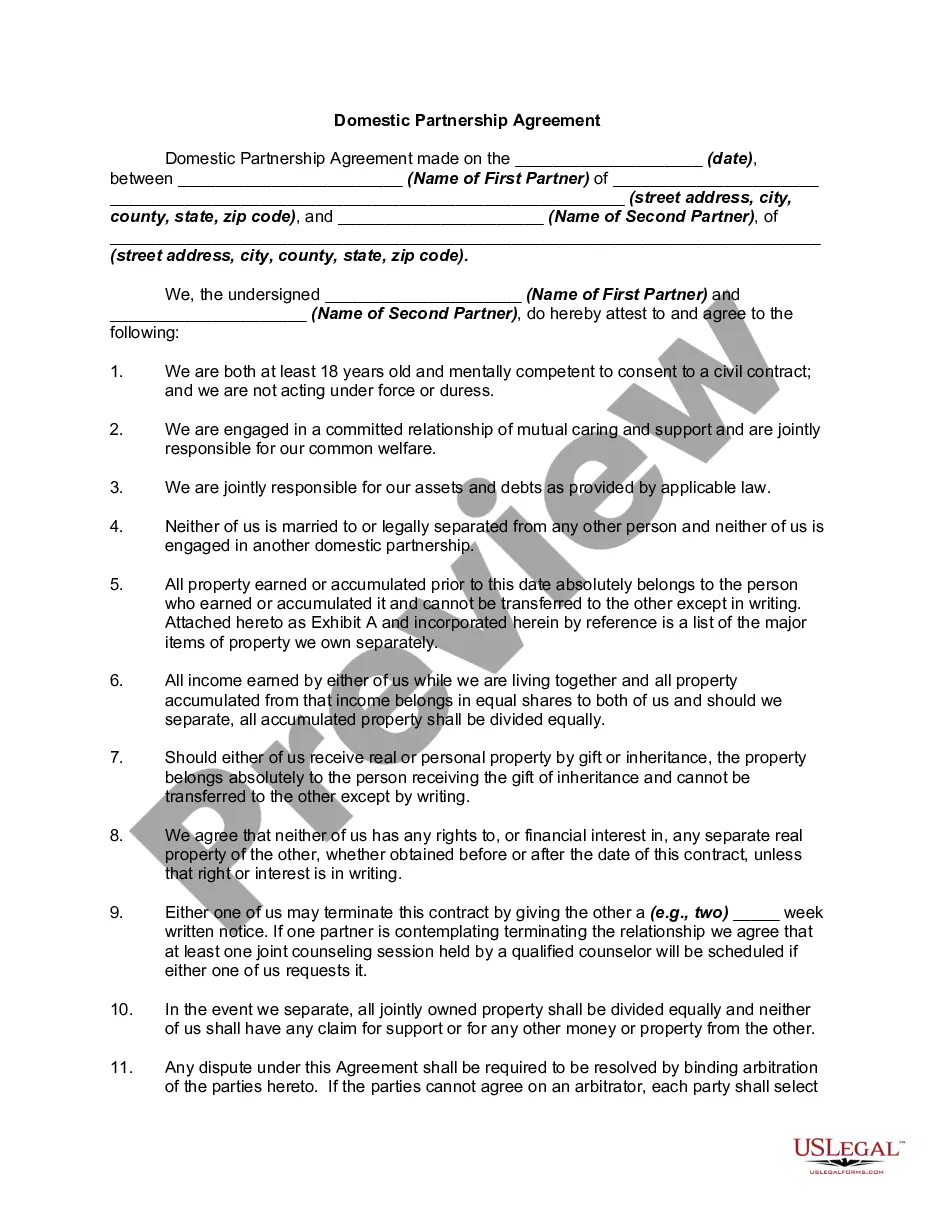
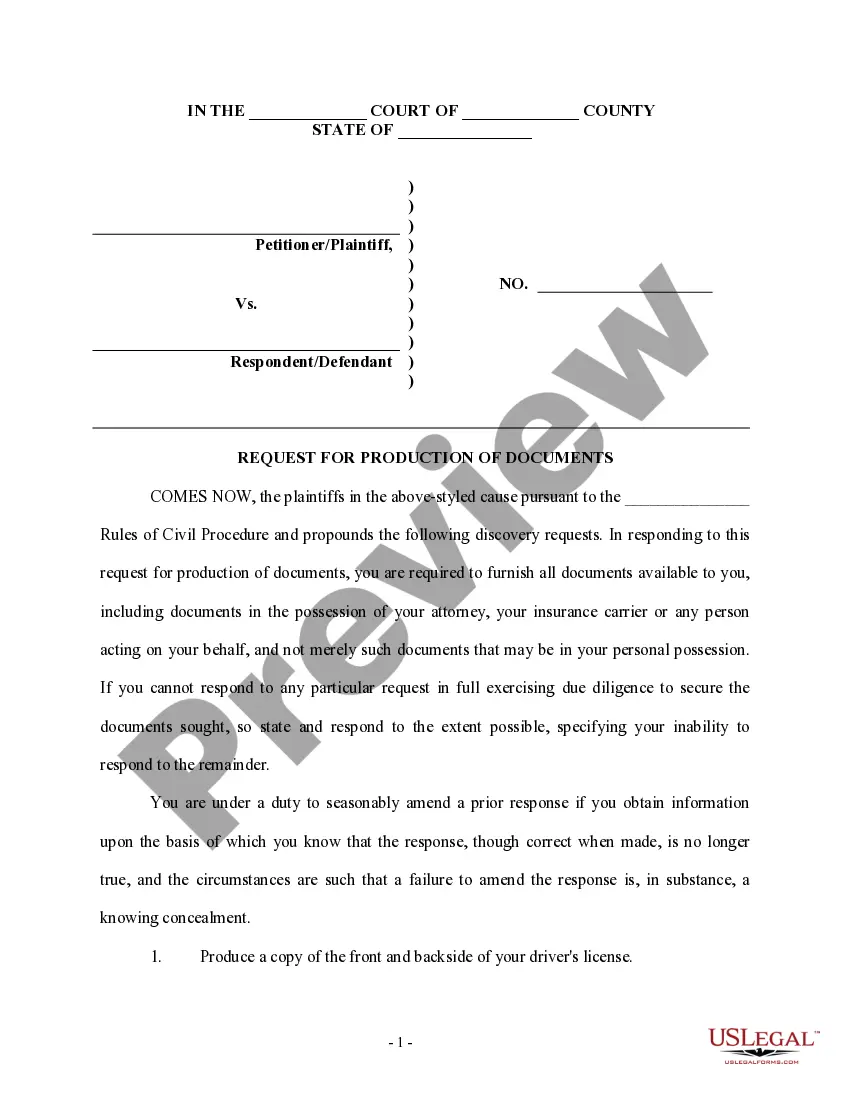
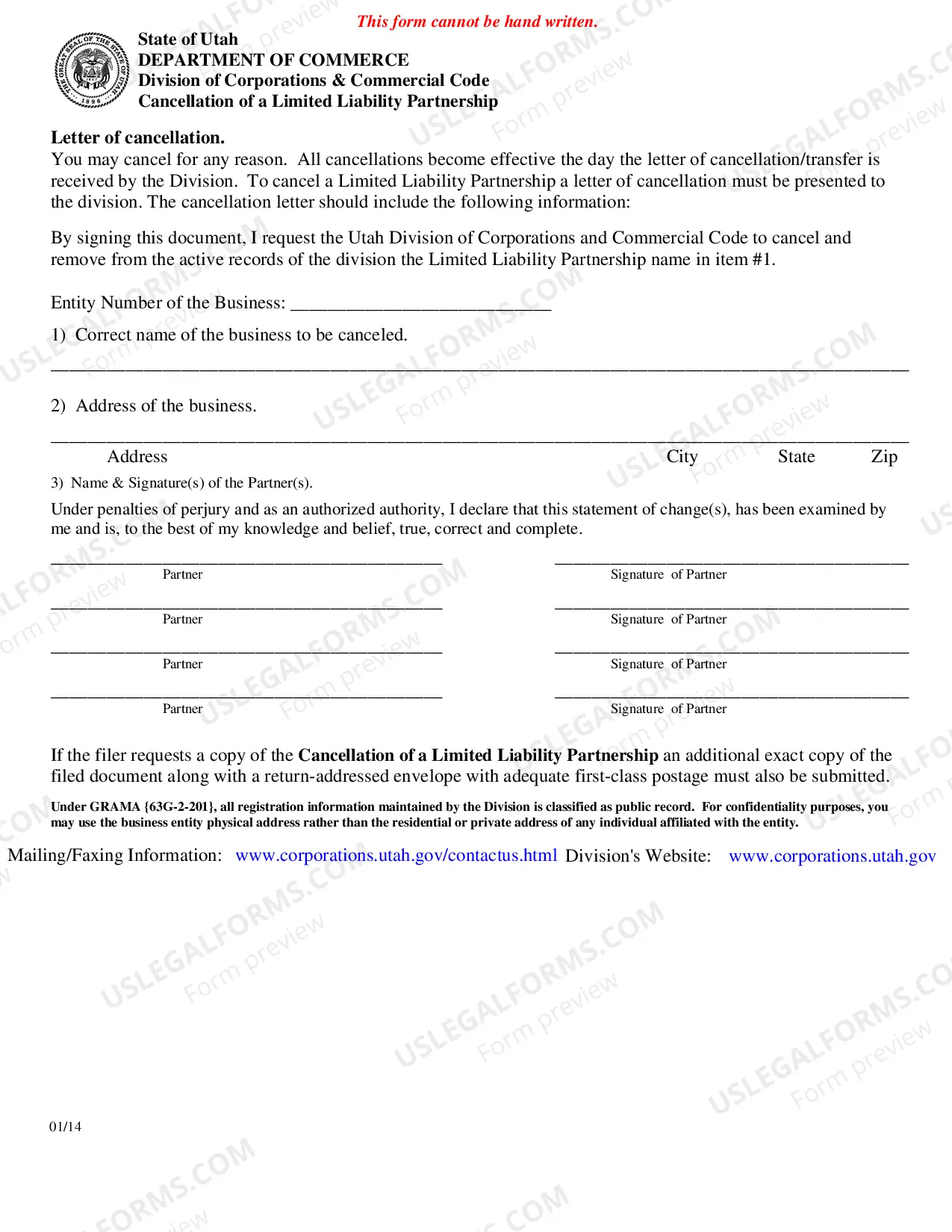

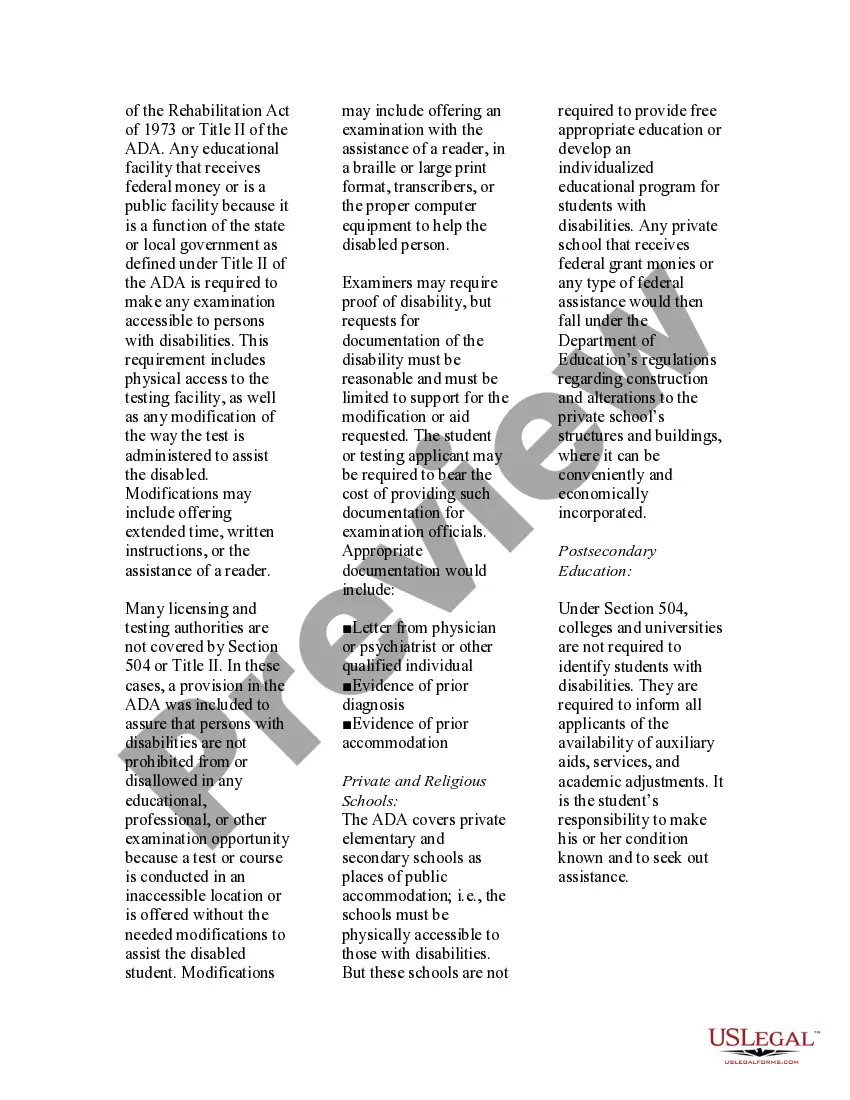
How to fill out USLegal Guide To Disabled Adults?
- Log in to your US Legal Forms account if you're an existing user, ensuring your subscription is active. Download the necessary form template by clicking the 'Download' button.
- For new users, start by browsing the extensive form library. Use the Preview mode to evaluate the document against your specific needs and local jurisdiction requirements.
- If the initial template does not meet your requirements, utilize the Search tab to find another option that aligns with your goals.
- Select your desired form and click the 'Buy Now' button. Choose a subscription plan that fits your needs, creating an account for access.
- Complete your purchase by entering payment details, either through credit card or PayPal.
- Once purchased, download the template to your device. Access it anytime in the 'My Forms' section of your profile for future use.
Using US Legal Forms not only saves time but also ensures that you have access to a robust collection of over 85,000 legal documents.
For employers looking to comply with the Employ Disabled Act, US Legal Forms offers the perfect solution. Start today to empower your organizational policies!
Form popularity
FAQ
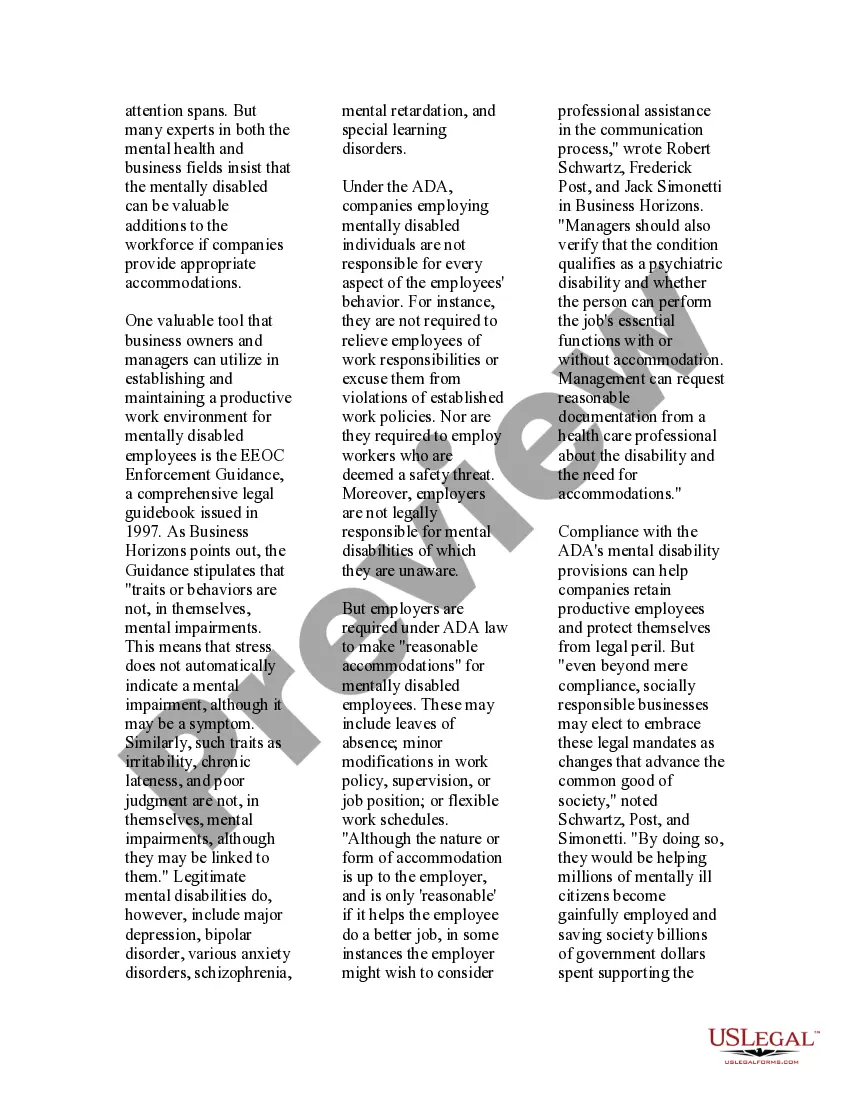
When answering the disability question on a job application, consider your personal comfort level and the relevance of your disability to the job. You have the option to disclose or not disclose depending on your needs. If you do choose to share, frame your response positively, focusing on your capabilities. Understanding the implications of the Employ Disabled Act for employers can help you navigate this delicate aspect of the application process confidently.
The requirements of the American Disabilities Act include providing reasonable accommodations for employees with disabilities and ensuring workplace accessibility. Employers must also implement policies that prevent discrimination against individuals with disabilities. By adhering to the guidelines of the Employ Disabled Act for employers, businesses can foster an inclusive and equitable workplace for everyone.
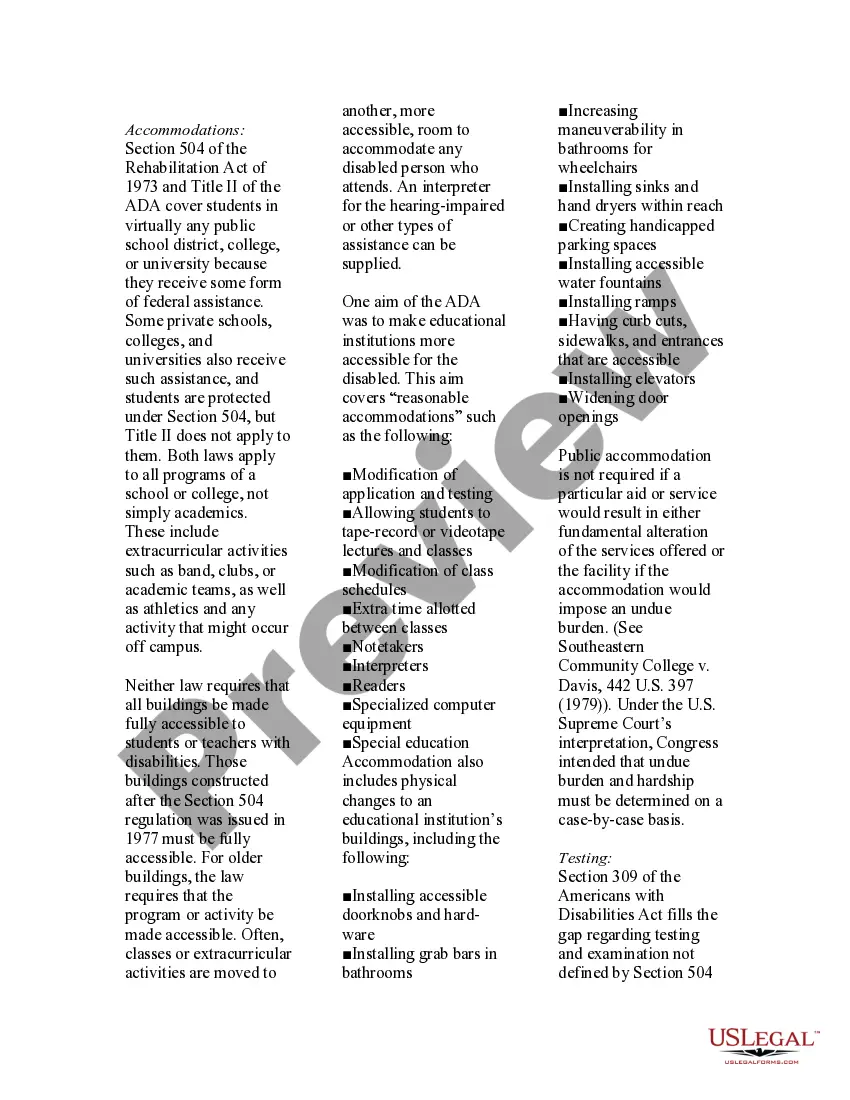
Filling out a reasonable accommodation form involves clearly stating your disability and how it affects your ability to perform your job. You should provide specific details about the accommodations needed and how they will help you succeed in your role. When using platforms like USLegalForms, you can access templates and resources to guide you through the process. Applying the guidelines of the Employ Disabled Act for employers ensures clarity and understanding for all parties involved.
The American with Disabilities Act requires employees to inform their employer if they need reasonable accommodations due to a disability. Employees must provide relevant information about their needs and how those can be met. This proactive approach helps employers understand how to support their workforce effectively. By knowing the obligations set by the Employ Disabled Act for employers, employees can better advocate for their rights at work.
Under the American Disabilities Act, employers must assess their hiring practices and implement necessary changes to accommodate individuals with disabilities. This includes providing accessible facilities and modifying work schedules if needed. Employers must also ensure proper training for all staff on disability awareness. Ensuring compliance with the Employ Disabled Act for employers can significantly enhance workplace culture and diversity.
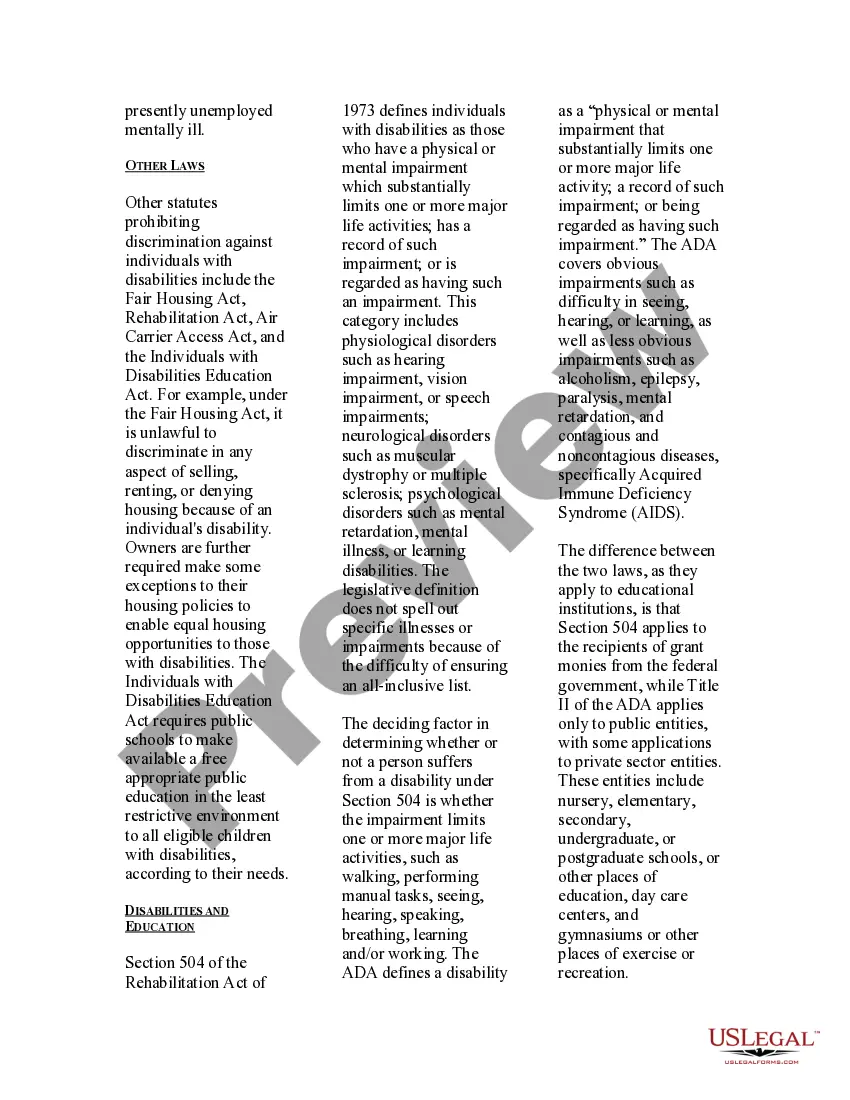
The ADA applies to companies with 15 or more employees in the private sector as well as state and local governments. This includes a wide range of industries and organizations dedicated to fair employment practices. By adhering to the Employ Disabled Act for employers, businesses can foster a more inclusive workforce.
The ADA does not apply to selected small businesses, religious organizations, and specific government entities. Additionally, some employees may be excluded based on job roles or industries. It's advisable to review the details of the Employ Disabled Act for employers to clarify who is covered and who is not.
Yes, the ADA directly applies to employers, requiring them to provide equal opportunity and reasonable accommodations for employees with disabilities. Employers must ensure that their policies do not discriminate and that they meet the necessary standards outlined in the Employ Disabled Act for employers. Understanding these obligations is crucial for maintaining a fair workplace.
Certain smaller employers and specific organizations may be exempt from some provisions of the ADA. For instance, businesses with fewer than 15 employees are generally not covered. It's essential to understand the implications of the Employ Disabled Act for employers to ensure compliance if your organization falls outside these exemptions.
Any individual with knowledge of a disability issue can assist with completing ADA paperwork. This includes employees with disabilities, their advocates, or legal representatives. Having the right support can simplify navigating the requirements of the Employ Disabled Act for employers and ensure accurate compliance.