Employ Disabled Act For Employees
Description


Get your form ready online
Our built-in tools help you complete, sign, share, and store your documents in one place.
Make edits, fill in missing information, and update formatting in US Legal Forms—just like you would in MS Word.
Download a copy, print it, send it by email, or mail it via USPS—whatever works best for your next step.
Sign and collect signatures with our SignNow integration. Send to multiple recipients, set reminders, and more. Go Premium to unlock E-Sign.
If this form requires notarization, complete it online through a secure video call—no need to meet a notary in person or wait for an appointment.
We protect your documents and personal data by following strict security and privacy standards.

Make edits, fill in missing information, and update formatting in US Legal Forms—just like you would in MS Word.

Download a copy, print it, send it by email, or mail it via USPS—whatever works best for your next step.

Sign and collect signatures with our SignNow integration. Send to multiple recipients, set reminders, and more. Go Premium to unlock E-Sign.

If this form requires notarization, complete it online through a secure video call—no need to meet a notary in person or wait for an appointment.

We protect your documents and personal data by following strict security and privacy standards.
Looking for another form?
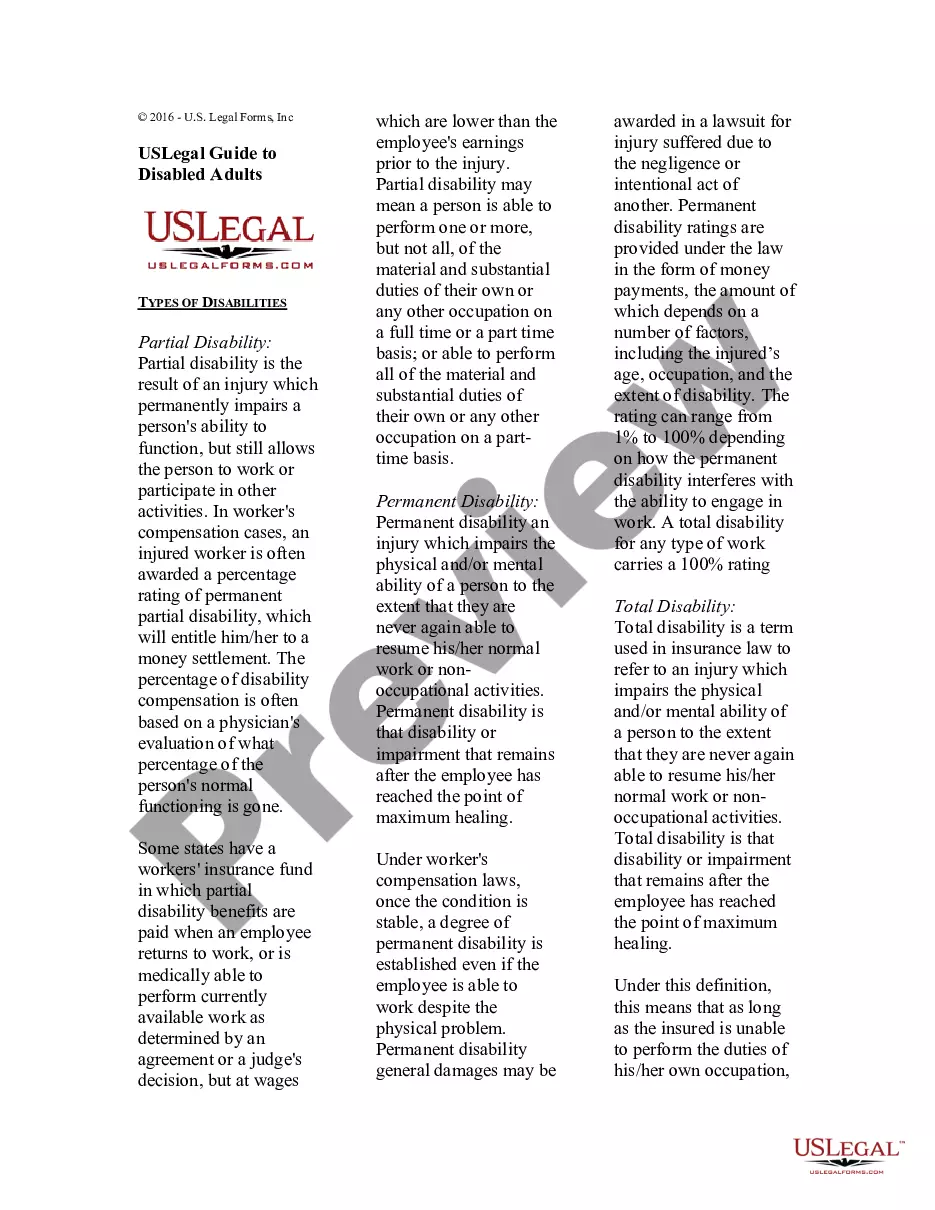
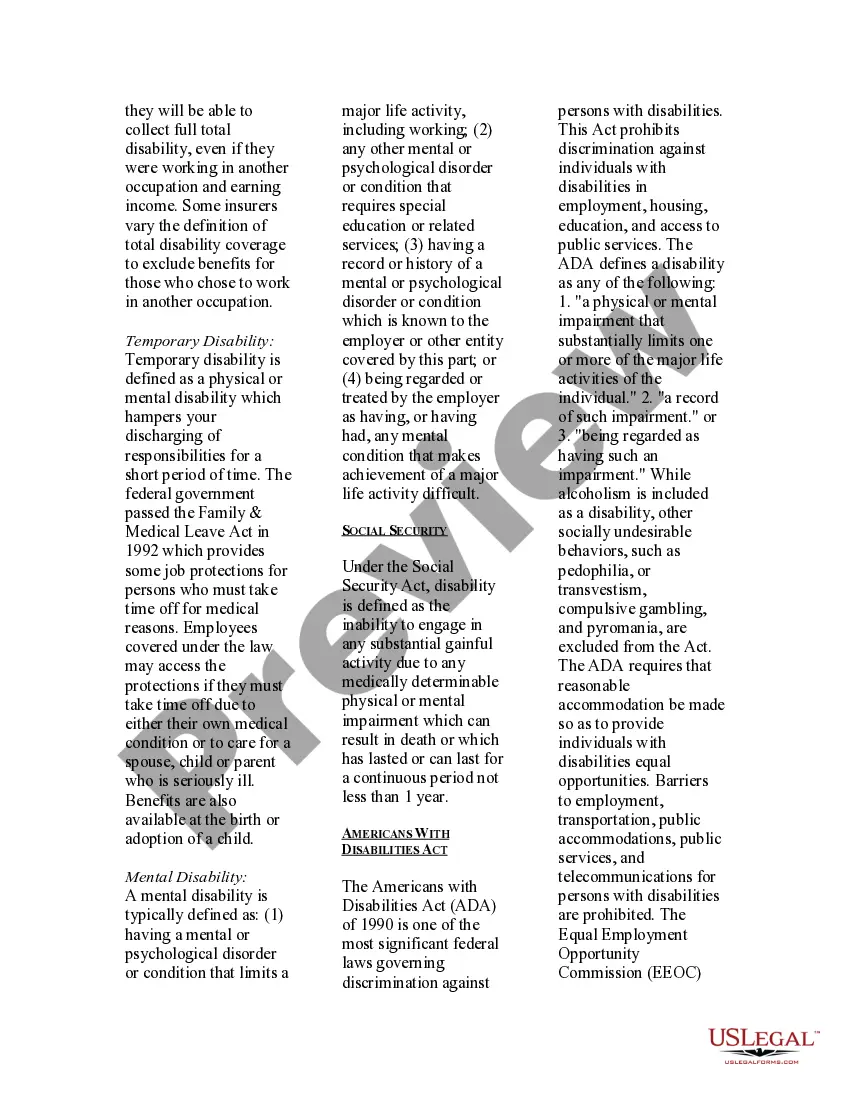
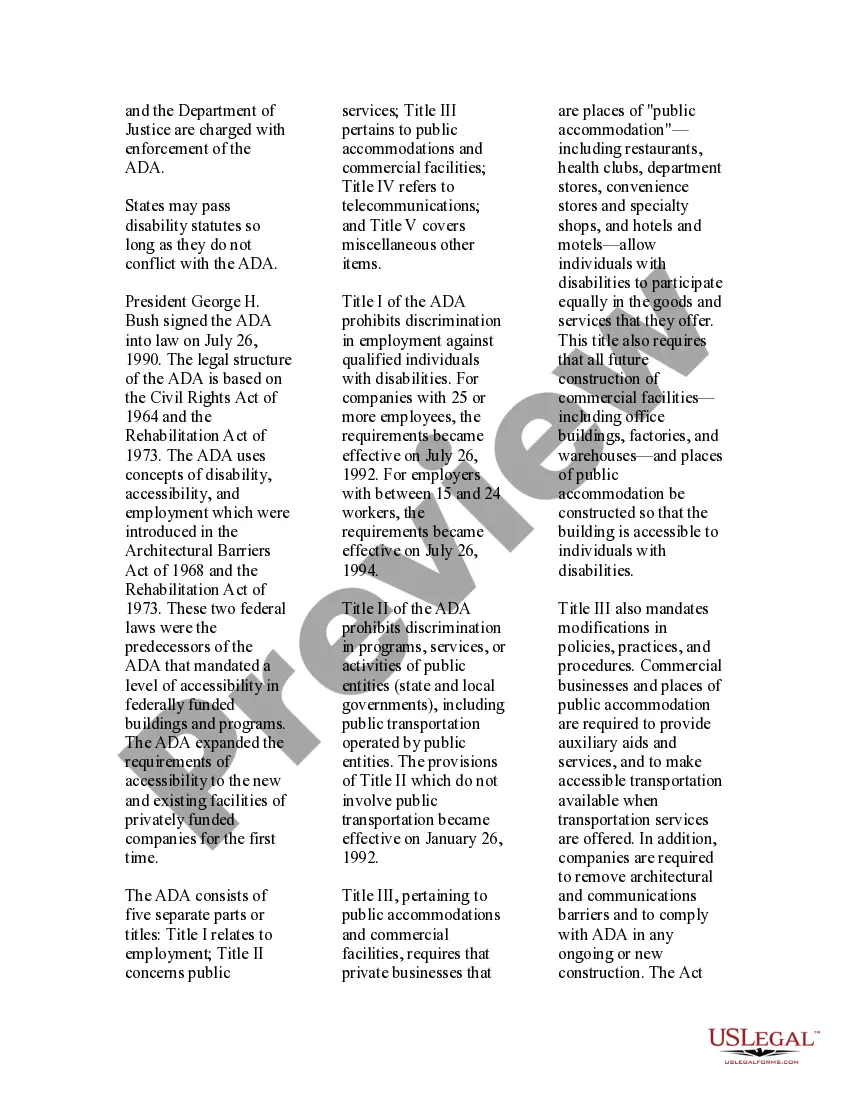
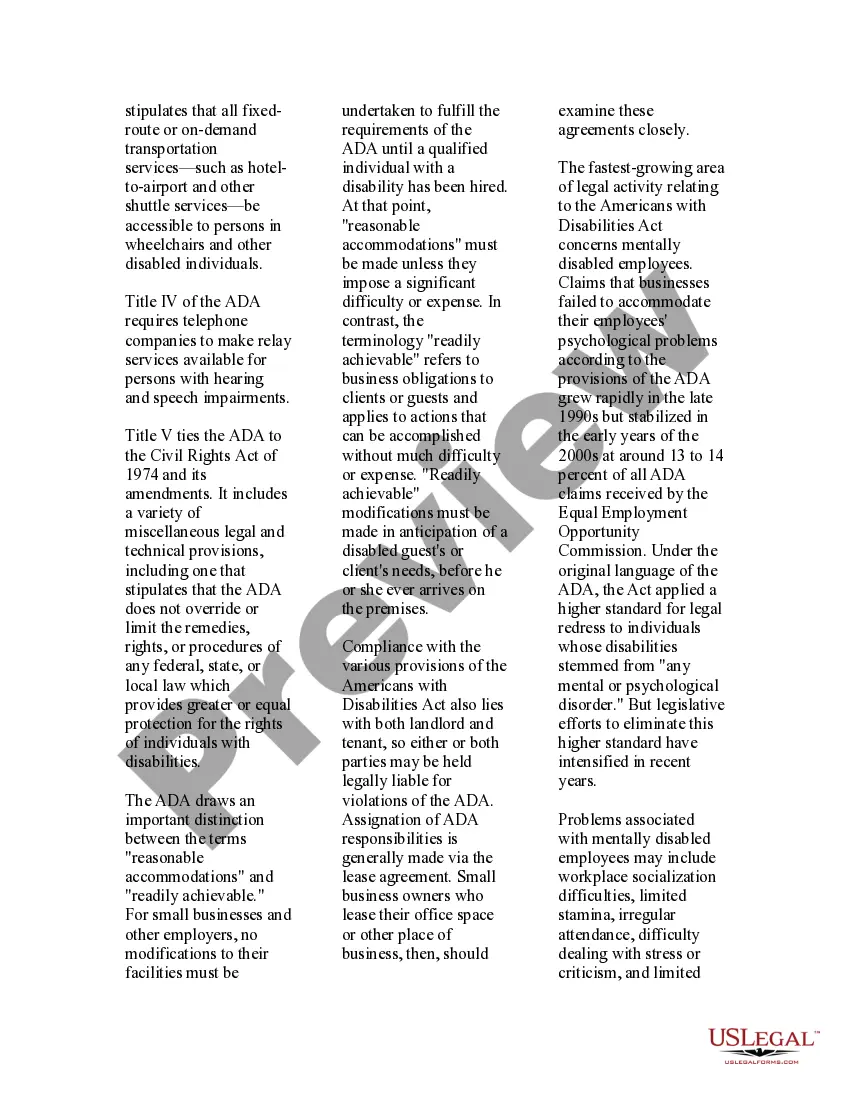
How to fill out USLegal Guide To Disabled Adults?
- Begin by checking your existing account status on the US Legal Forms website. If you’re a returning user, log in to access your saved forms and documents.
- In case you're new to the service, start by previewing the document options available. Look for templates related to the Employ Disabled Act and ensure they meet your specific requirements and jurisdiction.
- If the initial template doesn't fit your needs, utilize the search function to find alternative forms. Once you identify a suitable document, proceed to the next step.
- Select the document by clicking 'Buy Now.' Choose a subscription plan that aligns with your usage needs, and create an account to unlock access to the library.
- Complete your purchase by entering your payment details, either via credit card or your PayPal account.
- Finally, download your chosen form to your device. Access it anytime through the 'My Forms' section in your profile for completion.
In conclusion, US Legal Forms significantly simplifies the process of obtaining necessary legal documents, supporting employees under the Employ Disabled Act. By following these clear steps, you can ensure compliance and create sound documents tailored to your needs.
Don't hesitate! Start accessing the legal document templates you need today with US Legal Forms!
Form popularity
FAQ
Typically, anyone affected by a disability can fill out ADA paperwork, including employees, applicants, or family members on their behalf. Completing these forms accurately is crucial, especially when addressing the Employ Disabled Act for employees. You might want assistance from an attorney or a professional organization experienced in disability rights. This guidance can make the process smoother and ensure your rights are upheld.
Yes, the ADA does offer protection from being fired due to a disability. If you can perform essential job functions with reasonable accommodations, you are safeguarded under the Employ Disabled Act for employees. However, if an employer can demonstrate a legitimate reason unrelated to your disability for the termination, those protections may not apply. To navigate this complicated area, seeking legal counsel can provide clarity on your rights.
The average payout for an ADA lawsuit can vary significantly depending on the case's specifics, including the severity of the violation and damages incurred. Generally, settlements can range from thousands to millions of dollars. As the Employ Disabled Act for employees sets a strong foundation for equality, many lawsuits result in compensation for lost wages, pain, and suffering. Engaging a lawyer experienced in ADA cases might help you better understand potential outcomes.
An example of an ADA violation is when an employer fails to provide reasonable accommodations for an employee's disability. For instance, if a worker with mobility challenges is denied modified workstations or flexible schedules, this could be a breach of the Employ Disabled Act for employees. Each case is unique, so it is essential to understand the specific circumstances involved. If you suspect an ADA violation, it is advisable to consult with a legal professional.
If you wish to report your employer for disability discrimination under the Employ Disabled Act for employees, you should first gather all relevant documents and any evidence of the discrimination. Then, you can file a complaint with the Equal Employment Opportunity Commission (EEOC). This process helps to protect your rights and ensure that your concerns are taken seriously. Additionally, consider seeking advice from a qualified attorney who specializes in disability law.
An employee qualifies for ADA protections if they have a documented disability that significantly impairs their ability to perform major life activities. This includes a wide spectrum of conditions, ranging from physical ailments to specific mental health challenges. Employers should assess the situation fairly and consider the Employ Disabled Act for employees when providing accommodations. Facilitating this process contributes to a respectful and compliant workplace environment.
Filling out a reasonable accommodation form involves clearly outlining your disability and the specific accommodations needed under the Employ Disabled Act for employees. Start by providing your personal information, followed by a detailed description of your limitations and how they impact your work. Be clear about your requested accommodations, ensuring they are realistic and directly related to your job responsibilities. After completing the form, submit it to your employer's HR department for consideration.
The basic requirements of the ADA include provisions that prohibit discrimination against individuals with disabilities in all aspects of employment. Employers must provide reasonable accommodations unless it causes undue hardship. Additionally, organizations must ensure that their workplaces are accessible in compliance with the law. Understanding these requirements is vital for fostering an inclusive work environment and navigating compliance effectively.
To qualify for ADA protections, an employee must demonstrate that they have a disability that substantially limits a major life activity. This may include challenges in areas such as walking, seeing, or thinking. Employers must engage in an interactive process to assess requested accommodations. The Employ Disabled Act for employees mandates that companies consider reasonable requests for support that enable individuals to perform their jobs effectively.
The ADA disability list includes a range of physical and mental impairments that significantly affect major life activities. Some examples are mobility impairments, chronic illnesses, and mental health conditions. It is essential to refer to the specific criteria set forth by the Employ Disabled Act for employees to determine eligibility. Remember, even if a condition is not explicitly listed, it may still qualify if it meets the necessary criteria.