Employ Accommodation Disability With Autism
Description
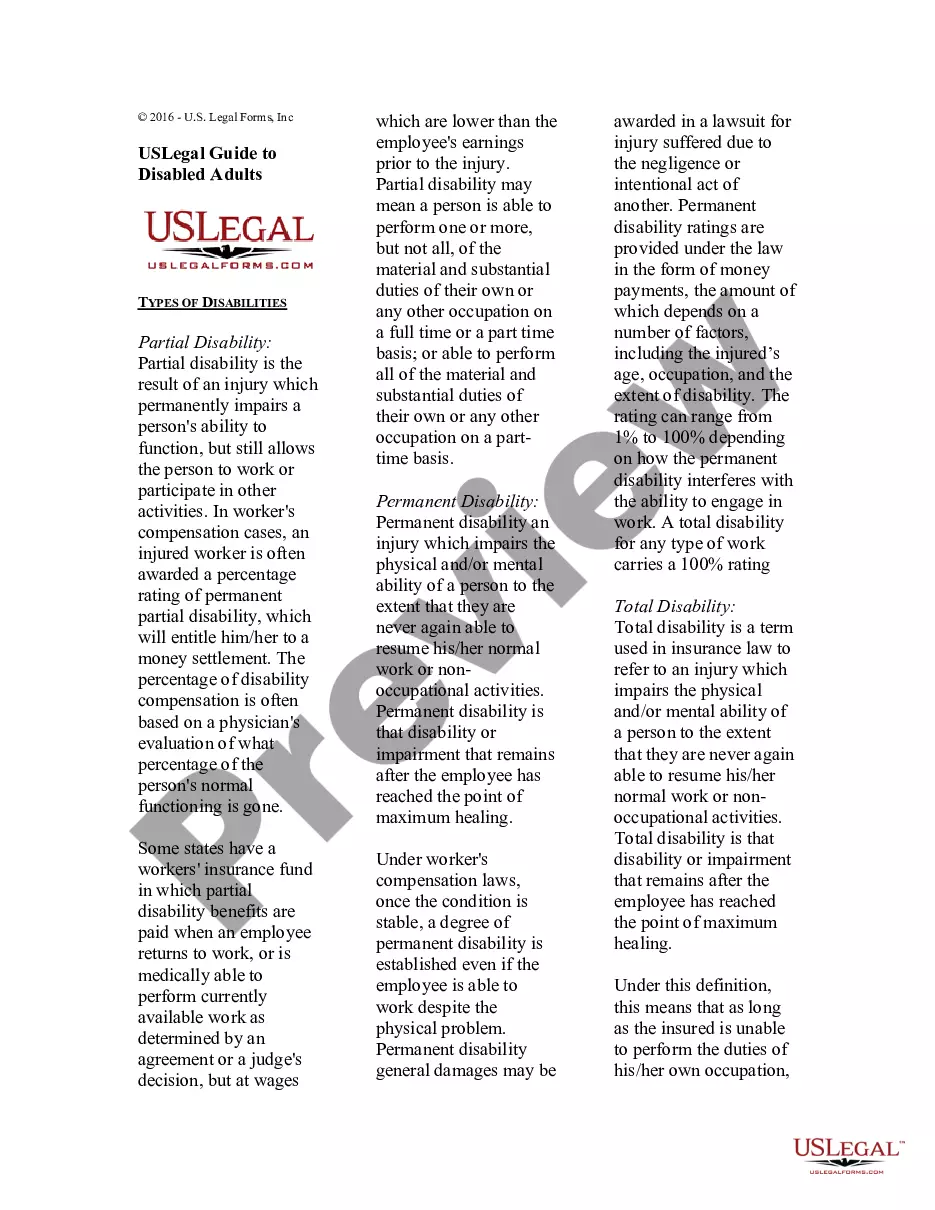
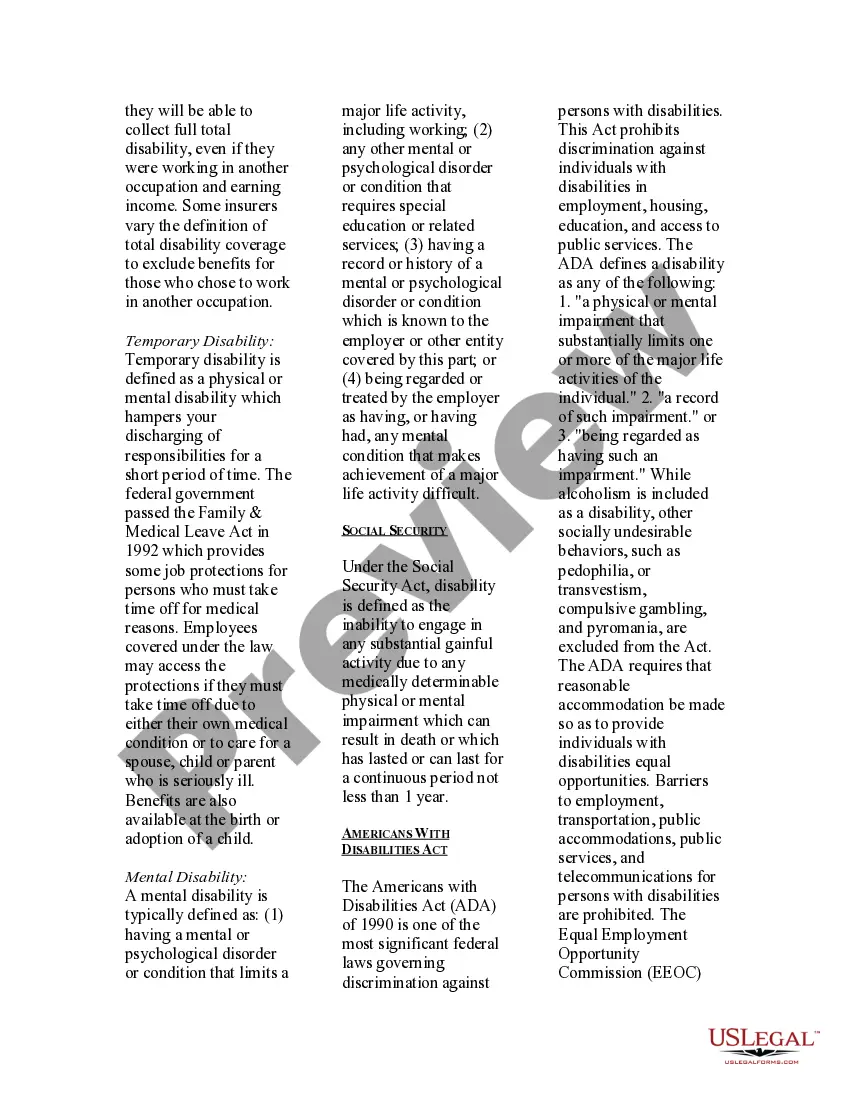
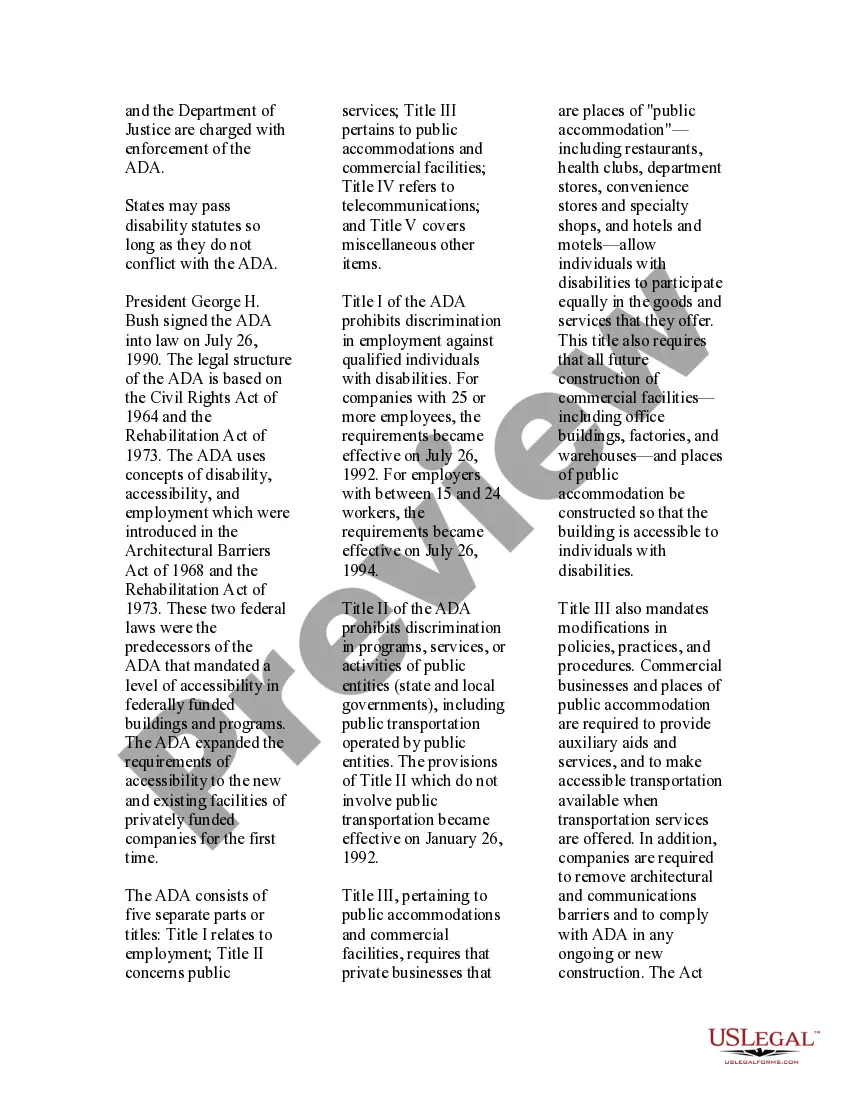
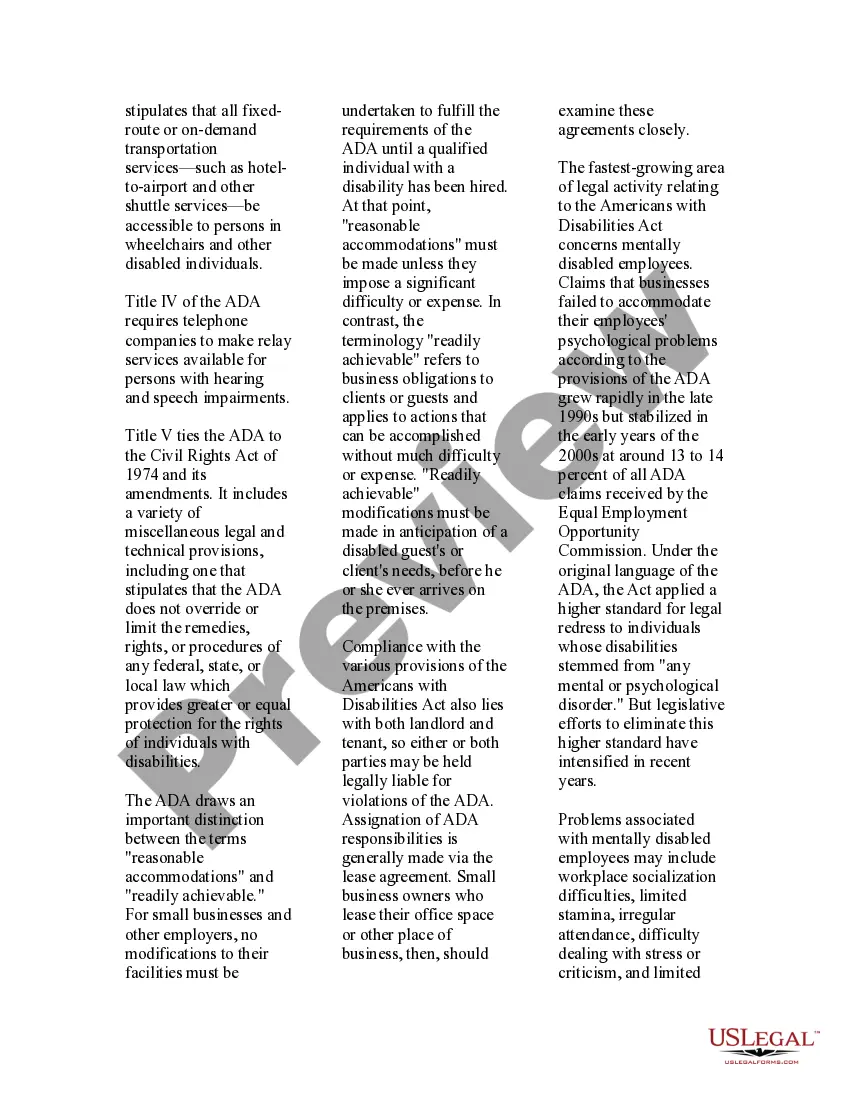


Get your form ready online
Our built-in tools help you complete, sign, share, and store your documents in one place.
Make edits, fill in missing information, and update formatting in US Legal Forms—just like you would in MS Word.
Download a copy, print it, send it by email, or mail it via USPS—whatever works best for your next step.
Sign and collect signatures with our SignNow integration. Send to multiple recipients, set reminders, and more. Go Premium to unlock E-Sign.
If this form requires notarization, complete it online through a secure video call—no need to meet a notary in person or wait for an appointment.
We protect your documents and personal data by following strict security and privacy standards.

Make edits, fill in missing information, and update formatting in US Legal Forms—just like you would in MS Word.

Download a copy, print it, send it by email, or mail it via USPS—whatever works best for your next step.

Sign and collect signatures with our SignNow integration. Send to multiple recipients, set reminders, and more. Go Premium to unlock E-Sign.

If this form requires notarization, complete it online through a secure video call—no need to meet a notary in person or wait for an appointment.

We protect your documents and personal data by following strict security and privacy standards.
Looking for another form?
How to fill out USLegal Guide To Disabled Adults?
- If you're a returning user, log in to your account and download the required template by clicking the Download button—ensure that your subscription remains active.
- For first-time users, start by exploring the Preview mode to understand the form better and confirm it meets your specific requirements and local jurisdiction.
- In case you need to find alternative templates, use the Search tab to locate the right document that aligns with your needs.
- Click the Buy Now button to select your desired subscription plan; registration is necessary to access the diverse resources offered.
- Complete your transaction by entering your payment information through credit card or PayPal for a seamless purchase experience.
- Finally, download your form, saving it onto your device for immediate access, and find it again anytime in the My Forms section of your profile.
In conclusion, US Legal Forms serves as a robust platform that empowers users to efficiently manage their legal documentation needs. With access to an extensive library of over 85,000 legal forms and expert assistance available, users can ensure accuracy and compliance effortlessly.
Start today and experience the ease of employing accommodation disability with autism using US Legal Forms!
Form popularity
FAQ
Yes, autism is recognized as a disability under the Americans with Disabilities Act (ADA). This designation means that individuals with autism are entitled to reasonable accommodations in the workplace. Understanding your rights and seeking employ accommodation disability with autism can lead to a more fulfilling career.
Absolutely, autism is recognized as a disability when applying for a job. Under the ADA, applicants with autism may receive necessary accommodations to support their job performance. This support is vital, as it ensures that everyone has a fair chance at success in the workplace.
Yes, autism can be classified as a disability on a job application. This classification may entitle you to accommodations if you secure the position. When applying, consider how disclosing your autism might impact your application and weigh your options carefully.
Examples of reasonable accommodations for autism include flexible work hours, a quiet workspace, and assistive technology tools. These adjustments help individuals manage symptoms and improve productivity. Employ accommodation disability with autism is designed to create a supportive workplace that respects each individual's needs.
Yes, autism qualifies as a workplace disability under the ADA. This classification means that individuals with autism are entitled to receive employ accommodation disability with autism to help them thrive at work. Employers are encouraged to create an inclusive environment that supports employees with such disabilities.
Deciding whether to disclose your autism in a job interview is a personal choice. If you believe that sharing this information will help you secure reasonable accommodations later on, it may be beneficial. Being open allows employers to understand how best to support you, but focus on your skills and potential contributions first.
Yes, autism can legally count as a disability. Under the Americans with Disabilities Act (ADA), autism spectrum disorder qualifies as a disability if it significantly limits one or more major life activities. Therefore, individuals with autism can seek employ accommodation disability with autism in the workplace.
Reasonable accommodations for autism in the workplace may involve tailored training, altered communication methods, or adjusted performance evaluations. Each accommodation should reflect your unique needs while aligning with your job responsibilities. Open dialogue with your employer is crucial to finding the best solutions. Ultimately, employ accommodation disability with autism emphasizes ensuring your success and well-being at work.
Common means of reasonable accommodation include providing assistive technology, altering work hours, redesigning job tasks, offering a quiet workspace, and allowing extra breaks. These adjustments ensure that employees can perform their best while feeling supported. Identifying the right accommodations can empower you in the workplace. Embrace the goal to employ accommodation disability with autism for a better work experience.
Filling out the ADA accommodation form requires clarity and honesty about your needs. Start by providing your personal information and detailing your specific challenges related to autism. Clearly describe the accommodations you believe will support you. Platforms like UsLegalForms can guide you through the paperwork, ensuring you effectively communicate your needs for employ accommodation disability with autism.