Disability Accommodation Services
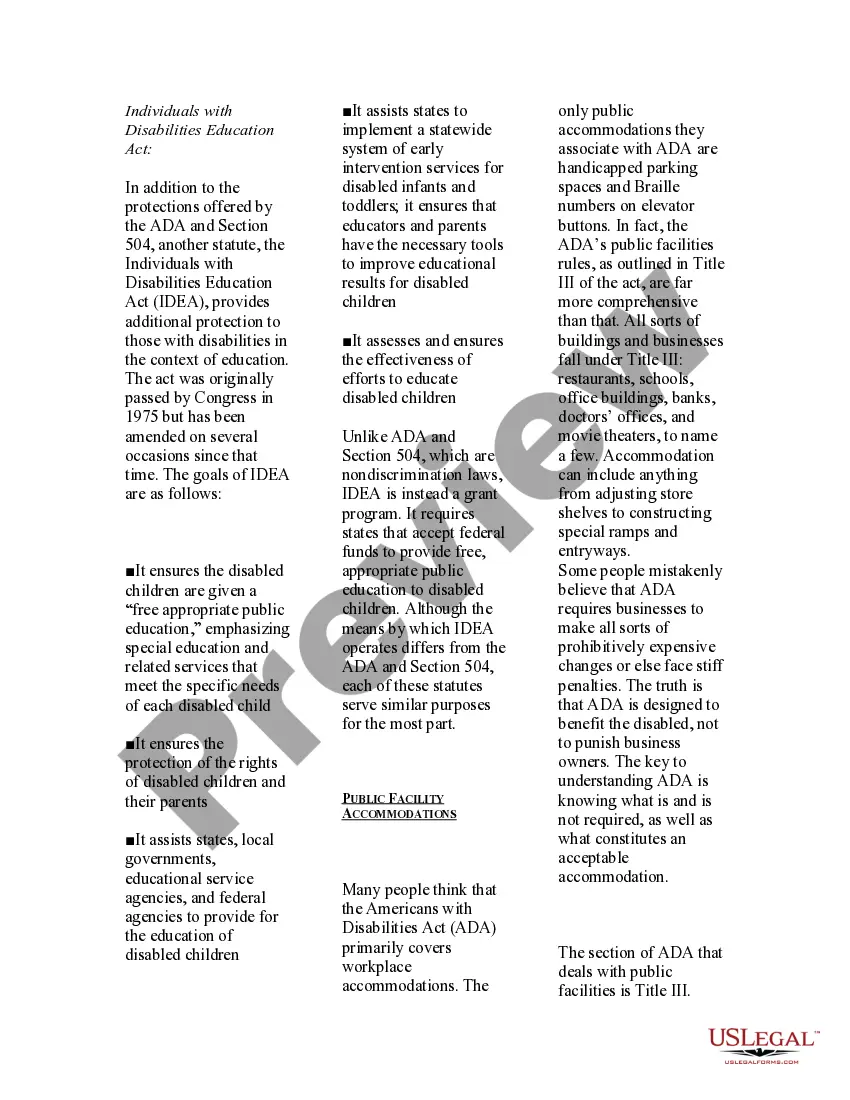
Description
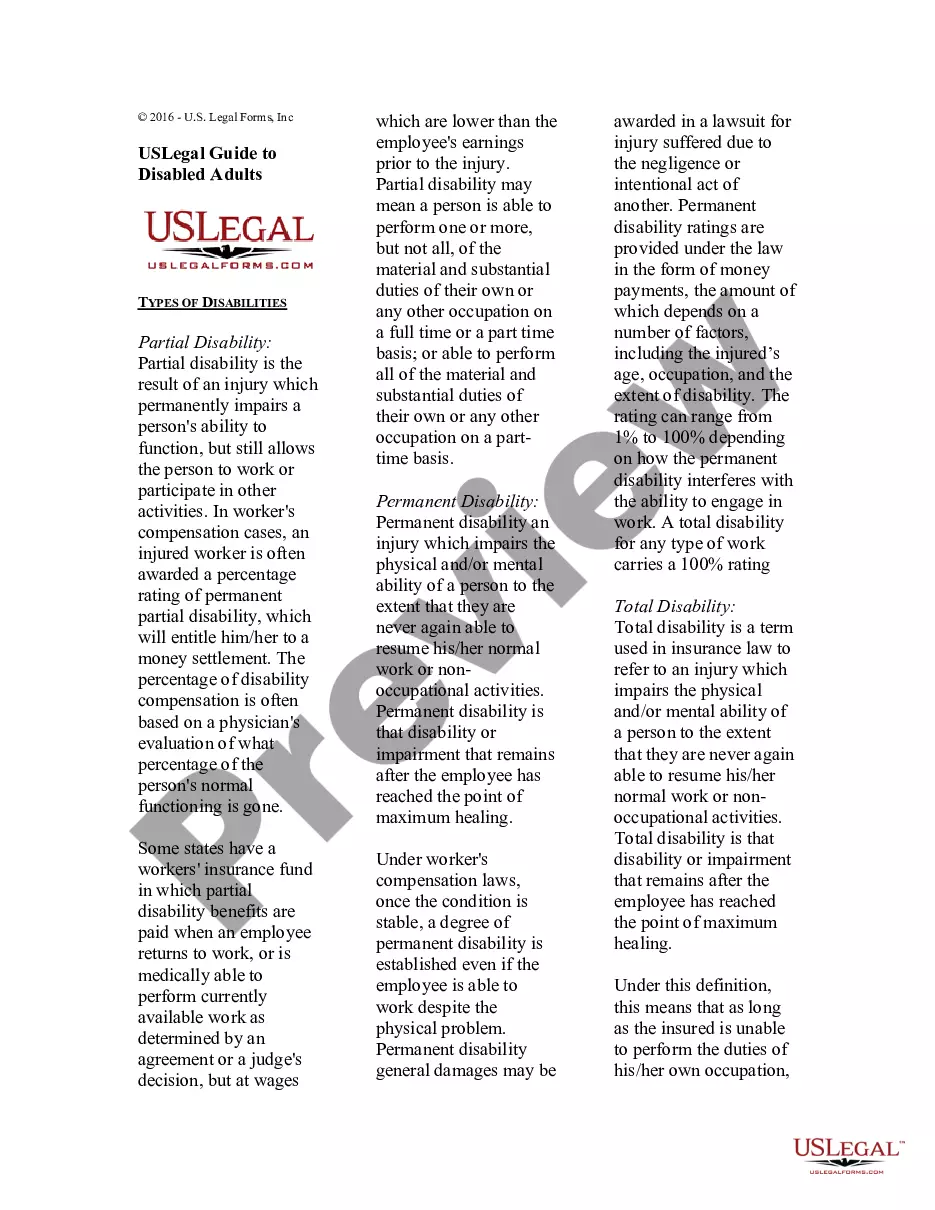
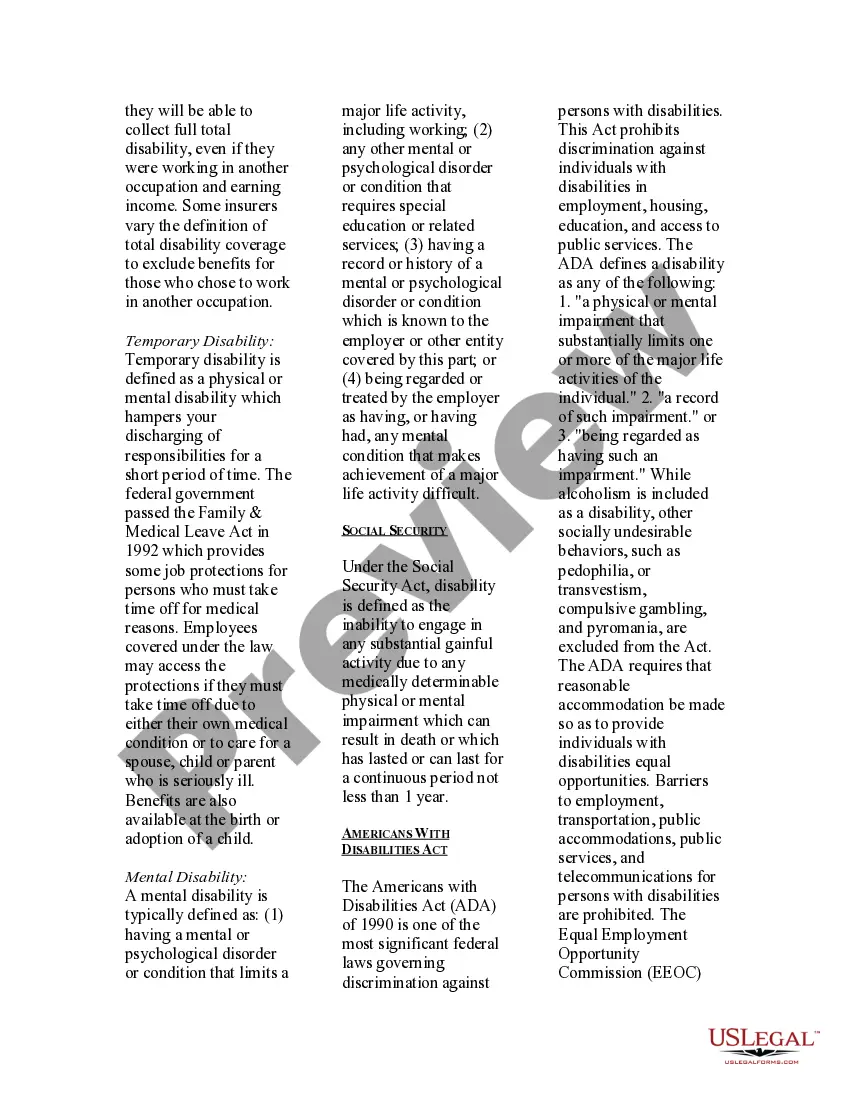
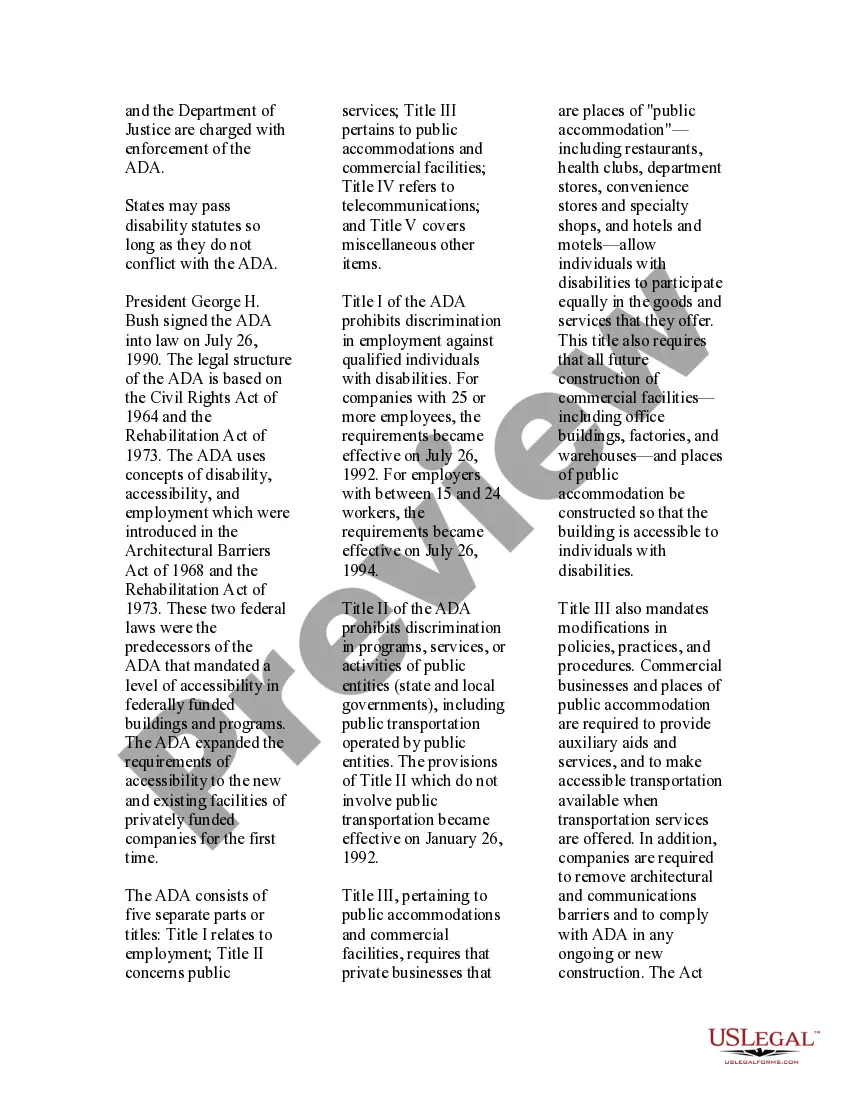
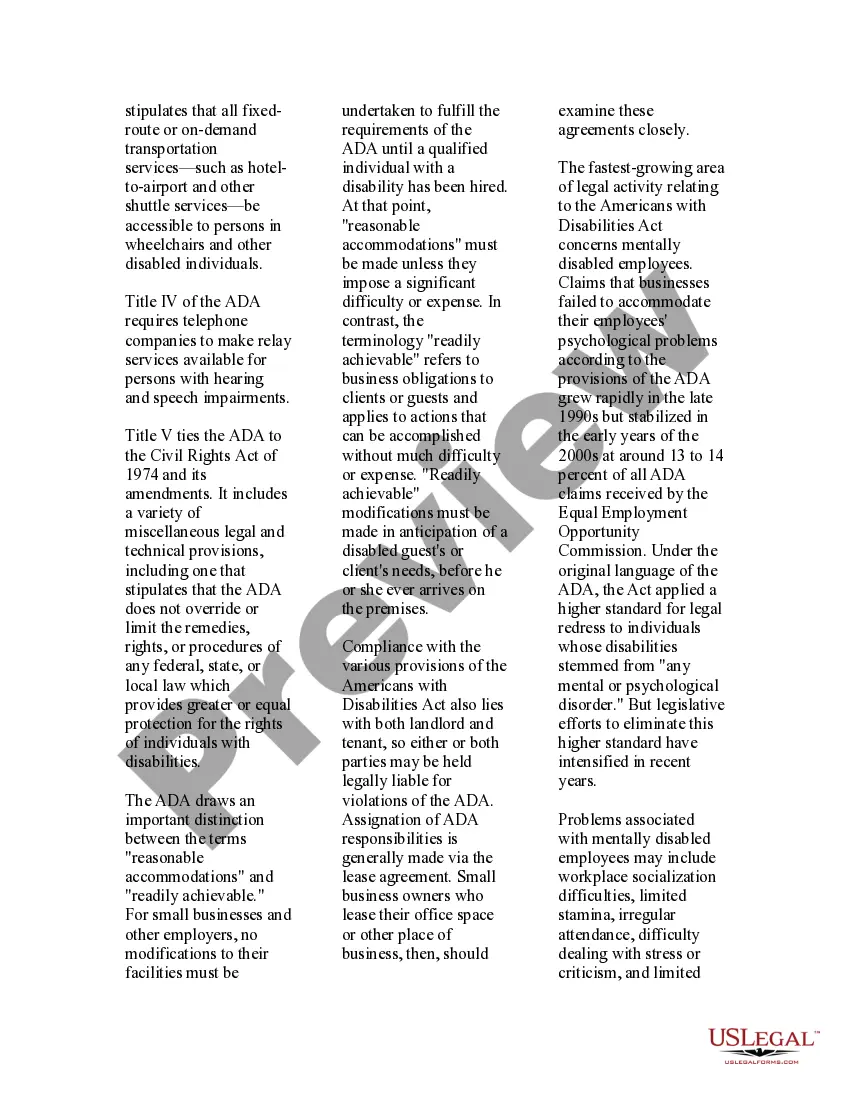


Get your form ready online
Our built-in tools help you complete, sign, share, and store your documents in one place.
Make edits, fill in missing information, and update formatting in US Legal Forms—just like you would in MS Word.
Download a copy, print it, send it by email, or mail it via USPS—whatever works best for your next step.
Sign and collect signatures with our SignNow integration. Send to multiple recipients, set reminders, and more. Go Premium to unlock E-Sign.
If this form requires notarization, complete it online through a secure video call—no need to meet a notary in person or wait for an appointment.
We protect your documents and personal data by following strict security and privacy standards.

Make edits, fill in missing information, and update formatting in US Legal Forms—just like you would in MS Word.

Download a copy, print it, send it by email, or mail it via USPS—whatever works best for your next step.

Sign and collect signatures with our SignNow integration. Send to multiple recipients, set reminders, and more. Go Premium to unlock E-Sign.

If this form requires notarization, complete it online through a secure video call—no need to meet a notary in person or wait for an appointment.

We protect your documents and personal data by following strict security and privacy standards.
Looking for another form?
How to fill out USLegal Guide To Disabled Adults?
- If you are a returning user, log into your account and download the required template by selecting the Download button. Ensure that your subscription is still active; if not, renew it per your payment plan.
- For new users, start by reviewing the Preview mode and form descriptions. Confirm that the selected form fits your specific needs and adheres to local regulations.
- If necessary, use the Search tab to find an alternative template that better suits your requirements.
- Once you’ve identified the correct document, click the Buy Now button to choose your subscription plan. You will need to register for an account to access the full resource library.
- Complete your purchase by entering your credit card information or opting for PayPal to finalize your subscription.
- Finally, download the form to your device. You can also access it anytime from the My Forms menu in your profile.
By following these steps, you can swiftly utilize US Legal Forms to gain access to the legal documents necessary for disability accommodation services.
Start your journey today by exploring the powerful resources available at US Legal Forms!
Form popularity
FAQ
Five common means of reasonable accommodation include altering work schedules, providing assistive devices, ensuring accessibility to facilities, allowing remote work options, and modifying duties. These accommodations help individuals with disabilities perform their roles effectively and comfortably. Employing disability accommodation services leads to a more productive and inclusive workplace for everyone. Creating an environment where all employees can thrive is essential for business success.
The four types of disability accommodation services include physical modifications, policy adjustments, assistive technology, and job restructuring. Physical modifications could involve changes to the workplace environment, while policy adjustments may allow for flexible schedules or telecommuting. Assistive technology serves to enhance an employee’s ability to perform tasks effectively. Lastly, job restructuring involves altering job duties to better align with an employee's capabilities.
To obtain dress accommodations at the University of Illinois Urbana-Champaign (UIUC), you should start by contacting the Disability Resource Center. They provide tailored disability accommodation services, guiding you through the necessary paperwork and process. It's essential to communicate any specific needs that relate to your condition, so they can offer appropriate support. Accessing these services ensures that you can participate fully in your academic journey.
Not all requests fall under the umbrella of reasonable accommodation services. For example, accommodations that impose undue hardship on employers or create a fundamental alteration to the job's nature are typically not considered reasonable. Additionally, an employee's preference for a specific shift or removal of essential job duties may not qualify. Understanding these limits helps both employees and employers navigate their rights and responsibilities.
The most common ADA violation in the workplace involves failing to provide necessary disability accommodation services. Employers may overlook necessary adjustments, such as modifying work environments or allowing flexible scheduling. These oversights can lead to discomfort for employees who require accommodations, ultimately impacting their productivity. Ensuring compliance with ADA regulations is crucial for creating an inclusive workplace for all.
Documentation of disability can include medical evaluations, psychological assessments, and letters from healthcare providers. These documents should clearly outline the nature of your disability and how it impacts your daily functioning. Clear and substantial documentation is crucial for your request for reasonable accommodation to be taken seriously. Organizations offering disability accommodation services can guide you in compiling the right documents.
Approval for a disability can vary based on individual circumstances and the employer's policies. Commonly recognized disabilities, like anxiety disorders or mobility impairments, often have clearer guidelines for accommodation. However, success depends largely on the completeness of your documentation and the support provided by disability accommodation services. Seeking assistance can greatly improve your chances.
Reasonable accommodation documentation refers to the paperwork that supports your request for workplace adjustments due to a disability. This includes evidence of your disability and the specific accommodations you seek. Proper documentation is vital, as it ensures that your needs are clearly communicated. You can utilize disability accommodation services to assist with this documentation process.
A reasonable accommodation may be denied if it imposes undue hardship on the employer, meaning it is too costly or complex to implement. Additionally, if the employer cannot reasonably accommodate the disability without significantly disrupting operations, the request may not be granted. Understanding the criteria for denial can help you navigate the process. Disability accommodation services can provide guidance on how to strengthen your request.
To request a reasonable accommodation, you generally need to provide documentation that verifies your disability and your need for accommodation. This may include medical records, therapist notes, or assessments from health professionals. Ensuring you have comprehensive documentation can facilitate the process. Using disability accommodation services can help you understand what specific documents you might need.