Should You Sign A Debt Validation Letter
Description
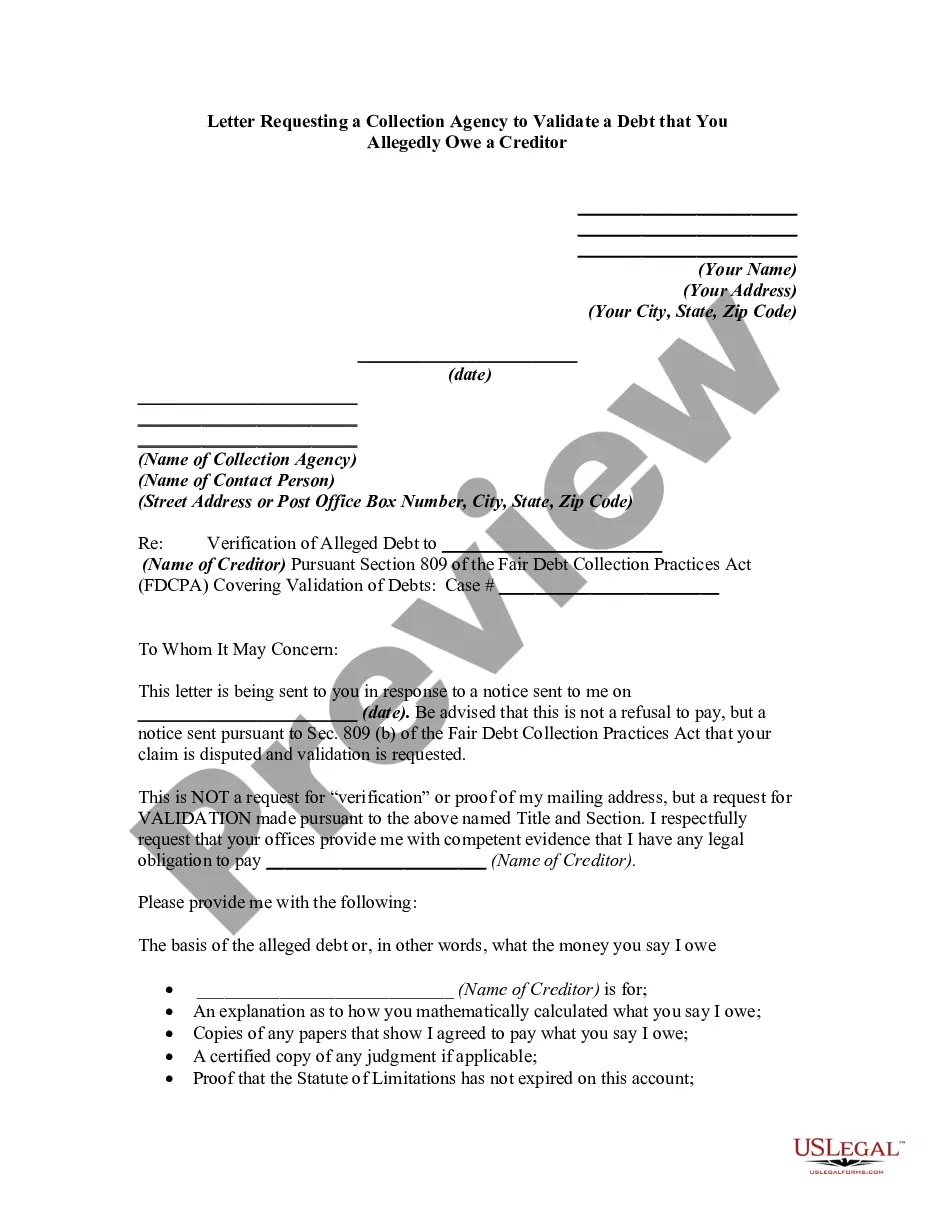
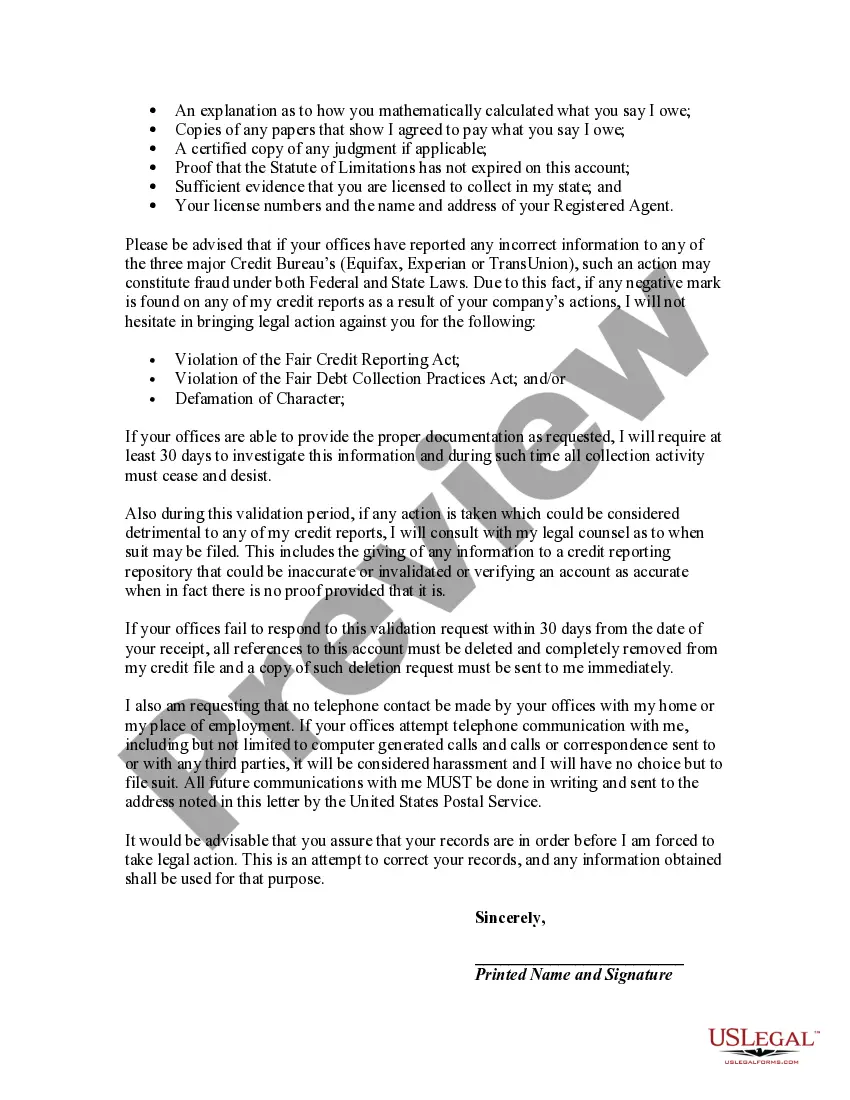
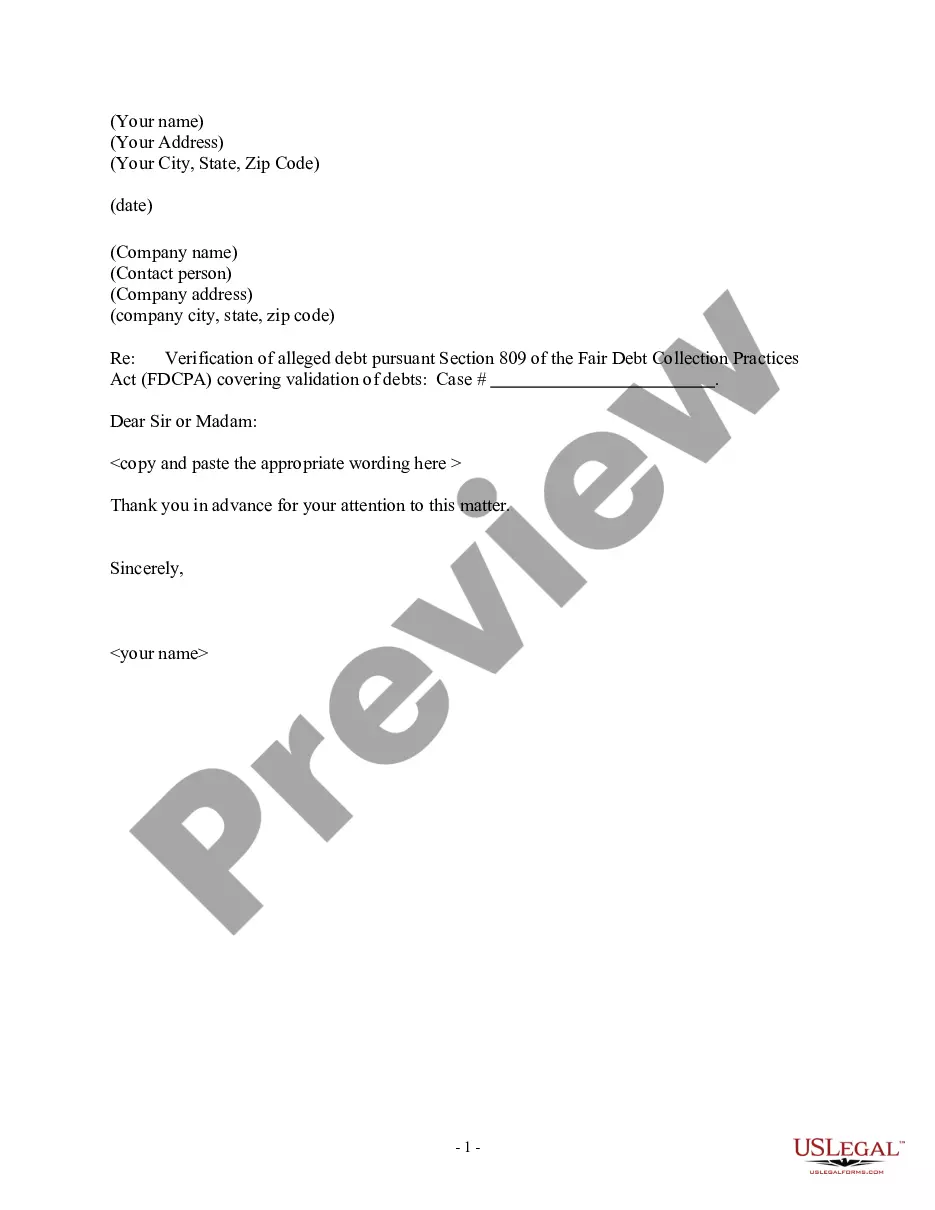
Get your form ready online
Our built-in tools help you complete, sign, share, and store your documents in one place.
Make edits, fill in missing information, and update formatting in US Legal Forms—just like you would in MS Word.
Download a copy, print it, send it by email, or mail it via USPS—whatever works best for your next step.
Sign and collect signatures with our SignNow integration. Send to multiple recipients, set reminders, and more. Go Premium to unlock E-Sign.
If this form requires notarization, complete it online through a secure video call—no need to meet a notary in person or wait for an appointment.
We protect your documents and personal data by following strict security and privacy standards.

Make edits, fill in missing information, and update formatting in US Legal Forms—just like you would in MS Word.

Download a copy, print it, send it by email, or mail it via USPS—whatever works best for your next step.

Sign and collect signatures with our SignNow integration. Send to multiple recipients, set reminders, and more. Go Premium to unlock E-Sign.

If this form requires notarization, complete it online through a secure video call—no need to meet a notary in person or wait for an appointment.

We protect your documents and personal data by following strict security and privacy standards.
Looking for another form?

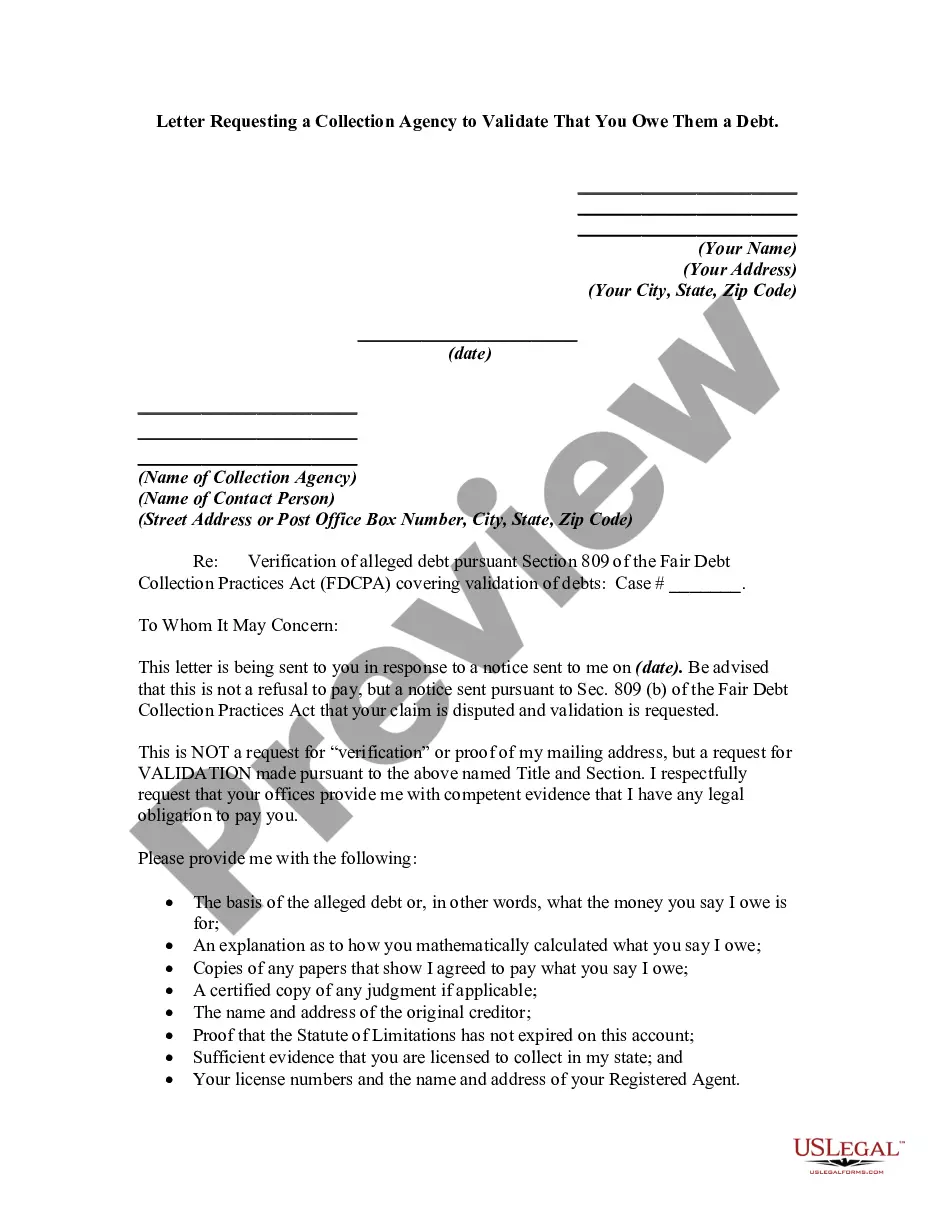
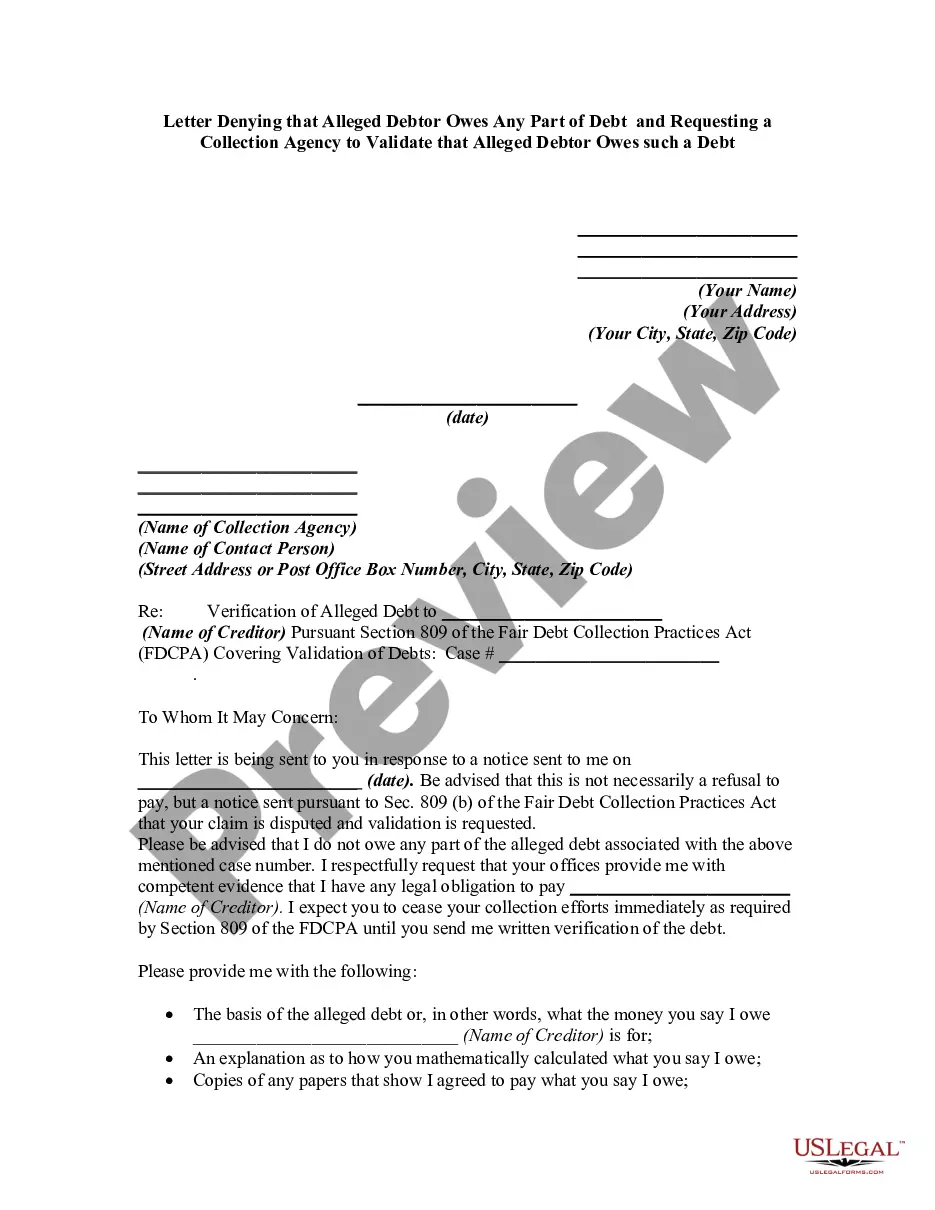
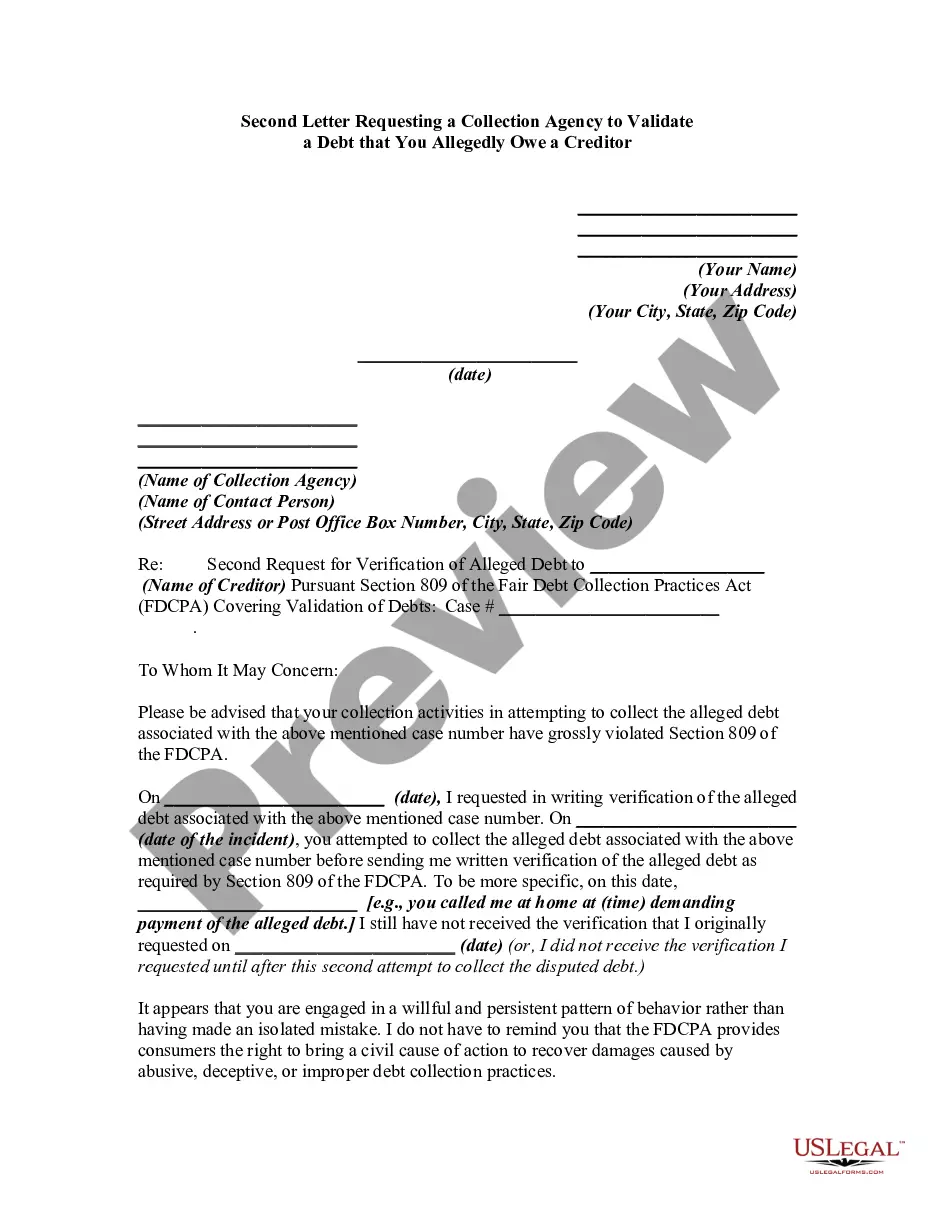
How to fill out Letter Requesting A Collection Agency To Validate A Debt That You Allegedly Owe A Creditor?
It's clear that you cannot transform into a legal authority in a single night, nor can you swiftly comprehend how to efficiently draft Should You Sign A Debt Validation Letter without possessing a specific skill set.
Compiling legal documents is a lengthy undertaking that demands particular education and abilities. So why not entrust the creation of the Should You Sign A Debt Validation Letter to the professionals.
With US Legal Forms, one of the most extensive legal template collections, you can find anything from court documents to templates for internal business communication. We recognize how crucial compliance and adherence to federal and state statutes and regulations are. That’s why, on our platform, all forms are location-specific and current.
You can access your documents again from the My documents tab at any time. If you're a returning client, simply Log In, and find and download the template from the same tab.
Regardless of the intention behind your documents—whether legal and financial, or personal—our platform has you supported. Experience US Legal Forms today!
- Locate the form you need using the search bar at the top of the page.
- Review it (if this option is available) and check the accompanying description to determine if Should You Sign A Debt Validation Letter is what you're looking for.
- Start your search once more if you require a different template.
- Sign up for a free account and choose a subscription plan to purchase the template.
- Click Buy now. After payment is completed, you can download the Should You Sign A Debt Validation Letter, fill it out, print it, and send or mail it to the appropriate individuals or organizations.
Form popularity
FAQ
Once you have sent a debt validation letter, the next step is to wait for a response. Assess the information they provide, and determine if it substantiates the debt. If they fail to validate the debt, consider disputing it with credit bureaus. Engaging with resources like US Legal Forms can guide you through the legal framework surrounding debt validation and your rights.
If a collector does not respond to your debt validation letter, this can be a favorable outcome for you. It may indicate that they cannot substantiate their claim. You should document their lack of response, as this support your position if they attempt further actions. This is where using a service like US Legal Forms can help you navigate your rights effectively.
After sending a debt validation letter, wait for a response from the debt collector. They are required to verify the debt within a reasonable time frame. During this period, continue to monitor your credit report for any updates. If they provide the necessary information, you can then decide whether you should sign a debt validation letter or pursue an alternative course of action.
Yes, it is advisable to respond to a debt collection letter. Ignoring such letters can lead to further actions, which may not be in your best interest. By engaging with the collector, you can request verification, which is crucial to determine if you should sign a debt validation letter. This proactive approach helps you manage your financial situation more effectively.
When you receive a debt recovery letter, start by carefully reviewing the details. Respond promptly and clearly to acknowledge the communication. You may express your intention to verify the debt in your response. Remember, it is important to maintain records of all correspondence, including the debt validation letter, as this supports your position.
When responding to a debt validation letter, it’s best to maintain a clear and professional tone. First, confirm receipt of the letter and express your intent to verify the debt. You can then request documentation that supports their claim, ensuring your rights are protected. Using tools from platforms like US Legal Forms can simplify this process, providing templates and guidance on how to respond effectively.
Responding to a debt collection letter is advisable, as it shows you take the matter seriously. Neglecting to respond can lead to further collection efforts or legal actions, which may complicate your situation. By replying, you can request a debt validation letter and gather information about the debt in question. This proactive approach helps you manage your financial health.
The 777 rule outlines certain protections under the Fair Debt Collection Practices Act. It typically allows consumers to dispute debts and avoid harassment while providing ample time for debt validation. Understanding this rule helps you interact confidently with debt collectors. Keep in mind that if you want clarity, you should consider requesting a debt validation letter as part of your defense strategy.
Acknowledging a debt collection letter is crucial for establishing communication and understanding your situation. However, you should take care before making any commitments or payments. Requesting a debt validation letter can serve as a useful step to confirm the validity of the debt. This ensures you act based on accurate information.
Ignoring a debt collection letter is generally not advisable. Doing so may escalate the situation, leading to further collection actions or negative impacts on your credit report. Instead, it is more beneficial to address the letter directly. You can either seek more information or respond appropriately within the time frame provided in the letter.