Debt Collector Information For Small Business
Description
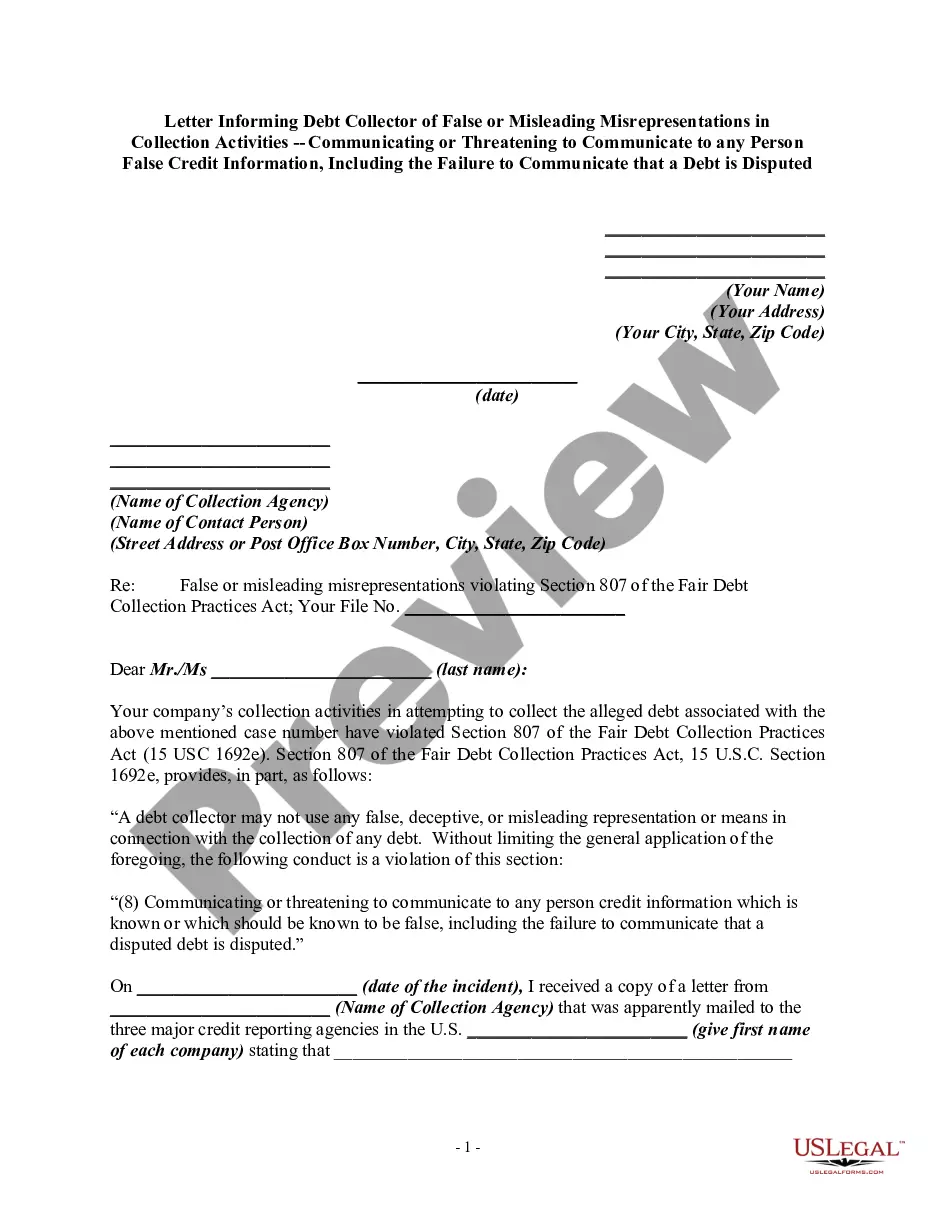
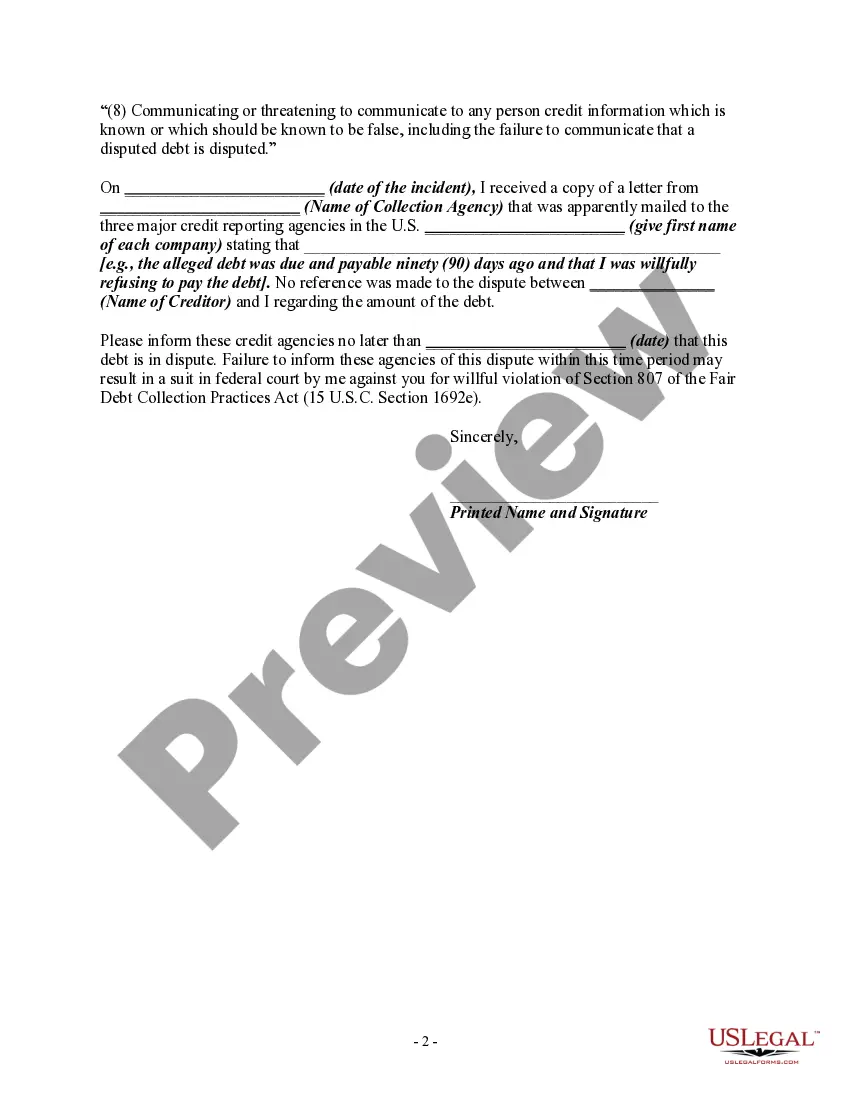
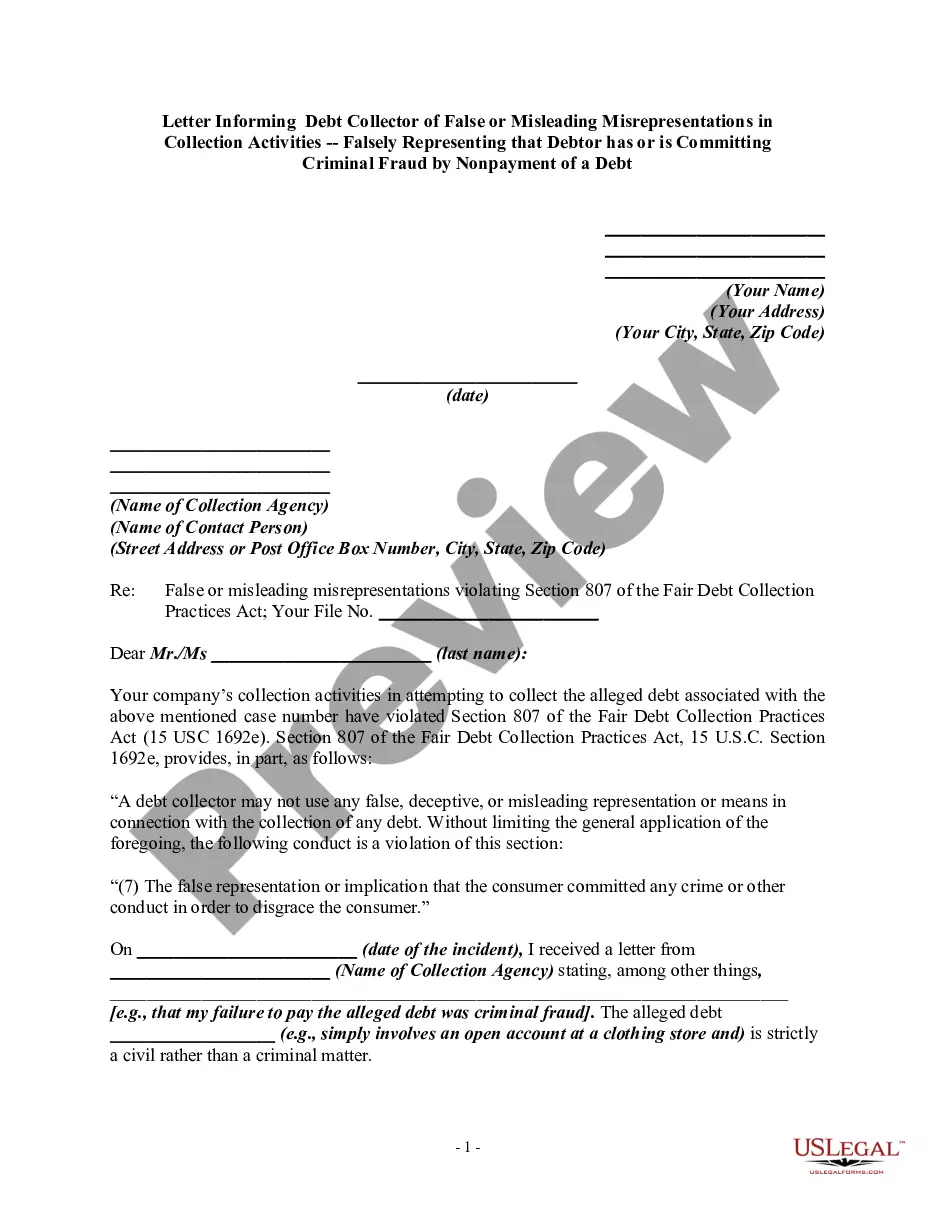
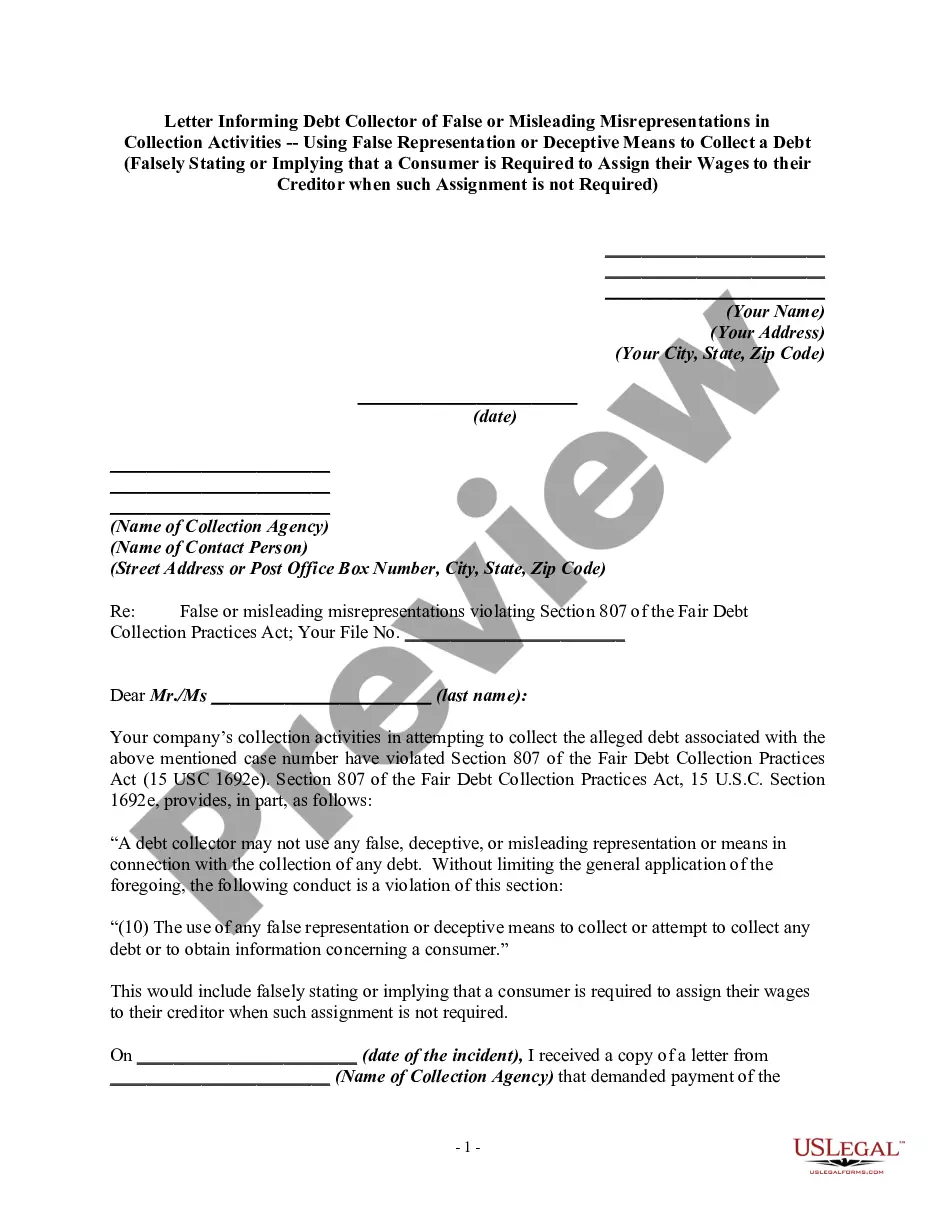
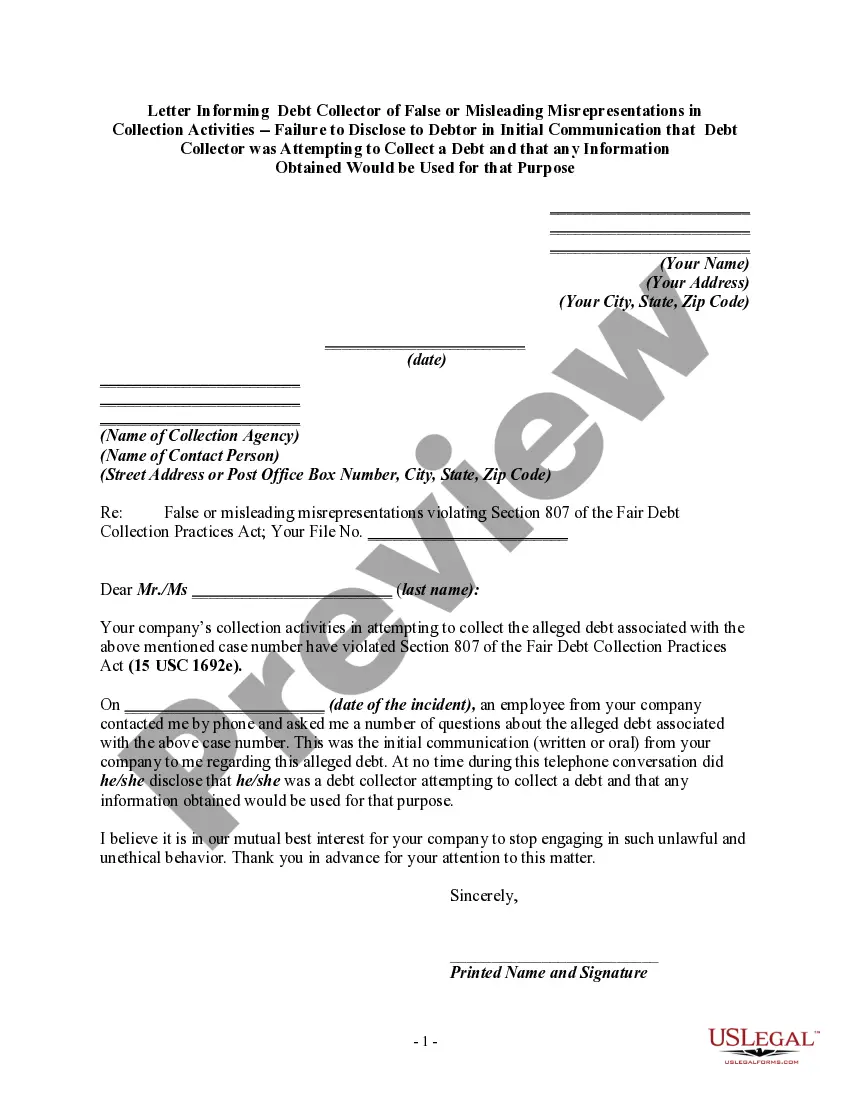
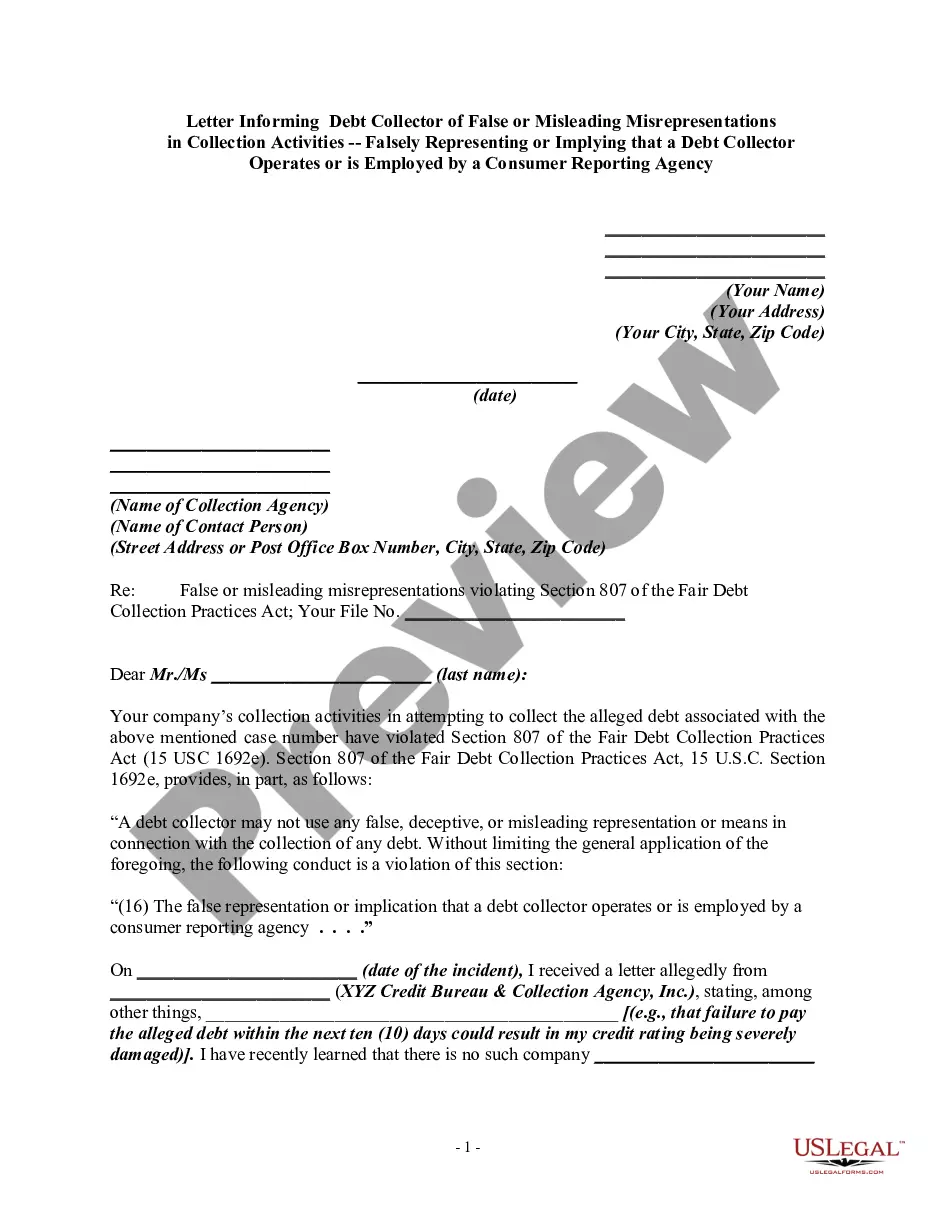
How to fill out Letter Informing Debt Collector Of False Or Misleading Misrepresentations In Collection Activities - Communicating Or Threatening To Communicate To Any Person False Credit Information, Including The Failure To Communicate That A Debt Is Disputed?
Creating legal documents from the ground up can frequently feel a bit daunting. Some situations may require extensive investigation and substantial financial investment.
If you’re looking for a simpler and more cost-effective method of preparing Debt Collector Information For Small Business or any other paperwork without dealing with unnecessary complications, US Legal Forms is readily accessible.
Our online collection of over 85,000 current legal documents covers nearly every facet of your financial, legal, and personal matters. With just a few clicks, you can quickly obtain state- and county-compliant templates meticulously crafted for you by our legal experts.
Utilize our platform whenever you require dependable and trustworthy services that allow you to swiftly locate and download the Debt Collector Information For Small Business. If you’re familiar with our site and have previously created an account, simply Log In to your account, select the template, and download it or re-download it at any time later in the My documents section.
Ensure the form you select meets the criteria of your state and county. Choose the appropriate subscription plan to acquire the Debt Collector Information For Small Business. Download the form, then complete, sign, and print it. US Legal Forms has a flawless reputation and over 25 years of expertise. Join us today and simplify document completion into an easy and efficient process!
- Not registered yet? No issue.
- Setting up an account takes minimal time and allows you to explore the library.
- Before proceeding to download Debt Collector Information For Small Business, adhere to these suggestions.
- Examine the form preview and descriptions to ensure it is the document you require.
Form popularity
FAQ
The 7 7 7 rule for collections refers to a strategy where businesses follow up on unpaid debts seven days after the due date, then again at 14 days, and finally at 21 days. This method helps maintain consistent communication and increases the likelihood of recovery. By implementing this rule, small businesses can effectively manage their collections while ensuring that their debt collector information for small business is up to date. Consider using platforms like USLegalForms to automate reminders and streamline your collection efforts.
Small businesses often collect debt by establishing clear payment terms upfront and communicating effectively with clients. When invoices go unpaid, they may send reminders or negotiate payment plans. Utilizing tools like USLegalForms can streamline the collection process by providing templates for demand letters and agreements. This approach helps maintain professionalism while encouraging timely payment.
To obtain debt collector information for small business, start by requesting documentation of the debt. You can contact the collector directly and ask for details such as the original creditor's name and the amount owed. It is important to communicate in writing to keep a record of your inquiries. Remember, you have the right to request this information to ensure transparency and accuracy.
When speaking with a debt collector, ask for the total amount owed, details about the original creditor, and the date of the last payment. Additionally, request their contact information and the name of their company for your records. Gathering this debt collector information for small business will provide clarity and help you manage your financial situation effectively.
Debt collectors must prove three key elements: the existence of the debt, that you are the responsible party, and that they have the right to collect on it. This requirement protects consumers and ensures that debt collection is legitimate. Familiarizing yourself with this debt collector information for small business can help you challenge any unjust claims.
Debt collectors gather information from various sources, including credit reports, public records, and the original creditor. They may also contact third parties or utilize skip tracing methods to locate individuals. Understanding this debt collector information for small business can help you be prepared and informed when dealing with collectors.
You can say, 'Please send me written verification of the debt.' This phrase effectively communicates your desire for documentation and halts any further collection efforts until you receive it. Utilizing this debt collector information for small business will empower you in negotiations and ensure transparency.
When communicating with a debt collector, request essential details such as the amount owed, the original creditor's name, and the account number. It is also wise to ask for written verification of the debt. This debt collector information for small business helps you confirm the legitimacy of the claim and protects your rights.
To send a customer to collections, first, document all communication regarding the unpaid debt, including invoices and reminders. Next, you should inform the customer of your intent to send the debt to collections, providing them an opportunity to settle the account. If the debt remains unpaid, you can enlist a professional collections agency to handle the matter. For more detailed guidance and resources, explore UsLegalForms for essential debt collector information for small business.
When dealing with debt collectors, you must provide basic information about the debt, including the amount owed, the name of the creditor, and any relevant account details. It’s essential to ensure that all information you provide is accurate to avoid potential disputes. Additionally, maintaining clear communication with the debt collector helps establish a timeline for payment and resolution. For comprehensive debt collector information for small business, consider consulting resources available through UsLegalForms.