Veterinarian Malpractice For Human
Description
Get your form ready online
Our built-in tools help you complete, sign, share, and store your documents in one place.
Make edits, fill in missing information, and update formatting in US Legal Forms—just like you would in MS Word.
Download a copy, print it, send it by email, or mail it via USPS—whatever works best for your next step.
Sign and collect signatures with our SignNow integration. Send to multiple recipients, set reminders, and more. Go Premium to unlock E-Sign.
If this form requires notarization, complete it online through a secure video call—no need to meet a notary in person or wait for an appointment.
We protect your documents and personal data by following strict security and privacy standards.

Make edits, fill in missing information, and update formatting in US Legal Forms—just like you would in MS Word.

Download a copy, print it, send it by email, or mail it via USPS—whatever works best for your next step.

Sign and collect signatures with our SignNow integration. Send to multiple recipients, set reminders, and more. Go Premium to unlock E-Sign.

If this form requires notarization, complete it online through a secure video call—no need to meet a notary in person or wait for an appointment.

We protect your documents and personal data by following strict security and privacy standards.
Looking for another form?


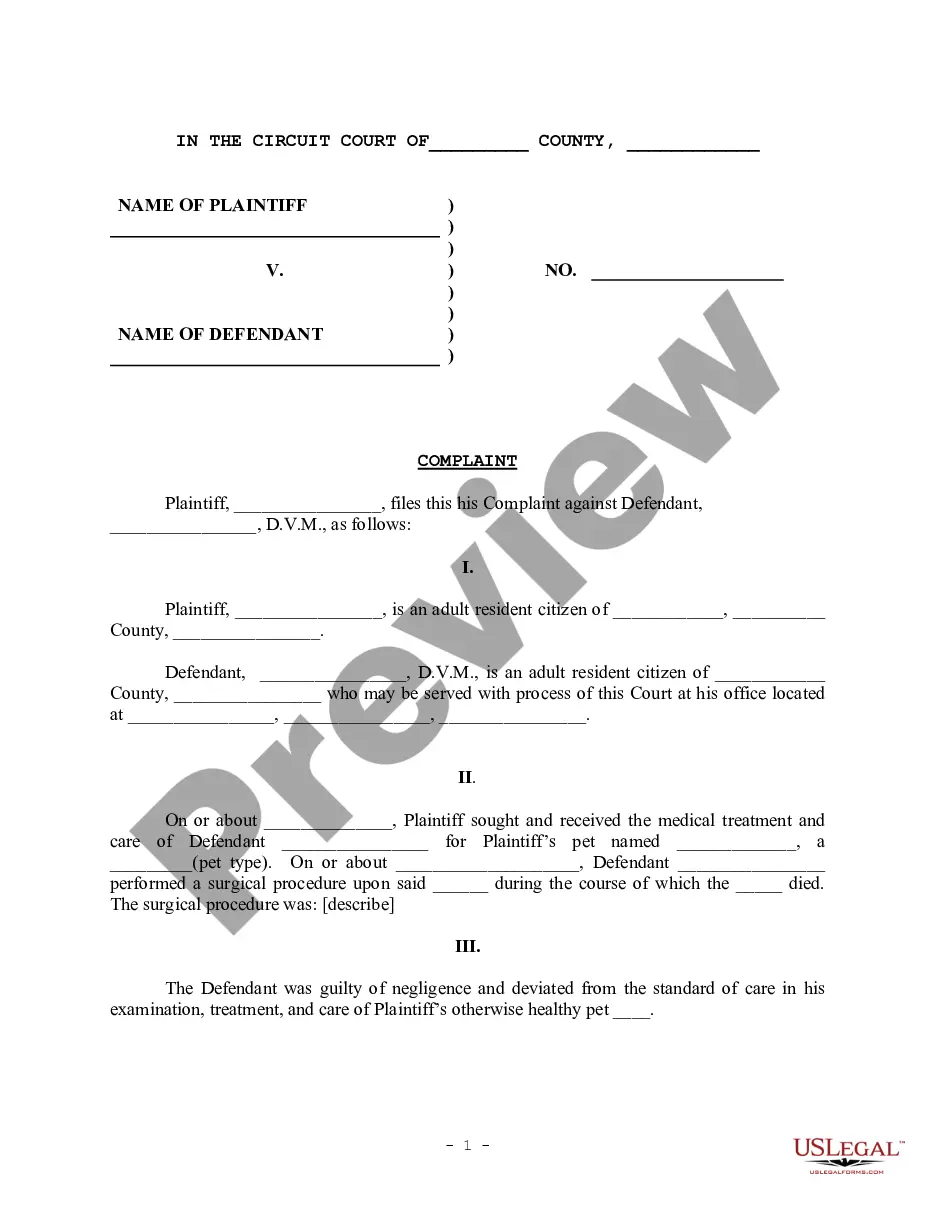
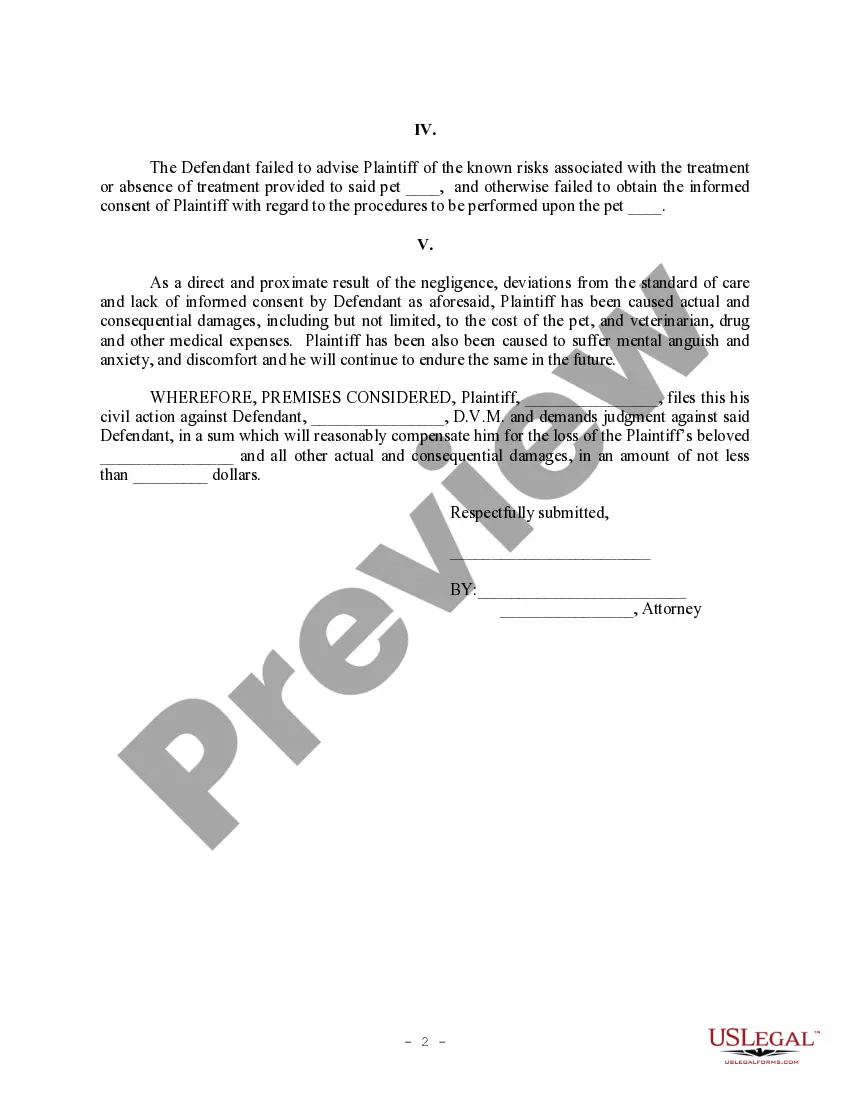
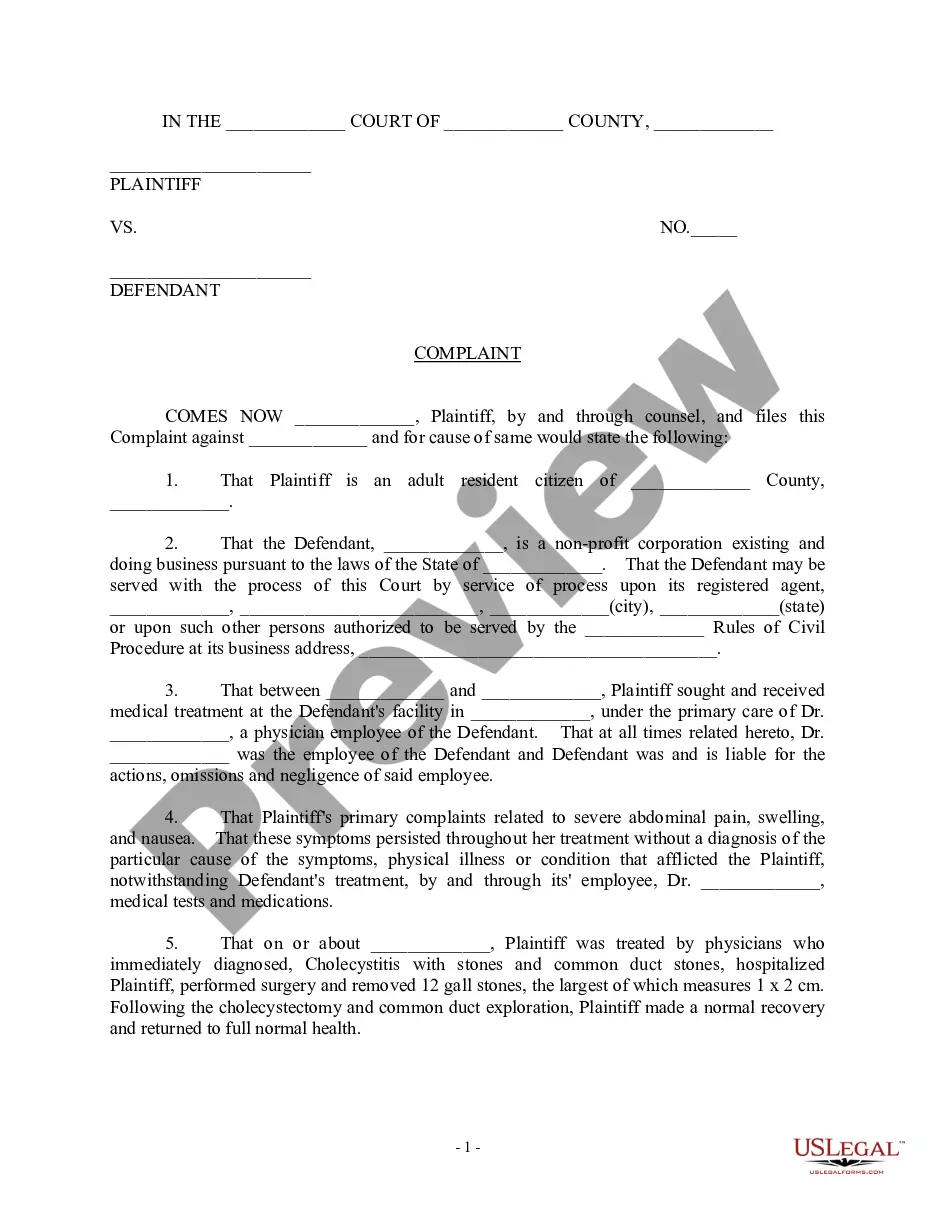
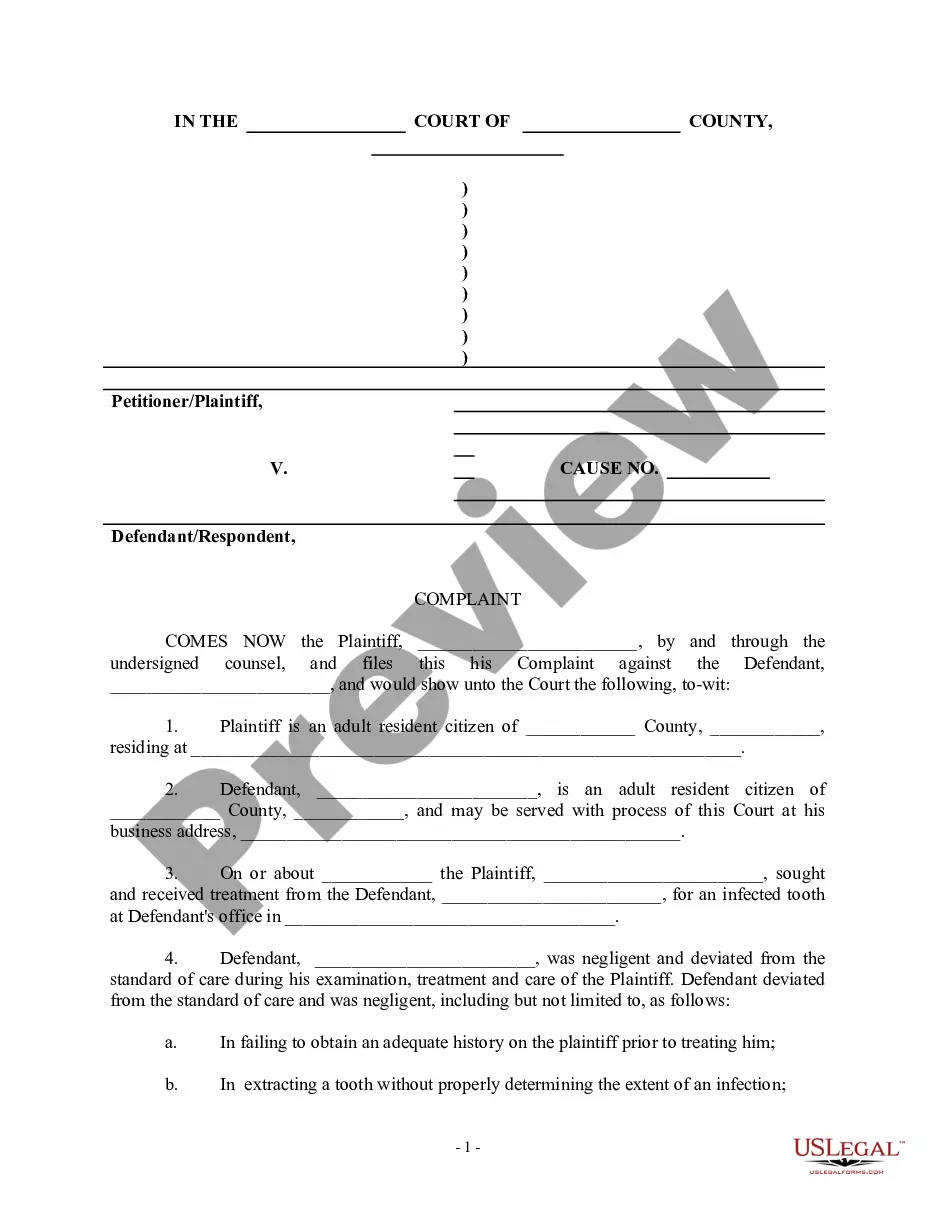
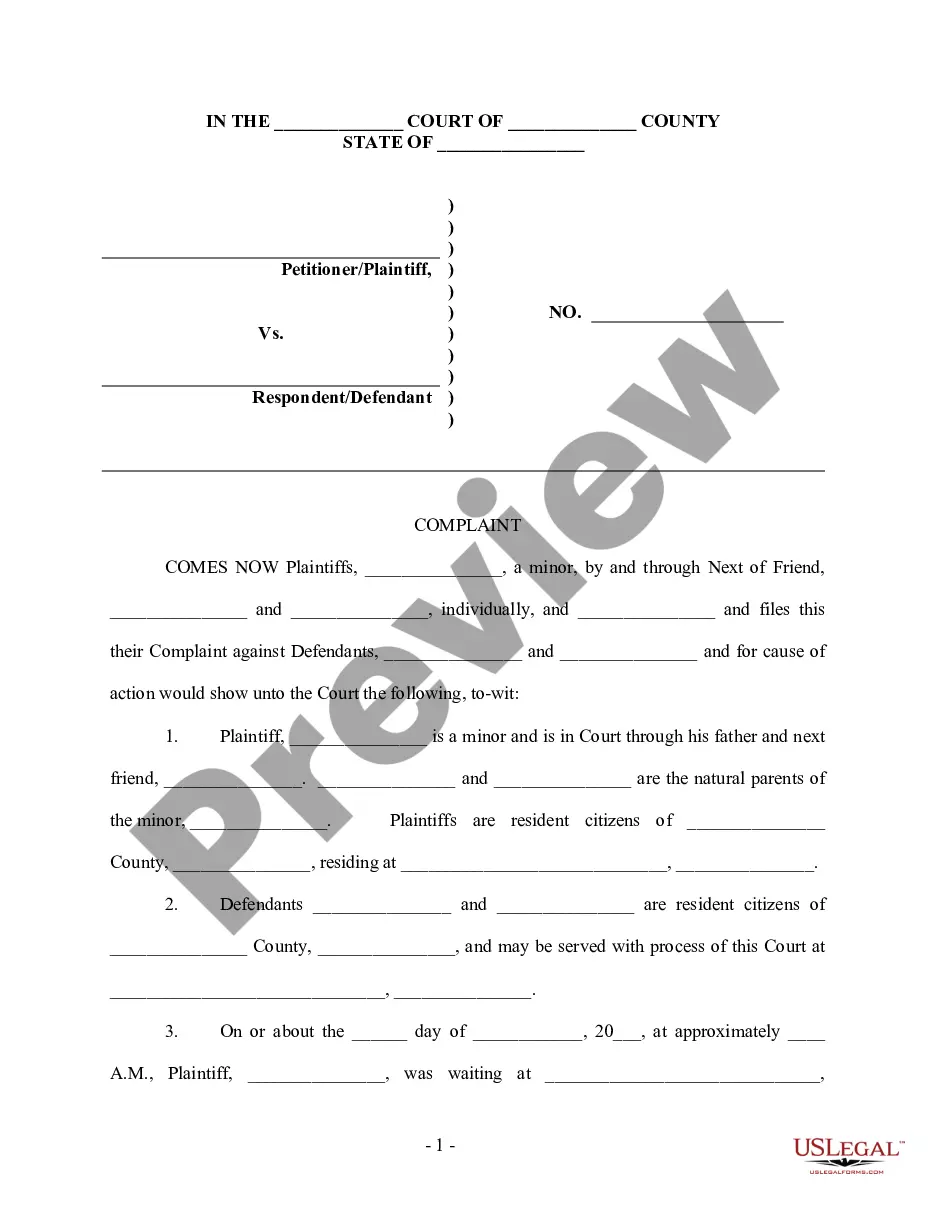
How to fill out Complaint Regarding Veterinarian Malpractice For Surgical Procedure?
- If you're a returning user, log in to your account to start. Check your subscription status and renew if necessary to access the forms.
- For new users, begin by exploring the Preview mode to find a template that matches your needs and aligns with local regulations.
- If no suitable form is found, utilize the Search feature to locate the correct document that fits your requirements.
- Once you find the right form, click on the Buy Now button and select your preferred subscription plan. You will need to create an account to unlock the library.
- Proceed to checkout by entering your payment information, whether through credit card or PayPal, to complete your subscription.
- After successful payment, download the necessary document to your device. You can access it anytime from the My Forms section of your account.
US Legal Forms provides a rich collection of over 85,000 legal templates, empowering users to quickly and effectively create documents for various legal needs.
Empower yourself with the right tools for your legal documents. Start using US Legal Forms today for reliable and efficient solutions.
Form popularity
FAQ
Yes, you can sue your veterinarian if you believe they acted negligently, leading to harm to your pet. Such lawsuits typically require evidence that proves the vet did not meet the standard of care expected in their practice. Understanding the legal process can be daunting, so platforms like uslegalforms can provide guidance on how to navigate veterinarian malpractice for human cases. If you are considering this route, consulting with a legal expert is essential to help you address your concerns effectively.
Unethical practices in the veterinary industry can include overcharging for unnecessary procedures or failing to inform pet owners about important treatment options. Some veterinarians may also have conflicts of interest, such as promoting treatments for personal profit rather than the best interest of the animal. Such actions not only harm pets but can also lead to cases of veterinarian malpractice for human, highlighting the need for accountability in the profession. It’s wise to report any suspicious activities to the appropriate regulatory bodies.
Lawsuits against veterinarians frequently revolve around claims of negligence or failure to provide adequate care. This includes situations where the vet's actions or decisions directly harmed the pet, leading to financial losses or emotional distress for the pet owner. Understanding the basis of these claims is crucial, especially considering cases of veterinarian malpractice for human, which highlight the importance of ethical practice in the veterinary field. Always ensure your veterinarian upholds high standards to protect both your pet and yourself.
If you believe your veterinarian has made a mistake, the first step is to gather all relevant records and details of your pet's care. Next, consider discussing your concerns directly with the vet, as they may provide clarification or corrective actions. If you still feel dissatisfied, seeking a second opinion from another veterinarian can help confirm or refute your suspicions. In cases of significant harm, you may want to explore options related to veterinarian malpractice for human, as this type of oversight can lead to serious consequences.
When considering a lawsuit against a vet, the first step is researching the grounds for your case based on evidence of negligence or malpractice. Collecting medical records and consulting an attorney experienced in veterinarian malpractice for human claims is crucial for building your case. They can help you navigate filing procedures, ensuring every detail is addressed competently and legally.
To sue a veterinarian for malpractice, first, document your claims thoroughly by gathering all relevant medical records and evidence of negligence. You will need to file a complaint in the appropriate court, detailing how the veterinarian's actions constituted malpractice. Given the intricacies of these cases, it may be beneficial to utilize services from platforms like uslegalforms, which can guide you through the process effectively.
Filing a medical malpractice suit on your own may seem daunting, but it's possible with careful preparation. Start by gathering evidence of the veterinarian's negligence, including medical records and witness statements. While it’s legally feasible to proceed without a lawyer, enlisting professional guidance can enhance your claim's strength, especially in complex cases involving veterinarian malpractice for human effects.
To sue a veterinarian for malpractice, you should seek an attorney specializing in veterinary malpractice or animal law. These lawyers understand the nuances of both animal and human implications in such cases, ensuring you receive proper representation. Look for someone with a proven track record in handling claims involving veterinarian malpractice for human to maximize your chances of a favorable outcome.
Veterinarian malpractice involves a veterinarian's failure to meet the established standards of care, which can cause injury or harm. A notable example is performing an unnecessary surgery without proper consent or failing to diagnose a treatable condition, which leads to severe complications. Such cases may qualify for claims under veterinarian malpractice for human, as they can also impact the pet owner’s emotional or financial state.
Negligence in veterinary medicine occurs when a veterinarian fails to provide the appropriate standard of care to animals, leading to harm. An example could involve a vet overlooking signs of a serious illness during a routine check-up, ultimately resulting in the animal's deterioration. When this negligence extends to human care under veterinarian malpractice for human conditions, legal action may be pursued.