Good Faith With
Description
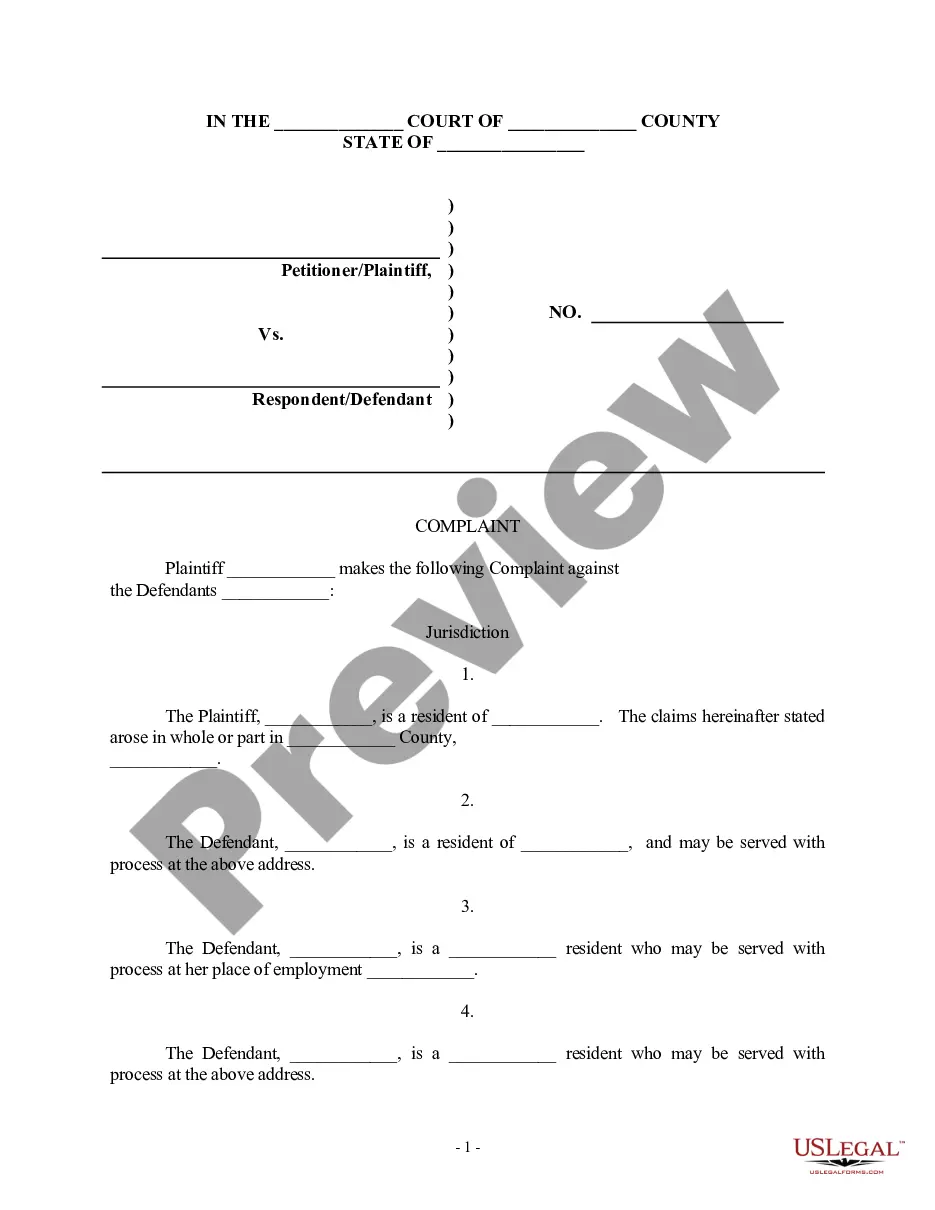
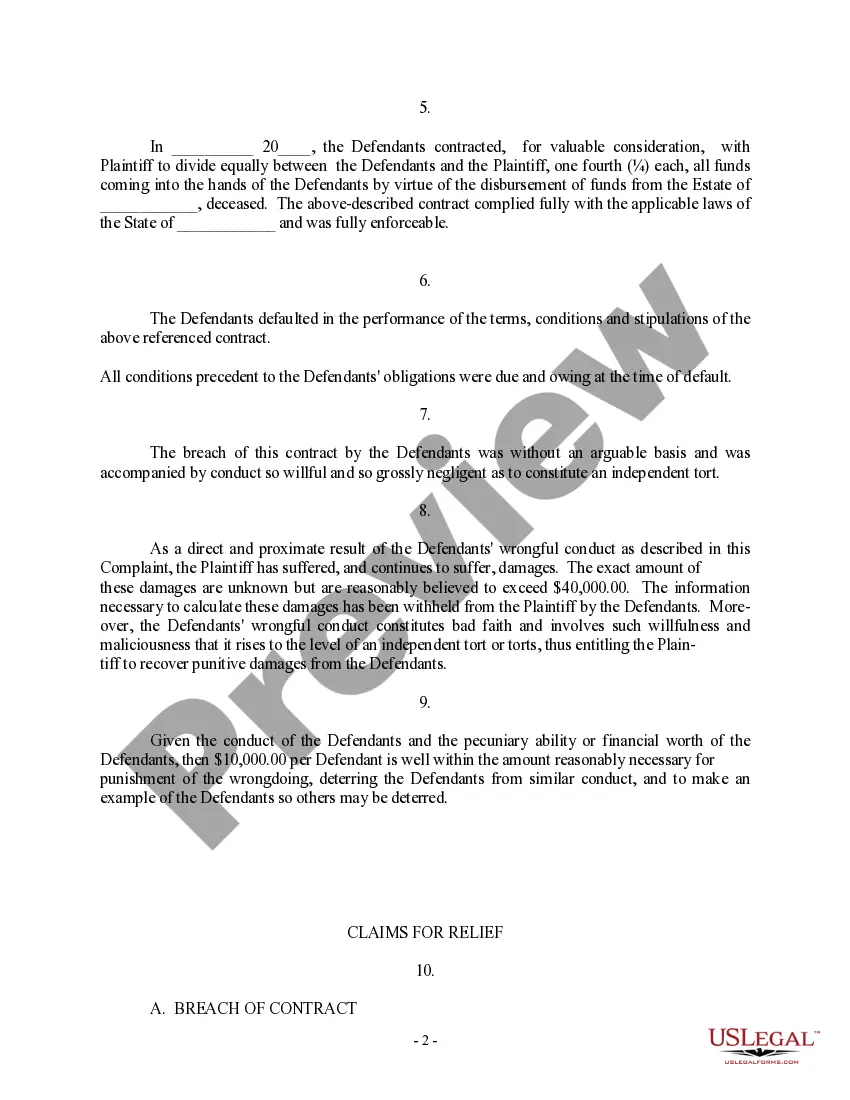
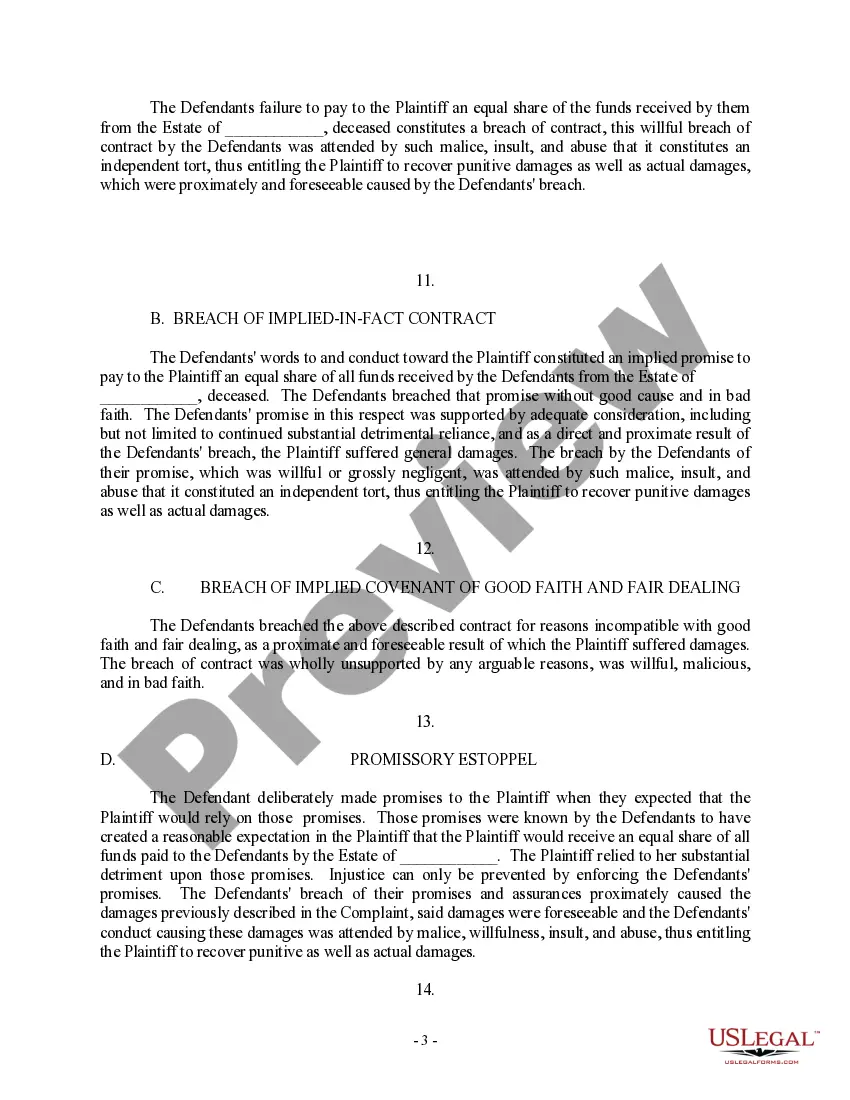
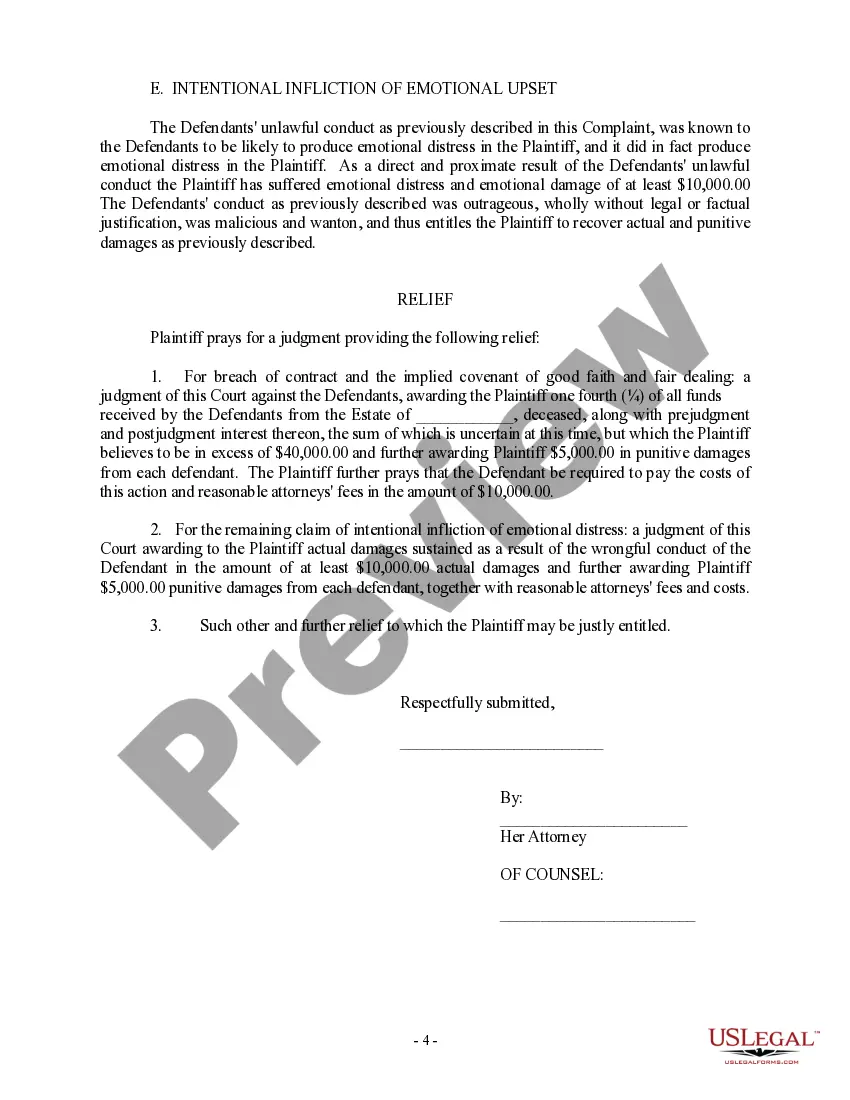
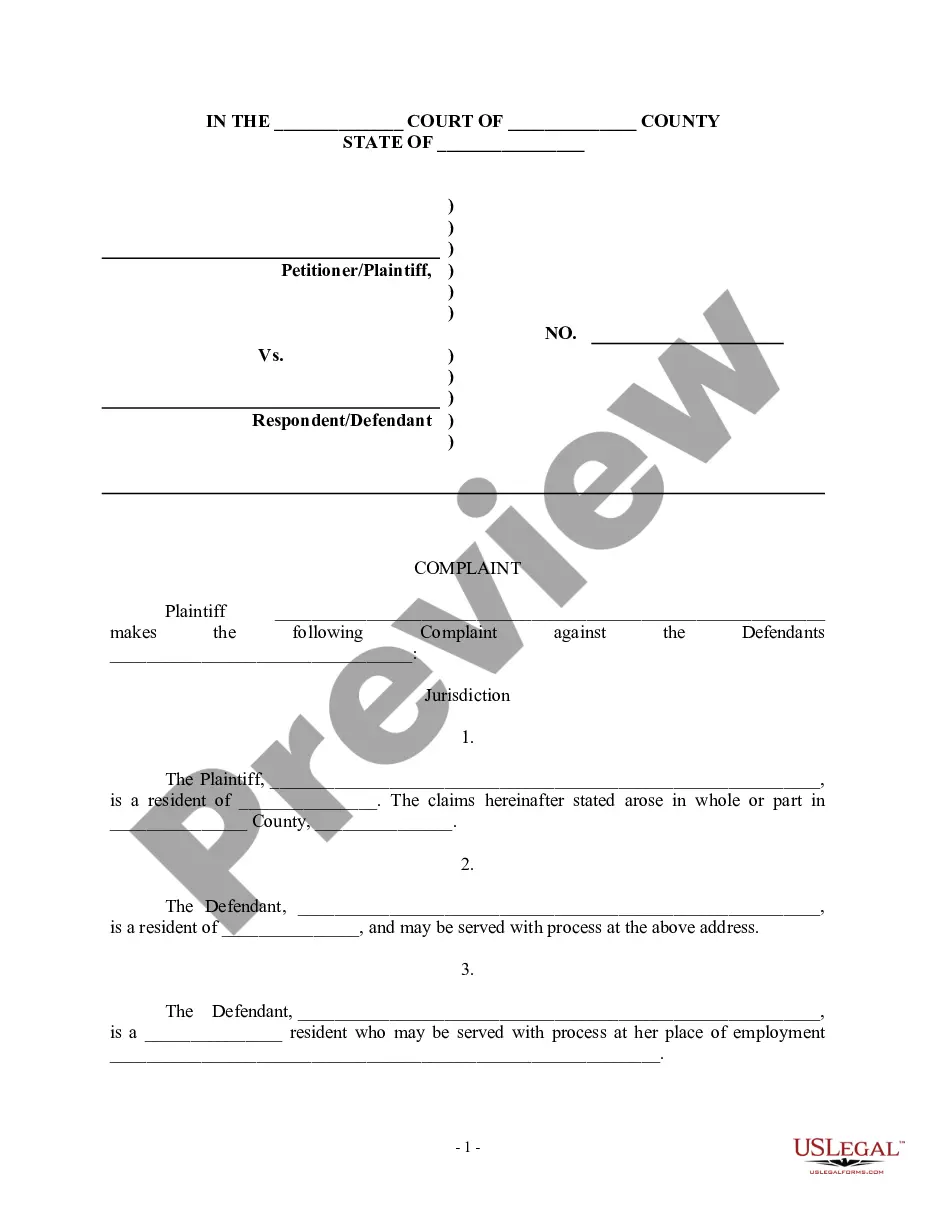
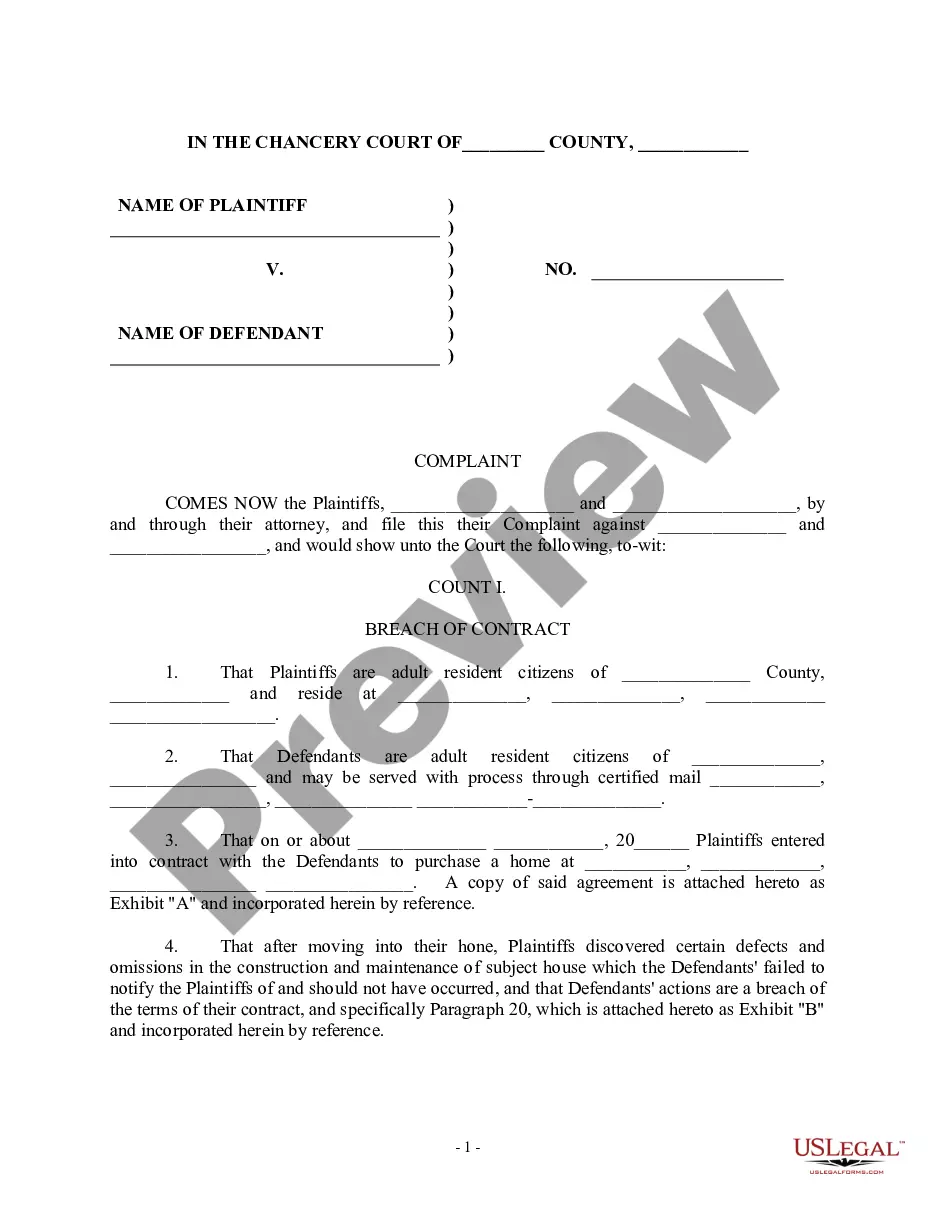
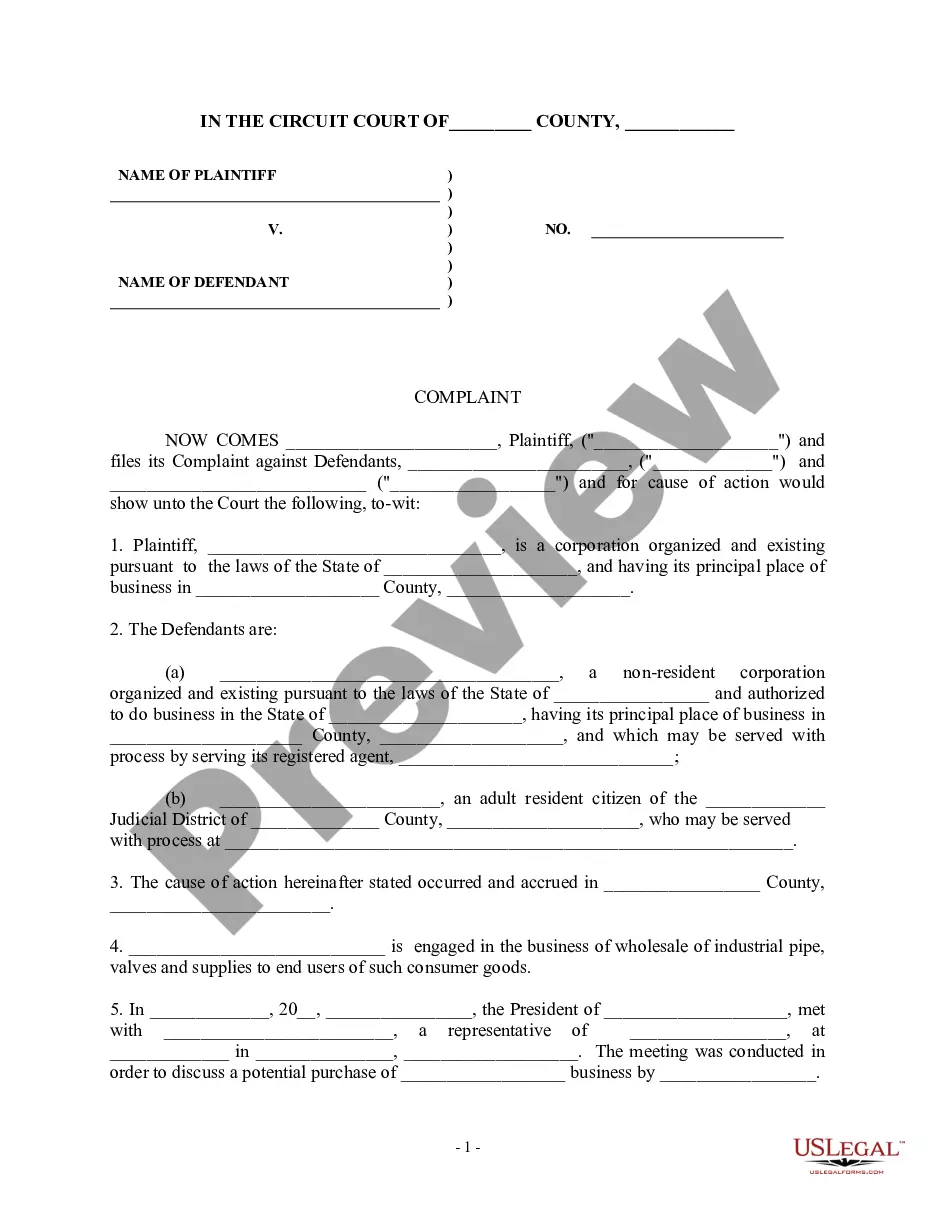

How to fill out Complaint Regarding Breach Of Contract To Divide Estate Proceeds, Implied Contract, Good Faith And Fair Dealing, Promissory Estoppel, Emotional Distress?
- Start by visiting the US Legal Forms website. If you're a returning user, log in to access your account directly.
- Review the form description in Preview mode to confirm it meets your specific needs and adheres to local jurisdiction standards.
- Use the Search tab to find any alternative templates if you require different options. Choose one that best fits your requirements.
- Purchase the preferred document by clicking the Buy Now button and selecting your desired subscription plan, ensuring your account is registered.
- Complete the payment process with your credit card or PayPal to complete your subscription purchase.
- Download the form to your device for easy access and later completion. You can also revisit this document anytime via the My Forms section of your profile.
By following these steps, you can efficiently access a robust collection of over 85,000 legal forms with the support of premium experts from the US Legal Forms team.
Experience the convenience of obtaining your legal documents today. Start using US Legal Forms and enhance your legal drafting process!
Form popularity
FAQ
To avoid good faith violations on Webull, ensure you familiarize yourself with their specific trading rules and regulations. Holding onto your positions for the required duration before selling is critical. Furthermore, US Legal Forms can help you navigate these rules effectively, ensuring you keep good faith with your trading activities on the platform.
Establishing good faith involves demonstrating honesty, transparency, and integrity in all transactions. You should follow through on commitments and ensure all your trades are made with clear, legitimate intent. This fosters trustworthy interactions and enhances your reputation in the trading community, reinforcing your good faith with others.
Day traders can avoid settlement violations by closely adhering to the guidelines set by their brokerage and settling trades promptly. Staying informed about regular trading practices ensures you maintain good faith with market rules. Additionally, using reliable platforms like US Legal Forms can offer valuable insights into maintaining compliance.
A typical good faith deposit usually ranges from 1% to 5% of the total transaction amount involved in trading activities. This amount signals your commitment and intent to proceed with a transaction. By making a good faith deposit, you demonstrate respect for the agreement and uphold good faith with all parties involved.
A good faith violation can be triggered by rapid buying and selling of securities without a legitimate investment purpose. When trading activity appears speculative or manipulative, it raises red flags for regulators. Understanding these triggers allows you to maintain good faith with your trading strategies and avoid potential penalties.
To steer clear of good faith violations, ensure you hold onto your securities for at least 30 days before selling them. This method establishes an authentic intent to invest while complying with regulations. If you’re unsure, platforms like US Legal Forms can provide essential resources to help you understand and maintain good faith with your trading practices.
A good faith violation typically occurs when a trader sells a security and fails to hold it long enough to demonstrate genuine intent. For instance, if an investor sells a stock within a short period after buying, such as on the same day, it could be seen as a violation. This practice disrupts market stability and undermines the spirit of good faith with fairness in trades.
'In good faith' is commonly used in legal contexts and everyday conversations to describe actions taken with honest intentions. For instance, you might say, 'They conducted the investigation in good faith, seeking the truth.' This phrase underscores the importance of integrity when working with others.
The term 'with a good faith' refers to acting sincerely and honestly in a situation. It indicates a readiness to uphold ethical standards while engaging with others. This concept not only helps individuals but also enhances business relationships by promoting transparency and trust.
The correct phrase is 'in good faith.' This term emphasizes the intent behind actions or communications. Understanding how to use good faith in your interactions is essential for establishing credibility and fostering trust.