Fair Use With Music
Description
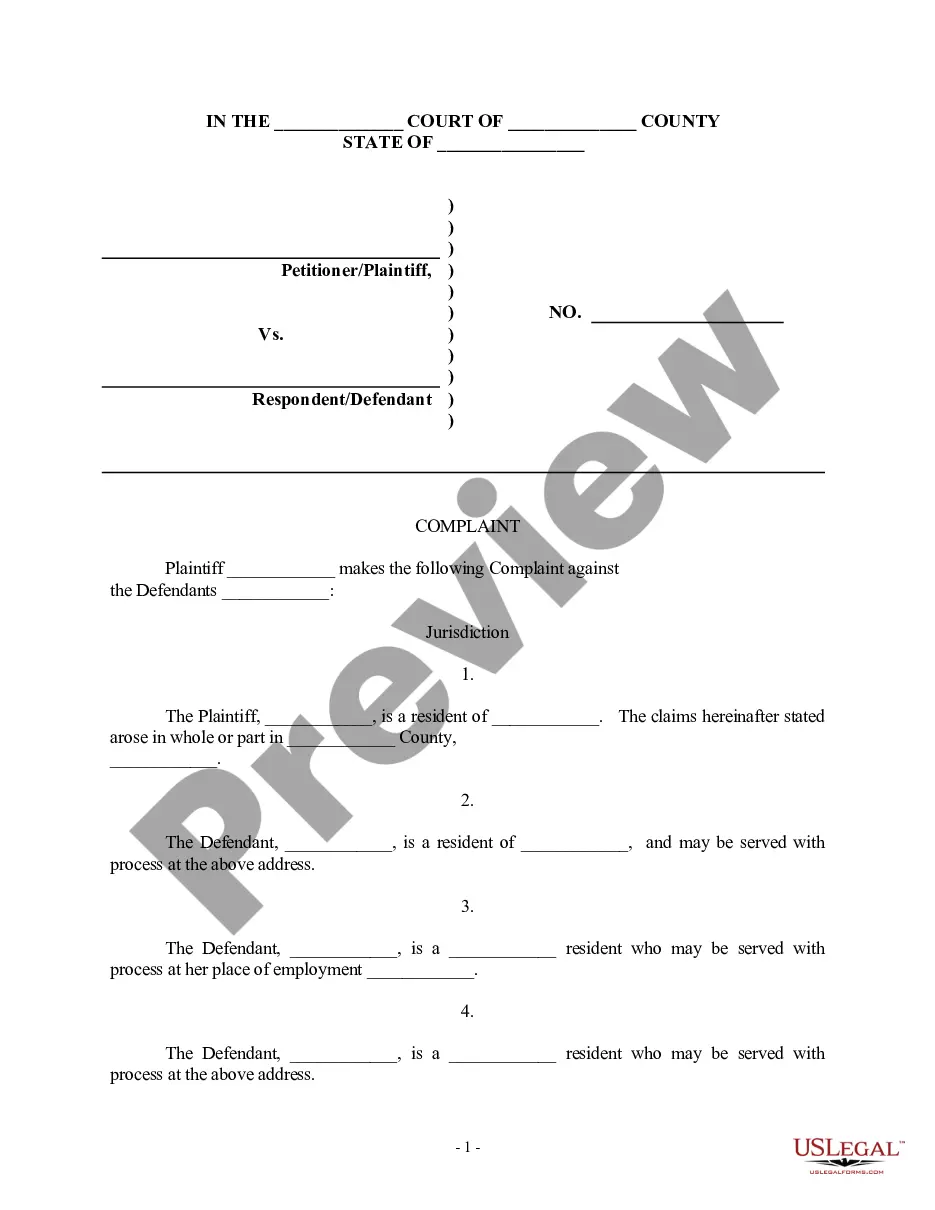
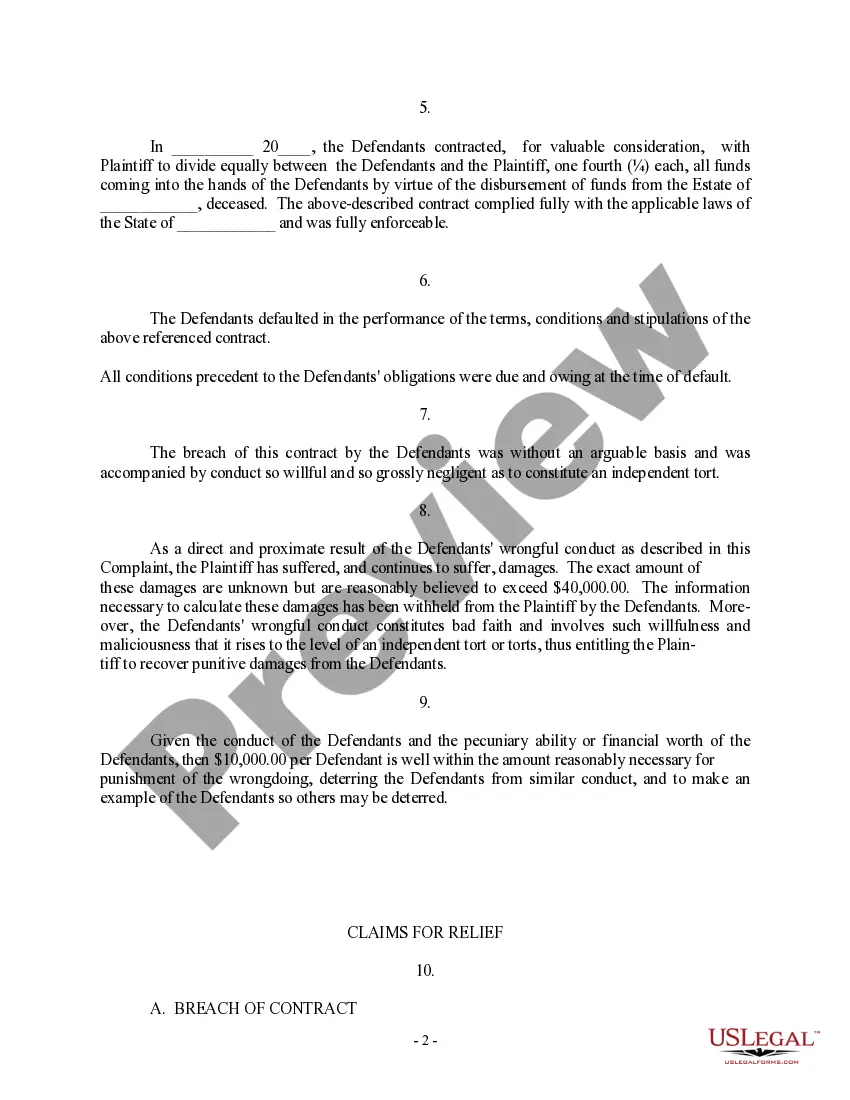
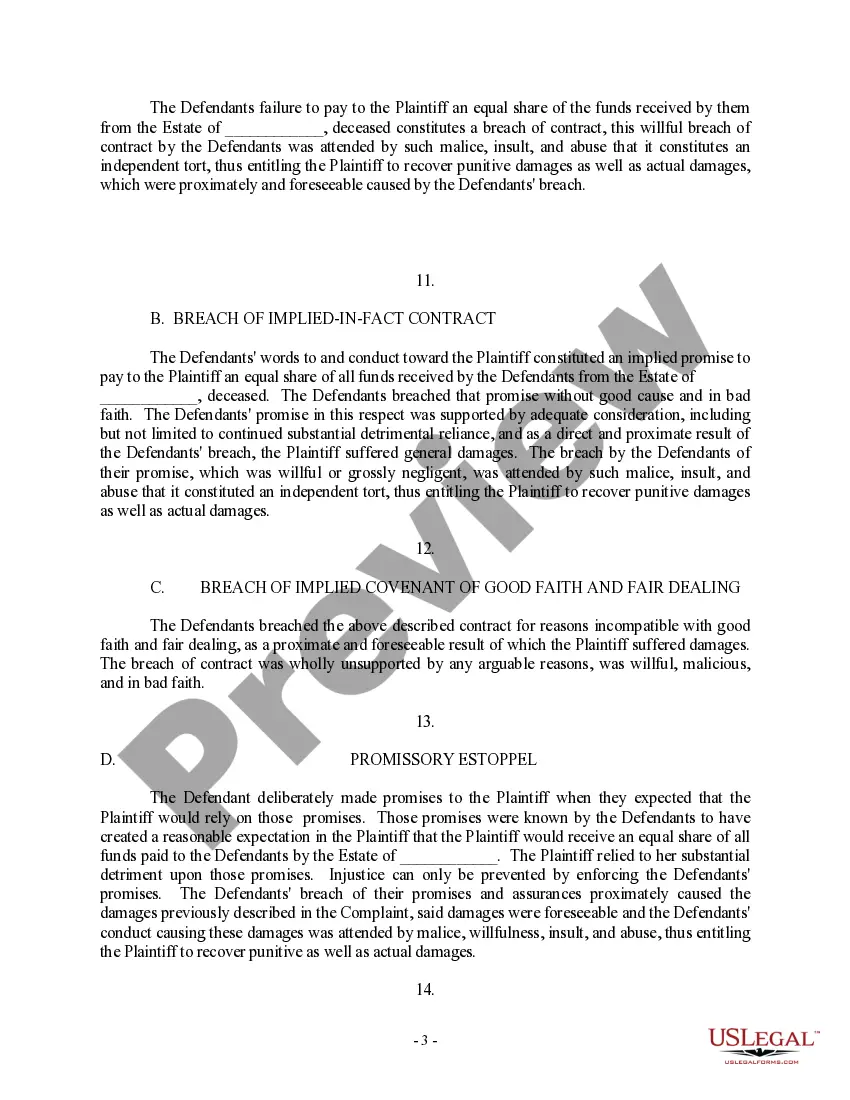
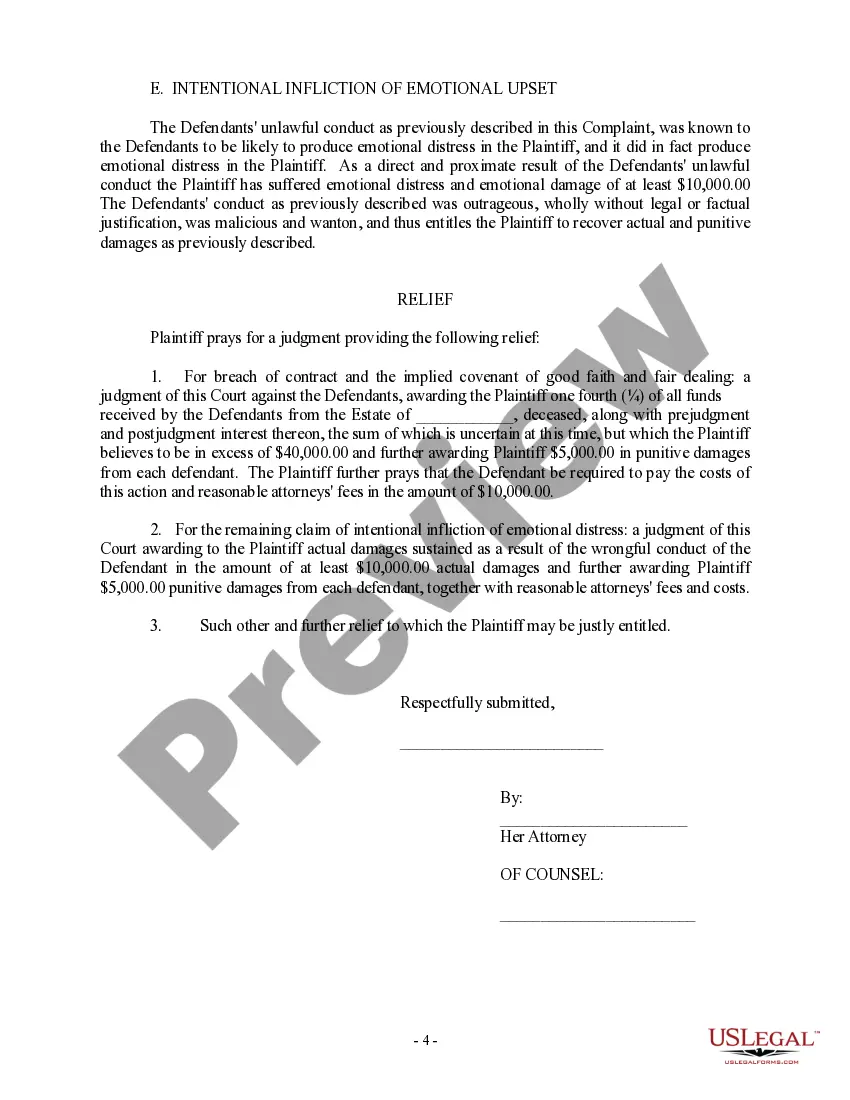

How to fill out Complaint Regarding Breach Of Contract To Divide Estate Proceeds, Implied Contract, Good Faith And Fair Dealing, Promissory Estoppel, Emotional Distress?
Establishing a reliable location to obtain the most up-to-date and suitable legal templates is a significant part of navigating bureaucracy.
Locating the correct legal documents requires accuracy and meticulousness, which is why it is essential to source Fair Use With Music samples solely from trustworthy origins, such as US Legal Forms.
Eliminate the complications related to your legal documentation. Explore the extensive US Legal Forms library where you can discover legal samples, assess their applicability to your situation, and download them instantly.
- Utilize the library navigation or search bar to find your template.
- Examine the form’s details to determine if it fulfills the criteria of your state and county.
- Check the form preview, if available, to ensure the template meets your expectations.
- Return to the search and find the appropriate template if the Fair Use With Music does not suit your needs.
- When you are confident about the form's relevance, download it.
- If you're a registered user, click Log in to verify and access your selected forms in My documents.
- If you don't have an account yet, click Buy now to acquire the template.
- Choose the pricing plan that meets your needs.
- Proceed with the registration to complete your purchase.
- Finalize your purchase by selecting a payment option (credit card or PayPal).
- Choose the file format for downloading Fair Use With Music.
- Once you have the form on your device, you can modify it using the editor or print it and complete it manually.
Form popularity
FAQ
An example of a fair use statement could be: 'This video contains excerpts of music used for educational and commentary purposes in compliance with fair use guidelines.' It's essential to express the nature of your use, the original work’s creator, and the context in which you are using the music. This approach helps clarify your adherence to fair use with music and reinforces your intent.
When writing a copyright disclaimer for music, begin by stating that the music is not your own and is protected under copyright law. Acknowledge the original creator and specify that your use falls under fair use with music. This disclaimer should also articulate your purpose, such as educating the audience or providing commentary. This clarity can reduce the risk of copyright disputes.
A fair use statement for music explains your intent to use copyrighted material legally. You should outline the purpose of your use, ensuring it qualifies for education, criticism, or parody under copyright law. Highlight that fair use with music is context-specific and may depend on how much of the music you use, its commercial value, and the effect on the market for the original. Always be transparent about your intentions to avoid any misunderstandings.
To write a disclaimer for music, start by clearly stating that the music is used under the fair use doctrine. Explain that the content is meant for educational, commentary, or transformative purposes. Make sure to include the source of the music and your intent in using it. This will help clarify your fair use with music and protect you from possible copyright claims.
The four conditions of fair use include the purpose of the use, the nature of the work, the amount used, and the effect on the market value. These factors help determine whether a use qualifies as fair use with music. For instance, educational or non-profit uses are more likely to be favored. If you're looking to navigate these conditions, consider utilizing resources from US Legal Forms for tailored legal information.
Yes, music can be used under fair use, but the circumstances matter. Fair use with music applies when the use is for education, news reporting, or parody, among others. It’s crucial to ensure that your use serves a transformative purpose and does not harm the original market for the work. If you're uncertain, tools provided by platforms like US Legal Forms can guide you in understanding your rights.
Playing 5 seconds of a song may not automatically qualify as fair use with music. While shorter clips might be less likely to lead to copyright claims, it ultimately depends on the context and purpose of the use. Factors such as commercial intent and how the clip fits into your work come into play. When in doubt, seek legal advice or consider using licensed music.
Fair use for music includes the limited use of copyrighted music without permission for purposes like non-profit education, commentary, or critique. It also considers the amount used versus the overall work and the intended purpose of that use. The key is to assess whether it transforms the original work or adds new meaning. To navigate the complexities of fair use, platforms like US Legal Forms offer essential resources and templates.
The specific length of music deemed fair use can be ambiguous and is often determined on a case-by-case basis. Generally, using short clips, around 30 seconds, may be considered fair use with music, but there are no strict rules. It's critical to evaluate how the music is used and whether it fulfills the purpose of criticism, comment, news reporting, or teaching. Consulting a legal expert can provide clarity on your specific situation.
You can legally use copyrighted music by obtaining a proper license, or in some cases, obtaining the creator's direct permission. Another option includes relying on fair use with music principles if your use qualifies under those guidelines. To navigate these legal pathways, consider utilizing US Legal Forms for reliable resources and assistance.