Trade Secret
Description


Get your form ready online
Our built-in tools help you complete, sign, share, and store your documents in one place.
Make edits, fill in missing information, and update formatting in US Legal Forms—just like you would in MS Word.
Download a copy, print it, send it by email, or mail it via USPS—whatever works best for your next step.
Sign and collect signatures with our SignNow integration. Send to multiple recipients, set reminders, and more. Go Premium to unlock E-Sign.
If this form requires notarization, complete it online through a secure video call—no need to meet a notary in person or wait for an appointment.
We protect your documents and personal data by following strict security and privacy standards.

Make edits, fill in missing information, and update formatting in US Legal Forms—just like you would in MS Word.

Download a copy, print it, send it by email, or mail it via USPS—whatever works best for your next step.

Sign and collect signatures with our SignNow integration. Send to multiple recipients, set reminders, and more. Go Premium to unlock E-Sign.

If this form requires notarization, complete it online through a secure video call—no need to meet a notary in person or wait for an appointment.

We protect your documents and personal data by following strict security and privacy standards.
Looking for another form?



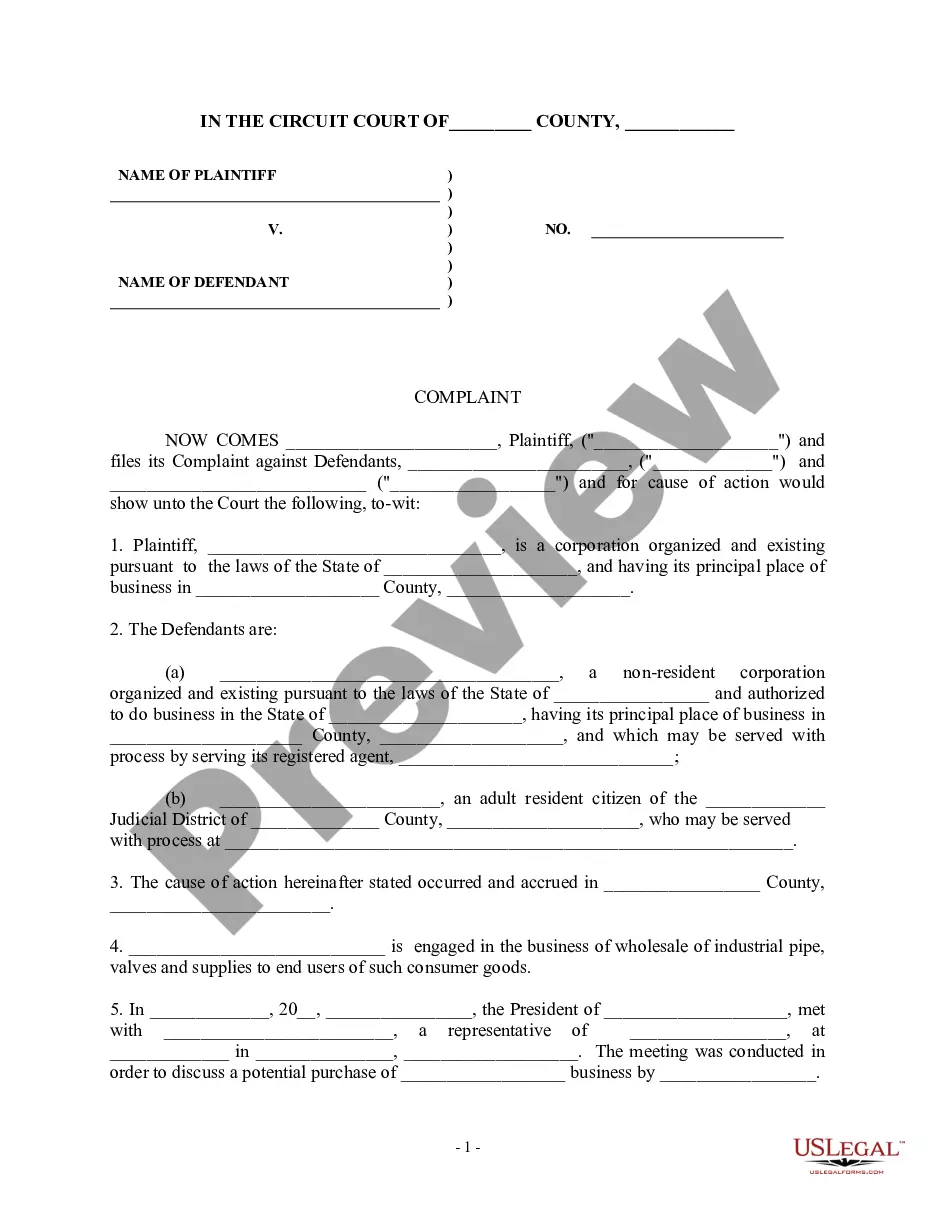
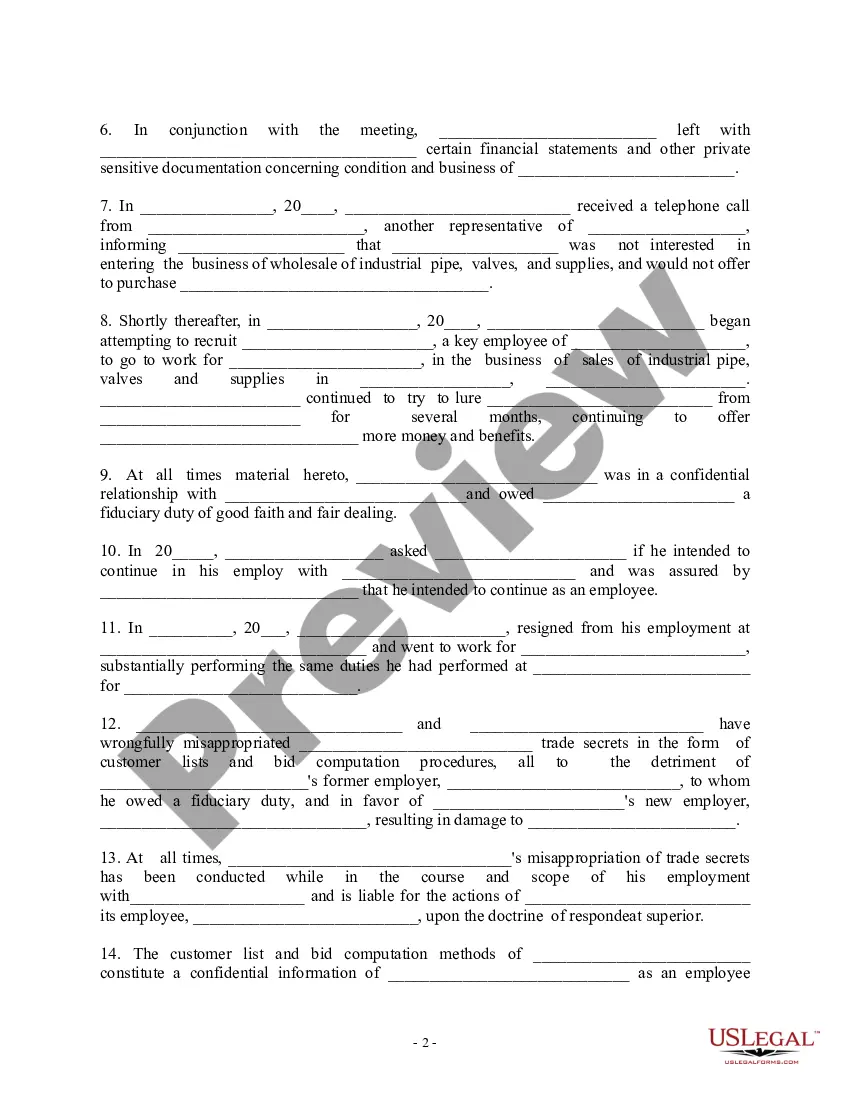
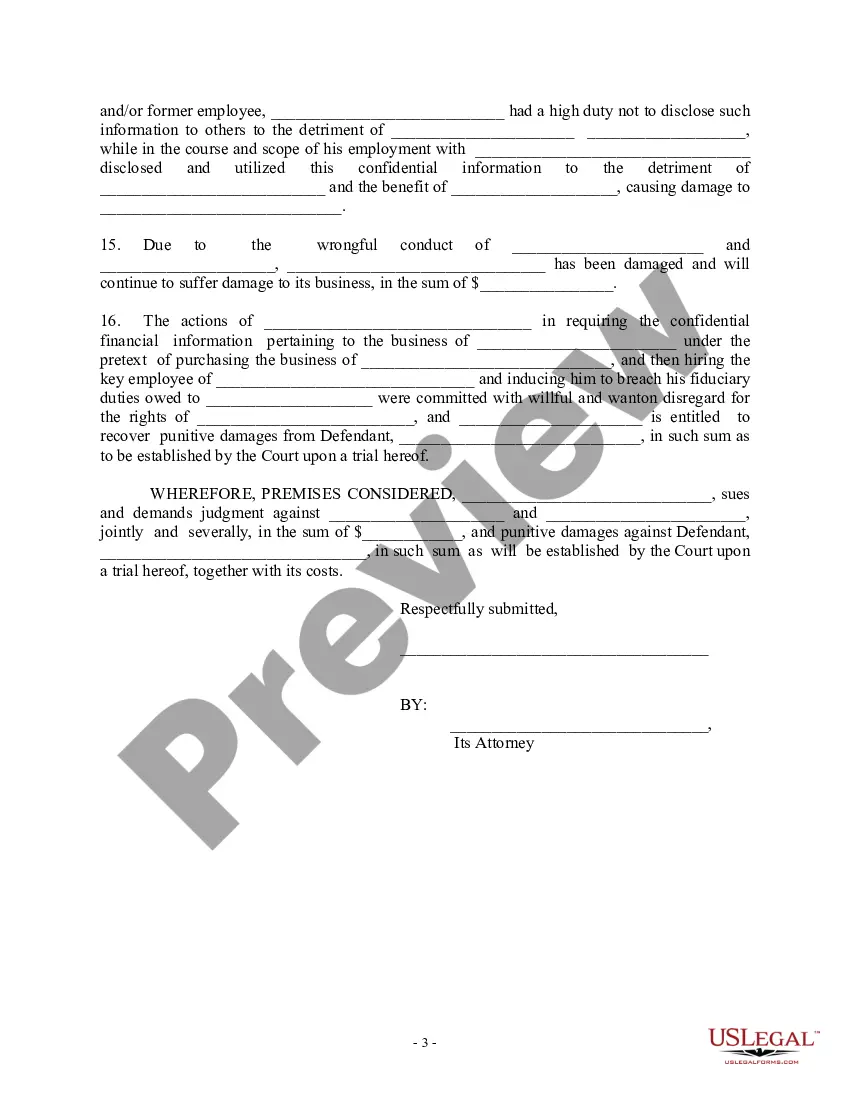
How to fill out Complaint - Trade Secrets - Misappropriation By Former Employee And Prospective Purchaser - Breach Of Fiduciary Duty?
- If you’re an existing user, log in to your account. Ensure your subscription is current to download the desired form.
- For first-time users, start by reviewing the form descriptions and preview modes to ensure the document aligns with your requirements and local regulations.
- If the needed form isn't suitable, utilize the Search tab at the top to locate another template that fits your criteria.
- Once you find the correct form, click on the Buy Now button and select an appropriate subscription plan. You will need to create an account to access the extensive library.
- Complete your purchase by entering your payment details via credit card or PayPal.
- After payment, download your legal template to your device, which you can access anytime in the My Forms section of your profile.
In conclusion, US Legal Forms allows you to handle legal documentation efficiently with a vast library of over 85,000 templates. By following the steps outlined, you can easily access the forms you need.
Start your journey to mastering legal documents today with US Legal Forms!
Form popularity
FAQ
Filing a trade secret does not involve a formal application as it does with patents. Instead, focus on documenting and maintaining the confidentiality of your information. You should implement steps such as storing secrets securely, employing confidentiality agreements, and keeping meticulous records of who accesses these secrets. Using a platform like USLegalForms can help streamline this process by providing templates and resources for drafting essential legal documents.
To qualify as a trade secret, the information must meet three key requirements. Firstly, it must not be generally known or easily accessible to others in the industry. Secondly, it must provide a competitive advantage or economic benefit to its holder. Finally, reasonable efforts must be made to maintain its secrecy, such as using non-disclosure agreements and proper security measures.
Completing trade secrets involves establishing procedures to protect confidential information. First, identify and document the sensitive information that qualifies as a trade secret. Next, implement confidentiality agreements with employees and business partners to secure that information. Consistently reviewing and updating these measures fosters ongoing protection of your valuable trade secrets.
A trade secret can be any non-public information that gives a business a competitive edge. For instance, the recipe for a popular soft drink is a well-known trade secret. Other examples include customer lists, proprietary formulas, or unique manufacturing processes. Protecting these secrets helps businesses maintain their market advantage.
Examples of trade secrets include the designs of a tech gadget, the formula for a famous drink, and a restaurant's unique cooking method. These secrets are vital for the success of these businesses as they provide a unique identity and competitive edge. By protecting these elements, companies can maintain their market position and encourage innovation.
To establish a trade secret, three key elements must be present: the information must be secret, it should provide a competitive advantage, and reasonable efforts must be made to keep it confidential. This definition emphasizes the importance of protective measures, such as non-disclosure agreements, to maintain the integrity of trade secrets. Firms can benefit from understanding these elements to safeguard their proprietary information effectively.
A trade secret is sensitive business information that is not publicly known, which provides a competitive edge. Common examples include marketing strategies, product designs, and proprietary software. The essence of a trade secret lies in its confidentiality, enabling businesses to thrive through unique operations and offerings.
Examples of trade secrets include algorithms used by tech companies, customer lists, supplier information, and proprietary manufacturing processes. Each of these elements plays a crucial role in providing businesses with distinct advantages that competitors cannot easily replicate. Protecting these secrets allows companies to innovate and compete effectively within their industries.
Yes, Coca-Cola operates with its formula as a trade secret. This formula includes a unique combination of flavorings that the company keeps confidential, safeguarding it against competitors. The strategy behind this secret not only protects the brand but also enhances customer loyalty, proving the importance of trade secrets in corporate success.
A trade secret refers to any confidential business information that provides a competitive advantage. This can include formulas, practices, processes, designs, instruments, patterns, or any other information that a company wants to keep private. Effective management of trade secrets is essential for businesses to maintain their market position and profitability.