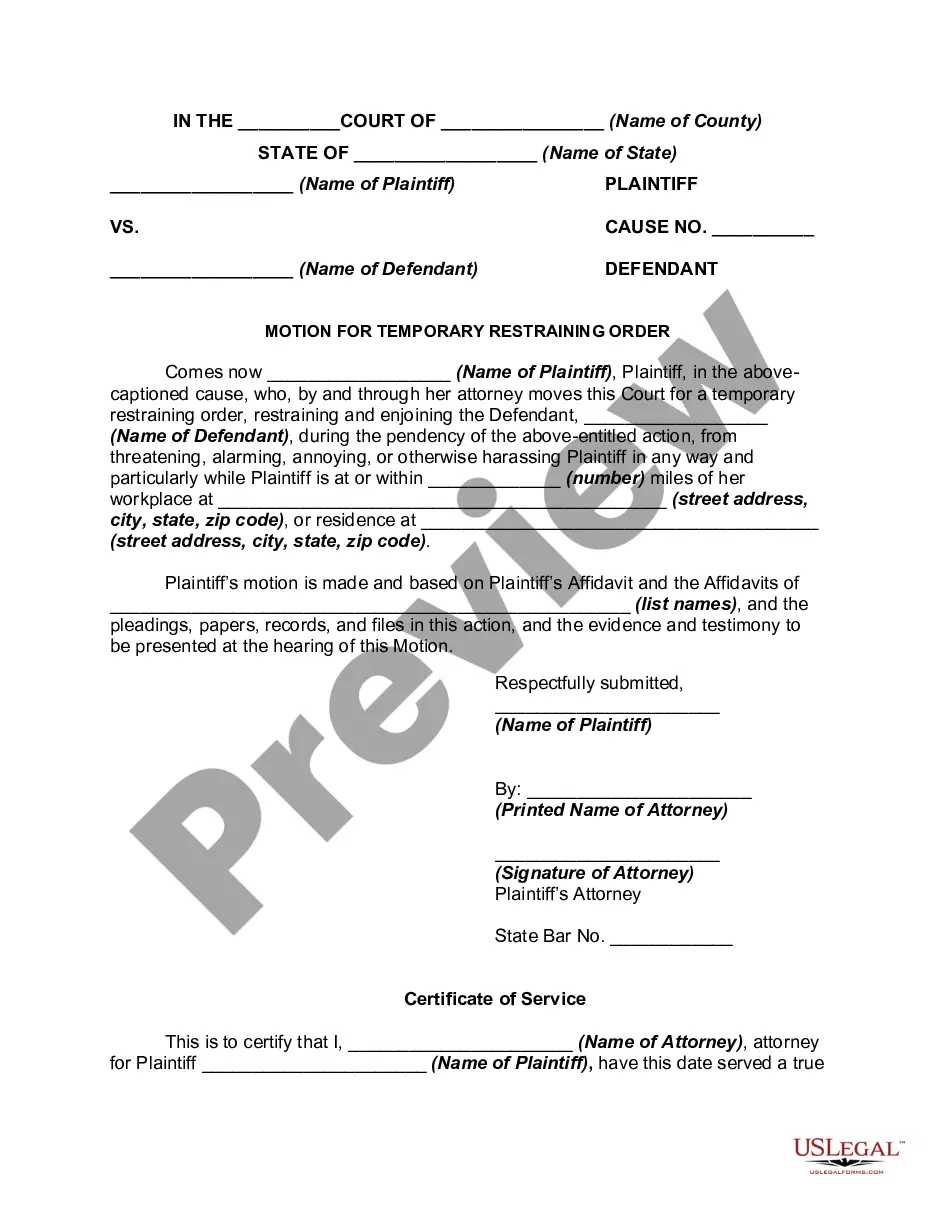
Petition Restraining Order Harassment With A Child
Description
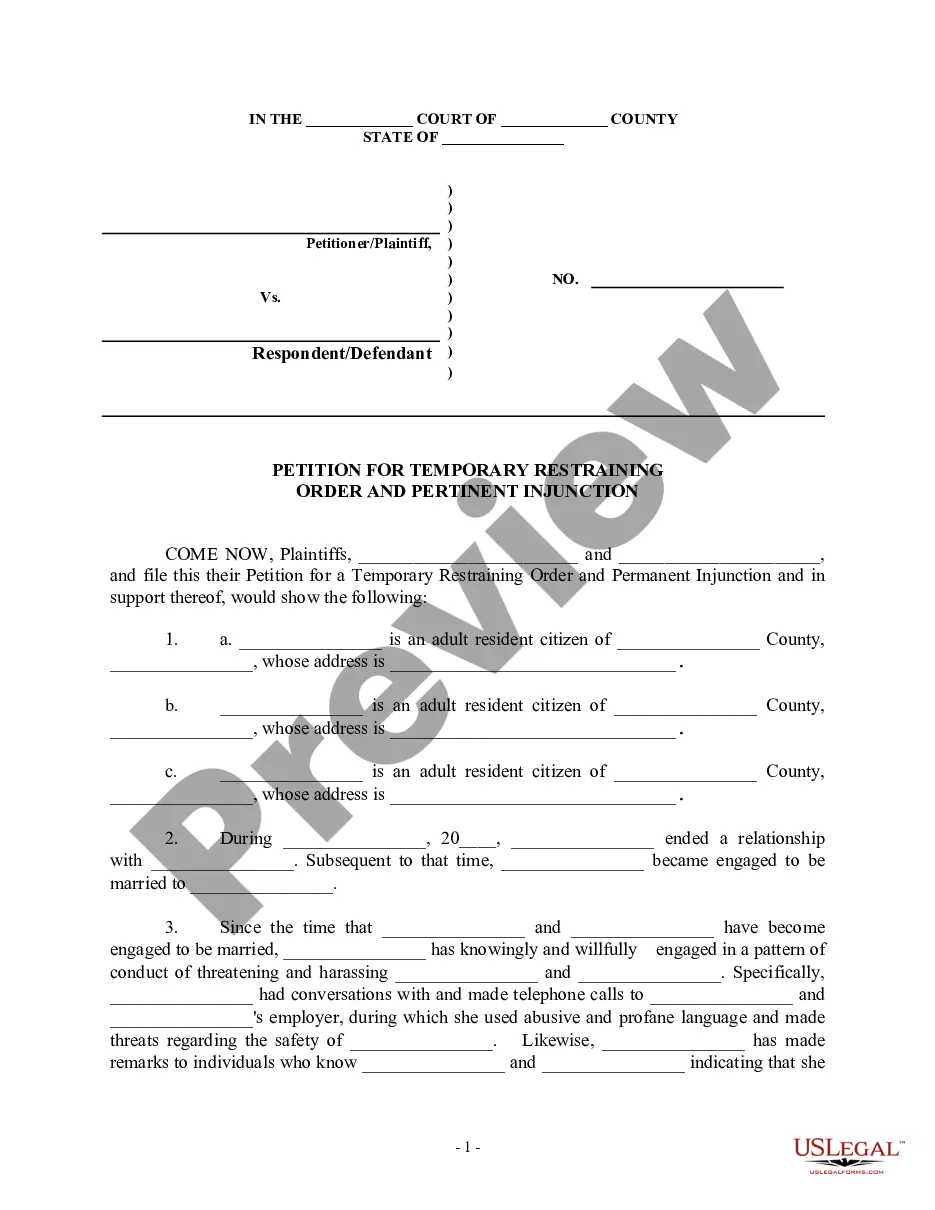
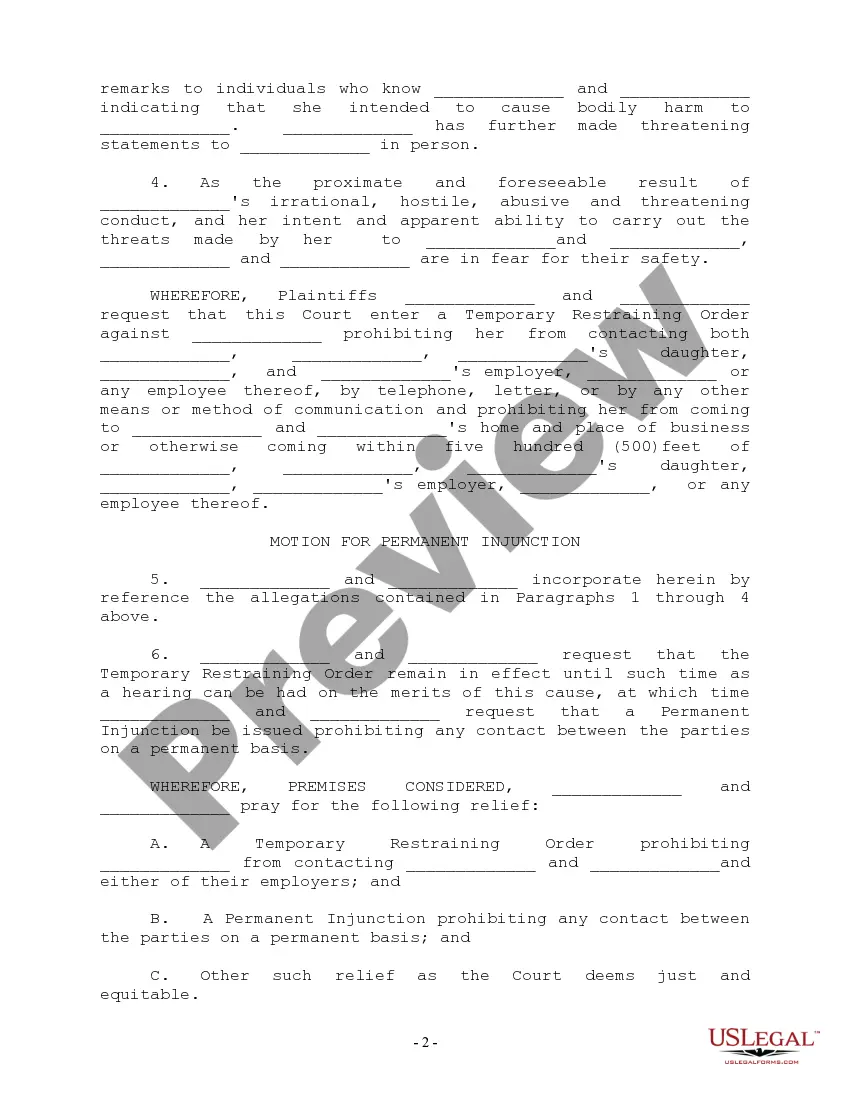
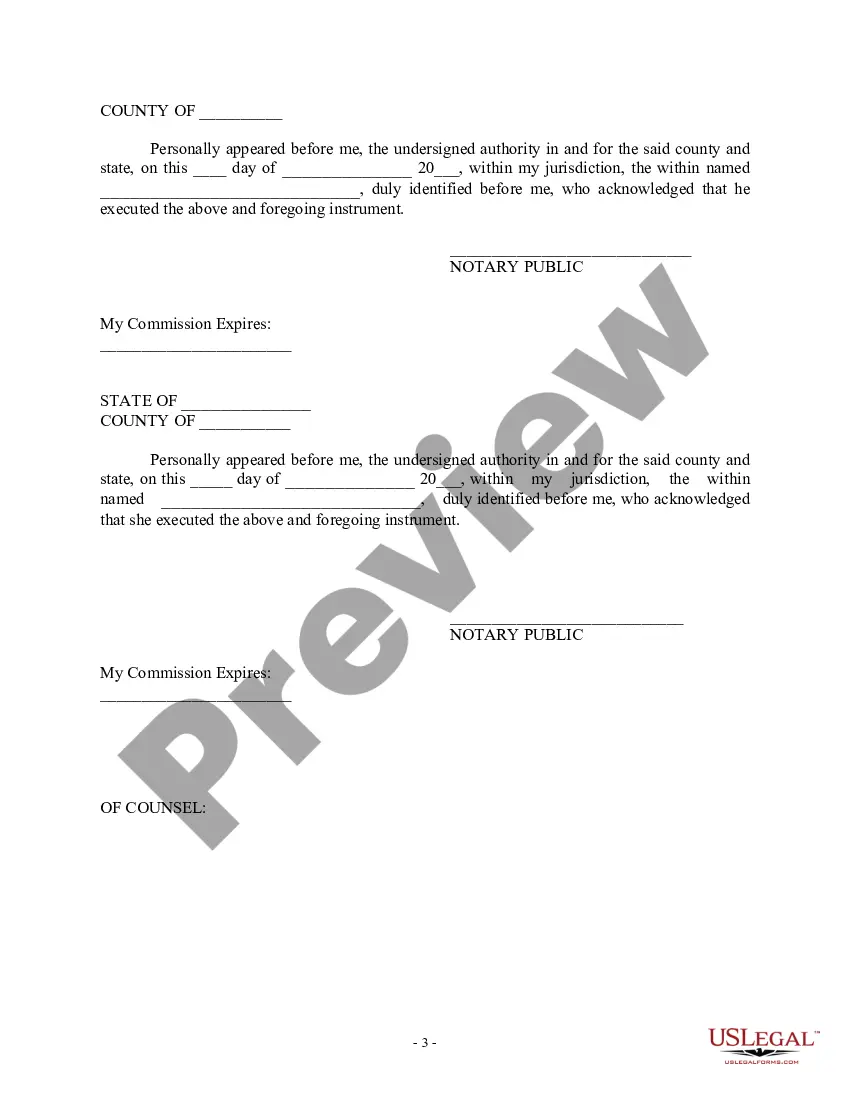



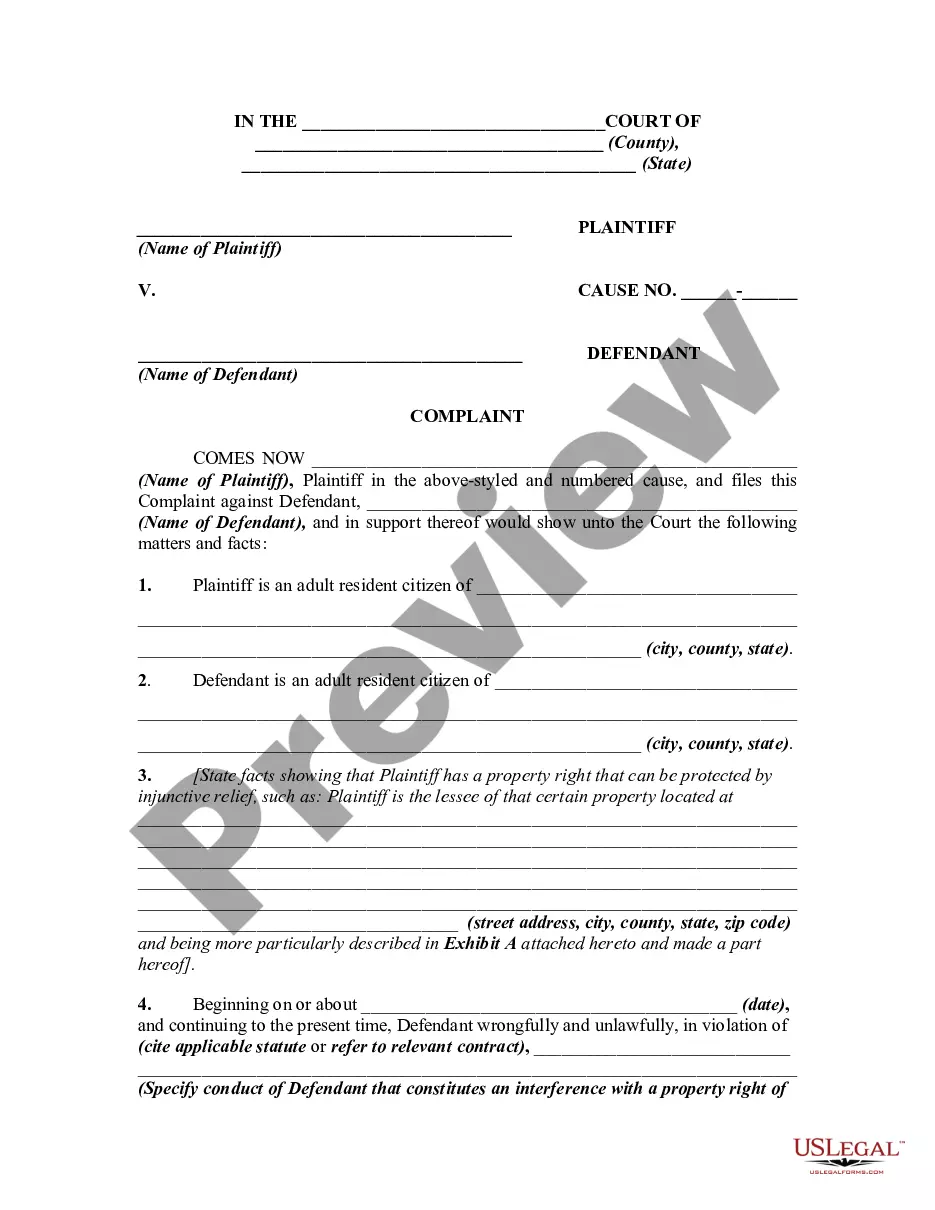

Get your form ready online
Our built-in tools help you complete, sign, share, and store your documents in one place.
Make edits, fill in missing information, and update formatting in US Legal Forms—just like you would in MS Word.
Download a copy, print it, send it by email, or mail it via USPS—whatever works best for your next step.
Sign and collect signatures with our SignNow integration. Send to multiple recipients, set reminders, and more. Go Premium to unlock E-Sign.
If this form requires notarization, complete it online through a secure video call—no need to meet a notary in person or wait for an appointment.
We protect your documents and personal data by following strict security and privacy standards.

Make edits, fill in missing information, and update formatting in US Legal Forms—just like you would in MS Word.

Download a copy, print it, send it by email, or mail it via USPS—whatever works best for your next step.

Sign and collect signatures with our SignNow integration. Send to multiple recipients, set reminders, and more. Go Premium to unlock E-Sign.

If this form requires notarization, complete it online through a secure video call—no need to meet a notary in person or wait for an appointment.

We protect your documents and personal data by following strict security and privacy standards.
Looking for another form?



How to fill out Petition For Temporary Restraining Order And Permanent Injunction For Personal Harassment?
- If you are a returning user, log in to your account to download the required form template. Ensure your subscription is active; if not, renew it.
- For new users, start by reviewing the Preview mode and the form description for accuracy and compliance with your local laws.
- Should you find any discrepancies, utilize the Search tab to explore additional templates until you find a suitable one.
- Once you identify the correct document, click the Buy Now button. Select your desired subscription plan and create an account to access our legal library.
- Complete your purchase by entering your payment details via credit card or PayPal to finalize your subscription.
- After successful payment, download your form to your device. You can access it anytime through the My Forms section of your profile.
US Legal Forms simplifies the legal process, empowering individuals and attorneys to swiftly obtain and complete legal documents. With a vast collection of over 85,000 forms, users can ensure they have precisely what they need.
Don’t hesitate to start your journey today. Secure your Petition Restraining Order Harassment with a Child and take the first step towards safeguarding your rights and those of your child.
Form popularity
FAQ
The key difference lies in their scope; a harassment order focuses specifically on repeated acts of harassment, while a restraining order can address a wider range of threats and personal safety issues. When dealing with harassment involving a child, it may be pertinent to petition a restraining order to ensure comprehensive protection. Familiarizing yourself with these differences can help you make informed decisions during legal proceedings.
In Minnesota, harassment can include repeated unwanted contact, threats, stalking, or other behavior that causes genuine fear or emotional distress. Understanding what constitutes harassment is crucial if you feel compelled to petition a restraining order. If you suspect harassment affecting you and your child, consulting legal resources can provide clarity and support.
Co-parenting with a restraining order can be challenging but is manageable with clear communication and boundaries. Make sure to follow the terms of the order while communicating with the other parent about your child's needs. Seeking guidance from professionals can help ensure that both co-parents prioritize the child's well-being, especially when a petition for restraining order harassment with a child is involved.
Writing an affidavit for a restraining order involves outlining your experiences and concerns clearly and concisely. Include detailed accounts of the harassment, how it affects you and your child, and why a restraining order is necessary. Using platforms like uslegalforms can simplify this process, providing templates that guide you through the creation of an effective affidavit.
To prove harassment, you typically need to show that the behavior is unwelcome and causes distress. Documenting specific incidents, keeping records of communications, and obtaining witness testimony can strengthen your case. If you seek to petition a restraining order for harassment with a child, gathering clear evidence will support your claim.
Yes, a harassment order and a restraining order serve different purposes. A harassment order specifically addresses acts of harassment, whereas a restraining order can cover a broader range of issues, including threats or violence. If you are considering to petition a restraining order against harassment with a child involved, understanding these distinctions can aid in the process.
When you have filed a petition for a restraining order due to harassment involving a child, avoid any contact with the individual named in the order. Do not ignore the terms set by the court, as violating them can lead to severe consequences. Additionally, refrain from discussing the case or sharing details on social media, as this may compromise your situation. Instead, focus on gathering evidence and seeking support to ensure the safety of your child.
In New Hampshire, the duration of a restraining order harassment with a child typically lasts for one year, but this can vary based on the specifics of the case. Extensions may be possible if circumstances warrant additional protection. Always consult with a legal expert to understand your rights and the process involved in extending or modifying an order as needed.
Yes, you can file a restraining order harassment with a child against someone who has previously filed one against you. However, you must provide compelling reasons for this new request, demonstrating that you are also in need of protection. It is important to prepare your case thoroughly and consider legal guidance to strengthen your position in court.
There are various valid reasons to consider dropping a restraining order harassment with a child. For instance, if the individual has changed their behavior, or if both parties agree to resolve the issues amicably, you might choose to withdraw. Furthermore, situations where communication and trust have been rebuilt may call for lifting the order, ensuring the child’s best interests remain a priority. Consulting with legal professionals can help you make an informed decision.