Phantom Stock Plan Accounting Treatment
Description

Get your form ready online
Our built-in tools help you complete, sign, share, and store your documents in one place.
Make edits, fill in missing information, and update formatting in US Legal Forms—just like you would in MS Word.
Download a copy, print it, send it by email, or mail it via USPS—whatever works best for your next step.
Sign and collect signatures with our SignNow integration. Send to multiple recipients, set reminders, and more. Go Premium to unlock E-Sign.
If this form requires notarization, complete it online through a secure video call—no need to meet a notary in person or wait for an appointment.
We protect your documents and personal data by following strict security and privacy standards.

Make edits, fill in missing information, and update formatting in US Legal Forms—just like you would in MS Word.

Download a copy, print it, send it by email, or mail it via USPS—whatever works best for your next step.

Sign and collect signatures with our SignNow integration. Send to multiple recipients, set reminders, and more. Go Premium to unlock E-Sign.

If this form requires notarization, complete it online through a secure video call—no need to meet a notary in person or wait for an appointment.

We protect your documents and personal data by following strict security and privacy standards.
Looking for another form?


How to fill out Phantom Stock Plan Of Hercules, Inc.?
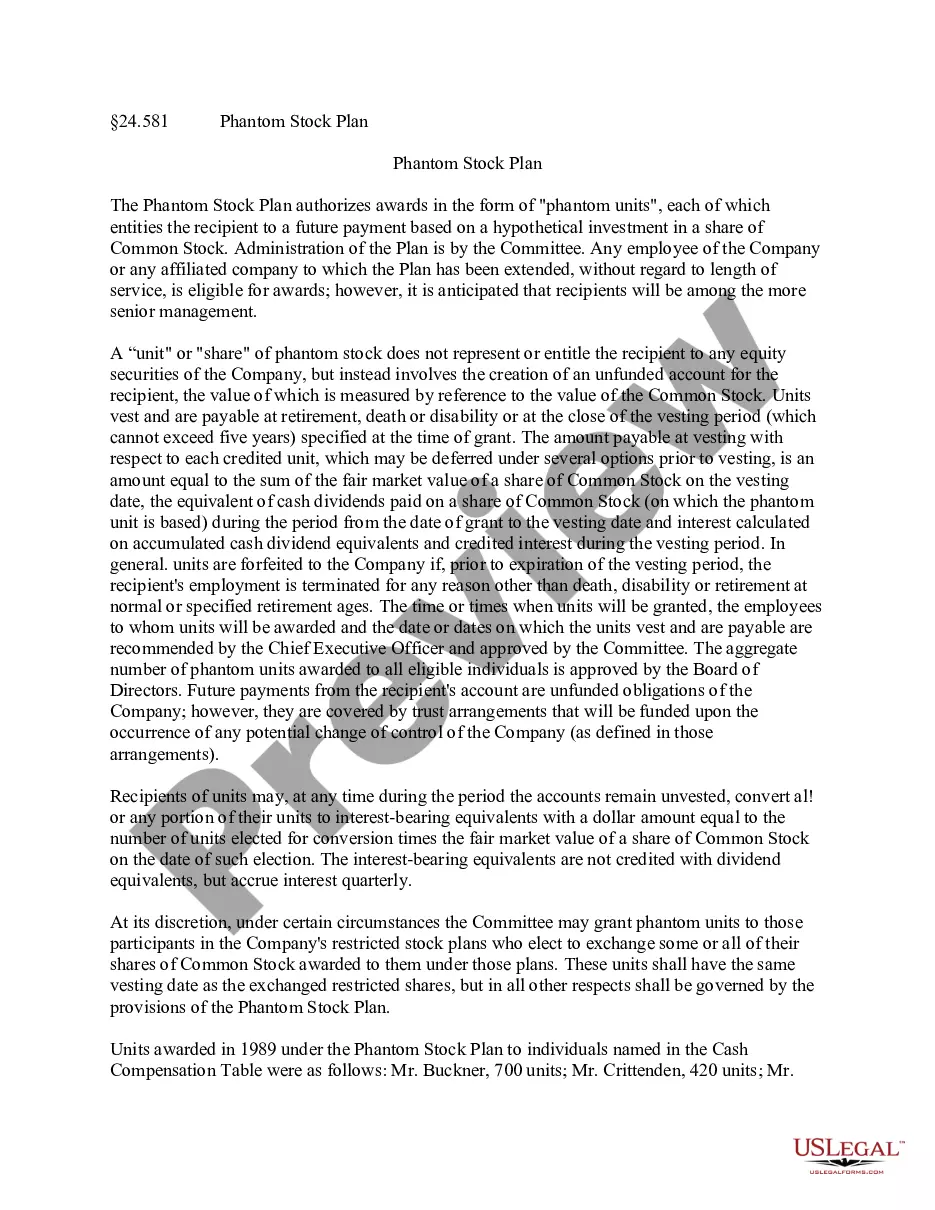
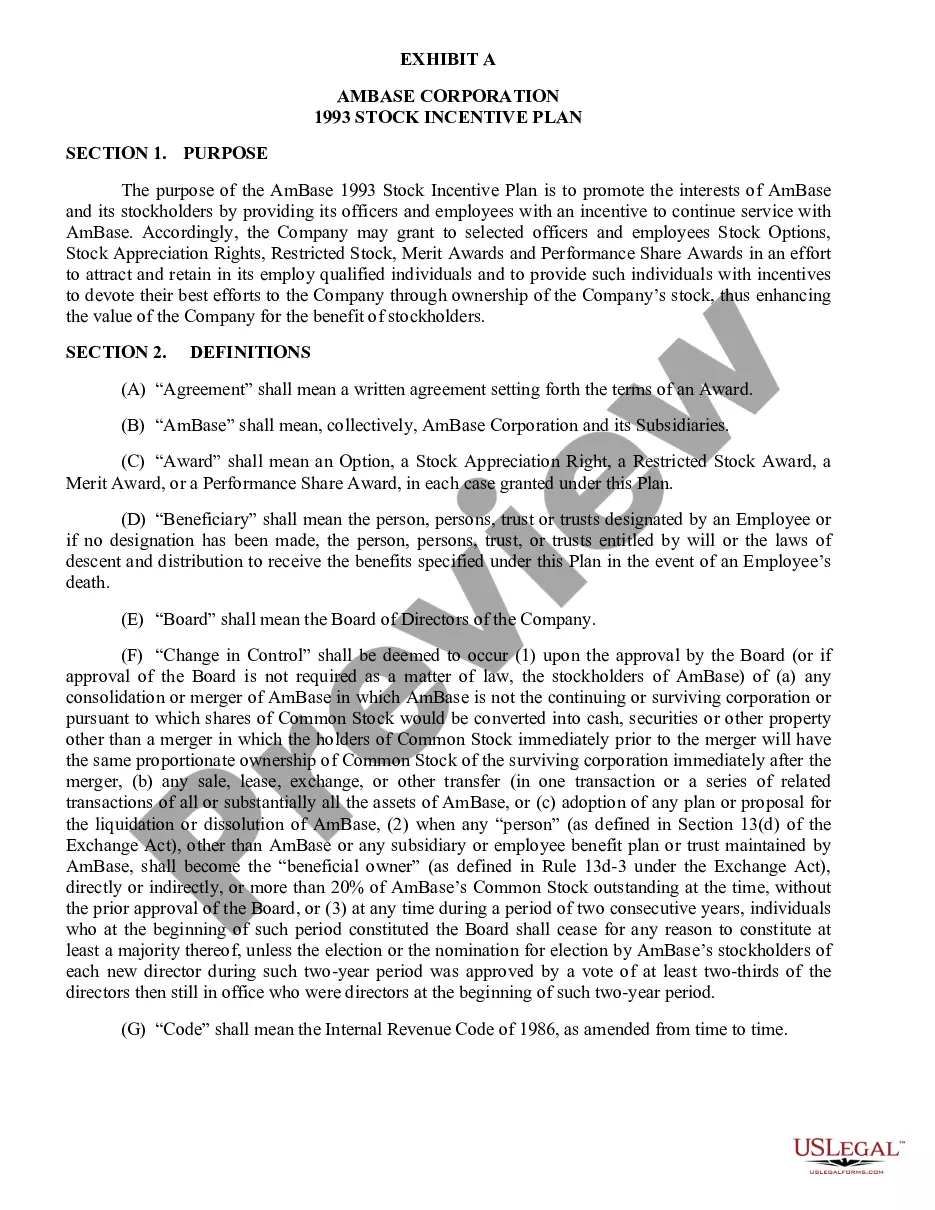
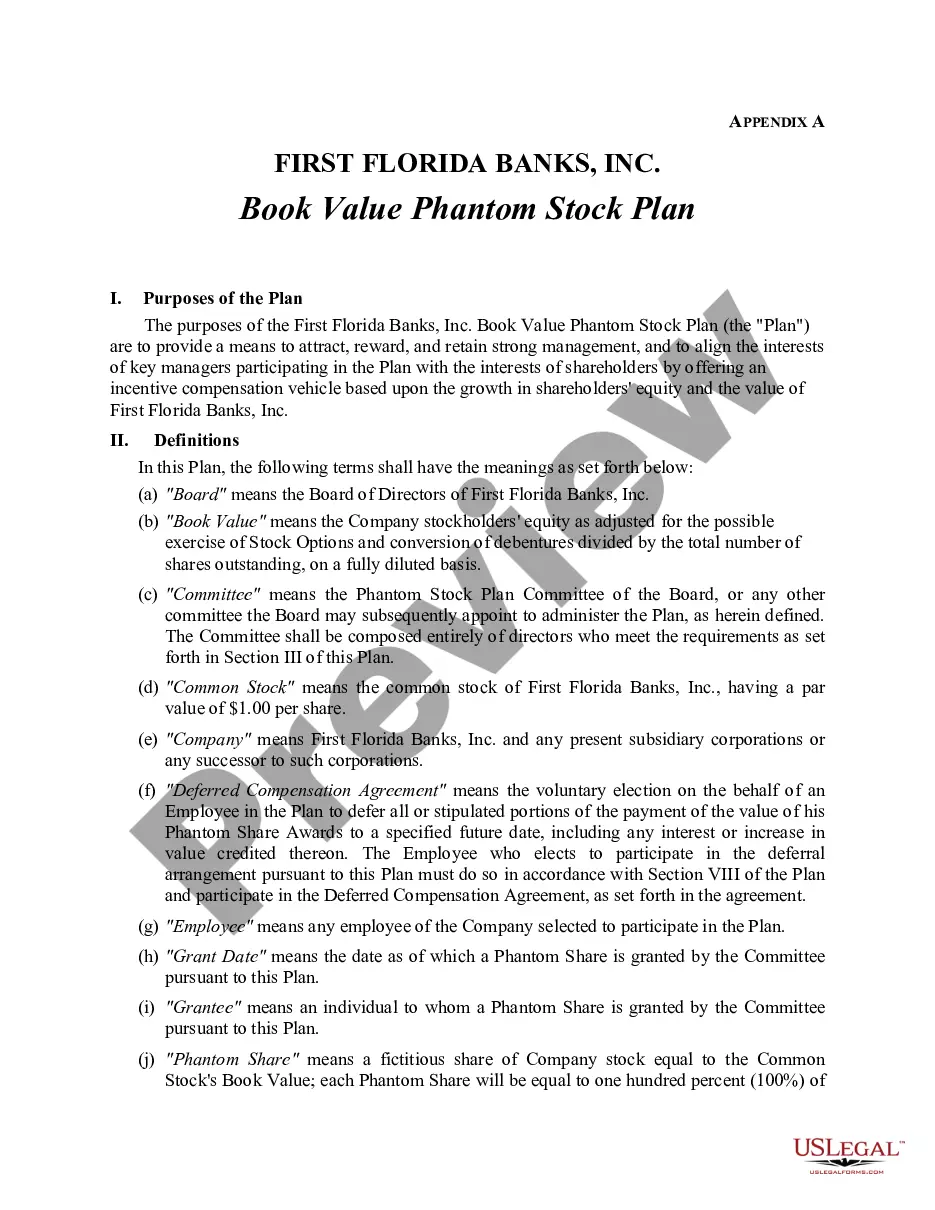
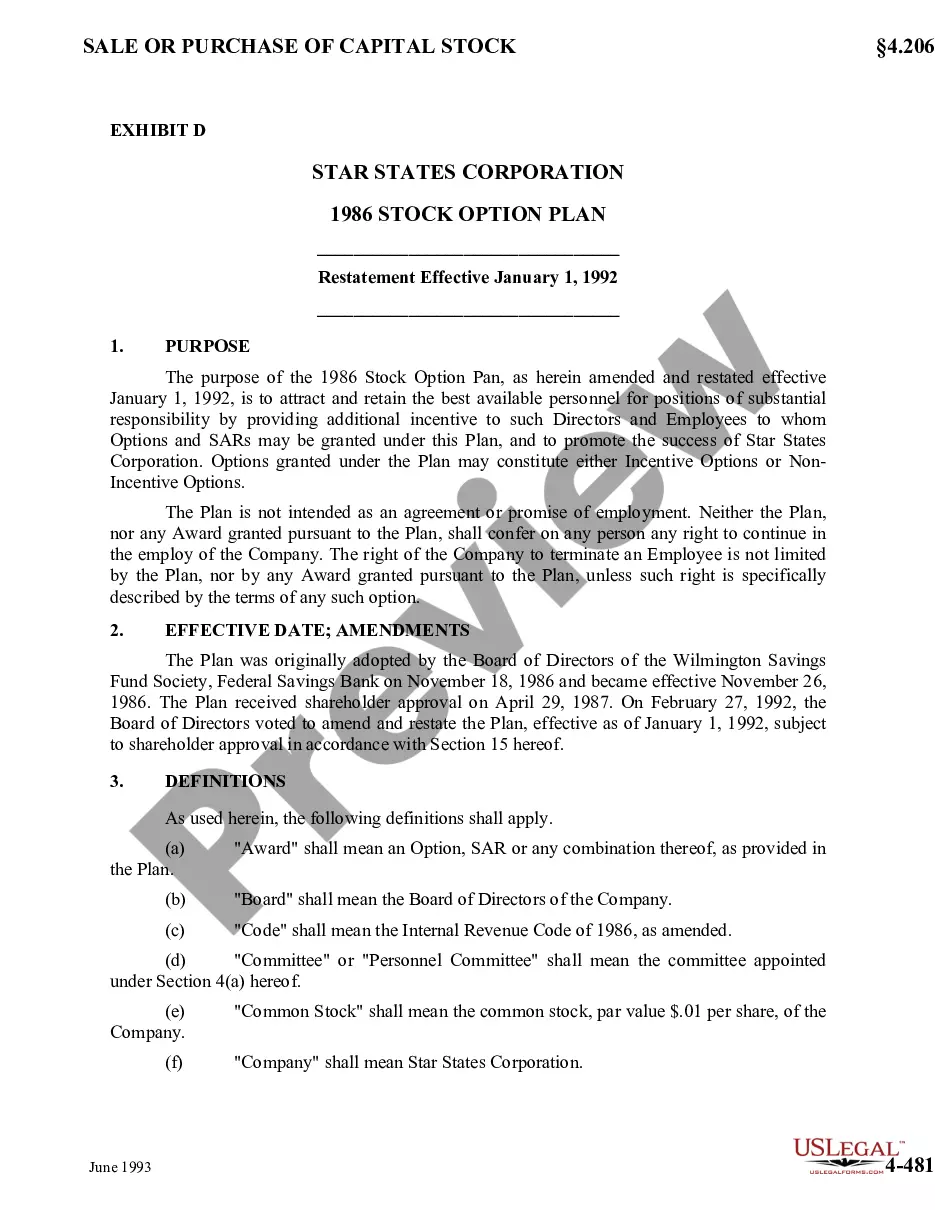
The Phantom Stock Plan Accounting Treatment illustrated on this page is a reusable official template created by experienced attorneys in accordance with national and local regulations.
For over 25 years, US Legal Forms has supplied individuals, businesses, and legal experts with more than 85,000 authenticated, state-specific documents for any business and personal circumstance. It is the fastest, easiest, and most reliable method to acquire the documentation you require, as the service ensures the utmost level of data protection and anti-malware safety.
Sign up for US Legal Forms to access verified legal templates for all of life's scenarios at your fingertips.
- Search for the document you need and review it.
- Look through the sample you searched and examine it or read the form description to verify it meets your needs. If not, utilize the search option to find the correct one. Click Buy Now once you have identified the template needed.
- Register and Log In.
- Choose the subscription plan that fits you and create an account. Use PayPal or a credit card to make a swift payment. If you have an account already, Log In and check your subscription to proceed.
- Obtain the editable template.
Form popularity
FAQ
Rule 701 of the Securities Act provides an exemption for companies to offer phantom stock to employees without needing to register the securities. This rule simplifies compliance by allowing companies to share equity-like benefits while protecting employee interests. Understanding compliance with Rule 701 is critical, as it ensures that your phantom stock plan accounting treatment aligns with legal requirements, protecting both the company and its employees.
You can file a grievance in person, by mail, phone or email. Phone 800-368-1019 or 800-537-7697 TDD.
You may also call the Health Inspection Program's main number at 207-287-5671 during business hours. Our offices are open from Monday through Friday from 8am-5pm, excluding holidays. If there is an emergency after hours, please call 1-800-821-5821.
Concerns About Patient Care/Safety Patients wishing to file a grievance can request a form from any staff member on their inpatient unit. If your concerns cannot be resolved through that process, you may contact The Joint Commission on hospital accreditation at (800) 994-6610.
An advance directive gives instructions about the healthcare you want if you become too hurt or ill to speak for yourself. It also allows you to name someone to make decisions on your behalf. Even if you're in good health, it's still important to make sure your healthcare team and loved ones know your wishes.
The rules governing Living Wills vary by state; however, in Maine, your Living Will needs the signatures of two witnesses. As a basic rule, witnesses will need to be over 18 years old, and no witness should simultaneously be acting as your healthcare agent.
You Have the Right To receive the best care available. To be fully involved in all decisions and aspects of your care. To refuse any care or treatment. To be paid for your work.
You must file your complaint in writing. You may submit an Online complaint against a licensed MD or PA. You can check licensure status at our Licensee Search Page. You may write a letter to the Board which states your complaint. You may call or write the Board to receive complaint forms and instructions.
The power must be in writing and signed by the principal and 2 witnesses. Notwithstanding any law validating electronic or digital signatures, signatures of the principal and witnesses must be made in person and not by electronic means.