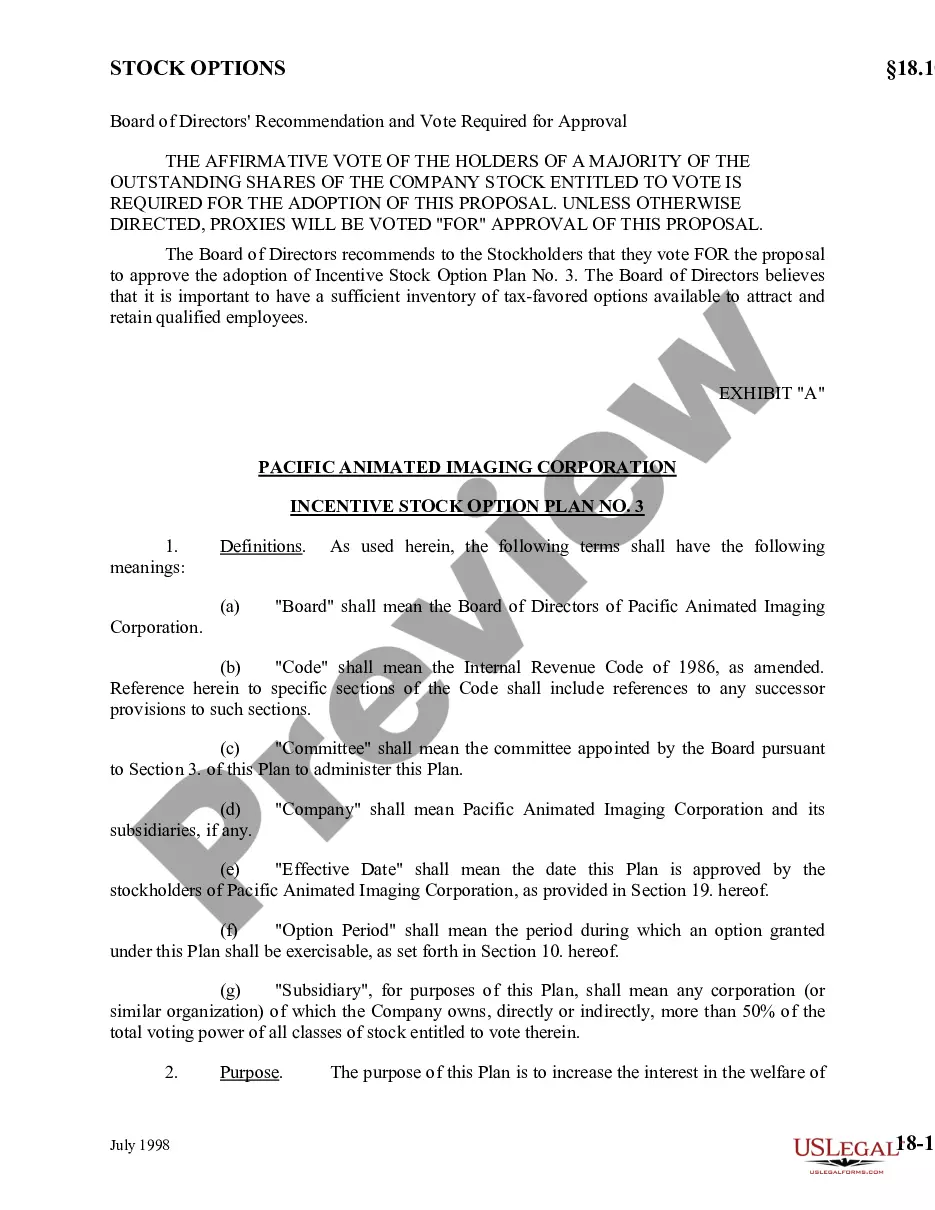
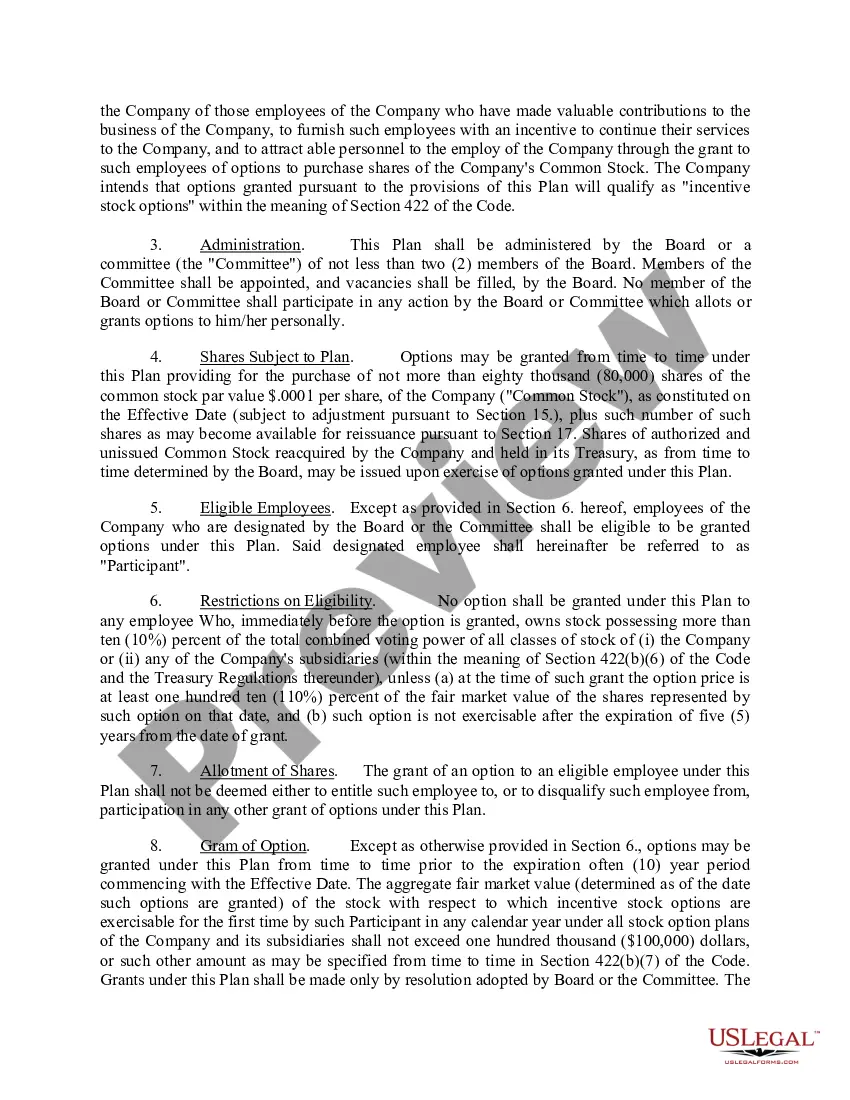
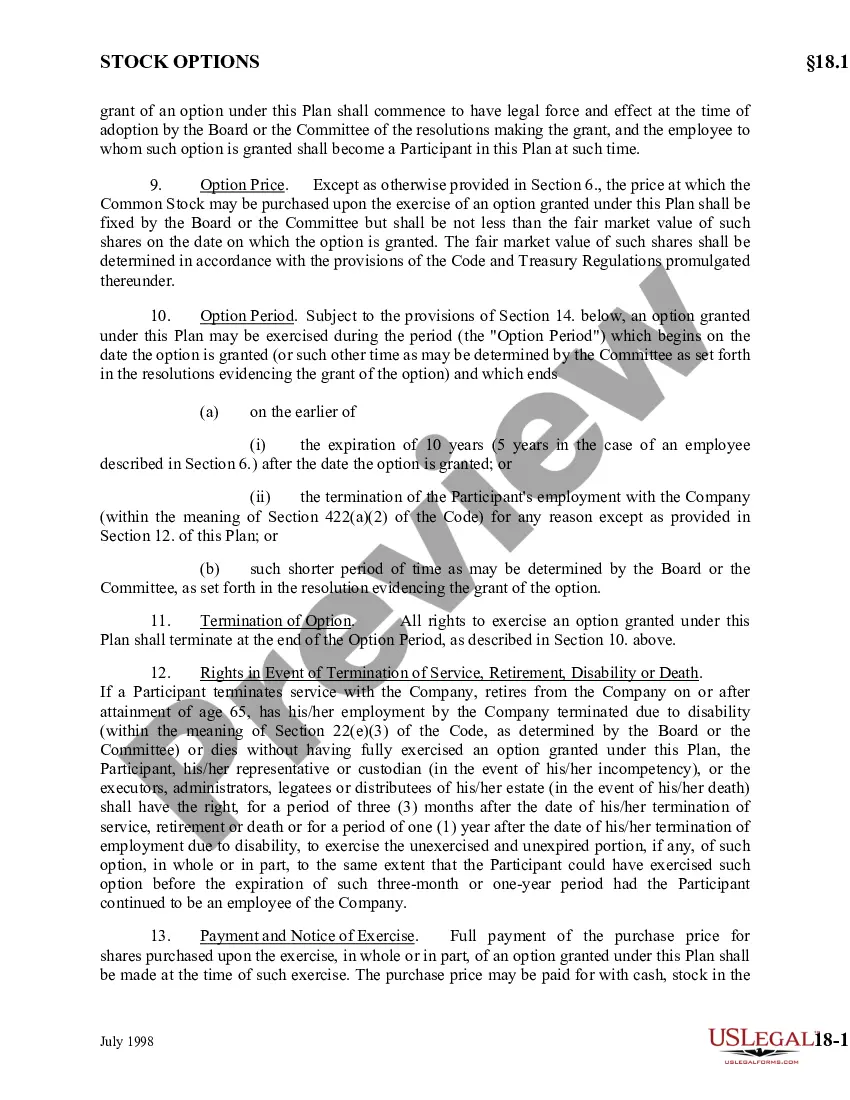
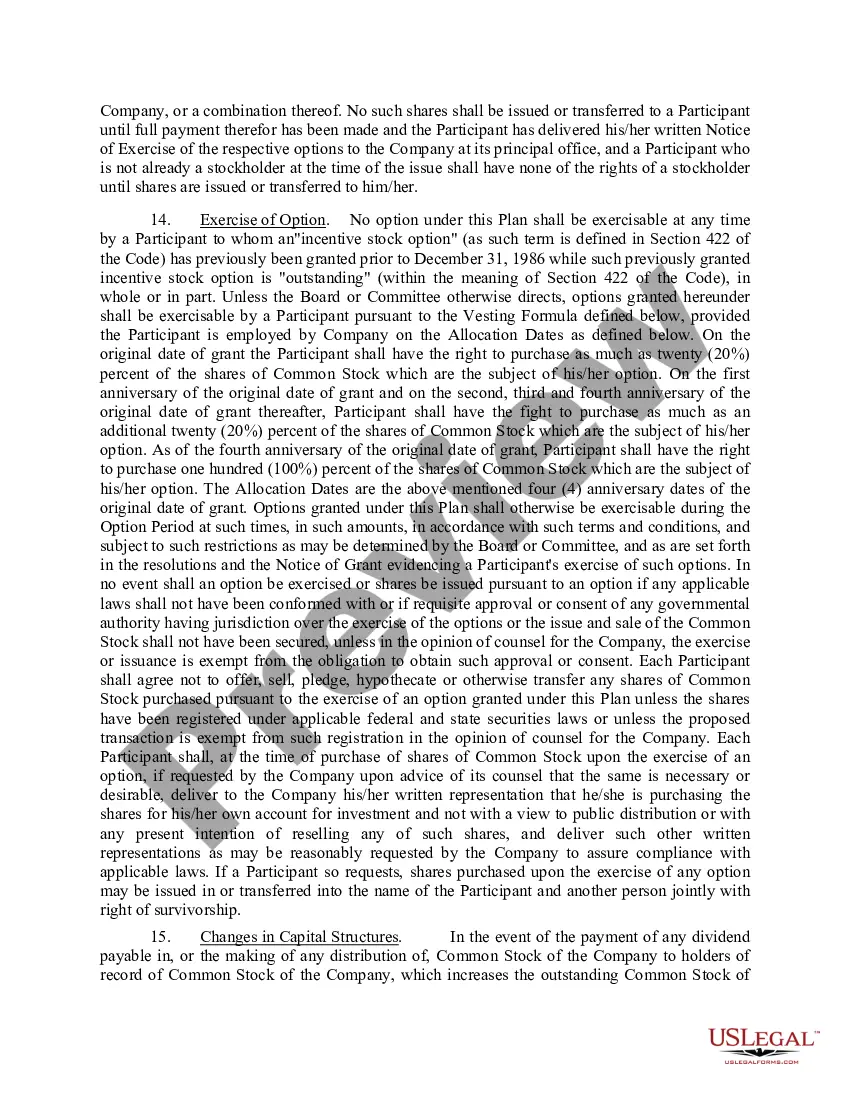
What Is Employee Stock Option Plan
Description
Get your form ready online
Our built-in tools help you complete, sign, share, and store your documents in one place.
Make edits, fill in missing information, and update formatting in US Legal Forms—just like you would in MS Word.
Download a copy, print it, send it by email, or mail it via USPS—whatever works best for your next step.
Sign and collect signatures with our SignNow integration. Send to multiple recipients, set reminders, and more. Go Premium to unlock E-Sign.
If this form requires notarization, complete it online through a secure video call—no need to meet a notary in person or wait for an appointment.
We protect your documents and personal data by following strict security and privacy standards.

Make edits, fill in missing information, and update formatting in US Legal Forms—just like you would in MS Word.

Download a copy, print it, send it by email, or mail it via USPS—whatever works best for your next step.

Sign and collect signatures with our SignNow integration. Send to multiple recipients, set reminders, and more. Go Premium to unlock E-Sign.

If this form requires notarization, complete it online through a secure video call—no need to meet a notary in person or wait for an appointment.

We protect your documents and personal data by following strict security and privacy standards.
Looking for another form?




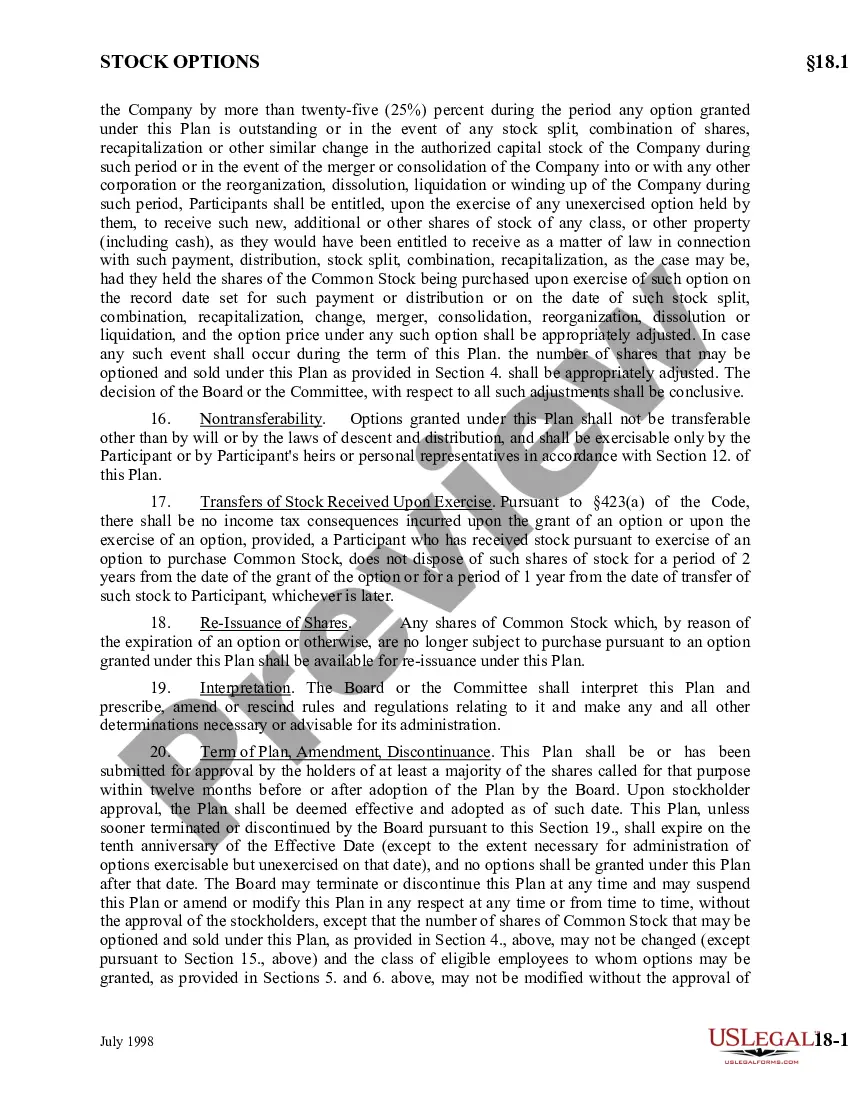
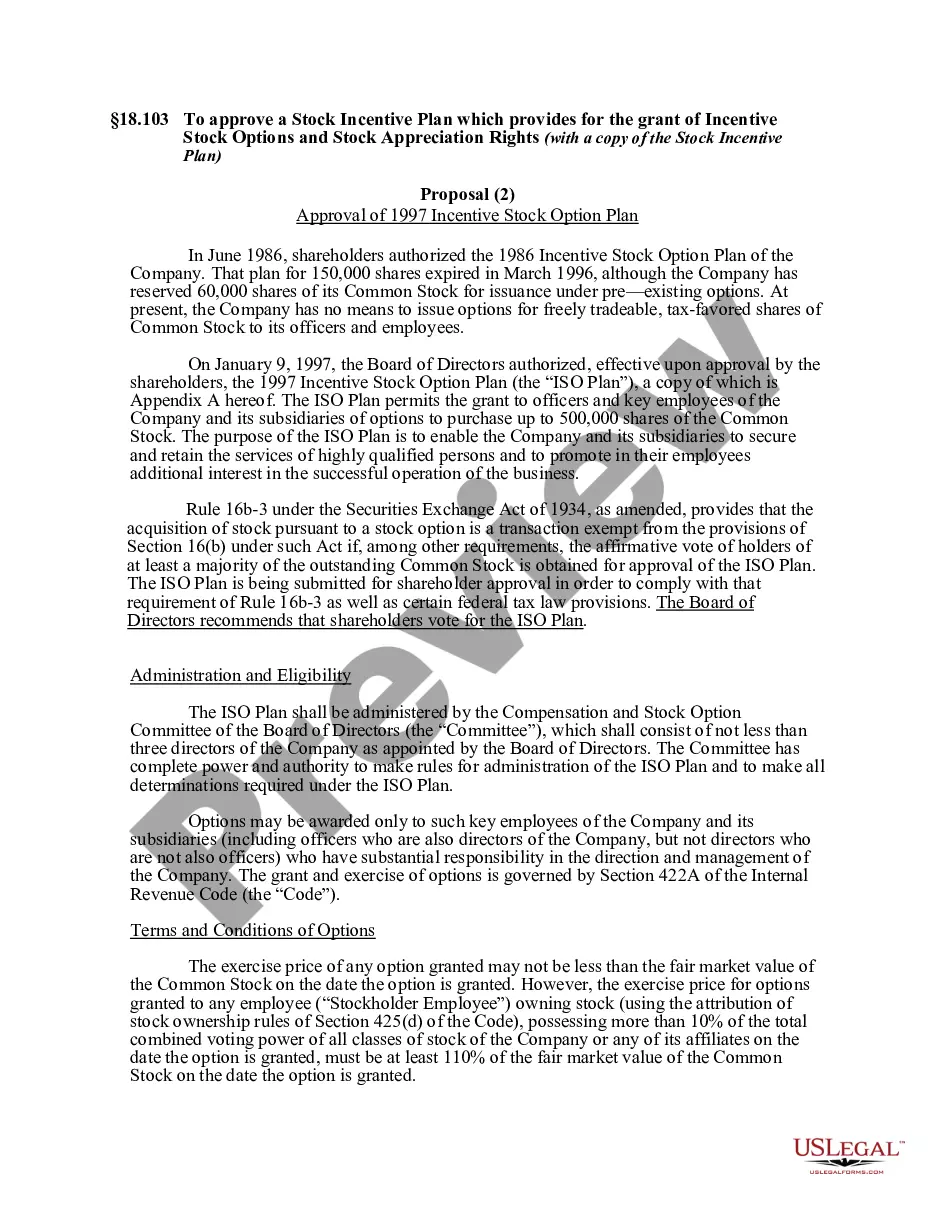
How to fill out Stock Option Plan To Approve Incentive Stock Option Plan Of Pacific Animated Imaging Corp.?
- If you're a returning user, simply log in to your account and download the required form template by clicking the Download button. Ensure your subscription is active; renew it if necessary.
- If you're new to US Legal Forms, start by reviewing the form's description and preview to confirm it meets your local jurisdiction's requirements.
- If you need a different template, utilize the Search tab to find the correct one. Once identified, proceed to the next step.
- Select your document by clicking the Buy Now button and choose a subscription plan that suits your needs. You will need to create an account to access additional resources.
- Complete your purchase by entering your credit card details or using your PayPal account to finalize the subscription.
- Once purchased, download the form to your device for completion, and you can easily access it anytime from the My Forms section in your account.
With US Legal Forms, you gain access to a robust library of over 85,000 legal forms, ensuring you find what you need quickly. Their services empower both individuals and attorneys to efficiently create legally sound documents.
Don't hesitate—start your journey today with US Legal Forms to simplify your legal document needs!
Form popularity
FAQ
The $100,000 rule refers to the limit on the amount of stock options that can qualify as Incentive Stock Options (ISOs) in a single year. If an employee is granted stock options exceeding this threshold, the excess options are treated as Non-Qualified Stock Options (NSOs) and may have different tax implications. This rule is important for employees to consider, as it affects the overall benefits of what an employee stock option plan can provide.
An Employee Stock Ownership Plan (ESOP) is a program that provides a company's workforce with an ownership interest in the company. It allows employees to acquire shares, often at discounted prices, thereby promoting a collective stake in the company's growth. Simply put, an ESOP empowers employees to benefit from the company's success, making it a practical example of what an employee stock option plan can accomplish.
Companies often award Restricted Stock Units (RSU) as part of a compensation package instead of solely relying on salary. This strategy helps align employees' interests with company performance, as the value of RSUs increases with the company's success. Essentially, it fosters a sense of ownership, which can enhance employee motivation and retention. Understanding what an employee stock option plan involves provides clarity on how these components work together.
When considering what is employee stock option plan versus a 401k, it's important to understand the key differences. ESOPs offer potential stock ownership, while 401ks primarily focus on savings through contributions. Additionally, employee stock options can provide significant financial benefits if the company's stock performs well, whereas a 401k's growth relies on market conditions and investment choices. Each option has its advantages, so assess your financial goals carefully.
If you get laid off, the treatment of your employee stock option plan depends on your plan's specific provisions. Usually, any vested options remain yours, but you might have a limited time to exercise them. It's advisable to consult your plan documents or speak with HR to understand your options and make informed decisions.
The ESOP 25% rule states that an employee can generally exercise up to 25% of their vested options annually after a specific period. This rule ensures that employees can gradually access their options while still encouraging long-term investment in the company. Familiarizing yourself with this rule is key to effectively managing your employee stock option plan.
Upon quitting, the fate of your employee stock options largely depends on the plan's structure. Typically, any vested options may still belong to you, but unvested options may return to the company. It’s important to review your plan's rules to understand what actions you need to take to protect your interests.
To find your employee stock option plan, start by reviewing your employment agreements and any documentation provided during your onboarding process. You can also reach out to your HR department for assistance. They can provide you with detailed information regarding your options and how to access your plan.
If you leave your company, the outcome for your employee stock option plan can vary based on the specific terms of the plan. Generally, you will still retain vested options, but you may need to exercise them within a certain time frame after departing. It's essential to check your plan details to understand your rights and any actions you must take.
Filing an ESOP involves reporting distributions and understanding your tax obligations related to those distributions. You typically need to report these as ordinary income when you receive the shares or upon their sale. Recognizing what is employee stock option plan helps you navigate the intricacies of your file. For assistance, services like US Legal Forms can help streamline the filing process.