Terminated
Description
Get your form ready online
Our built-in tools help you complete, sign, share, and store your documents in one place.
Make edits, fill in missing information, and update formatting in US Legal Forms—just like you would in MS Word.
Download a copy, print it, send it by email, or mail it via USPS—whatever works best for your next step.
Sign and collect signatures with our SignNow integration. Send to multiple recipients, set reminders, and more. Go Premium to unlock E-Sign.
If this form requires notarization, complete it online through a secure video call—no need to meet a notary in person or wait for an appointment.
We protect your documents and personal data by following strict security and privacy standards.

Make edits, fill in missing information, and update formatting in US Legal Forms—just like you would in MS Word.

Download a copy, print it, send it by email, or mail it via USPS—whatever works best for your next step.

Sign and collect signatures with our SignNow integration. Send to multiple recipients, set reminders, and more. Go Premium to unlock E-Sign.

If this form requires notarization, complete it online through a secure video call—no need to meet a notary in person or wait for an appointment.

We protect your documents and personal data by following strict security and privacy standards.
Looking for another form?

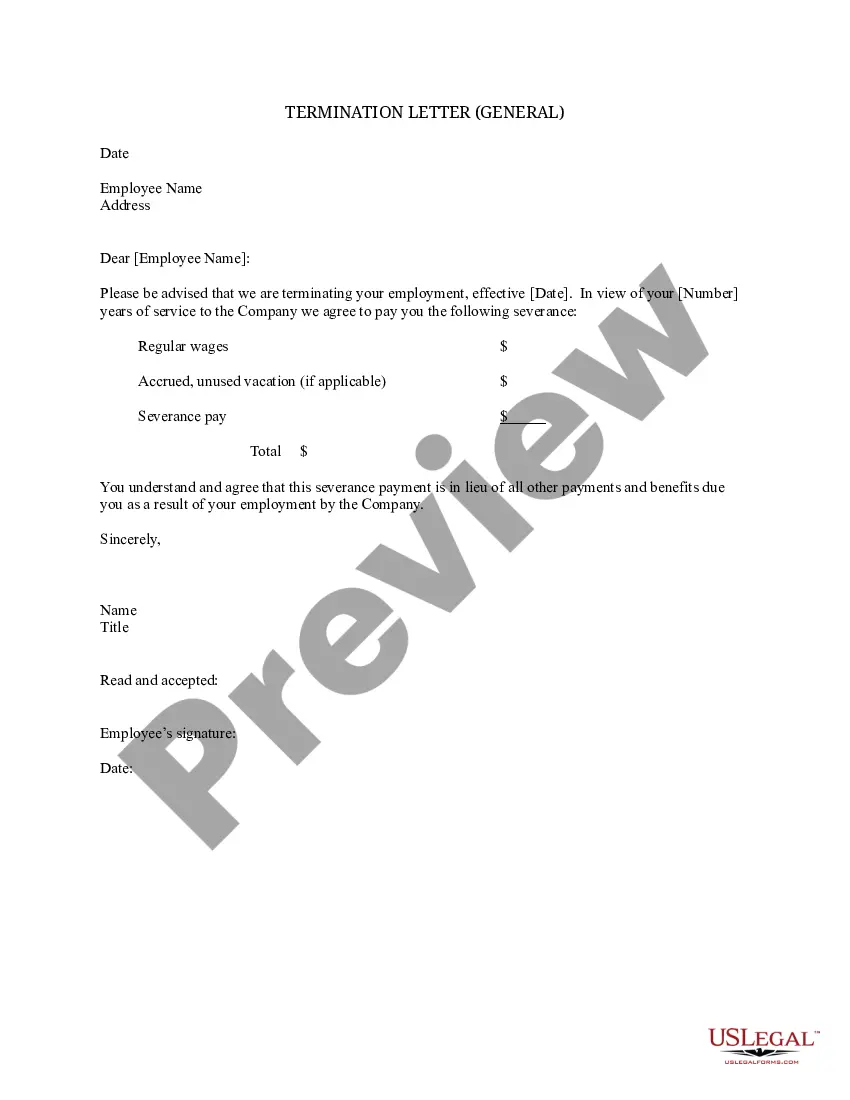
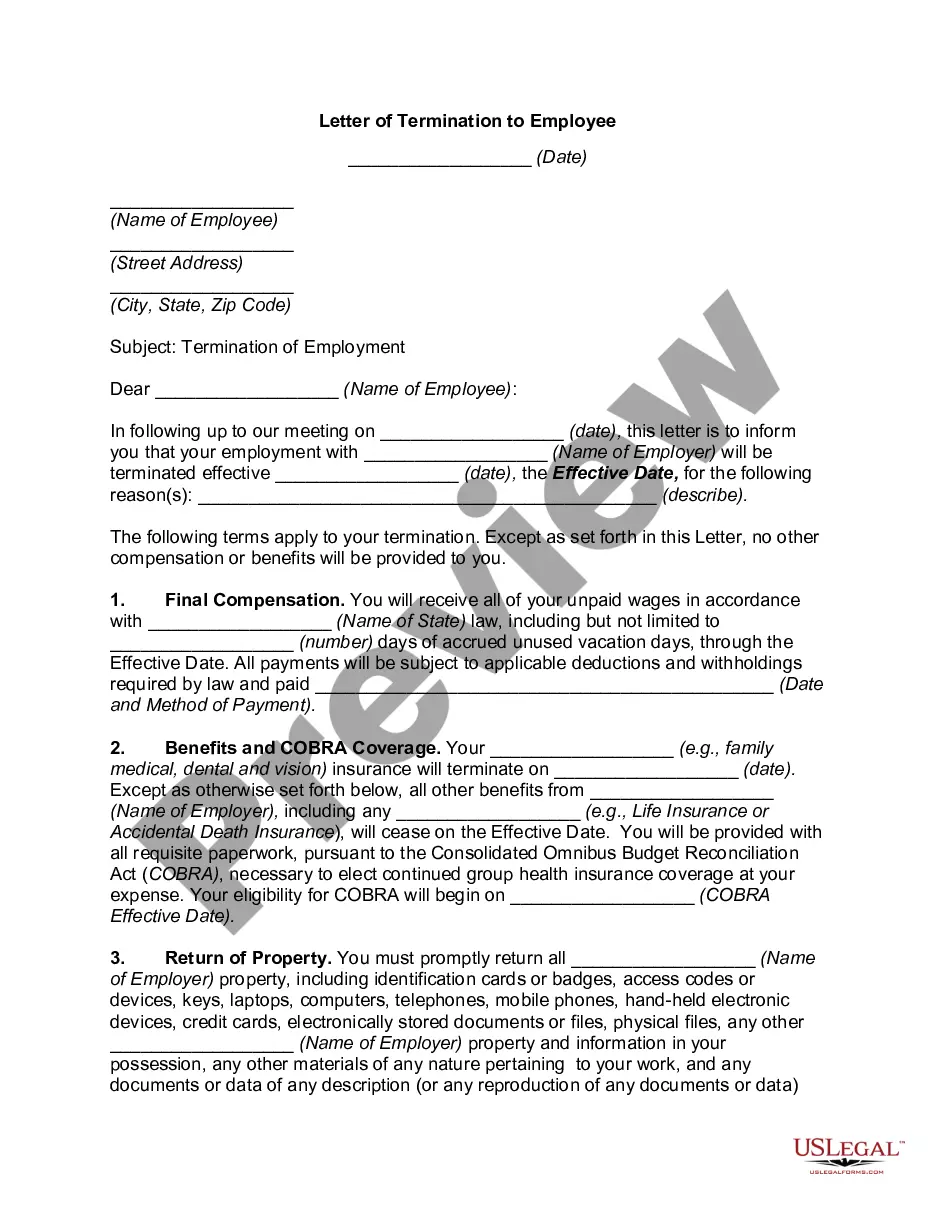
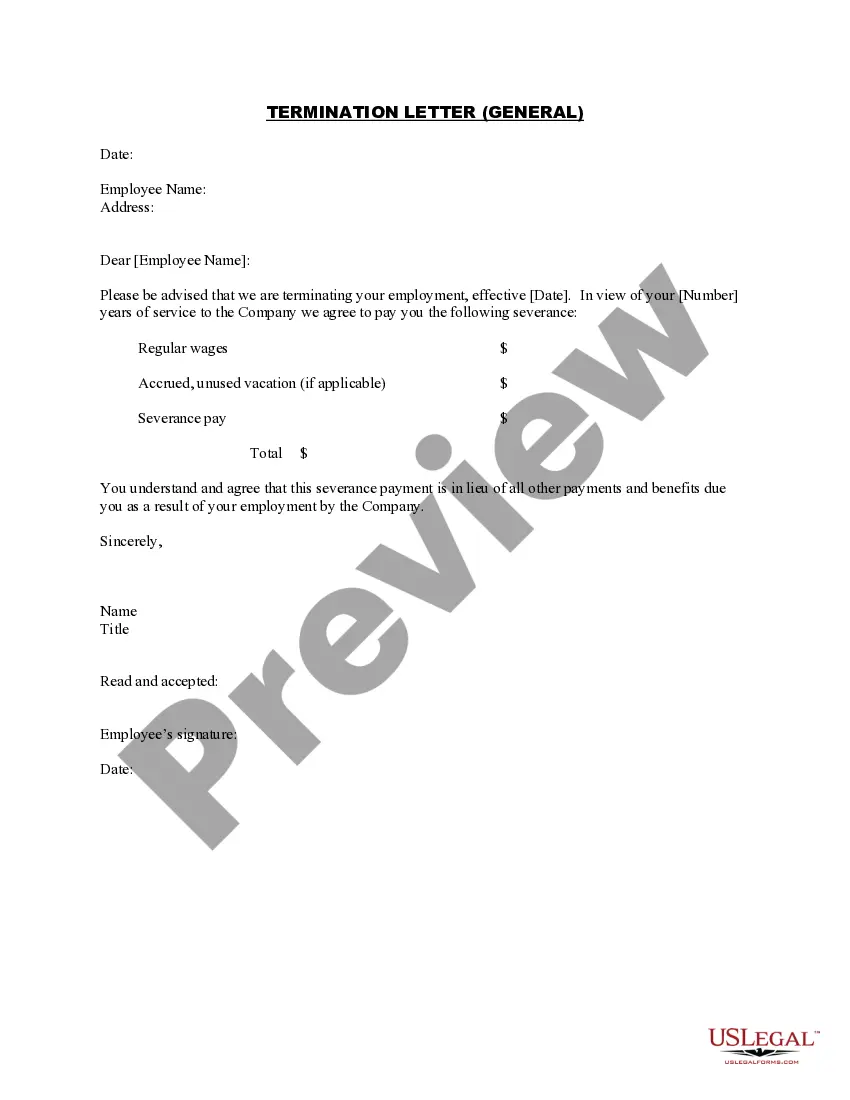
How to fill out Termination Letter (General)?
- If you’re an existing user, log into your account and check your subscription status. Ensure it's active before downloading the necessary form.
- For first-time users, start by browsing our extensive library. Review the form descriptions and confirm that it matches your local jurisdiction requirements.
- In case the desired form doesn’t meet your needs, utilize the Search tab to find the correct template that suits your requirements.
- Once you identify the right document, click on the Buy Now button and select your preferred subscription plan. Create an account to access our library resources.
- Complete your payment using your credit card or PayPal, and finalize your subscription.
- After your purchase, download the form to your device. You can always access it later from the My Forms section.
In conclusion, US Legal Forms provides a robust solution for accessing terminated legal documents. With its expansive library and expert assistance, you can trust that you're making informed choices in your legal documentation.
Don't wait any longer – visit US Legal Forms today to start your document journey!
Form popularity
FAQ
Facing termination can raise concerns for many, but it doesn't have to be detrimental to your career. While some employers may view termination negatively, many recognize that various factors contribute to employment changes. Being honest about your circumstances and emphasizing your skills can mitigate the impact of a termination. With tools and resources available through uslegalforms, you can also learn how to present your situation positively.
Yes, if you were terminated, it typically means you were fired. Employers use the term 'terminated' to describe the end of your employment, whether for performance issues, company layoffs, or other reasons. Understanding this can help you frame your situation in discussions with potential employers. It's crucial to communicate openly about your experience when moving forward.
Documenting a termination involves keeping clear records of the events leading up to the termination. You should note the reasons given for the termination and any prior disciplinary actions. This documentation can be valuable if you need to defend your case later or seek legal advice. Platforms like uslegalforms can assist you in generating the necessary documentation to ensure you cover all essential aspects.
Generally, you can use either term, but saying you are terminated can sound more formal and professional. Many employers opt for the term 'terminated' to maintain a level of decorum in communication. Regardless of the term you choose, it's essential to clarify your employment status. This understanding can be particularly useful when discussing your situation with future employers.
Yes, terminated and fired are often used interchangeably in the workplace. When an employee is terminated, it typically means that their employment has been ended by the employer. While the terms may carry similar meanings, the context can vary, affecting the perception of the act. Understanding this distinction will help you navigate your rights and potential severance options.
After getting fired from work, take time to reflect on your experience and identify areas for improvement. Update your professional documents and begin reaching out to your network for support and job leads. US Legal Forms can assist you in preparing necessary paperwork as you embark on your job search journey.
If you suddenly get fired, remain calm and don't react impulsively. Try to gather details about your termination reason for future reference. It’s essential to use this shock to motivate yourself to seek new opportunities and ensure that you have proper documentation readily available from platforms like US Legal Forms.
After you get terminated, focus on creating a plan for your next steps. Assess your finances, update your resume, and start networking with colleagues and friends. Additionally, consider using platforms like US Legal Forms to ensure you have the right documents ready for your job search.
After being terminated, take a moment to process what happened. Reach out to your contacts to let them know about your availability and gather support. It is also a good time to start exploring new job opportunities, and using resources such as US Legal Forms can help you access necessary documents and information.
When explaining your situation, you can simply say, 'I was terminated from my previous position.' This phrasing communicates the situation directly without unnecessary embellishment. Being transparent about your termination may help others understand your circumstances better.