Employer Translate
Description
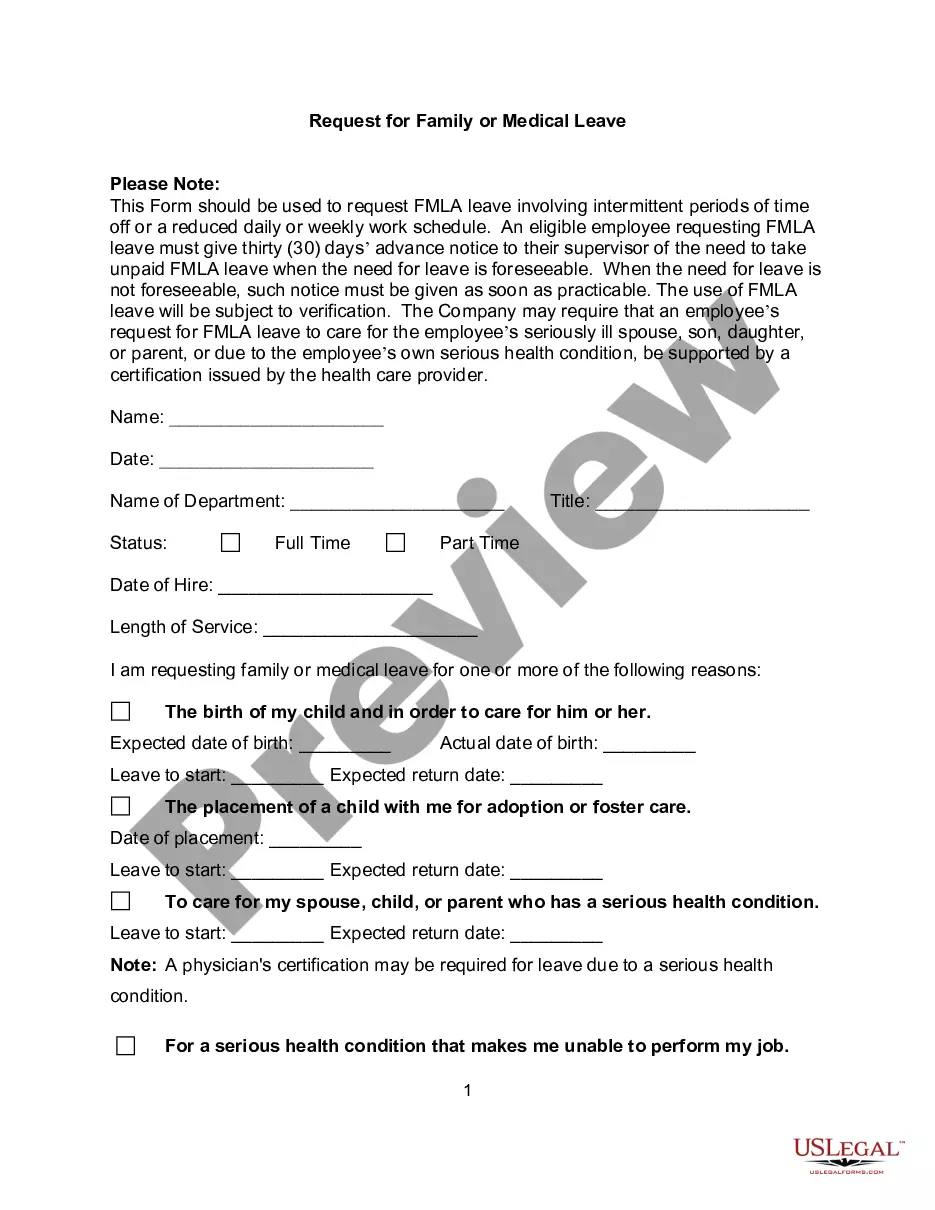
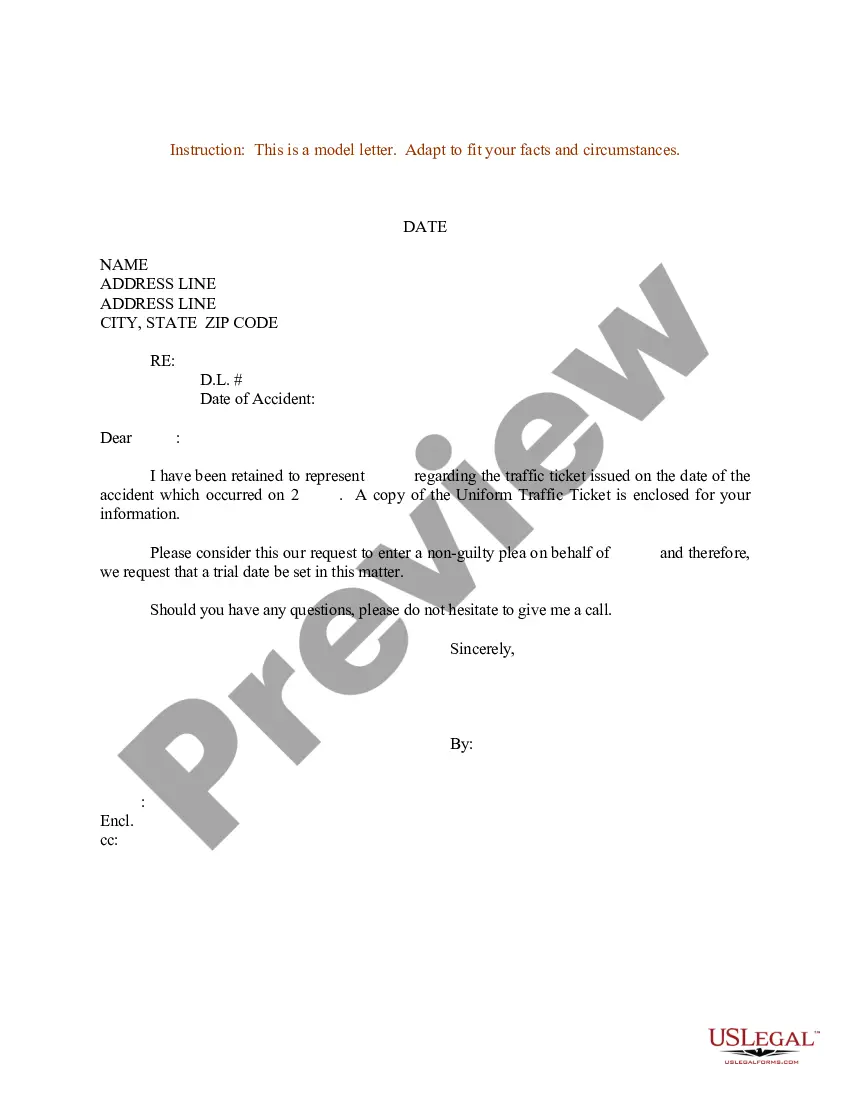
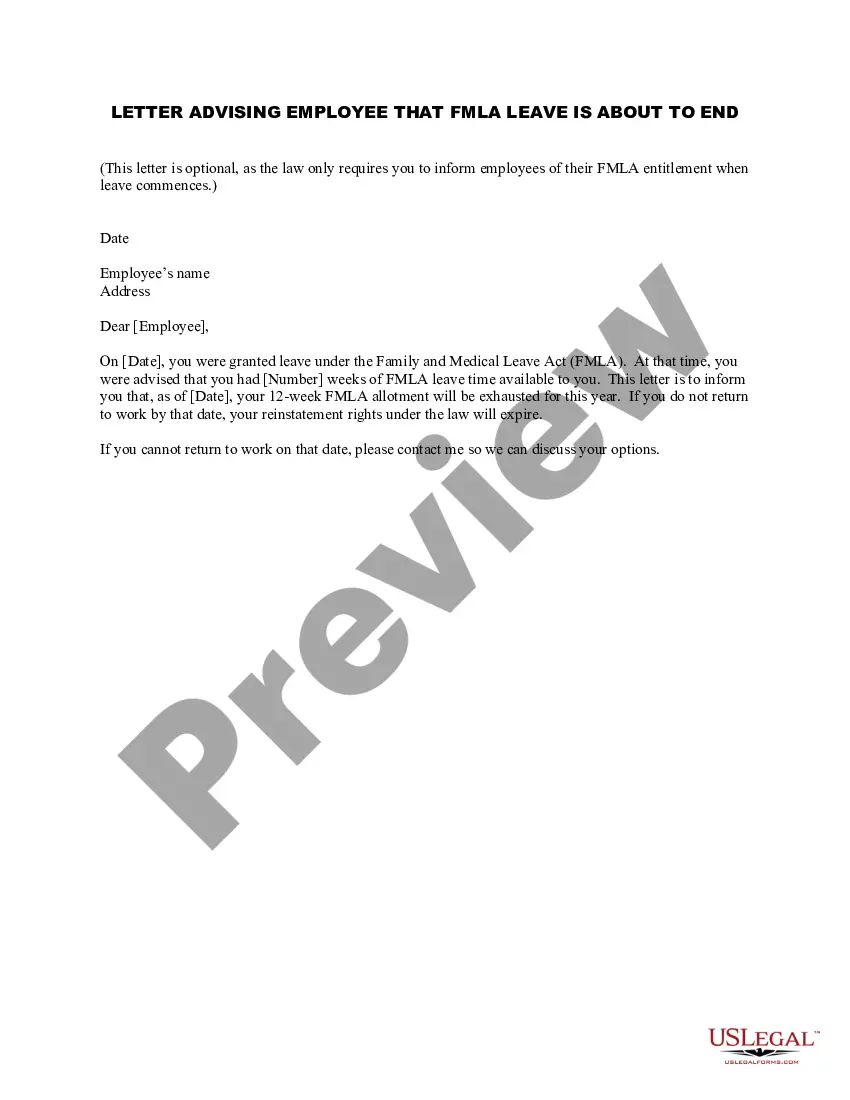
How to fill out Letter Advising Employee That FMLA Leave Is About To End?
- Log in to your account if you have previously used US Legal Forms, and ensure your subscription is active to download needed templates.
- In Preview mode, inspect the form description to confirm it aligns with your legal needs and jurisdiction requirements.
- If you find any discrepancies or need additional templates, utilize the Search feature on the site to find the right form.
- Click the Buy Now button once you've selected your document, then choose your preferred subscription plan.
- Complete your purchase by entering your payment information through credit card or PayPal.
- Download the document to your device, allowing you easy access through the My Forms section of your profile whenever needed.
With US Legal Forms, you gain access to a robust collection of legal documents and expert guidance, ensuring your forms are precisely completed and legally sound.
Start your journey with us today and experience the convenience of reliable legal forms. For more information, visit US Legal Forms now!
Form popularity
FAQ
To secure a job translating, start by developing your language skills and building a portfolio of your work. Networking with professionals in the translation field and joining relevant associations can enhance your visibility. Additionally, consider signing up for job platforms that specialize in translation services. Resources on USLegalForms can help you prepare your resume and understand industry standards.
Translating a work without permission generally violates copyright laws, which could expose you to legal action. You should always seek permission from the copyright owner before proceeding with any translation. While there are exceptions such as fair use, these can be complex and vary by situation. To navigate these complexities, consider consulting with professionals or using USLegalForms for guidance.
To legally translate a document, you start by ensuring you have permission from the copyright owner if required. Next, your translation should maintain accuracy and fidelity to the original text. It is also important to provide a signed statement that verifies your translation's accuracy when dealing with legal documents. When in doubt, USLegalForms can provide the necessary forms and resources to ensure you adhere to the legal requirements.
Getting certified to translate official documents typically involves passing a recognized exam from a professional organization. You may also need to demonstrate proficiency in both the source and target languages. It's essential to stay informed about the certification requirements in your state. For those interested in pursuing certification, USLegalForms provides resources that can help you navigate the necessary steps.
To obtain the rights to translate a work, you must first locate the copyright owner and request their permission. This often involves writing a formal request, explaining your intention to translate and how you plan to use the translation. The copyright owner may provide a licensing agreement that outlines the terms of your translation rights. Utilizing platforms like USLegalForms can simplify this process by offering templates and guidance.
Filling out the preparer and/or translator certification for section 1 involves stating your role in the translation process and providing your contact details. Ensure that you clearly mark your capacity, whether as a preparer or a translator, to avoid confusion. Providing accurate and complete information helps maintain the integrity of the document, allowing it to serve its purpose effectively. If you need additional support, uslegalforms offers resources to help you employer translate complex sections effortlessly.
To fill out a W-2 form for an employer, start by collecting the necessary information about your employee, including their Social Security number, total wages, and withheld taxes. You must accurately complete each box on the form, ensuring you enter details for state and federal taxes. Remember, maintaining clarity is essential; errors can lead to significant issues for both you and your employees. For guidance, uslegalforms can help you navigate this process seamlessly, enabling you to employer translate your data accurately.
An employer is anyone or any entity that hires individuals to perform work, whether in a corporate setting, a small business, or any other capacity. Employers hold the responsibility of providing a wage, managing workflows, and ensuring a conducive work environment. If you need help understanding different employer definitions, consider using employer translate resources to clarify various meanings.
The word 'employer' has its roots in Middle English, derived from the Latin word 'implicare,' which means to involve or engage. Over time, this term evolved to represent those who are engaged in hiring individuals for labor. Learning about such origins can enhance your grasp of the term, especially with assistance from services that offer employer translate options.
In English, 'employer' means a person or organization that employs people, providing them with work and compensation. This term highlights the relationship between a business and its workforce, establishing responsibilities on both sides. Understanding this concept can be easier through employer translate tools that simplify language barriers.