Contractor Irs Withholding Calculator
Description

Get your form ready online
Our built-in tools help you complete, sign, share, and store your documents in one place.
Make edits, fill in missing information, and update formatting in US Legal Forms—just like you would in MS Word.
Download a copy, print it, send it by email, or mail it via USPS—whatever works best for your next step.
Sign and collect signatures with our SignNow integration. Send to multiple recipients, set reminders, and more. Go Premium to unlock E-Sign.
If this form requires notarization, complete it online through a secure video call—no need to meet a notary in person or wait for an appointment.
We protect your documents and personal data by following strict security and privacy standards.

Make edits, fill in missing information, and update formatting in US Legal Forms—just like you would in MS Word.

Download a copy, print it, send it by email, or mail it via USPS—whatever works best for your next step.

Sign and collect signatures with our SignNow integration. Send to multiple recipients, set reminders, and more. Go Premium to unlock E-Sign.

If this form requires notarization, complete it online through a secure video call—no need to meet a notary in person or wait for an appointment.

We protect your documents and personal data by following strict security and privacy standards.
Looking for another form?
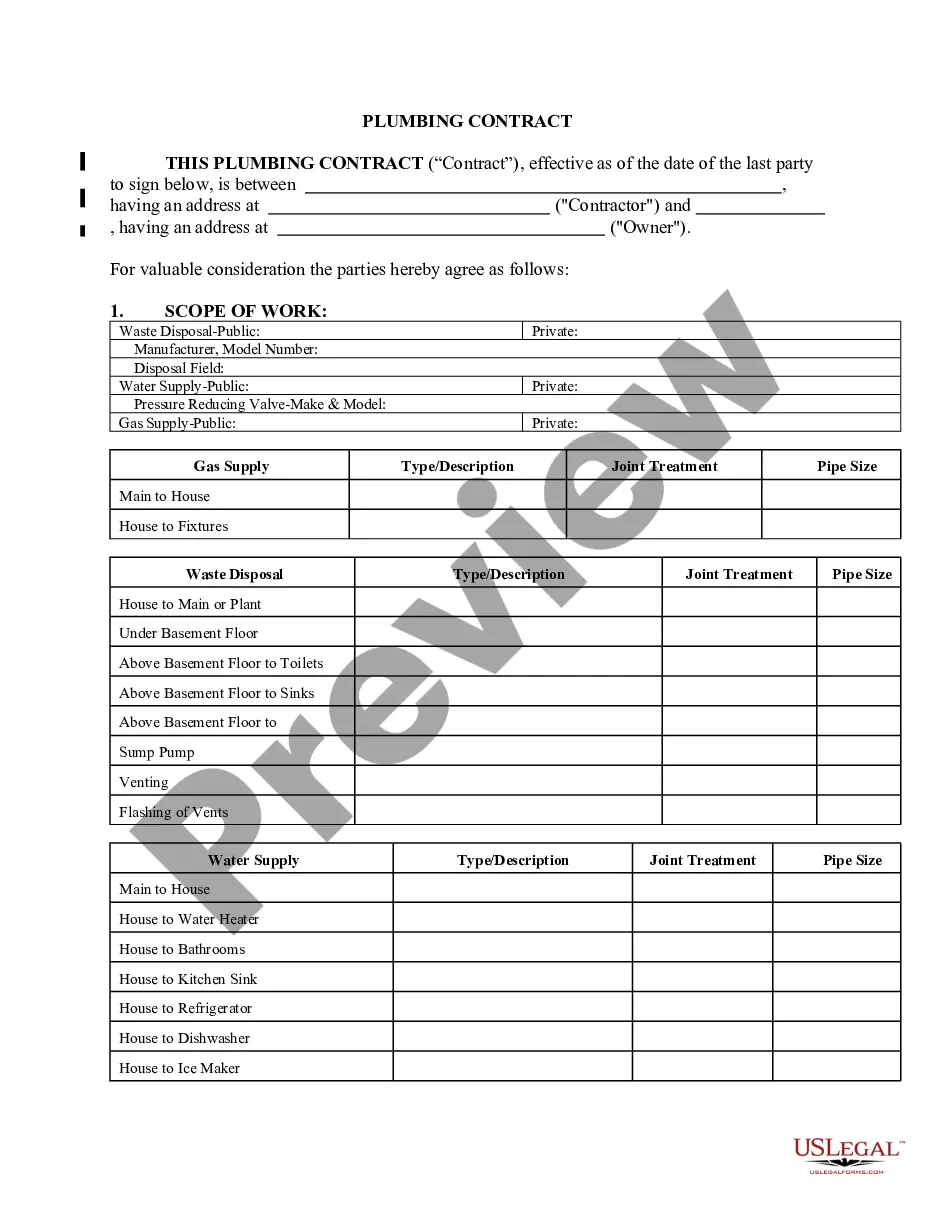







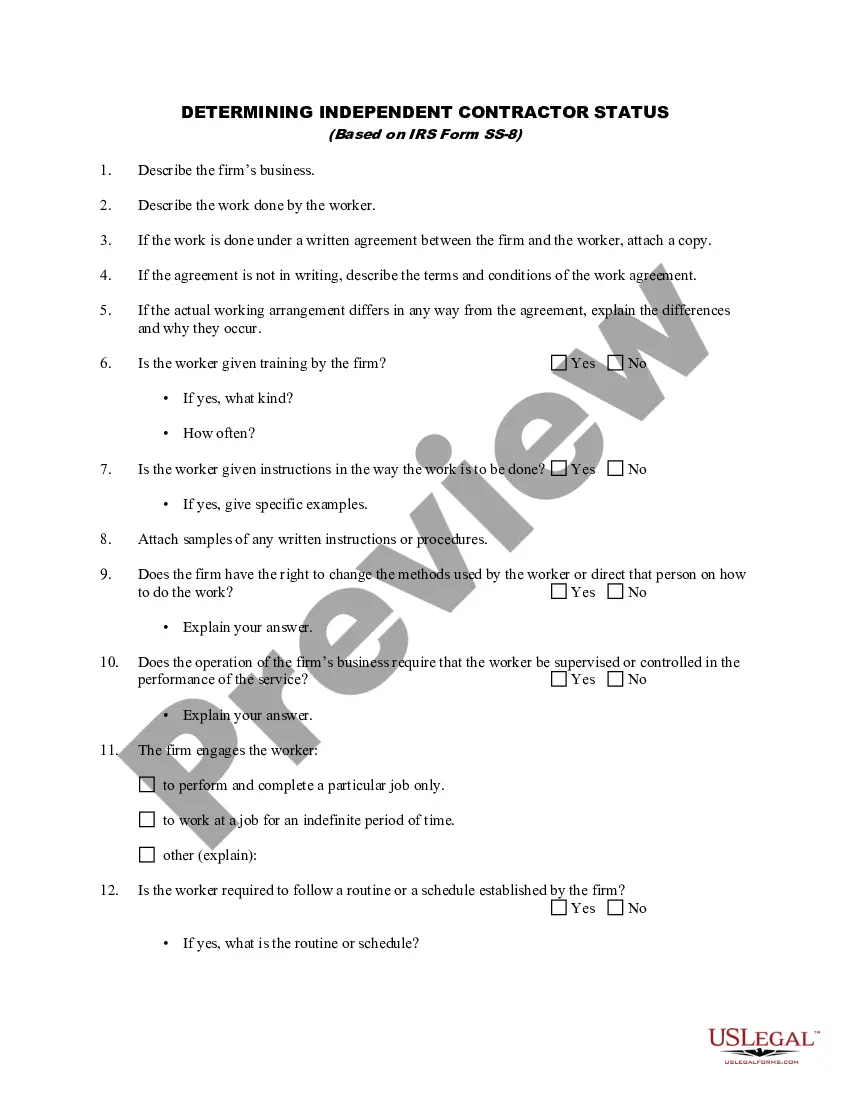
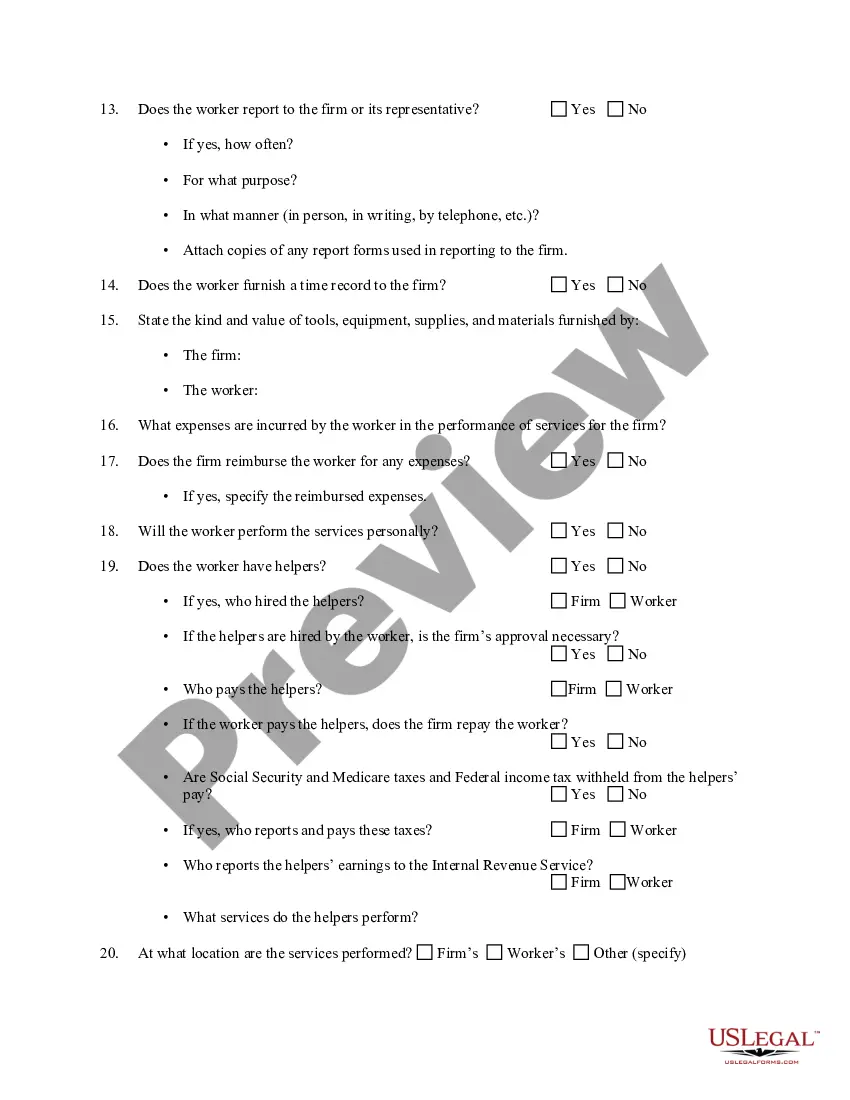
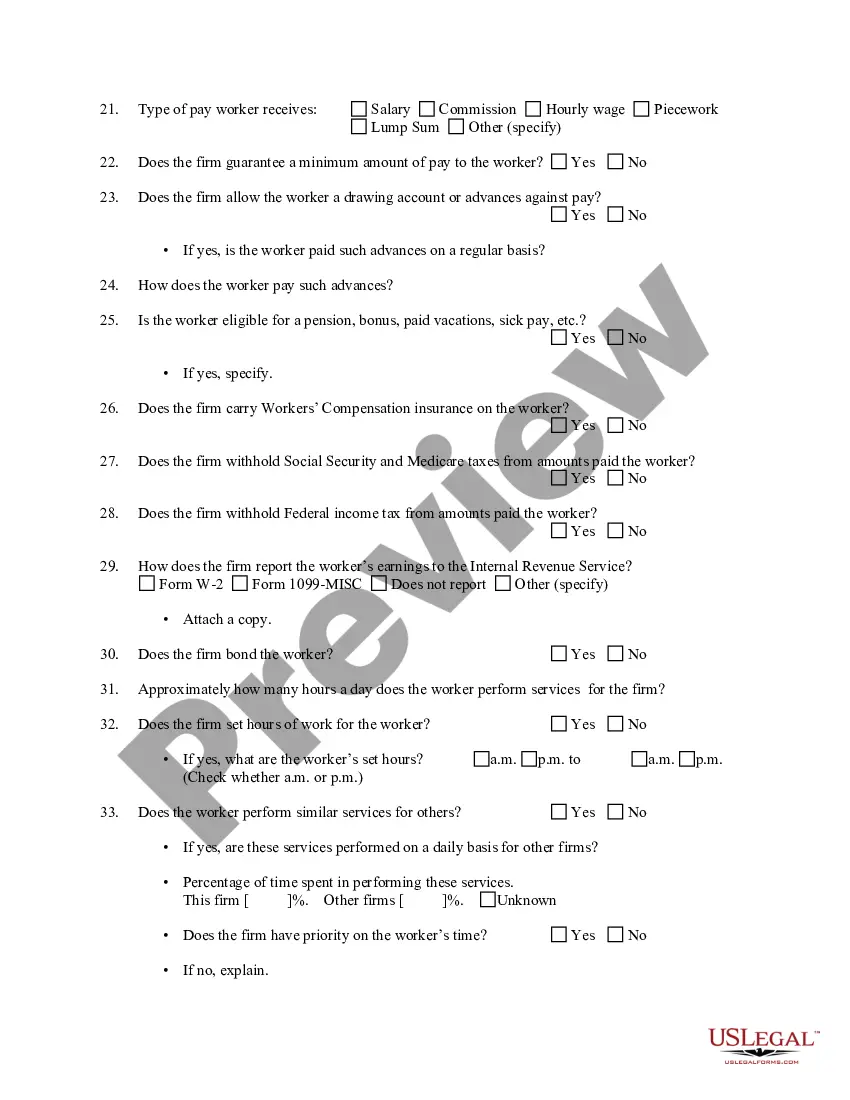
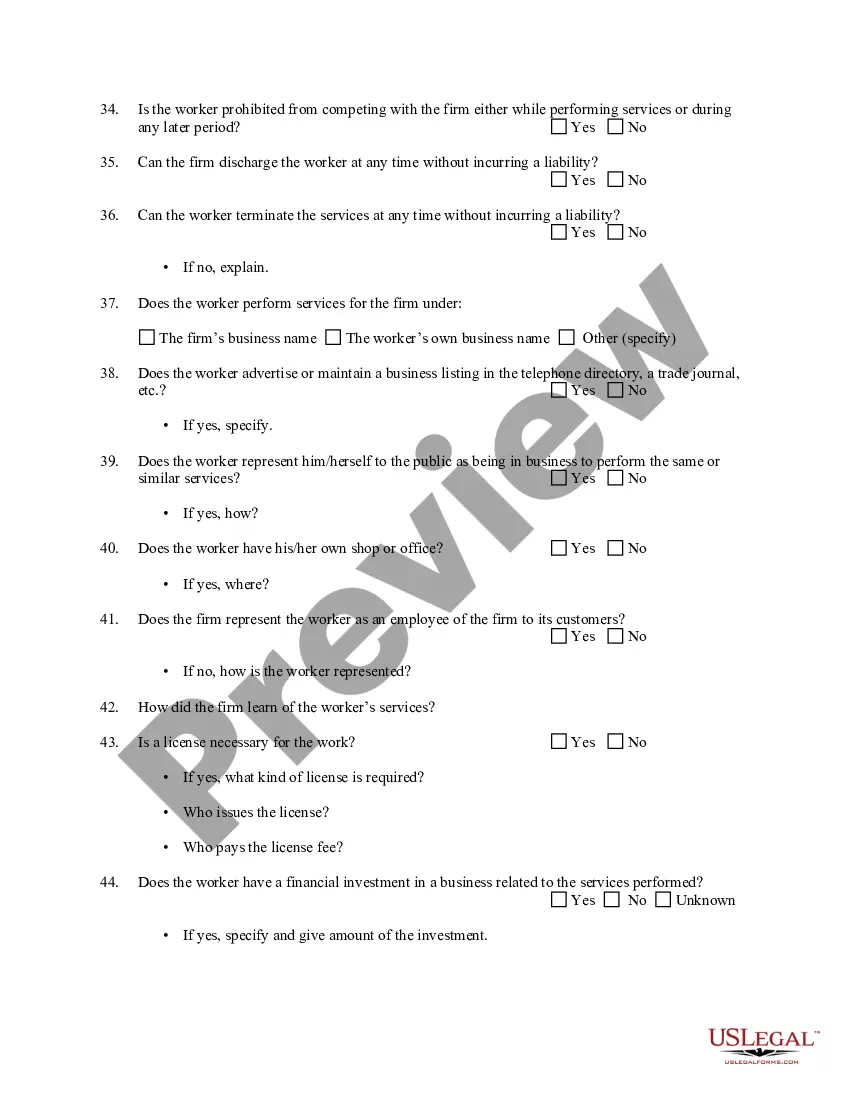
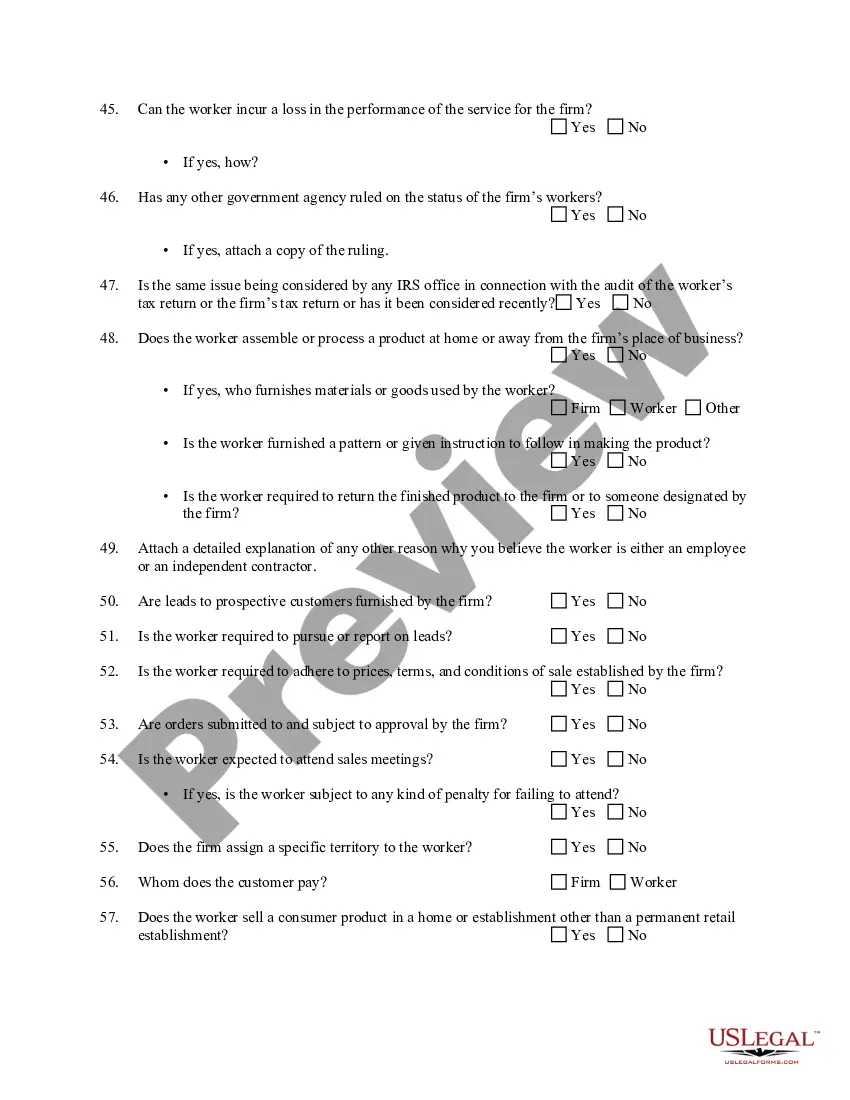
How to fill out Determining Self-Employed Independent Contractor Status?
Locating a reliable source for obtaining the latest and suitable legal templates is a significant part of dealing with bureaucracy.
Identifying the correct legal documentation demands accuracy and meticulousness, which is why it is crucial to source Contractor Irs Withholding Calculator samples exclusively from trusted providers, such as US Legal Forms. An incorrect template can squander your time and delay your situation.
Eliminate the complications associated with your legal paperwork. Explore the comprehensive US Legal Forms library to discover legal samples, verify their suitability for your situation, and download them instantly.
- Use the directory navigation or search option to locate your template.
- Examine the details of the form to confirm it aligns with the requirements of your state and locality.
- View the form preview, if accessible, to ensure it is indeed the document you need.
- Continue searching to find the suitable template if the Contractor Irs Withholding Calculator does not meet your needs.
- Once you are confident about the form’s applicability, download it.
- If you are a registered user, click Log in to verify your identity and access your chosen forms in My documents.
- If you haven’t registered yet, click Buy now to acquire the form.
- Choose the pricing option that suits your needs.
- Proceed with the registration to finalize your purchase.
- Complete your transaction by selecting a payment method (credit card or PayPal).
- Choose the file format for downloading Contractor Irs Withholding Calculator.
- Once you have the form on your device, you can edit it using the editor or print it out and fill it in by hand.
Form popularity
FAQ
Calculating taxes as an independent contractor involves a few key steps. First, you need to estimate your total income and then determine your allowable deductions. After that, you can use a Contractor IRS withholding calculator to find out how much to set aside for taxes. This process simplifies your tax planning and ensures that you meet your tax obligations efficiently.
The 20% withholding rule refers to the requirement for certain payments made to independent contractors. When you hire a contractor, the IRS mandates that you withhold 20% of their payment for federal taxes. Using a Contractor IRS withholding calculator can help you determine the exact amount to withhold. This ensures compliance with tax regulations and helps avoid penalties.
To properly fill out a tax withholding form, start by gathering your personal information, such as your Social Security number and filing status. Then, use the Contractor IRS withholding calculator to estimate your tax liability and determine how many allowances to claim. Make sure to follow the instructions on the form carefully, as errors can lead to incorrect withholding. If you need assistance, platforms like USLegalForms provide resources and guidance to help you navigate the process.
The amount you should withhold for taxes as a contractor depends on your expected income and expenses. Generally, a good rule of thumb is to set aside around 25% to 30% of your income for federal taxes, but this can vary based on your specific circumstances. A Contractor IRS withholding calculator can assist you in determining the appropriate withholding amount by analyzing your income and expected deductions. This way, you avoid surprises when tax season arrives.
To calculate your taxes as an independent contractor, you need to consider your total income, deduct any eligible business expenses, and determine your taxable income. You can use a Contractor IRS withholding calculator to estimate the taxes you owe. This calculator helps you assess federal and state tax obligations based on your income and withholding preferences. Additionally, keeping good records of your income and expenses will make this process easier.
Self-employment tax is typically 15.3% of your net earnings, which covers Social Security and Medicare taxes. However, depending on your income level and deductions, your total tax rate may vary. Many contractors benefit from using a Contractor IRS withholding calculator to better understand their total tax responsibilities. This tool can help you accurately estimate your self-employment tax and plan your finances effectively.
As a contractor, it is crucial to set aside a sufficient amount for taxes to avoid surprises at tax time. Generally, you should consider saving about 25% to 30% of your income for federal taxes, including self-employment tax. Utilizing a Contractor IRS withholding calculator can help you determine the exact amount based on your earnings and expenses. By planning ahead, you can ensure you meet your tax obligations without financial strain.
The Contractor IRS withholding calculator helps you estimate the amount of federal taxes to withhold from your contractor payments. You simply enter details such as the payment amount and any applicable deductions. The calculator then provides you with a recommended withholding amount to ensure compliance with IRS regulations. Utilizing this tool can simplify your payment process and help you avoid tax penalties.