Warning Notice Work For Parking
Description
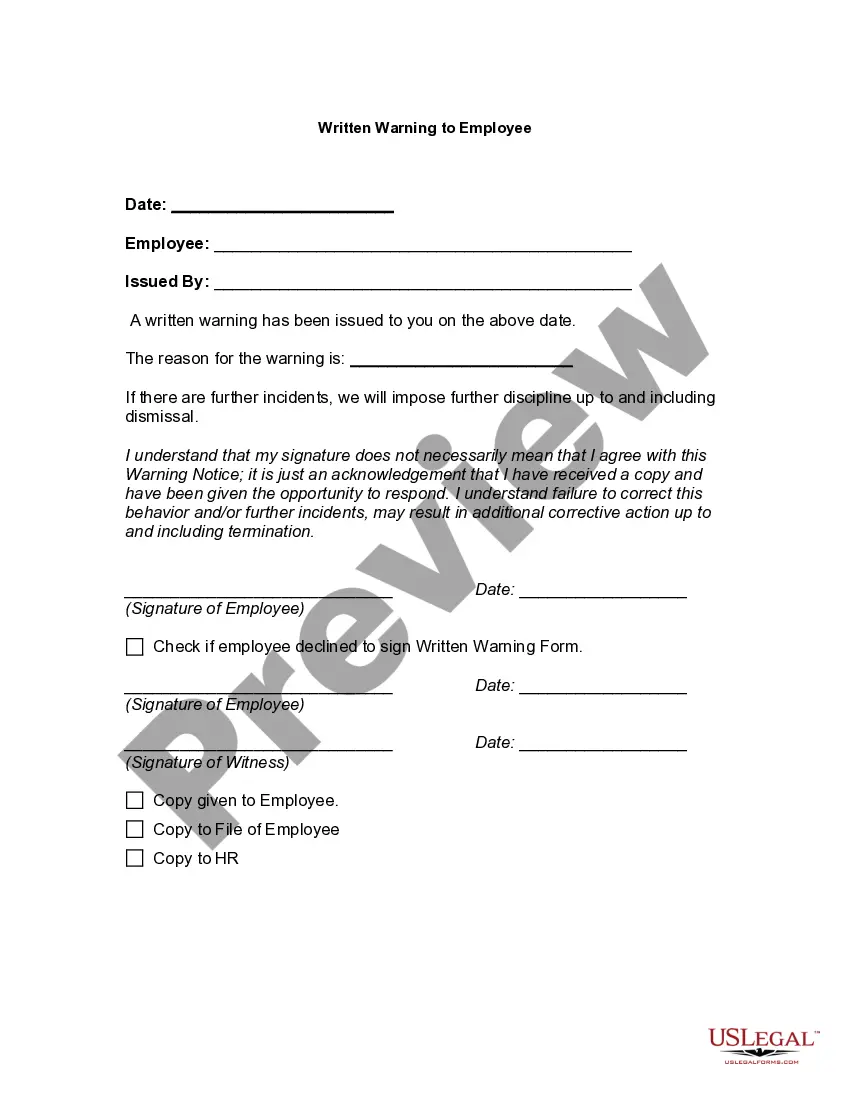
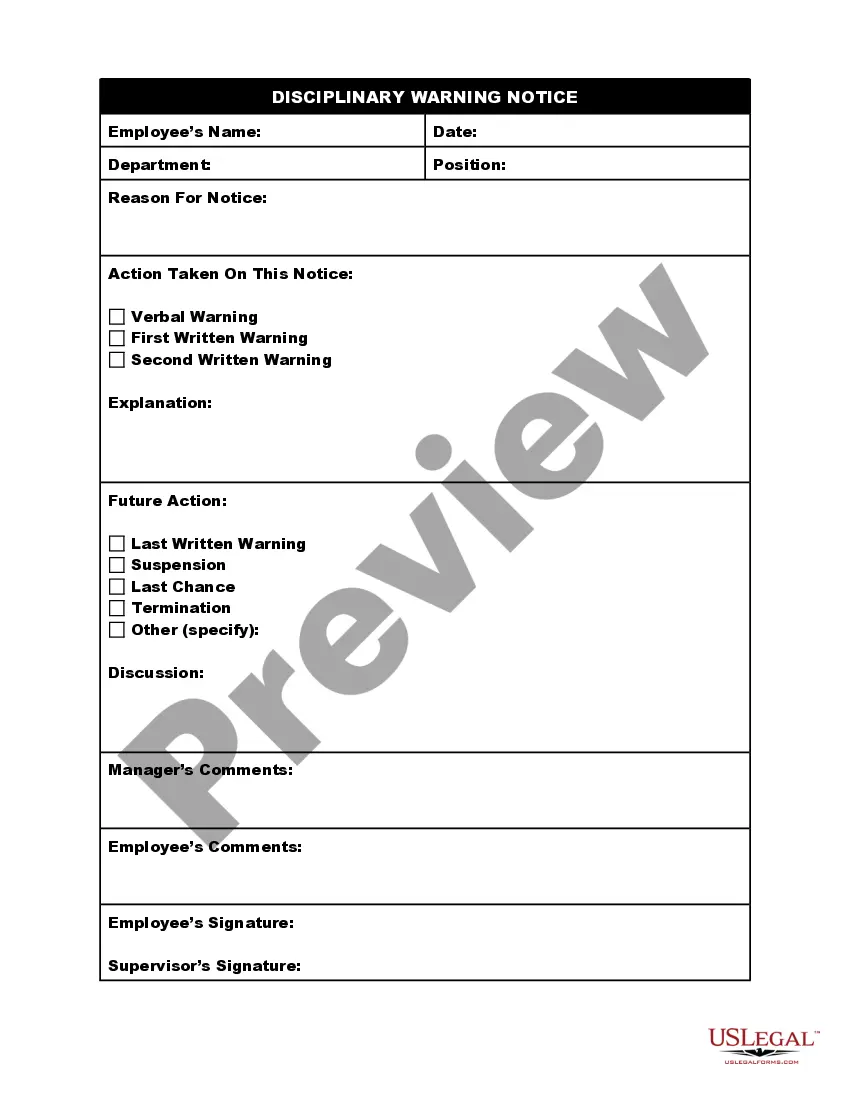
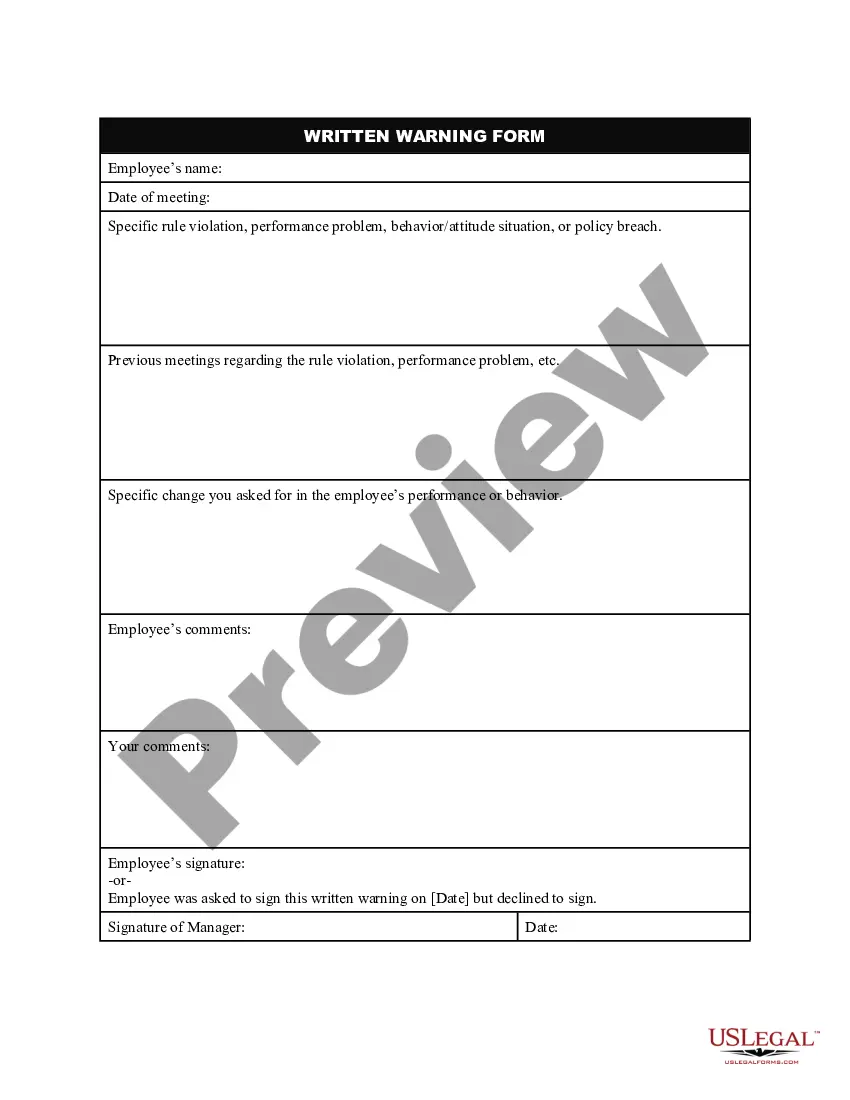
Get your form ready online
Our built-in tools help you complete, sign, share, and store your documents in one place.
Make edits, fill in missing information, and update formatting in US Legal Forms—just like you would in MS Word.
Download a copy, print it, send it by email, or mail it via USPS—whatever works best for your next step.
Sign and collect signatures with our SignNow integration. Send to multiple recipients, set reminders, and more. Go Premium to unlock E-Sign.
If this form requires notarization, complete it online through a secure video call—no need to meet a notary in person or wait for an appointment.
We protect your documents and personal data by following strict security and privacy standards.

Make edits, fill in missing information, and update formatting in US Legal Forms—just like you would in MS Word.

Download a copy, print it, send it by email, or mail it via USPS—whatever works best for your next step.

Sign and collect signatures with our SignNow integration. Send to multiple recipients, set reminders, and more. Go Premium to unlock E-Sign.

If this form requires notarization, complete it online through a secure video call—no need to meet a notary in person or wait for an appointment.

We protect your documents and personal data by following strict security and privacy standards.
Looking for another form?




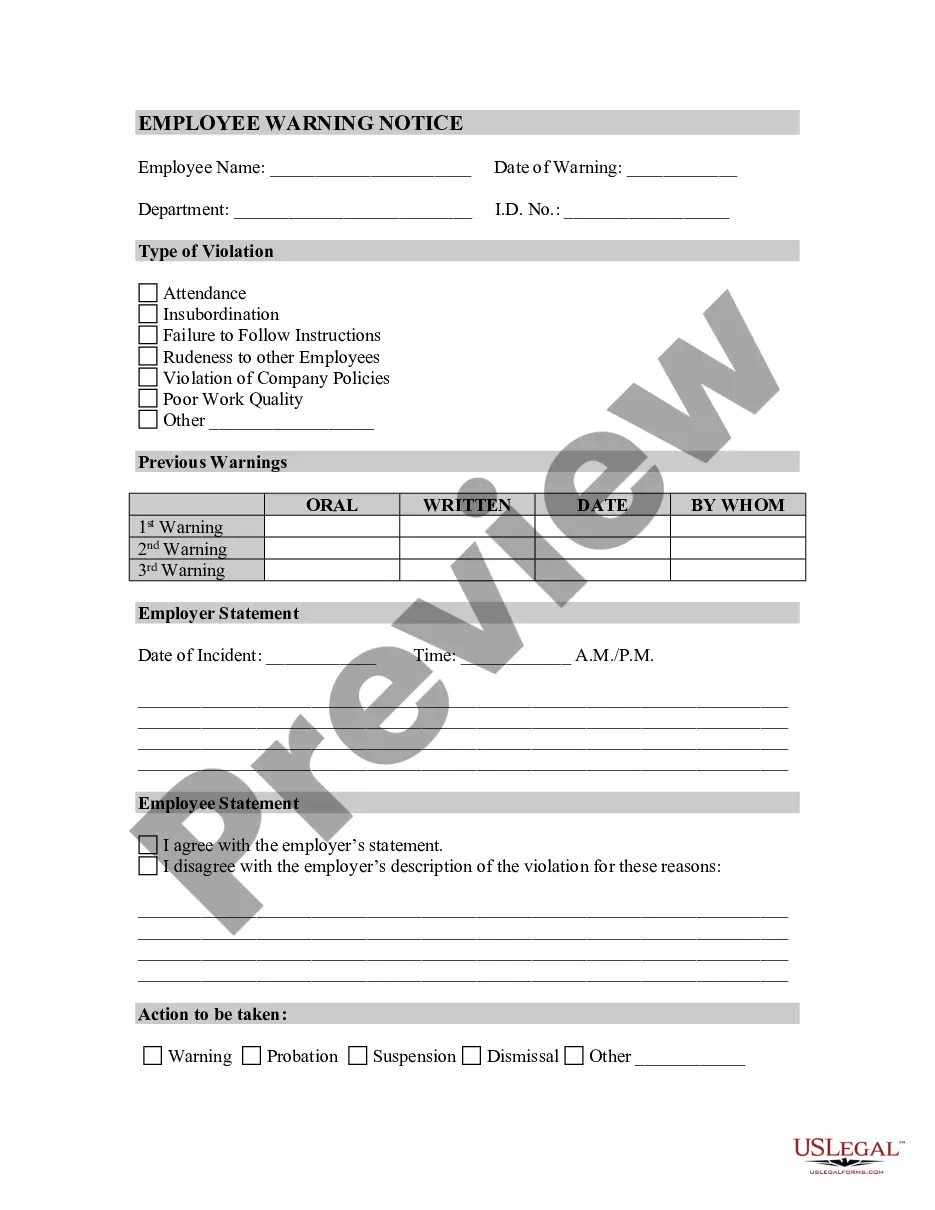
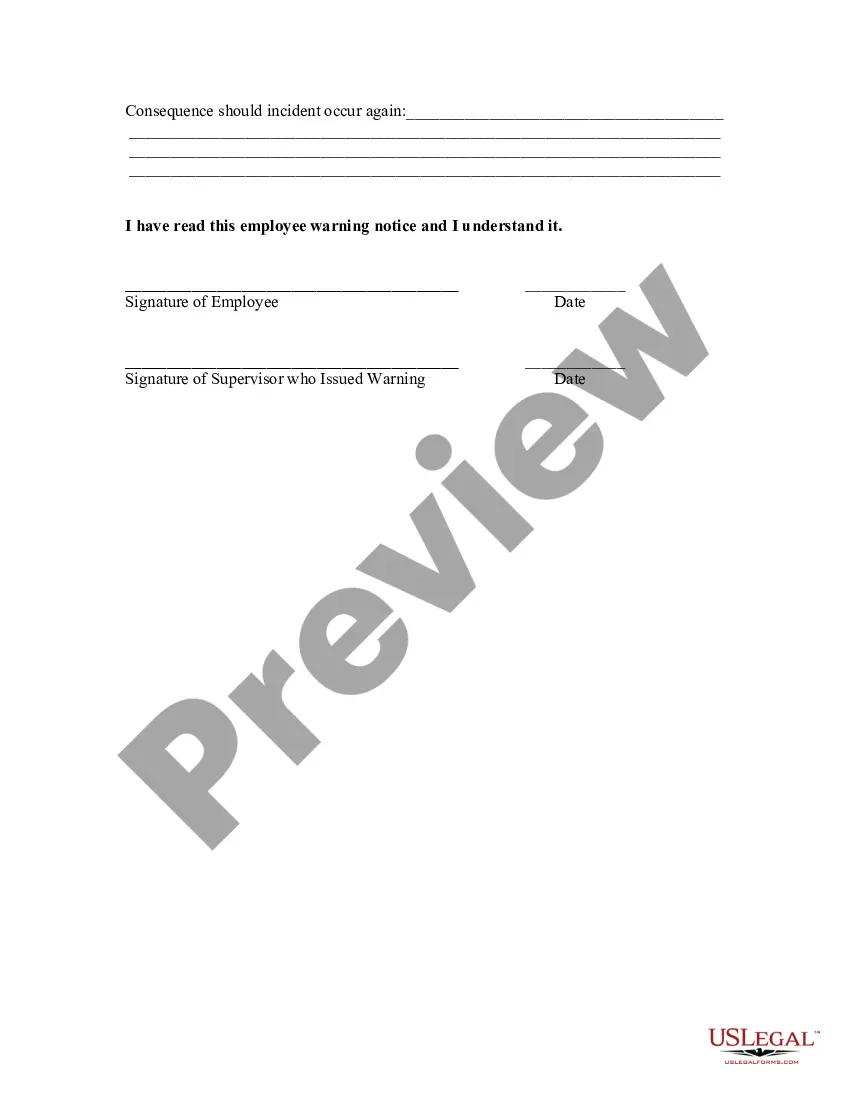
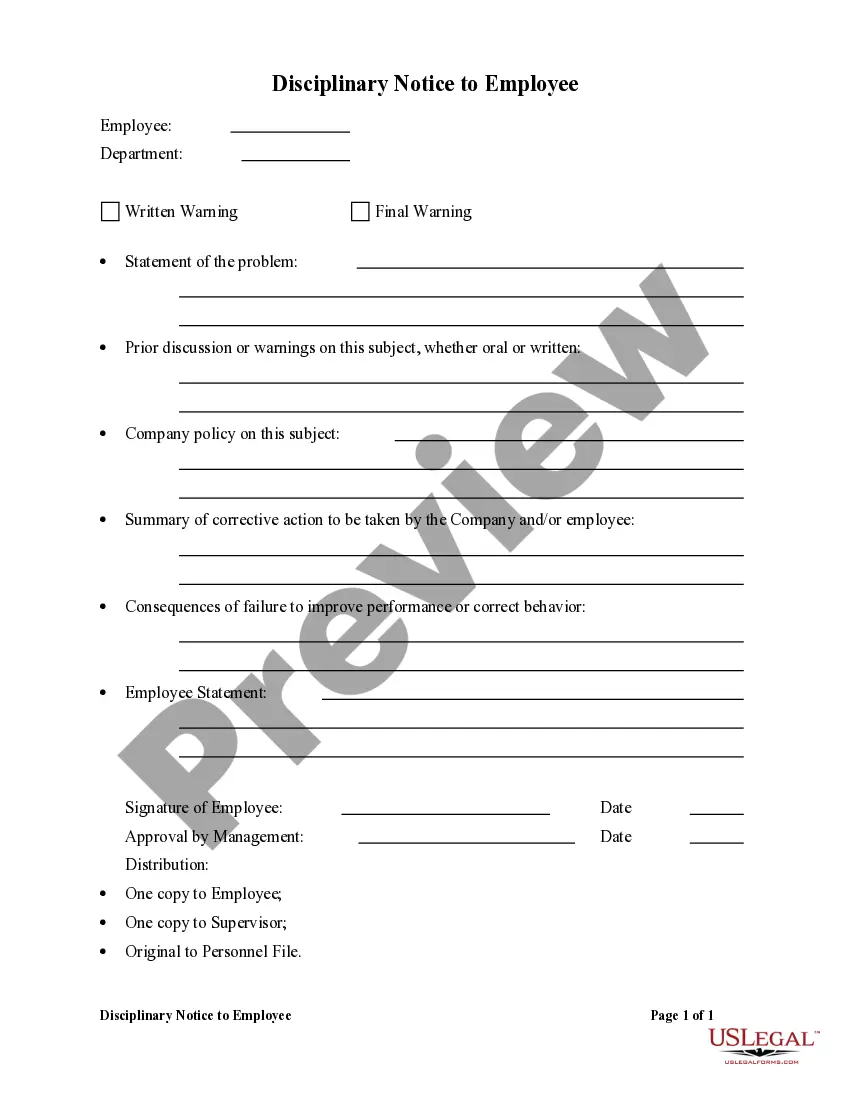
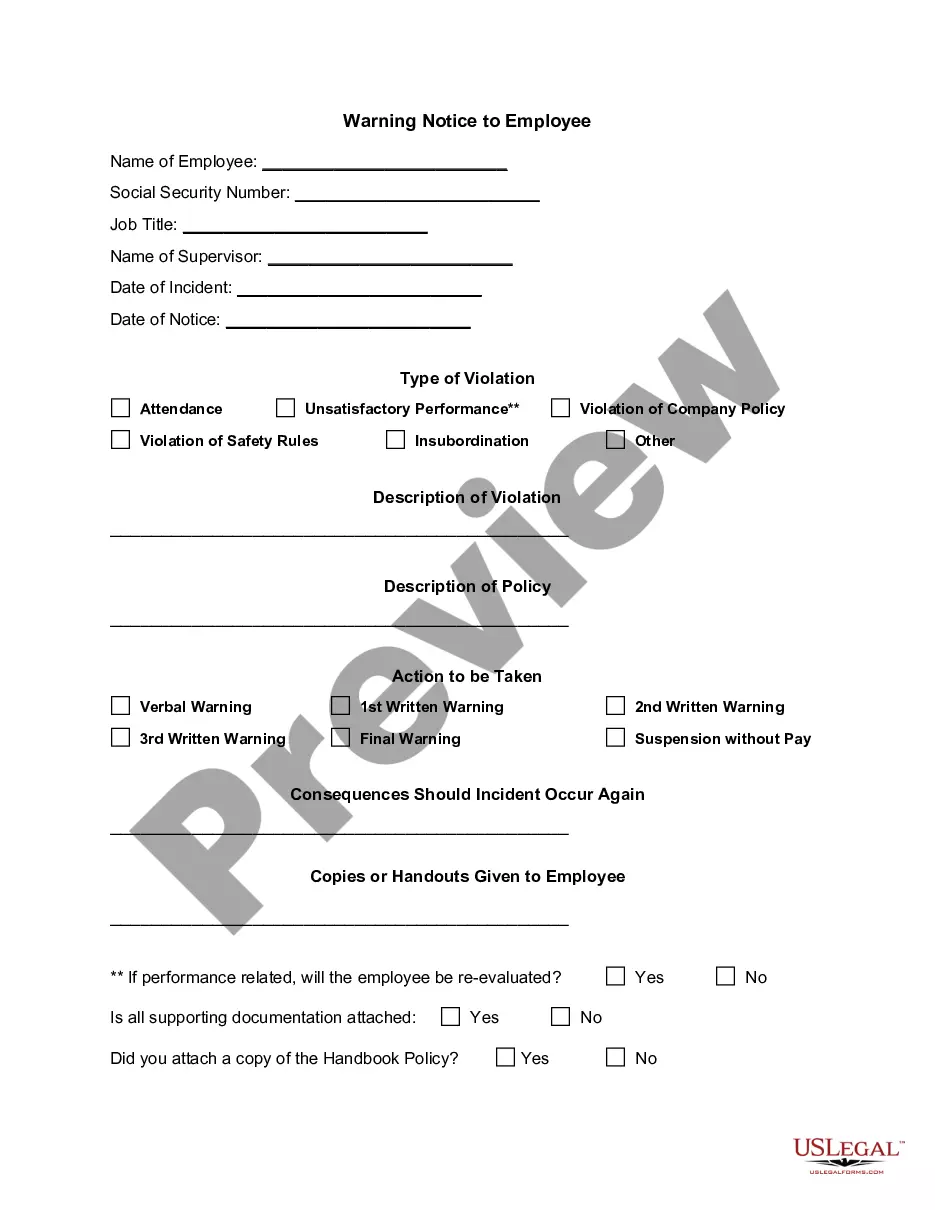
How to fill out Employee Warning Notice?
Acquiring a reliable source for obtaining the latest and pertinent legal templates is half the battle of navigating bureaucracy. Identifying the correct legal documents demands precision and meticulousness, which is why it is crucial to source Warning Notice Work For Parking exclusively from trustworthy providers, such as US Legal Forms. An incorrect template will squander your time and delay the issue at hand. With US Legal Forms, you have minimal concerns. You can access and view all the details concerning the document’s applicability and significance for your circumstances and in your state or county.
Consider the outlined steps to finalize your Warning Notice Work For Parking.
Once you have the form on your device, you can modify it using the editor or print it and fill it out by hand. Alleviate the stress associated with your legal documentation. Explore the extensive US Legal Forms library where you can discover legal samples, assess their relevance to your situation, and download them instantly.
- Utilize the catalog navigation or search field to locate your template.
- Open the form’s description to determine if it meets the criteria of your state and region.
- View the form preview, if available, to confirm the template is the one you seek.
- Return to the search and locate the appropriate template if the Warning Notice Work For Parking does not match your needs.
- Once you are certain about the form’s applicability, download it.
- If you are a registered user, click Log in to verify and access your selected templates in My documents.
- If you do not have an account yet, click Buy now to acquire the template.
- Select the pricing plan that aligns with your preferences.
- Proceed to registration to complete your transaction.
- Finalize your purchase by selecting a payment method (credit card or PayPal).
- Choose the file format for downloading Warning Notice Work For Parking.
Form popularity
FAQ
Managers can use warning letters to record disciplinary action and inform team members of potential consequences. The letter's purpose is to notify people of their undesirable behaviour to prevent a re-occurrence.
Related Content. Similar to a penal notice. A statement attached to a contact order, explaining that the instructions contained in the order must be obeyed and warning of the possible consequences of failure to comply.
Dear Sir/Madam, I am writing this letter to bring to your attention the issue of parking of scooters and cars without any order in our residential area. This has resulted in a blockage of the streets, making it difficult for residents to move around freely or park their own vehicles.
5 Tips to Manage Multi-Tenanted Parking Allocation Establish a clear parking policy for your commercial or residential building or complex. Assign specific parking areas for each tenant. Implement a system to track and monitor parking usage. Regularly communicate the parking policy and procedures to tenants.
Find your parking ratio by dividing the number of spaces by the building's square footage (in thousands). For instance, take a 40,000-square-foot building with a 200-space parking lot. Divide 200 (spaces) by 40 (thousand square feet) to find a parking ratio of 5 spaces per 1,000 square feet.