Working Conditions In The Industrial Revolution
Description
Get your form ready online
Our built-in tools help you complete, sign, share, and store your documents in one place.
Make edits, fill in missing information, and update formatting in US Legal Forms—just like you would in MS Word.
Download a copy, print it, send it by email, or mail it via USPS—whatever works best for your next step.
Sign and collect signatures with our SignNow integration. Send to multiple recipients, set reminders, and more. Go Premium to unlock E-Sign.
If this form requires notarization, complete it online through a secure video call—no need to meet a notary in person or wait for an appointment.
We protect your documents and personal data by following strict security and privacy standards.

Make edits, fill in missing information, and update formatting in US Legal Forms—just like you would in MS Word.

Download a copy, print it, send it by email, or mail it via USPS—whatever works best for your next step.

Sign and collect signatures with our SignNow integration. Send to multiple recipients, set reminders, and more. Go Premium to unlock E-Sign.

If this form requires notarization, complete it online through a secure video call—no need to meet a notary in person or wait for an appointment.

We protect your documents and personal data by following strict security and privacy standards.
Looking for another form?
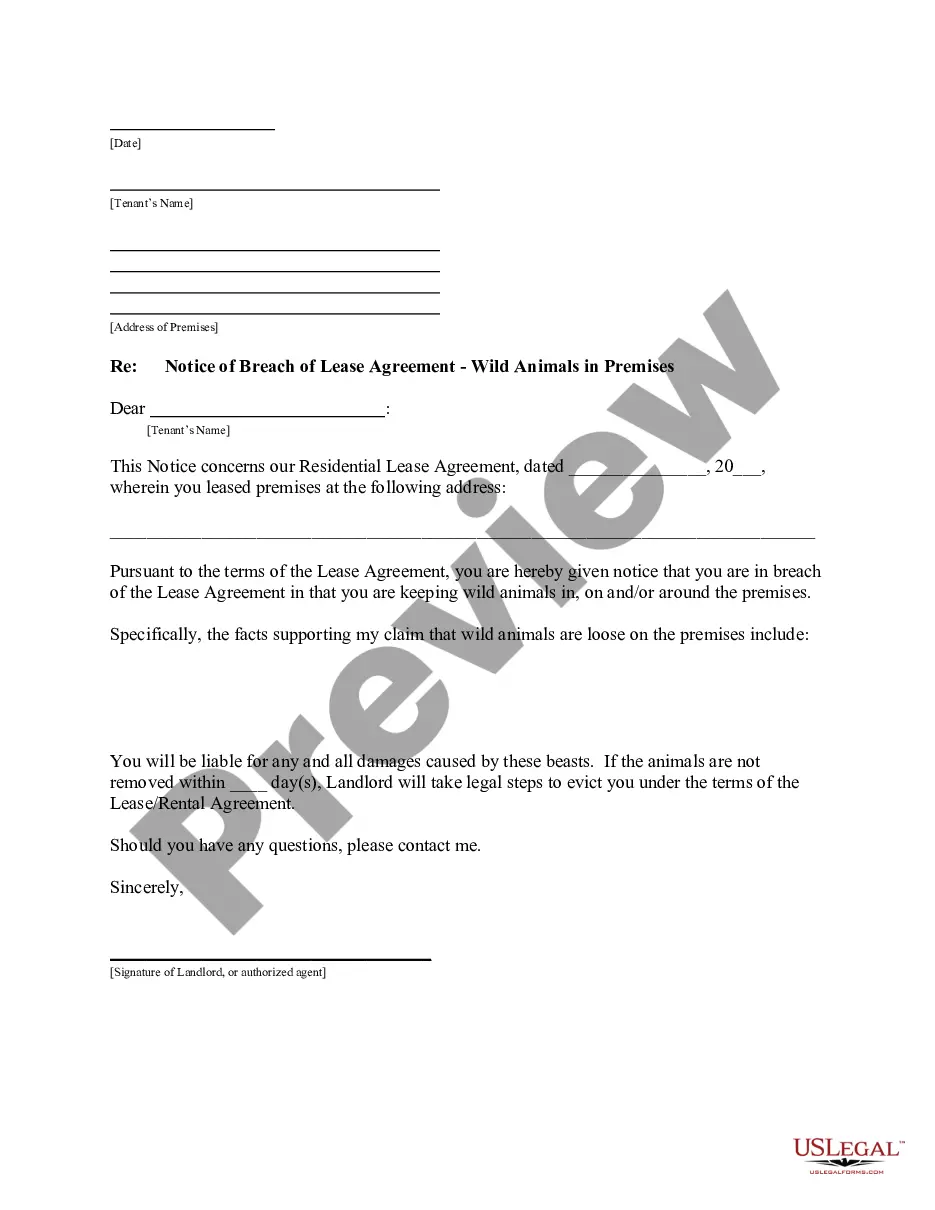



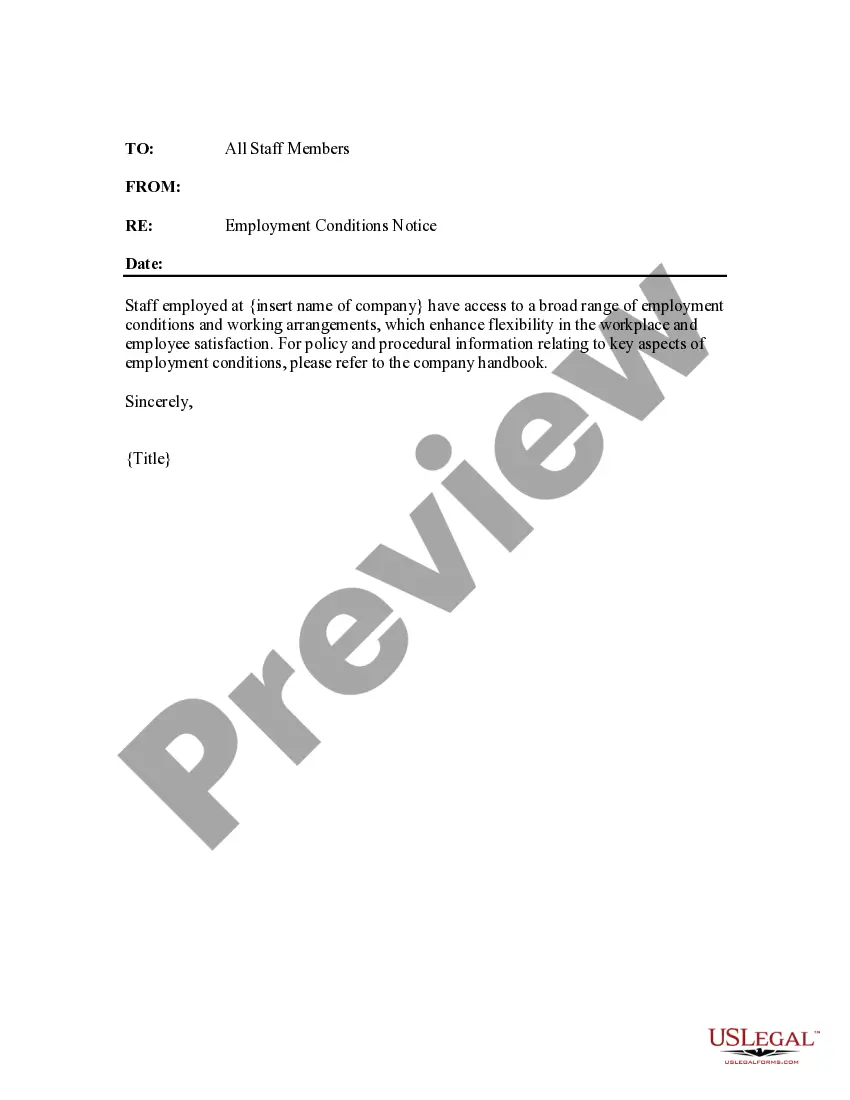
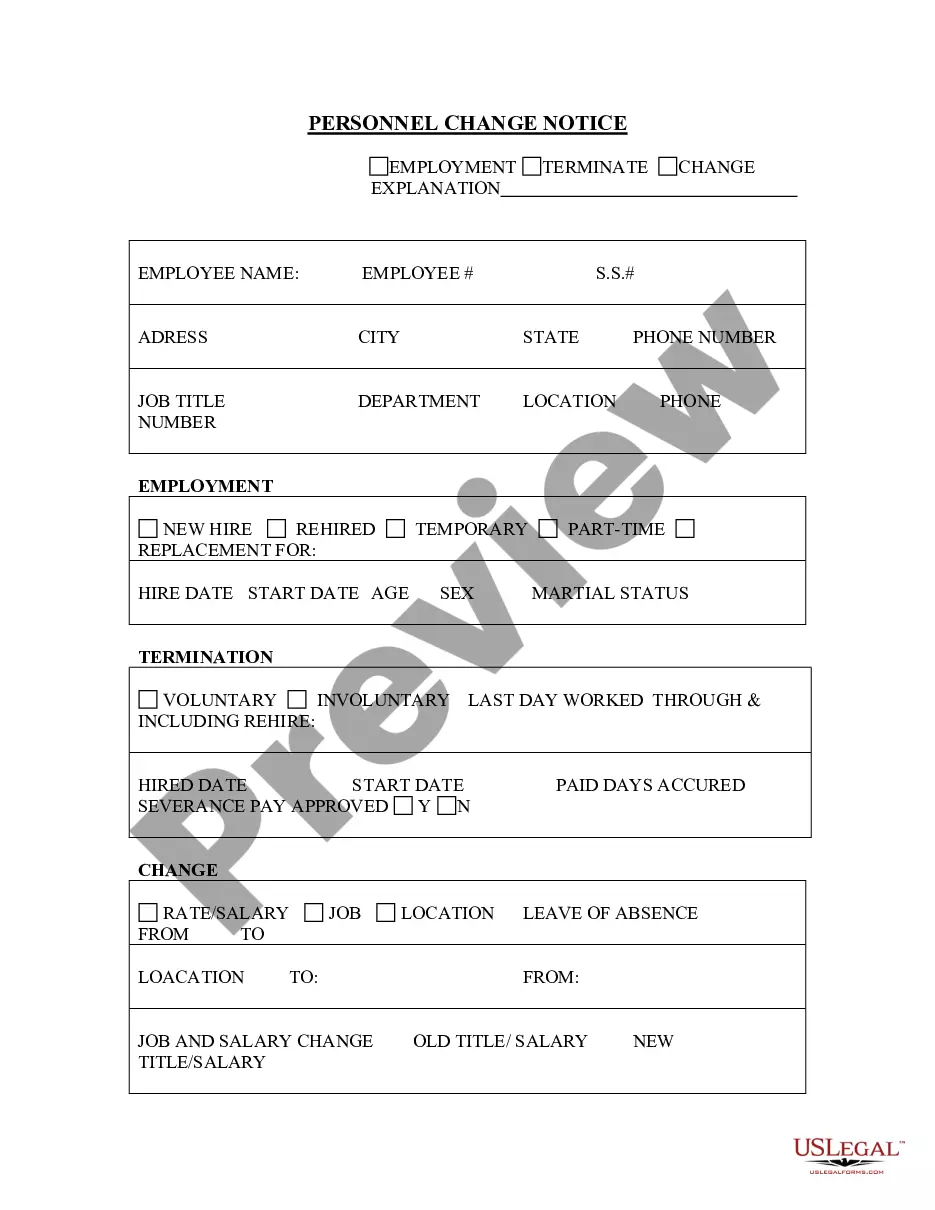
How to fill out Employment Conditions Notice - Notice To Existing Employees Of Flexibility In Working Arrangements?
Creating legal documents from the ground up can frequently feel a bit daunting. Certain cases may require extensive research and significant financial investment.
If you're seeking a more straightforward and cost-effective method for producing Working Conditions In The Industrial Revolution or any other documentation without unnecessary hurdles, US Legal Forms is readily accessible.
Our online library of more than 85,000 current legal forms encompasses nearly every aspect of your financial, legal, and personal matters. With just a few clicks, you can swiftly obtain state- and county-specific templates meticulously crafted for you by our legal professionals.
Utilize our platform whenever you require a dependable and trustworthy service through which you can rapidly locate and download the Working Conditions In The Industrial Revolution. If you are already familiar with our site and have previously registered an account with us, simply Log In to your account, choose the form, and download it or re-download it at any time from the My documents section.
Verify that the form you choose adheres to the rules and regulations of your state and county. Select the most appropriate subscription plan to acquire the Working Conditions In The Industrial Revolution. Download the form, then complete it, sign it, and print it out. US Legal Forms has a solid reputation and over 25 years of expertise. Join us today and simplify your document management!
- Not registered yet? No worries.
- Setting up your account takes minimal time and allows you to navigate the library.
- Before diving straight into downloading Working Conditions In The Industrial Revolution, consider these suggestions.
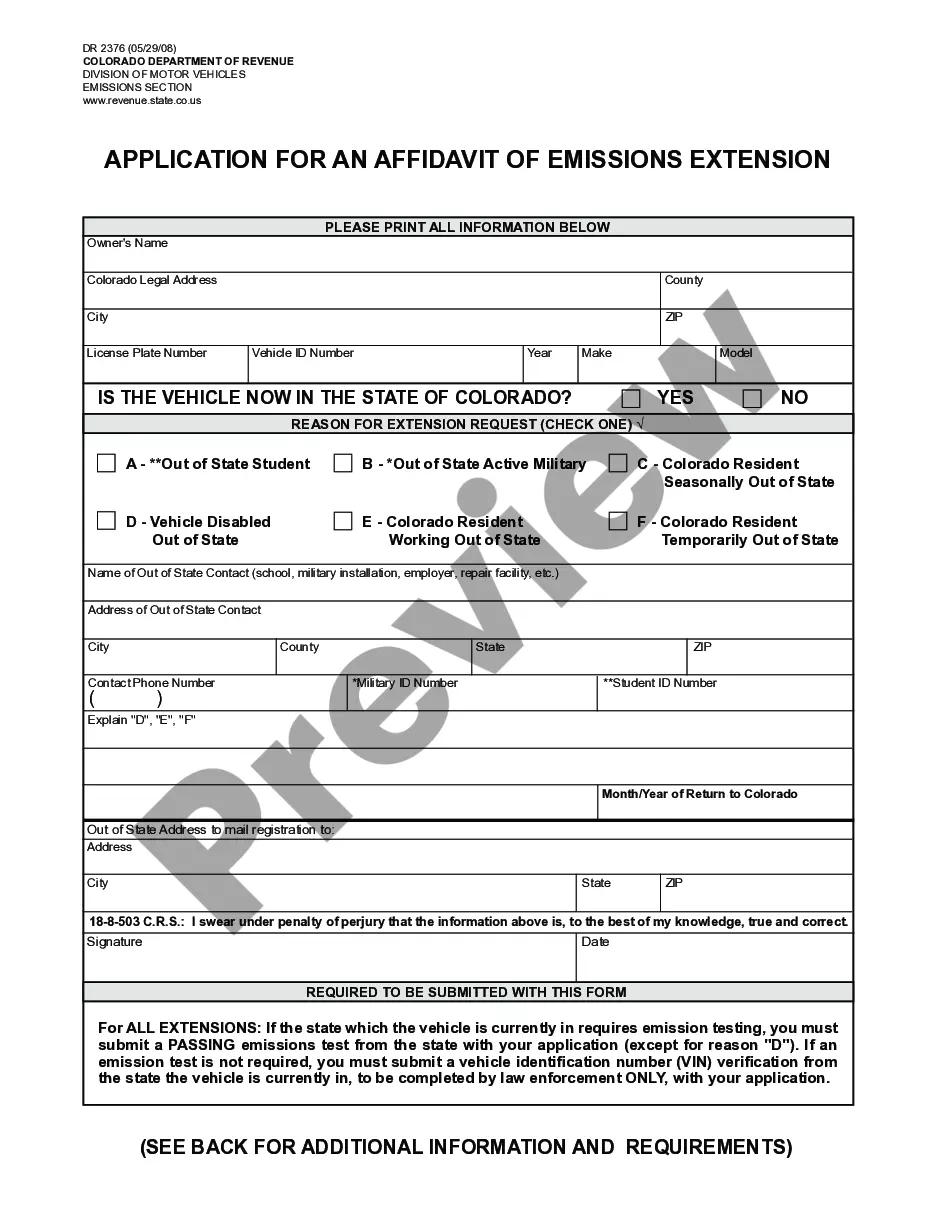
- Examine the form preview and descriptions to ensure it matches your needs.
Form popularity
FAQ
Most people worked between 12 and 16 hours per day, six days a week, without any paid holidays or vacation. Safety hazards were everywhere, machines didn't have any safety covers or fences and children as young as 5 years old were operating them. Iron workers worked in temperatures of 130 degrees and higher every day.
Many workers in the late 1800s and early 1900s spent an entire day tending a machine in a large, crowded, noisy room. Others worked in coal mines, steel mills, railroads, slaughterhouses, and in other dangerous occupations. Most were not paid well, and the typical workday was 12 hours or more, six days per week.
The working conditions in factories were often harsh. Hours were long, typically ten to twelve hours a day. Working conditions were frequently unsafe and led to deadly accidents. Tasks tended to be divided for efficiency's sake which led to repetitive and monotonous work for employees.
The working conditions in factories were often harsh. Hours were long, typically ten to twelve hours a day. Working conditions were frequently unsafe and led to deadly accidents. Tasks tended to be divided for efficiency's sake which led to repetitive and monotonous work for employees.
The Industrial Revolution led to rapid changes in people's living and working conditions. In response to poor working conditions, labor movements organized alliances known as unions and pushed for reforms. Reform movements happened around the world but started in Britain and the United States.