Hipaa Privacy Form Statement For Employees
Description
Get your form ready online
Our built-in tools help you complete, sign, share, and store your documents in one place.
Make edits, fill in missing information, and update formatting in US Legal Forms—just like you would in MS Word.
Download a copy, print it, send it by email, or mail it via USPS—whatever works best for your next step.
Sign and collect signatures with our SignNow integration. Send to multiple recipients, set reminders, and more. Go Premium to unlock E-Sign.
If this form requires notarization, complete it online through a secure video call—no need to meet a notary in person or wait for an appointment.
We protect your documents and personal data by following strict security and privacy standards.
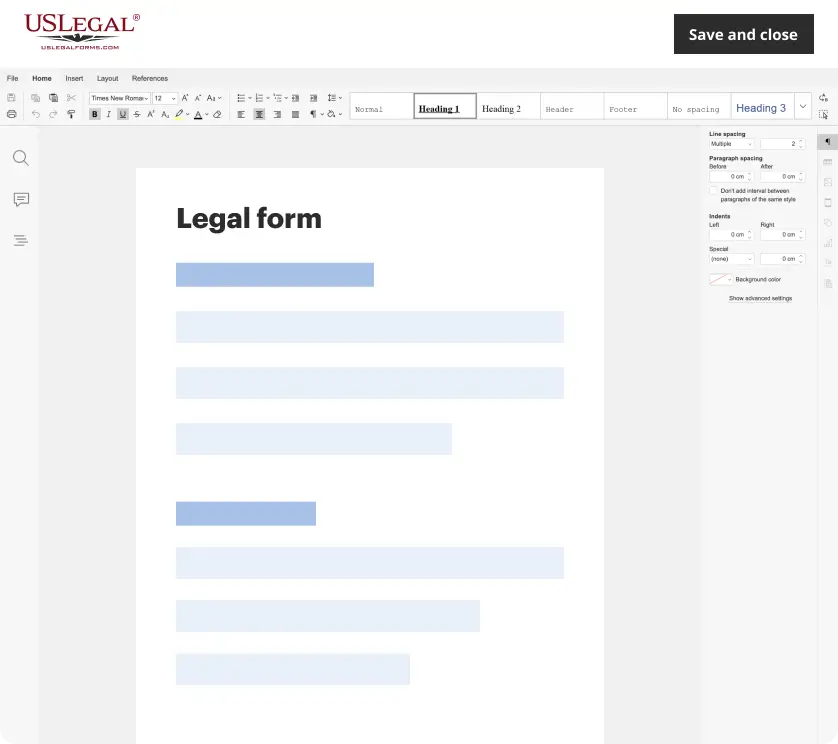
Make edits, fill in missing information, and update formatting in US Legal Forms—just like you would in MS Word.
Download a copy, print it, send it by email, or mail it via USPS—whatever works best for your next step.
Sign and collect signatures with our SignNow integration. Send to multiple recipients, set reminders, and more. Go Premium to unlock E-Sign.
If this form requires notarization, complete it online through a secure video call—no need to meet a notary in person or wait for an appointment.
We protect your documents and personal data by following strict security and privacy standards.
Looking for another form?



How to fill out HIPAA Notice Of Privacy Practices?
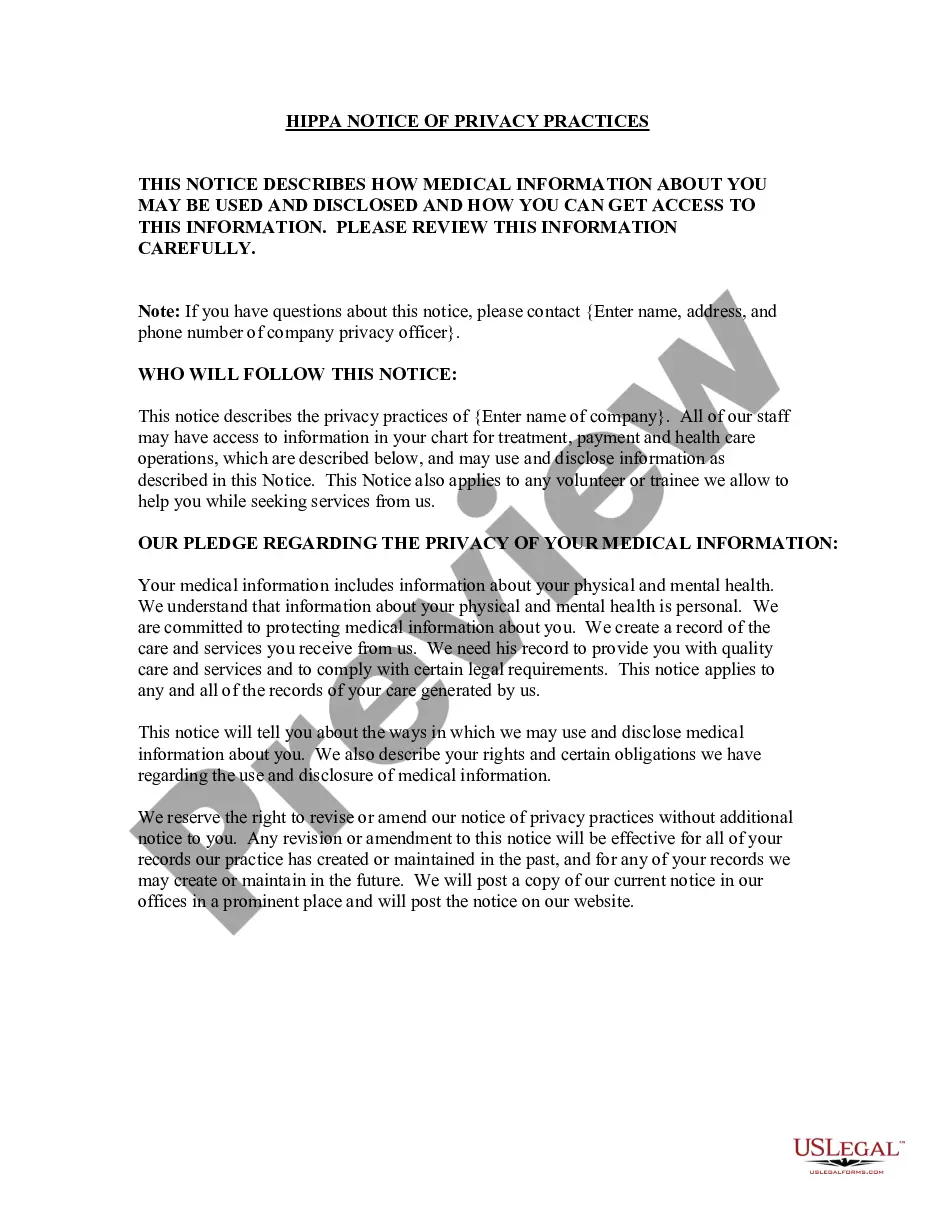
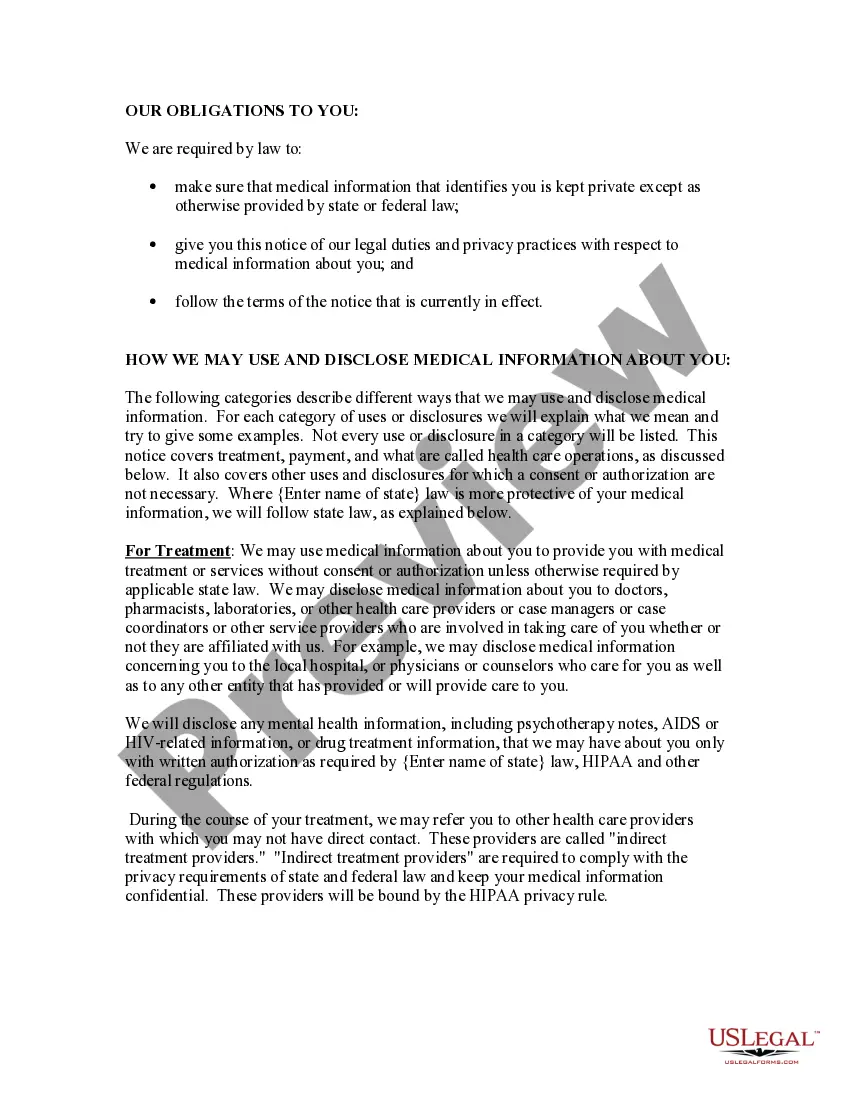
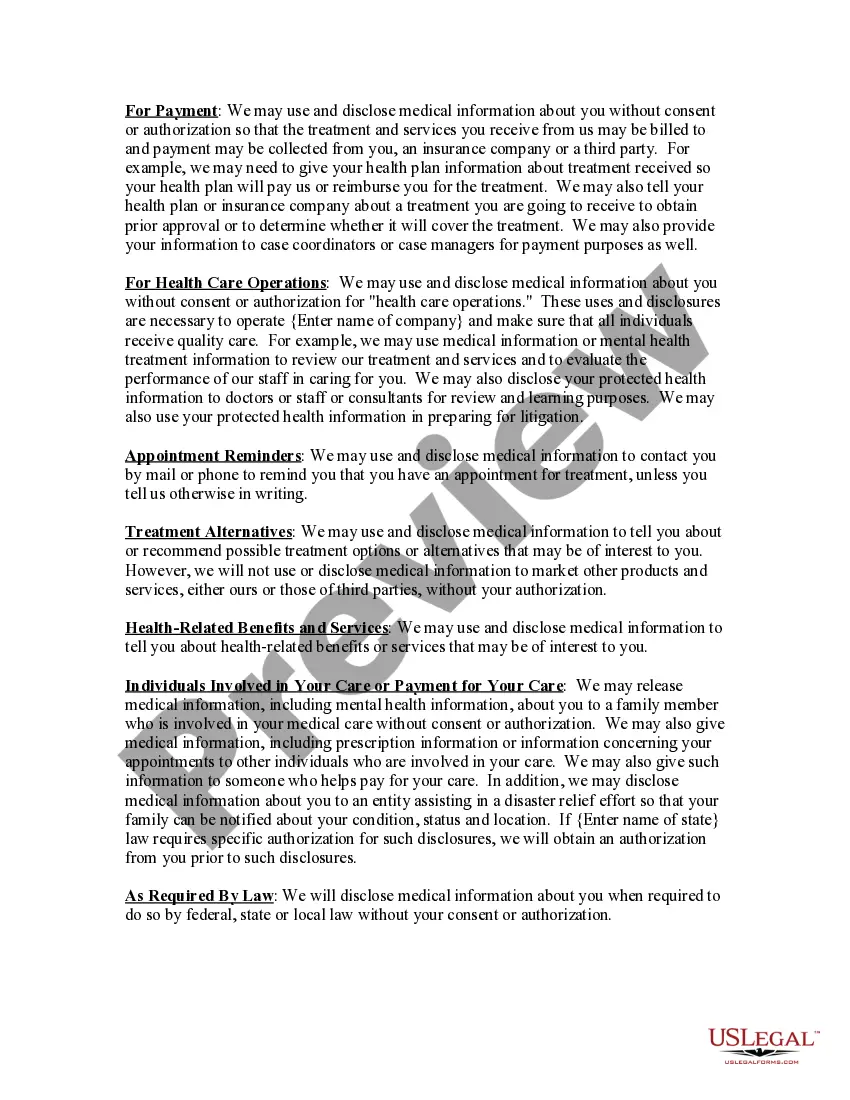
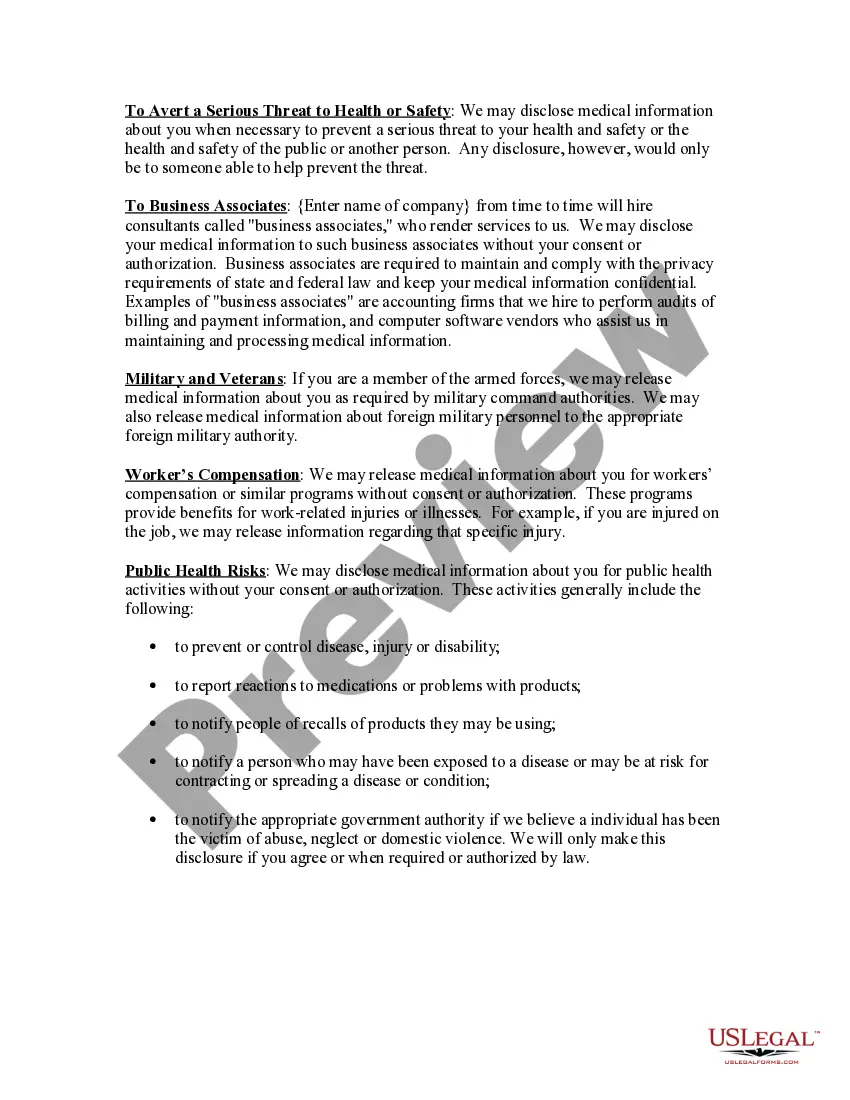
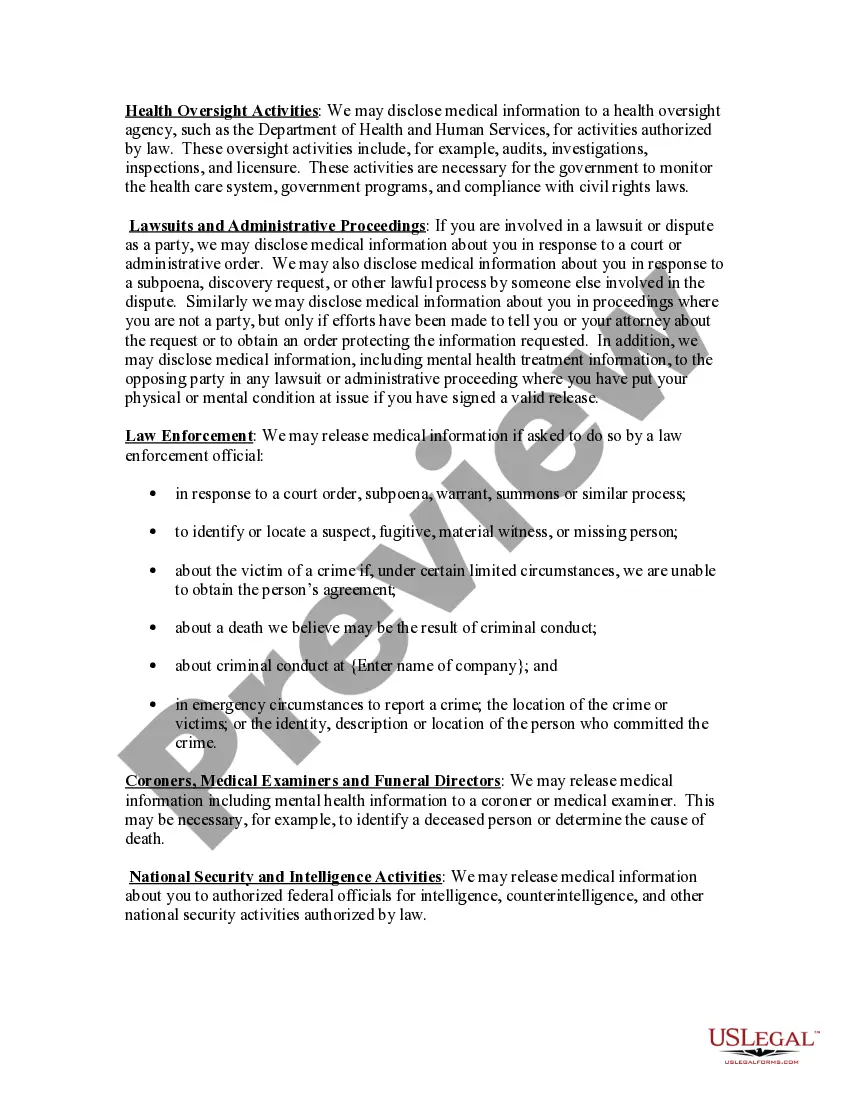
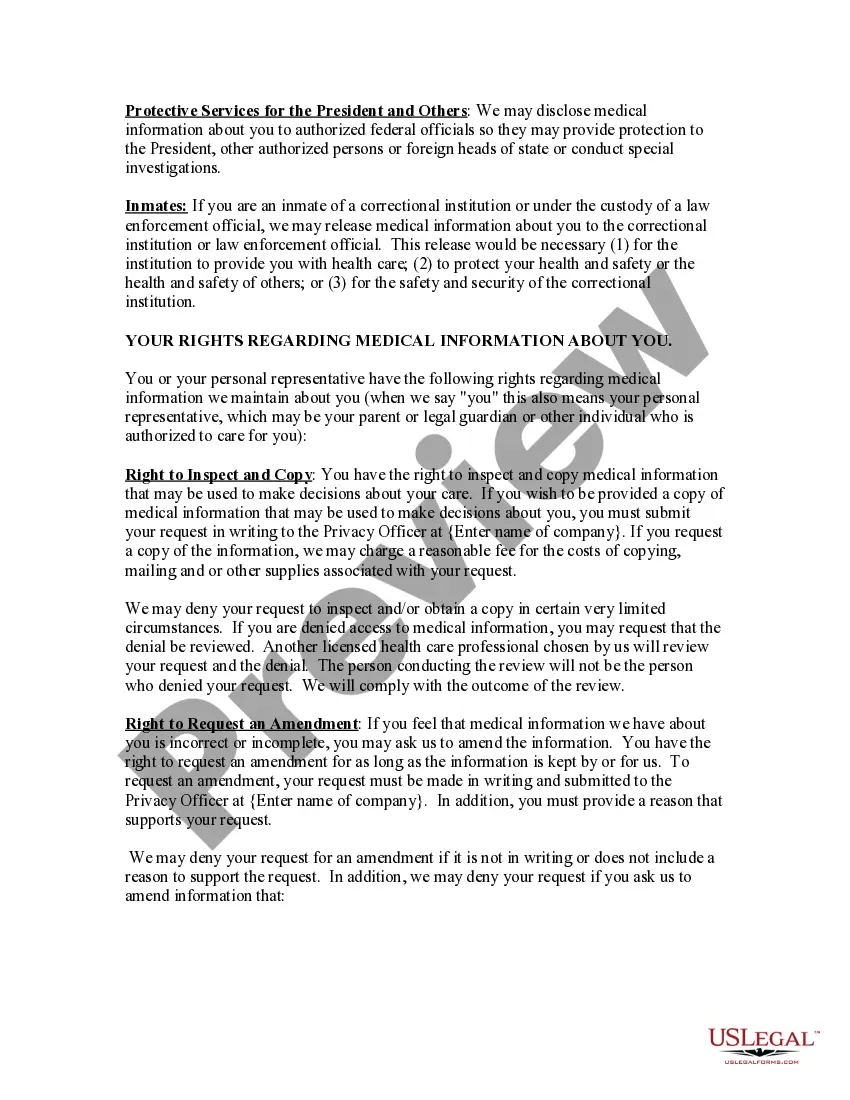
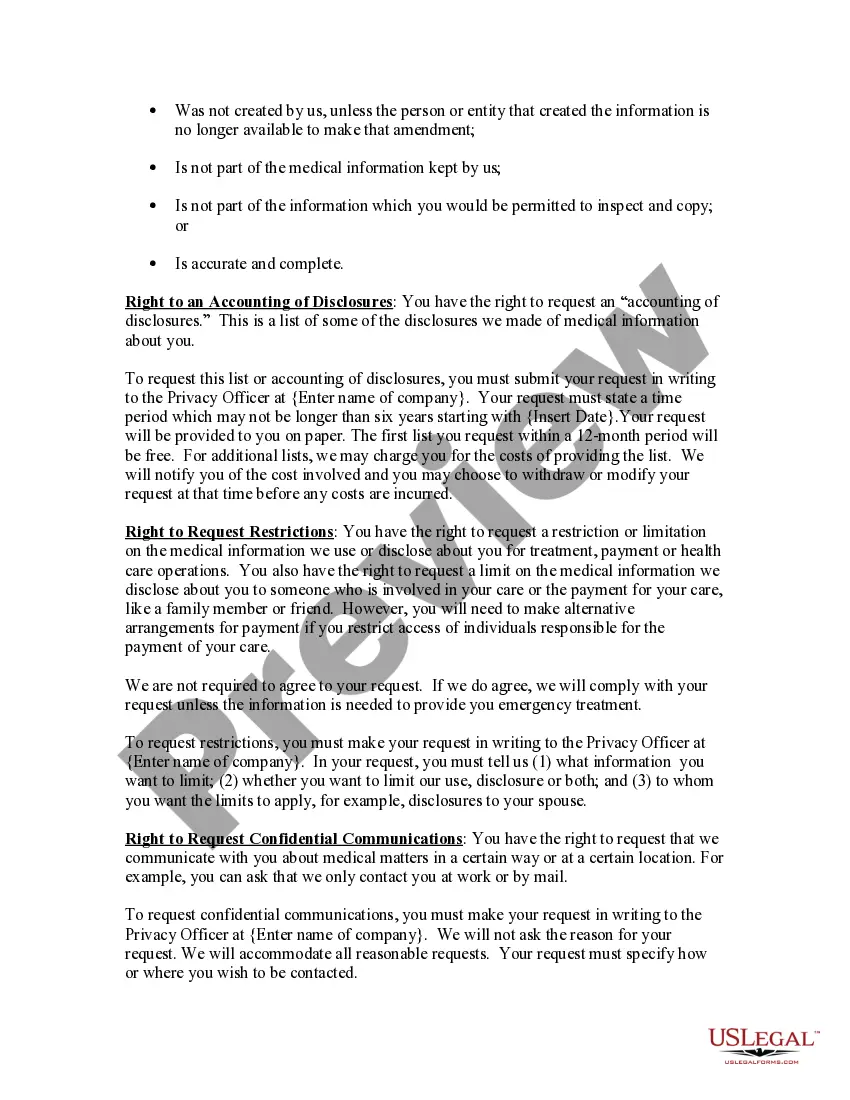
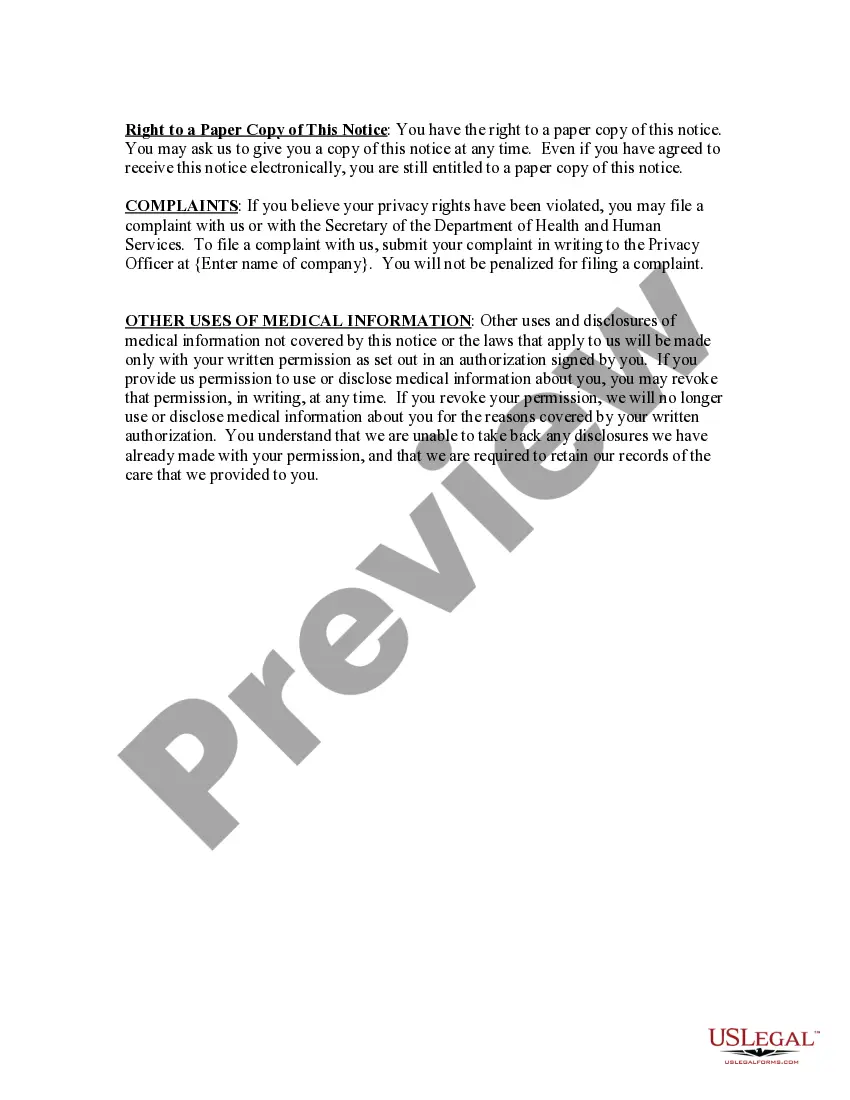
The Hipaa Privacy Form Statement For Employees found on this webpage is a versatile formal blueprint created by expert attorneys in accordance with national and local laws.
For over 25 years, US Legal Forms has supplied individuals, enterprises, and lawyers with upwards of 85,000 validated, state-specific documents for any commercial and personal circumstance. It’s the fastest, most straightforward, and most dependable method to acquire the materials you require, as the service ensures bank-grade data security and anti-malware safeguards.
Subscribe to US Legal Forms to have validated legal templates for every situation in life at your fingertips.
- Search for the document you require and evaluate it.
- Review the sample you found and preview it or examine the form details to confirm it meets your needs. If it doesn’t, use the search feature to locate the appropriate one. Hit 'Buy Now' once you have identified the template you require.
- Register and Log In.
- Select the pricing option that fits your needs and create an account. Use PayPal or a credit card for quick payment. If you already possess an account, Log In and verify your subscription to proceed.
- Obtain the fillable template.
- Choose the format you desire for your Hipaa Privacy Form Statement For Employees (PDF, DOCX, RTF) and download the sample onto your device.
- Fill out and sign the document.
- Print the template to fill it out manually. Alternatively, utilize an online versatile PDF editor to swiftly and accurately complete and sign your form with a valid.
- Download your documents once again.
- Reuse the same document whenever it’s required. Access the 'My documents' section in your profile to redownload any previously saved documents.
Form popularity
FAQ
Confidentiality according to HIPAA refers to the obligation of healthcare providers and employers to protect the privacy of individuals’ health information. This involves ensuring that personal health data is only accessible to those who have authorized access. Adhering to the HIPAA privacy form statement for employees is vital for promoting a culture of confidentiality in the workplace.
An example of a confidentiality statement could be: 'All employees must respect the confidentiality of health records and ensure that any health information is only shared with authorized personnel.' Including a well-defined confidentiality statement as part of the HIPAA privacy form statement for employees is essential for maintaining compliance and ensuring that everyone understands their responsibilities.
Currently, ChatGPT does not guarantee HIPAA compliance. When using AI tools like ChatGPT, it is crucial to avoid sharing any private health information. For organizations needing a secure communication platform, consider using specialized services that ensure adherence to HIPAA regulations.
Probate Division | New Hampshire Judicial Branch.
English courts are a public forum and that means the court will consider particular documents fall within the public domain.
Filing Deadline in New Hampshire's Small Claims Courts You have a limited amount of time to bring a lawsuit, regardless of the New Hampshire court in which you file. The statute of limitations for New Hampshire cases is three years for contracts, personal injury cases, and property damage matters.
Members of the public will need a PACER login and password to review electronic documents. You can obtain a PACER login on-line or by calling (800) 676-6856. If you have a PACER account, you may login to the court's electronic case files.
You can obtain a PACER login on-line or by calling (800) 676-6856. If you have a PACER account, you may login to the court's electronic case files. You may also view the court's electronic case files free of charge at the public terminals in the clerk's office.
A presumption exists that all court records are subject to public inspection.
Most documents in federal courts ? appellate, district, and bankruptcy ? are filed electronically, using a system called Case Management/Electronic Case Files (CM/ECF). The media and public may view most filings found in this system via the Public Access to Court Electronic Records service, better known as PACER.