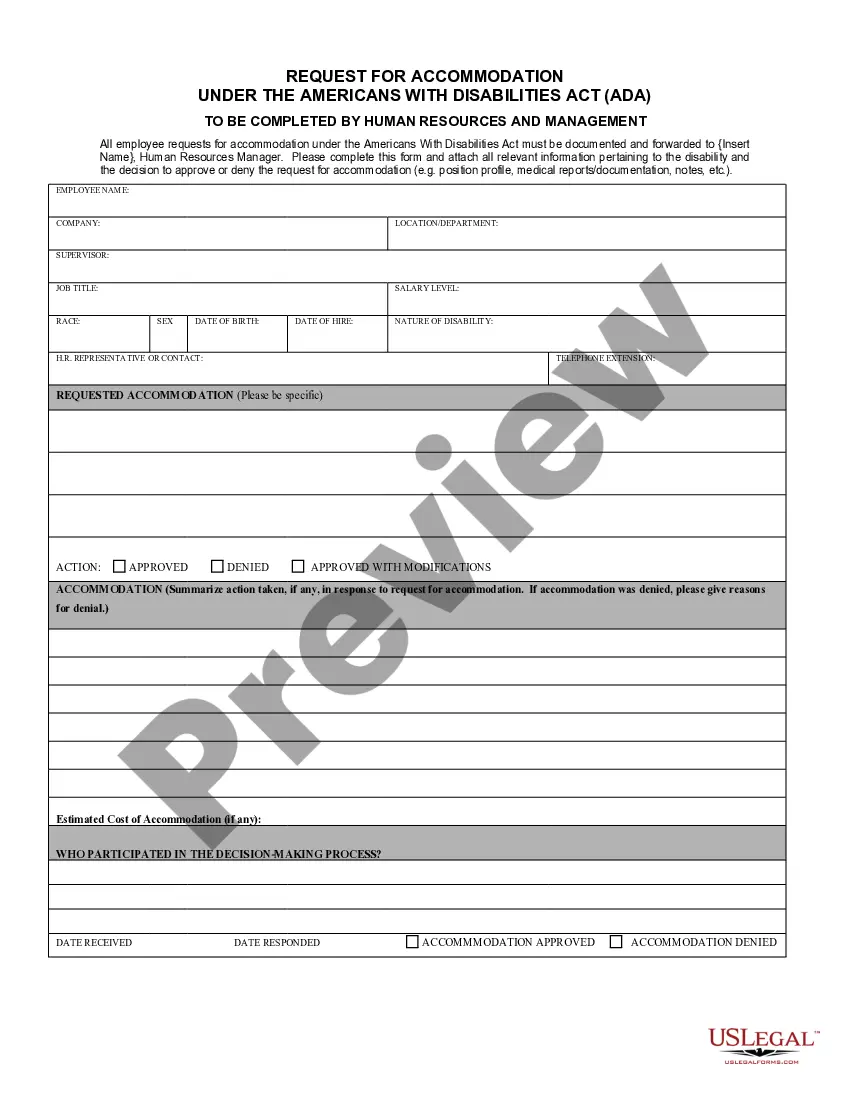
Ada Accommodation For Ptsd
Description
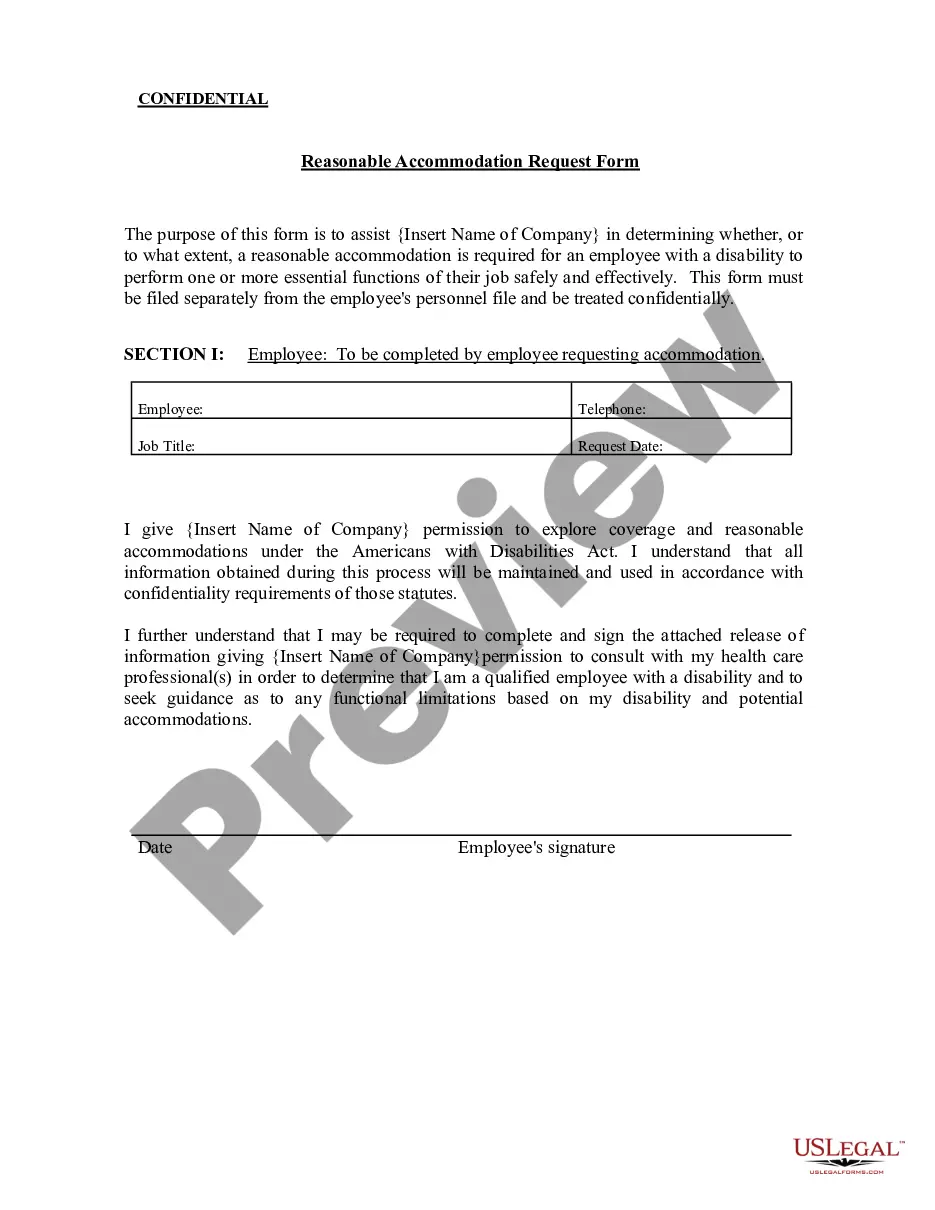
Get your form ready online
Our built-in tools help you complete, sign, share, and store your documents in one place.
Make edits, fill in missing information, and update formatting in US Legal Forms—just like you would in MS Word.
Download a copy, print it, send it by email, or mail it via USPS—whatever works best for your next step.
Sign and collect signatures with our SignNow integration. Send to multiple recipients, set reminders, and more. Go Premium to unlock E-Sign.
If this form requires notarization, complete it online through a secure video call—no need to meet a notary in person or wait for an appointment.
We protect your documents and personal data by following strict security and privacy standards.

Make edits, fill in missing information, and update formatting in US Legal Forms—just like you would in MS Word.

Download a copy, print it, send it by email, or mail it via USPS—whatever works best for your next step.

Sign and collect signatures with our SignNow integration. Send to multiple recipients, set reminders, and more. Go Premium to unlock E-Sign.

If this form requires notarization, complete it online through a secure video call—no need to meet a notary in person or wait for an appointment.

We protect your documents and personal data by following strict security and privacy standards.
Looking for another form?


How to fill out Request For Accommodation Under The ADA?
Whether for commercial reasons or for individual matters, everyone must confront legal issues at some point in their life.
Filling out legal documents requires meticulous care, beginning with choosing the suitable form template.
Once downloaded, you can fill out the form using editing software or print it out and complete it by hand. With an extensive catalog of US Legal Forms available, you won’t have to waste time searching for the correct template online. Utilize the library’s straightforward navigation to find the right form for any situation.
- Identify the document you require by using the search box or browsing the directory.
- Review the description of the form to confirm it aligns with your situation, jurisdiction, and area.
- Click on the preview of the form to examine it.
- If it is the wrong form, return to the search feature to find the Ada Accommodation For Ptsd sample you need.
- Download the template once it fits your needs.
- If you have a profile with US Legal Forms, click Log in to access previously saved templates in My documents.
- If you do not yet have an account, you can download the document by clicking Buy now.
- Select the correct pricing choice.
- Fill out the profile registration form.
- Choose your payment option: you may use a credit card or PayPal account.
- Select the desired file format and download the Ada Accommodation For Ptsd.
Form popularity
FAQ
Yes, PTSD qualifies for ADA accommodations if it substantially limits a major life activity. The ADA protects individuals with disabilities, including mental health conditions like PTSD, and requires employers to provide reasonable accommodations. These accommodations can include job restructuring or remote work options, depending on individual needs. Engaging with tools and resources like USLegalForms can help you understand your rights and prepare your requests effectively.
Reasonable accommodations for PTSD when working from home can include flexible work hours, modified job duties, or access to mental health resources. These adjustments help create a supportive work environment that addresses your unique challenges. Employers benefit too, as they maintain productivity while supporting their employees. Consider presenting these options during discussions with your employer.
To prove PTSD for disability purposes, you typically need to provide medical documentation from a qualified healthcare provider. This documentation should detail your diagnosis, symptoms, and how your condition affects your ability to work. Additionally, gathering personal statements and therapist reports can strengthen your case. Seeking assistance from platforms like USLegalForms can make navigating this process easier.
A reasonable accommodation request to work from home involves formally asking your employer for permission to perform your job duties remotely. This request should outline your PTSD and explain how working from home would help you manage your symptoms effectively. Make sure to provide any necessary documentation to support your request. You can utilize resources like USLegalForms to streamline the process.
Yes, remote work can serve as a reasonable accommodation for PTSD under the ADA. Many individuals find that working from home reduces anxiety and creates a more comfortable environment for productivity. By allowing employees to work in a familiar setting, organizations can enhance well-being and performance. Consider discussing the specifics with your employer to explore how this can work for you.
When managing an employee with PTSD, it's essential to create a supportive environment by fostering open communication. Encourage the employee to discuss their needs regarding ADA accommodations for PTSD, which may include flexible work hours or a quiet space. Additionally, consider seeking guidance from legal platforms like US Legal Forms to ensure your approach aligns with legal obligations.
Several organizations focus on helping individuals with PTSD, including the PTSD Foundation of America and the Anxiety and Depression Association of America. These organizations provide education, resources, and community support. They often have information on ADA accommodations for PTSD to help you advocate for your rights and necessary adjustments.
Individuals with PTSD can access several valuable resources, such as the National Center for PTSD and local mental health providers. Online forums and educational materials provide further support and information. By utilizing these resources, you can learn more about your rights, including how to request ADA accommodations for PTSD in your workplace.
A variety of services are available for those experiencing PTSD, including psychological therapies, medication management, and holistic approaches like mindfulness. Many organizations also offer educational resources to help individuals understand and manage their symptoms. When considering ADA accommodations for PTSD, seeking assistance from services like US Legal Forms can help ensure your needs are met.
Yes, PTSD is considered a mental health condition that falls under the Americans with Disabilities Act (ADA). This means that individuals with PTSD may qualify for specific accommodations at work to ensure a supportive environment. Understanding these rights is crucial, and US Legal Forms can guide you in navigating the legal aspects surrounding ADA accommodations for PTSD.