Reasonable Accommodation In The Federal Government
Description
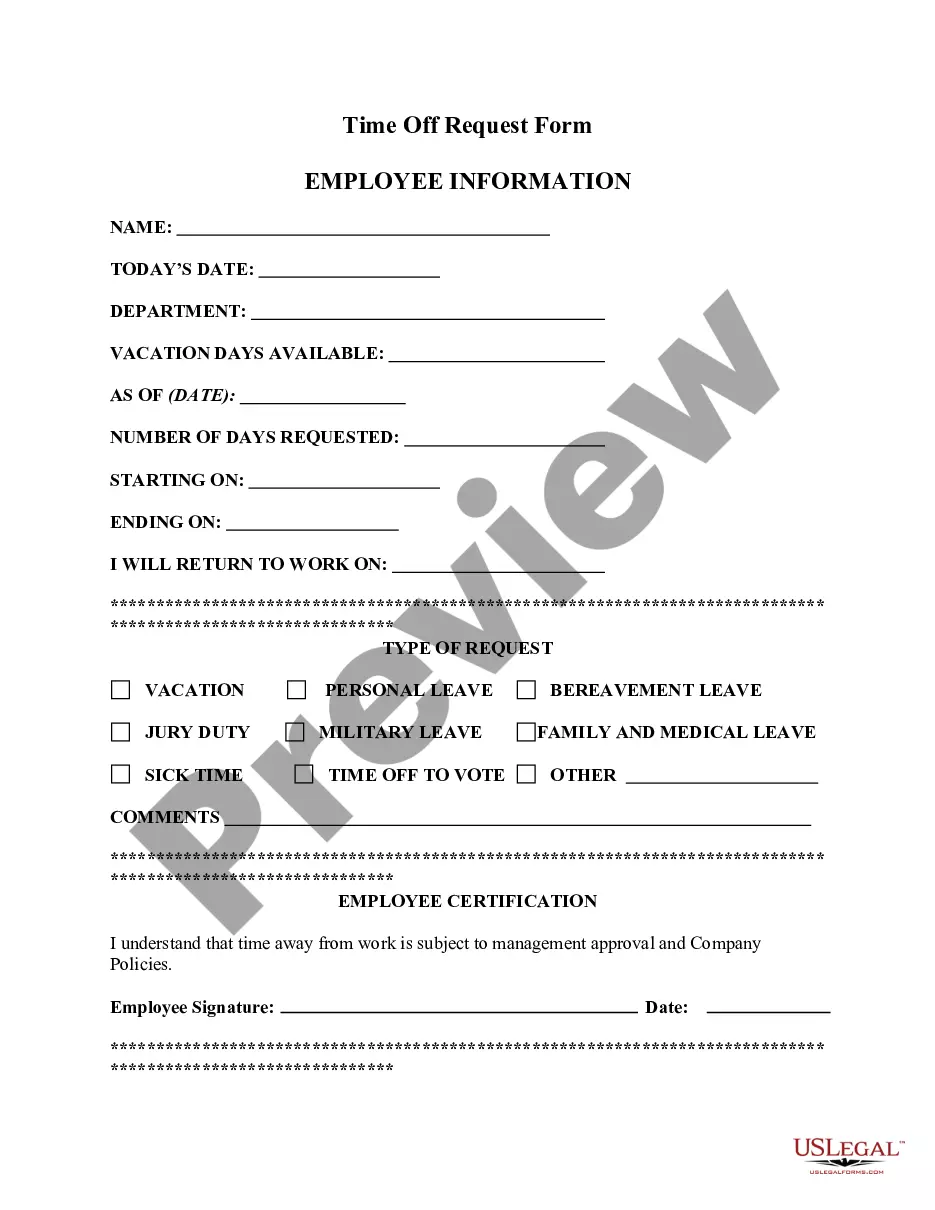
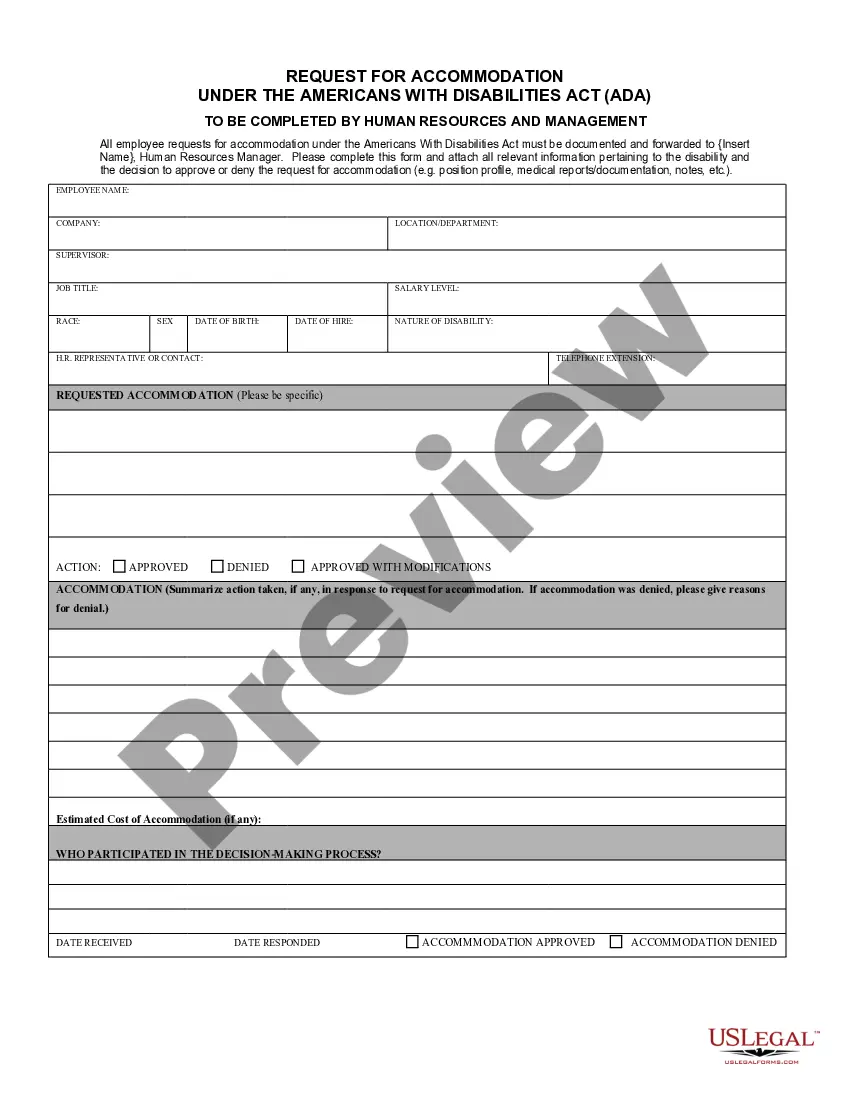
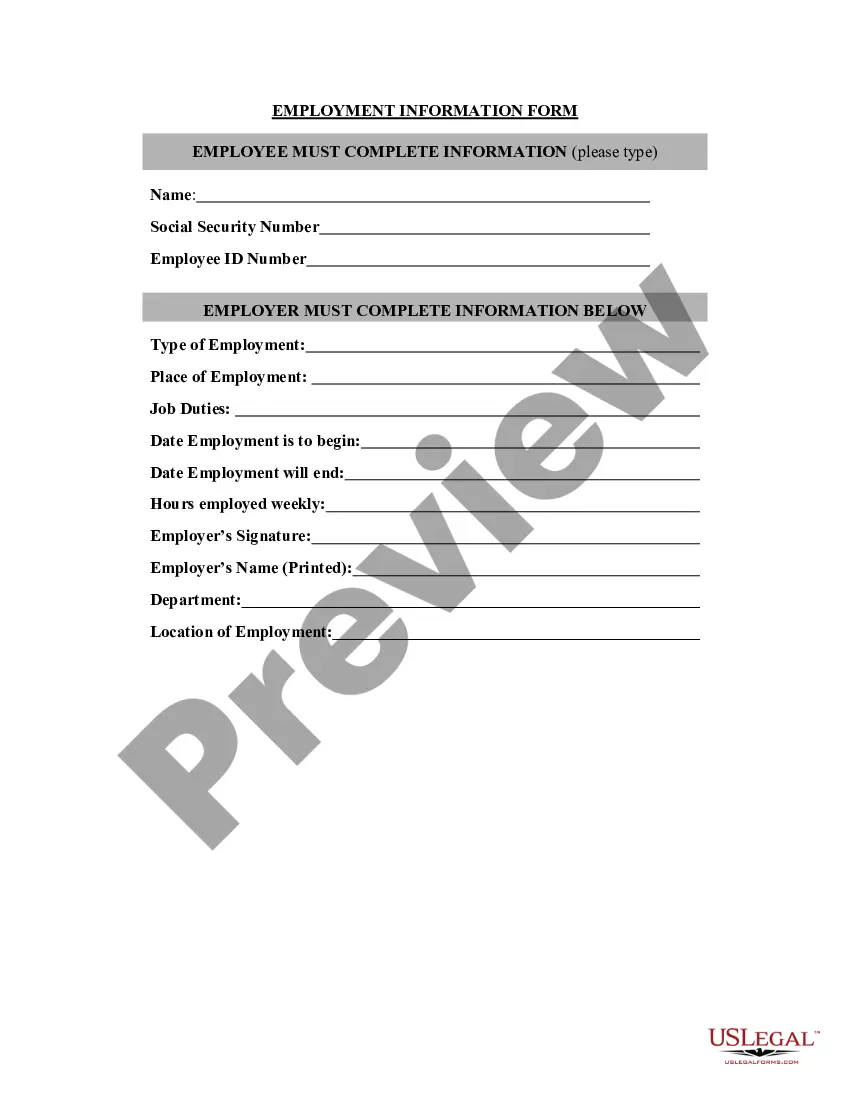
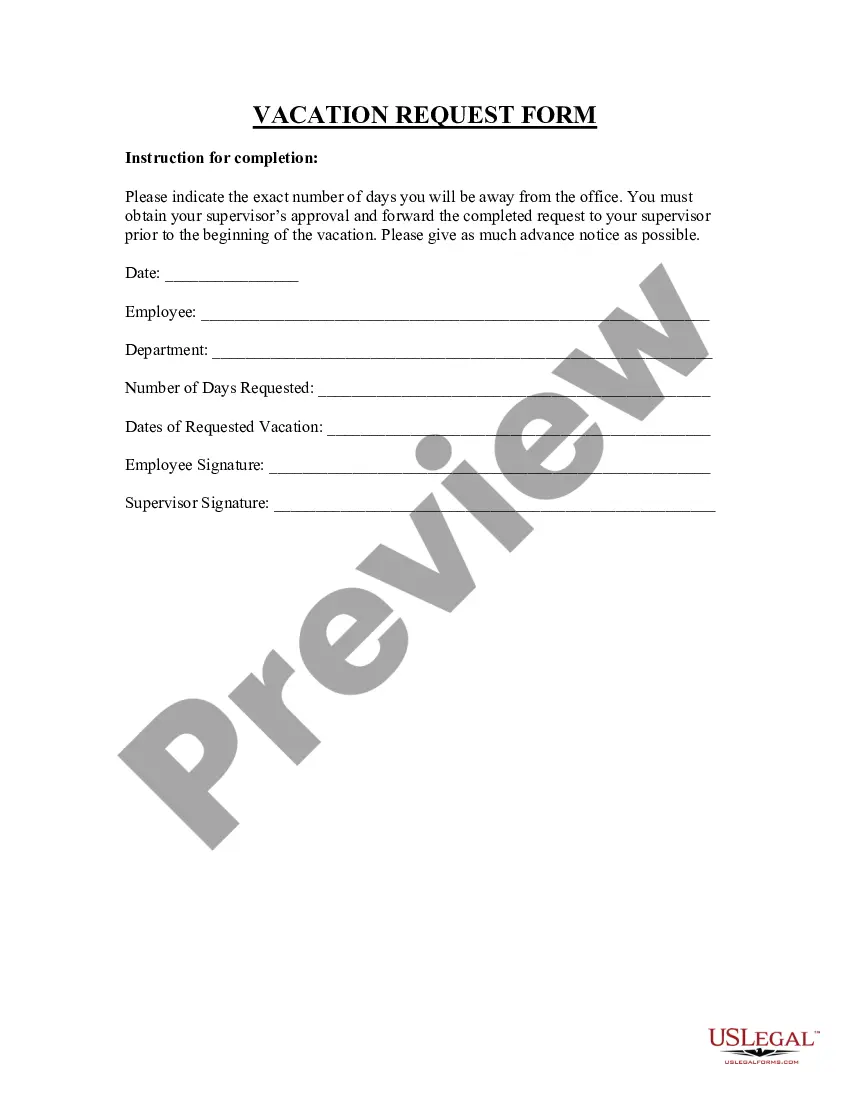
Get your form ready online
Our built-in tools help you complete, sign, share, and store your documents in one place.
Make edits, fill in missing information, and update formatting in US Legal Forms—just like you would in MS Word.
Download a copy, print it, send it by email, or mail it via USPS—whatever works best for your next step.
Sign and collect signatures with our SignNow integration. Send to multiple recipients, set reminders, and more. Go Premium to unlock E-Sign.
If this form requires notarization, complete it online through a secure video call—no need to meet a notary in person or wait for an appointment.
We protect your documents and personal data by following strict security and privacy standards.

Make edits, fill in missing information, and update formatting in US Legal Forms—just like you would in MS Word.

Download a copy, print it, send it by email, or mail it via USPS—whatever works best for your next step.

Sign and collect signatures with our SignNow integration. Send to multiple recipients, set reminders, and more. Go Premium to unlock E-Sign.

If this form requires notarization, complete it online through a secure video call—no need to meet a notary in person or wait for an appointment.

We protect your documents and personal data by following strict security and privacy standards.
Looking for another form?
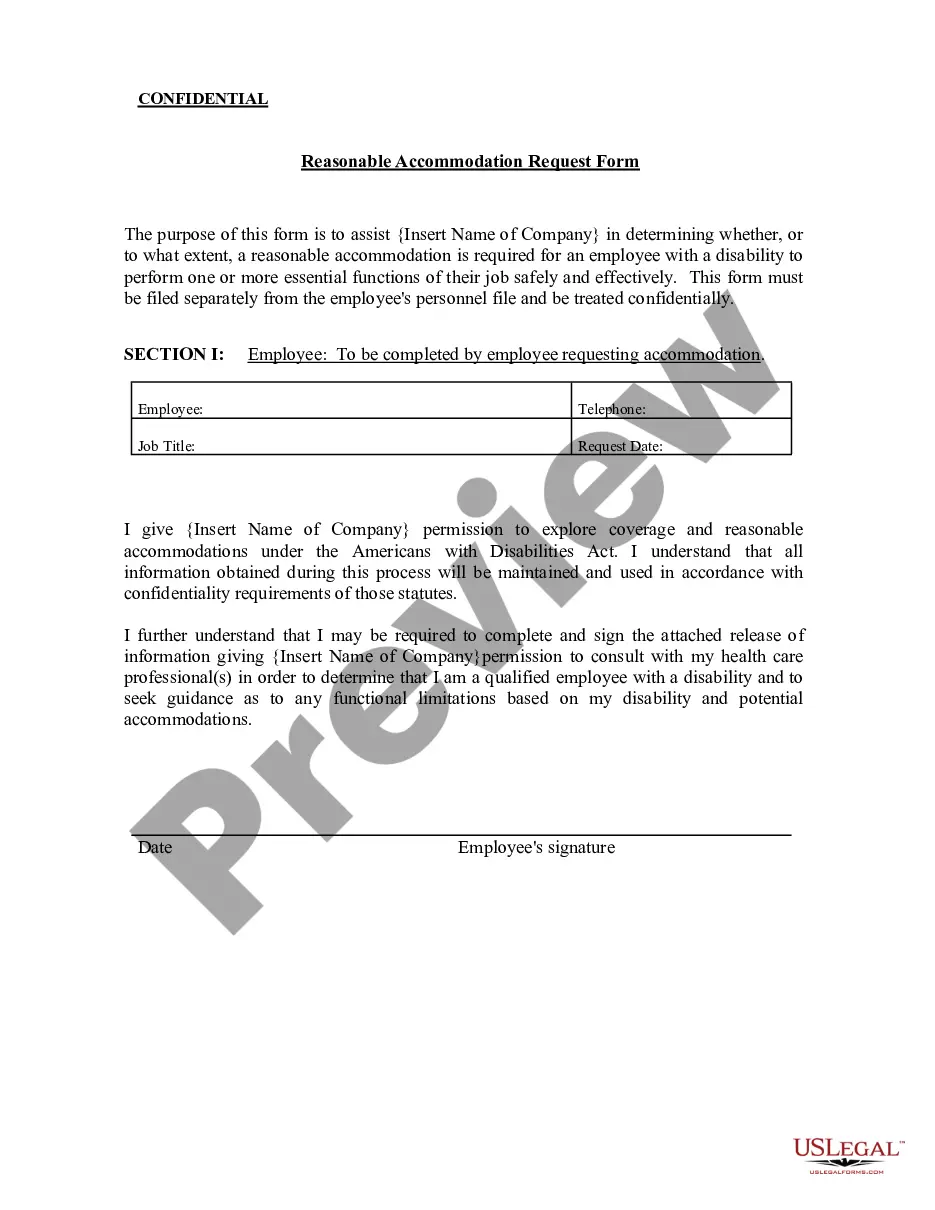
How to fill out Reasonable Accommodation Request Form?
The Acceptable Adjustment In The Federal Sector you observe on this webpage is a reusable legal framework composed by expert attorneys in accordance with federal and local statutes and regulations.
For over 25 years, US Legal Forms has offered individuals, enterprises, and lawyers more than 85,000 validated, state-specific documents for any commercial and personal need. It’s the fastest, simplest, and most reliable method to acquire the paperwork you require, as the service assures bank-level data security and anti-malware safeguards.
Select the format you desire for your Acceptable Adjustment In The Federal Sector (PDF, Word, RTF) and save the sample on your device.
- Search for the document you require and evaluate it.
- Survey the sample you found and preview it or examine the form description to confirm it meets your needs. If it doesn’t, utilize the search bar to locate the appropriate one. Click Buy Now once you have identified the template you seek.
- Subscribe and Log In.
- Choose the pricing option that fits you and create an account. Use PayPal or a credit card to make a swift payment. If you already possess an account, Log In and verify your subscription to continue.
- Obtain the fillable template.
Form popularity
FAQ
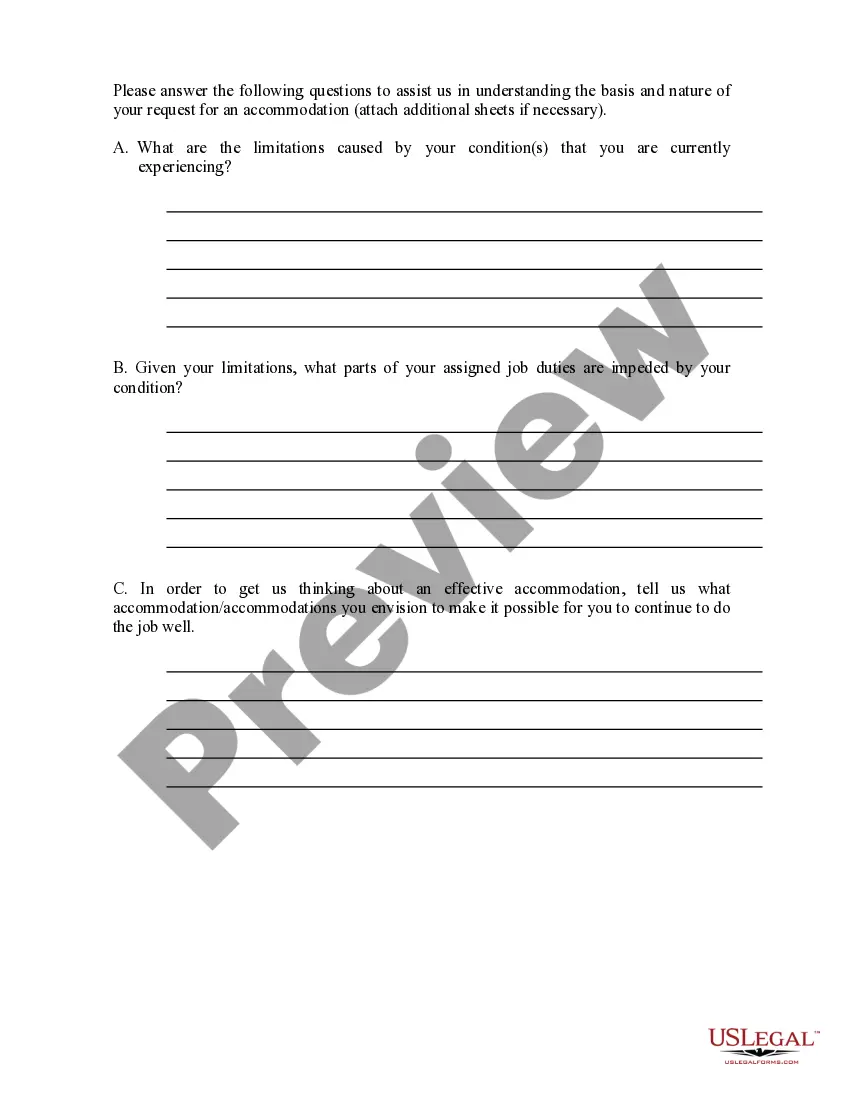
To complete a reasonable accommodation form, start by gathering necessary personal information, including your contact details and medical documentation, if required. Clearly articulate your needs and provide any supporting information that explains how the accommodation will aid your job performance. Utilizing the USLegalForms platform can simplify this process by providing structured formats and guidance.
Examples of reasonable accommodations include flexible work schedules, modified workstations, and access to assistive technology. These adjustments help individuals perform their jobs effectively while considering their specific needs. In the federal government context, such accommodations are essential for promoting inclusivity and equal opportunities.
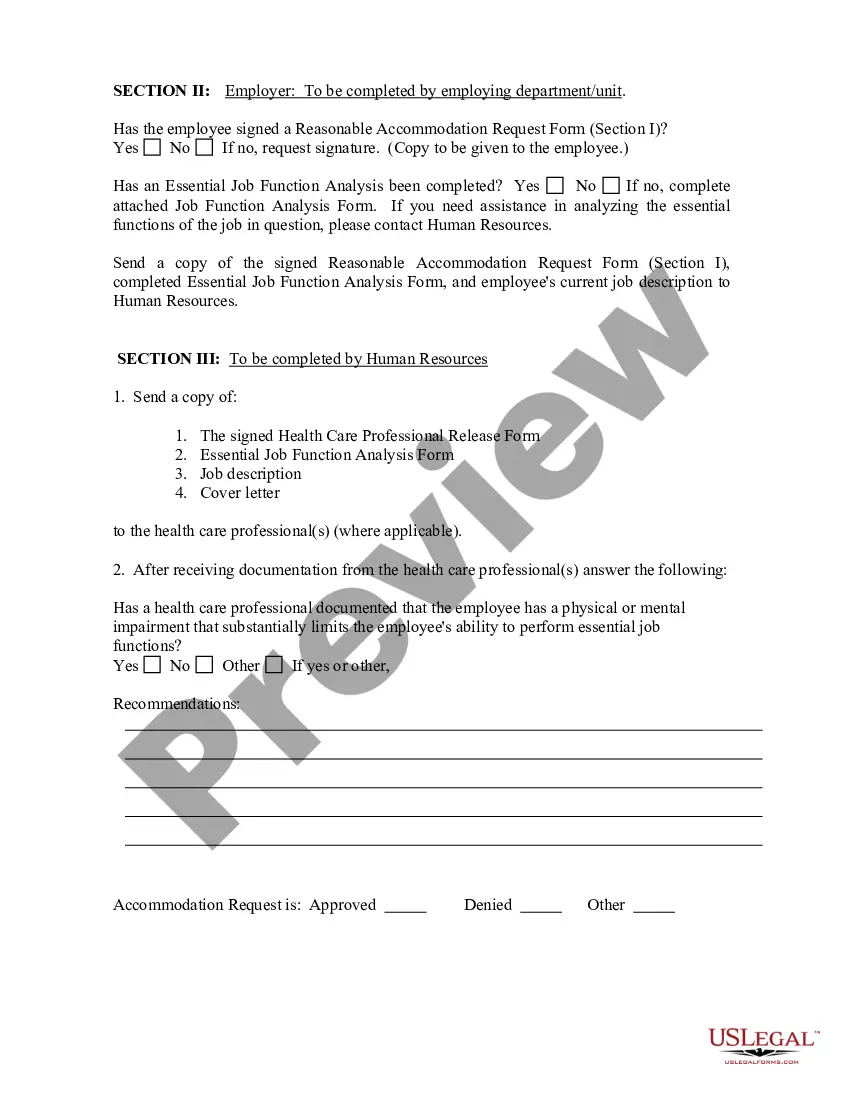
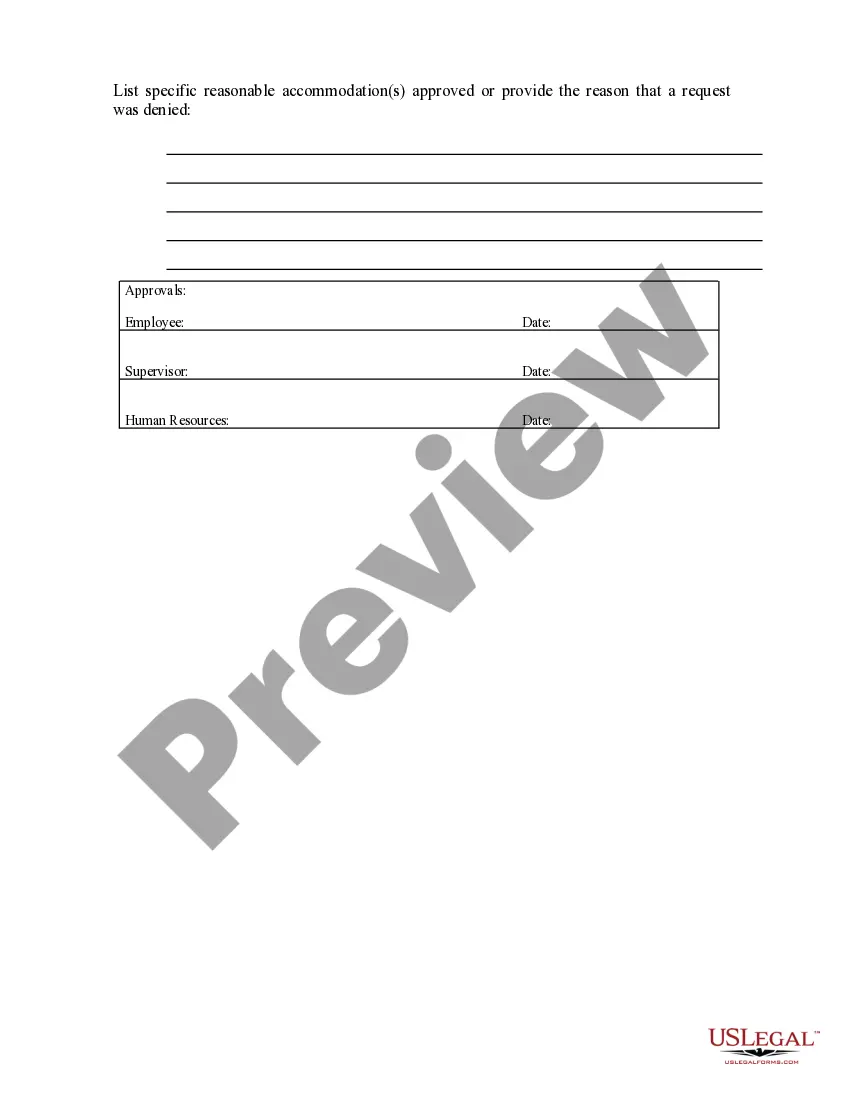
A valid reason to deny a reasonable accommodation request could include situations where the accommodation imposes an undue hardship on the operation of the federal agency. For instance, if the requested changes disrupt workflow or require significant resources, the request might be denied. It is important for both parties to engage in an interactive process that ensures understanding and fairness.
Filing a reasonable accommodation request with the federal government requires submitting the completed form to your designated human resources representative. It is essential to follow up on your request to ensure it is being processed. The procedures may vary by agency, but understanding the basic filing process is crucial for timely accommodations.
Filling out a reasonable accommodation form involves providing personal details, describing your condition, and specifying the accommodations you need. It is important to clearly articulate how these accommodations will help you perform your duties. For detailed guidance, you can consult resources available on the USLegalForms platform, which offers templates and examples to streamline the process.
A reasonable accommodation statement typically outlines an employee's need for adjustments to perform their job effectively. For instance, a statement might indicate that an employee requires specific assistive technology to complete work tasks. In the context of reasonable accommodation in the federal government, such a statement helps clarify the employee's situation and the requested changes.
The first step in determining a reasonable accommodation in the federal government involves an interactive dialogue between the employee and employer. This conversation should focus on the employee's specific needs and the essential functions of their job. By engaging openly, both parties can identify potential solutions that meet legal requirements and support workplace productivity. For guidance, US Legal Forms can provide valuable resources.
Reasons for denying a reasonable accommodation in the federal government can include undue hardship, lack of medical documentation, or the request being unreasonable or not directly related to the job. Each situation is unique, and it's essential for employers to provide a clear rationale for their decision. Understanding these reasons can help employees better prepare their requests. You may find assistance through US Legal Forms to navigate these complexities.
An employer may deny a request for reasonable accommodation in the federal government if fulfilling that request would cause undue hardship or if the individual does not have a qualifying disability. Additionally, if the request falls outside the scope of what can be reasonably accommodated, it may also be denied. Transparency in communication is crucial, and employers must explain the reasoning for denial. Users can consult resources such as US Legal Forms for further assistance.
To request a reasonable accommodation in the federal government, you typically start by contacting your human resources department or the designated office for accommodations. Provide necessary documentation that outlines your needs and how they relate to your job. Being clear and specific helps streamline the process and ensures that your request is taken seriously. Resources like US Legal Forms can guide you in crafting an effective request.