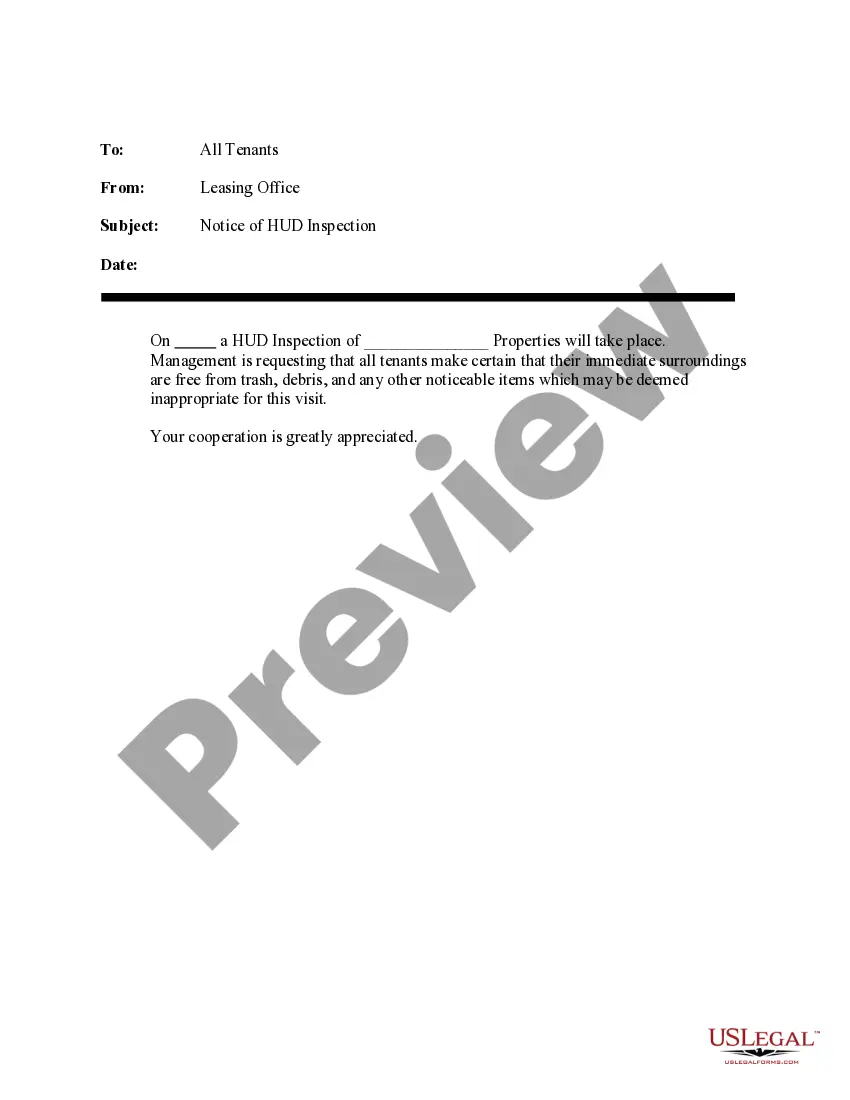
Notice Inspection Subject For Rental
Description
Get your form ready online
Our built-in tools help you complete, sign, share, and store your documents in one place.
Make edits, fill in missing information, and update formatting in US Legal Forms—just like you would in MS Word.
Download a copy, print it, send it by email, or mail it via USPS—whatever works best for your next step.
Sign and collect signatures with our SignNow integration. Send to multiple recipients, set reminders, and more. Go Premium to unlock E-Sign.
If this form requires notarization, complete it online through a secure video call—no need to meet a notary in person or wait for an appointment.
We protect your documents and personal data by following strict security and privacy standards.

Make edits, fill in missing information, and update formatting in US Legal Forms—just like you would in MS Word.

Download a copy, print it, send it by email, or mail it via USPS—whatever works best for your next step.

Sign and collect signatures with our SignNow integration. Send to multiple recipients, set reminders, and more. Go Premium to unlock E-Sign.

If this form requires notarization, complete it online through a secure video call—no need to meet a notary in person or wait for an appointment.

We protect your documents and personal data by following strict security and privacy standards.
Looking for another form?



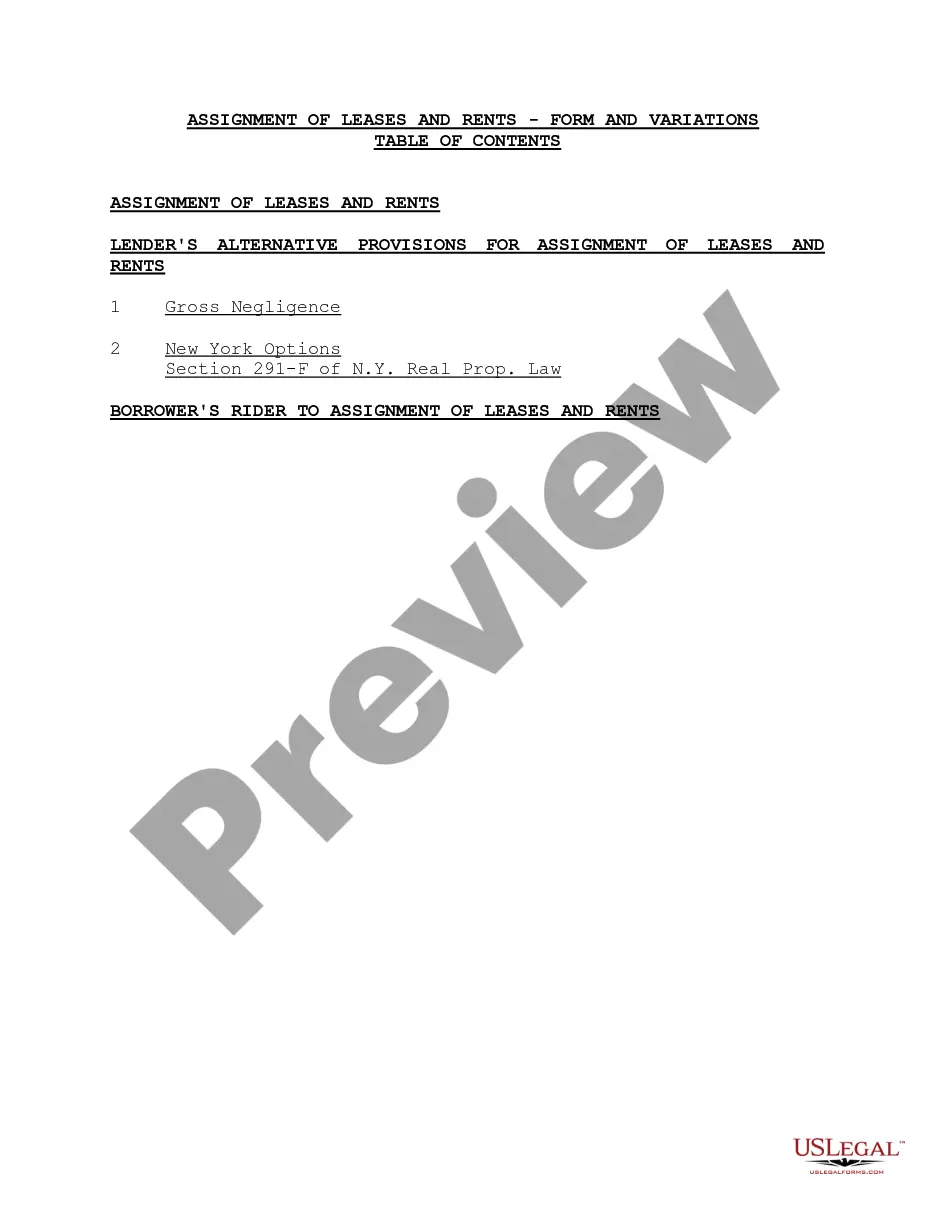



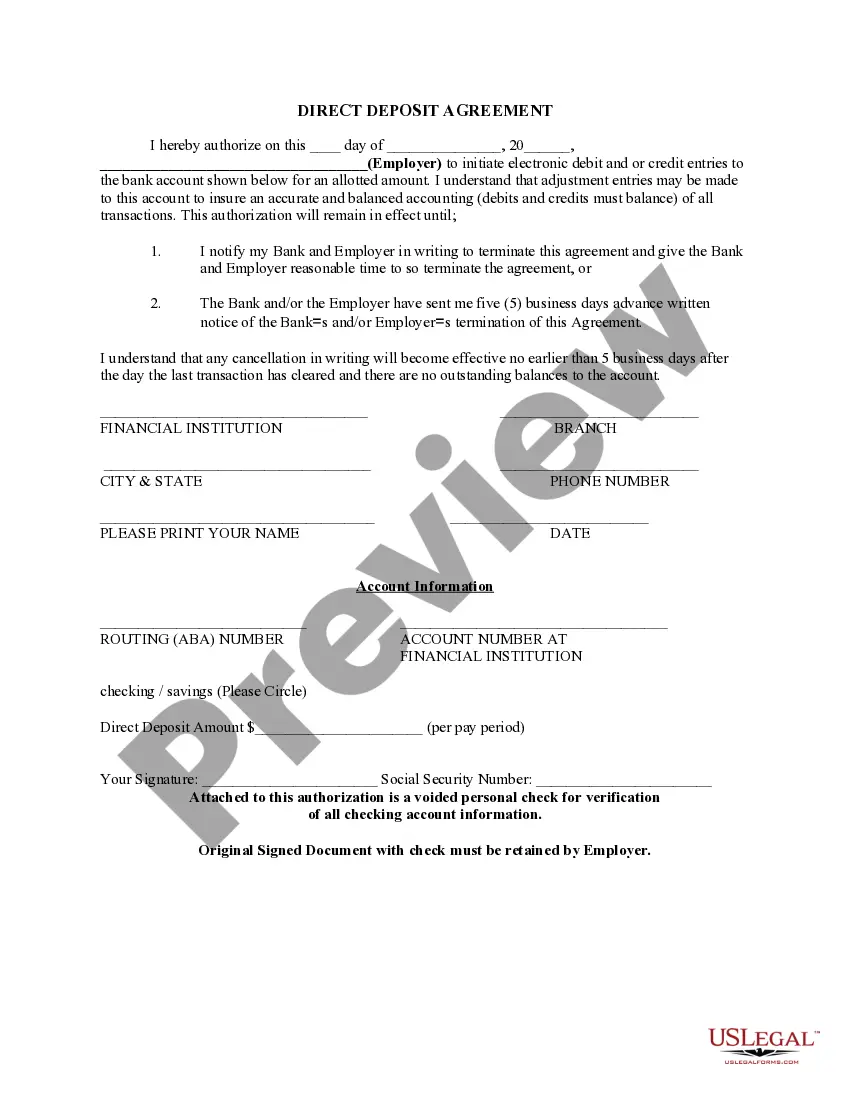


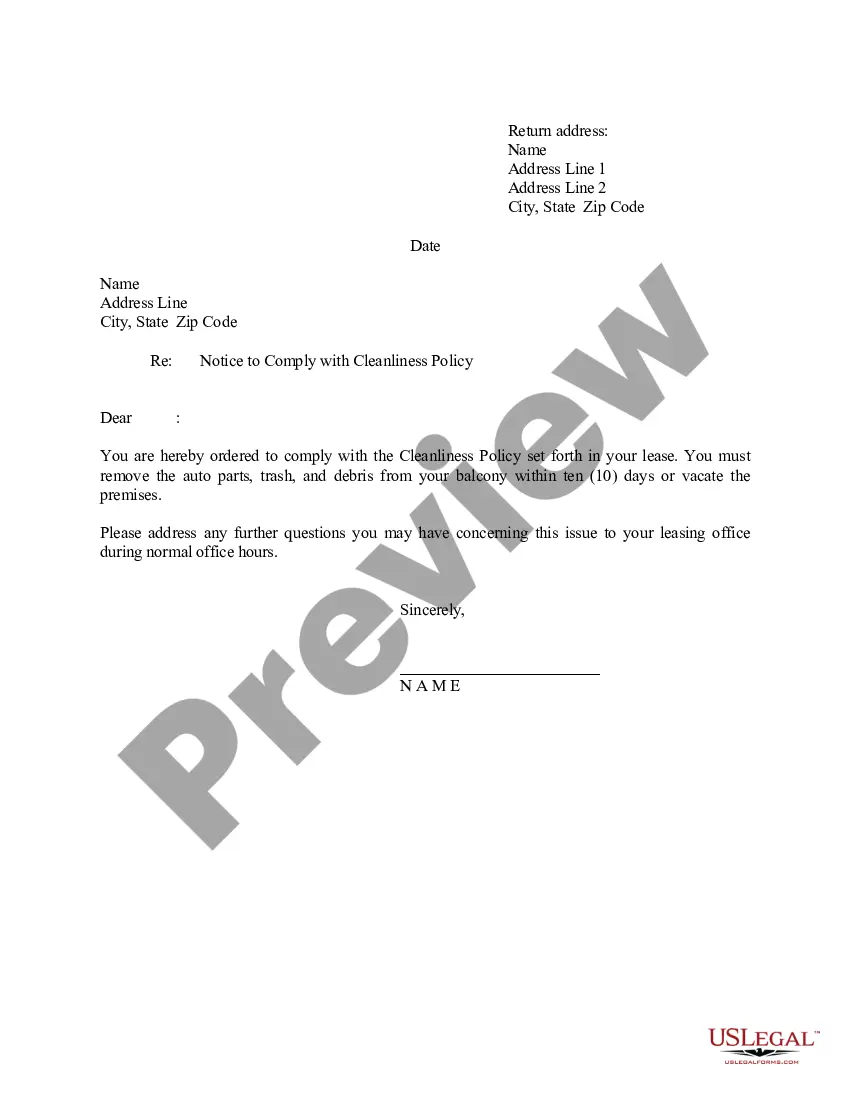
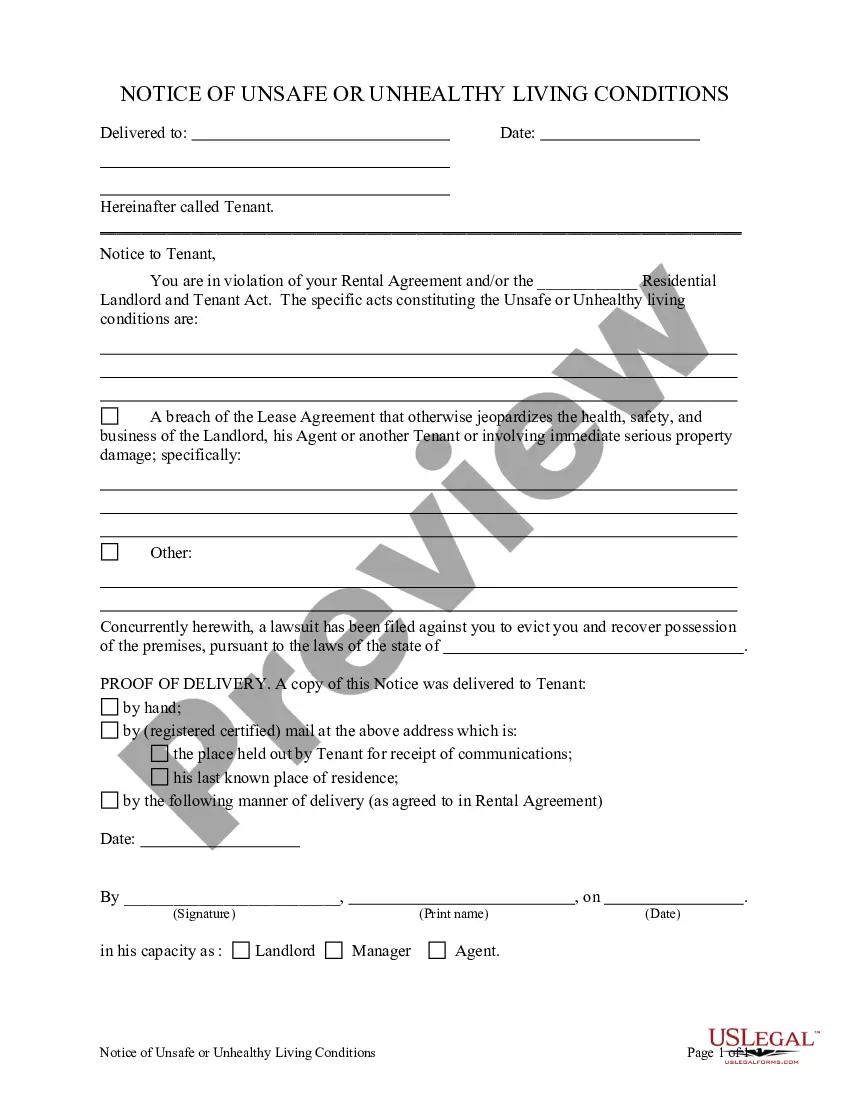
How to fill out Letter - Notice To Tenants Announcing HUD Inspection?
Whether for commercial reasons or personal affairs, everyone must deal with legal matters at some stage in their life.
Completing legal documents requires meticulous attention, starting from selecting the appropriate form template.
Once it is saved, you can fill out the form using editing software or print it and complete it manually. With a vast US Legal Forms catalog at your disposal, you do not need to waste time searching for the suitable sample online. Utilize the library's user-friendly navigation to discover the right template for any circumstance.
- For instance, if you select an incorrect version of a Notice Inspection Subject For Rental, it will be rejected upon submission.
- Thus, it is vital to have a trustworthy source of legal documents like US Legal Forms.
- If you require a Notice Inspection Subject For Rental template, follow these straightforward steps.
- Obtain the sample you need by utilizing the search bar or catalog navigation.
- Review the form's description to confirm it aligns with your case, state, and locality.
- Click on the form's preview to examine it.
- If it is the incorrect document, return to the search function to find the Notice Inspection Subject For Rental template you need.
- Download the template once it satisfies your requirements.
- If you already possess a US Legal Forms account, simply click Log in to access previously stored files in My documents.
- If you do not have an account yet, you may obtain the form by clicking Buy now.
- Select the appropriate pricing option.
- Complete the profile registration form.
- Choose your payment method: use a credit card or PayPal account.
- Select the file format you desire and download the Notice Inspection Subject For Rental.
Form popularity
FAQ
Landlords are generally prohibited from locking a tenant out of the premises, from taking a tenant's property for nonpayment of rent (except for abandoned property under certain conditions), or from intentionally terminating a tenant's utility service. Various penalties exist for violating these protections.
Landlords must give 120 days' notice for the termination of month-to-month tenancies before major building changes that require tenants to leave the building. Previously, 20 days' notice was required. As a reminder, an owner or immediate family needing to occupy the unit doesn't qualify as change of use.
(1)(a) When premises are rented for an indefinite time, with monthly or other periodic rent reserved, such tenancy shall be construed to be a tenancy from month to month, or from period to period on which rent is payable, and shall end by written notice of 20 days or more, preceding the end of any of the months or ...
If you are a month-to-month tenant, you must give notice to your landlord in writing at least 20 days (not including the day your serve the notice) before the last day of the month that you want to move out. For example, if you wanted to move out by July 31, you must give notice no later than July 11.
Reasonable Notice The New York Attorney General's office has held that ?reasonable? means one week's notice for repairs and 24 hours notice for inspections. As a landlord, you will need to provide the tenant with reasonable notice in writing of your intent to enter.