Company Internet Email Policy Format
Description

Get your form ready online
Our built-in tools help you complete, sign, share, and store your documents in one place.
Make edits, fill in missing information, and update formatting in US Legal Forms—just like you would in MS Word.
Download a copy, print it, send it by email, or mail it via USPS—whatever works best for your next step.
Sign and collect signatures with our SignNow integration. Send to multiple recipients, set reminders, and more. Go Premium to unlock E-Sign.
If this form requires notarization, complete it online through a secure video call—no need to meet a notary in person or wait for an appointment.
We protect your documents and personal data by following strict security and privacy standards.

Make edits, fill in missing information, and update formatting in US Legal Forms—just like you would in MS Word.

Download a copy, print it, send it by email, or mail it via USPS—whatever works best for your next step.

Sign and collect signatures with our SignNow integration. Send to multiple recipients, set reminders, and more. Go Premium to unlock E-Sign.

If this form requires notarization, complete it online through a secure video call—no need to meet a notary in person or wait for an appointment.

We protect your documents and personal data by following strict security and privacy standards.
Looking for another form?









How to fill out Company Internet And Email Policy - Strict?
Managing legal documents can be daunting, even for seasoned experts.
When seeking a Company Internet Email Policy Format and lacking the time to search for the appropriate and current version, the process can be stressful.
US Legal Forms meets all your needs, covering everything from personal to business documents, all in one location.
Utilize advanced tools to complete and manage your Company Internet Email Policy Format.
After downloading the necessary form, follow these steps: verify it is the correct document by previewing and reading its description, ensure that the form is valid in your state or county, select Buy Now when ready, choose a subscription plan, locate the file format you need, and then Download, complete, sign, print, and send your document. Appreciate the US Legal Forms online library, backed by 25 years of experience and trustworthiness. Streamline your daily document management into a smooth and intuitive process today.
- Access a repository of articles, guides, and resources connected to your situation and needs.
- Save time and energy searching for the documents you require, using US Legal Forms’ enhanced search and Preview tool to find Company Internet Email Policy Format.
- If you hold a subscription, Log In to your US Legal Forms account, search for the form, and obtain it.
- Check your My documents tab to review the documents you've previously downloaded and organize your folders as needed.
- If this is your first experience with US Legal Forms, create a free account for unlimited access to all platform features.
- A comprehensive online form library can significantly improve the efficiency of handling these issues.
- US Legal Forms is a leading provider of online legal documents, boasting over 85,000 state-specific legal forms available to you at any time.
- With US Legal Forms, you can access a variety of legal and business forms tailored to your state or county.
Form popularity
FAQ
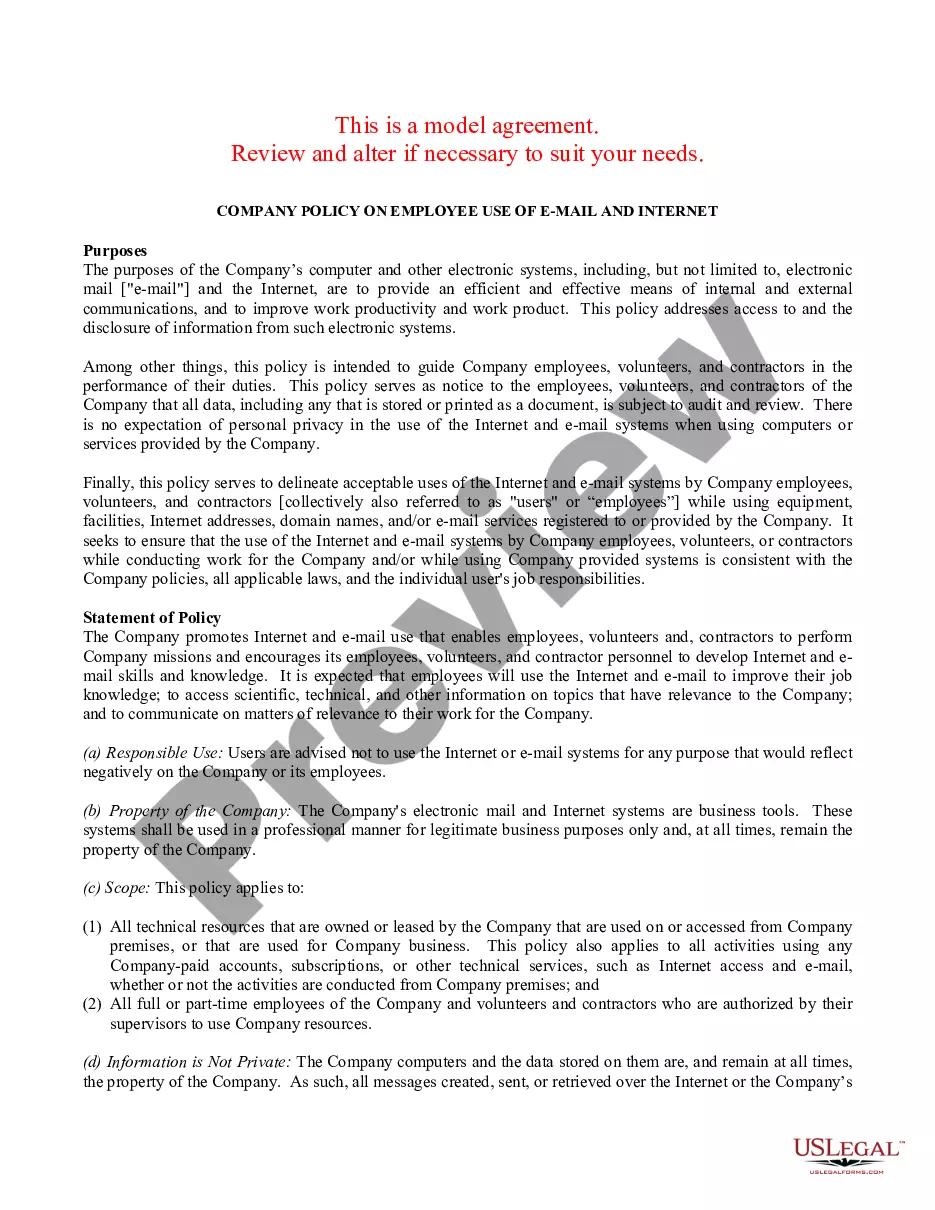
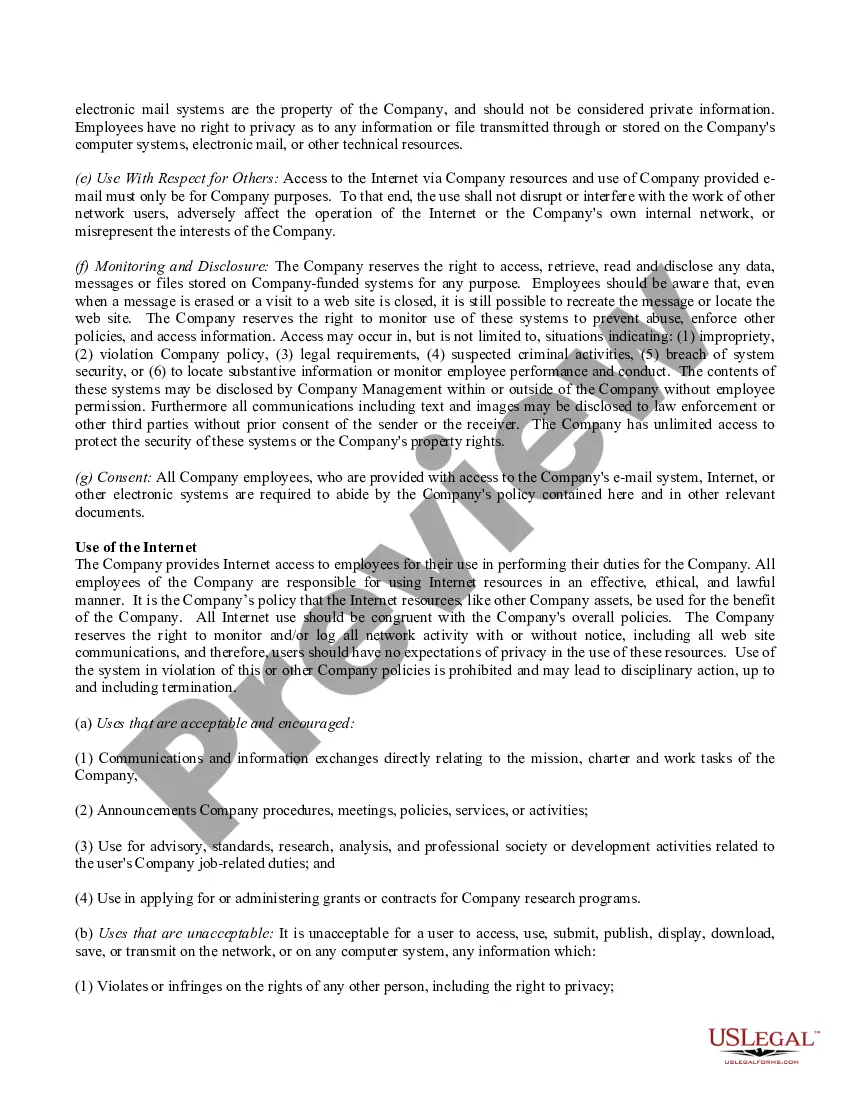
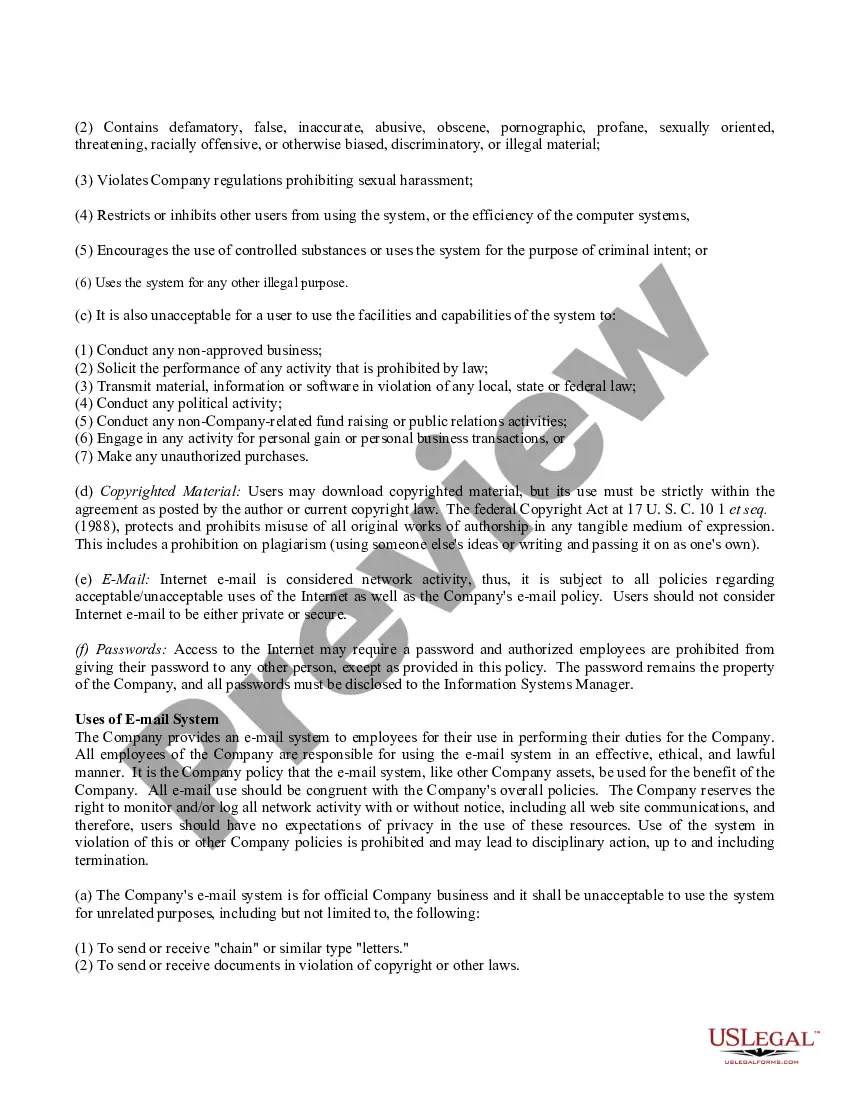
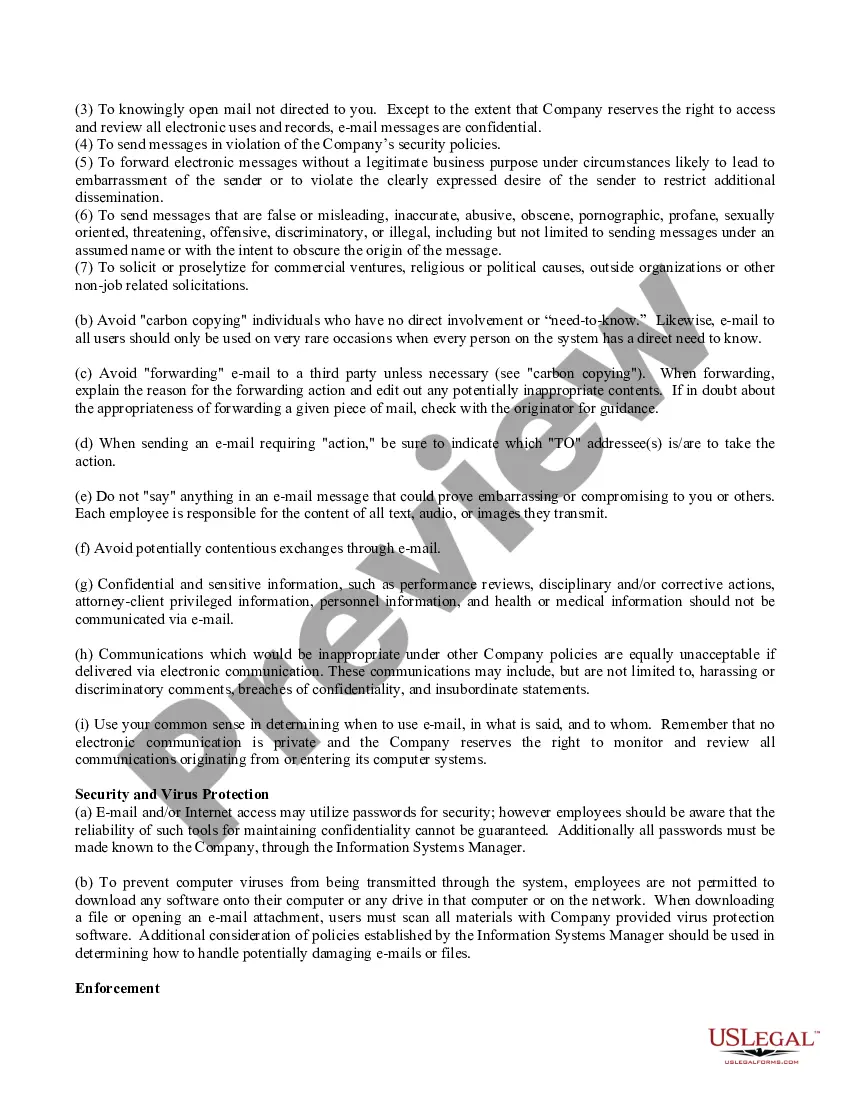
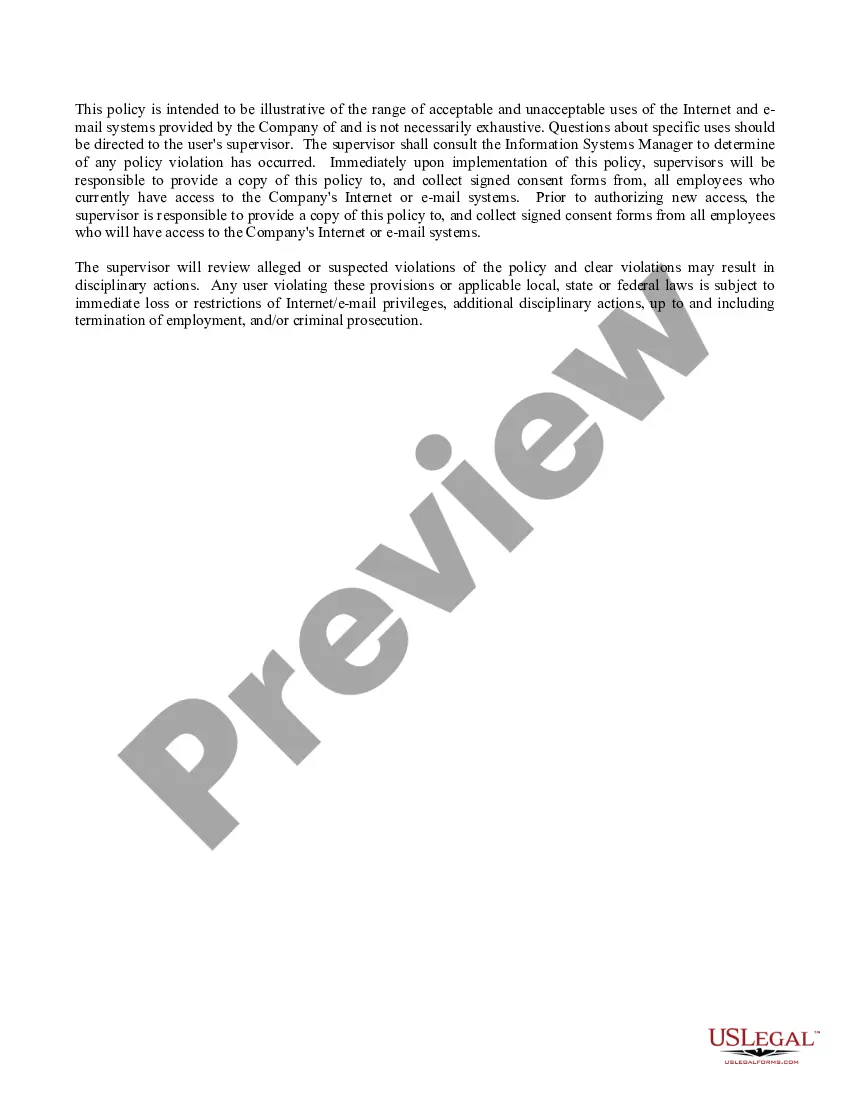
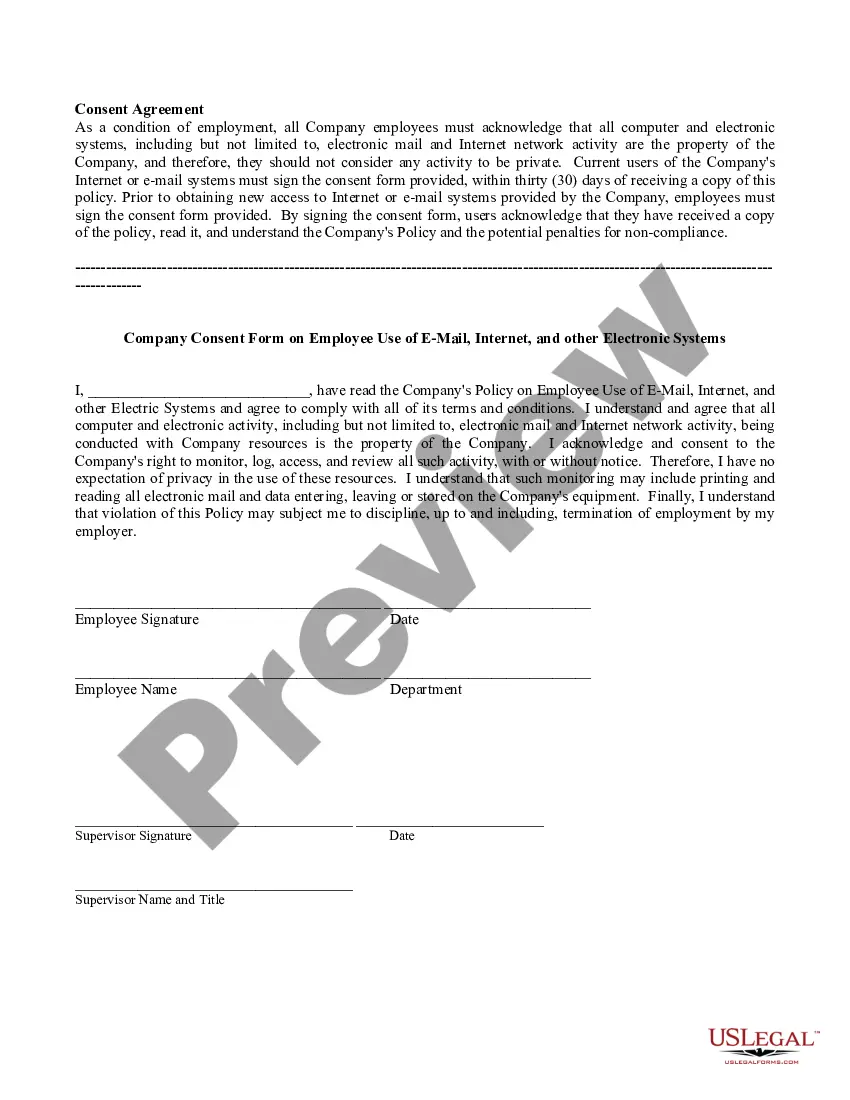
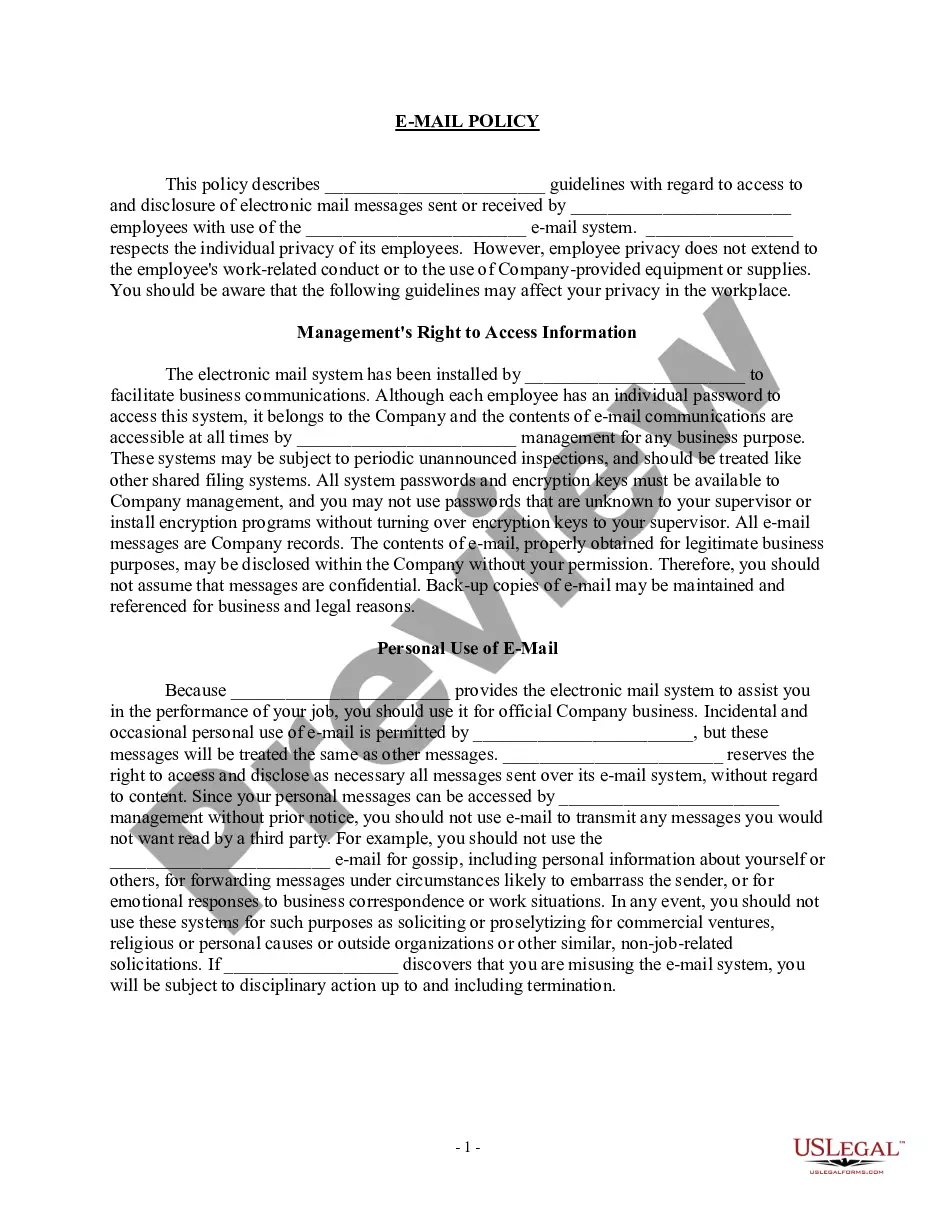
An example of an email policy could specify that company email should only be used for work-related correspondence and prohibit the sharing of confidential information. It might also include guidelines for responding to emails in a timely manner and maintaining a professional tone. By adopting a clear company internet email policy format, organizations can foster a respectful work environment and ensure efficient communication among team members.
Creating an email policy involves several steps, including evaluating the specific needs of your organization and identifying key areas of concern. Begin by outlining acceptable use, confidentiality, and security protocols. Including input from employees can enhance understanding and compliance. A well-defined company internet email policy format helps streamline communication and safeguards sensitive information.
An example of an internet policy for employees might include guidelines on acceptable use, security measures, and consequences for misuse. This policy should clearly outline what employees can and cannot do while using company resources. By establishing a company internet email policy format, employers can ensure that all staff members understand their responsibilities regarding internet usage. Such policies protect both the company and its employees.
The best format for a company email address typically includes the employee's name and the company domain. A common structure is firstname.lastname@company. This format enhances professionalism and makes it easier for clients and colleagues to recognize the sender. Adopting a clear, consistent company internet email policy format helps maintain uniformity across your organization.
To determine a company's email format, start by researching the company's domain name. Typically, email addresses follow a standard pattern such as firstname.lastname@company or firstinitiallastname@company. You can also check the company's website for contact information or look at press releases and public documents for employee emails. Additionally, platforms like US Legal Forms offer templates and guidelines that can help you create a company internet email policy format, ensuring consistency across your organization.
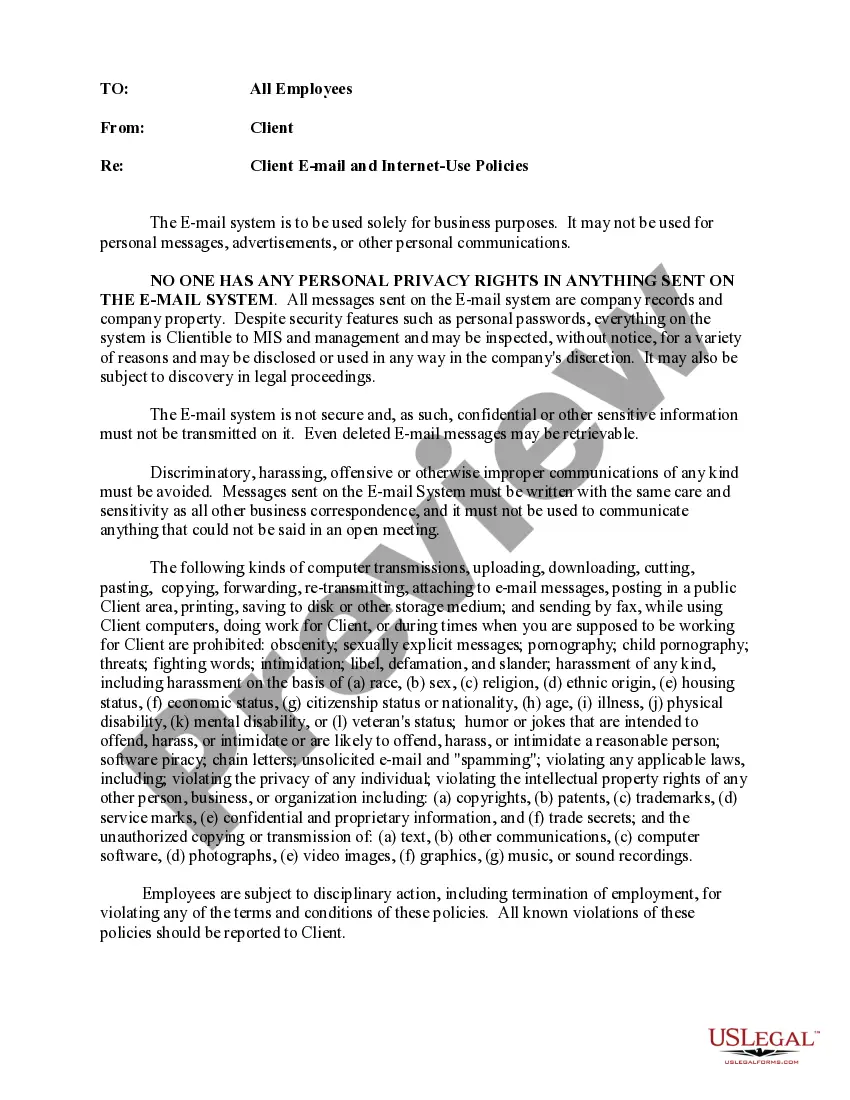
What should an email policy include? Signing up for illegal, unreliable, disreputable or suspect websites and services. Sending unauthorised marketing content or solicitation emails. Registering for a competitor's services unless authorised. Sending insulting or discriminatory messages and content.
When employees use their corporate email, they shouldn't be opening attachments from unknown senders. Also, they shouldn't be sending offensive or inappropriate emails to anyone. This means that they must not: Send out unsolicited emails to people.
[business name] accepts that the use of the internet is a valuable business tool. However, misuse of this facility can have a negative impact upon employee productivity and the reputation of the business. In addition, all of the company's internet-related resources are provided for business purposes.
This email usage policy should include: Clear distinctions between appropriate and inappropriate email use. Security measures, including password requirements and strategies to identify phishing attempts. Guidelines for creating professional email signatures and the consequences of policy violations.
It is strictly forbidden to use (Company Name)'s email system for anything other than legitimate business purposes. Therefore, the sending of personal emails, chain letters, junk mail, and jokes is prohibited. All messages distributed via the company's email system are (Company Name)'s property.