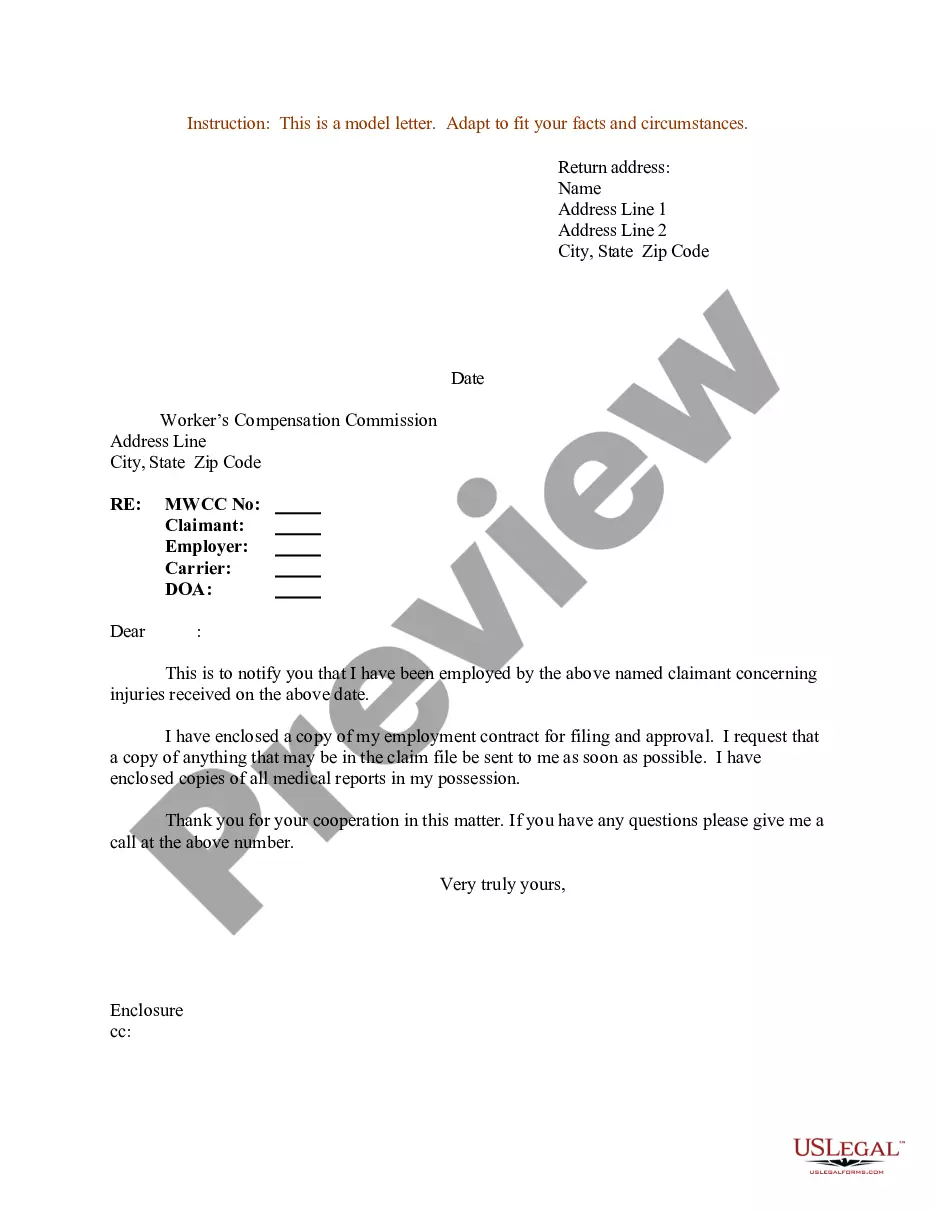
Sample Workers With Disabilities
Description
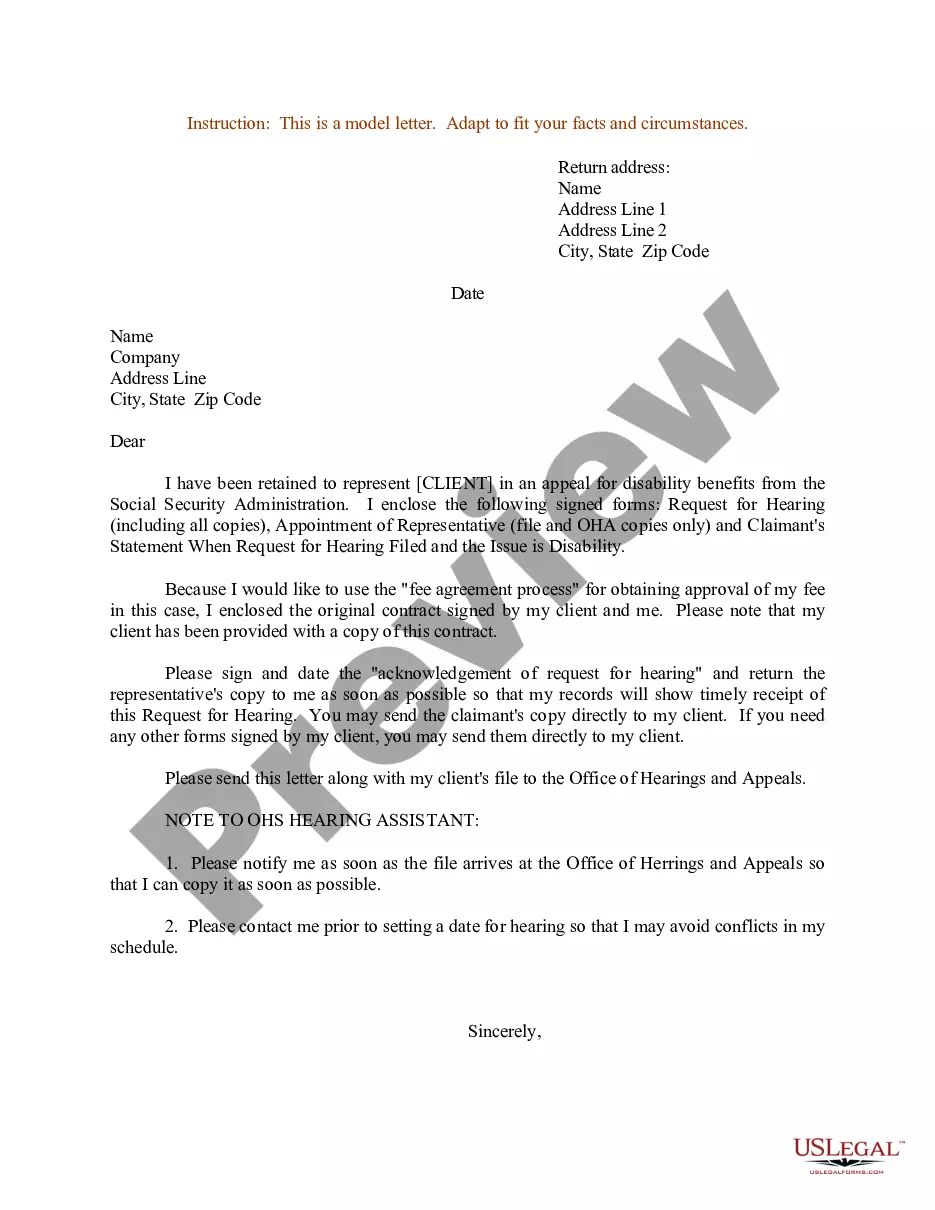
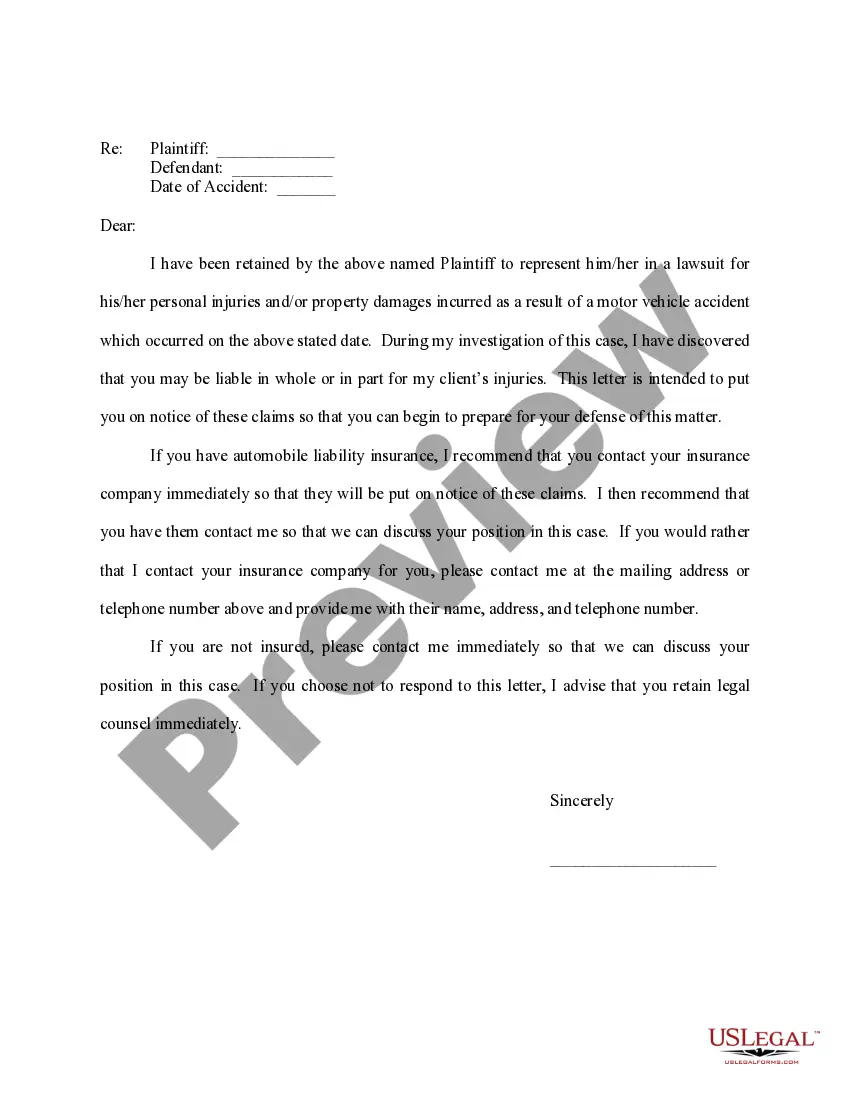
Get your form ready online
Our built-in tools help you complete, sign, share, and store your documents in one place.
Make edits, fill in missing information, and update formatting in US Legal Forms—just like you would in MS Word.
Download a copy, print it, send it by email, or mail it via USPS—whatever works best for your next step.
Sign and collect signatures with our SignNow integration. Send to multiple recipients, set reminders, and more. Go Premium to unlock E-Sign.
If this form requires notarization, complete it online through a secure video call—no need to meet a notary in person or wait for an appointment.
We protect your documents and personal data by following strict security and privacy standards.

Make edits, fill in missing information, and update formatting in US Legal Forms—just like you would in MS Word.

Download a copy, print it, send it by email, or mail it via USPS—whatever works best for your next step.

Sign and collect signatures with our SignNow integration. Send to multiple recipients, set reminders, and more. Go Premium to unlock E-Sign.

If this form requires notarization, complete it online through a secure video call—no need to meet a notary in person or wait for an appointment.

We protect your documents and personal data by following strict security and privacy standards.
Looking for another form?
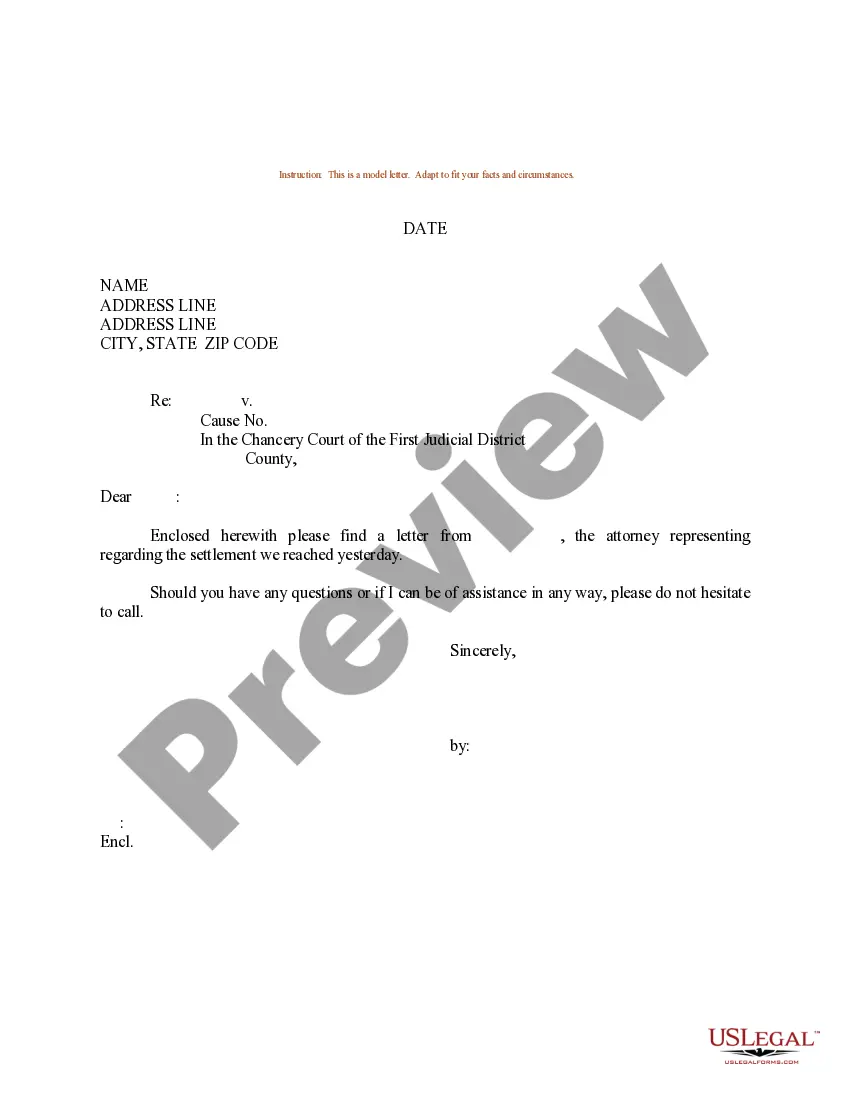
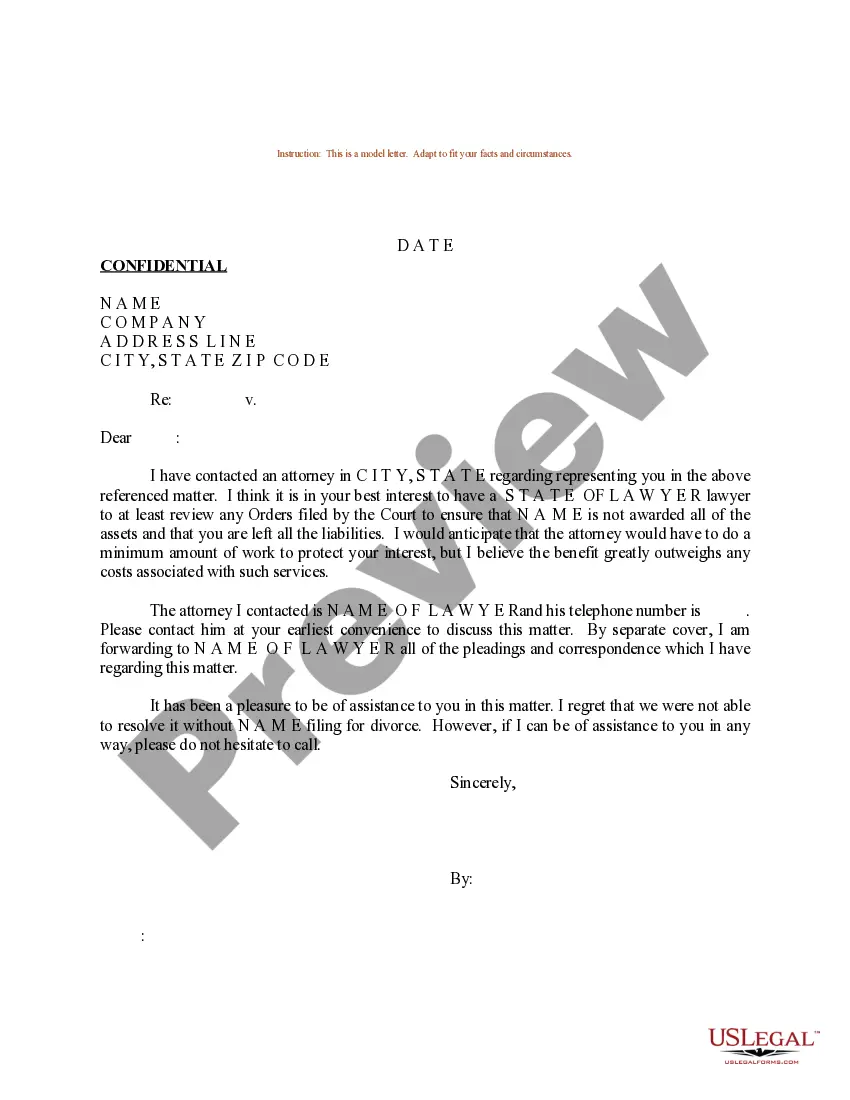
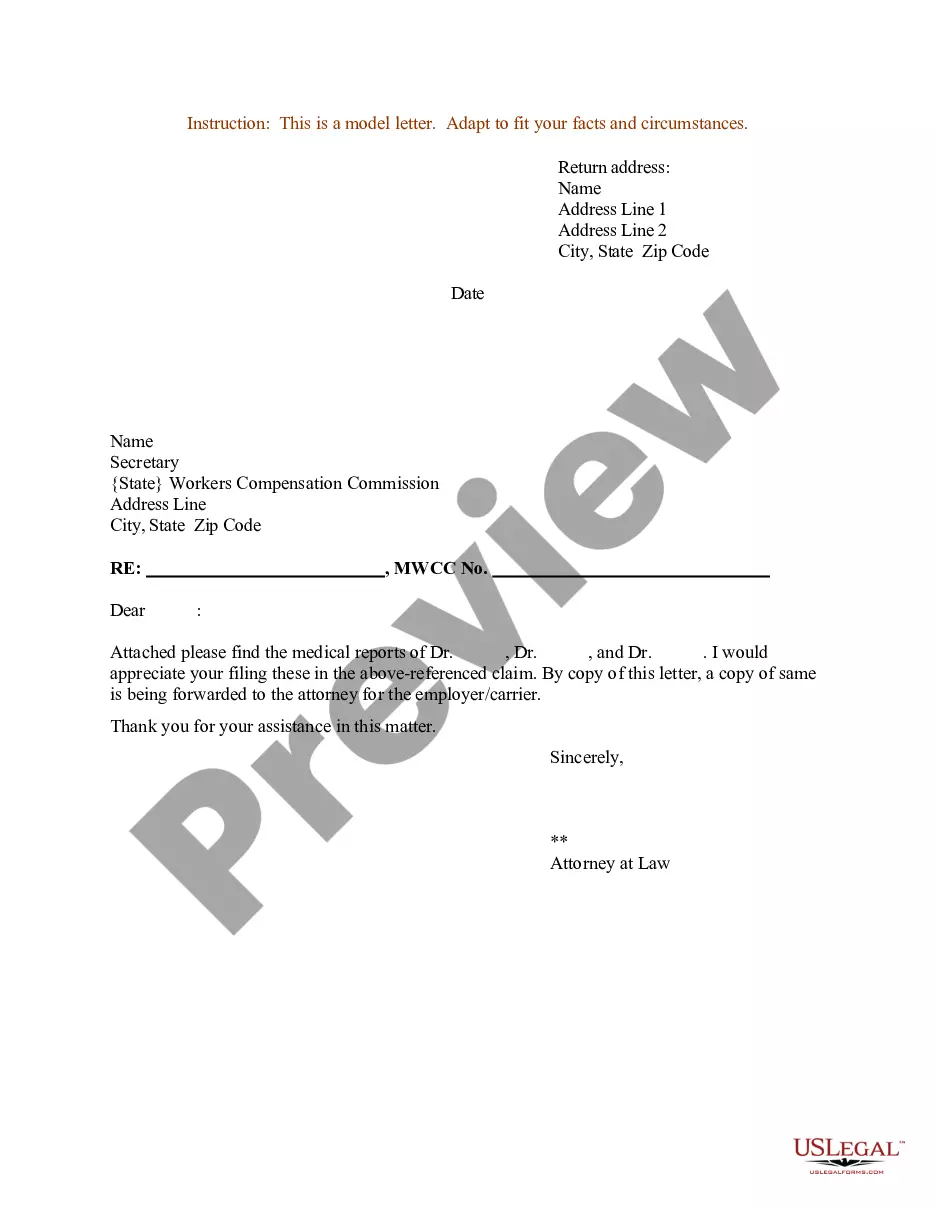
How to fill out Sample Letter For Legal Representation - Worker's Compensation?
The Sample Workers With Disabilities displayed on this page is a versatile formal template created by expert attorneys in accordance with federal and local statutes and regulations.
For over 25 years, US Legal Forms has offered individuals, organizations, and legal practitioners more than 85,000 validated, state-specific forms for various business and personal situations. It’s the fastest, simplest, and most reliable method to acquire the documents you require, as the service ensures the utmost level of data security and anti-malware safeguards.
Register for US Legal Forms to access verified legal templates for all of life's scenarios.
- Search for the document you need and review it.
- Choose the pricing plan that fits you and create an account.
- Select the format you desire for your Sample Workers With Disabilities (PDF, DOCX, RTF) and download the sample onto your device.
- Print the template to complete it manually or use an online multi-functional PDF editor to quickly and accurately fill out and sign your form with an eSignature.
- Utilize the same document again whenever needed.
Form popularity
FAQ
How to Fill Out an Adult Function Report for Disability (7 Tips) Answer Every Question and Be Honest! ... Answer Only the Questions Being Asked. ... Give as Much Detail as You Can. ... Be Consistent (Some Questions Overlap) ... Be Specific on Question 5 of the Function Report. ... Don't Limit Your Answers to the Space on the Form.
Don't automatically refer to 'disabled people' in all communications ? many people who need disability benefits and services don't identify with this term. Consider using 'people with health conditions or impairments' if it seems more appropriate.
This is an invitation to self-identify, not a requirement. The self-identification of disability form is a voluntary form, so each individual may choose to disclose his or her disability status, or not.
Impairment in a person's body structure or function, or mental functioning; examples of impairments include loss of a limb, loss of vision or memory loss. Activity limitation, such as difficulty seeing, hearing, walking, or problem solving.
This is an invitation to self-identify, not a requirement. The self-identification of disability form is a voluntary form, so each individual may choose to disclose his or her disability status, or not.