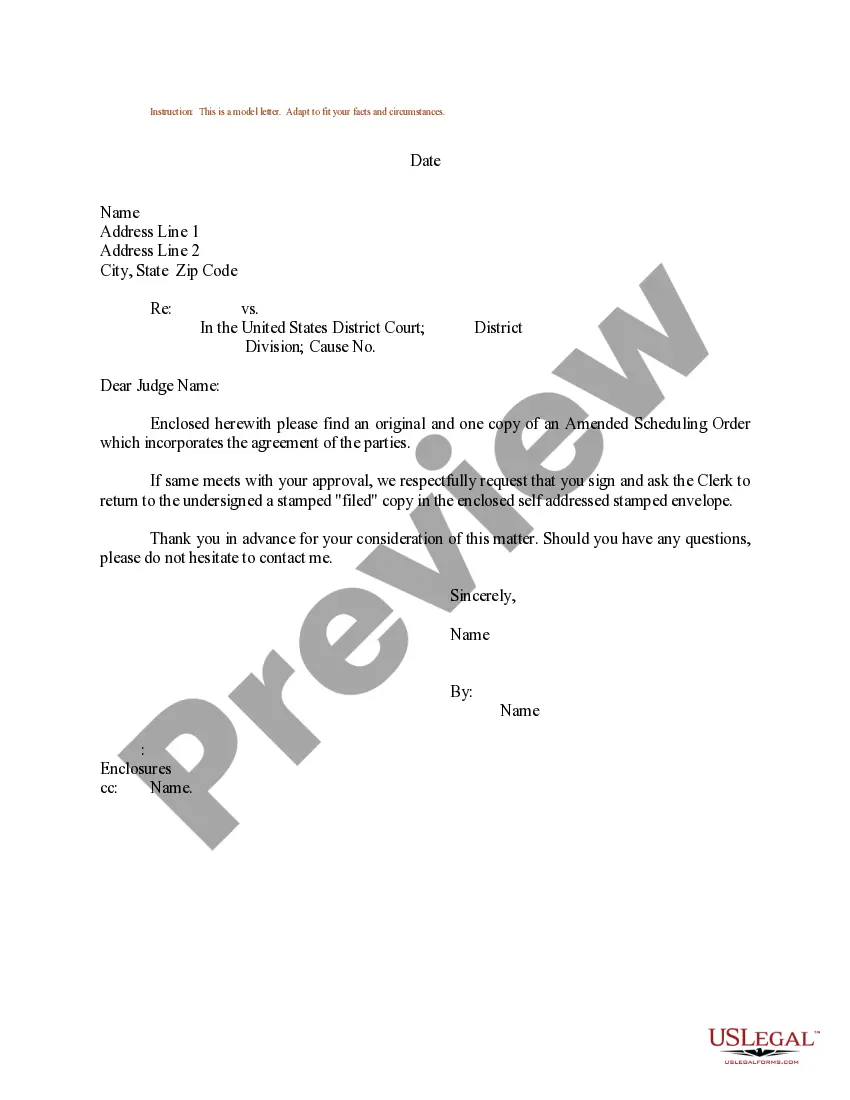
Scheduling Order And Discovery Control Plan
Description
Get your form ready online
Our built-in tools help you complete, sign, share, and store your documents in one place.
Make edits, fill in missing information, and update formatting in US Legal Forms—just like you would in MS Word.
Download a copy, print it, send it by email, or mail it via USPS—whatever works best for your next step.
Sign and collect signatures with our SignNow integration. Send to multiple recipients, set reminders, and more. Go Premium to unlock E-Sign.
If this form requires notarization, complete it online through a secure video call—no need to meet a notary in person or wait for an appointment.
We protect your documents and personal data by following strict security and privacy standards.

Make edits, fill in missing information, and update formatting in US Legal Forms—just like you would in MS Word.

Download a copy, print it, send it by email, or mail it via USPS—whatever works best for your next step.

Sign and collect signatures with our SignNow integration. Send to multiple recipients, set reminders, and more. Go Premium to unlock E-Sign.

If this form requires notarization, complete it online through a secure video call—no need to meet a notary in person or wait for an appointment.

We protect your documents and personal data by following strict security and privacy standards.
Looking for another form?


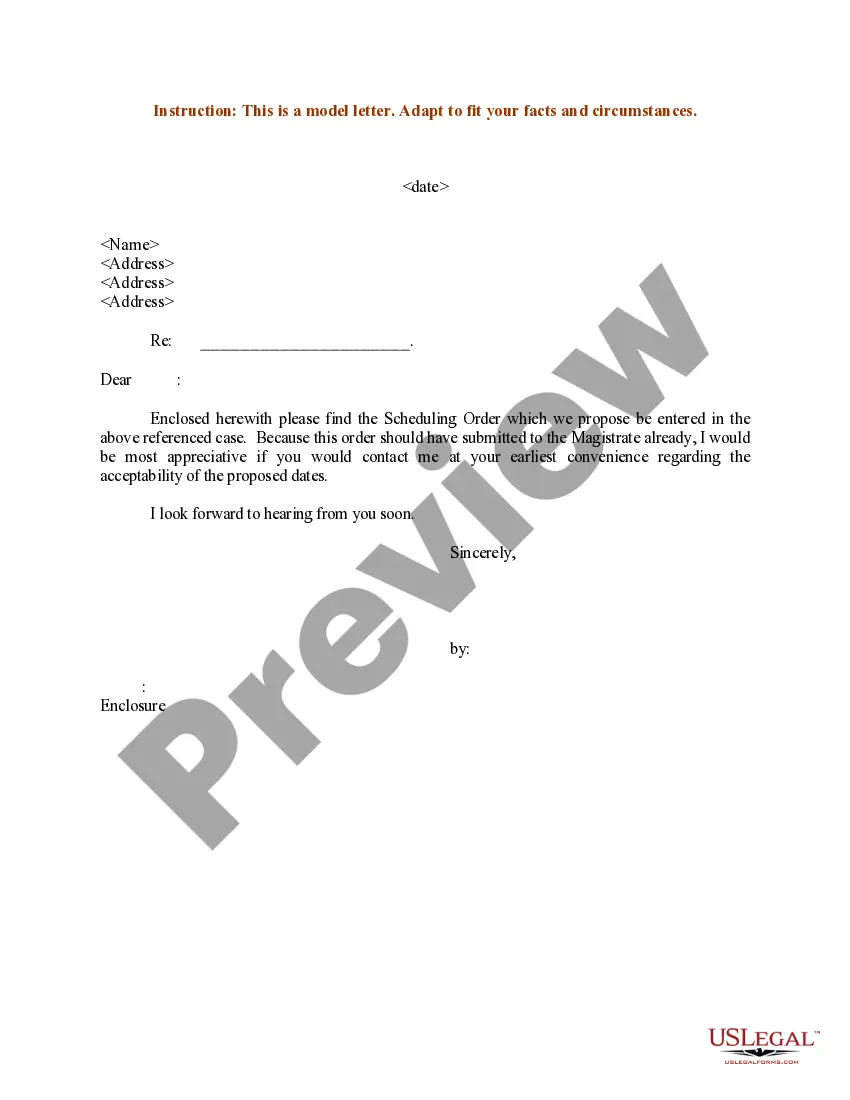
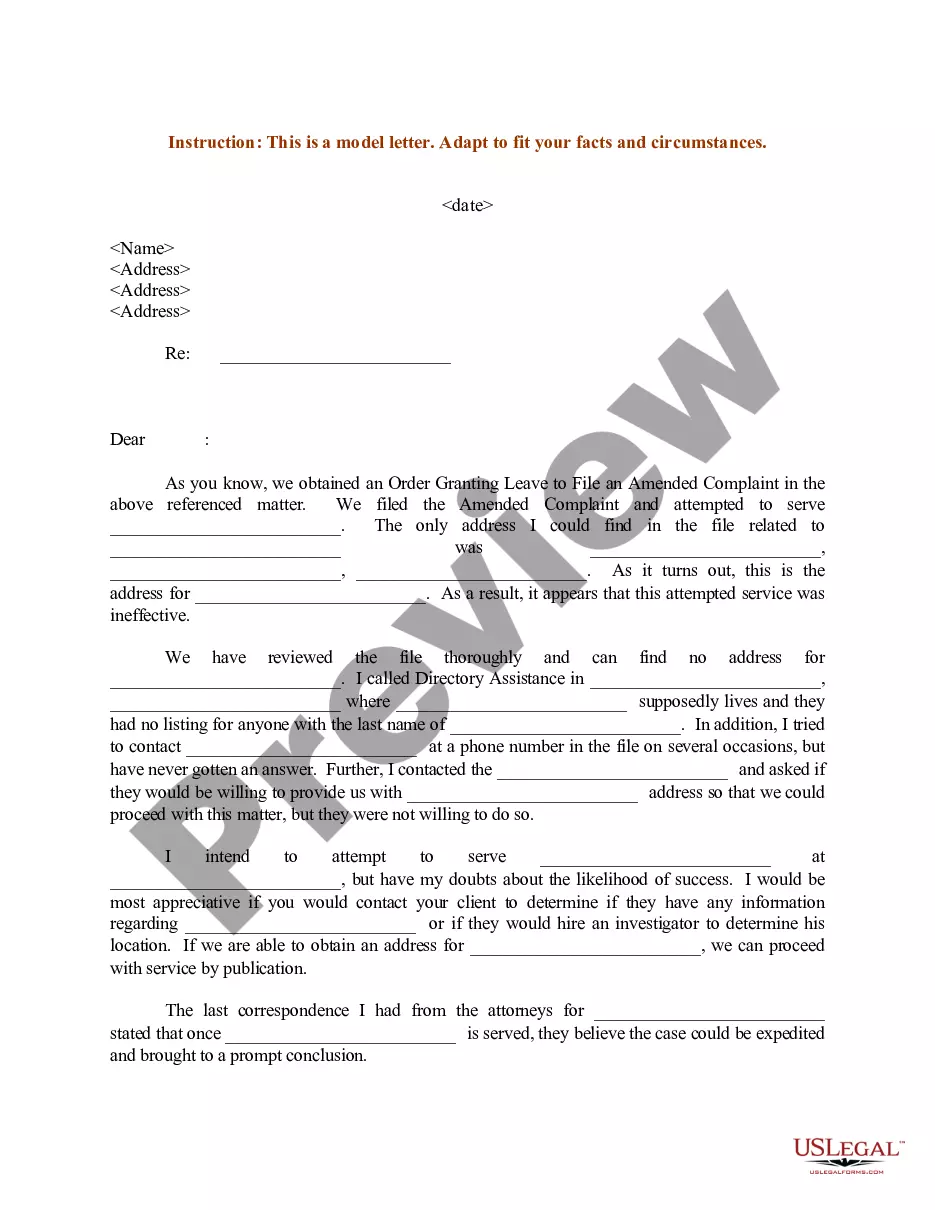
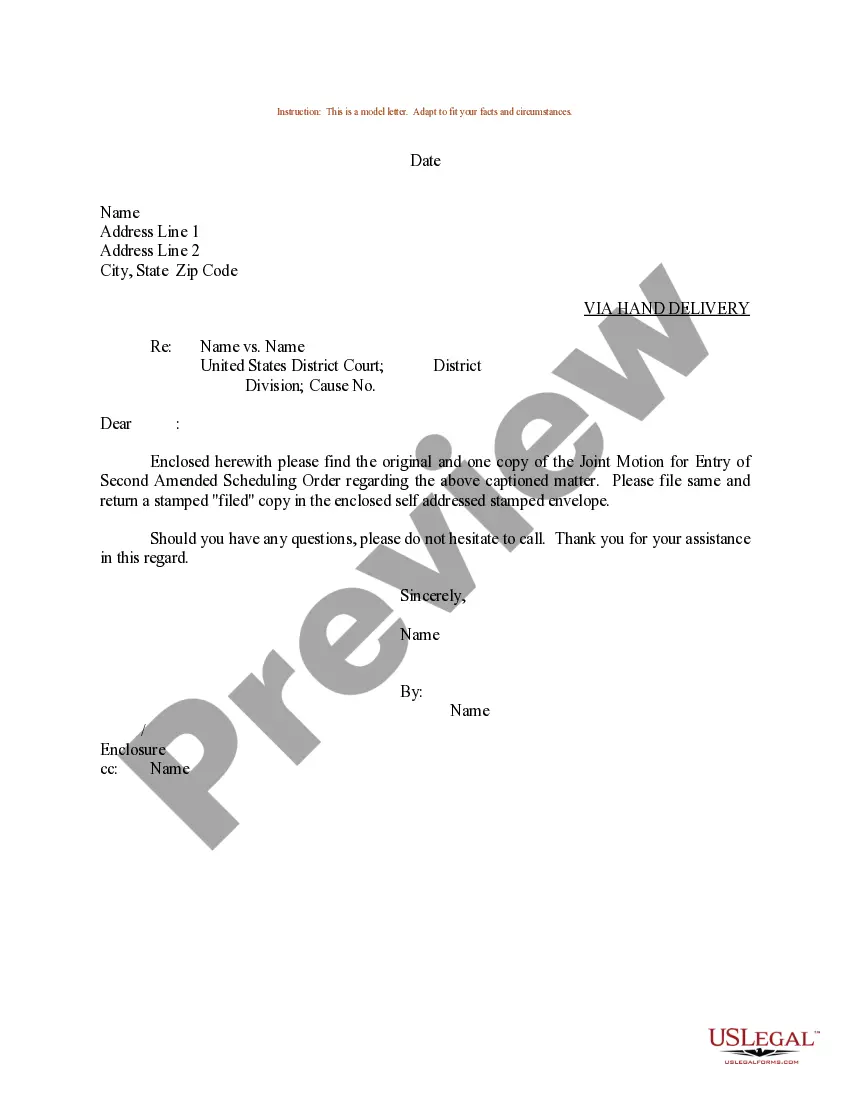
How to fill out Sample Letter For Amended Scheduling Order?
Identifying a reliable source for obtaining the latest and pertinent legal templates constitutes a significant portion of the challenge associated with bureaucracy.
Selecting the appropriate legal documents requires accuracy and meticulousness, which is why it is essential to acquire samples of Scheduling Order And Discovery Control Plan solely from trustworthy providers, such as US Legal Forms. An incorrect template could squander your time and prolong the situation you are facing. With US Legal Forms, your concerns are minimized. You can access and verify all the specifics regarding the document’s applicability and significance for your situation and within your state or county.
Once you have the form on your device, you can edit it using the editor or print it and fill it out manually. Eliminate the complications that come with your legal paperwork. Explore the vast US Legal Forms library to discover legal templates, verify their relevance to your situation, and download them instantly.
- Utilize the library navigation or search bar to find your template.
- Examine the form’s details to ensure it aligns with your state's and area's requirements.
- Preview the form, if available, to confirm that the template is indeed the one you need.
- Return to the search and find the appropriate document if the Scheduling Order And Discovery Control Plan does not meet your needs.
- If you are confident about the form’s applicability, proceed to download it.
- If you are a registered user, click Log in to verify your identity and access your selected forms in My documents.
- If you do not possess an account yet, click Buy now to acquire the form.
- Choose the pricing plan that fits your needs.
- Proceed to register to complete your purchase.
- Complete your purchase by selecting a payment option (credit card or PayPal).
- Choose the document format for downloading Scheduling Order And Discovery Control Plan.
Form popularity
FAQ
Yes. During discovery, both parties must exchange evidence they plan to use during trial and certain disclosures are automatically required in every case. These are called ?Initial? or required disclosures.
Hear this out loud PauseDiscovery is the formal process by which the parties to a case in court exchange information about the case. This includes information about the witnesses and evidence to be presented at trial. Its purpose is to make the parties aware of the evidence which may be presented at trial.
Hear this out loud PauseYes. You must respond to every request sent to you. However, you are allowed to object to certain requests. Read Texas Rules of Civil Procedure Rule 193.1 to learn more.
Hear this out loud PauseTexas Rules of Civil Procedure Rule 190 identifies the three levels of discovery. In most cases, discovery level 2 (Rule 190.3) governs the timing of discovery. After initial disclosures, you can serve requests for discovery until 30 days before the date set for trial, or the date set by the court.
Hear this out loud PauseAfter you have filed the Joint 26(f) Report, you will receive a document from the Court called a ?Scheduling Order.? This document is extremely important because it lists many deadlines for your case, including discovery deadlines, motion deadlines, and deadlines for required pre-trial documents.