Case Law On Summary Judgment
Description
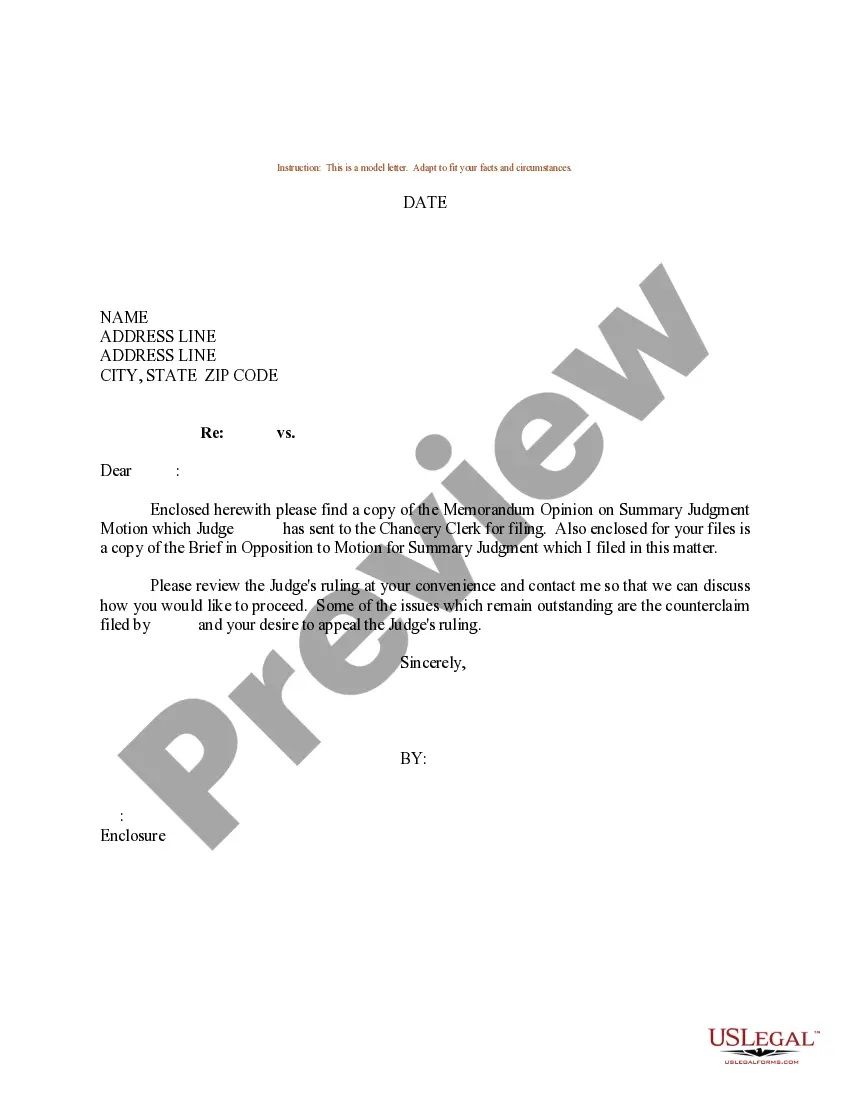
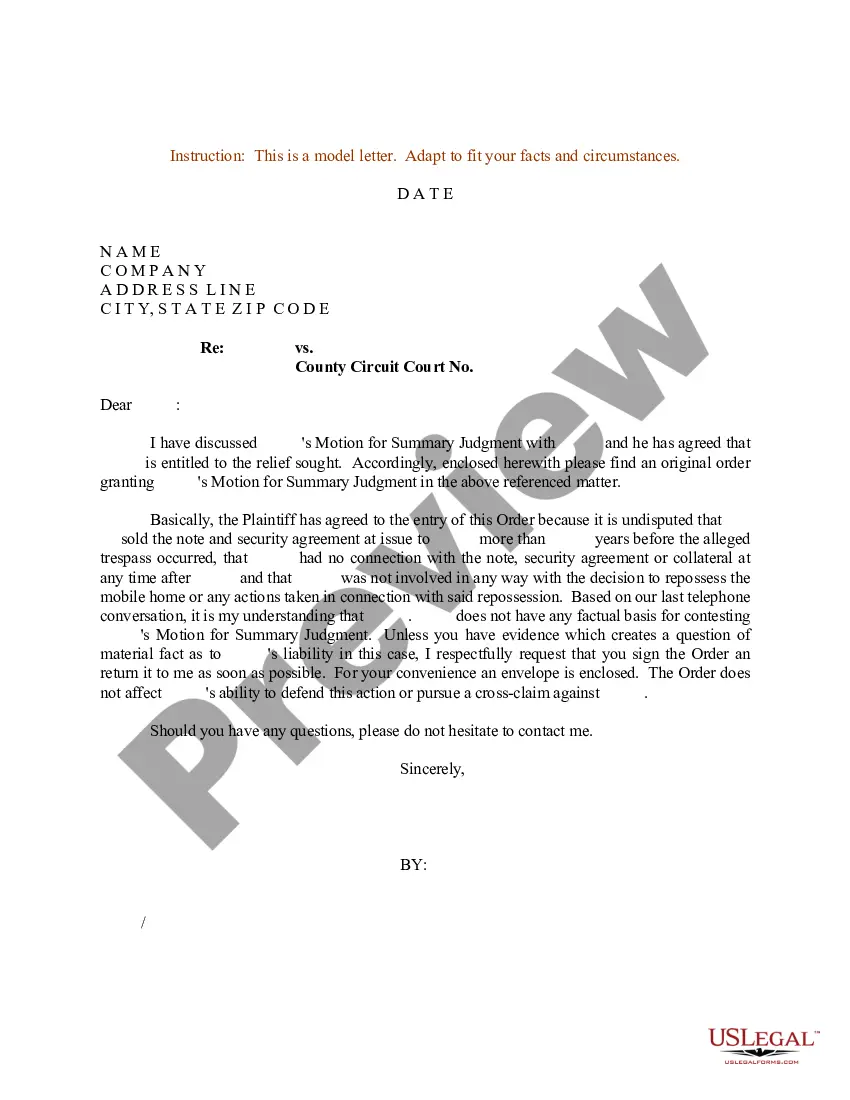
Get your form ready online
Our built-in tools help you complete, sign, share, and store your documents in one place.
Make edits, fill in missing information, and update formatting in US Legal Forms—just like you would in MS Word.
Download a copy, print it, send it by email, or mail it via USPS—whatever works best for your next step.
Sign and collect signatures with our SignNow integration. Send to multiple recipients, set reminders, and more. Go Premium to unlock E-Sign.
If this form requires notarization, complete it online through a secure video call—no need to meet a notary in person or wait for an appointment.
We protect your documents and personal data by following strict security and privacy standards.

Make edits, fill in missing information, and update formatting in US Legal Forms—just like you would in MS Word.

Download a copy, print it, send it by email, or mail it via USPS—whatever works best for your next step.

Sign and collect signatures with our SignNow integration. Send to multiple recipients, set reminders, and more. Go Premium to unlock E-Sign.

If this form requires notarization, complete it online through a secure video call—no need to meet a notary in person or wait for an appointment.

We protect your documents and personal data by following strict security and privacy standards.
Looking for another form?
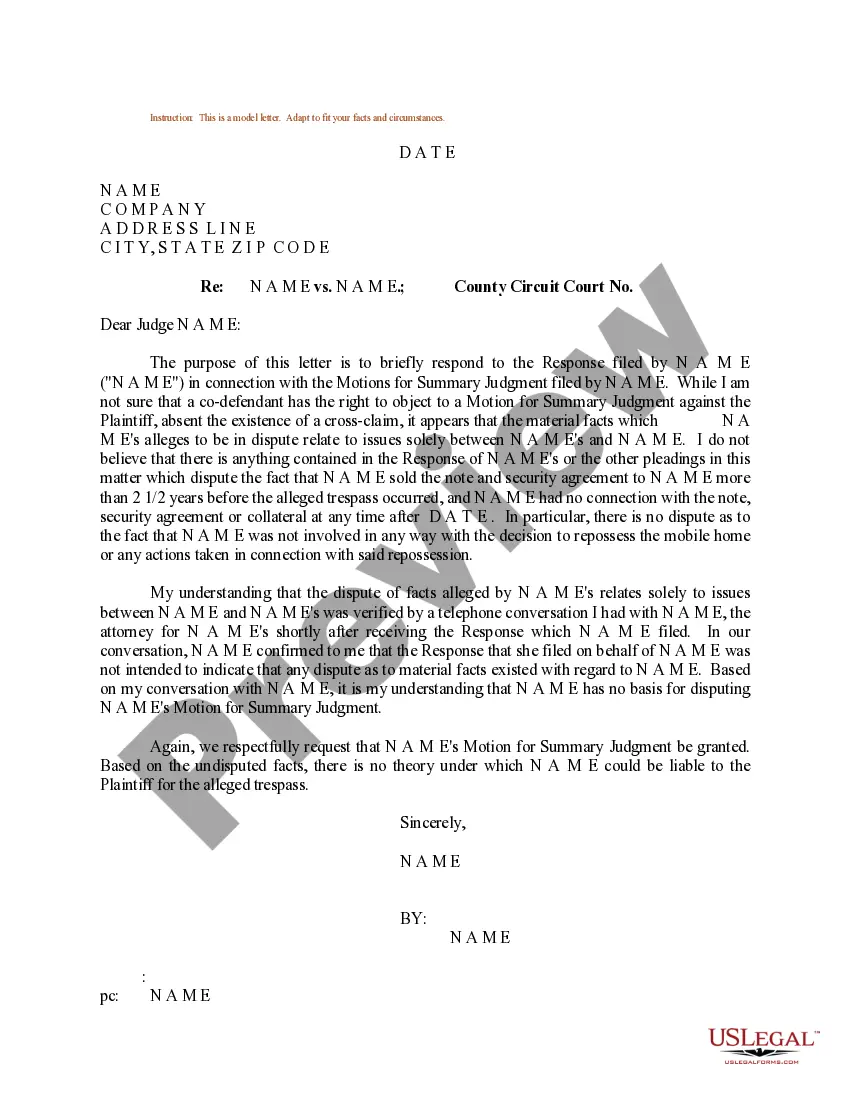
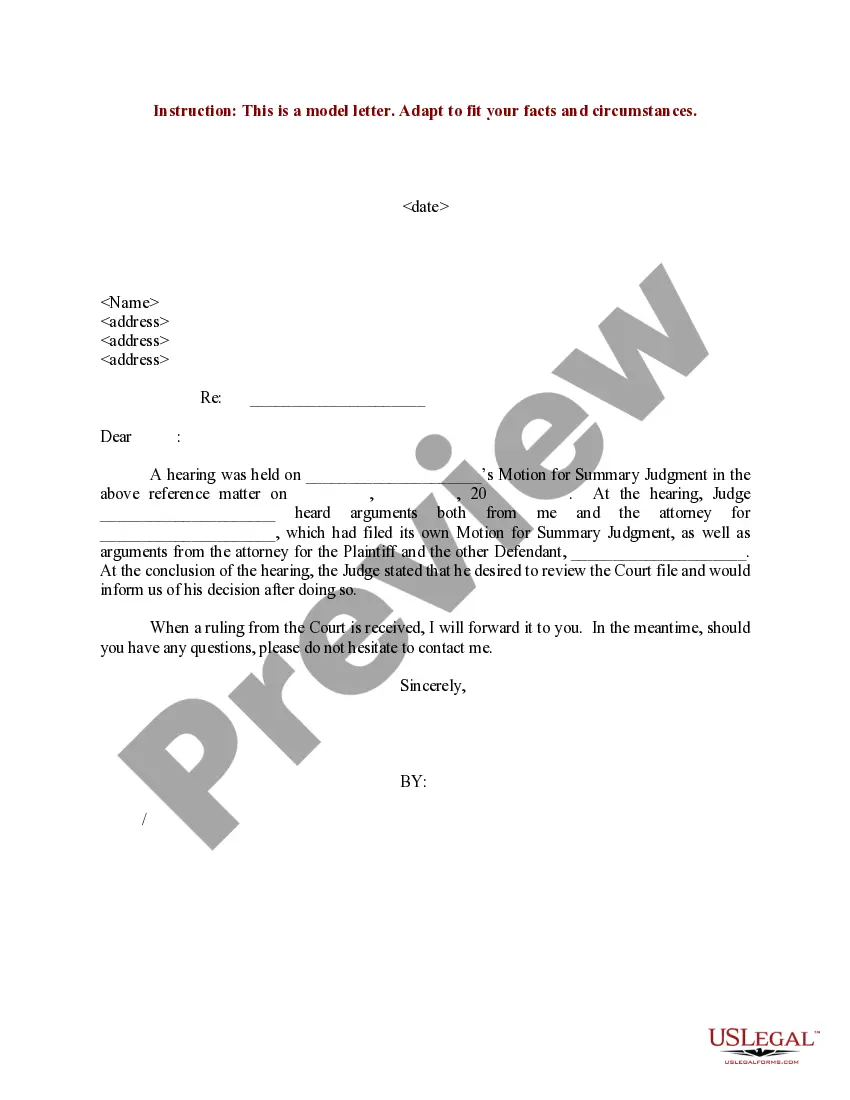
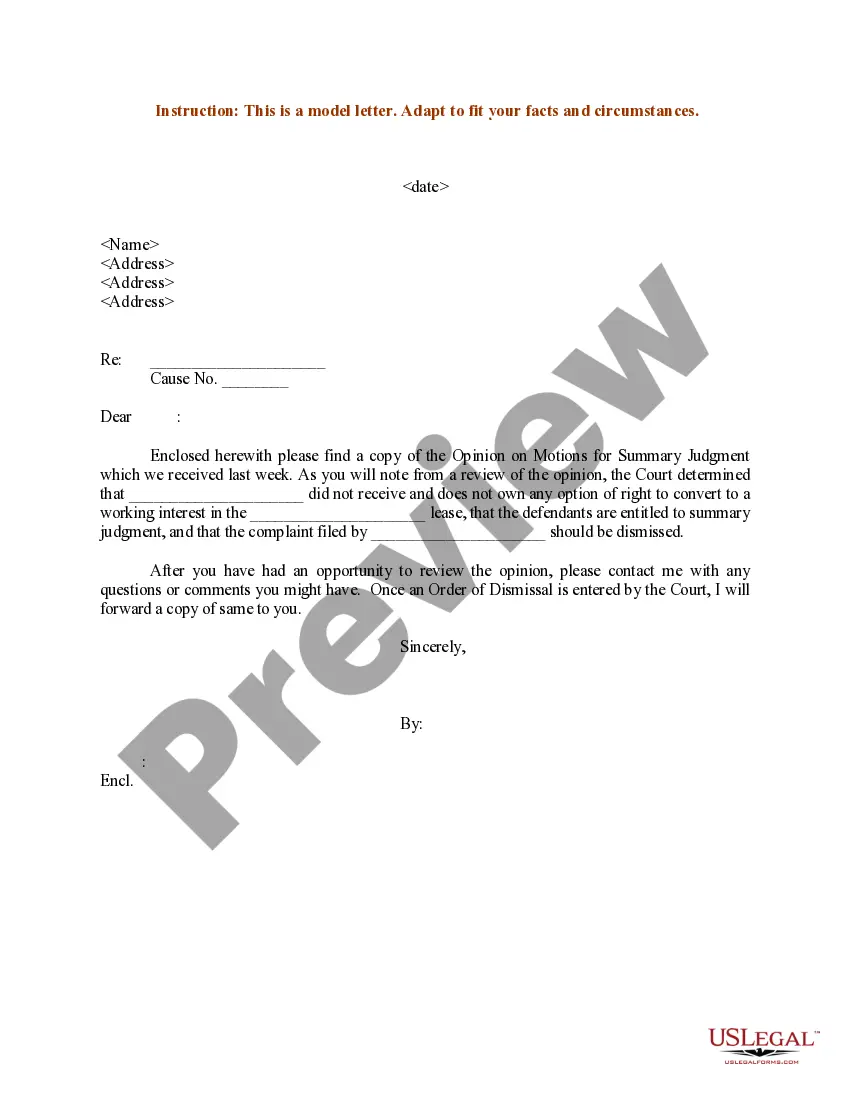
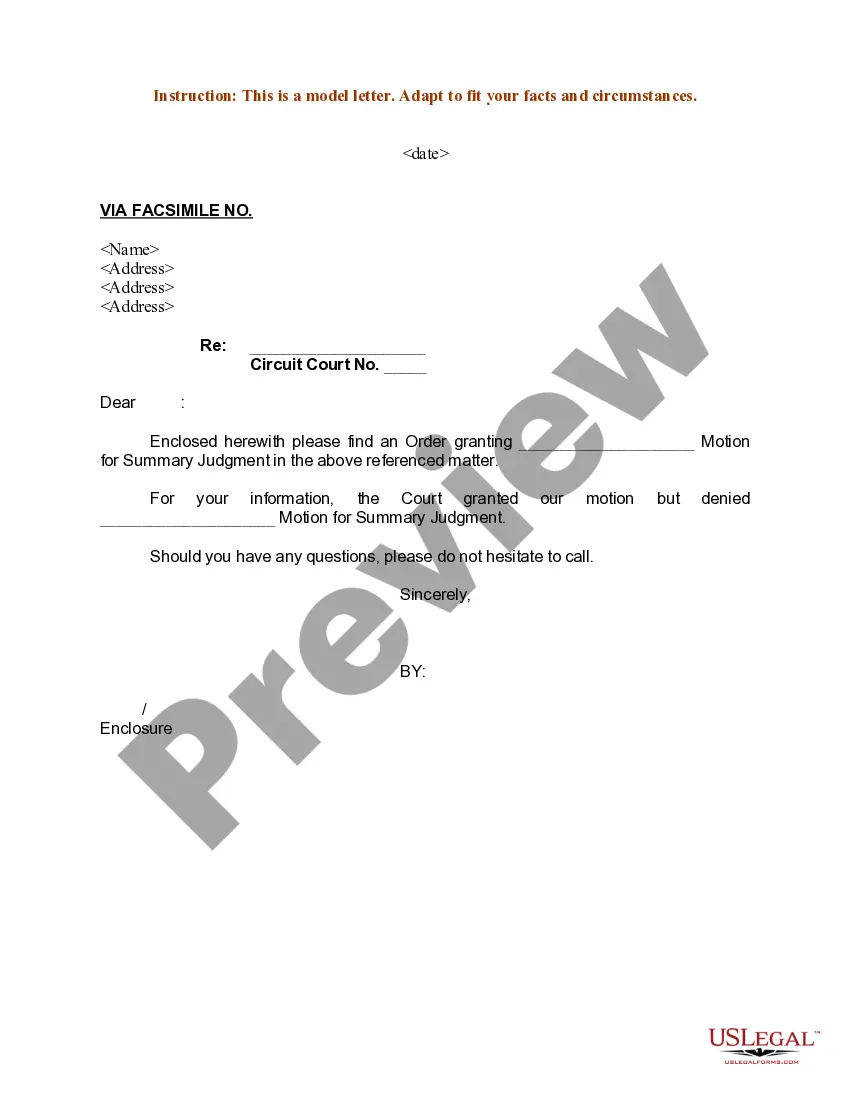
How to fill out Sample Letter For Response In Connection With Motions For Summary Judgment?
Utilizing legal document examples that adhere to national and local regulations is essential, and the web presents numerous selections to pick from.
However, what's the advantage of spending time searching for the properly prepared Case Law On Summary Judgment example online if the US Legal Forms digital library has already gathered such templates in one location.
US Legal Forms is the largest online legal repository with over 85,000 fillable templates created by attorneys for any professional and personal situation.
Explore the template using the Preview feature or the written description to confirm it meets your requirements.
- They are simple to navigate with all documents organized by state and intended use.
- Our specialists keep up with legal updates, ensuring that your documents are always current and compliant when obtaining a Case Law On Summary Judgment from our site.
- Acquiring a Case Law On Summary Judgment is fast and straightforward for both existing and new users.
- If you already possess an account with an active subscription, Log In and download the template you need in your preferred format.
- If you're new to our platform, follow the steps outlined below.
Form popularity
FAQ
An example of summary judgment occurs when a court denies a defendant's motion to dismiss based on a plaintiff's provided evidence. For instance, if a plaintiff demonstrates clear proof of negligence through documents or admissions, the court may grant summary judgment favoring the plaintiff. This process relies heavily on established case law on summary judgment, which outlines the necessary criteria. Understanding these examples can guide you in your own case, and utilizing US Legal Forms can streamline your approach.
When crafting a motion for summary judgment, begin with a clear statement of the relevant facts and evidence that support your case. Next, include legal standards drawn from case law on summary judgment, which helps establish the basis for your argument. Ensure you organize the motion logically with headings and subheadings for easy navigation. Consider using US Legal Forms for templates that guide you through the formatting and contents of your motion.
To request summary judgment in line with case law on summary judgment, you must file a motion with the court. This motion needs to articulate why you believe there are no genuine disputes over material facts and why you are entitled to a judgment as a matter of law. You should include all necessary supporting documents and evidence. Making a clear, concise argument will strengthen your position.
Summary judgments are often upheld on appeal, but they can be overturned if the appellate court finds errors in how the original court applied the law or facts. Data shows that while many are successful at the trial level, a smaller subset gets reversed in higher courts. Reviewing relevant case law on summary judgment can give you insight into patterns of reversal. For further clarity, consider legal resources like uslegalforms.
To succeed in a summary judgment, you must present clear and compelling evidence that supports your position. Start by gathering all relevant documents and testimonies that establish your facts. Case law on summary judgment emphasizes the importance of crafting a strong legal argument. Resources from uslegalforms can guide you in organizing your materials and increasing your chances of a favorable outcome.
The odds of winning a summary judgment depend on various factors, including the nature of your case and the evidence you provide. Studies show that generally, a significant percentage of motions for summary judgment do get granted. However, case law on summary judgment varies by jurisdiction, so understanding local laws is vital. Using platforms like uslegalforms can help you navigate these complexities effectively.
Answer each numbered fact proposed by the moving party in separate paragraphs, using the same number. The court strongly prefers that the responding party repeat verbatim the moving party's proposed fact and then respond to it. 2. All responses should be succinctly stated.
The chance of success in these cases is less than 10% [1]. Another study found that summary judgment is mostly granted in Title VII cases, for example, cases involving equal pay or employment discrimination [2]. When it comes to federal cases, summary judgments are filed in 17% of total cases.
Consider the following five approaches: Show that the motion fails to list the specific facts and law supporting summary judgment. ... Show that a dispute exists on a material fact. ... Show that the law does not support judgment on the undisputed facts.
Therefore, to win on summary judgment you have to convince a judge that it is a good use of his or her very limited time and resources to write the decision. This means that your written material has to demonstrate that the law and facts support summary judgment, and contain no misstatements of law or fact.