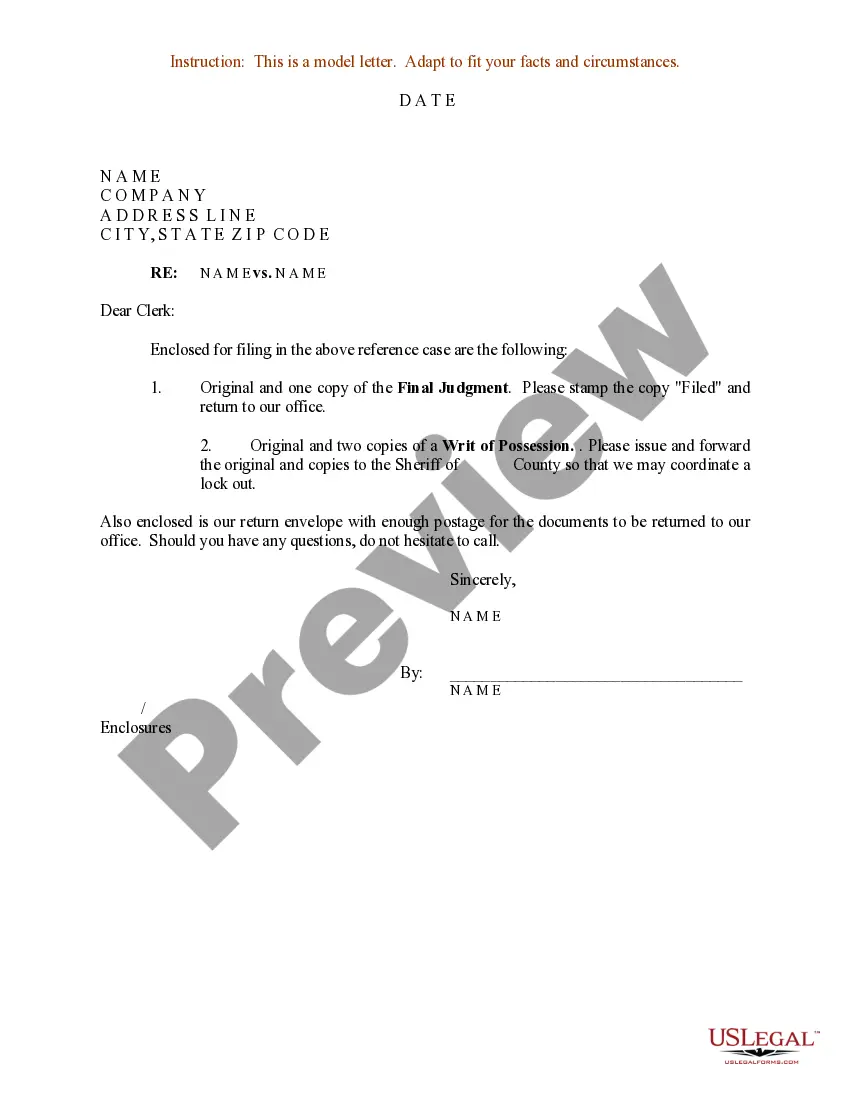
Sample Writ Possession Form Ny
Description
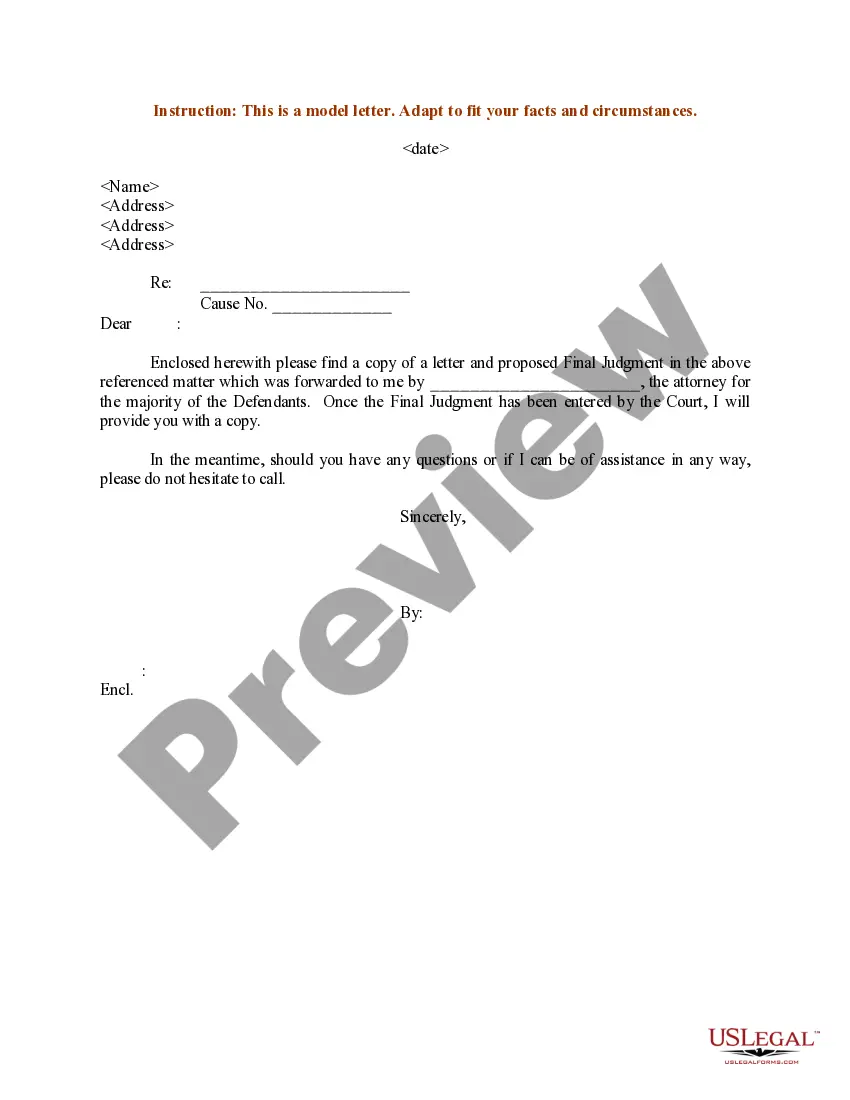
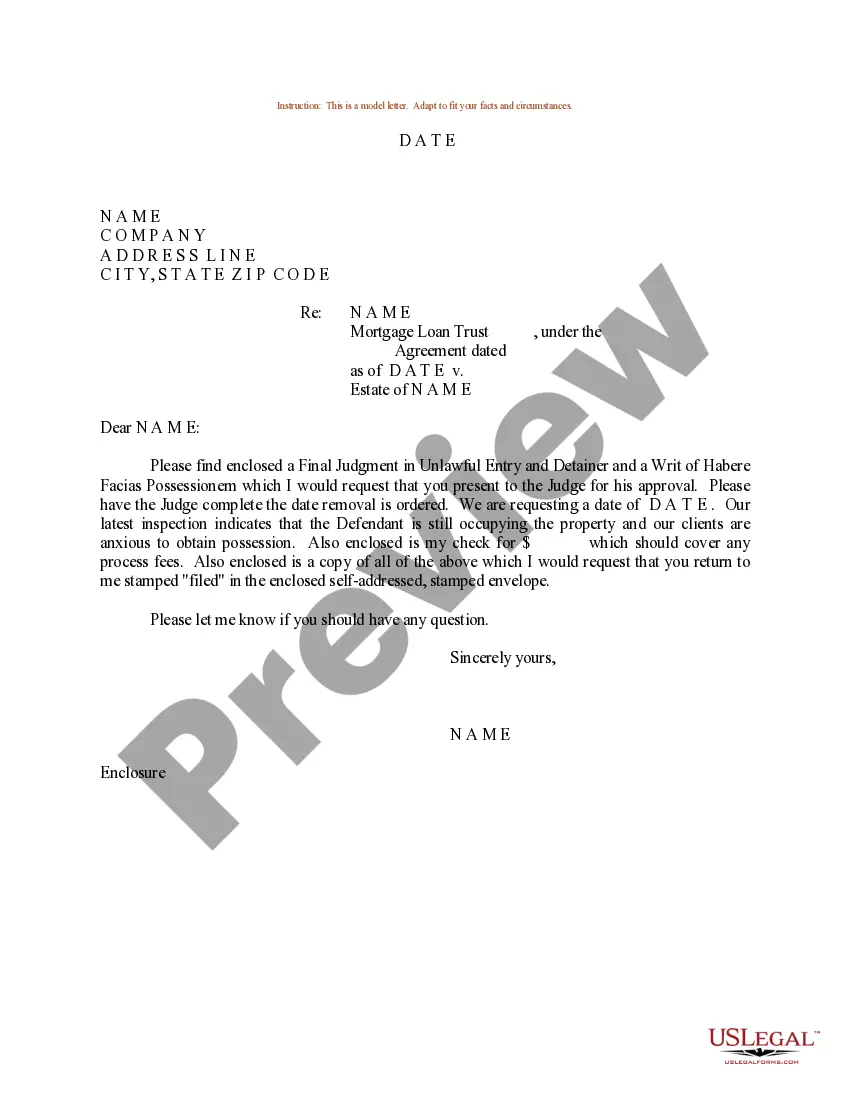
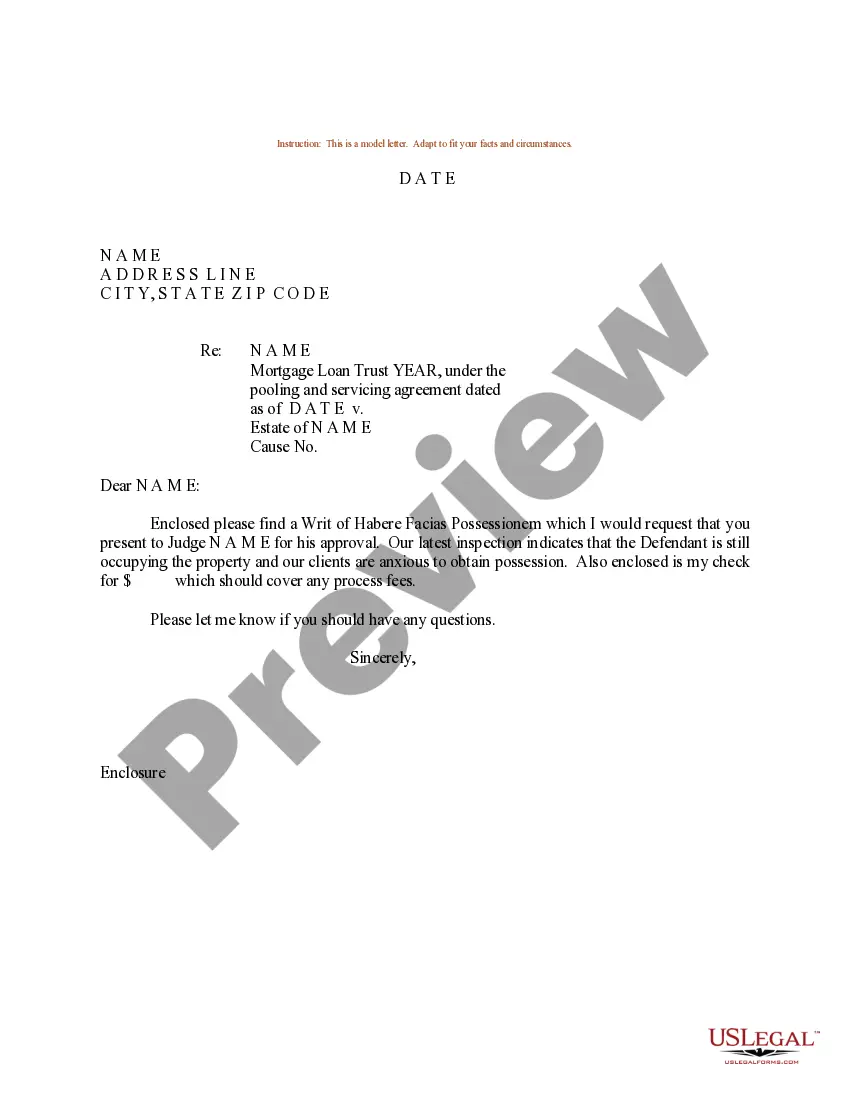
Get your form ready online
Our built-in tools help you complete, sign, share, and store your documents in one place.
Make edits, fill in missing information, and update formatting in US Legal Forms—just like you would in MS Word.
Download a copy, print it, send it by email, or mail it via USPS—whatever works best for your next step.
Sign and collect signatures with our SignNow integration. Send to multiple recipients, set reminders, and more. Go Premium to unlock E-Sign.
If this form requires notarization, complete it online through a secure video call—no need to meet a notary in person or wait for an appointment.
We protect your documents and personal data by following strict security and privacy standards.

Make edits, fill in missing information, and update formatting in US Legal Forms—just like you would in MS Word.

Download a copy, print it, send it by email, or mail it via USPS—whatever works best for your next step.

Sign and collect signatures with our SignNow integration. Send to multiple recipients, set reminders, and more. Go Premium to unlock E-Sign.

If this form requires notarization, complete it online through a secure video call—no need to meet a notary in person or wait for an appointment.

We protect your documents and personal data by following strict security and privacy standards.
Looking for another form?


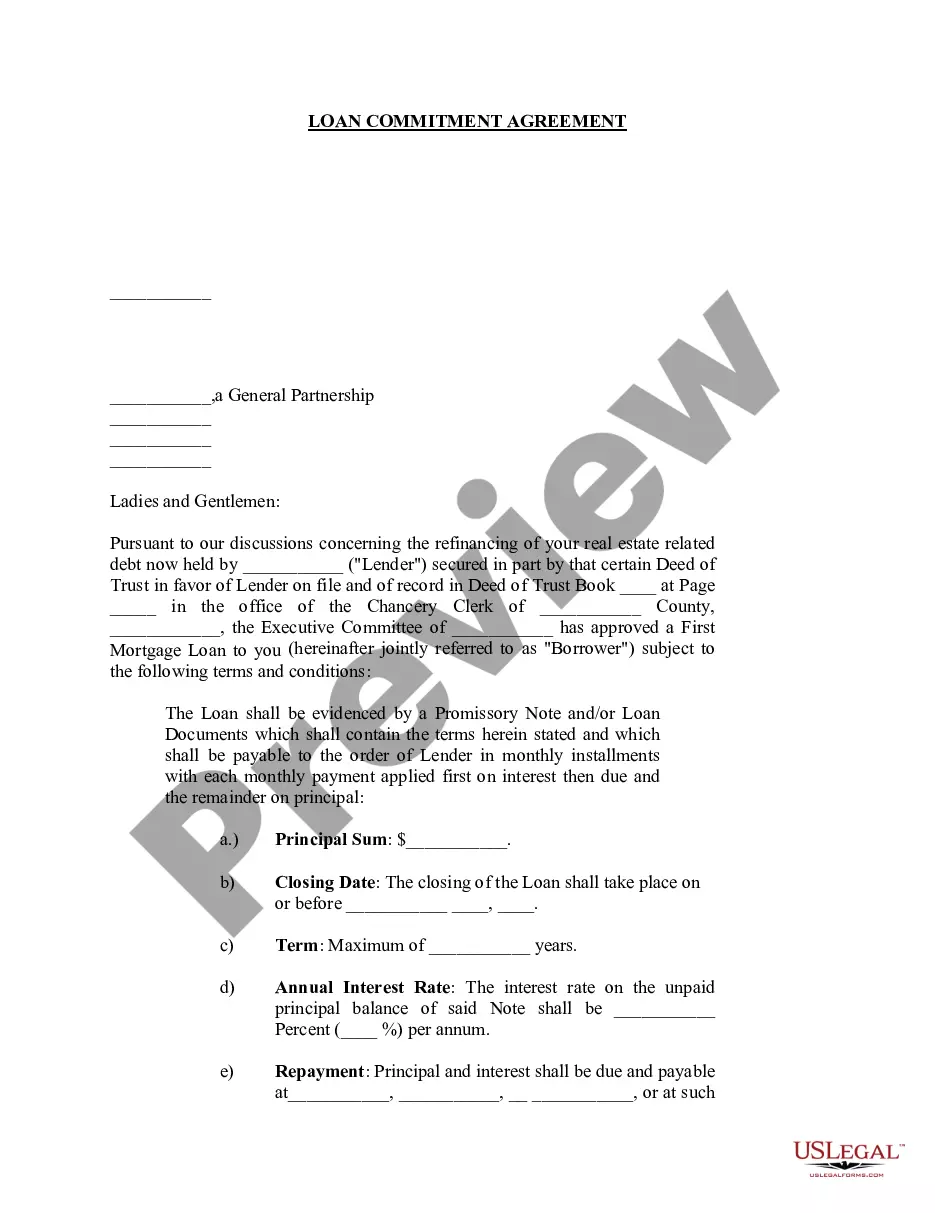
How to fill out Sample Letter For Final Judgment - Writ Of Possession?
Securing a reliable source for the latest and pertinent legal templates is a significant part of dealing with bureaucracy.
Selecting the appropriate legal documents demands precision and meticulousness, which is why it is crucial to obtain samples of Sample Writ Possession Form Ny exclusively from reputable sources, such as US Legal Forms. An incorrect template can squander your time and hinder your current situation. With US Legal Forms, you can have peace of mind. You can review and verify all the specifics regarding the document’s applicability and significance for your circumstances and in your state or county.
Eliminate the complications related to your legal documentation. Discover the extensive US Legal Forms collection, where you can locate legal templates, assess their relevance to your case, and download them instantly.
- Use the catalog navigation or search bar to find your template.
- Examine the form’s details to ensure it meets the specifications of your state and county.
- Check the form preview, if available, to confirm it is the document you need.
- Return to the search to find the correct document if the Sample Writ Possession Form Ny does not meet your criteria.
- Once you are certain about the form’s applicability, download it.
- If you are a registered user, click Log in to verify your identity and access your selected templates in My documents.
- If you do not have an account yet, click Buy now to acquire the form.
- Select the pricing option that aligns with your needs.
- Proceed with the registration to complete your purchase.
- Conclude your purchase by selecting a payment method (credit card or PayPal).
- Choose the file format for downloading Sample Writ Possession Form Ny.
- After obtaining the form on your device, you can modify it using the editor or print it and complete it manually.
Form popularity
FAQ
Non-payment The only legal way to evict a nonpaying tenant is through a nonpayment eviction proceeding in Housing Court. Building owners must notify the tenant that rent is late, what the balance is, and that, if not paid, the tenant will be evicted.
In the case that the tenant pays the rent or moves out of the property within fourteen days, then the eviction process does not continue. If they still haven't paid rent and continue living in the property by the end of the fourteen days, the landlord can continue with the eviction lawsuit.
The judgment for possession states the plaintiff has a right to the property; the writ of execution actually begins the transfer process from a judgment debtor to a plaintiff. A writ of execution may be used in bankruptcy cases and in eviction cases (when a tenant will not leave on their own and will not pay rent).
Step 1 ? Send Eviction Notice to Tenant. Non-Payment of Rent. ... Step 2 ? Wait to Hear from the Tenant. ... Step 3 ? File in Court. ... Step 4 ? Serve the Tenant. ... Step 5 ? Appear in Court. ... Step 6 ? Obtain Warrant for Eviction. ... Step 7 ? Repossess the Property.
The sheriff's office will first serve a 72-hour notice on the tenants, informing them that they have 72-hours to vacate the rental premises, or they will be physically removed. The service of this notice is required by New York landlord tenant law and is made personally by uniformed deputies who come to the house.