Bankruptcy Information May Be Reported For ___ Years
Description
Get your form ready online
Our built-in tools help you complete, sign, share, and store your documents in one place.
Make edits, fill in missing information, and update formatting in US Legal Forms—just like you would in MS Word.
Download a copy, print it, send it by email, or mail it via USPS—whatever works best for your next step.
Sign and collect signatures with our SignNow integration. Send to multiple recipients, set reminders, and more. Go Premium to unlock E-Sign.
If this form requires notarization, complete it online through a secure video call—no need to meet a notary in person or wait for an appointment.
We protect your documents and personal data by following strict security and privacy standards.

Make edits, fill in missing information, and update formatting in US Legal Forms—just like you would in MS Word.

Download a copy, print it, send it by email, or mail it via USPS—whatever works best for your next step.

Sign and collect signatures with our SignNow integration. Send to multiple recipients, set reminders, and more. Go Premium to unlock E-Sign.

If this form requires notarization, complete it online through a secure video call—no need to meet a notary in person or wait for an appointment.

We protect your documents and personal data by following strict security and privacy standards.
Looking for another form?



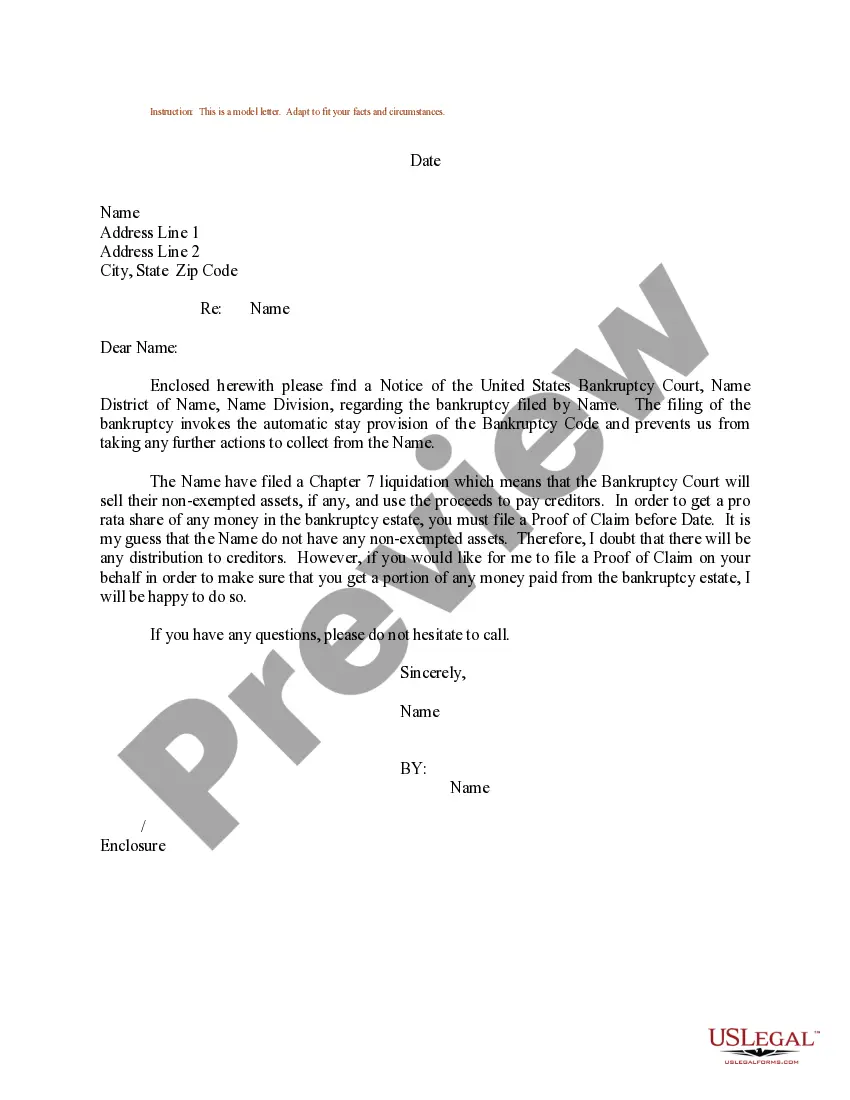

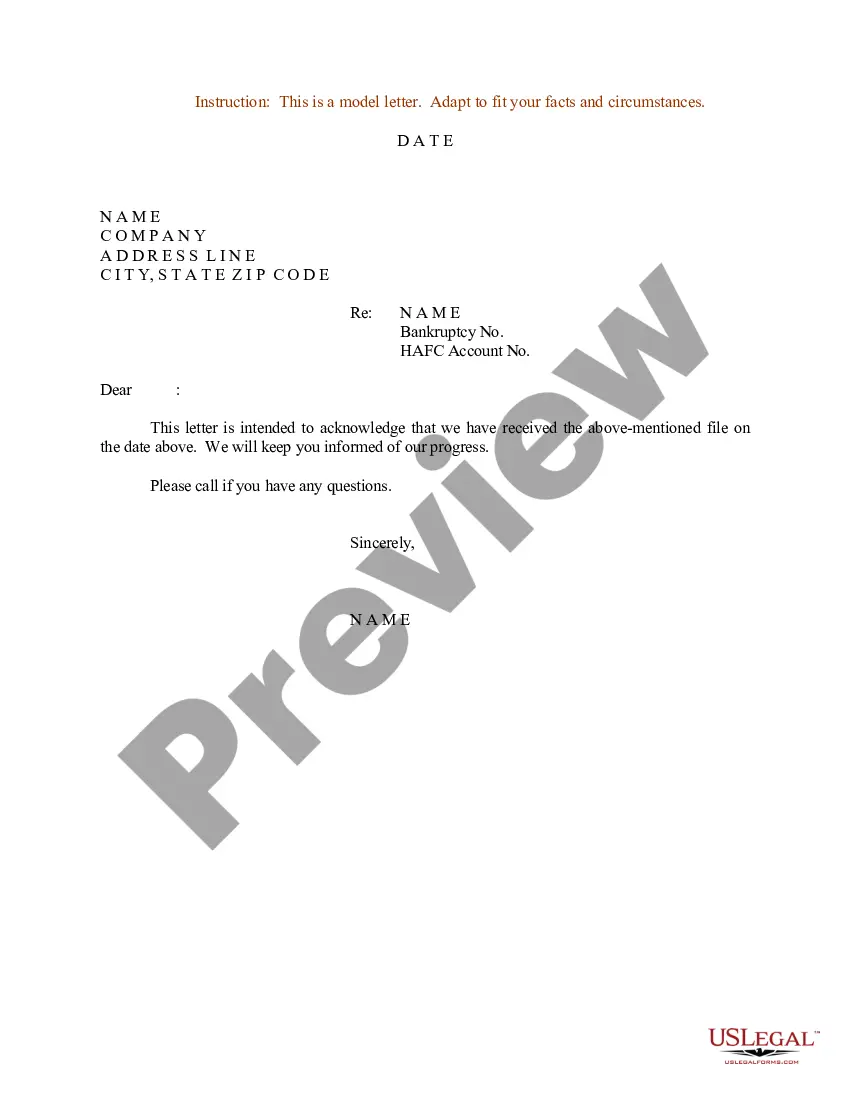
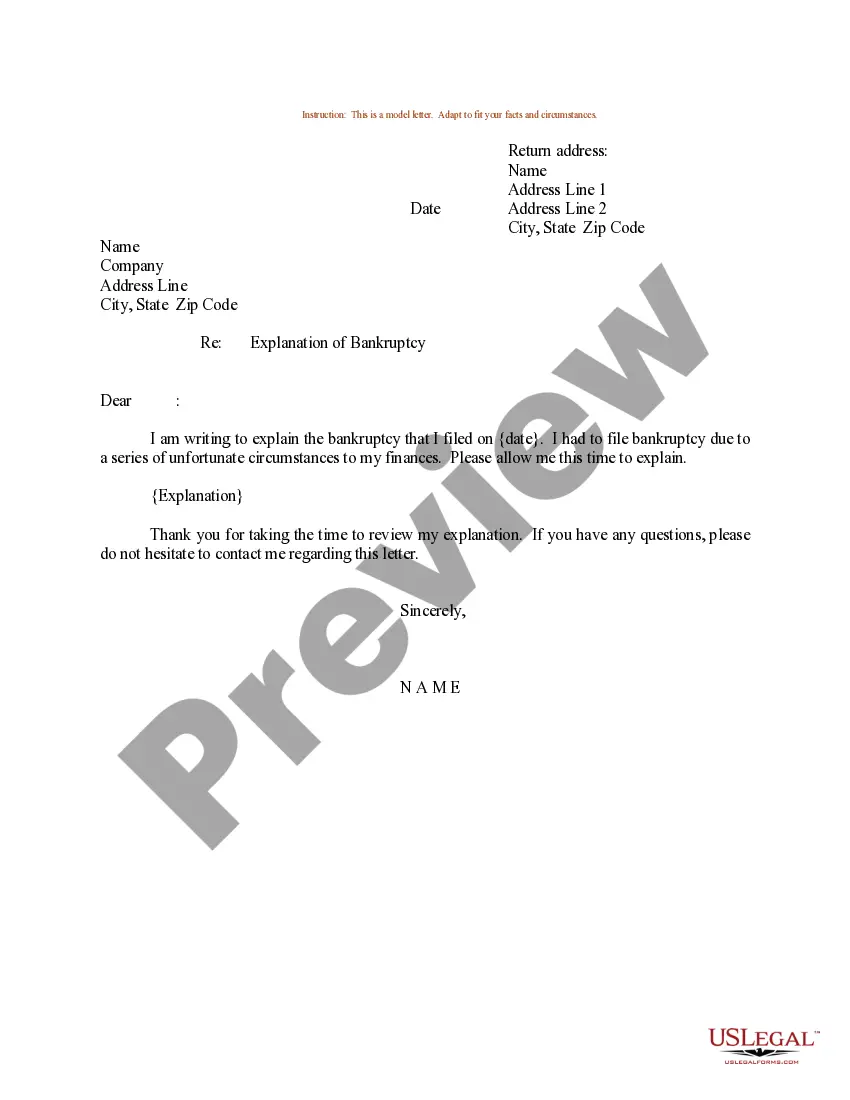
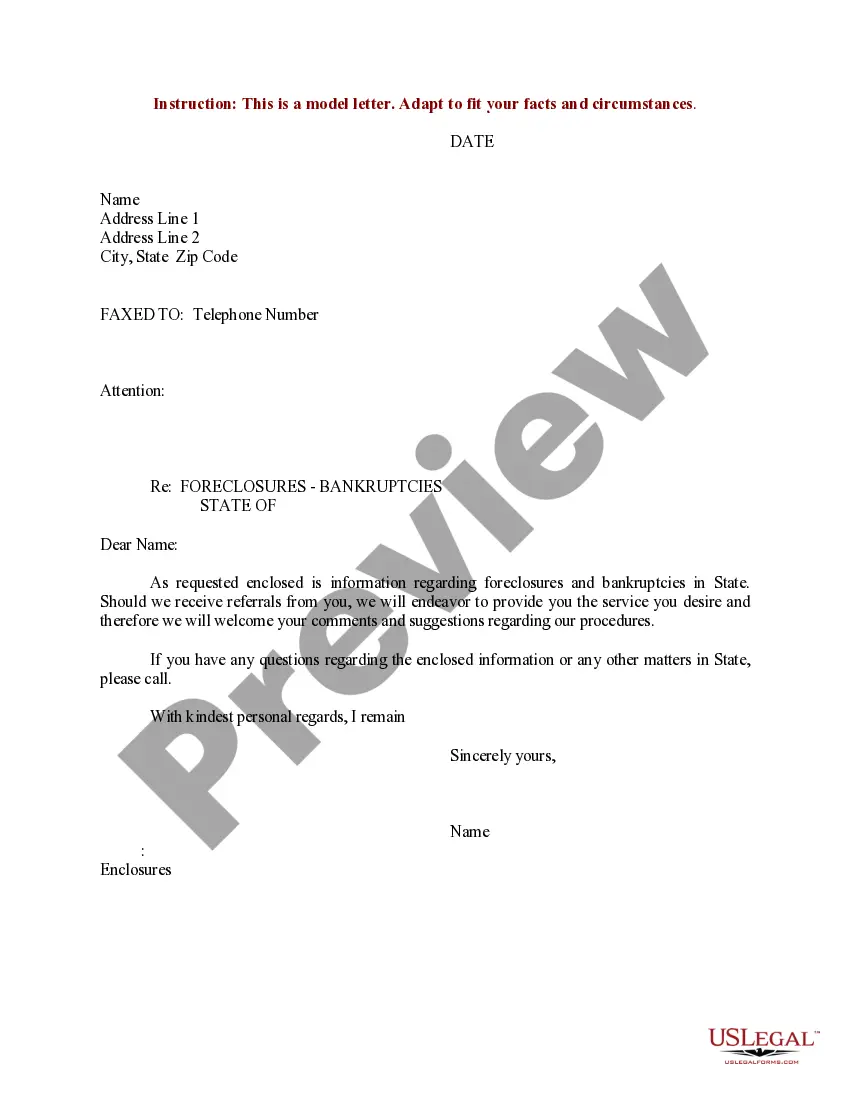
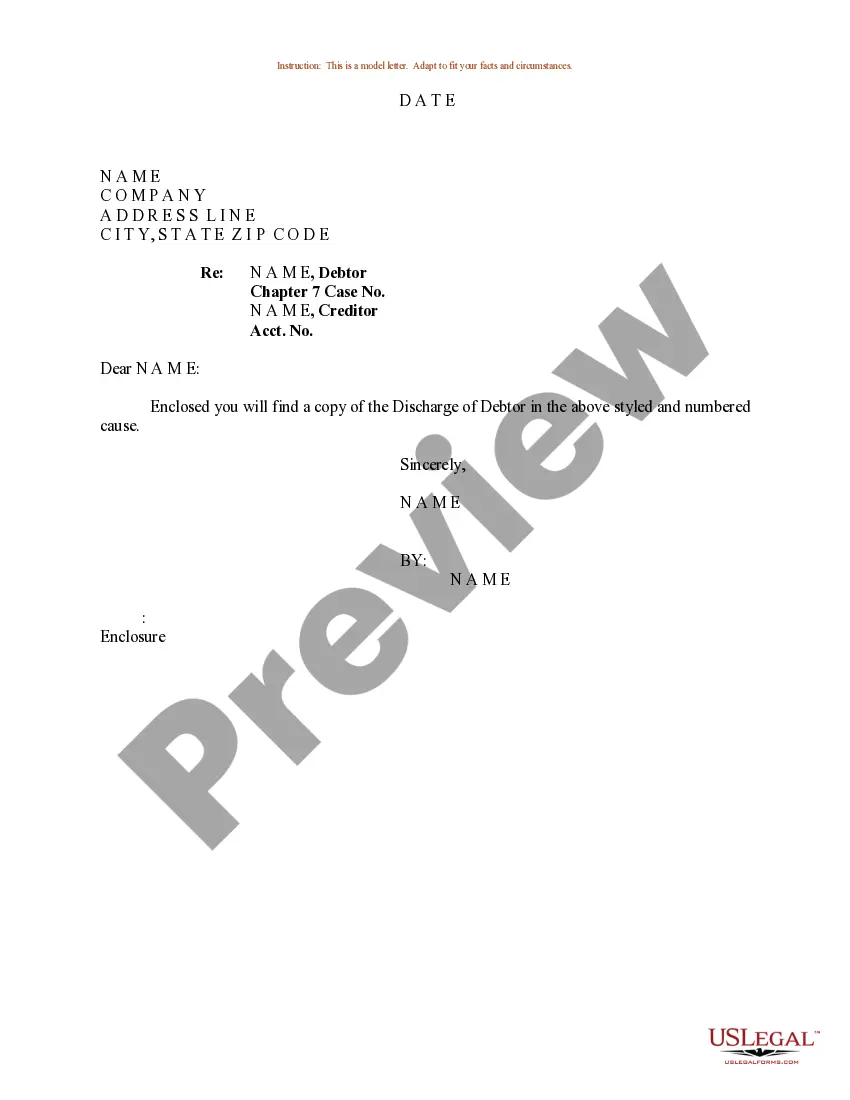
How to fill out Sample Letter For Written Acknowledgment Of Bankruptcy Information?
- If you're already registered, log in to your account to find and download your required form. Verify that your subscription is currently active; if not, renew as per your existing payment plan.
- For first-time users, begin by previewing the available forms. Ensure the chosen document aligns with your needs and meets the local jurisdiction requirements.
- Should you need different templates, utilize the Search feature to find the correct documents. Continue to the next step when you identify suitable forms.
- Proceed to purchase the selected document by clicking the Buy Now button and opting for your desired subscription plan. An account registration is necessary for library access.
- Complete your purchase using a valid credit card or PayPal account for the subscription fee.
- Finally, download the form and save it to your device. You can also access it anytime in the My Forms section of your profile.
US Legal Forms simplifies the process of obtaining legal documentation. By providing a user-friendly platform with a robust collection of over 85,000 forms, customers benefit from both accessibility and affordability compared to competitors.
With the support of premium experts, you can ensure your forms are properly completed and legally binding. Why wait? Start your hassle-free journey with US Legal Forms today!
Form popularity
FAQ
Certain debts cannot be cleared by bankruptcy, including alimony, child support, and most student loans. Bankruptcy information may be reported for a defined period, but these specific debts remain your responsibility regardless of bankruptcy status. Other debts like court fines and some tax obligations also fall into this category. It's important to be aware of these exceptions when considering bankruptcy as an option.
Bankruptcy information may be reported for 7 to 10 years, depending on the type of bankruptcy filed. For Chapter 7 bankruptcy, the information will stay on your credit report for up to 10 years. In contrast, Chapter 13 bankruptcy typically remains for about 7 years. Knowing this timeframe helps you plan your financial recovery and reestablish your credit.
The 3 year rule for bankruptcy generally relates to the time frame in which certain debts may be cleared from your credit report. This rule specifies that bankruptcy information may be reported for up to 7 years for Chapter 13 and 10 years for Chapter 7. It means that any discharge received in a bankruptcy case will be visible to creditors during this period. This rule is crucial to understanding how long bankruptcy can affect your financial future.
Bankruptcy information may be reported for longer than 6 years, typically appearing on your credit report for 7 to 10 years depending on the chapter filed. While you may feel concerned about its impact, many individuals find they can start rebuilding their credit score well before that time limit. Taking proactive steps, such as using services from uslegalforms, can support you in navigating your recovery journey.
The ability to file for bankruptcy is based on specific time frames related to your previous filings. You can file again for Chapter 7 bankruptcy every 8 years. If you're considering repeated filings, consulting resources from uslegalforms can provide clarity on your options and the best steps forward. Awareness of these rules can help you propose viable solutions to your financial challenges.
Bankruptcy information may be reported for several years, but it does fade from your credit report after the designated time limit. After 10 years for Chapter 7 and 7 years for Chapter 13, the bankruptcy should no longer appear in your history. This can greatly improve your chances of obtaining credit and moving toward financial freedom. Utilizing tools from uslegalforms can also help you understand how to manage your credit afterward.
The 2 year rule generally refers to the timeframe in which you can file for bankruptcy relief under certain circumstances after a previous bankruptcy. Specifically, if you've filed for Chapter 7 bankruptcy, you may be eligible to file again for Chapter 7 after 8 years. However, if you filed for Chapter 13, the waiting period is typically only 2 years. Understanding these timelines can help you navigate your financial options more effectively.
Bankruptcy information may be reported for a total of 10 years from the date of filing. This time frame can vary based on the type of bankruptcy filed—Chapter 7 or Chapter 13. As you move on from bankruptcy, you might find that its impact lessens over time, especially if you're focused on rebuilding your credit. Tools and resources, such as those offered by uslegalforms, can guide you through this process.
Bankruptcy information may be reported for up to 10 years, but many people mistakenly believe it lasts only 5 years. This confusion often arises from the waiting period for certain types of loans. It's essential to understand that while some debts may be discharged after 5 years, the bankruptcy itself remains on your credit report longer. Knowing this can help you make informed financial decisions.
Absolutely; it is possible to achieve an 800 credit score after experiencing bankruptcy. Focus on building credit through responsible behaviors like paying bills timely and reducing debt. Over time, as bankruptcy information may be reported for up to 10 years but becomes less relevant, your credit score can recover significantly. Tools and resources from platforms like uslegalforms can guide you in this rebuilding process, helping to simplify the path to financial restoration.