Attorney Information With A Lawyer
Description

Get your form ready online
Our built-in tools help you complete, sign, share, and store your documents in one place.
Make edits, fill in missing information, and update formatting in US Legal Forms—just like you would in MS Word.
Download a copy, print it, send it by email, or mail it via USPS—whatever works best for your next step.
Sign and collect signatures with our SignNow integration. Send to multiple recipients, set reminders, and more. Go Premium to unlock E-Sign.
If this form requires notarization, complete it online through a secure video call—no need to meet a notary in person or wait for an appointment.
We protect your documents and personal data by following strict security and privacy standards.

Make edits, fill in missing information, and update formatting in US Legal Forms—just like you would in MS Word.

Download a copy, print it, send it by email, or mail it via USPS—whatever works best for your next step.

Sign and collect signatures with our SignNow integration. Send to multiple recipients, set reminders, and more. Go Premium to unlock E-Sign.

If this form requires notarization, complete it online through a secure video call—no need to meet a notary in person or wait for an appointment.

We protect your documents and personal data by following strict security and privacy standards.
Looking for another form?

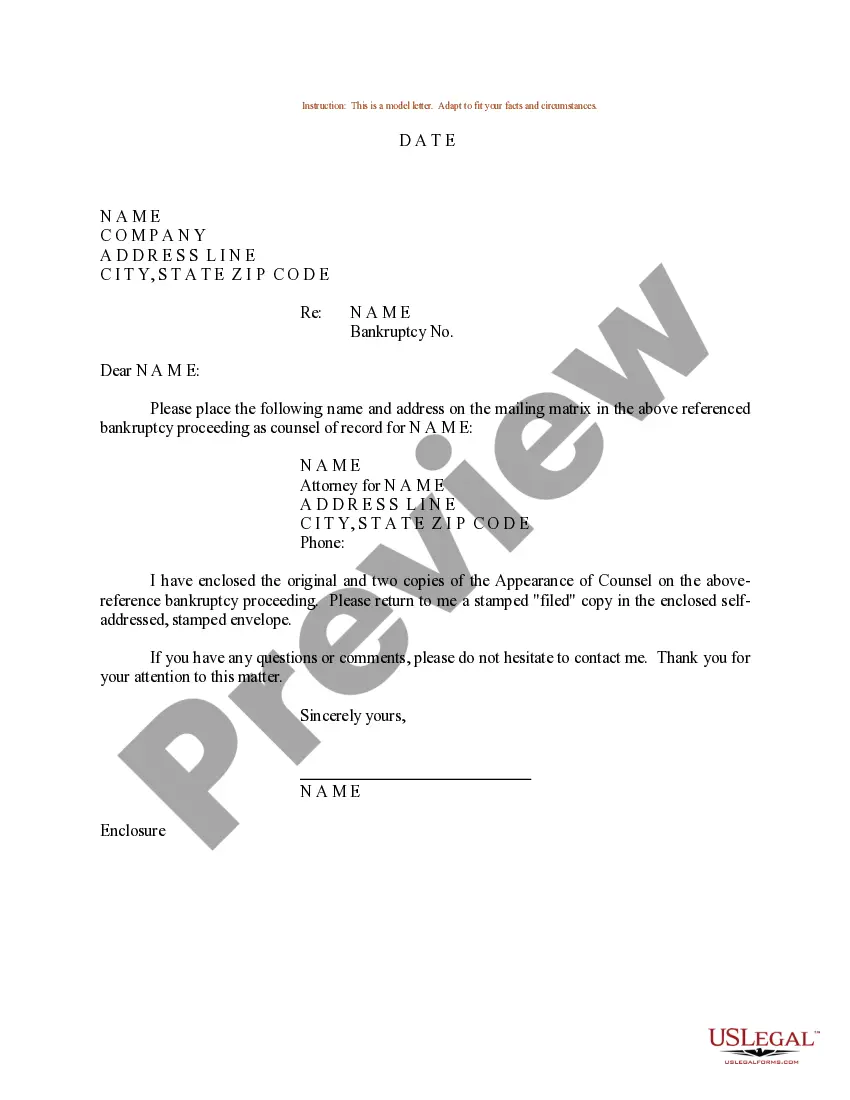
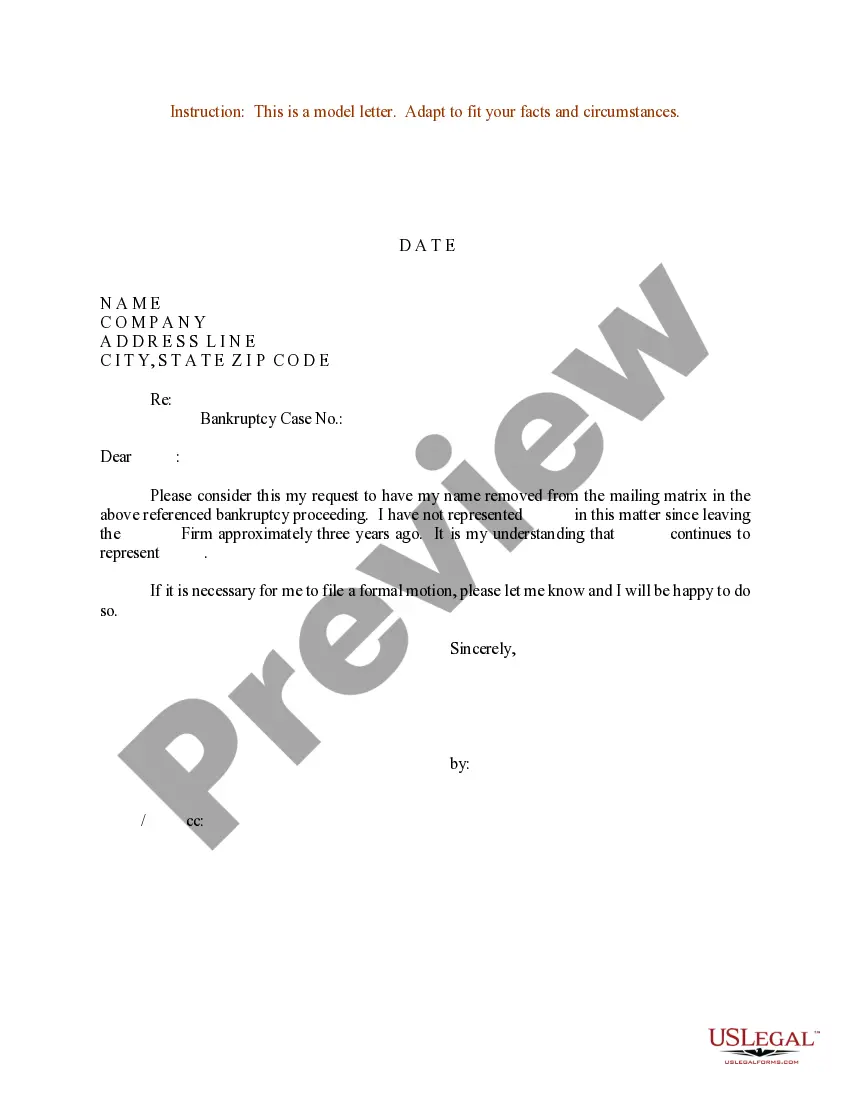
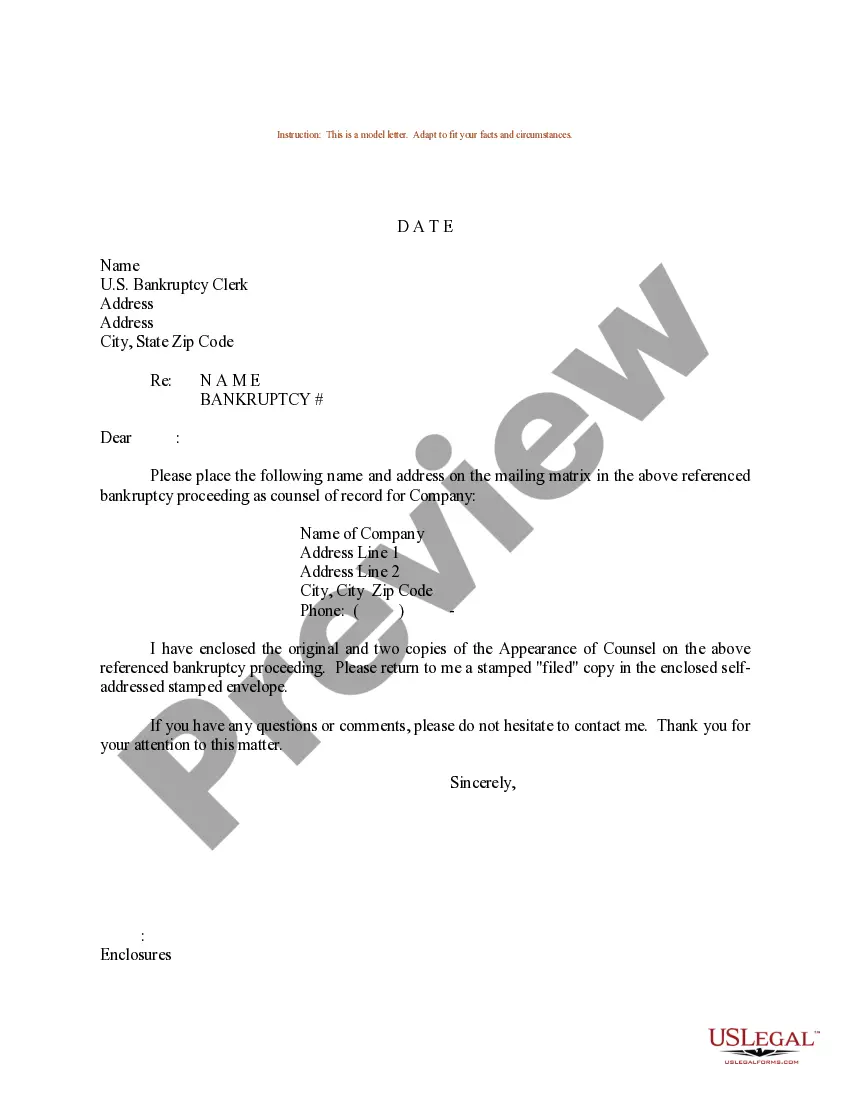
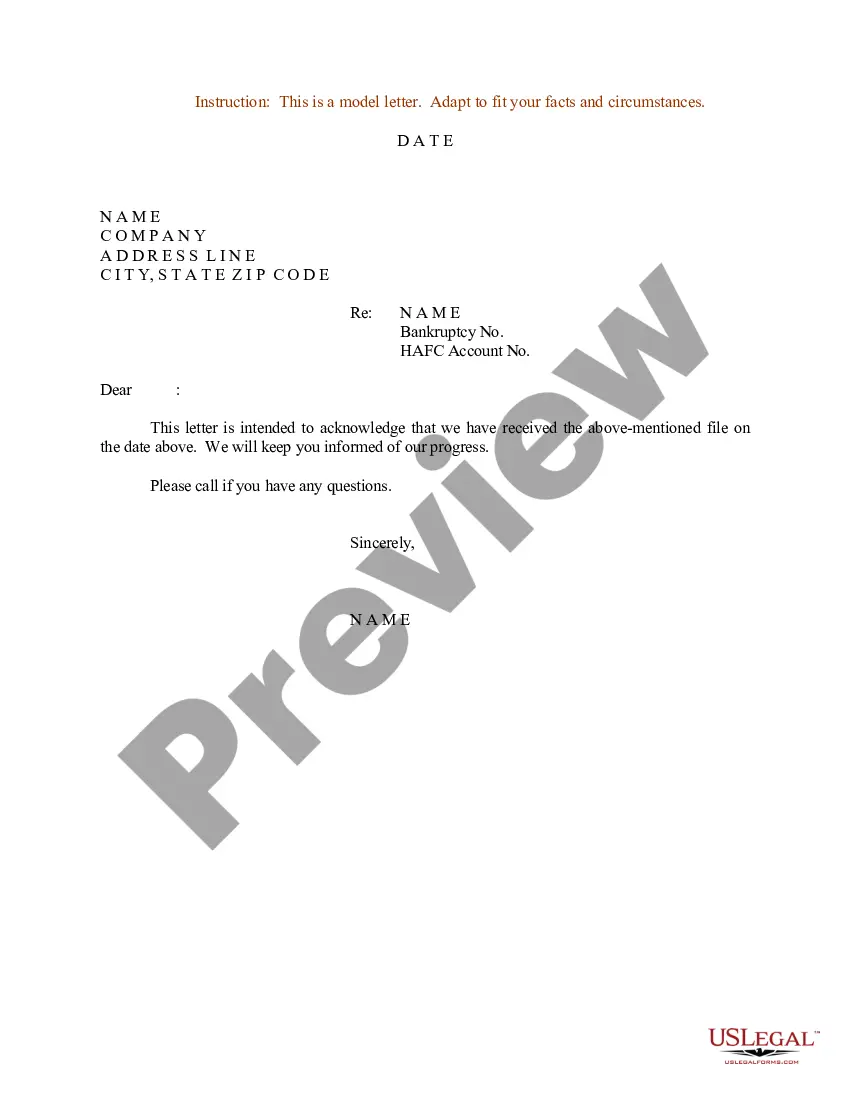
How to fill out Sample Letter For Appointment Of Attorney's Information On Mailing Matrix Concerning Bankruptcy Proceeding?
- Log in to your US Legal Forms account if you're a returning user. Ensure your subscription is active to download form templates.
- Preview the required form and read the description carefully. Confirm it's the right choice that meets your jurisdiction's requirements.
- If you find inconsistencies or need another form, use the search feature to locate the appropriate document.
- Proceed to purchase the document by selecting the Buy Now button and choosing your preferred subscription plan. Remember to create an account for accessing the full library.
- Complete your payment using your credit card or PayPal account.
- Download your legal form and save it on your device. You can revisit your saved documents anytime through the My Forms section in your profile.
By following these steps, you'll gain access to one of the most extensive collections of legal forms available. US Legal Forms not only provides a cost-effective solution but also ensures you have access to expert advice for completing your documents accurately.
Start simplifying your legal processes today! Visit US Legal Forms to explore our extensive library and obtain the attorney information with a lawyer you need.
Form popularity
FAQ
Attorneys typically write their name followed by the designation 'Esquire' or 'Esq.' after their name to signify their legal qualification. For example, John Doe, Esq. indicates that this individual is a qualified attorney. If you are looking for more clarity on this subject, seeking attorney information with a lawyer can provide detail on common practices and how to present your professional identity.
An example of an attorney-in-fact could be a trusted friend who helps you manage your financial affairs when you are unavailable or incapacitated. This individual would have the authority to make significant decisions like paying bills or managing investments on your behalf. When discussing scenarios like these, having attorney information with a lawyer is crucial for ensuring you understand the implications of granting such authority.
An example of an attorney-in-fact is a family member who is designated to make medical decisions for you if you become incapacitated. This arrangement allows them to act in your best interest without having to go through legal hurdles. If you're considering this role, obtaining attorney information with a lawyer can guide you in understanding the responsibilities involved.
Typically, attorneys are addressed as 'Mr.' or 'Ms.' followed by their last name, unless they hold a specific title such as 'Judge' or 'Professor.' In formal settings, it is appropriate to use 'Esquire' after the attorney's name to denote their professional status. When seeking attorney information with a lawyer, understanding the proper titles can help you communicate respectfully.
An attorney-in-fact is a person authorized to act on behalf of another individual, known as the principal, for legal matters. This authority is granted through a legal document called a power of attorney. In this context, having attorney information with a lawyer can ensure that the document is prepared correctly, outlining specific powers granted to the attorney-in-fact.
Avoid sharing irrelevant personal details that do not pertain to your case, as they can distract from key issues. Additionally, do not hide important information, as this could negatively affect your representation. Effective communication with your attorney is essential, so focus on sharing relevant attorney information with a lawyer.
The terms attorney and lawyer are often used interchangeably, but there are subtle differences. A lawyer is anyone who has completed law school and may provide legal advice, while an attorney has passed the bar exam and can represent clients in legal matters. Understanding these distinctions is beneficial when you seek attorney information with a lawyer.
You can tell your lawyer everything relevant to your case, as they are bound by confidentiality. This open dialogue allows your attorney to give you informed legal options. Remember, when you seek attorney information with a lawyer, honesty serves your best interests.
Yes, you can and should share all relevant details with your attorney. Providing complete information helps them develop effective strategies for your case, ensuring they can represent you fully. Trust is key in this relationship, so always feel encouraged to speak openly.
Yes, everything you say to a lawyer is confidential due to attorney-client privilege. This privilege encourages open and honest communication, allowing your lawyer to provide you with the best legal advice. When seeking attorney information with a lawyer, always feel safe sharing your concerns.