Testamentary Trust Template
Description
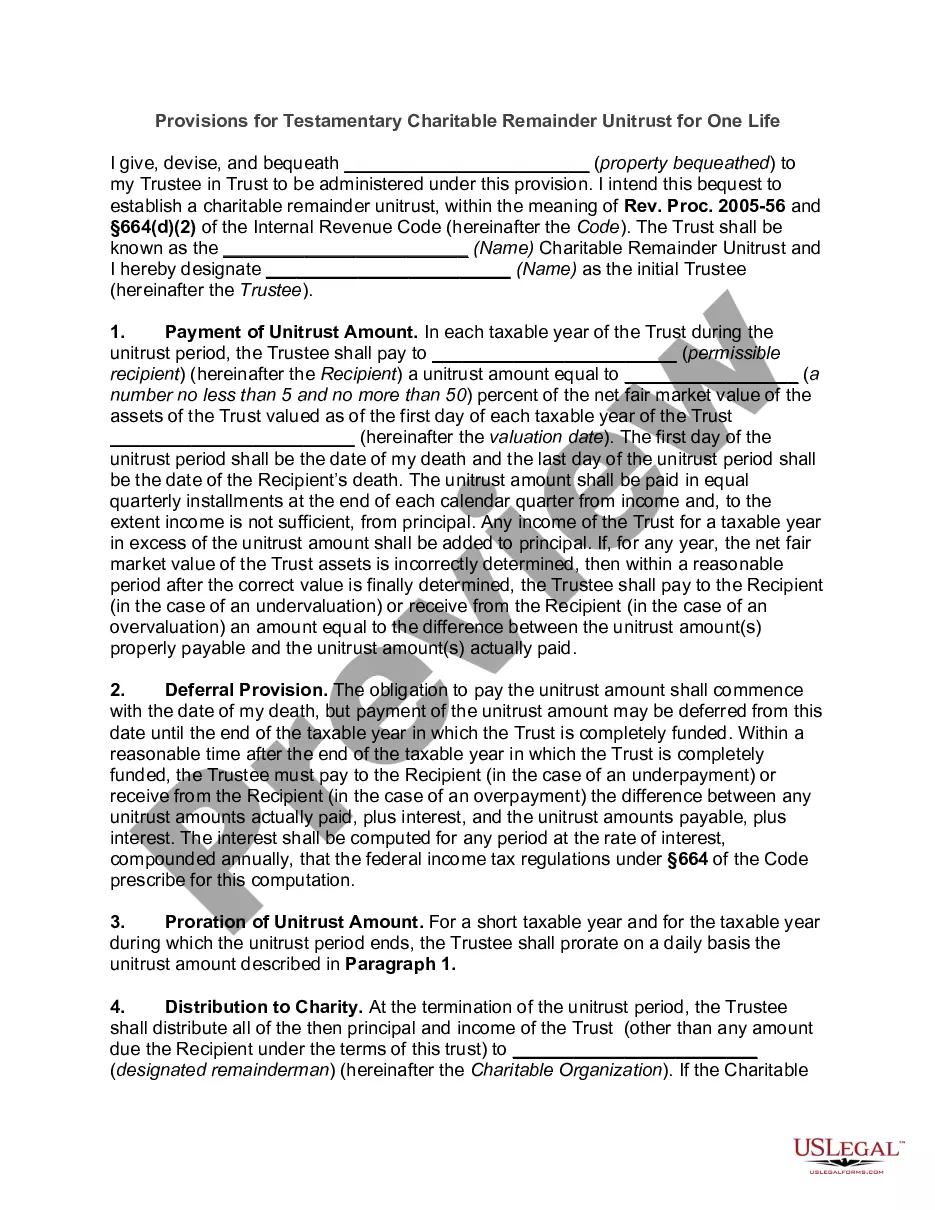

Get your form ready online
Our built-in tools help you complete, sign, share, and store your documents in one place.
Make edits, fill in missing information, and update formatting in US Legal Forms—just like you would in MS Word.
Download a copy, print it, send it by email, or mail it via USPS—whatever works best for your next step.
Sign and collect signatures with our SignNow integration. Send to multiple recipients, set reminders, and more. Go Premium to unlock E-Sign.
If this form requires notarization, complete it online through a secure video call—no need to meet a notary in person or wait for an appointment.
We protect your documents and personal data by following strict security and privacy standards.

Make edits, fill in missing information, and update formatting in US Legal Forms—just like you would in MS Word.

Download a copy, print it, send it by email, or mail it via USPS—whatever works best for your next step.

Sign and collect signatures with our SignNow integration. Send to multiple recipients, set reminders, and more. Go Premium to unlock E-Sign.

If this form requires notarization, complete it online through a secure video call—no need to meet a notary in person or wait for an appointment.

We protect your documents and personal data by following strict security and privacy standards.
Looking for another form?
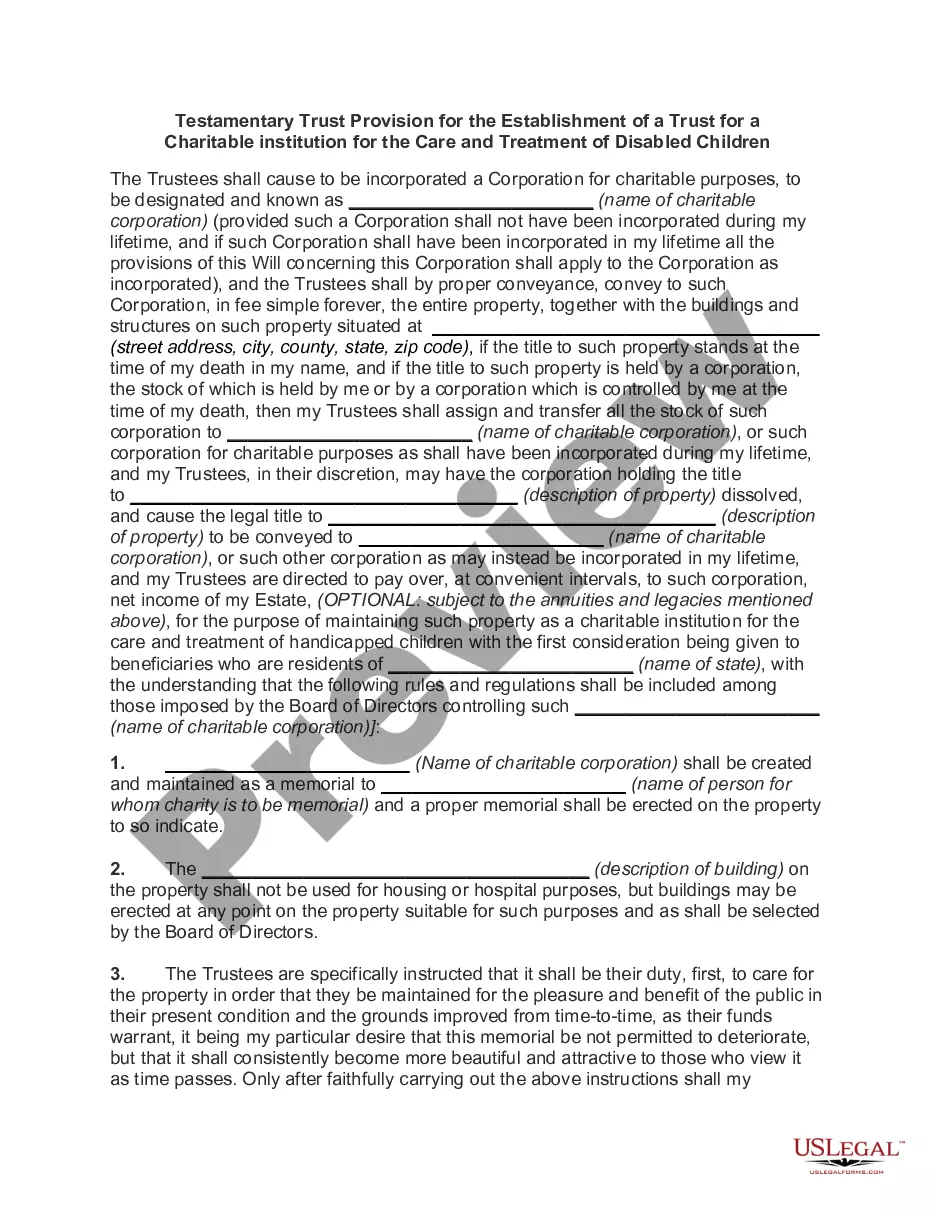
How to fill out Testamentary Trust Provision For The Establishment Of A Trust For A Charitable Institution For The Care And Treatment Of Disabled Children?
- Log in to your US Legal Forms account if you're a returning user. Ensure your subscription is active to access your needed form template.
- For new users, begin by reviewing the available templates. Use the Preview mode to understand the details and confirm it meets your specific requirements.
- If the template doesn’t fit your needs, utilize the search feature to find the correct document that adheres to your jurisdiction's regulations.
- Once you identify the suitable testamentary trust template, click the 'Buy Now' button. Select the preferred subscription plan and create an account to access the legal library.
- Complete your purchase by entering your payment details, either via credit card or PayPal, to finalize your subscription.
- Upon successful payment, download the testamentary trust template to your device. You can always access it later in the 'My Forms' section within your account.
Utilizing US Legal Forms for your estate planning not only streamlines the document creation process but also ensures that you have access to more than 85,000 legal forms. With expert assistance available, you can feel confident your documents are accurate and compliant.
Start your estate planning journey today! Visit US Legal Forms to explore our vast library and secure your testamentary trust template.
Form popularity
FAQ
Not all trusts are required to file a tax return, but many are, especially if they generate income. A living trust, for instance, may not need to file because it's revocable and the income is reported on the grantor's tax return. However, a testamentary trust typically does need to file, as indicated in a reliable testamentary trust template. Understanding your trust's status is crucial, so consulting with a legal expert is advisable.
To establish a testamentary trust, you need several documents, including a will, which outlines the terms of the trust. A testamentary trust template can guide you through the necessary components, ensuring you include all essential details. Additionally, you might require property deeds and financial statements to fund the trust properly. Consulting an attorney can help clarify all required documents.
Yes, a testamentary trust is required to file a tax return if it has income that exceeds a certain threshold. The IRS treats the trust as a separate entity for tax purposes. Using a testamentary trust template can simplify the process of determining income and required documentation for tax filings. Always seek professional help to ensure accurate filing.
To write a testamentary trust, begin by identifying your beneficiaries and the assets you want to place in the trust. Next, appoint a reliable trustee responsible for managing the trust assets according to your wishes. Employing a testamentary trust template can guide you through this process, making it easier to create a legally sound document that meets your unique requirements.
Writing a testamentary involves outlining your wishes regarding the distribution of your assets after your death within your will. It is important to specify the appointment of a trustee who will manage any trusts formed as part of your estate plan. Utilizing a testamentary trust template can help structure your will effectively, ensuring all necessary details are included.
One significant mistake parents often make is failing to communicate their intentions to their children about the trust fund. Clear communication can prevent misunderstandings and help set realistic expectations for beneficiaries. Additionally, using a well-designed testamentary trust template can ensure that parents outline their wishes clearly, reducing the potential for conflict after they are gone.
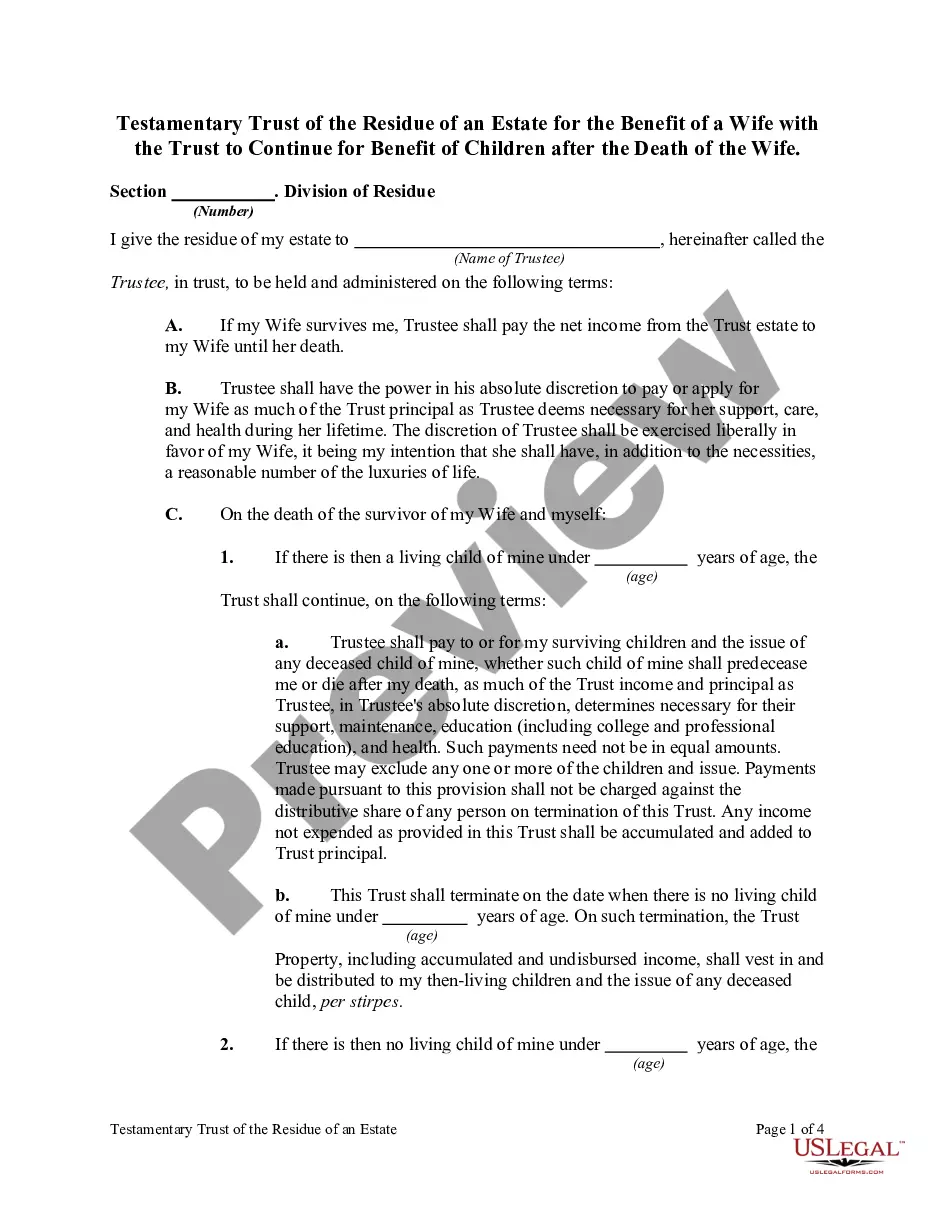
A testamentary trust is created through a will and comes into effect upon the death of the testator. The structure typically includes a trustee, who manages the trust, beneficiaries, who receive the benefits, and specific provisions that outline how assets will be distributed. Using a testamentary trust template can simplify the setup process, ensuring all critical components are properly addressed.
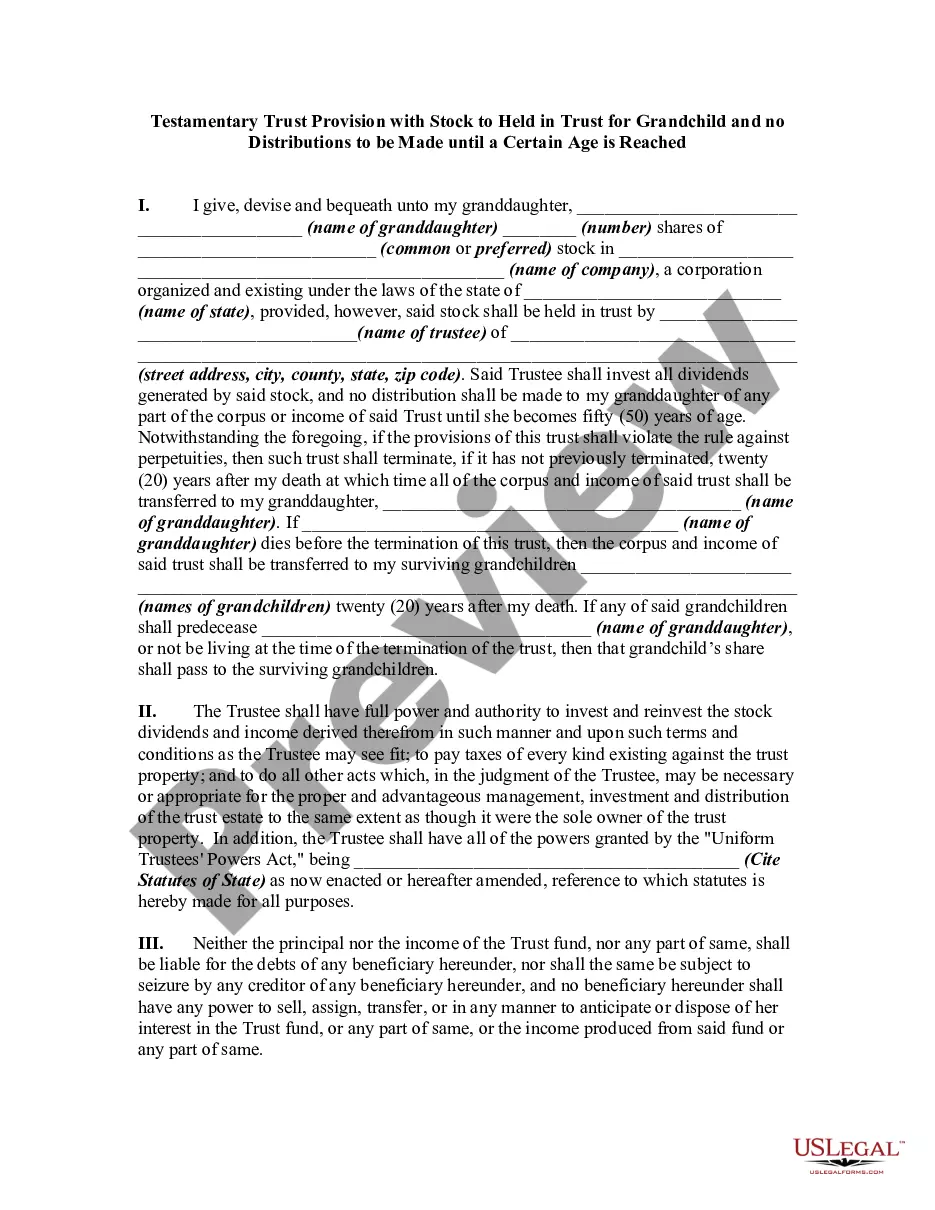
To draft a testamentary trust, start by outlining your intentions for asset distribution after your death. Use a testamentary trust template to include essential information such as the beneficiaries, trustee responsibilities, and distribution timelines. Ensure that your language is clear and precise to prevent any potential confusion. Lastly, consult with a legal professional if needed, making sure your testamentary trust aligns with your overall estate plan.
One key disadvantage of a testamentary trust is that it takes effect only after your death, meaning it does not provide immediate financial support during your lifetime. Additionally, the court may oversee the trust's creation and administration, which can lead to delays and additional costs. By carefully considering these factors and using a testamentary trust template, you can create a plan that meets your needs while minimizing complications.
To draft a testamentary trust, begin by defining the assets you wish to place in the trust, such as property or investments. Next, select a trustworthy individual or institution to act as the trustee, and outline their powers and duties. Utilizing a testamentary trust template can streamline the drafting process and ensure that you include all necessary details. Remember, clarity is vital to avoid disputes among beneficiaries.