Special Needs Trustor Complete With The Family
Description



Get your form ready online
Our built-in tools help you complete, sign, share, and store your documents in one place.
Make edits, fill in missing information, and update formatting in US Legal Forms—just like you would in MS Word.
Download a copy, print it, send it by email, or mail it via USPS—whatever works best for your next step.
Sign and collect signatures with our SignNow integration. Send to multiple recipients, set reminders, and more. Go Premium to unlock E-Sign.
If this form requires notarization, complete it online through a secure video call—no need to meet a notary in person or wait for an appointment.
We protect your documents and personal data by following strict security and privacy standards.

Make edits, fill in missing information, and update formatting in US Legal Forms—just like you would in MS Word.

Download a copy, print it, send it by email, or mail it via USPS—whatever works best for your next step.

Sign and collect signatures with our SignNow integration. Send to multiple recipients, set reminders, and more. Go Premium to unlock E-Sign.

If this form requires notarization, complete it online through a secure video call—no need to meet a notary in person or wait for an appointment.

We protect your documents and personal data by following strict security and privacy standards.
Looking for another form?



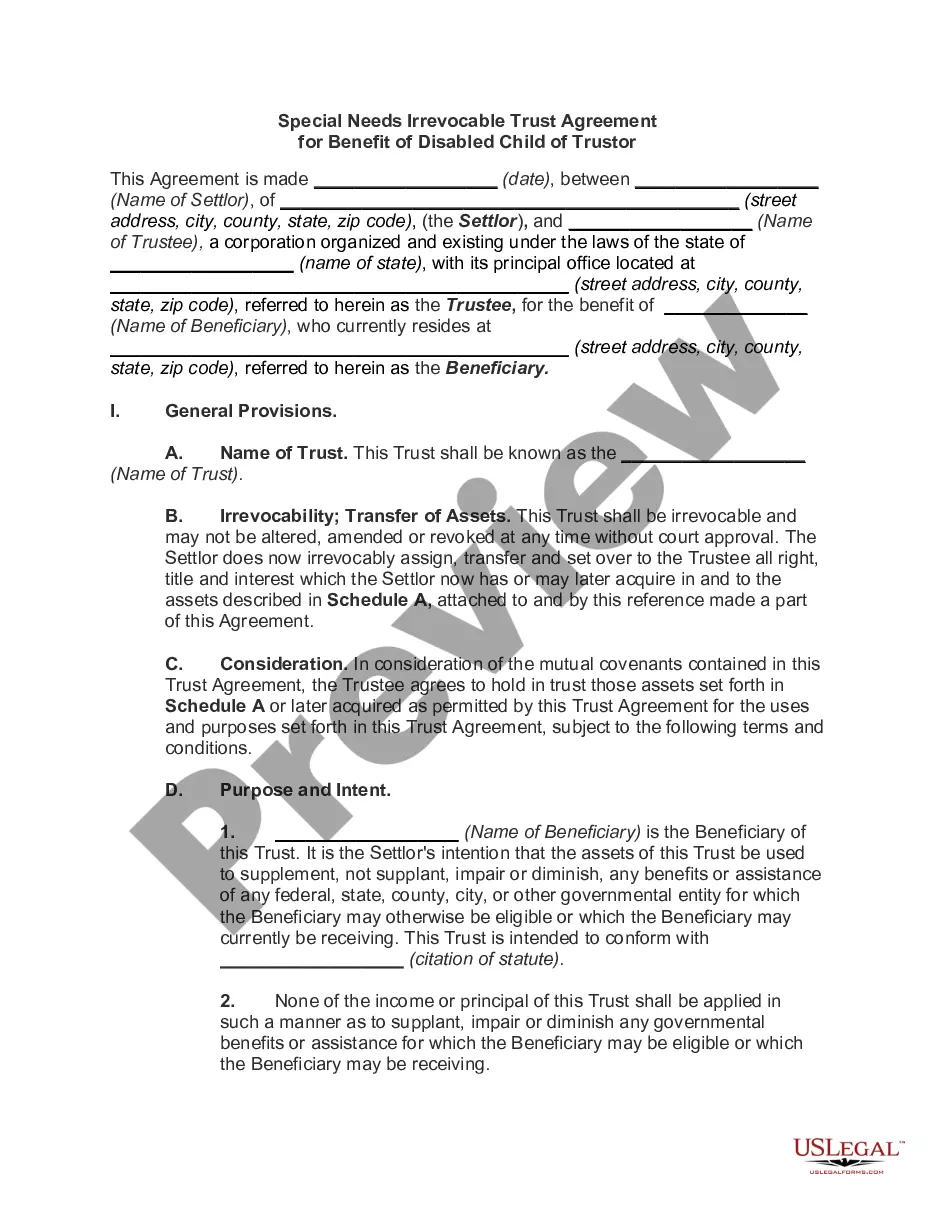
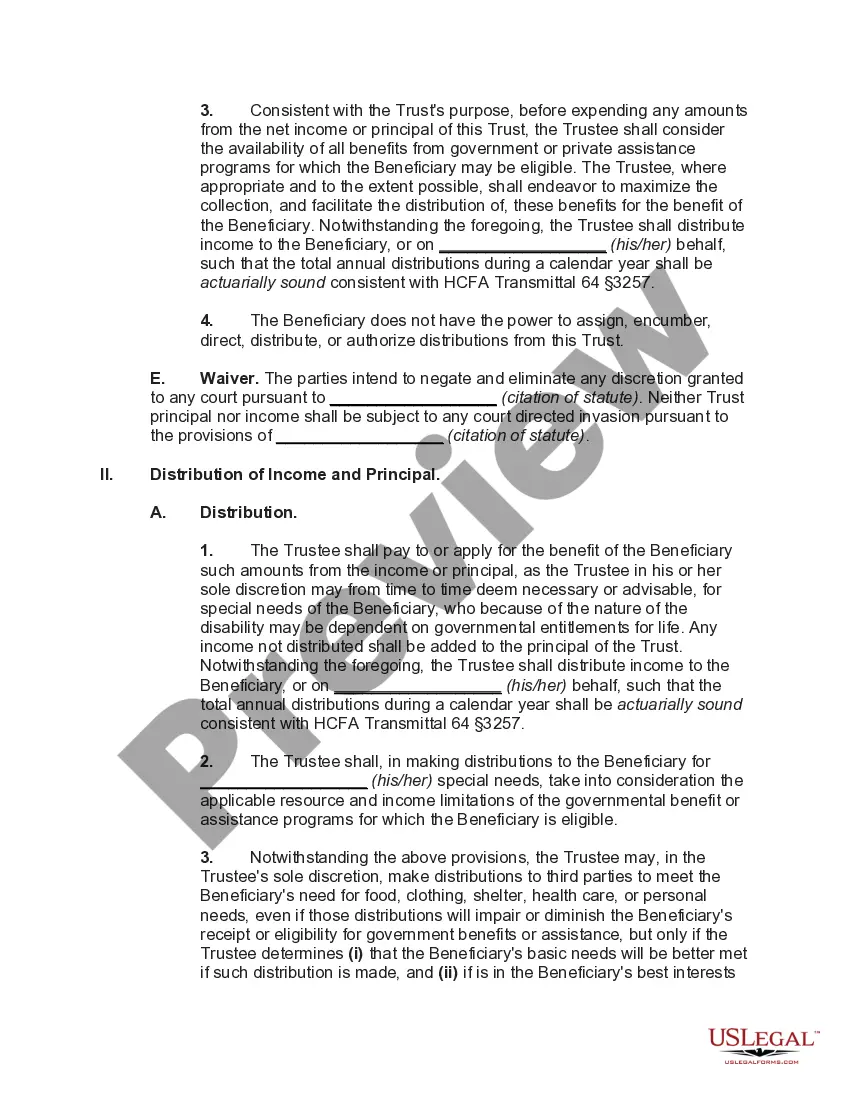
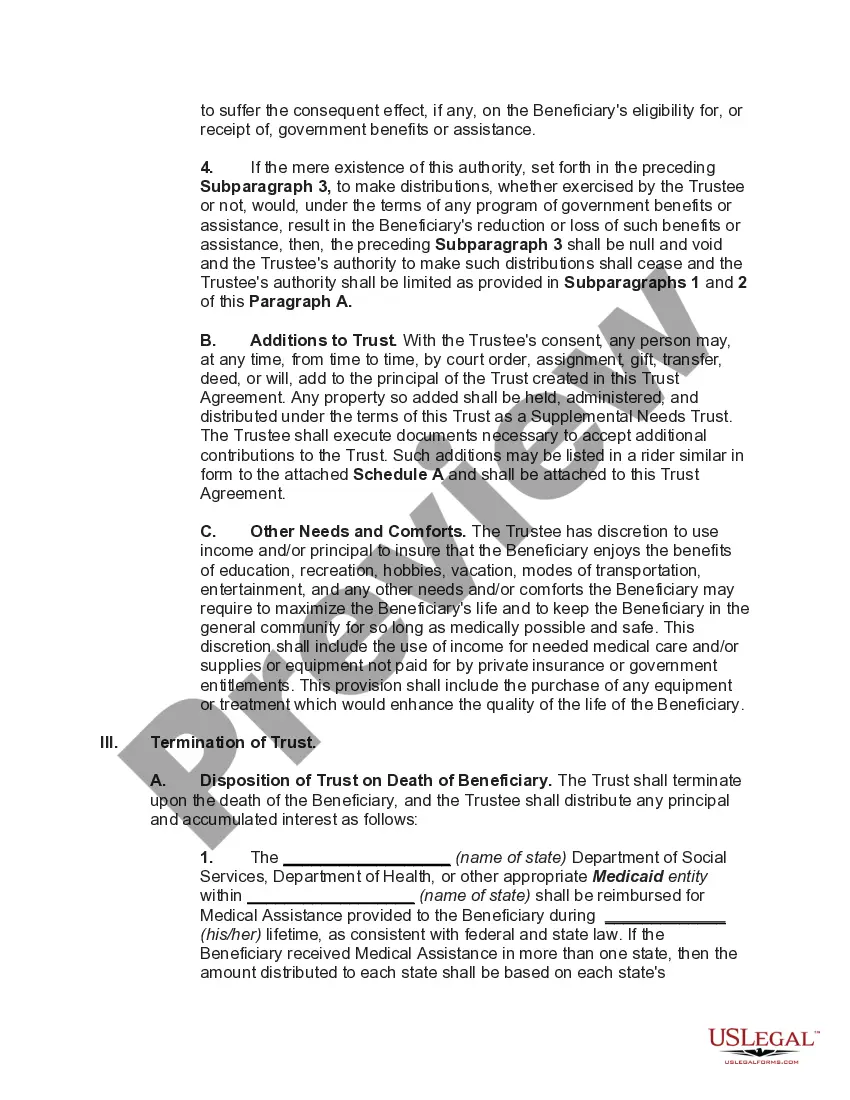
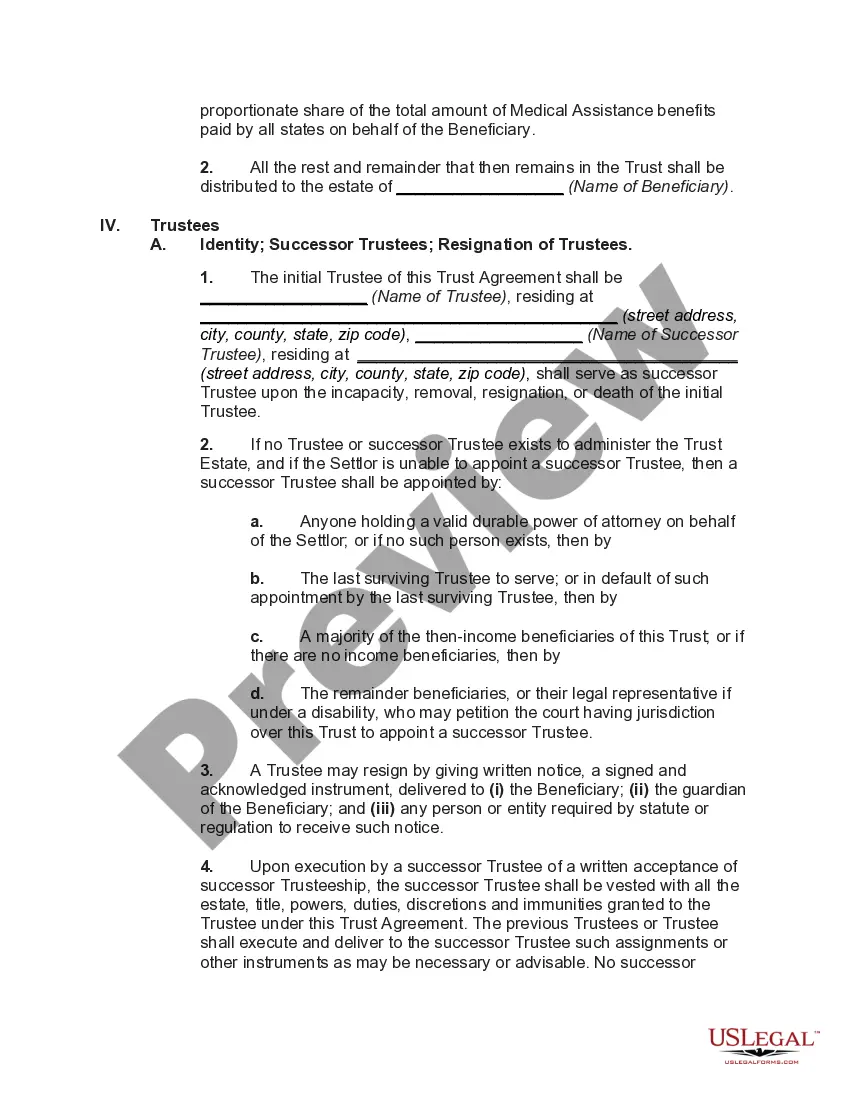
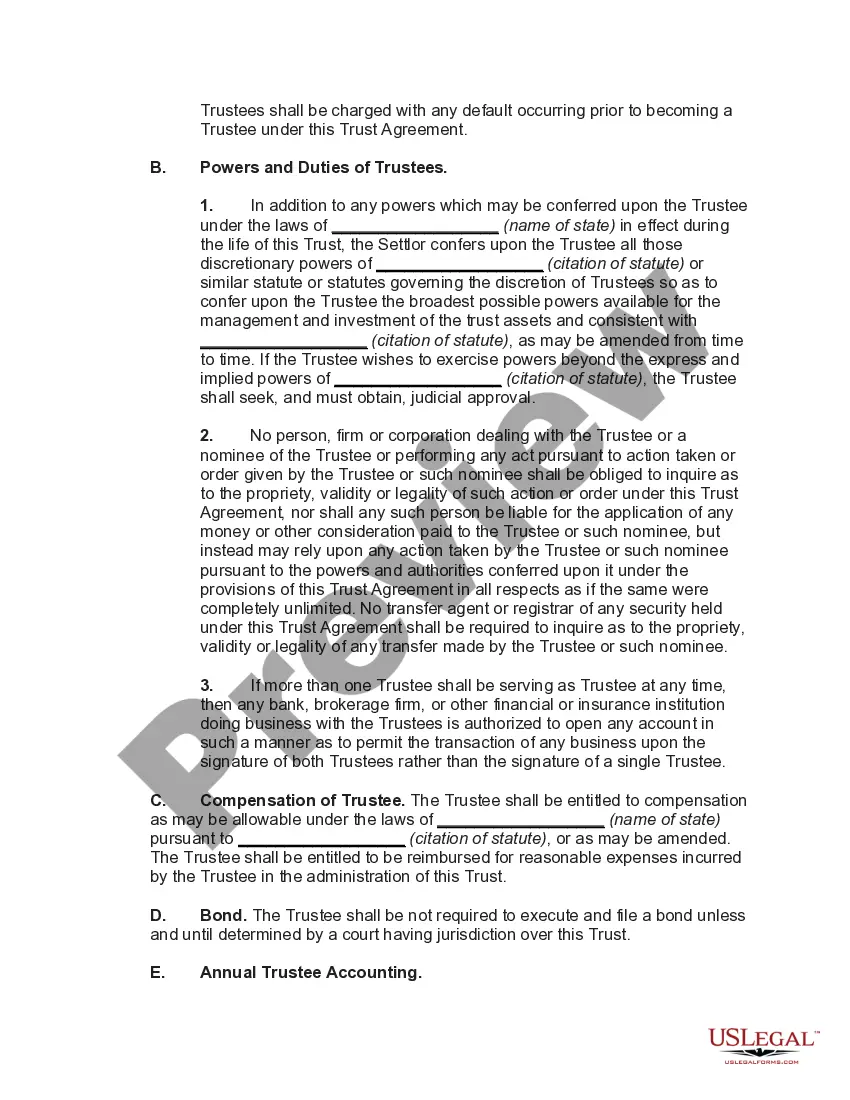
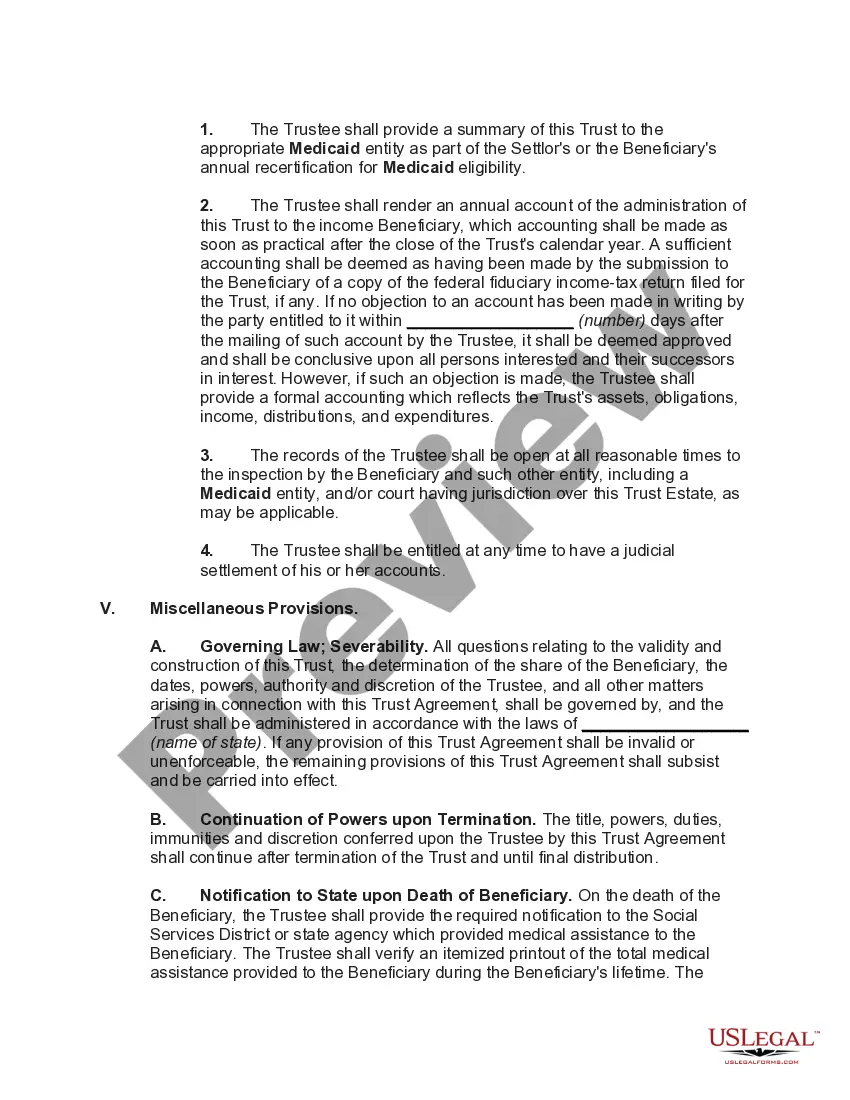
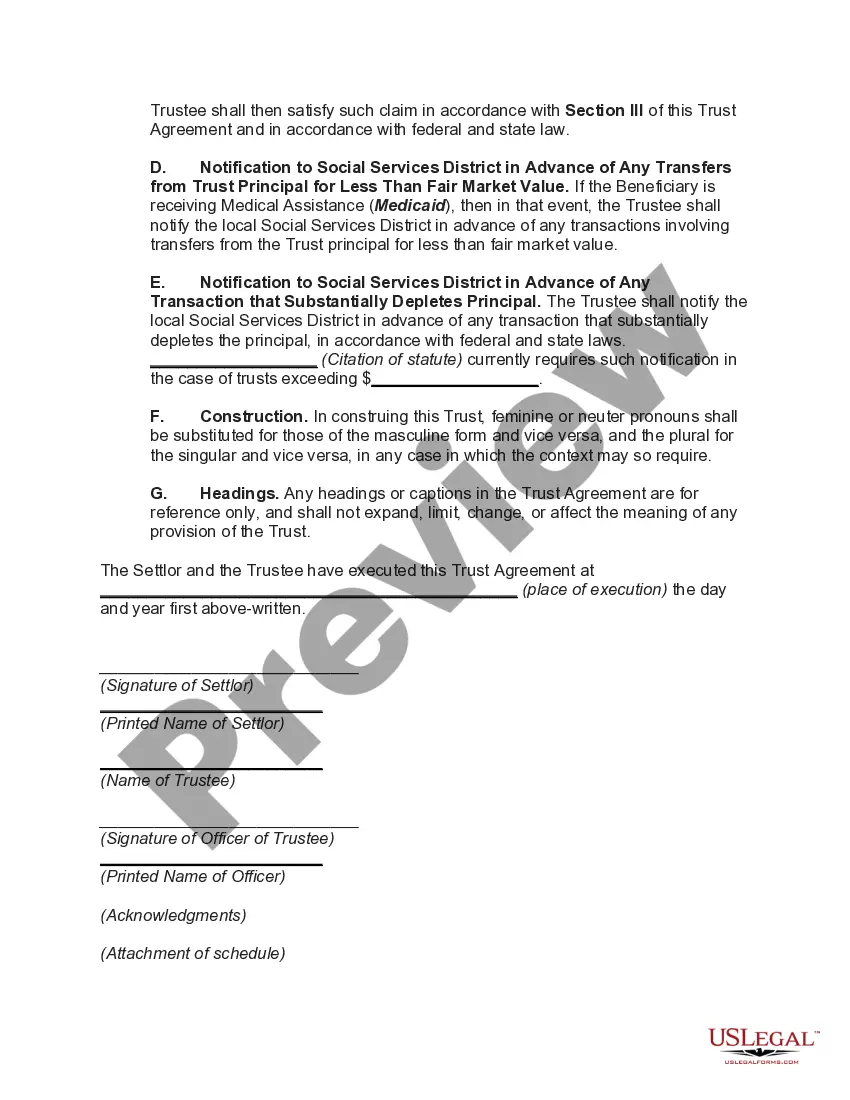
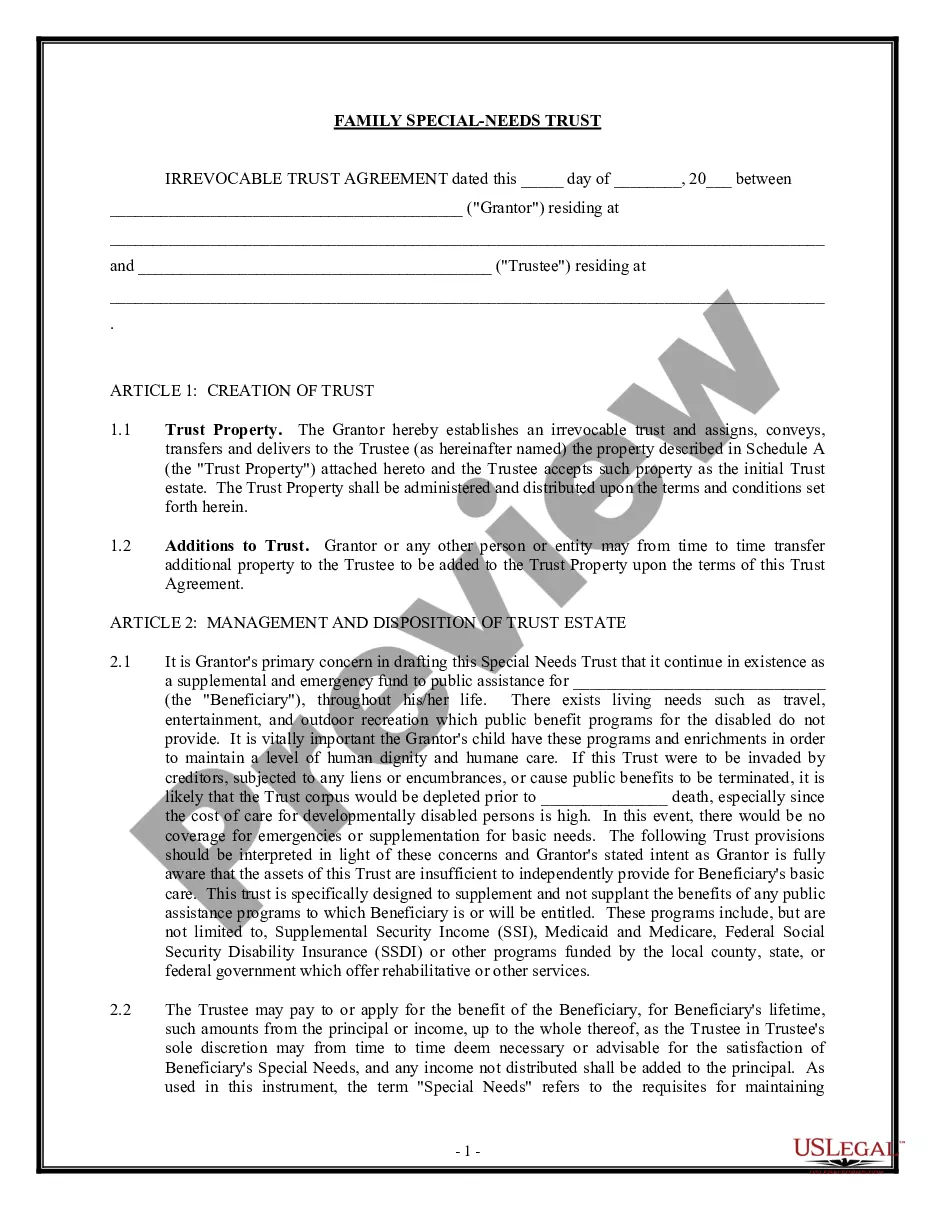
How to fill out Special Needs Irrevocable Trust Agreement For Benefit Of Disabled Child Of Trustor?
- Log in to your US Legal Forms account if you're a returning user, then click the Download button for the needed form template.
- Preview the form details to verify it meets your jurisdiction's requirements. Make sure it fulfills your specific needs.
- If the selected template isn’t suitable, use the Search tab to find an appropriate alternative.
- To proceed, click the Buy Now button and choose your desired subscription plan, creating an account if you’re a new user.
- Complete the purchase using your credit card or PayPal to gain access to your documents.
- Download the template to your device, making sure to save it for later access in the My Forms section of your account.
In conclusion, using US Legal Forms simplifies the process of creating a Special Needs Trust, allowing your family to focus on what matters most. With over 85,000 legal forms at your disposal and guidance from experts, you can ensure you have the right documents for your needs.
Start protecting your loved ones today by accessing US Legal Forms and create your trust with ease!
Form popularity
FAQ
Finding a trustee for a special needs trustor complete with the family can take time and consideration. You can start by asking family members or close friends who have shown an interest in the beneficiary's well-being. Additionally, professional services, such as those offered by uslegalforms, can assist you in identifying qualified trustees who understand the unique needs of special needs trusts.
Selecting a trustee for a special needs trustor complete with the family involves a careful evaluation of potential candidates. Look for someone trustworthy, responsible, and capable of managing financial matters. It's important to discuss this role with family members to ensure everyone is informed and supportive. A strong relationship with the beneficiary can also enhance the effectiveness of the trust.
The trustee plays a crucial role in managing the trust’s assets and ensuring that the funds support the needs of the beneficiary. This includes making legal and financial decisions while staying transparent with the family. Their commitment to the beneficiary's best interests solidifies the goals of special needs trustor complete with the family.
One of the biggest mistakes parents make is failing to clearly communicate their intentions and expectations concerning the trust. This can lead to misunderstandings and complications in the future. It is vital to involve all stakeholders, ensuring the special needs trustor complete with the family is aligned with everyone's understanding.
The beneficial owner of a special needs trust is typically the individual with special needs for whom the trust was established. This person's needs and circumstances guide the trustee's management of the trust assets. Understanding who benefits helps clarify the intent behind special needs trustor complete with the family.
The purpose of a special trustee is to oversee the management of a special needs trust, ensuring that the funds are utilized for the beneficiary's well-being and health. This role involves making informed decisions that align with the terms set by the trustor. It's essential for a special needs trustor complete with the family that the trustee is dedicated to the beneficiary's interests.
The ideal trustee for a special needs trust often combines both personal and professional qualifications. A trusted family member or friend who knows the beneficiary's needs can be effective, but a professional trustee might offer expertise and neutrality. The key is ensuring that the trustee is compassionate and capable of managing the trust well.
A trustee has various powers, including the ability to manage, invest, and distribute trust assets. They can make decisions regarding expenditures for the beneficiary’s needs, ensuring compliance with state laws. Understanding these powers is essential for a special needs trustor complete with the family.
The three types of special needs trusts are first-party trusts, third-party trusts, and pooled trusts. First-party trusts are funded with the beneficiary's own assets, while third-party trusts are funded by someone else on behalf of the beneficiary. Pooled trusts combine multiple beneficiaries into one trust managed by a nonprofit organization, offering both benefits and oversight.
When choosing a trustee for a special needs trust, consider their experience with financial management and their understanding of special needs issues. Personal qualities, such as compassion and patience, are also key. Assess their willingness and ability to communicate with the family and beneficiaries, prioritizing a smooth collaboration.